Rare 2008 Sacagawea Dollar Errors (List & Pictures)
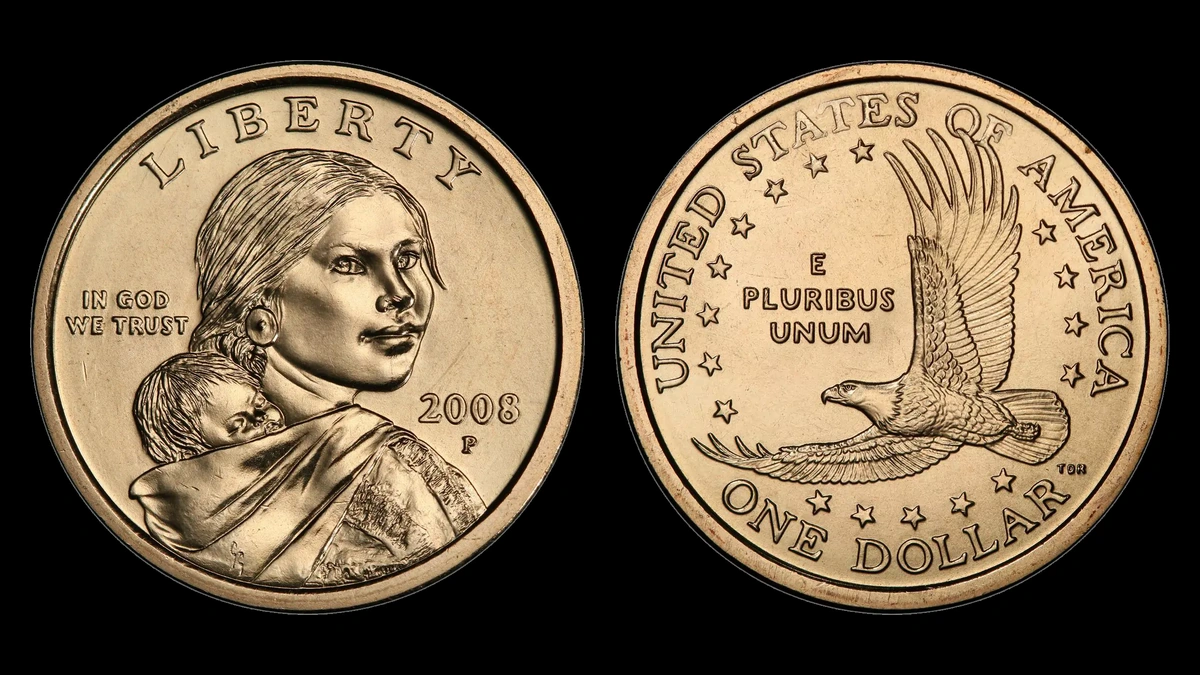
A plain edge belongs on a normal 2008 Sacagawea dollar; the date and mint letter appear on its front. That starting point prevents later dollar-edge rules from confusing a search for 2008 Sacagawea dollar errors.
Supplied estimates span $10–$3,500. A different-year eagle-reverse dollar, a 2000-P struck 50% off center, realized $3,120 in April 2021; inspect the dated face, individual surface features, and complete outline before applying that comparison.
1. 2008 Dollar Additional Letter or Star Outlines: Doubled Die Error
The year guide reports doubled details on either face without fixing a mint or catalog variety. Front words and eagle-side stars are inspection areas rather than a certified pattern every candidate must show.
A doubled die already carries duplicated detail when it strikes the blank. The same tool can reproduce those extra contours on multiple coins without giving each coin a second displaced blow.
How to Identify
Compare an ordinary 2008 dollar first, then examine LIBERTY, IN GOD WE TRUST, or the relevant reverse stars and words. Follow a full letter or star contour instead of accepting thickness along one reflective edge.
Look at neighboring details and change the light to determine whether the apparent repeat remains fixed. A flat shelf caused during striking is a different effect from a matching extra raised shape in the die.
Record the mint and finish with each close-up. A front-side candidate does not establish that the same coin also carries reverse doubling.
What It’s Worth
$20–$400 is estimated for a confirmed doubled-die example in ordinary collectible condition. The supplied year guide places minor features in the tens of dollars and stronger ones in the hundreds, without a specific 2008 auction record.
2. 2008 Dollar A Raised Ridge or Rim-Connected Mass: Die Cracks and Breaks Error
The 2008 reports include narrow cracks, interior chips, and larger breaks reaching the rim. They do not establish a universal face, mint, or clock position for those features.
Metal fills openings in a damaged die and becomes raised detail on the coin. A substantial rim-connected break is called a cud, while an enclosed lump remains an interior chip.
How to Identify
Inspect the center of a line under light directed across it. A scratch can have raised edges beside a recessed cut, so the side shadows alone may suggest the wrong cause.
Follow a ridge through its intersections with normal letters or artwork. For a larger lump, document whether it actually reaches the rim.
Check the edge and opposite face for pressure marks that could explain metal pushed inward by a later blow. Full-face context helps distinguish an original tool feature from a dramatic-looking dent.
What It’s Worth
$10–$600 is the estimate across genuine cracks, chips, and cuds. Minor ridges commonly fit the lower end, while a substantial break that visibly replaces design offers a different comparison.
The figures concern whole coins and reported categories, not a named 2008 sale. A large rim dent does not acquire a broken-die premium from its size.
3. 2008 Dollar A Flap or Shallow Opening in the Surface: Lamination Error
Philadelphia and Denver reports include peeling or split metal. A weakness within the material can separate into a thin flap or leave an exposed patch when part comes away.
The golden outer alloy is bonded to a copper center, making the location of the separation important. A local peel does not by itself establish that an entire outer layer was absent before striking.
How to Identify
Find the point where lifted metal remains attached and photograph it without bending the flap. Make sure protective storage cannot catch the free edge or press it down.
Compare design on the separated portion with the surrounding hair, letters, or feathers. The continuation of the struck picture can help explain how the metal separated.
Inspect the exposed texture and both faces for scraping or chemical attack. A reddish stain alone does not establish exposed copper, and a specialist may need to distinguish an internal flaw from a failed bond.
What It’s Worth
$25–$800 is estimated for genuine peeling or split surface metal. A clearly attached flap with surviving design presents different evidence from a tiny rough opening or a damaged missing patch.
No completed 2008 transaction is supplied for this category. Removing the flap can destroy both its identifying evidence and collector appeal.
4. 2008 Dollar The Whole Design inside an Enlarged Outline: Broadstrike Error
A Philadelphia broadstrike appears in the year reports. The collar around the blank failed to restrain spreading metal, allowing the dollar to become wider while retaining its complete intended design.
The expanded margin can be uneven. Its plain edge remains unremarkable because normal 2008 Sacagawea dollars have neither edge lettering nor grooves.
How to Identify
Trace the complete outer words and picture on both faces before checking measurements. If intended design falls beyond the blank, the candidate requires an off-center assessment instead.
For a loose coin, compare several diameter directions with about 26.5 millimeters and weight with the standard 8.10 grams. Approximately normal weight with extra width can support spread, but later flattening may produce a similar result.
Examine the portrait and raised letters for crushing, and compare the edge profile with an ordinary dollar. The entire physical combination matters more than a slightly wide rim.
What It’s Worth
$75–$1,000 is estimated for authentic 2008 broadstrikes using comparable golden-dollar errors. The material does not provide an identified 2008 auction sale.
Clear expansion and original surfaces strengthen the comparison. Damage to lettering or the portrait can reduce value even when the original strike was broad.
5. 2008 Dollar A Bare Crescent beside Lost Design: Off-Center Strike Error
Ordinary Philadelphia and Denver off-center dollars are reported for 2008 without one fixed displacement or direction. A blank placed partly outside the dies receives incomplete designs beside an untouched portion of metal.
A large shift can remove the front date or mint letter. The shared eagle reverse cannot establish 2008 by itself.
How to Identify
Read the surviving date before selecting a year-specific comparison. Include the mint letter, if present, and retain the full blank outline in both face photographs.
Check that the two designs fit the same misplaced disk. A shift restricted to one face may involve a misaligned die, while a gap where metal is absent raises a different blank-defect question.
Inspect the bare crescent for abrasion or pressure marks that could have erased a finished image. Original unstruck metal is different from a ground-down patch.
What It’s Worth
$150–$3,500 is the estimate for genuine 2008 off-center dollars. The supplied 2000-P comparison was struck 50% off center and sold for $3,120 in April 2021.
That older coin does not establish a newly documented 2008 specimen or its percentage. Readable identity, actual displacement, and preservation determine how useful the comparison is.
Conclusion
For this year, the front carries the date and the plain edge is expected. Focus on the actual extra contour, raised tool defect, separating metal, or relationship between the image and blank.
Full photographs are especially useful for expanded or displaced strikes, while a fragile flap should stay attached. Most ranges here are estimates, and the older off-center transaction provides context rather than a sale record for a 2008 coin.