Rare 1980 Dollar Errors (List & Pictures)
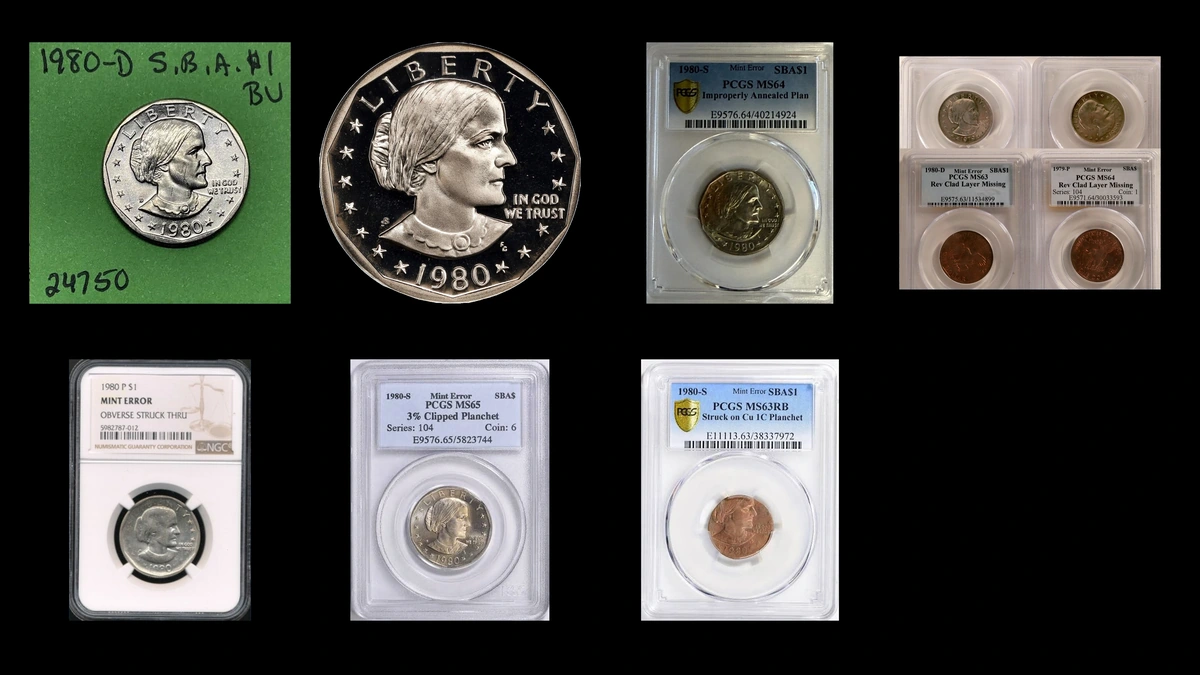
A 1980-S dollar on a nickel blank sold for $6,900 in April 2021. The 1980 Susan B. Anthony dollar errors below have estimated values of $20–$12,000.
The wide border near the date is normal for this year. Examine letter shapes first, then compare surface color, missing metal, and displaced designs with the appropriate examples.
| Observation | Possible explanation | Guide range |
|---|---|---|
| Split letter tips or repeated mintmark | Doubled die or repunched mintmark | $20–$200 |
| Brown surface or copper-colored face | Annealing, copper wash, or missing layer | $30–$1,500 |
| Weak detail | Struck through material | $25–$750 |
| Gap, expansion, or blank crescent | Clip, broadstrike, or off-center strike | $20–$2,000 |
| Overlapping impressions | Multiple strike | $500–$4,000 |
| Small blank with dollar artwork | Wrong planchet | $900–$12,000 |
1. 1980 Dollar Small splits in ordinary S lettering: reported doubled die Error
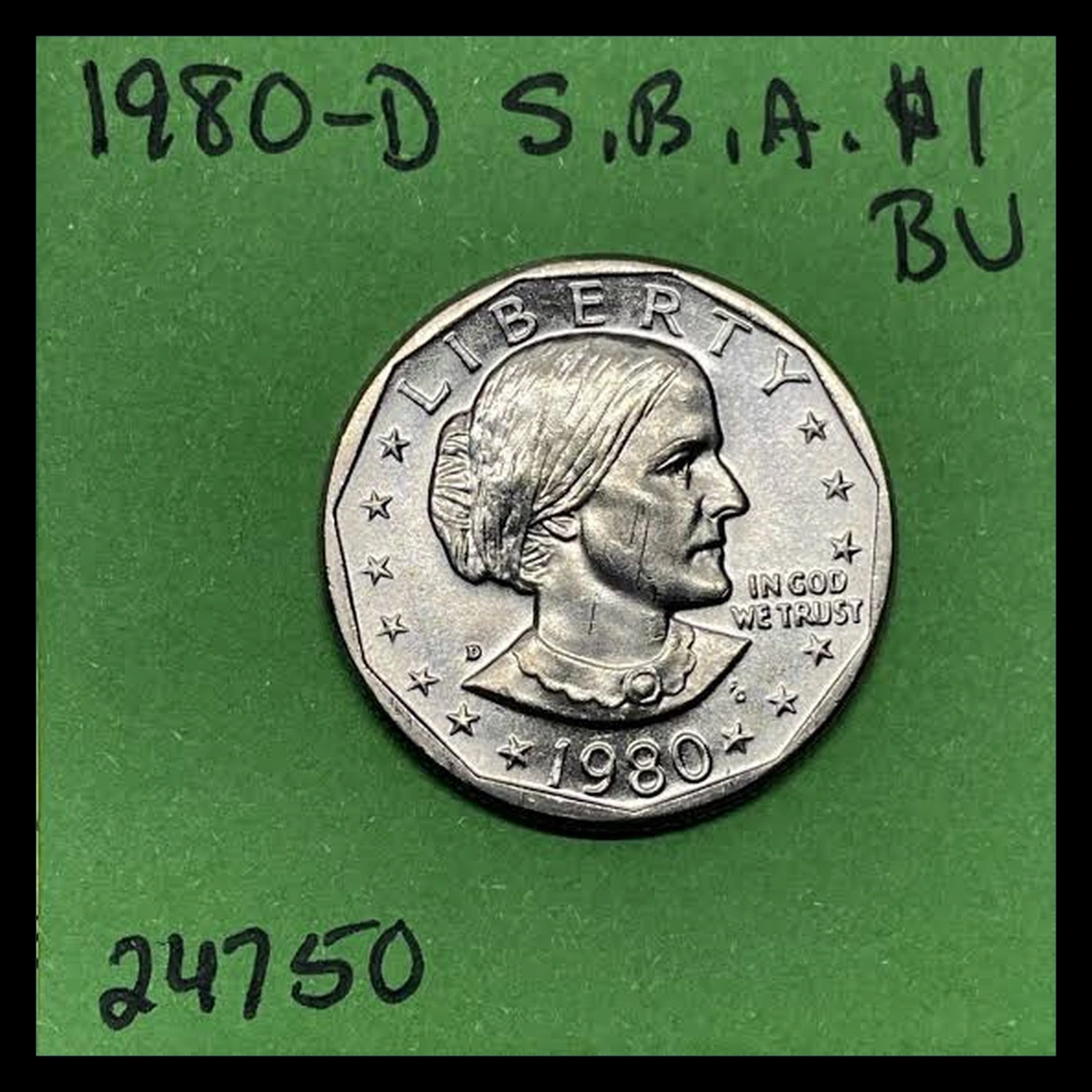
Reports for ordinary 1980-S dollars describe forked ends in LIBERTY and IN GOD WE TRUST. The feature concerns circulation-style strikes rather than specially prepared Proofs.
A doubled die contains repeated contours in the stamping tool before coin production. Flat ledges produced by movement during striking have a different origin.
How to Identify
Compare the ends of the same letters on a normal ordinary 1980-S coin. Look for small notches separating raised tips, with the main letter shape intact.
Photograph several matching letters under different lighting directions. General thickness or a reflection beside one letter cannot establish the reported pattern.
What It’s Worth
A confirmed example of the reported minor variety has an estimated range of $20–$100.
No individual realized sale is supplied. Worn lettering or faint separation makes a weaker comparison than clear repetition on an original unworn surface.
2. 1980 Dollar Extra curves beside D or S: repunched mintmark Error
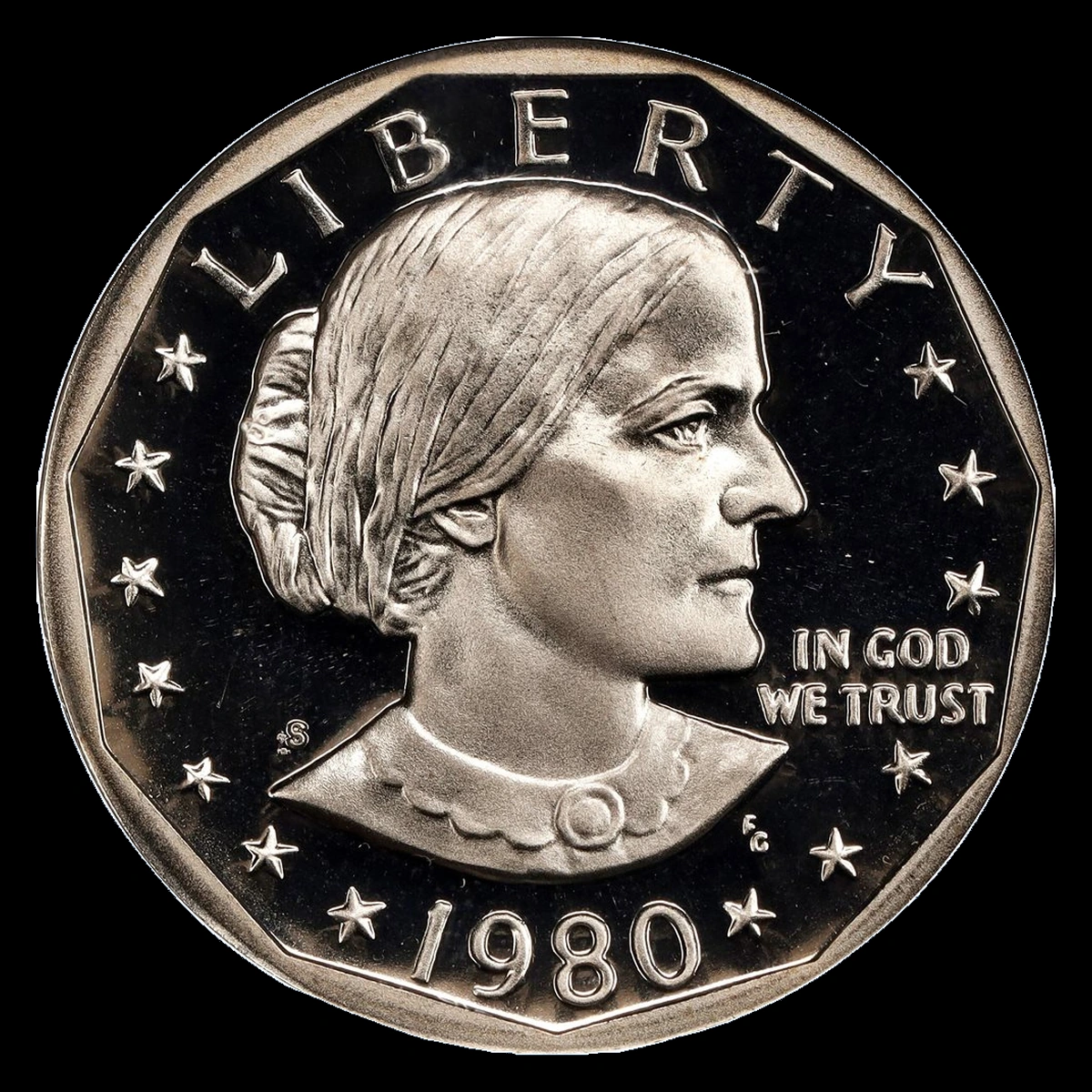
Denver reports describe traces to the left of D on ordinary dollars. The San Francisco Proof report places an extra S below and to the left of the main letter.
Reapplying the mintmark punch in a slightly different position can leave parts of its earlier impression in the die. Each mint and finish needs its own comparison.
How to Identify
Find the letter to the left of Anthony’s shoulder. An S identifies San Francisco but does not, by itself, establish a Proof finish.
For Denver, compare the extra left-side traces with D’s normal stem and curve. For the S Proof, inspect both lower-left curves against a matching ordinary mintmark shape.
PCGS discusses repunched mintmarks on 1980-S Proof dollars. An isolated lump or filled center is not enough to prove another punched letter.
What It’s Worth
The combined estimate is $20–$200, with minor Denver examples generally around $20–$100.
No particular sale is supplied for either reported pattern. Clear separation and undisturbed surfaces matter more than a thick-looking mintmark.
3. 1980 Dollar Brown streaks with intact metal: annealing or copper wash Error
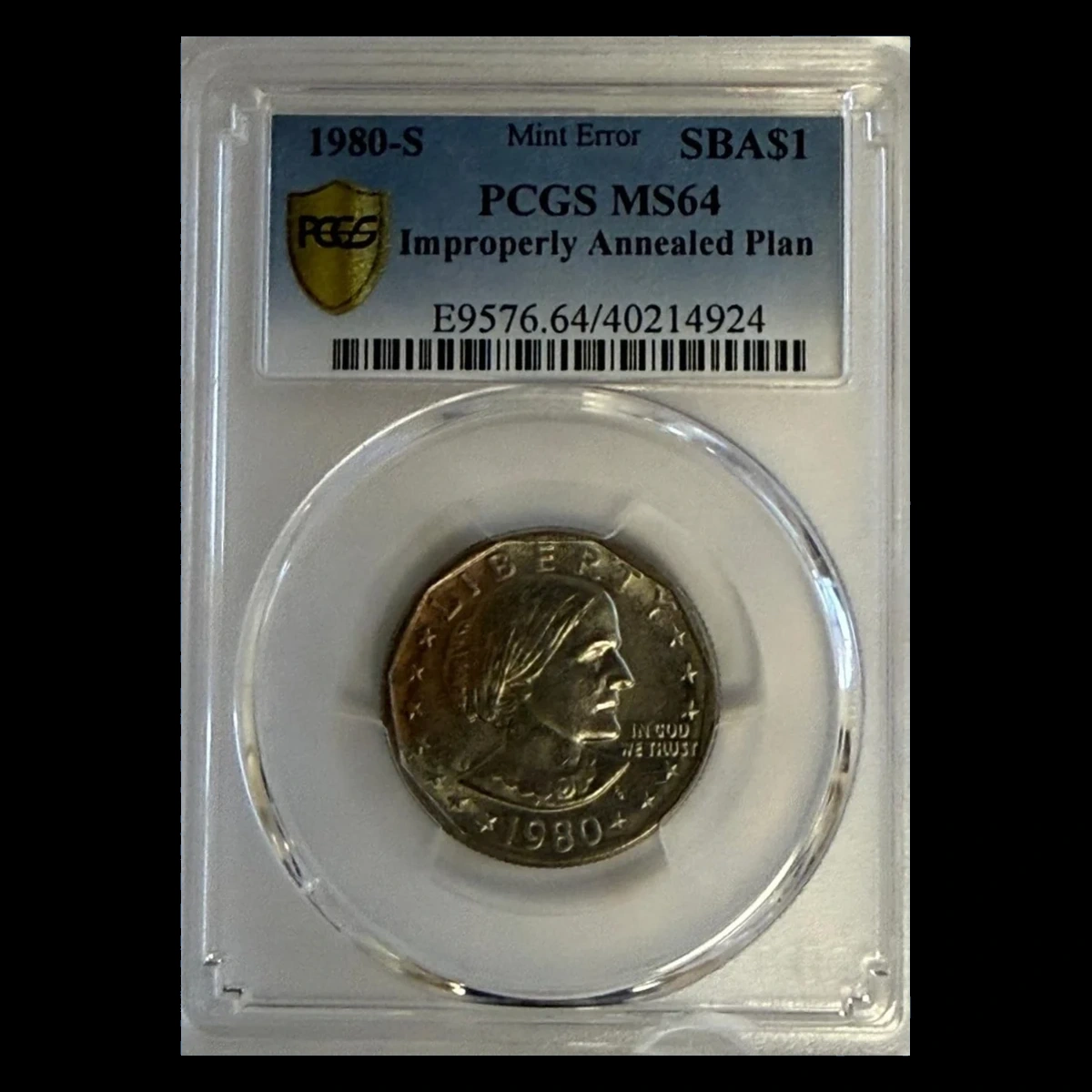
Some 1980-S dollars have been certified with improper annealing, a problem during the heating used to prepare blanks. Other certified examples carry a copper-wash description for a thin copper-colored covering.
Records include color on both faces and a separate coin with most of its reverse covered. These labels do not necessarily establish an identical cause.
How to Identify
Compare both faces and the edge under neutral light, looking for original shine beneath the color. Do not clean a test patch.
A normal Anthony dollar weighs about 8.10 grams and measures about 26.5 millimeters across. Thin surface color can leave its layers intact, while substantial metal loss needs another explanation.
Later chemicals and heating can imitate mint color changes. Match the certified example’s actual surface and finish rather than classifying any brown dollar as improperly annealed.
What It’s Worth
Authenticated color errors of these kinds have an estimated range of $30–$350.
The auction index records a PCGS MS65 copper-wash dollar at about $100 in September 2024. That result belongs to the copper-wash description, not automatically to every annealing report.
4. 1980 Dollar Exposed copper from layer loss: missing outer layer Error
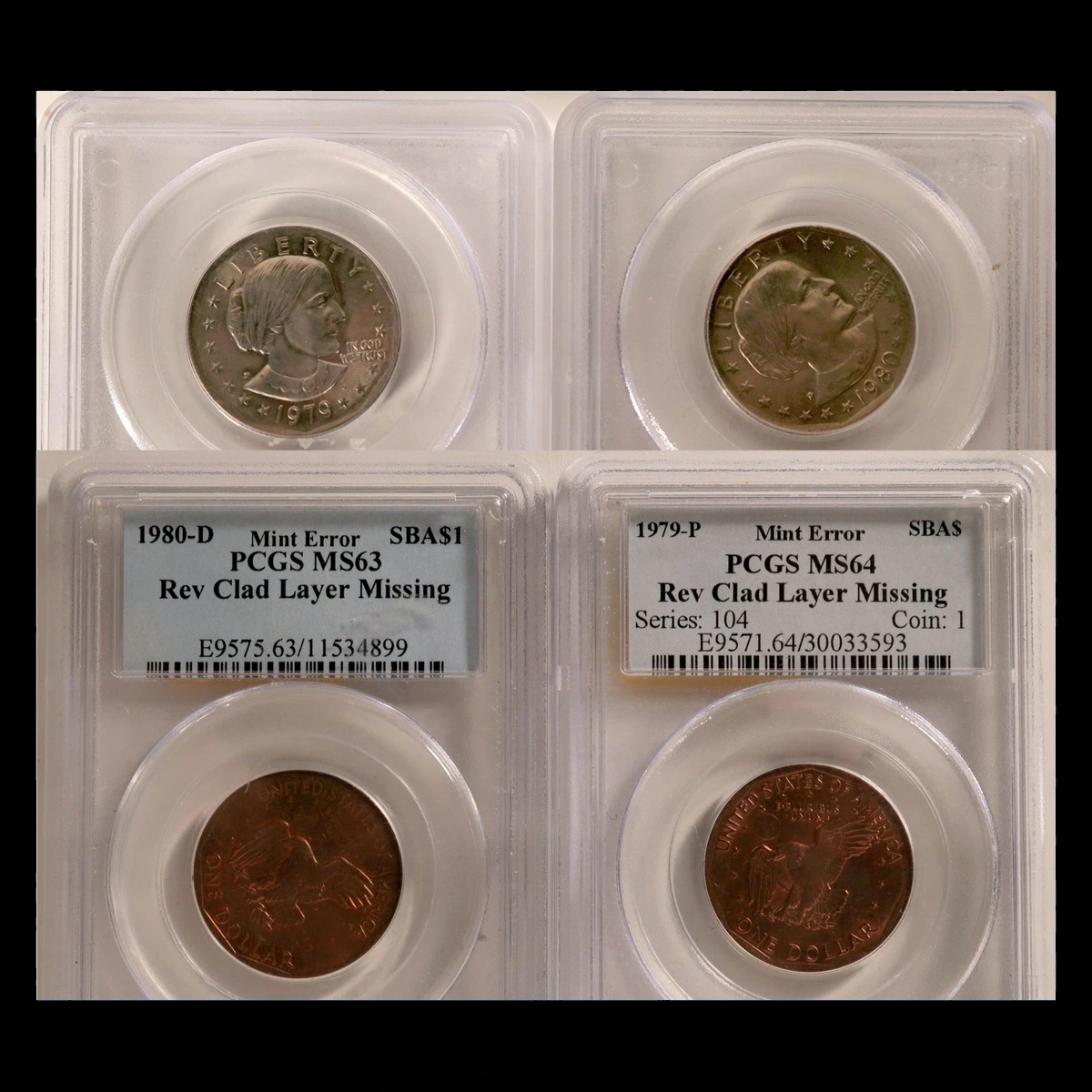
Normal dollars have pale copper-nickel outer metal bonded to a copper center. A certified Denver example lacks its reverse layer, while a separate published front-layer coin weighs 6.0 grams and was described as cleaned.
The exposed center is part of the coin’s construction. It differs from a thin copper-colored wash over intact layers.
How to Identify
Compare the affected face with the remaining edge structure and actual weight. The 6.0-gram figure belongs to the cleaned front-layer specimen.
Inspect for grinding lines, shaved lettering, or an unevenly removed surface. A low weight alone does not show that the loss occurred during minting.
What It’s Worth
Authenticated missing-layer examples have an estimated range of $150–$1,500.
The reverse-layer coin appeared in a two-coin lot, so the lot does not establish its individual price. The separate front-layer specimen’s cleaning must remain part of any comparison.
5. 1980 Dollar Weak stars or blocked lettering: struck through material Error
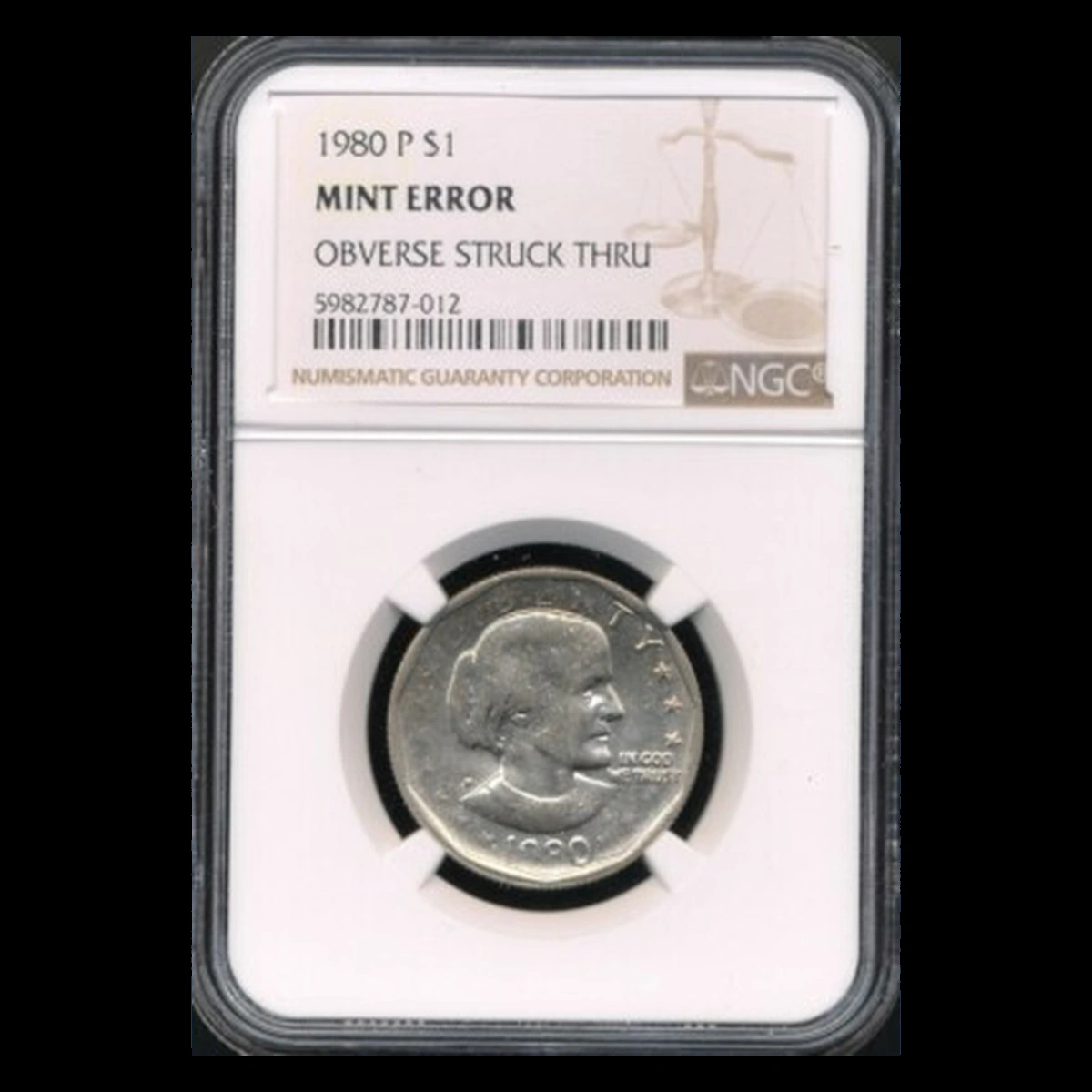
An ANACS-certified 1980-D dollar has grease weakness on the reverse. A separate S example sold by APMEX has weak outer front stars, while an NGC-certified P coin has extensive weakness on both faces.
Material obstructing the die can prevent part of the design from forming. The S coin’s obstruction was not identified, so it should not automatically inherit the Denver grease description.
How to Identify
Compare the affected star or letter with a normal dollar, then inspect nearby sharp detail. Broad wear on Anthony’s cheek and hair offers a different explanation from local blockage.
The Philadelphia two-face pattern needs its own views. Scraping across a finished design may leave harsh parallel lines instead of the original softly interrupted strike.
What It’s Worth
Authenticated examples have an estimated range of $25–$750.
The Denver reverse-grease coin sold for $312 in March 2023. A separate S front struck-through dollar brought about $55 in September 2023.
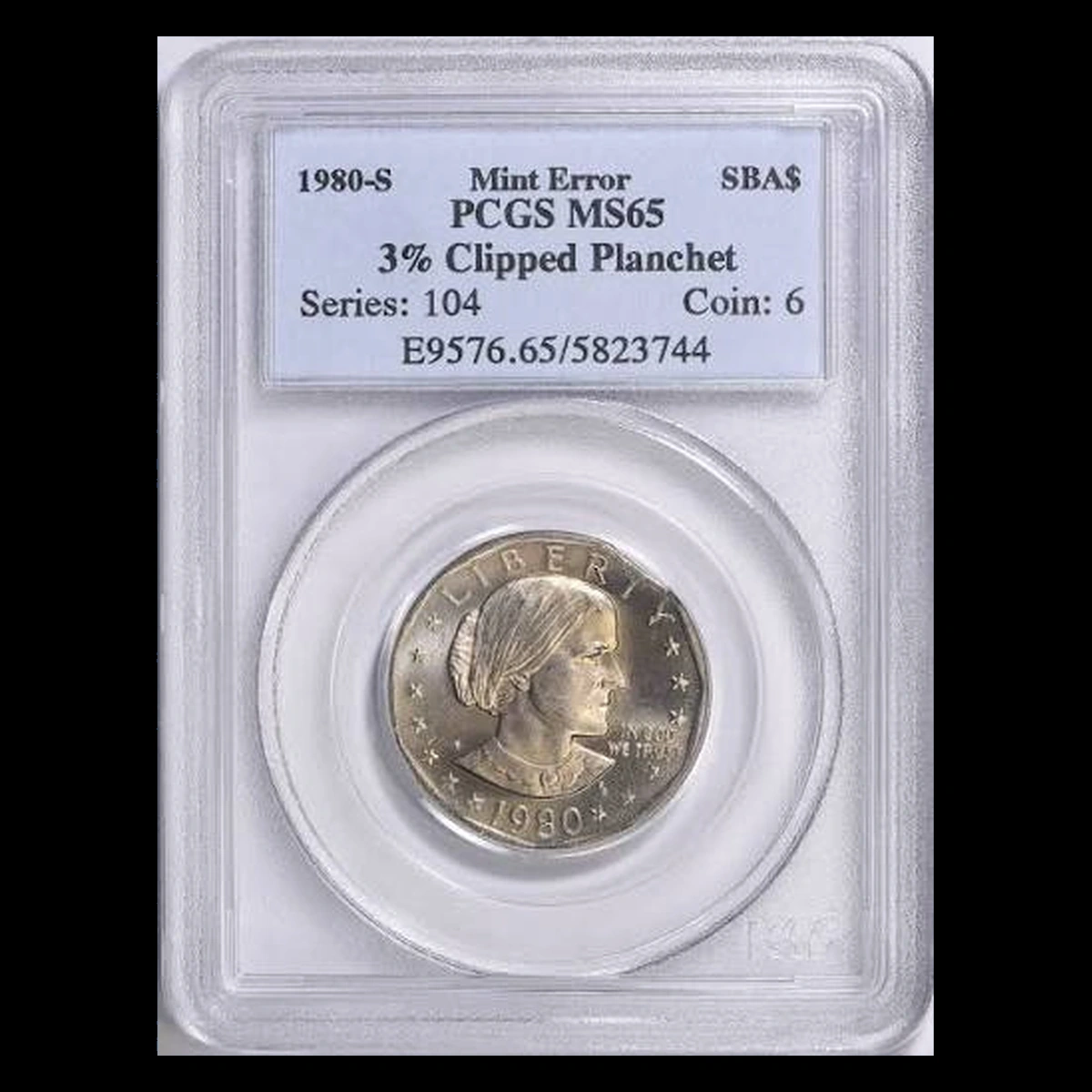
6. 1980 Dollar A section missing from the edge: clipped blank Error
An ANACS-certified 1980-S dollar establishes a clipped example for the year. Its listing does not specify the percentage of missing metal.
A blank punched across an earlier hole in the metal strip begins incomplete. The later strike can stretch or weaken detail near the gap.
How to Identify
Inspect the gap wall for saw marks, fresh burrs, and filing. Follow how the original rim and nearby letters approach each end of the missing area.
A weak rim opposite the gap and reduced weight can support the explanation without proving it alone. Do not borrow a larger clip’s percentage to describe this recorded S coin.
What It’s Worth
Genuine clips have an estimated range of $20–$500, depending on their size, visibility, and condition.
No individual sale is supplied for the ANACS example. A later cut receives no comparable mint-error premium.
7. 1980 Dollar Complete designs inside a wider outline: broadstrike Error
A broadstrike occurs when the collar fails to restrain the blank and the metal spreads outward. The collar normally controls width and forms the edge.
The 1980 report does not establish a specific mint or finish. The normal near-date border for this year is not itself abnormal expansion.
How to Identify
Measure a loose candidate in several directions and check that the intended outer design remains within the metal on both faces. Uneven spreading can leave a wider margin on one side.
Hammering or squeezing after minting can also widen a dollar but may crush the finished details. A smooth edge alone cannot establish a broadstrike.
What It’s Worth
An authenticated broadstrike has an estimated range of $50–$750, with modest expansion often placed around $50–$100.
No specimen sale is supplied for the general 1980 report. Full identity and original surface quality improve the comparison.
8. 1980 Dollar An unstruck crescent beside incomplete artwork: off-center strike Error
A 1980-S NGC MS64 dollar is described as 45% off center. A separate PCGS example was listed at 75%, demonstrating a different degree of displacement.
The blank was misplaced when the dies met, leaving metal unstruck while some design fell beyond its edge.
How to Identify
Read the surviving date and mintmark, then relate the untouched crescent to missing artwork on the opposite side. Both faces should fit the same displaced blank.
Examine the unstruck area for grinding, flattening, or other alteration. A complete design within a wide margin belongs in a broadstrike comparison instead.
What It’s Worth
Moderate through dramatic authenticated examples have an estimated range of $150–$2,000.
The 45% off-center 1980-S NGC MS64 coin sold for about $881 in August 2012. That price and mint should not be transferred to the separate 75% PCGS example without its own evidence.
9. 1980 Dollar Distinct overlapping impressions: multiple strike Error
A coin that remains in or returns to the press can receive another blow after shifting or turning. Earlier portrait, lettering, rim, or date fragments may remain beside the later impression.
The 1980 reports establish no particular mint, finish, or number of blows. Those details must come from the actual specimen.
How to Identify
Trace recognizable fragments that fit a second complete design position. Random flattened areas or tiny doubled tips do not by themselves show another strike.
Check the reverse for supporting overlap, while allowing that an obstruction could block part of an additional blow. Proofs normally receive repeated blows, so a sharp single image is not a multiple-strike error merely because of that process.
What It’s Worth
An authenticated multiple strike has an estimated range of $500–$4,000.
This is a range based on comparable Anthony striking errors, not a reported sale of a particular 1980 coin. Clear separated impressions and readable identity are central to the comparison.
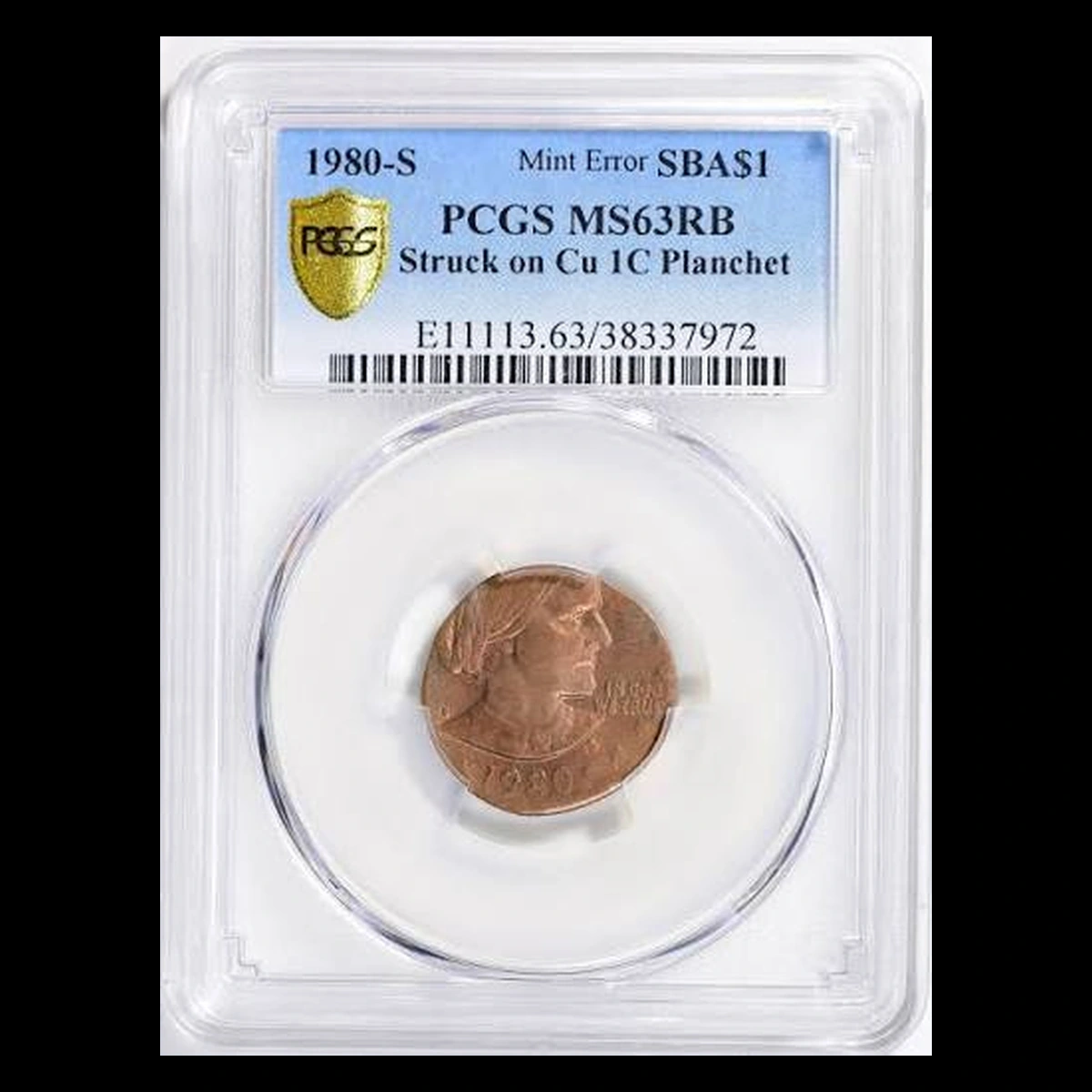
10. 1980 Dollar A smaller coin blank carrying dollar artwork: wrong planchet Error
Certified San Francisco examples include quarter and nickel blanks. Cent blanks are documented for both Denver and San Francisco.
A dime-blank type is reported without an identified certified example or confirmed mint. It remains a candidate requiring physical evidence rather than an excuse to relabel another year’s specimen.
How to Identify
Compare weight, composition, edge structure, and design fit together. Standard blanks weigh 5.67 grams for a quarter, 5 grams for a nickel, 3.11 grams for a copper cent, and about 2.27 grams for a clad dime.
These are standards rather than measured weights for every recorded error. Striking can spread a smaller blank, and later trimming can also reduce a normal dollar’s diameter.
Look for older coin artwork beneath Anthony or the eagle. Such remnants would identify a finished-coin overstrike instead of an unused wrong blank.
What It’s Worth
The combined estimate is $900–$12,000: quarter blanks around $900–$3,500, cent blanks around $2,500–$8,000, and nickel blanks around $4,000–$12,000.
The reported dime-blank category has a conditional $4,000–$12,000 estimate after authentication.
The 1980-S nickel-blank dollar graded NGC AU58 brought $6,900 in April 2021. A contemporary report places a separate quarter-blank sale at $977.50 in 2002.
Conclusion
Letter splits, unusual color, missing layers, and displaced artwork each require a different examination on a 1980 dollar. The wide border near the date is normal and should stay out of the error count.
Keep ordinary S strikes separate from Proofs and attach each measurement to its own specimen. For a small coin with dollar artwork, verify the blank’s metal and look for earlier designs before choosing a wrong-planchet comparison.