Rare 2017 Dollar Errors (List & Pictures)
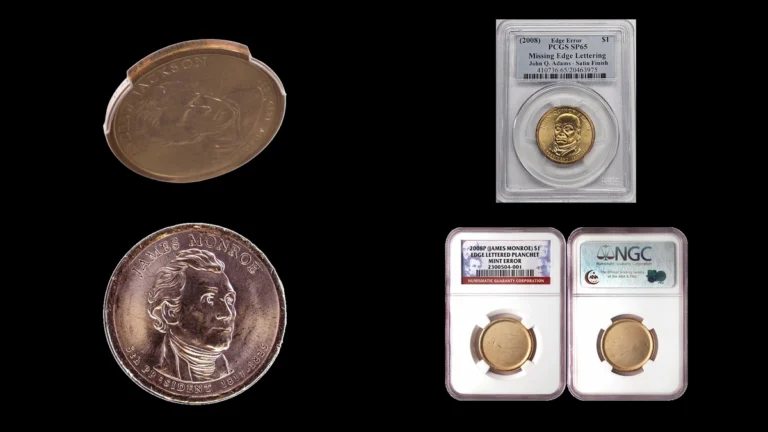
A 2007 Madison dollar with no edge lettering sold for $119 in July 2025. That older Presidential coin provides a comparison for 2017 Sacagawea dollar edge errors, with estimated values of $20–$650.
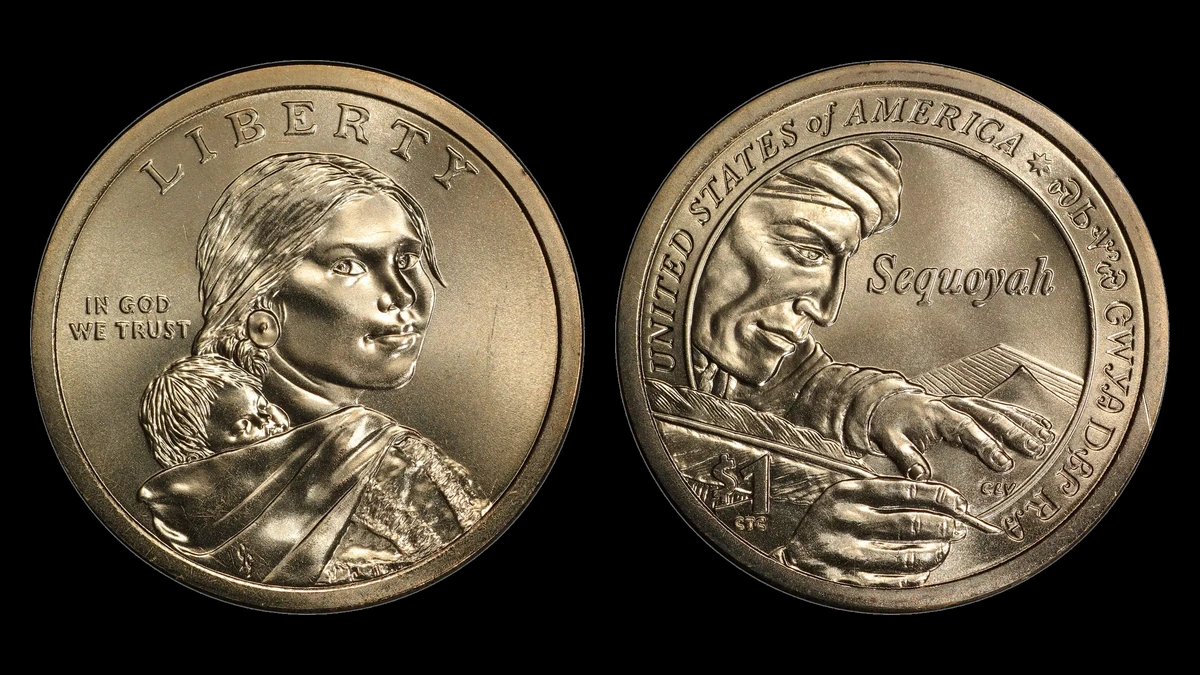
Use Sequoyah’s reverse to identify the annual design, then follow the whole edge to distinguish shallow strokes, partial omissions, and complete absence.
2017 Dollar Shallow, interrupted, or absent text: edge-lettering Error
The date, mint letter, and E PLURIBUS UNUM normally occupy this dollar’s edge. Ordinary coins receive those recessed inscriptions in a separate operation after the faces are struck.
Poor contact can leave weak characters or interrupt part of the sequence. A coin that bypasses the operation can have a fully unlettered edge.
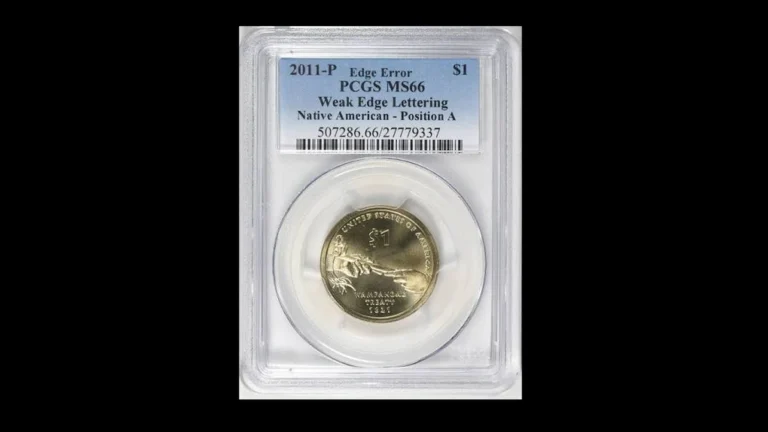
PCGS lists weak and partial lettering for ordinary 2017-P dollars in Position B. It also lists a Sequoyah dollar with completely missing edge lettering, without independently establishing that example’s mint.
Position B is one normal reading direction, not an error by itself. Specially finished San Francisco collector coins require their own finish comparison rather than inheriting an ordinary Philadelphia attribution.
How to Identify
Photograph both faces before enlarging the edge. Sequoyah’s design remains useful when the edge date cannot be read.
Divide the circumference into overlapping photographs and keep the lighting consistent. Starting at a clear character helps show where depth changes or the inscription stops.
Move the light at every apparently blank stretch to search for the bottoms of faint strokes. Shallow but present characters indicate weak lettering, while original blank metal interrupting a readable sequence can support partial omission.
Only an edge with no date, mint letter, or motto anywhere fits complete absence. Failure to find P does not establish that the coin came from Philadelphia.
Inspect for parallel file lines, rounded borders, or evidence of polishing away text. A loose coin’s diameter should be compared with the normal 26.49 millimeters, while recognizing that a normal measurement does not prove untouched edge metal.
A single photograph cannot show whether another part of the edge retains lettering. Keep the full sequence together so classification rests on the entire coin.
What It’s Worth
The combined estimated range is $20–$650. Clearly abnormal weak or partial inscriptions are estimated around $20–$250, while complete absence on an original edge is estimated around $50–$650.
The PCGS Native American dollar guide includes 2010 missing-edge comparisons around $65–$650 across unworn grades. Those are different-year guide figures.
A 2007 Madison missing-edge dollar graded NGC MS67 sold for $119 in July 2025. Its high grade and different Presidential design remain part of that specific comparison.
No individual realized sale is supplied here for a 2017 weak, partial, or completely missing inscription. Ordinary shallow variation and normal Position A or B orientation do not automatically earn an error premium.
Conclusion
The amount of surviving text determines the useful classification on a 2017 dollar. Follow every section of the edge before deciding that lettering is weak, partly missing, or entirely absent.
Retain Sequoyah’s reverse and any readable mint letter in the same photographic record. A blank-edge coin should keep its mint unassigned unless reliable evidence establishes it, and later smoothing must be excluded before applying a mint-error estimate.