Rare 1856 Dollar Errors (List & Pictures)
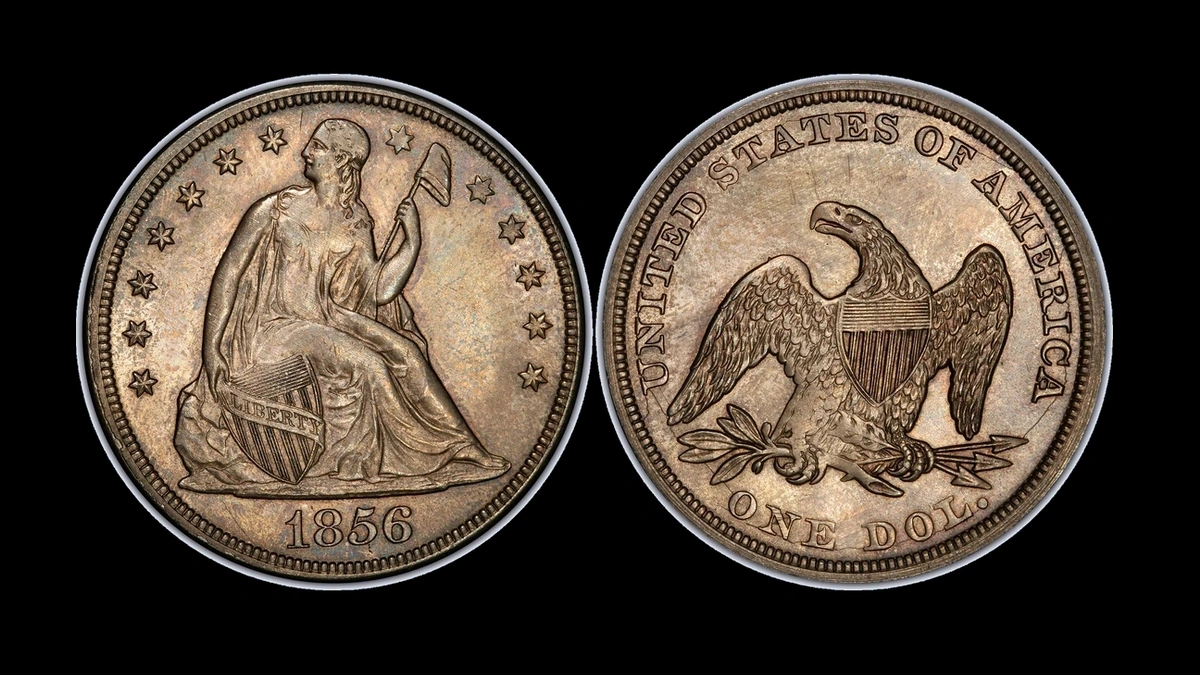
Fine marks beneath the chin and raised lines near the date have different origins among 1856 Liberty Seated dollar errors. The supplied auction record lists $16,800 in August 2025 for an unworn MS63 dollar with die cracks.
Whole-coin estimates span $500–$20,000, largely reflecting preservation. Compare the chin’s small group of lines first, then trace the cracks around the lower design and reverse.
1856 Dollar Fine lines below Liberty’s chin: Chin Whiskers die feature Error
The Chin Whiskers nickname describes short lines immediately beneath Liberty’s chin. They copied marks left on the die during its preparation, rather than hairs or another object caught in the press.
Early ordinary-strike coins can show the feature more clearly. Continued use of the die weakened the fine detail, while wear on an individual coin can obscure it further.
The lines are a named tool feature, not a redesigned portrait. Their absence does not automatically identify a late die state because condition and lighting also affect visibility.
How to Identify
Keep the portrait upright and examine the open area just below the chin under magnification. Compare the arrangement of several fine lines with a clear early ordinary-strike reference.
A single isolated scratch is weaker evidence than a matching group. Move the light while holding the coin still to see whether reflections are creating an apparent extra line.
Check the surrounding portrait for wear before interpreting missing detail. A smooth chin on a worn coin does not disclose exactly when the die produced it.
Proof dollars used a different pair of dies and are poor substitutes for this comparison. Keep the reference’s manufacture type attached to its photograph.
What It’s Worth
$500–$15,000 is the supplied estimate for ordinary 1856 dollars showing Chin Whiskers, from worn through attractive unworn examples. Condition carries more weight than the nickname alone.
The separate $16,800 cracked-die dollar illustrates the value of strong preservation in this scarce issue. It does not establish a whisker premium or a transaction for the chin-feature specimen.
Cleaning and scratches can outweigh the appeal of fine diagnostic lines. A visible group of whiskers does not make two differently preserved dollars equivalent.
1856 Dollar Raised lines through the date and border: die cracks Error
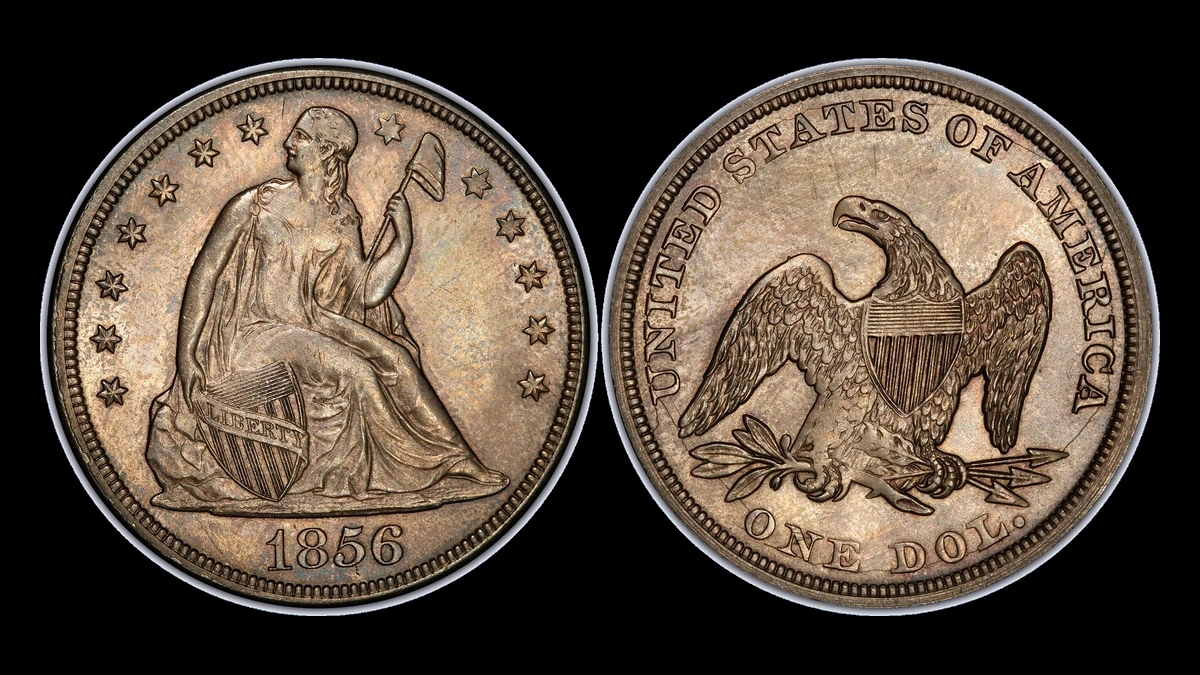
The Hansen/Pellegrini example has a fine line through the 5 and another rising from the bottom border beads toward the seated design. Reverse cracks require their own full-coin comparison because the supplied description does not fix every route.
These lines formed when silver entered cracks in the dies during striking. They rise above the coin rather than opening a split through its body.
The 5 normally leans in the 1856 date. Its slant is neither a crack nor an additional date error.
How to Identify
At 6 o’clock, follow the suspected ridge from the small border beads upward toward the seated figure. A normal bead remains part of the border, while the recorded crack continues beyond it.
Examine the 5 separately and distinguish a thin thread crossing it from the digit’s own sloping body. Angled light should show raised silver rather than a scratch’s recessed channel.
Include a full reverse view before enlarging any back-side line. Toning can create dark streaks without the physical height of a die crack.
What It’s Worth
$500–$20,000 is the estimated whole-coin range from worn pieces to desirable unworn dollars with identified cracks. The PCGS record lists $16,800 in August 2025 for a PCGS MS63 example with cracks.
MS63 describes an unworn coin with visible marks. Its original surfaces and overall preservation can account for far more value than the length of a fine line.
Several cracks remain features of one dollar. They do not create separate prices to add together.
Conclusion
The chin feature records die preparation, while raised cracks record later damage to the striking tools. Neither should be confused with loose material, an incuse scratch, or the date’s normally leaning 5.
Use the complete line pattern and surrounding surface to make the identification. The broad estimates and $16,800 auction comparison value whole dollars with different preservation, so a small diagnostic detail cannot replace a condition comparison.