Rare 1948 Quarter Errors (List & Pictures)
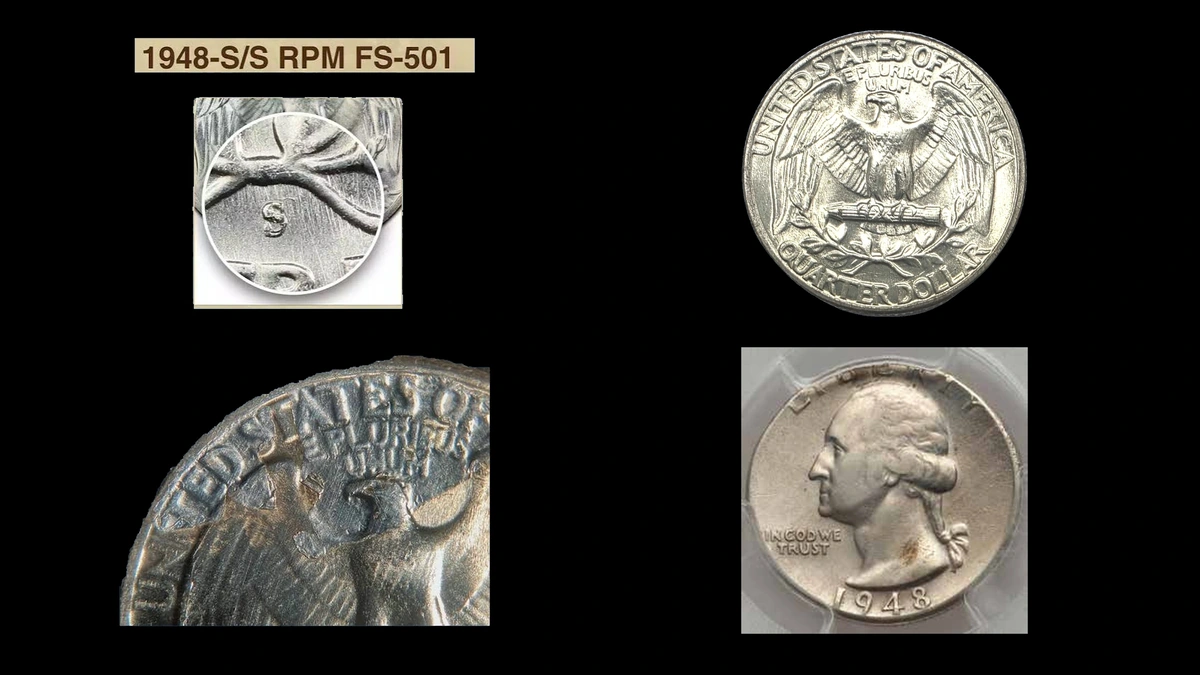
A tiny mintmark feature supplies the highest completed result in this 1948 quarter error guide: an S-over-S graded MS64 sold for $3,999.60 in March 2018. A much larger mistake, a quarter struck on a nickel blank, has its own separate $3,600 record.
Estimated whole-coin values range from $25 to $6,000. Begin with the reverse mintmark, then inspect repeated details, surface defects, and the outline to separate the seven categories.
| Feature | Category | Estimated value |
|---|---|---|
| Earlier S or D remnants | Repunched mintmark | $25–$5,000 |
| Repeated raised shapes | Doubled die | $25–$2,000 |
| Attached silver flap | Lamination | $25–$500 |
| Localized design interruption | Struck through | $50–$1,000 |
| Expanded or displaced design | Broadstrike or reported off-center strike | $50–$3,000 |
| Wrong metal and smaller body | Nickel-planchet strike | $1,000–$6,000 |
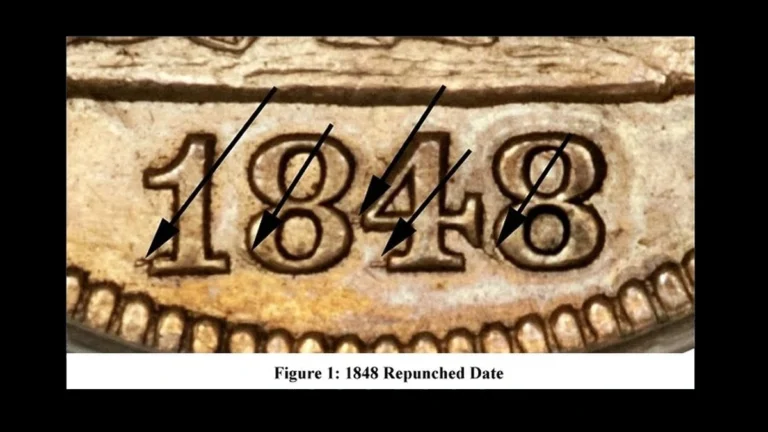
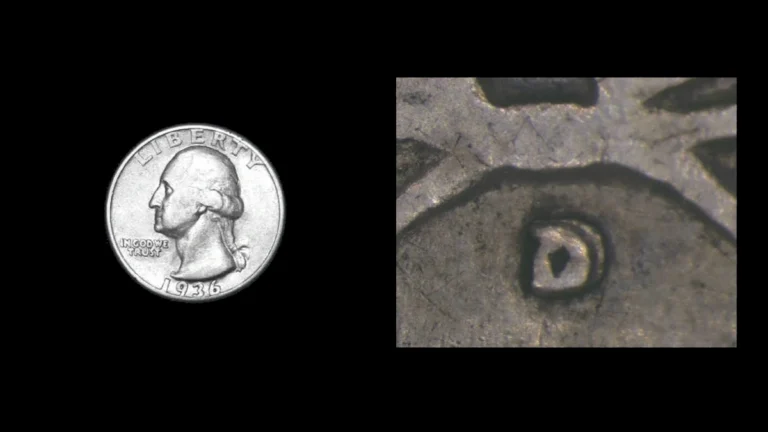
1. 1948 Quarter An earlier letter survives beside S or D: repunched mintmark Error
A mintmark punch used in more than one position could leave part of an earlier letter in the die. Later quarters reproduced the combined outline below the reverse wreath.
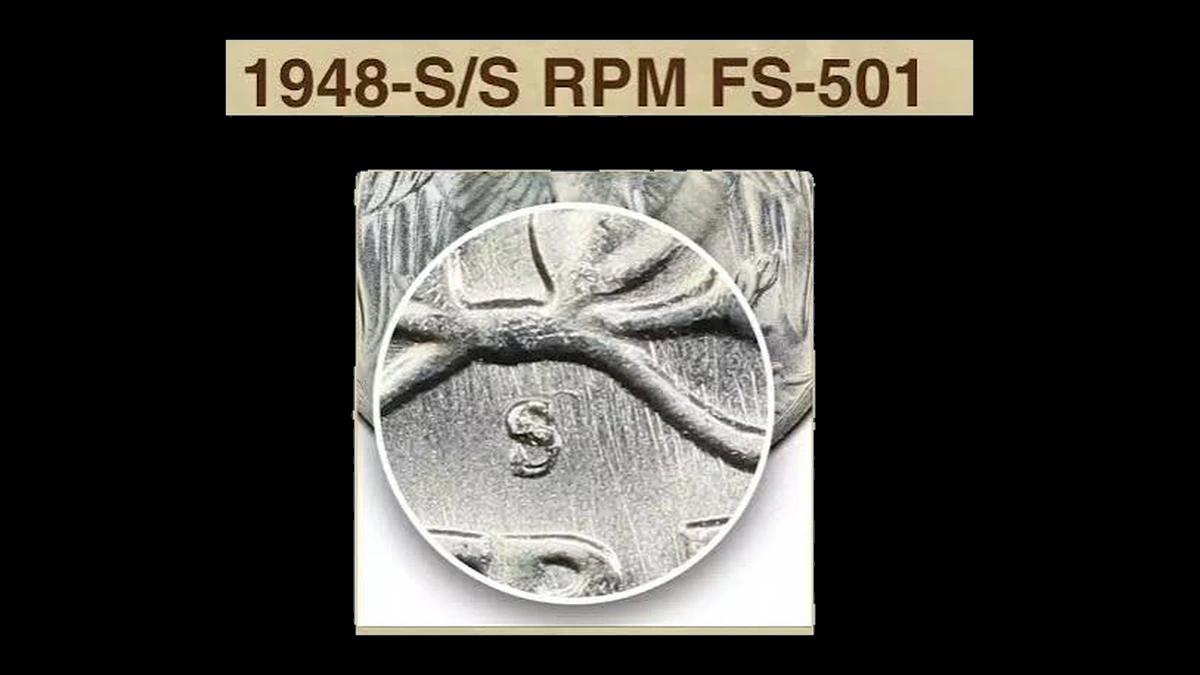
The recognized San Francisco S-over-S is FS-501. Denver also has repunched-mintmark listings, whose D remnants need separate references.
How to Identify
Trace the entire main letter, including its opening, before interpreting extra curves. A genuine remnant should fit another position of the same letter rather than an unrelated lump.
Compare an S candidate with the FS-501 reference photographs. Use a Denver comparison for D instead of transferring the S pattern.
Change the lighting and inspect for dirt, dents, or corrosion. A flat shelf from strike movement can widen a mintmark without demonstrating another punch.
What It’s Worth
$25–$5,000 is the supplied range across authenticated repunched mintmarks. The Heritage archive records $3,999.60 in March 2018 for a PCGS MS64 FS-501 S-over-S.
That result belongs to an identified unworn San Francisco quarter with some visible marks. A Denver variety or damaged thick-looking S does not automatically share its value.
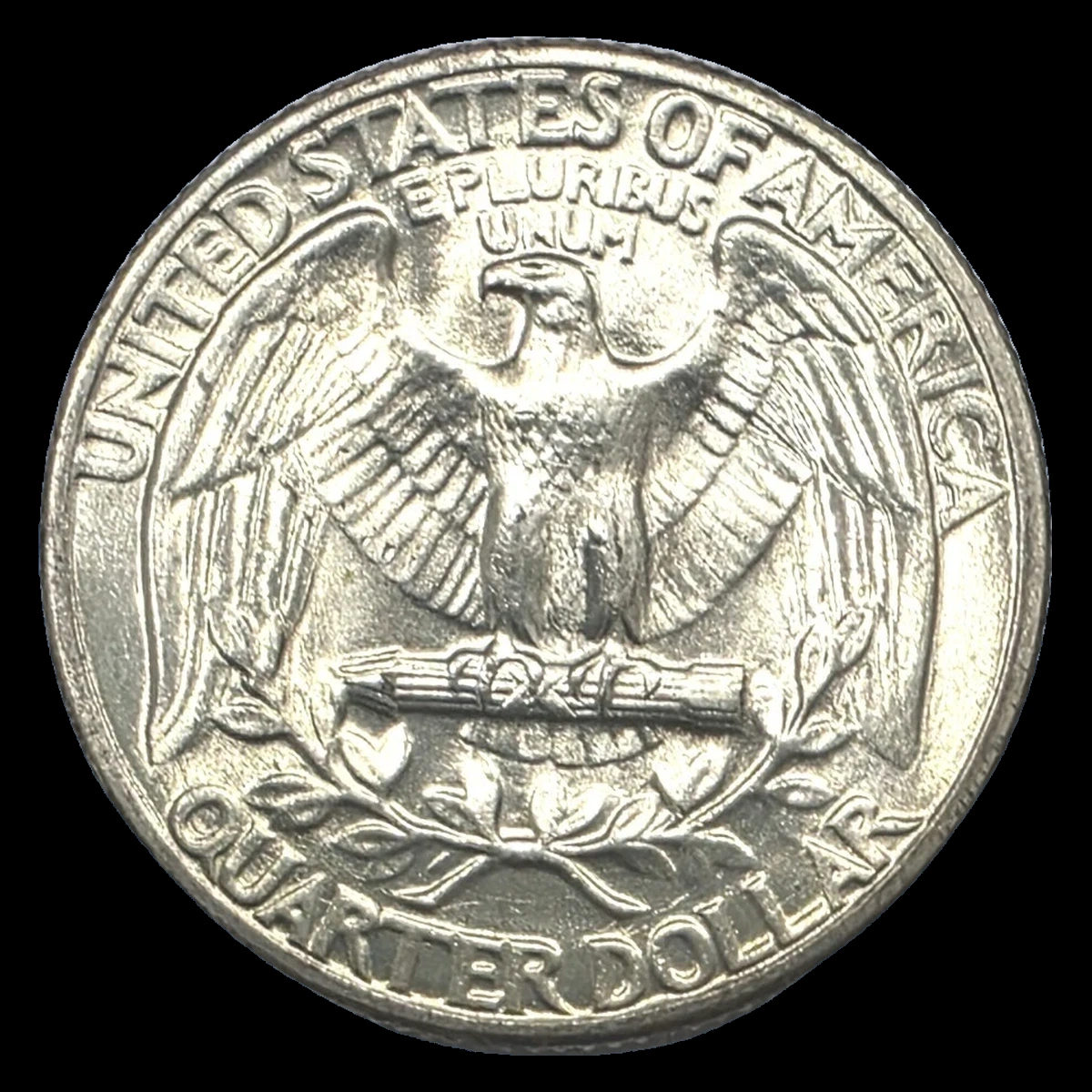
2. 1948 Quarter Small design shapes repeat: doubled die Error
A die prepared with overlapping design impressions can create extra raised outlines in one strike. A doubled die is therefore different from a whole coin struck twice.
The specialist index lists Philadelphia and Denver front varieties, plus Philadelphia and San Francisco reverse varieties. It does not supply one letter, feather, or digit common to every pattern.
How to Identify
Read the mintmark below the wreath, remembering that Philadelphia normally has none. Choose the reference for that mint and the affected face before examining its specific details.
Look for several matching raised outlines and any small splits at corners. Move the lamp to distinguish metal from reflections, and separate rounded duplicated design from flat shelves caused during striking.
What It’s Worth
$25–$2,000 is the estimated range for matched doubled-die varieties in ordinary collectible condition. Clarity of the pattern and the coin’s preservation affect the comparison together.
No single certified auction result is supplied for these groups. The price of one mint-and-face variety should not be assigned to a different one merely because both have doubling.
3. 1948 Quarter A loose silver flap remains attached: lamination Error
A thin portion of a quarter’s alloy can separate without falling away. Philadelphia examples are reported with this retained lamination.
The 1948 silver quarter has silver and copper mixed throughout its metal. Its local peeling is not the loss of an outer layer from the copper-centered construction used on later circulation quarters.
How to Identify
Keep the flap in its natural position and inspect the boundary under angled light. Follow any design from the flat surface onto the separating sheet.
Check for parallel scratches or scraping around the opening. Torn metal alone does not prove a manufacturing flaw, and a hollow without an attached layer may have another cause.
A local thin peel also differs from a blank split into large pieces. Describe the extent actually visible rather than enlarging the claim from its nickname.
What It’s Worth
$25–$500 is the estimate for authenticated Philadelphia laminations of ordinary collectible size and condition. A retained-flap example was reported offered at about $44.
The $44 amount is an asking price. A broad original peel and attractive surroundings can increase interest, while cleaning or breaking off the flap changes the comparison.
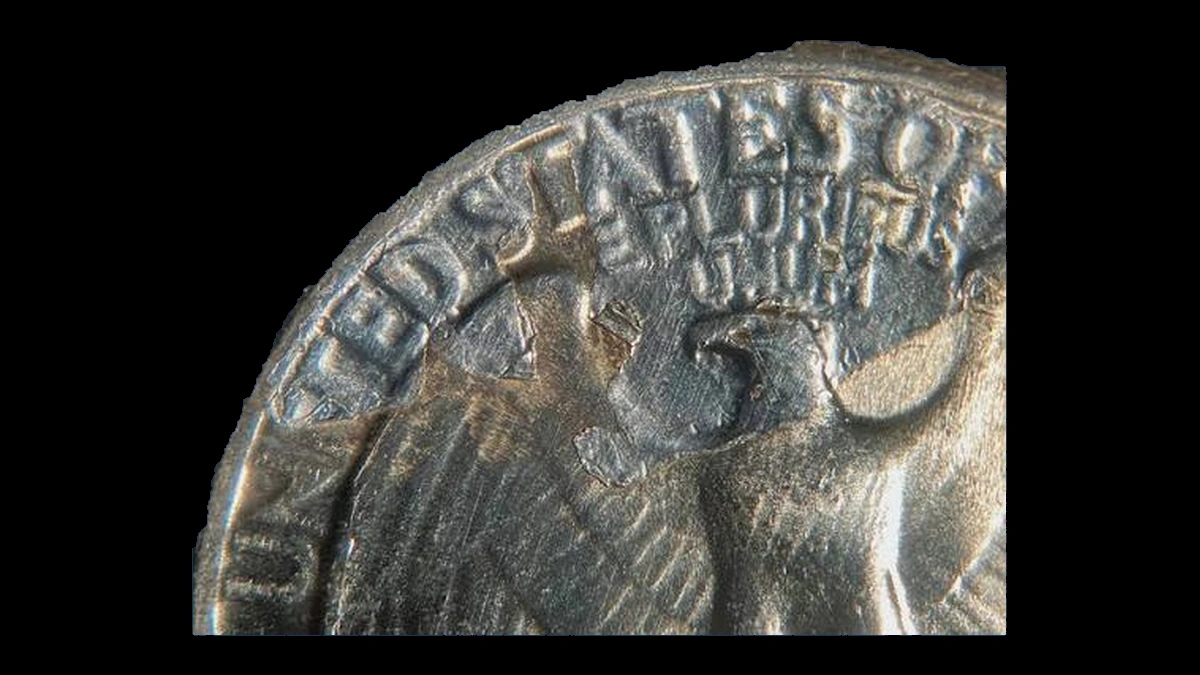
4. 1948 Quarter A hollow interrupts the portrait side: struck through Error
Something between the blank and front die can block normal detail and leave an impression. The supplied Philadelphia report concerns a lightly worn coin without identifying the obstructing material.
The texture and relationship with nearby design are more useful than a guessed object name. A smooth hollow alone does not prove grease, wire, or cloth.
How to Identify
Inspect the interior with low light, then trace intact design into the affected area. Determine whether the feature failed to form or was cut through after striking.
A lip of displaced silver, sharp cuts, or repeated scrape lines can indicate later damage. Leave any attached material undisturbed and retain the whole front in photographs for context.
What It’s Worth
$50–$1,000 is the supplied estimate for authenticated front strike-throughs. The year guide reports an almost-unworn Philadelphia example offered at $99.
That is an asking price rather than a verified result. A large, clear impression on attractive surfaces is a stronger comparison than a shallow patch surrounded by damage.
5. 1948 Quarter The full picture sits inside a wider outline: broadstrike Error
A blank can spread beyond normal diameter when the collar fails to restrain it. The complete intended design remains on the metal, distinguishing a broadstrike from a strike that misses part of the blank.
Philadelphia examples are reported, and an auction index records a San Francisco broadstrike graded ANACS AU58. The grade indicates slight circulation wear.
How to Identify
Follow all outer letters and design elements on both faces before measuring. The expanded outline may be uneven while still containing the entire picture.
Compare several diameters with the normal 24.3 millimeters and inspect the edge grooves. Hammering, folding, or filing after striking can alter the outline but leaves different evidence.
Read the reverse mintmark before using the San Francisco price comparison. Neither direction nor amount of spread is fixed by the broadstrike label.
What It’s Worth
$50–$1,500 is the estimated range for authenticated broadstrikes. The ANACS AU58 San Francisco example is recorded at $138 in July 2006.
A separate Philadelphia quarter was reported offered at $55. That asking price and the S-mint sale concern different coins.
6. 1948 Quarter The design misses the blank beside a plain crescent: reported off-center strike Error
An off-center blank receives incomplete artwork with unstruck metal remaining beside it. The year guide includes this type but does not establish an individually documented 1948 specimen.
The mint, direction, and percentage therefore need evidence from any candidate. An uneven rim does not supply those details.
How to Identify
Find the surviving date and compare both faces in consistent orientation. Missing artwork and the unstruck crescent should agree with the same misplaced blank.
Inspect for grinding across the plain region or filing along the opposite edge. If every design element remains inside a wider outline, examine the broadstrike explanation instead.
A shift confined mostly to one face can reflect a misaligned die. Do not assign a missing date or mintmark from another coin’s description.
What It’s Worth
$100–$3,000 is the conditional estimate for an authenticated 1948 off-center quarter. Readable identity, original surfaces, and actual displacement would determine the comparison.
No particular same-year sale establishes this range. A reported percentage without specimen evidence cannot set another candidate’s price.
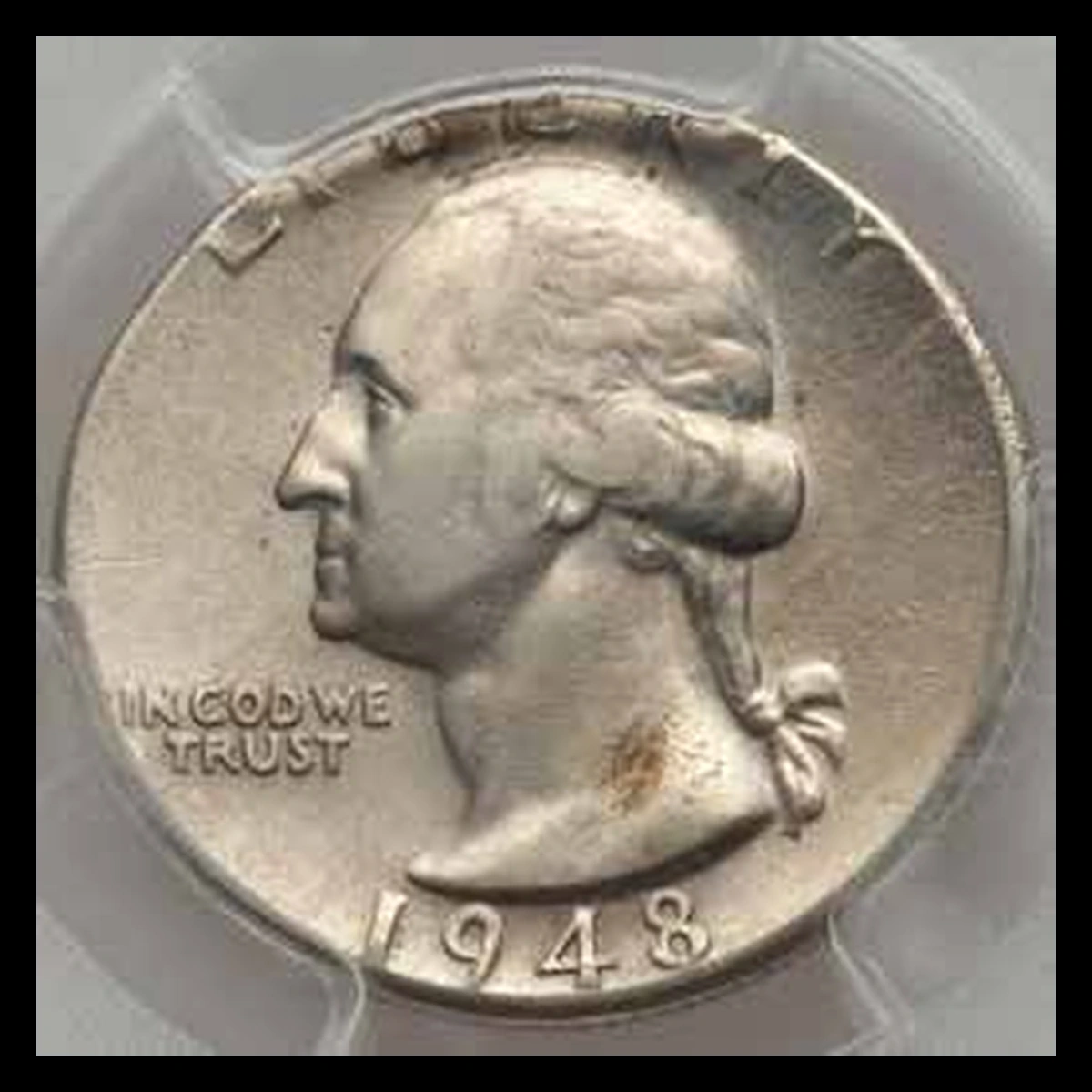
7. 1948 Quarter Washington’s design is on nickel metal: wrong-planchet strike Error
The documented 1948-S error was struck on a blank prepared for a nickel. Its smaller copper-nickel body had less room for the quarter’s outer artwork.
PCGS graded it AU55, indicating light wear with much detail remaining. The blank was unused, so this description does not imply a surviving Jefferson portrait beneath Washington.
How to Identify
Confirm the 1948 date and S mintmark, then examine composition alongside size and design fit. A normal quarter is 90% silver, while an ordinary nickel blank is copper-nickel.
The normal comparison weights are 5 grams for a nickel blank and 6.25 grams for the silver quarter. Neither figure is a published measurement of this particular error.
Allow for spreading under the larger quarter dies when assessing diameter. Filing an ordinary silver quarter smaller can alter weight and outline without producing the required metal identity.
What It’s Worth
$1,000–$6,000 is the estimate for comparable authenticated San Francisco nickel-blank quarters. Mint Error News reports $3,600 in April 2020 for the PCGS AU55 example.
The price belongs to the identified wrong-metal combination with readable date and mint. Its light wear did not erase the appeal, but a different blank or altered silver coin would require a different assessment.
Conclusion
The reverse mintmark helps select the right comparison before a tiny repeated letter or a larger shape change is valued. Keep ordinary-strike varieties separate from the reported but unconfirmed off-center category.
Preserve attached silver and inspect both faces and the edge. The recorded S-over-S and nickel-blank prices concern complete, specifically graded coins, while guide estimates and dealer asking prices provide more limited comparisons for other examples.