Rare 1803 Dollar Errors (List & Pictures)
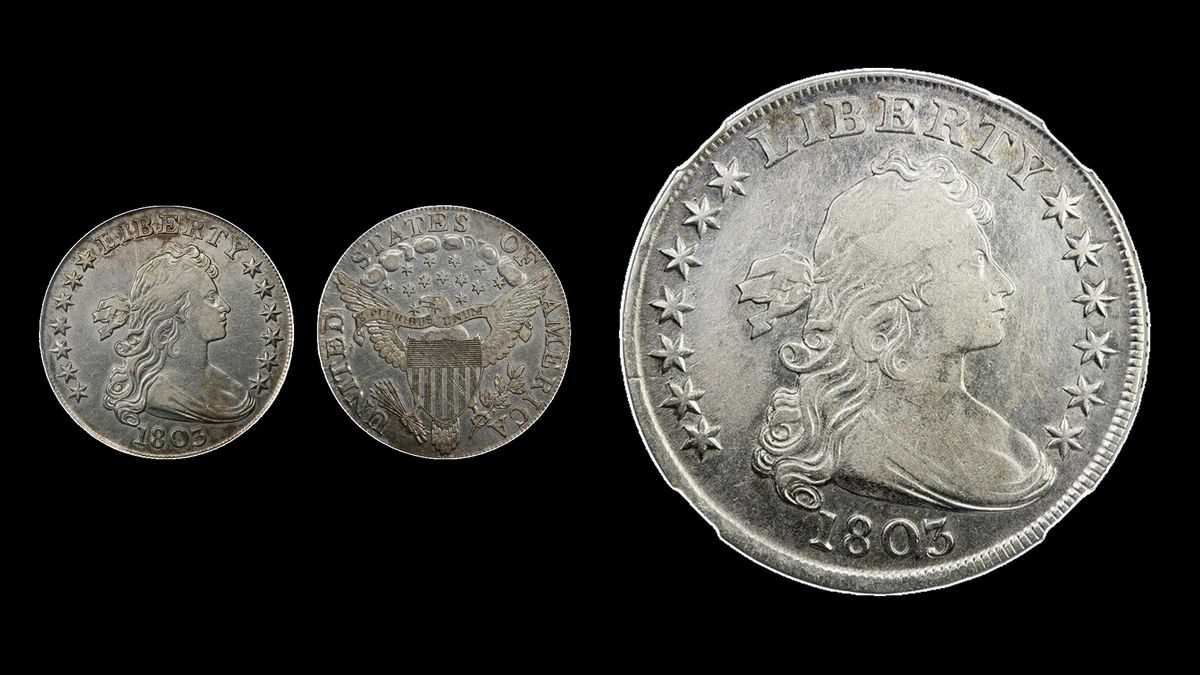
A nearly unworn 1803 dollar with a repunched 3 and rotated reverse brought $18,000 in November 2019. Those two features belong to one coin.
The estimated whole-coin range for 1803 Draped Bust dollar errors is $1,000–$100,000, including a conditional off-center category. Begin with the date, lettering, and stars, then compare overlapping images and the relationship between the two faces.
1. 1803 Dollar An Extra Stroke Below 3 or T: Repunched Details Error
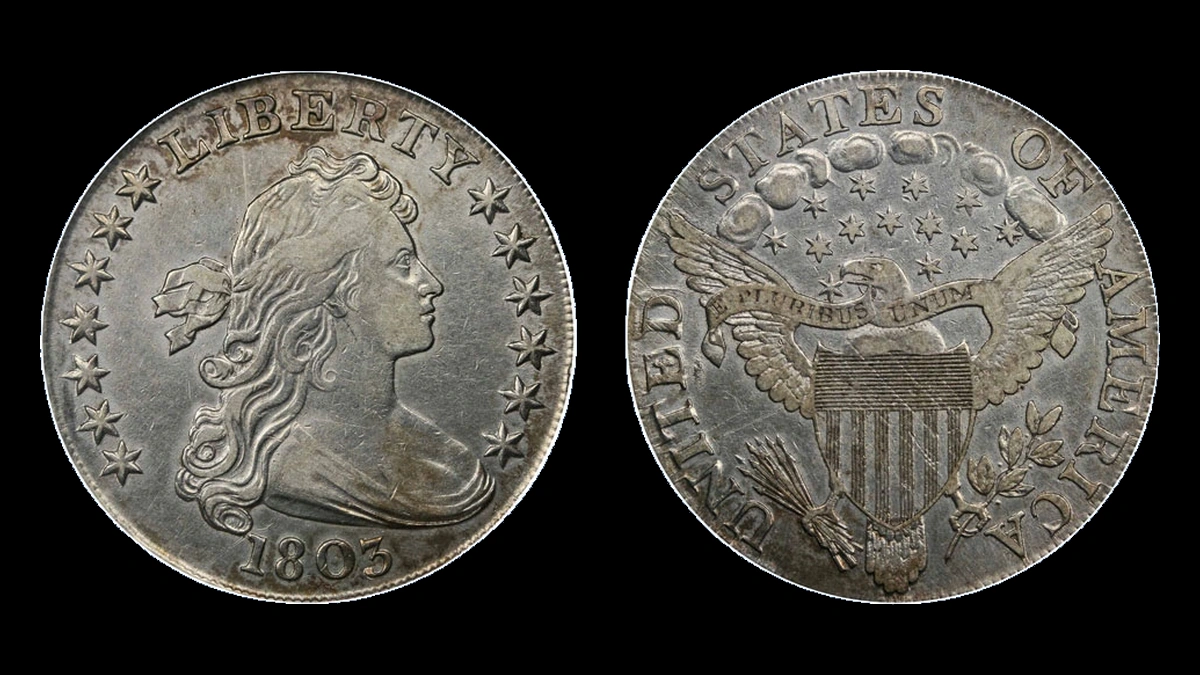
Look beneath the final digit on a Large 3 dollar attributed as BB-255. A lower repeated stroke preserves an earlier position of the date punch in the die.
The rarer BB-257, also a Large 3 variety, has a repeated base on the T in LIBERTY instead. These are different die varieties, not two required features of the same dollar.
Repunching happens while the steel stamping tool is prepared. It does not imply another year beneath 1803 or a second strike on the finished coin.
How to Identify
For BB-255, keep the whole 3 visible while comparing its lower extra stroke with an attributed example. For BB-257, move to the base of T and include its neighboring letters in the comparison.
Check for raised metal under changing light rather than a scratch or reflection. Other attribution details must agree with the same variety; matching the 3 cannot establish the rare T variety.
What It’s Worth
$1,000–$25,000 is the estimated range for BB-255 across worn and nearly unworn coins. The $18,000 AU58 result discussed under rotation includes this low repunched 3.
$15,000–$75,000 is a separate whole-coin estimate for a correctly identified BB-257. No sale of the small T feature alone is implied by that range.
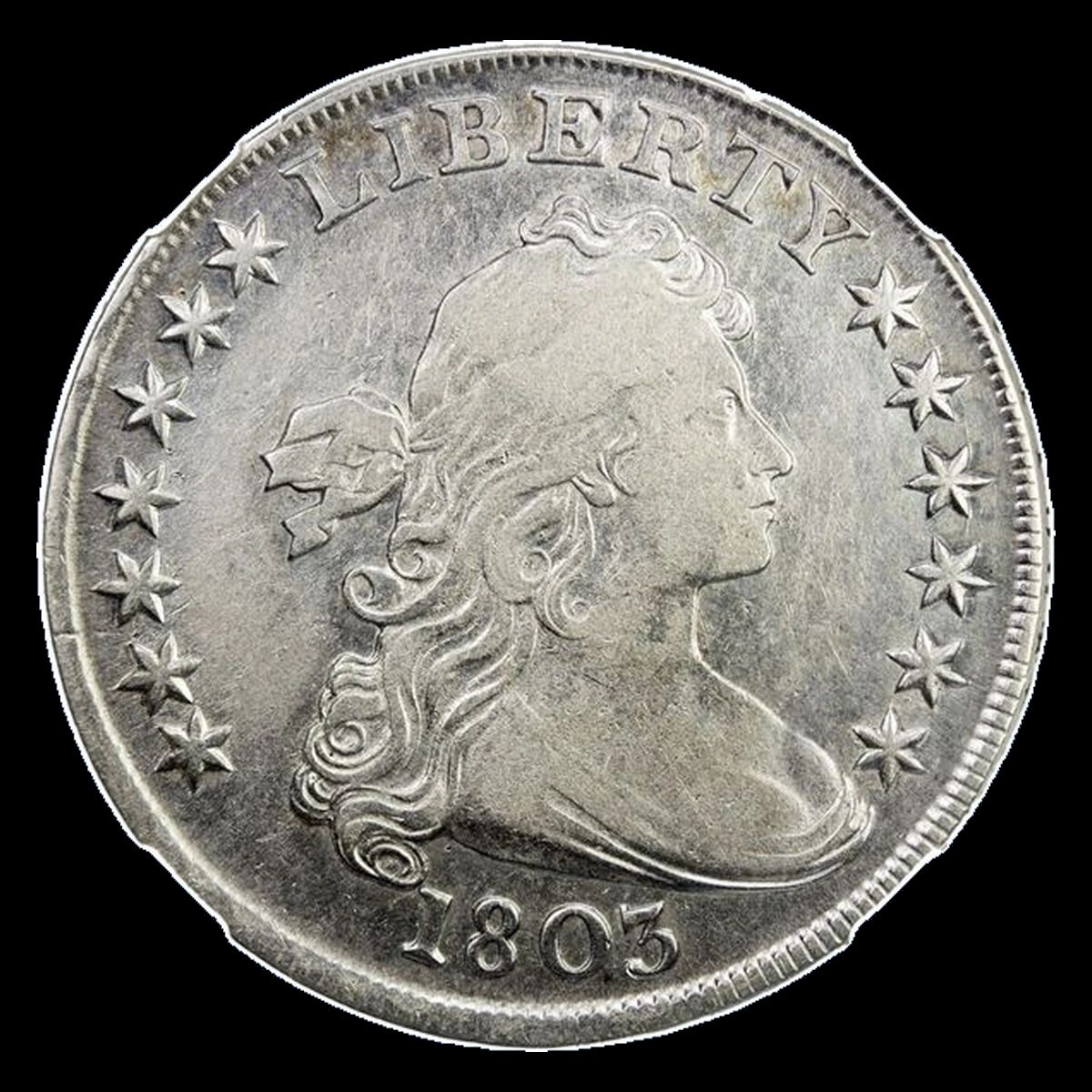
2. 1803 Dollar A Raised Thread Joining the Right Stars: Die Cracks Error
A narrow raised line connecting stars to Liberty’s right is recorded on Large 3 examples. Silver entered a crack in the front die and reproduced its path above the coin’s surface.
Some described examples also have a rotated reverse. The extra alignment feature does not make the star connections evidence of another strike.
How to Identify
Follow several spaces between the right-hand stars rather than relying on one apparently connected point. An attributed photograph should show the same raised route.
Low light can distinguish the ridge from a scratch cutting into the silver. Bold stars alone do not establish a cracked die.
What It’s Worth
$1,000–$20,000 is the estimated whole-coin range for worn through attractive lightly worn examples. Much of the value lies in the early dollar itself.
An NGC VF30 example received a $2,400–$3,000 auction estimate in September 2021 but did not sell. That moderately worn coin therefore provides an estimate, not a realized price.
3. 1803 Dollar The Eagle Leans After a Controlled Flip: Rotated Reverse Error
A die held at an unusual angle can produce a tilted eagle relative to Liberty even when each face has only one design. Documented Large 3 examples include about 20 degrees and, on another coin, about 45 degrees counterclockwise.
The angle describes the relationship between faces. It is separate from a coin turning between successive strikes.
How to Identify
Hold Liberty upright and turn the coin top to bottom around a horizontal axis without twisting it sideways. The eagle should normally finish upright.
Repeat the flip to establish a consistent tilt; turn the whole holder if the coin is sealed. Separately straightened photographs cannot preserve this relationship or prove either recorded angle.
What It’s Worth
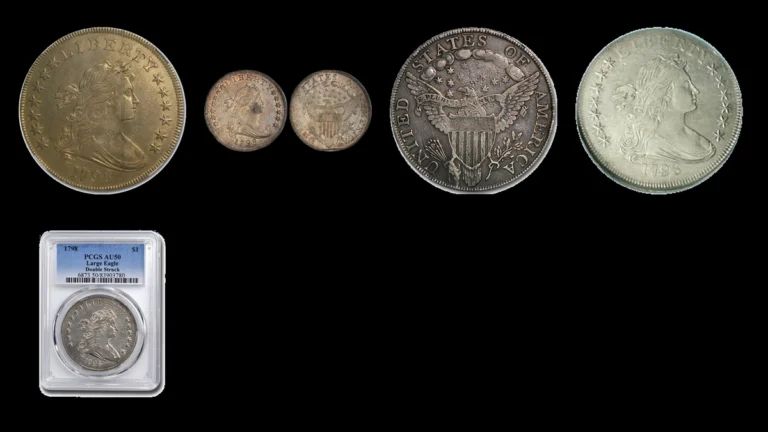
$1,000–$25,000 is the estimated range for identified examples in varied condition. PCGS records a Large 3 AU58 dollar at $18,000 in November 2019.
That slightly worn coin has about 20 degrees of reverse rotation and the repunched 3 noted earlier. Its single sale should not be divided into two separate error values.
4. 1803 Dollar Two Turned Images on One Face: Rotated Double Strike Error
Another strike after the coin turns can leave overlapping portraits, stars, letters, or borders. Some earlier details survive while the later blow flattens others.
The supplied guide reports an 1803 Small 3 BB-252 graded PCGS VG10 as a rotated double strike. That grade indicates substantial wear, which can obscure the remaining first impression.
How to Identify
Start on one face and trace two connected groups of design elements. Each group should fit the dollar’s design at its own angle rather than consist of unrelated scratches.
Examine the reverse for supporting evidence without expecting both sides to preserve it equally. A crooked eagle after flipping a coin is not, by itself, evidence of another strike.
What It’s Worth
$2,000–$30,000 is an estimated range for authenticated double-struck examples. The guide reports a $2,115 Heritage result in 2016 for the VG10 BB-252.
Keep that figure identified as a reported result for the specified coin. Clearer surviving images and better surfaces can support a different comparison.
5. 1803 Dollar Missing Design Opposite Unstruck Metal: Off-Center Candidate Error
A genuine off-center strike would place part of the blank beyond the dies, leaving an incomplete design and an unstruck area opposite it. No particular authenticated 1803 specimen is established in the supplied account.
Uneven centering is common enough on early coins that a narrow border alone cannot establish a major error. Later filing can also change the outline.
How to Identify
Inspect the lettered edge for fresh filing, saw marks, or other removed metal. Full views of both faces should connect the naturally incomplete design with a genuine untouched portion of the blank.
The original standard was about 26.96 g and roughly 39–40 mm across, allowing for wear and early manufacturing variation. Measurements may reveal a problem but cannot replace the visible striking evidence.
What It’s Worth
$10,000–$100,000 is a conditional estimate for a genuine 1803 off-center dollar. Displacement, readable date, and preservation would determine an appropriate comparison.
An 1880 Morgan dollar struck 40% off center sold for $72,000 in May 2022. This later design illustrates demand for a dramatic error without establishing an 1803 sale or discovery.
Conclusion
A repeated punch leaves a small fixed detail, a rotated die changes the relationship between faces, and a double strike creates another image on the coin. Keep those tests distinct when examining an 1803 dollar.
The $1,000–$100,000 estimates describe complete coins, including a conditional off-center category. Preserve the date and lettered edge in photographs, and do not count several features on one auction coin as separate sales.