Rare 1901 Dollar Errors (List & Pictures)
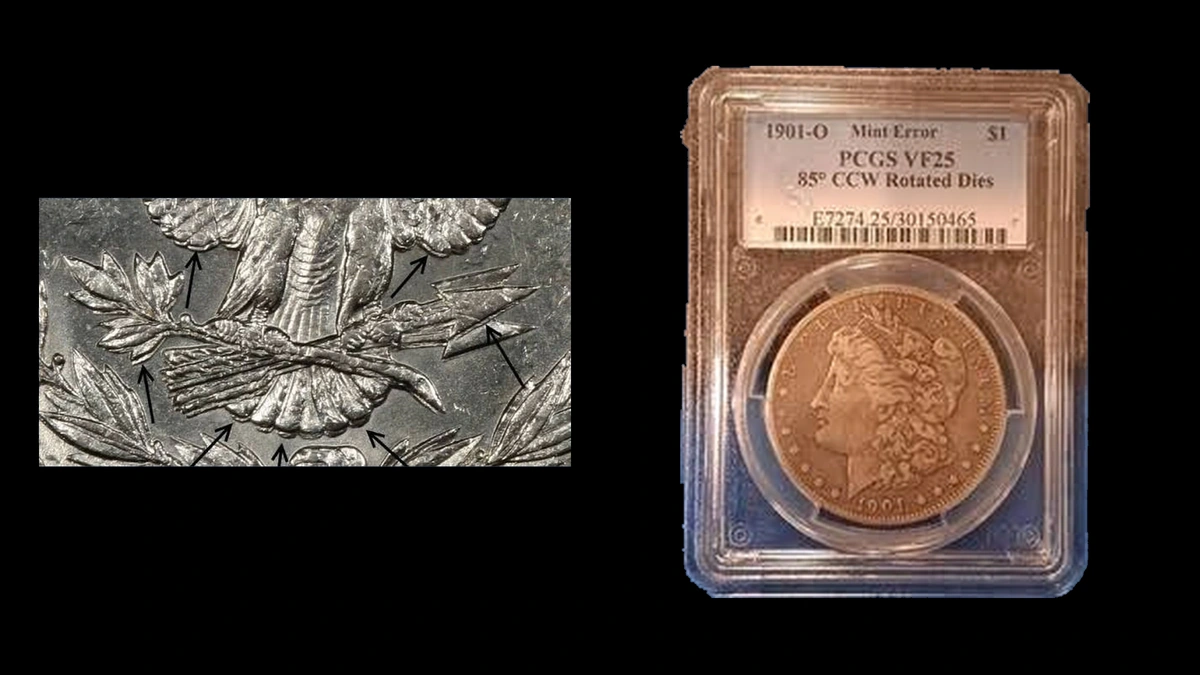
A 1901 Shifted Eagle dollar graded MS61 sold for $43,200 in January 2023. This 1901 Morgan dollar errors guide covers estimated whole-coin values of $75–$50,000.
Use the reverse mint mark to choose the correct comparison, then inspect the date, doubled details, and alignment of the two faces.
| Where to look | Feature | Estimated range |
|---|---|---|
| Border teeth beneath 90 on 1901-S | Misplaced date fragment | $100–$3,500 |
| Eagle, ear, arrows, or eyelid | Doubled die varieties | $75–$50,000 |
| Reverse after a controlled flip | Rotated die | $100–$3,000 for circulated examples |
1. 1901 Dollar A little curve beneath the date: misplaced 0 Error
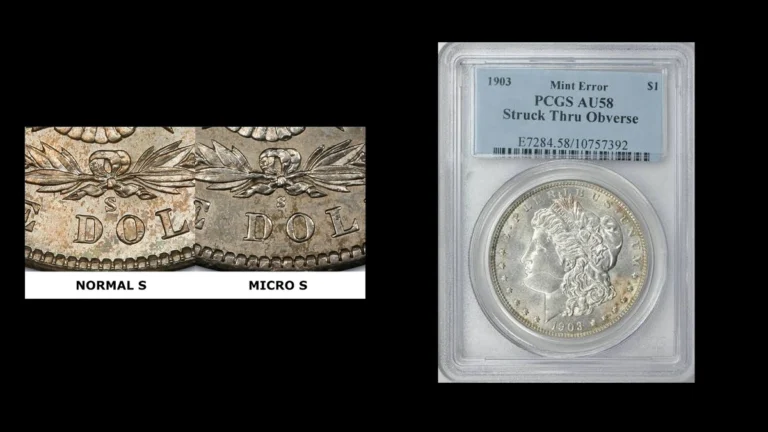
On the San Francisco VAM-14 variety, the top of an extra 0 appears among the border teeth beneath 90. The intended date still reads 1901.
The small raised arc records an incorrectly positioned impression in the die. VAM-14 is the catalog name for the pattern, whose possible relationship with VAM-11 does not replace the need to see the misplaced digit.
How to Identify
Confirm the S beneath the reverse wreath, then magnify the front border immediately below 90. Look between the teeth for a short curved raised bar rather than a complete extra numeral.
The final 1 sits slightly higher than the first 1. This tilted date is supporting evidence, not a substitute for the tiny curve.
Angle the light into the gap and compare the arc’s position with an identified VAM-14 photograph. Cuts or disturbed silver around a mark can undermine an apparent match.
What It’s Worth
Identified examples have an estimated whole-coin value of $100–$3,500 from worn through attractive unworn condition.
No exact sale was supplied for this variety. Wear can obscure the small date fragment even when the rest of the dollar remains easy to identify.
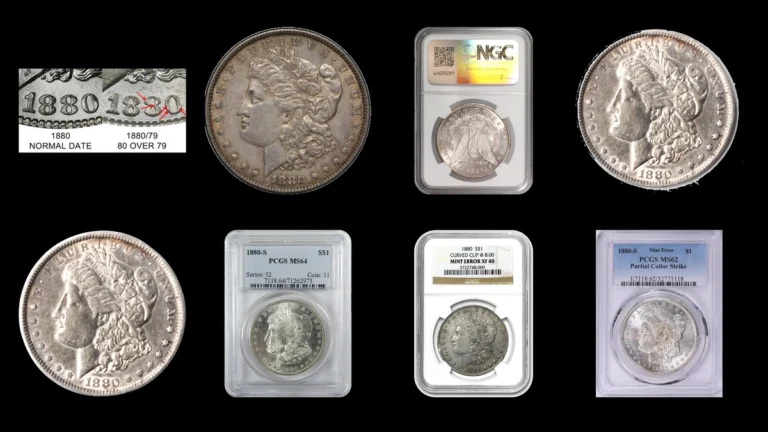
2. 1901 Dollar Repeated eagle or portrait details: doubled dies Error
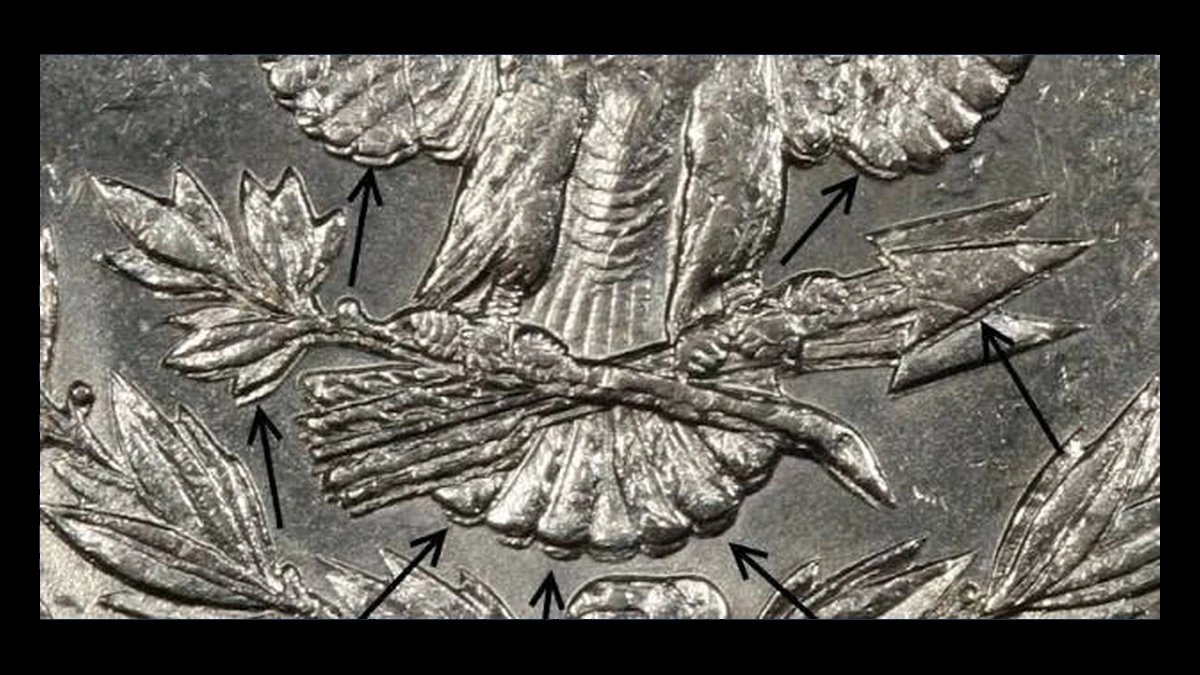
The Philadelphia Shifted Eagle, VAM-3, repeats outlines on the tail, legs, wings, arrows, and olive branch. These features were doubled in the die before it struck a coin.
Other Philadelphia varieties include VAM-5 and VAM-16 doubled ears and VAM-7 arrow doubling with reported wing doubling. They are separate patterns with different comparisons.
New Orleans VAM-34 has an extra eyelid, doubling beneath the lowest cotton leaf, shifted hair above the ear, and doubled olive fruit on the back. Repeated details can occur on both faces without a second strike.
How to Identify
Read the mint area below the wreath first: no letter indicates Philadelphia, and O indicates New Orleans. Do not carry Philadelphia’s Shifted Eagle identification onto an O-mint dollar.
For VAM-3, compare the tail and lower wings, then trace the repeated outlines through the legs, arrows, and branch. Several agreeing features are stronger evidence than one flat shelf.
For a doubled ear, match a complete VAM-5 or VAM-16 reference. VAM-7 calls for the arrow pattern, so the nickname alone cannot choose the attribution.
John Roberts illustrates the connected VAM-34 features. Compare the eyelid, cotton leaf, hair, and olive fruit as a group while changing the light to rule out glare.
What It’s Worth
The estimated range across identified patterns is $75–$50,000.
PCGS records the MS61 Shifted Eagle at $43,200 in January 2023. A separate VAM-5 doubled ear graded AU58 brought $1,140 in July 2018.
MS61 describes an unworn but marked coin, while AU58 permits slight wear. The high end concerns rare unworn Shifted Eagles and does not automatically apply to smaller patterns or New Orleans dollars.
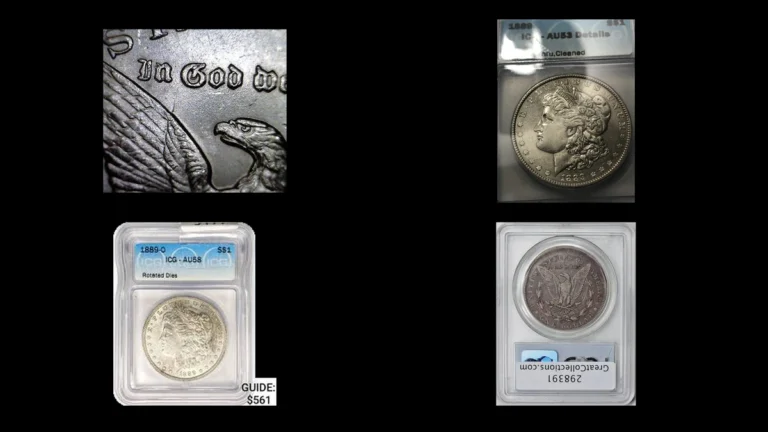
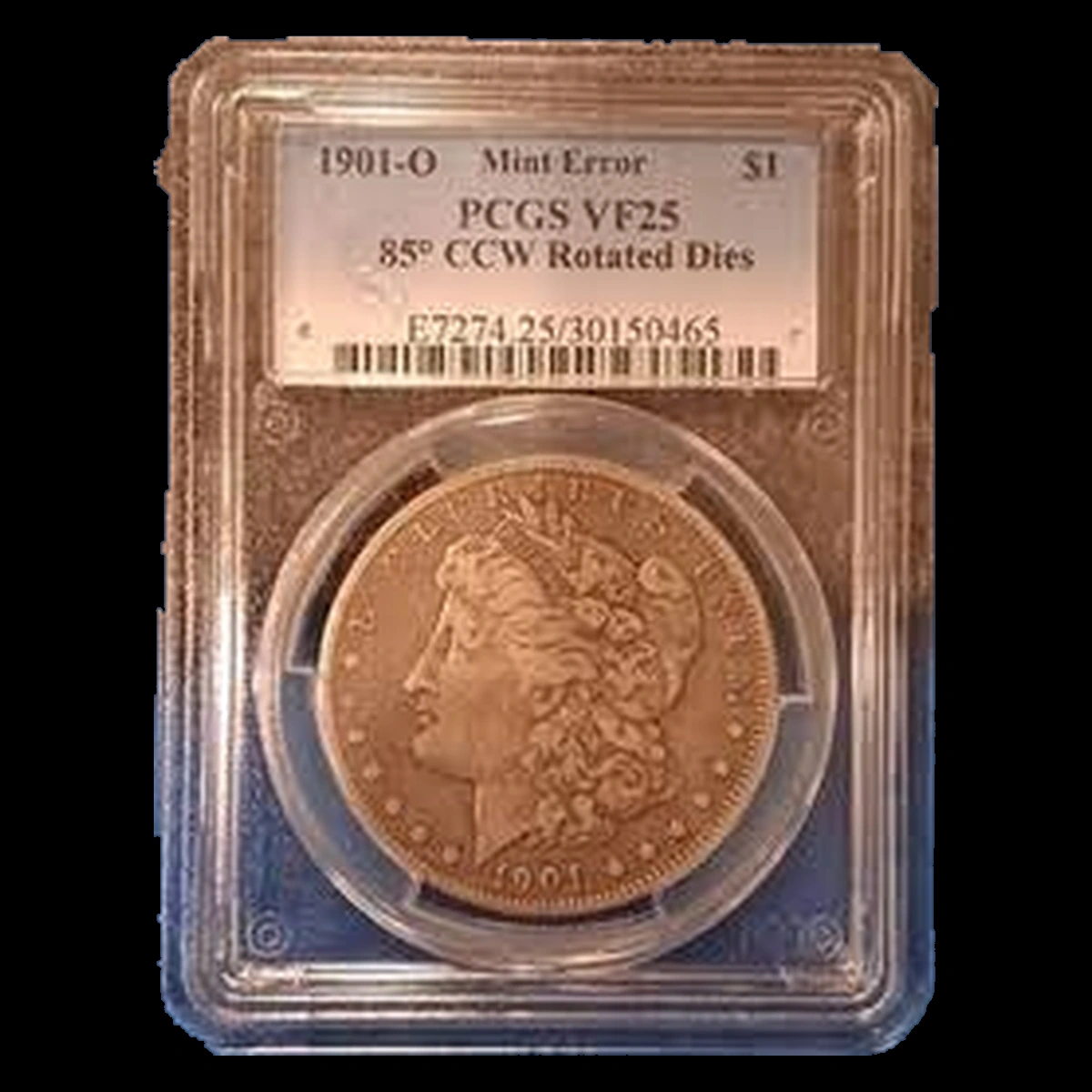
3. 1901 Dollar The eagle stays tilted after a flip: rotated die Error
If the reverse design consistently leans after the front is correctly aligned and flipped, the dies may have been rotated relative to each other. The eagle and surrounding words should turn together.
The 1901 report supplies no particular mint or certified rotation angle. A tilted holder or independently rotated photograph can imitate the appearance.
How to Identify
Place the coin in a clear holder with Liberty and the date upright. Mark the holder’s top while keeping tape and ink away from the silver.
Flip the holder top to bottom around a horizontal line through its center. With normal United States coin alignment, the eagle should finish upright.
Repeat the motion and compare the reverse with a straight reference line. Photograph the holder in both positions without rotating either image afterward.
A repeatable lean can then be measured with a protractor or image overlay. The fixed holder preserves evidence of the starting orientation.
What It’s Worth
Clearly rotated, authenticated circulated examples have an estimated whole-coin range of $100–$3,000.
This is a comparison-based allowance, not a supplied 1901 auction result. An unworn Philadelphia dollar needs a separate valuation because its ordinary issue value can already be substantial.
Conclusion
The mint letter determines which 1901 pattern belongs in the comparison. A tiny misplaced date arc on an S coin, a Philadelphia Shifted Eagle, and a New Orleans doubled eyelid are distinct identifications.
Keep the full dollar’s preservation in view when using prices. For rotation, preserve the relationship between both faces through a controlled flip; separately straightened images remove the evidence needed to judge the claim.