Rare 1944 Quarter Errors (List & Pictures)
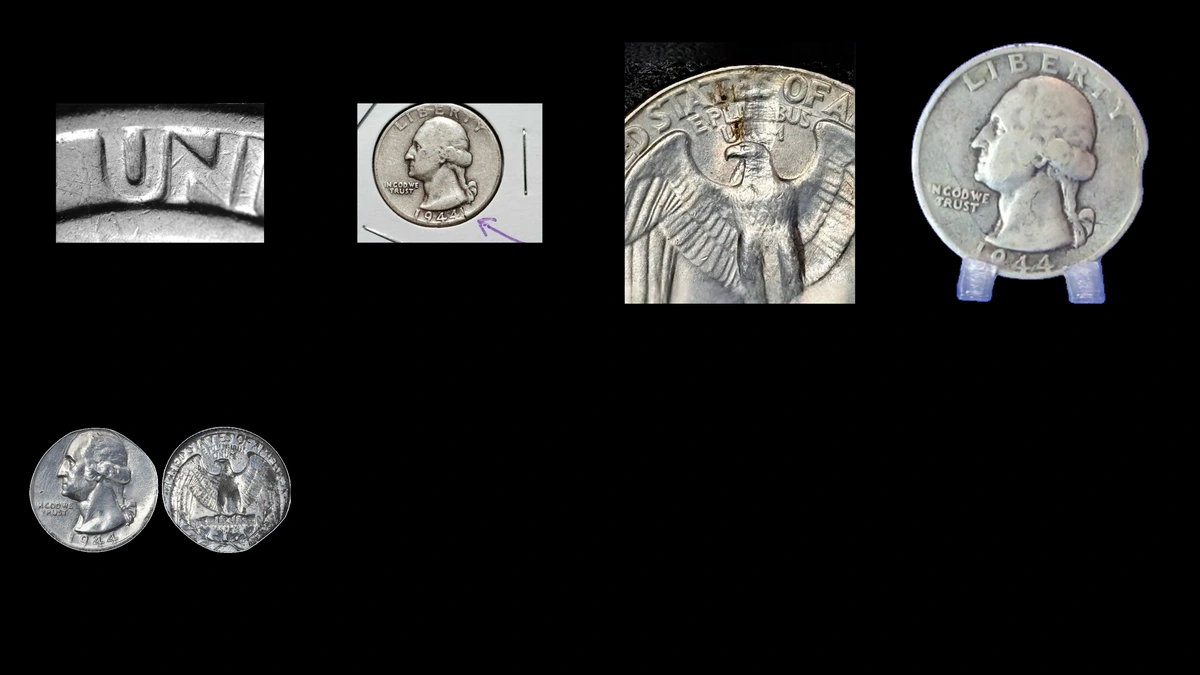
A 1944 quarter on a zinc-plated steel cent blank sold for $16,800 in December 2022. The 1944 quarter errors below span estimated values of $25–$25,000.
Start with the mintmark and repeated design, then inspect any surface opening, impression, missing edge, or unusual blank material.
| Clue | Category | Estimated range |
|---|---|---|
| Extra D or S contour | Repunched mintmark | $25–$2,000 |
| Repeated front or reverse detail | Doubled die | $25–$3,000 |
| Open split in the metal | Cracked planchet | $25–$500 |
| Interrupted eagle-side design | Struck through material | $50–$1,500 |
| Missing section of outline | Clipped blank | $50–$1,500 |
| Blank crescent beside incomplete artwork | Off-center strike | $100–$5,000 |
| Small blank with a different alloy | Wrong planchet | $500–$25,000 |
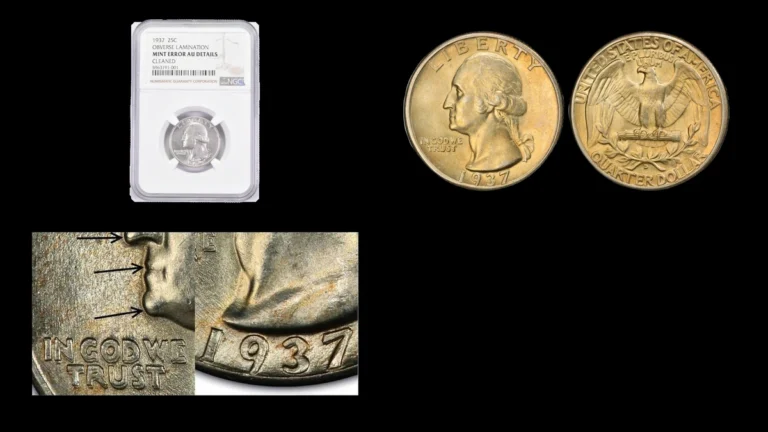
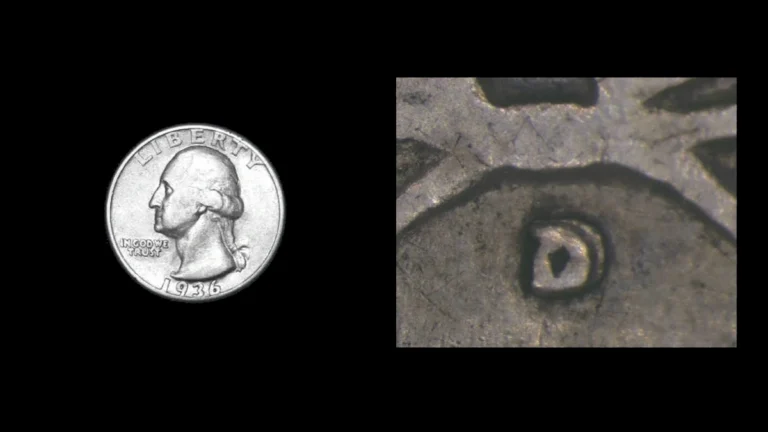
1. 1944 Quarter An earlier D or S outline: repunched mintmark Error
The reverse mintmark below the wreath can preserve parts of an earlier letter position. Workers added the letter to the die with a punch, sometimes applying it again out of alignment.
Denver patterns include northward, eastward, and tilted overlaps. San Francisco has a listed eastward S/S pattern.
How to Identify
Use Wexler’s mintmark photographs for Denver WRPM-001 north, WRPM-002 east, and WRPM-003 tilted. San Francisco WRPM-001 places the earlier S to the right when the coin is upright.
CONECA’s Denver number 002 points north, unlike Wexler’s number 002. A shared catalog number therefore cannot replace the actual pattern comparison.
A lump or flat shelf must not be mistaken for a curved earlier letter. Philadelphia quarters normally have no mintmark, so a blank mintmark area is expected.
What It’s Worth
Identified repunched-mintmark varieties have an estimated range of $25–$2,000.
No individual auction price is supplied for each catalog pattern. Strong separation and original surfaces make a better comparison than faint traces on a cleaned or heavily worn coin.
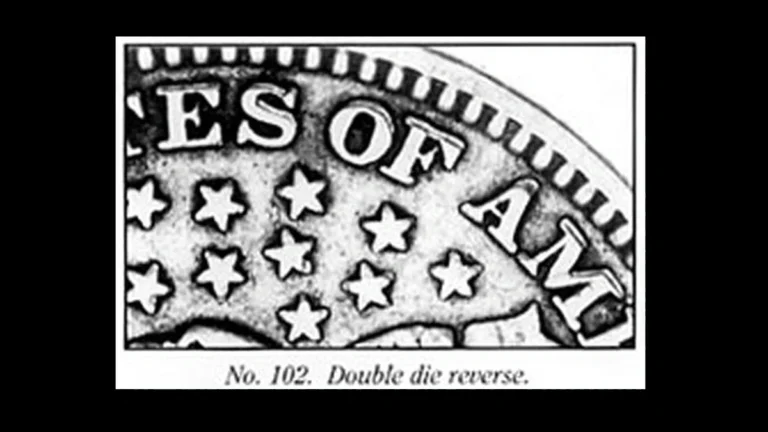
2. 1944 Quarter Repeated contours across the design: doubled die Error
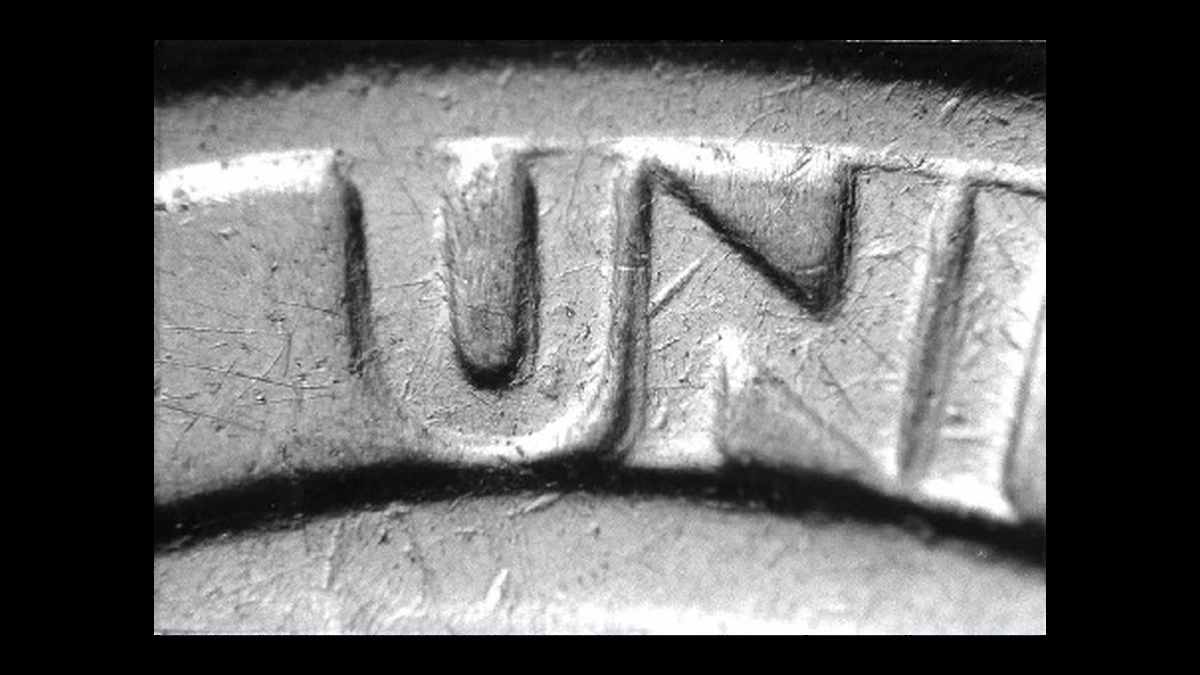
Reported front varieties affect LIBERTY, the date, motto, and designer’s initials near the neck. Reverse patterns involve lettering, wreath details, and sometimes the eagle.
The die already contained the repeated detail, which it copied onto coins. Philadelphia, Denver, and San Francisco varieties have separate identifying patterns.
How to Identify
Read the mint area before selecting a photograph. FS-101 for Philadelphia, Denver, or San Francisco names different varieties rather than one interchangeable design.
Compare several matching letters or the specified leaves, stems, and feathers. Rounded raised repetition differs from a low flat shelf left by movement during striking.
The supplied account does not provide one shared directional checklist for all varieties. Keep each affected face and its mint-specific reference together.
What It’s Worth
Identified doubled-die quarters have an estimated range of $25–$3,000.
No individual sale is supplied for a named 1944 pattern here. The upper end requires a desirable variety and strong preservation, not simply thick lettering.
3. 1944 Quarter An opening through the silver: cracked planchet Error
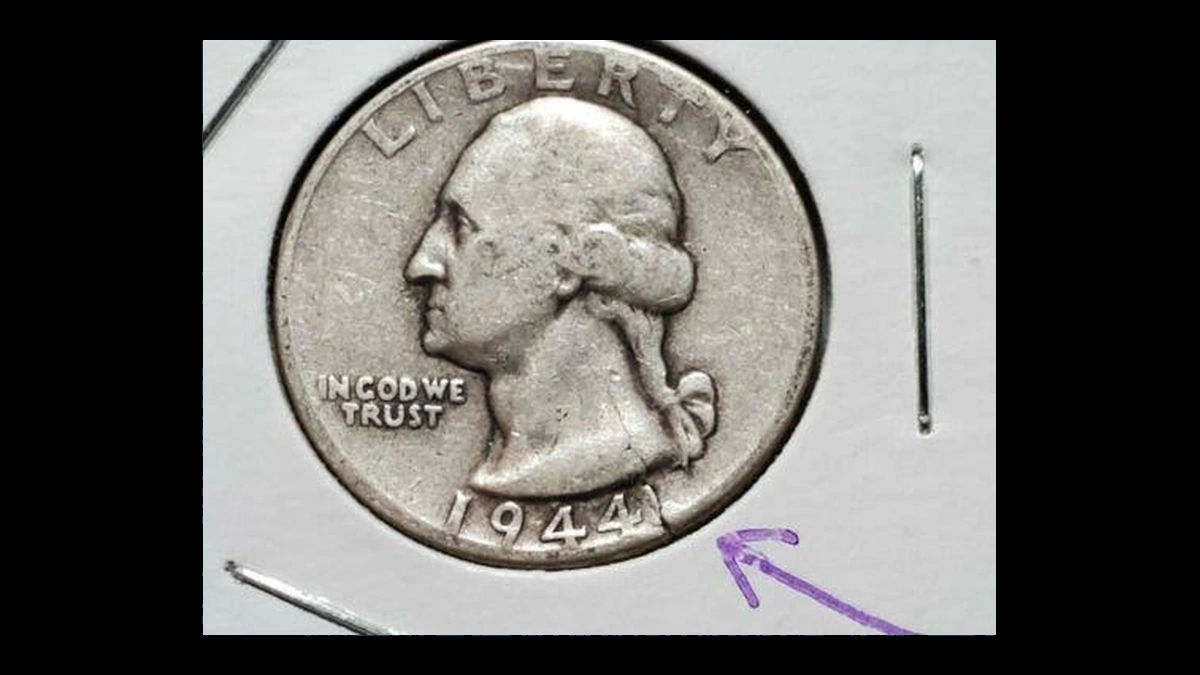
A Philadelphia example graded PCGS VF30 has a crack in the original blank. The coin’s own metal opened, rather than copying a narrow raised ridge from a cracked die.
The supplied description does not establish a precise route for the split. Its structure and relationship to the struck design are the useful evidence.
How to Identify
Inspect the opening from the edge and follow it onto both faces without flexing or widening it. Nearby stretched or weak detail may help explain how the metal moved during striking.
Parallel grooves within the gap can indicate a later saw cut. Fresh exposed surfaces, bending, or tool marks need to be distinguished from an original metal flaw.
What It’s Worth
Comparable authenticated cracked-planchet quarters have an estimated range of $25–$500.
The Philadelphia PCGS VF30 coin brought $53 in September 2024. Its circulation wear and documented split provide a modest same-year comparison.
4. 1944 Quarter A hollow interrupting the eagle side: struck through material Error
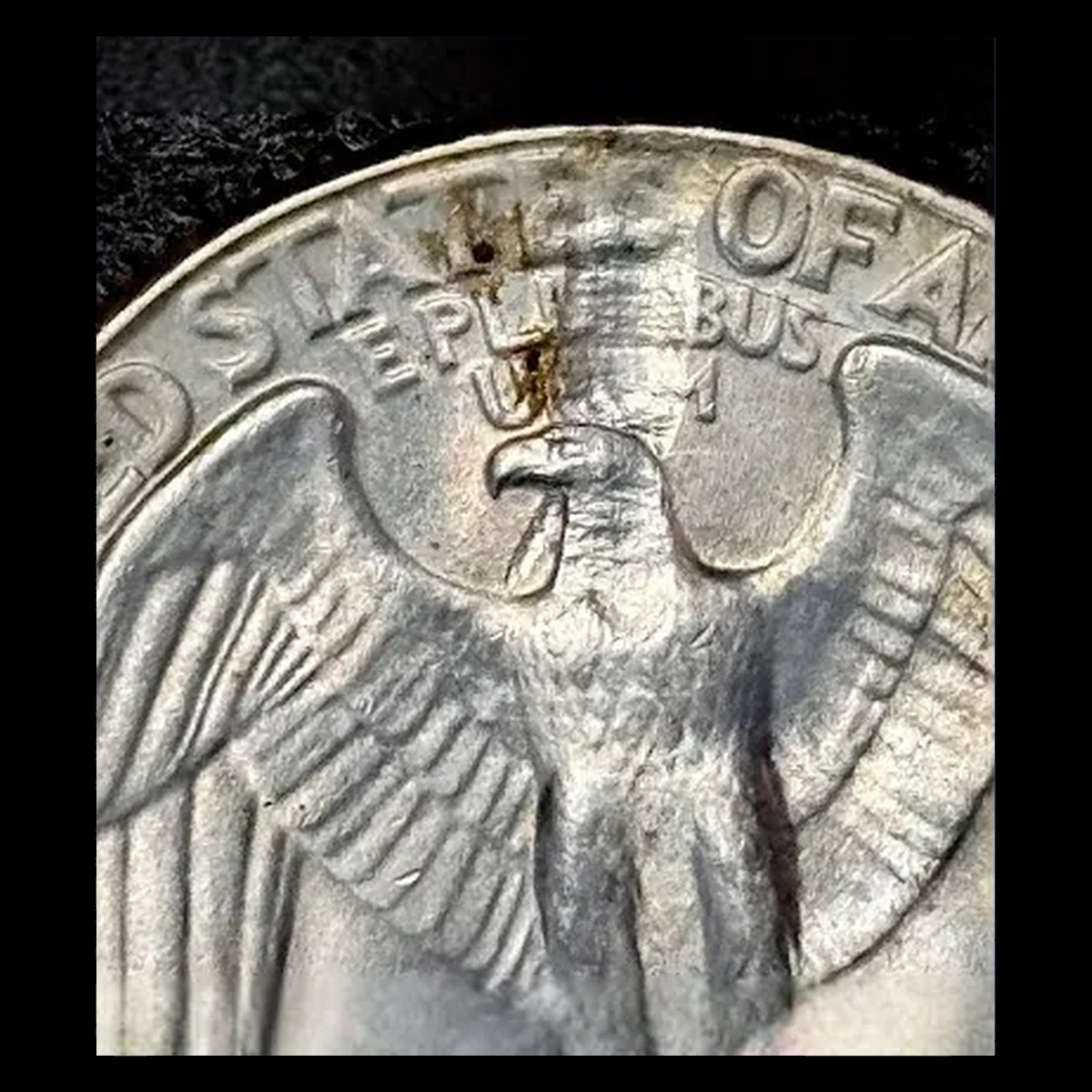
A Philadelphia coin from the Don Bonser collection was certified NGC AU58 with a reverse struck-through error. An obstruction prevented part of the normal design from forming.
The object’s identity is not established. A hollow alone cannot determine whether grease, wire, cloth, or another material caused it.
How to Identify
Compare the affected reverse with a normal quarter and follow the surviving design to the depression’s boundary. The obstruction should explain interrupted formation rather than artwork scraped away later.
Inspect for sharp cutting lines or pushed-up silver from a gouge. Leave any retained material in place and keep the undisturbed nearby detail in close photographs.
What It’s Worth
Authenticated examples have an estimated range of $50–$1,500.
The NGC AU58 reverse strike-through sold for $174 in November 2020. Its slight wear and particular impression should guide the comparison without inventing an object name.
5. 1944 Quarter Curved, straight, or paired edge gaps: clipped blank Error
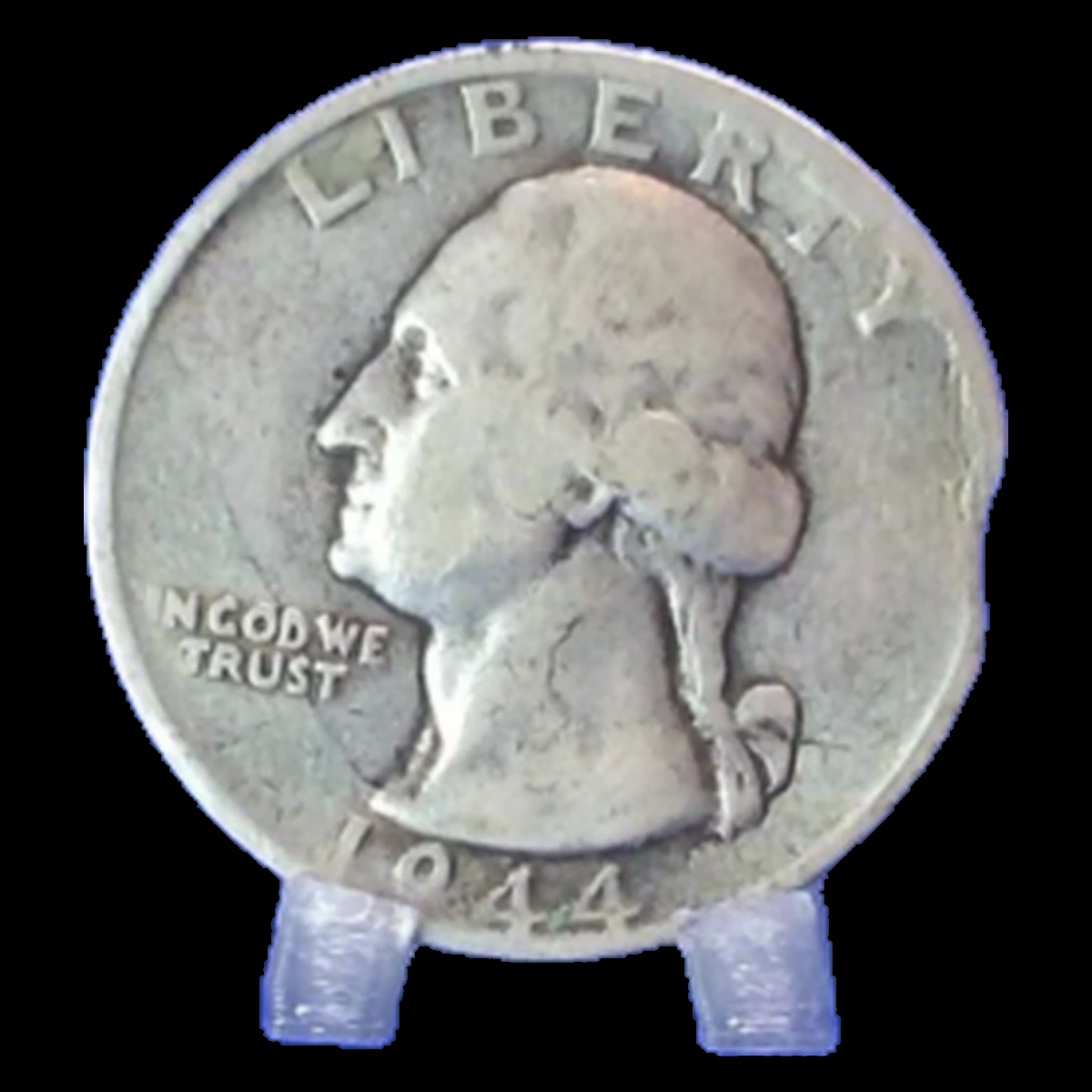
A blanking punch can overlap an earlier hole or the end of the metal strip, leaving missing metal before striking. More than one overlap can produce two gaps.
The 1944 reports include curved, straight, and double clips without a fixed mint, percentage, or direction for each form.
How to Identify
Inspect the gap walls and the points where the original rim approaches missing metal. Natural weak or stretched detail supports a blank that was incomplete when struck.
A weak opposite rim can help without appearing on every genuine clip. On a double clip, examine both gaps rather than assuming that one proves the other.
A normal silver quarter weighs 6.25 grams. Missing metal lowers weight, but later cutting also does, so file lines or saw grooves remain important checks.
What It’s Worth
Authenticated 1944 clips have an estimated range of $50–$1,500.
This is a comparable-type estimate rather than a sale assigned to an unnamed specimen. Two gaps do not automatically double the price.
6. 1944 Quarter A blank crescent opposite missing artwork: off-center strike Error
Reports cover Philadelphia, Denver, and San Francisco off-center quarters without establishing one certified example’s direction or percentage. The blank was misplaced between the dies, so both faces received incomplete designs.
How to Identify
Compare both faces at the same scale and locate the original unstruck area. The design missing at the opposite edge should fit that same blank placement.
A shift only on the front can reflect a misaligned die. A widened outline retaining every intended detail requires a broadstrike comparison instead.
Read only the surviving date and mintmark evidence. An off-coin reverse mintmark area cannot automatically establish Philadelphia production.
What It’s Worth
Authenticated 1944 off-center quarters have an estimated range of $100–$5,000.
No specific completed sale is supplied for the general reports. Readable identity, visible displacement, and original surfaces matter more than an uneven rim alone.
7. 1944 Quarter Quarter artwork on steel or five-cent metal: wrong planchet Error
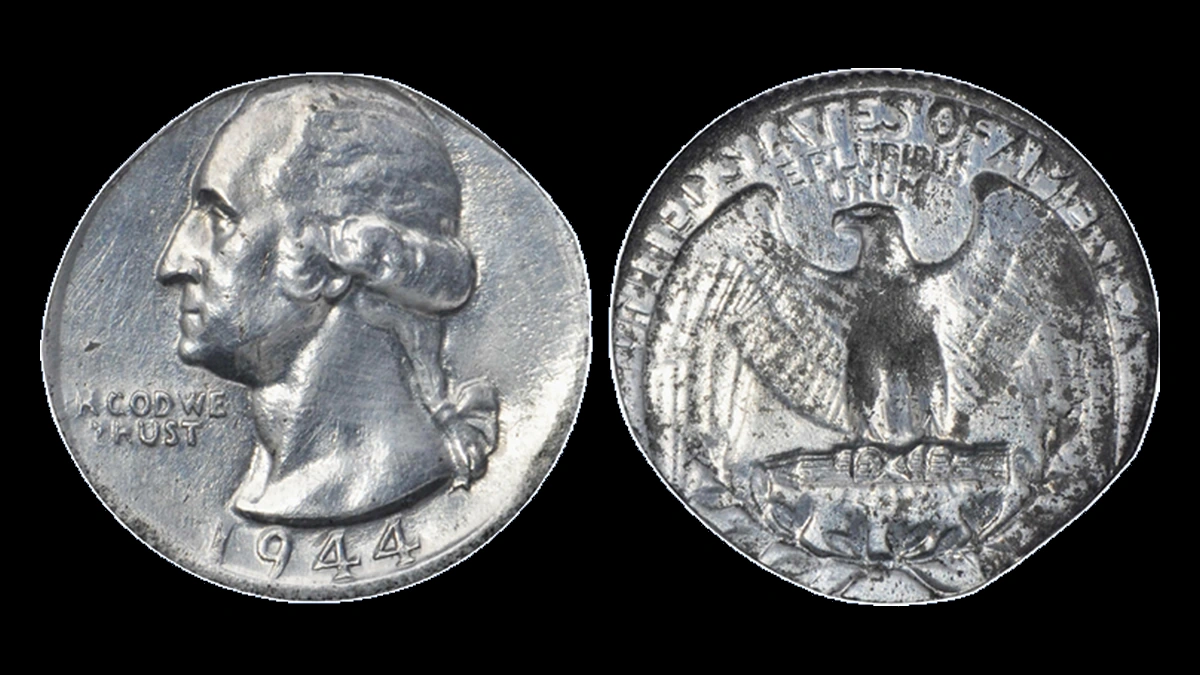
Two documented Philadelphia examples use smaller blanks: zinc-plated steel at 2.7 grams and wartime five-cent alloy at 5.0 grams. Both retain the full date while losing parts of the outer design.
The steel example lacks LIBERTY and the denomination, with a slightly oval outline bulging at the top. A separate year-list report names a Philippine five-cent blank without establishing it through either specimen’s measurements.
How to Identify
Compare the actual weight, composition, shape, and cropped artwork together. The 5.0-gram wartime alloy is different from an ordinary copper-nickel nickel despite the similar weight.
On the steel specimen, oxidation at the eagle is a later surface condition rather than another mint error. Inspect any candidate for trimming or added plating before relying on its pale color.
The Philippine claim requires its own material and measurement evidence. Neither documented United States blank establishes that foreign attribution.
What It’s Worth
The combined estimate is $500–$25,000: comparable steel-blank coins around $8,000–$25,000, wartime five-cent blanks around $1,000–$6,000, and an authenticated Philippine type provisionally around $500–$5,000.
The steel-blank NGC MS62 quarter sold for $16,800 in December 2022. The separate wartime five-cent NGC MS62 brought $2,990 in May 2004.
Those are prices for different complete coins. Their weights and alloys must stay attached to their own descriptions.
Conclusion
A repeated mintmark, raised design contour, metal split, and undersized blank each require a different explanation. Start with the feature’s physical structure rather than an error nickname.
For 1944 wrong-blank candidates, composition is especially important because steel, wartime five-cent alloy, and the reported Philippine material are separate possibilities. Keep both faces, the edge, and actual measurements connected to the same coin when comparing prices.