Rare 1850 Quarter Errors (List & Pictures)
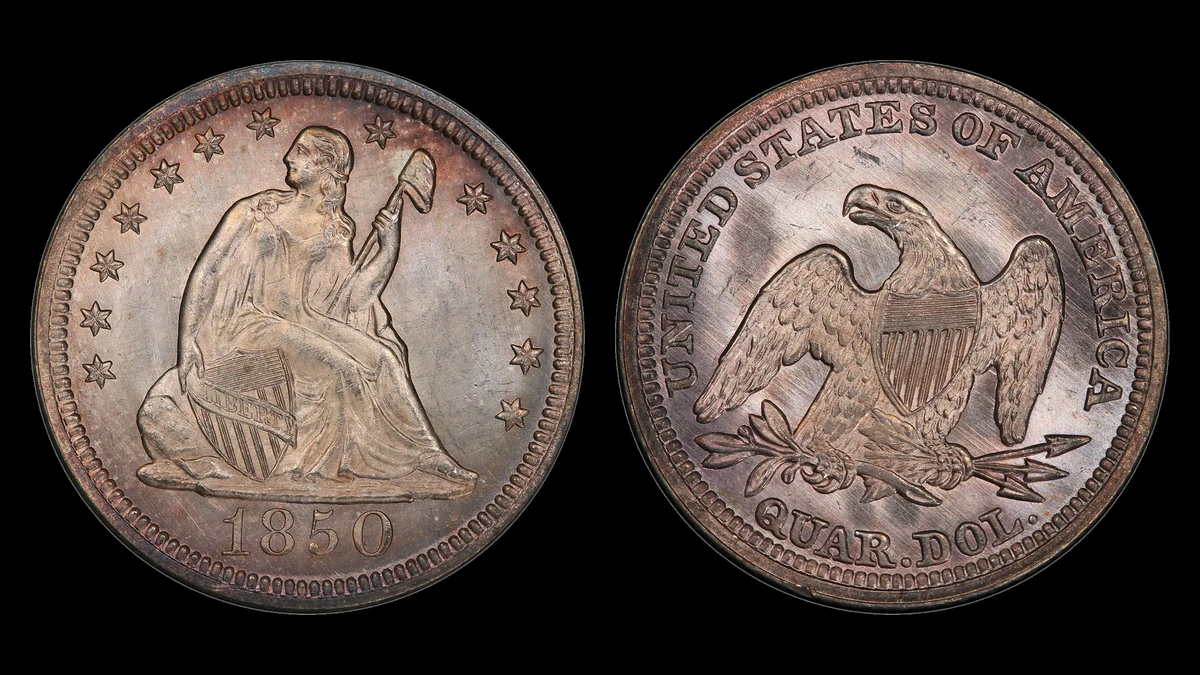
An extra numeral can hide below the normal date on an 1850 quarter. A well-preserved example with a misplaced 1 reached $5,750 before auction fees in an April–May 2025 sale.
These two groups of 1850 quarter errors have estimated whole-coin values of $100–$10,000. One calls for a magnified look at the rim; the other requires a fixed flip to test the angle between the faces.
1850 Quarter A Small Extra 1 on the Rim: Misplaced Date Error
Look below and slightly left of the proper date for the base of another 1. Part of its upright stroke can remain on the rim as well.
The misplaced punch entered the die during date preparation and left a fragment outside the intended date position. Coins from that die copied the extra shape.
FS-301 and Briggs 1-A are two names for this Philadelphia variety. They do not identify two separate errors on the same quarter.
How to Identify
Follow the rim from the first normal date digit toward the lower-left border. Compare the little base and upright with a clear FS-301 photograph while keeping 1850 in view.
The fragment’s location matters as much as its shape. A rim hit can push up irregular metal without producing the recognizable base of a numeral.
Use light from more than one direction to check the raised outline. Heavy wear can remove part of the extra 1, so absence of a complete digit does not by itself identify a different die.
What It’s Worth
$100–$10,000 is the estimate for identified examples from worn through attractive unworn condition. The clarity of the extra digit helps, but overall preservation remains a major factor.
An NGC MS65 example reached $5,750 before fees in Heritage’s April–May 2025 sale. The published results list it as lot 3579.
MS65 describes a well-preserved unworn coin. The figure is for the complete quarter and excludes auction fees, rather than being a standalone price for its extra numeral.
1850 Quarter A Tilted Eagle after a Fixed Flip: Reported Rotated Dies Error
A die that turns out of alignment can leave the front and back at the wrong angle. After Liberty is set upright and the coin is flipped top to bottom, the eagle remains tilted.
Collector Greg Johnson mentioned reports of noticeable rotation on 1850-O quarters but said he had not personally seen an example. The supplied report gives no measured angle for that date.
How to Identify
Confirm the 1850 date, O mintmark, and quarter denomination before testing the alignment. A smaller Seated coin or another date needs a different comparison.
Place Liberty upright in a clear holder and flip it top to bottom without twisting sideways. Repeat the movement to see whether the entire eagle and reverse lettering keep the same tilt.
Johnson’s discussion illustrates an 1848 example separately from the 1850-O report. Measure the actual 1850 coin rather than borrowing that other year’s angle.
What It’s Worth
$100–$2,000 is the estimate for a circulated 1850-O quarter with an established rotation. The scarce New Orleans issue already carries collector value before the alignment feature is considered.
A large, repeatable turn can add interest, while a slight lean may add little. Scratches and cleaning can reduce appeal even when the rotation is genuine.
This range requires demonstrated alignment on the coin. Separately positioned photographs do not establish that error.
Conclusion
The misplaced 1 provides a precise rim feature to match on a Philadelphia quarter. The New Orleans report instead needs a repeatable alignment test and a measured angle.
Keep those different levels of evidence in mind when comparing values. The $5,750 before-fee result belongs to the unworn misplaced-date coin and does not establish a sale or rotation angle for 1850-O.