Rare 1845 Dollar Errors (List & Pictures)
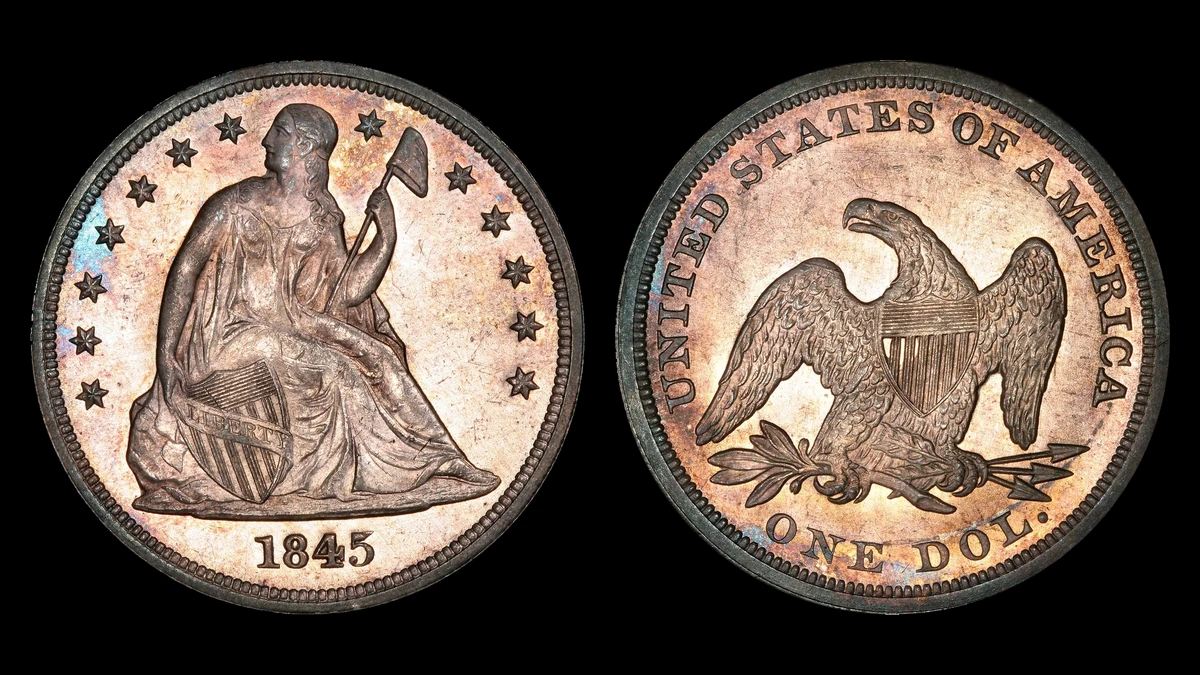
Proof identity comes before date doubling when examining this 1845 variety. The 1845 dollar errors entry below concerns a cataloged proof repunched date, with an estimated whole-coin range of $20,000–$225,000.
For context, an exceptional 1845 proof sold for $207,000 in 2008 and $141,000 in 2013. Those results are for the proof issue generally; the supplied record does not identify that coin as the repunched-date variety.
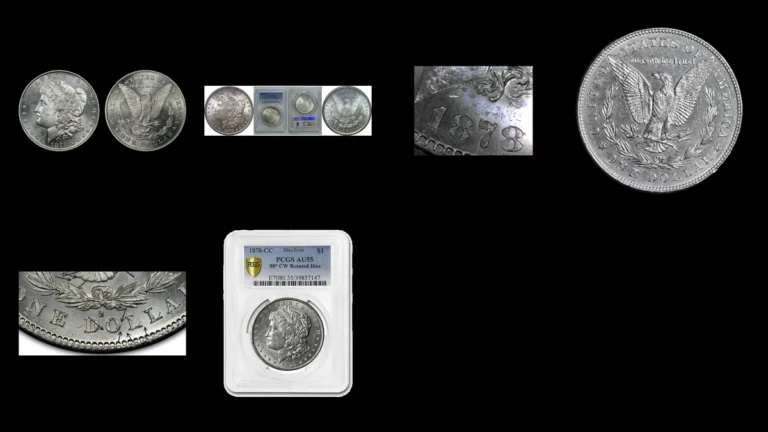
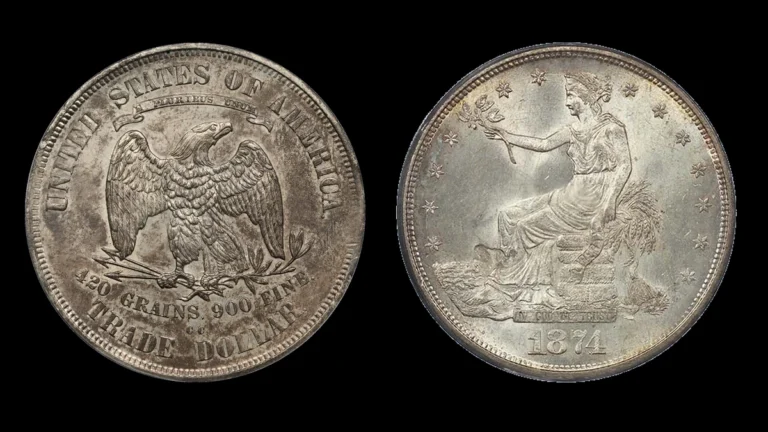
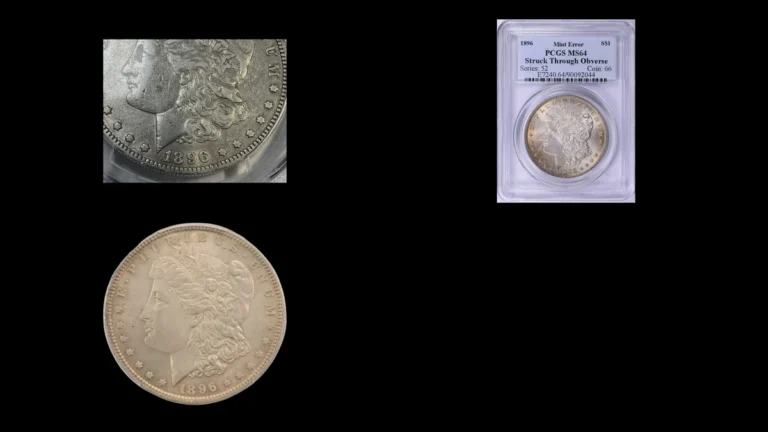
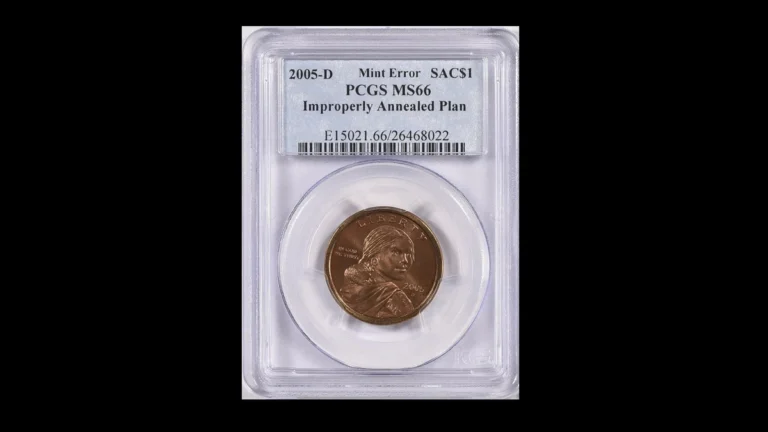
1845 Dollar Earlier Date-Punch Traces on a Proof: OC-P1 Error
PCGS lists OC-P1 Repunched Date for the 1845 proof dollar. Small parts of an earlier date-punch position survived beside the final numerals in the die.
A die is the steel tool that stamps the coin’s design. Repositioning the date punch during its preparation could leave overlapping digit shapes that later appeared on the dollar.
That process did not give the finished coin a second complete portrait. The extra feature should follow the date, and OC-P1 identifies a particular pairing of front and back dies.
Proofs were specially prepared collector coins. An ordinary dollar with bright or polished surfaces does not become a proof because it looks shiny.
How to Identify
Begin with a coin recognized as a proof, then compare its complete date with a clear OC-P1 reference. Starting from one unusual line on an ordinary dollar can lead to the wrong variety.
Examine all four digits at the same magnification. Follow smaller raised remnants alongside the main strokes rather than expecting every extra mark to sit above or below its numeral.
Move the light across the date to separate reflections from permanent detail. Scratches can cross the numerals, but their paths do not necessarily follow earlier digit shapes.
The whole coin should support the identification, including the finish and the appropriate die pairing. A close-up with no view of the surrounding dollar leaves important questions unanswered.
Keep a certified coin in its holder during comparison. Cleaning the fields or rubbing the date would risk the surface qualities that contribute so much to this issue’s value.
What It’s Worth
$20,000–$225,000 is the estimate for an authenticated OC-P1 proof, allowing for condition and preservation. Much of the amount comes from the rare proof dollar itself.
PCGS describes an NGC PR67 proof that brought $207,000 in 2008 and $141,000 in 2013. PR67 indicates a proof with few imperfections.
These are general proof comparisons, not identified OC-P1 auction results. The two prices also show that even the same exceptional coin can bring different amounts in different sales.
A repeated date does not erase scratches, cleaning, or other surface problems. Compare the complete dollar’s condition before treating any high-grade proof result as a guide to its value.
Conclusion
This identification has two parts: the correct proof issue and matching remnants of the earlier date-punch position. Neither a shiny surface nor one thick numeral is enough by itself.
Keep the general proof auction records separate from the OC-P1 estimate. Clear views of the entire date and protected original surfaces make a far stronger basis for comparison than an isolated enlarged line.