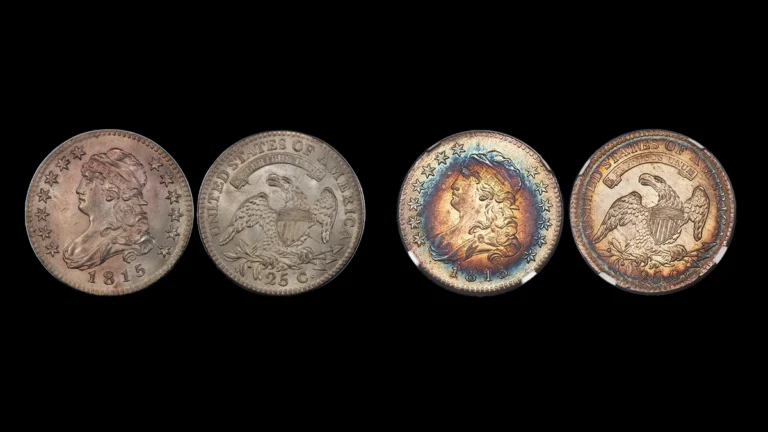
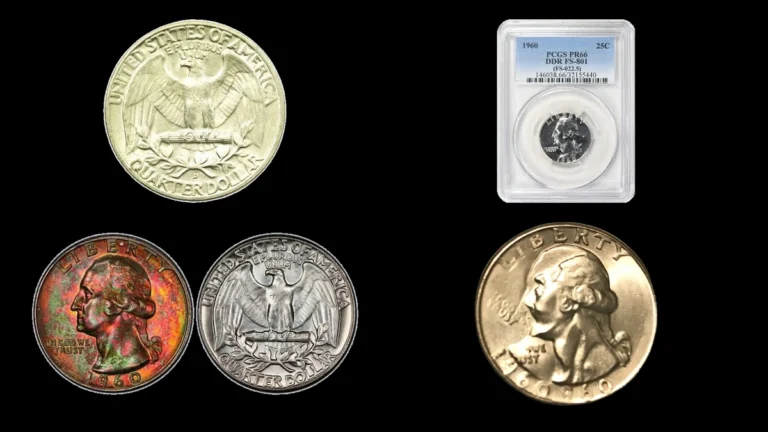
Rare 1894 Quarter Errors (List & Pictures)
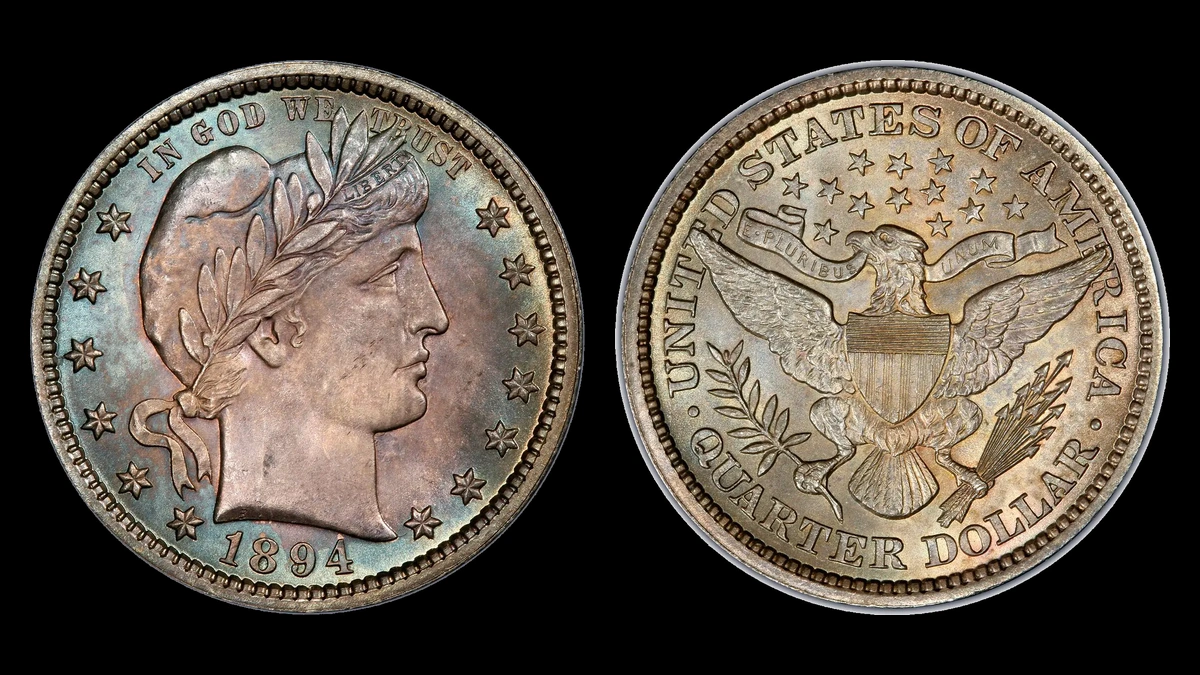
A related 1902 date-punch quarter sold for $139 in March 2024. Estimated whole-coin values for the 1894 Barber quarter errors below run from $35–$2,000.
Read the mint mark before comparing an extra O curve or date strokes, since Philadelphia, New Orleans, and San Francisco have different reported patterns.
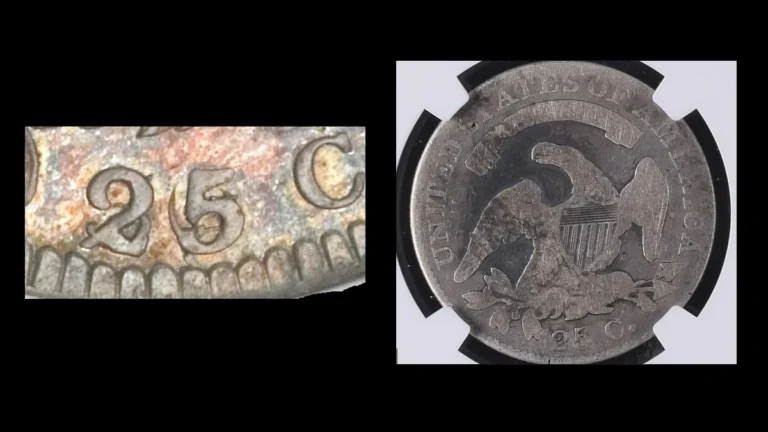
1894 Quarter Part of another oval follows O: repunched mint mark Error
The New Orleans O below the eagle can retain an extra curved stroke from an earlier punch position. Workers added mint letters to dies by hand before the dies struck coins.
If the punch moved between blows, portions of both impressions could survive. The Barber Coin Collectors’ Society lists an 1894-O/O variety without specifying a direction.
The feature is a second letter remnant, not merely an unusually placed or thick O. Its complete curve must be examined before assigning the variety.
How to Identify
Follow the suspected extra stroke with a magnifier and ask whether it fits part of another O. Compare a normal New Orleans letter at the same scale and orientation.
Use the normal oval and its wear as references, while keeping position beneath the eagle separate from the second-letter question. An ordinary O can sit unusually without being repunched.
Change the lighting to inspect projections and recesses. A flat shelf from striking movement or a cut with a pushed-up burr can imitate a small remnant.
Photograph the whole reverse and the close view together. Match the surviving curve with a reliable O/O example without inventing a directional description absent from the report.
What It’s Worth
Matching worn through attractive unworn O/O examples have an estimated whole-coin range of $35–$1,500.
A dealer inventory lists a Very Fine O/O at $130 and a Very Good repunched-mint-mark coin at $36. These are asking prices, and the latter entry lacks a detailed pattern description.
Strong curved remnants aid identification, while ordinary issue value and surfaces contribute much of the total. One small unexplained projection is insufficient to apply the range.
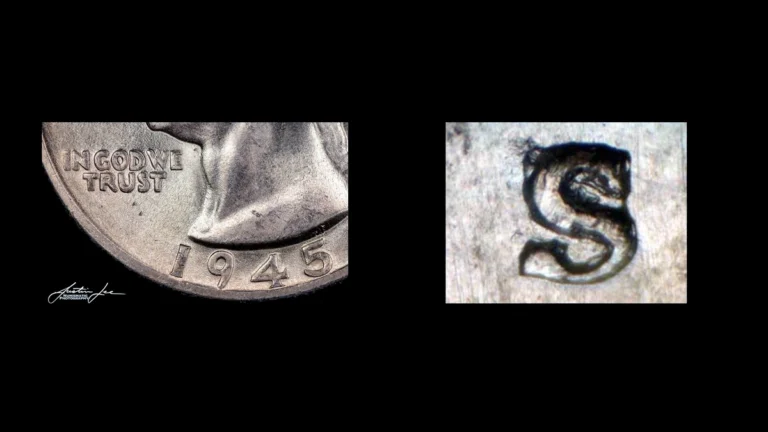
1894 Quarter Earlier strokes sit beside date digits: repunched date Error
Philadelphia’s report places an earlier 4 below the final 4. New Orleans repetition concerns 18 and 4, with remnants toward the right and below.
San Francisco has two reports: one involves 18 and 4 without a stated direction, while another places earlier 1 and 4 strokes below-left. They should remain separate patterns.
These remnants arose when the date punch was repositioned in the die. They do not imply two strikes on the finished quarter.
How to Identify
Confirm the mint on the reverse first. No letter identifies Philadelphia, O identifies New Orleans, and S identifies San Francisco.
On Philadelphia coins, inspect immediately below 4 while keeping the entire numeral visible. On New Orleans examples, compare 18 and 4 for the stated lower and rightward traces.
For San Francisco, choose either the broad 18-and-4 reference or the specific lower-left 1-and-4 pattern. Do not assign a direction to the report that leaves it unspecified.
Use sharp photographs with equal magnification to compare the extra strokes and undisturbed surface. The whole date and mint must agree, not just one bright edge.
What It’s Worth
Identified date-punch varieties have an estimated whole-coin range of $40–$2,000.
A 1902 Philadelphia quarter with a misplaced 0, graded ANACS XF45, sold for $139 in March 2024. It is a related mechanism comparison from a different year and pattern.
That transaction does not fix the price of any 1894 variety. Mint, preservation, and the clarity of the correct remnants remain essential.
Conclusion
The reverse mint mark determines which date comparison to use. Philadelphia’s lower 4, New Orleans’ reported 18-and-4 traces, and San Francisco’s separate patterns should not become one combined date.
For O/O, establish an actual second oval rather than unusual placement or thickness. The dealer amounts are asking prices, while the $139 sale belongs to a different year; value the complete identified quarter accordingly.