Rare 1890 Dollar Errors (List & Pictures)
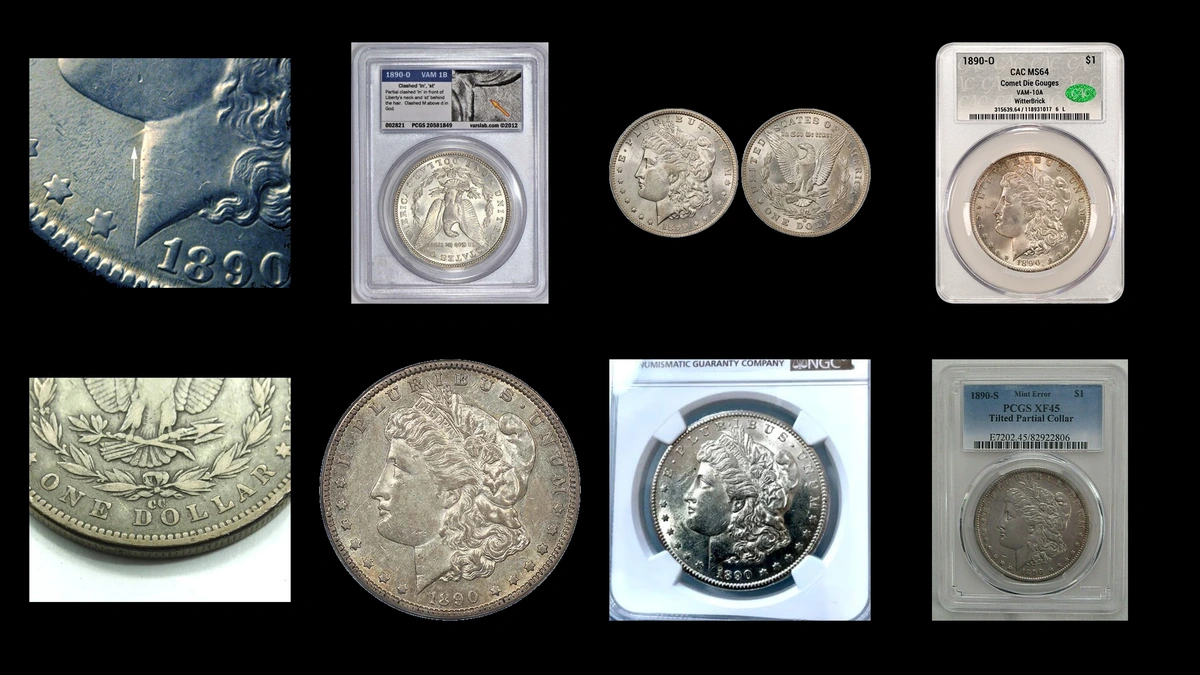
The mint mark is a useful first clue when exploring 1890 Morgan dollar errors. Philadelphia, New Orleans, San Francisco, and Carson City examples do not all share the same unusual features.
A Carson City Tailbar in exceptional unworn condition sold for $27,025 in July 2022. Estimated values for the groups below span $100–$30,000.
Read the date and mint mark first, inspect the designs and surfaces, then turn to the edge for missing metal or a misplaced strike.
1. 1890 Dollar Extra Strokes in the Date: Repunched Date Error
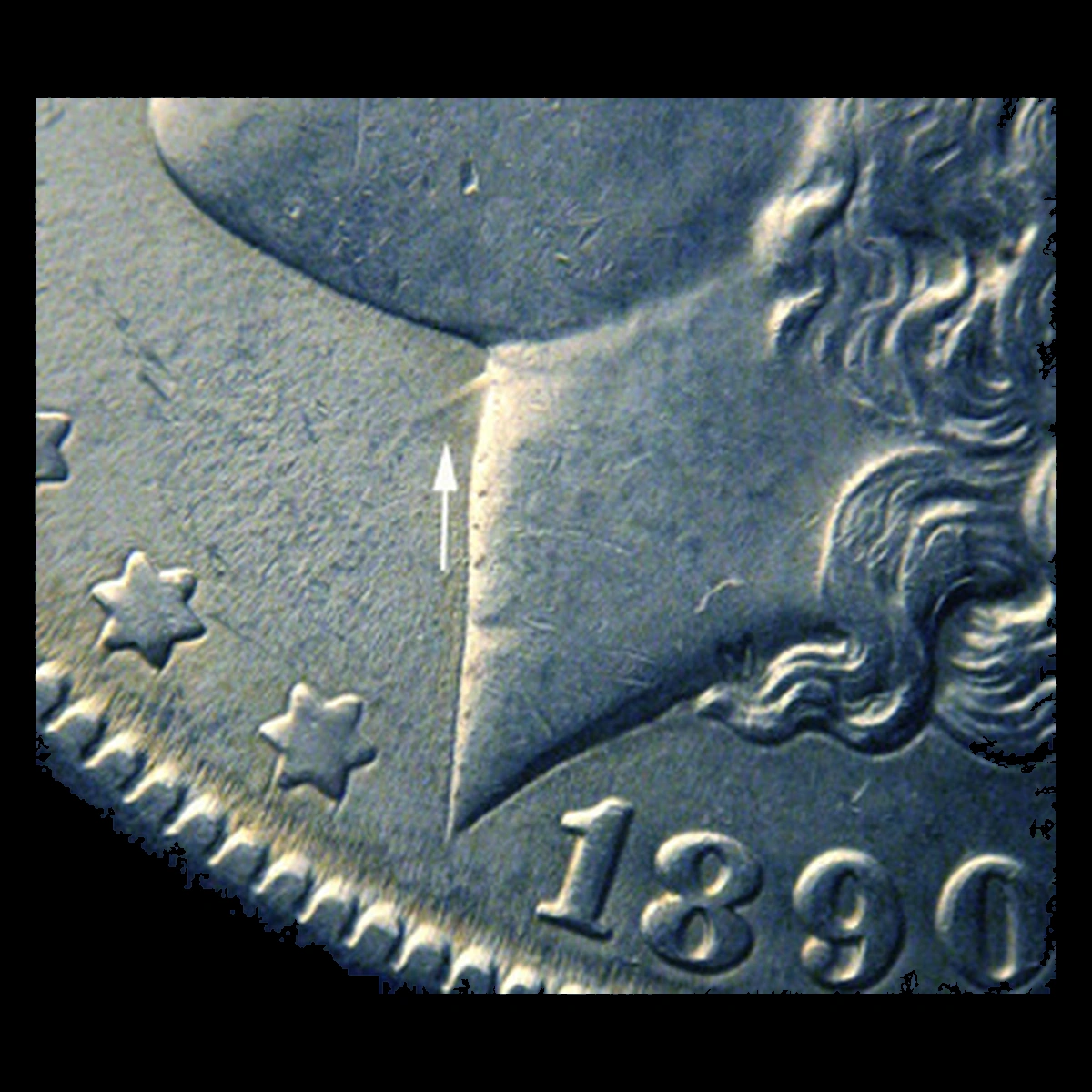
The digits 1, 9, and 0 show repeated detail on a documented Philadelphia dollar. These small traces came from placing the date punch into the die more than once at slightly different positions.
The die is the steel tool used to stamp the coin. An earlier date impression could survive beside the final one and appear on dollars struck with that tool.
How to Identify
View the complete date before enlarging each affected digit. Extra strokes should fit the shape of a numeral, rather than run across the surface like unrelated scratches.
The illustrated Philadelphia example provides a comparison for 1, 9, and 0. Do not borrow a different mint’s pattern just because its date also looks thick.
This same specimen has clash marks elsewhere. Those marks have a separate cause and cannot prove that the date was repunched.
What It’s Worth
$100–$1,000 is an estimated range for identified Philadelphia examples from worn to ordinary unworn condition. Clear extra strokes and original surfaces help buyers see the feature.
A small date detail may add only modest interest to the dollar’s normal value. If the coin also has clashes, price the whole piece once rather than adding two complete coin values together.
2. 1890 Dollar Outlines Where They Do Not Belong: Die Clash Error
A die clash can place parts of the opposite design in unexpected areas. It happens when the two dies meet with no blank between them and mark each other.
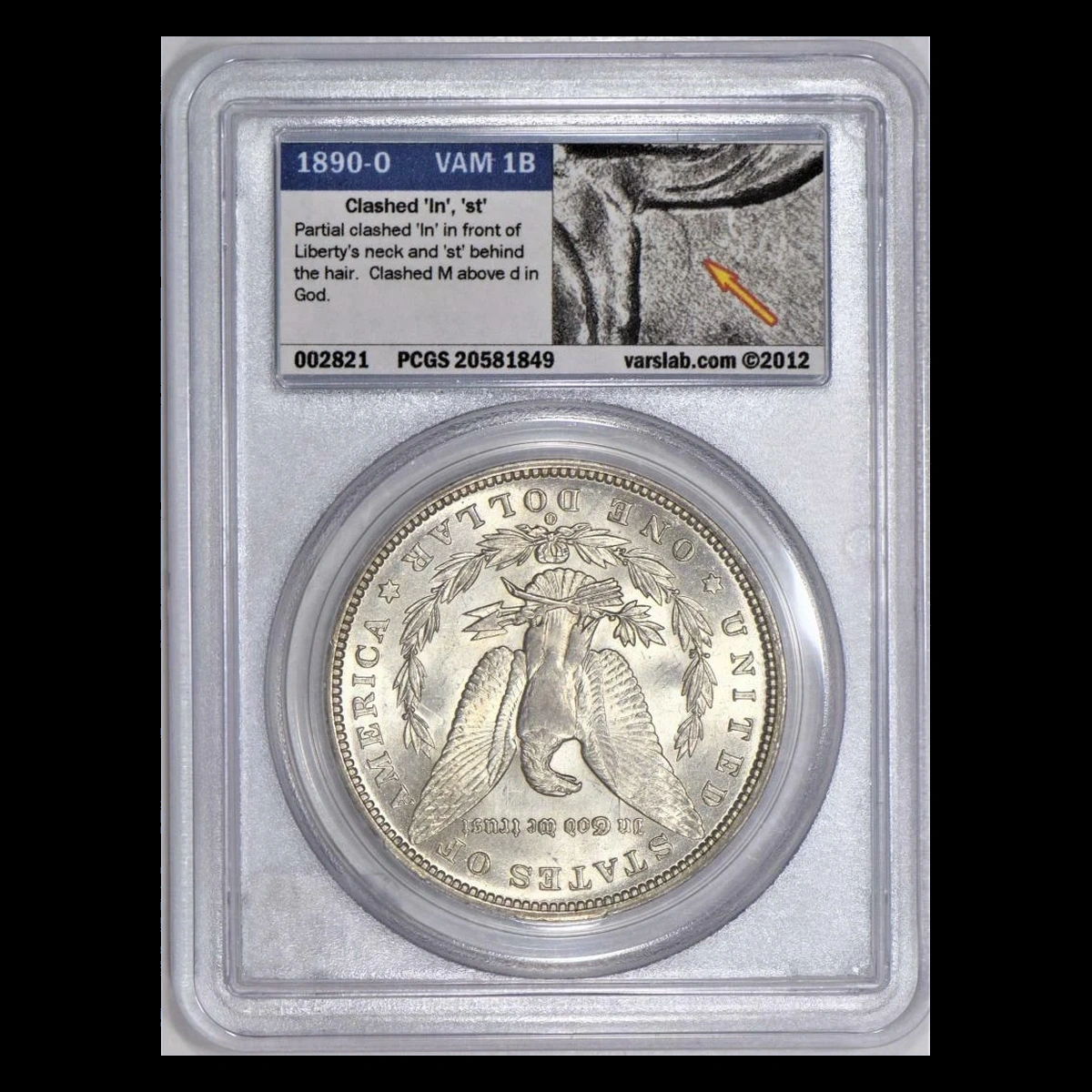
A specialist has illustrated a Philadelphia example. A separate seller report describes small tooth-like impressions beneath the eagle’s tail, resembling the teeth around the inner border.
These reports need their own matching photographs. The tail-area marks should not be treated as established features of every clashed 1890 dollar.
How to Identify
Locate the extra line within a full view of the coin. Compare it with the documented Philadelphia clash instead of gathering unrelated scratches into an imagined pattern.
For the reported teeth beneath the tail, inspect their shape and spacing. A repeated border-like pattern is more useful evidence than a single bump.
Examine both faces for related traces. The repunched date on the specialist’s coin is a separate identification step.
What It’s Worth
$100–$1,200 is an estimated range for matched Philadelphia clashes in circulated and ordinary unworn condition. Clear transferred details generally attract more attention than barely visible lines.
The reported tail-area teeth need a convincing match before a variety premium makes sense. Cleaning, wear, and surface marks still influence the price of the complete dollar.
3. 1890 Dollar Repeated Letter or Feather Outlines: Doubled Die Error
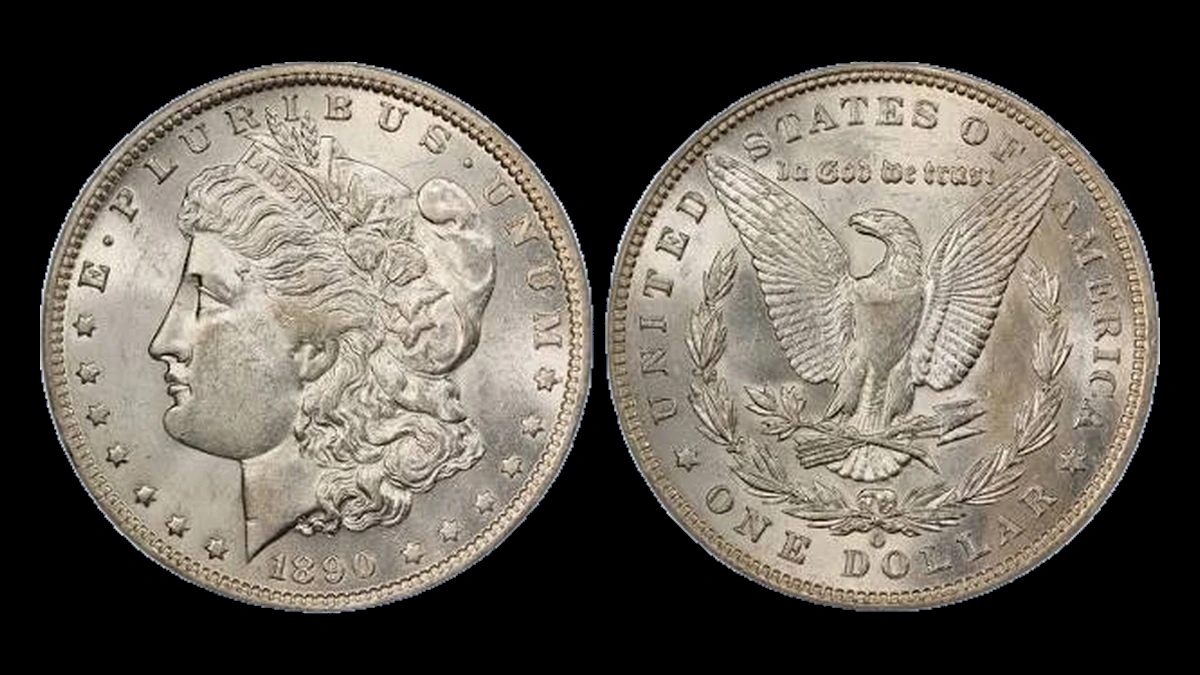
Some 1890 reports describe doubled lettering, eagle feathers, or eye details. A doubled die carries repeated outlines in the tool itself, so it can pass the same pattern to more than one coin.
The year guide covers a broad reported group rather than one exact pattern shared by all four mints. Each candidate needs a comparison showing its own mint and affected details.
How to Identify
Read the mint mark below the wreath on the back: O is New Orleans, S is San Francisco, and CC is Carson City. Philadelphia dollars have no mint mark.
Enlarge the suspected letter, feather, or eye along with the neighboring design. A second outline should follow the feature’s shape, not turn into random surface roughness.
Flat shelves beside letters can result from movement during striking. Compare those shelves with the raised, separated details of the specific doubled-die example being claimed.
What It’s Worth
$100–$1,500 is an estimated range for authenticated examples in ordinary collector grades. Strong separation and good surfaces can help the feature stand out.
The year guide gives roughly $400–$1,200 for its reported category. Those figures are guide estimates, not auction sales or a minimum price for any thick-looking letter.
4. 1890 Dollar A Bar beneath the Eagle: Tailbar and Die Gouges Error
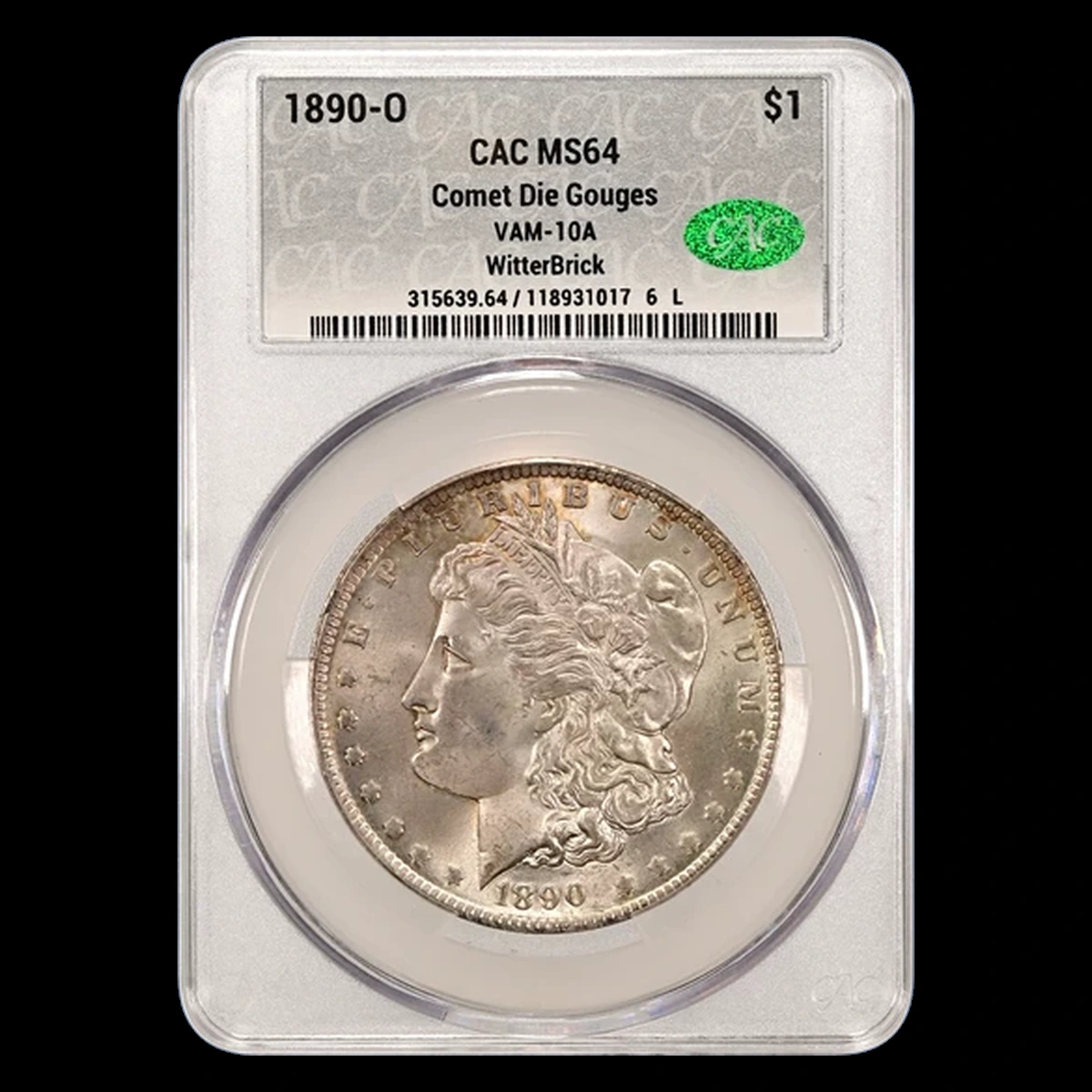
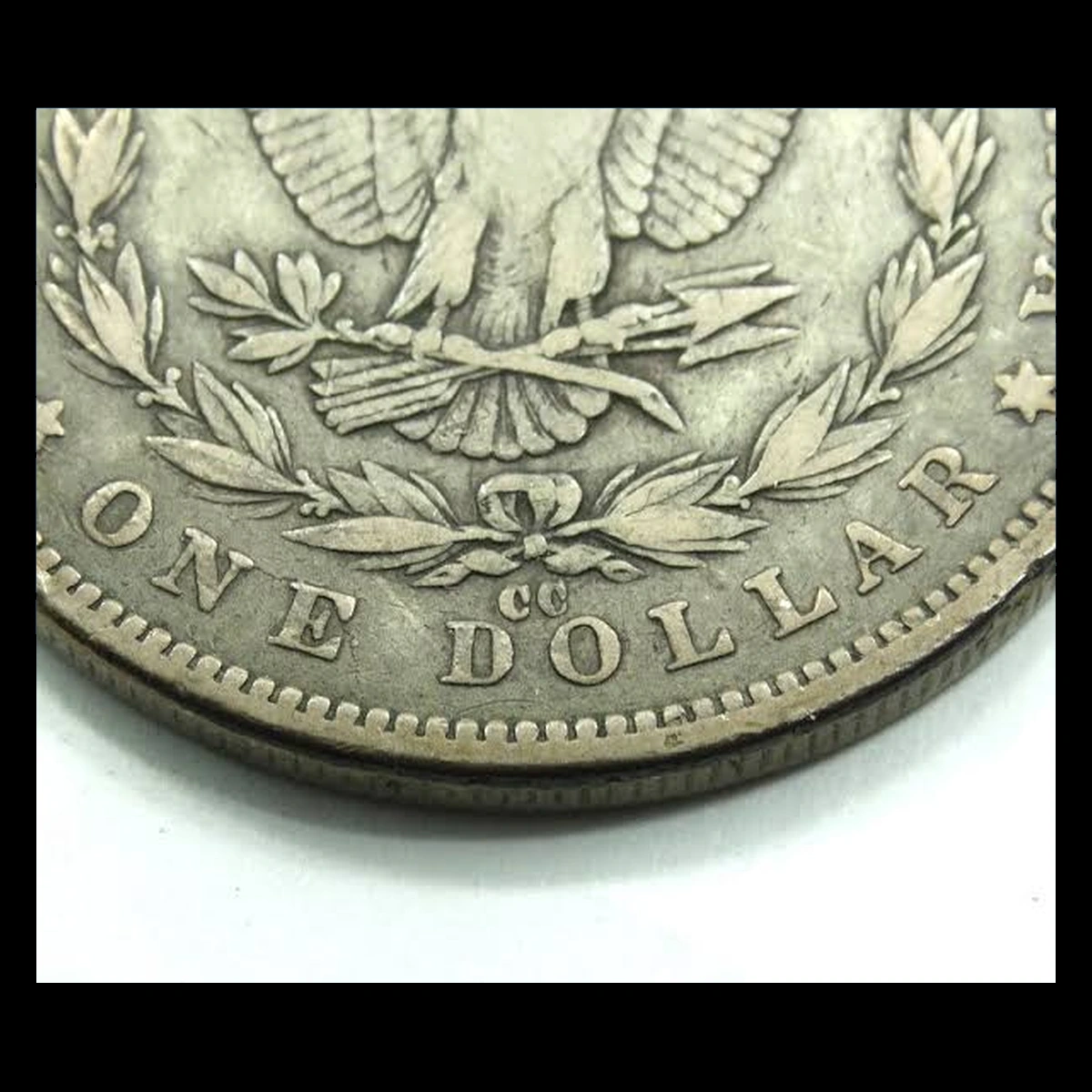
The Carson City Tailbar runs from the arrow-feather area toward the wreath leaves below the eagle. It is raised metal, created when silver entered a gouge in the die.
A gouge cut into a finished coin would leave a depression instead. The familiar Tailbar name does not mean someone attached a bar to the dollar.
A historical dealer catalog also reports two raised die-gouge lines near the date on a New Orleans coin. That is a separate pattern from the Carson City feature.
How to Identify
Find the CC mint mark, then follow the bar between the arrow feathers and wreath area. Match both its shape and its location to a clear Tailbar photograph.
Move a light across the surface to see whether the bar rises above the silver. A trench in the coin or an added lump is a different kind of alteration.
For a New Orleans candidate, compare the two date-area lines with that report. The Tailbar photograph cannot identify those separate marks.
What It’s Worth
$150–$30,000 is an estimated range for Tailbars from heavily worn to exceptional unworn examples. Ordinary New Orleans die-line examples have a separate estimated range of $100–$1,000.
A Tailbar graded MS65+ sold for $27,025 in July 2022 at Legend, as recorded by PCGS. That grade represents an especially well-preserved unworn coin.
Carson City demand and excellent condition contribute to the high result. A worn Tailbar should not be priced as though the raised bar alone produced that sale.
5. 1890 Dollar Raised Lines or Lumps: Die Cracks and Breaks Error
A damaged die can leave a thin ridge or a larger raised patch on a dollar. Metal fills the opening in the tool as the coin is struck.
Year sources report extra rim metal on a New Orleans dollar and a wreath-area break on a San Francisco example. The descriptions do not establish one shared shape or the same size of damage.
How to Identify
Decide whether you see a narrow line, a small chip-shaped lump, or a broad raised area reaching the rim. These appearances should not all receive the same label.
Include nearby leaves when photographing a wreath-area feature. For raised rim metal, add a side view to check whether a later impact simply pushed the edge over.
A matching shape repeated on another coin supports a die-related explanation. General roughness and flattened metal do not establish it.
What It’s Worth
$100–$2,000 is an estimated range for authenticated examples in ordinary circulated through unworn condition. A large clear break can be more appealing than a fine, common crack.
The New Orleans and San Francisco reports need separate comparisons. The word “break” alone says little about rarity, and damage elsewhere can lower the whole coin’s value.
6. 1890 Dollar A Lifting Flake of Silver: Lamination Error
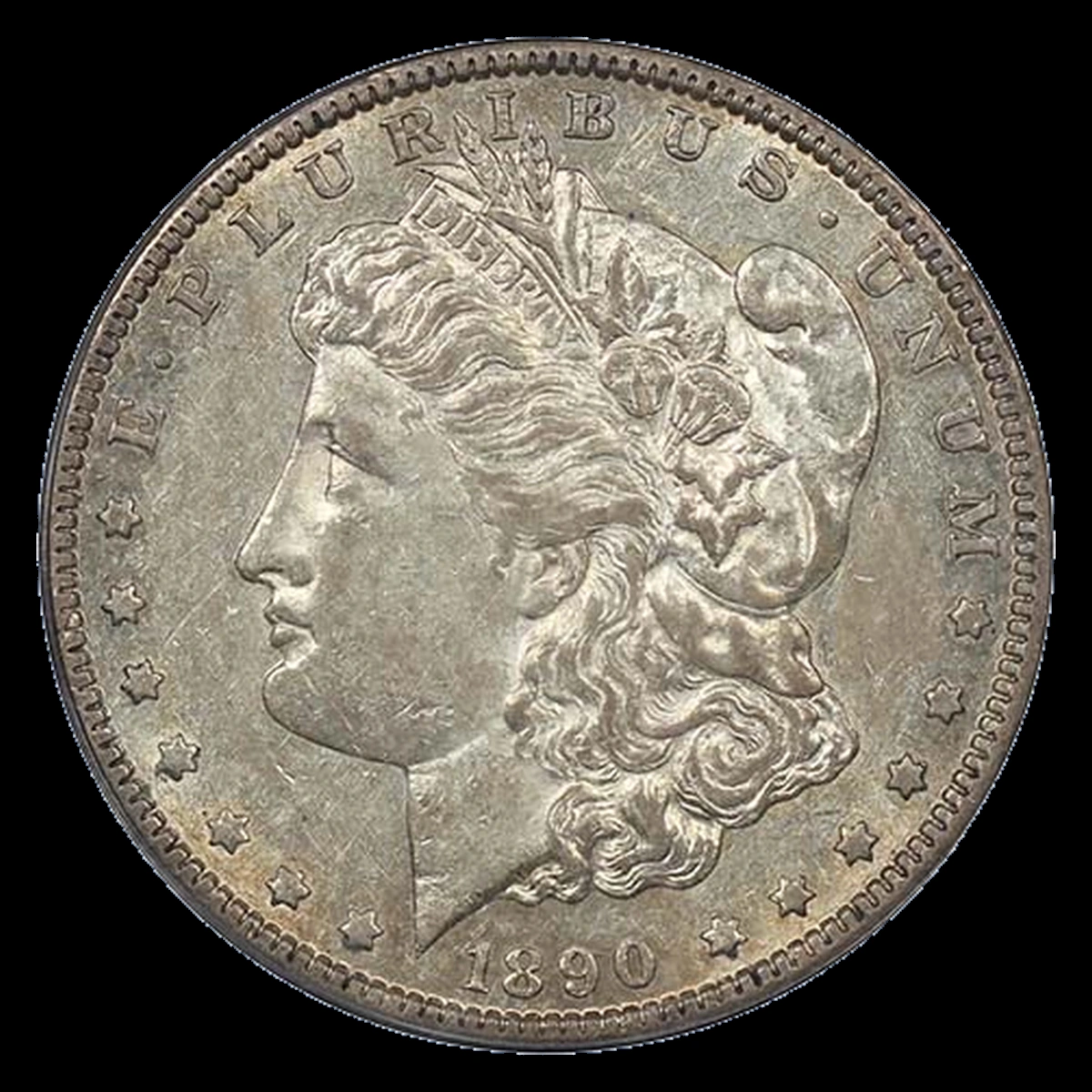
A thin flap or an irregular shallow gap can reveal separation within the coin’s alloy. This peeling defect is called a lamination.
A Philadelphia front-side example is recorded in an ANACS VF25 holder. Separate Carson City reverse examples include a PCGS XF45 dollar; both grades describe circulated coins.
Morgan dollars are made from a solid silver-copper alloy. A lamination is different from losing an outer layer on a modern clad coin.
How to Identify
Photograph a lifted flap without touching or bending it. Any design continuing onto the thin sheet can help explain how the surface separated.
Inspect the boundary of a missing flake under angled light. A scrape may show cutting lines or metal pushed along its edges, while a color change alone does not show peeling.
Match the correct face and mint to the comparison coin. Do not combine the Philadelphia front defect and Carson City back defect into one imagined example.
What It’s Worth
$100–$800 is an estimated range for ordinary Philadelphia laminations, compared with $300–$3,000 for comparable Carson City examples. The underlying mint’s collector value accounts for part of the difference.
A different-year 1921 dollar with peeling on both faces sold for $104 in March 2024. That is a comparison for the defect, not a sale of either 1890 specimen.
A large intact flap can attract attention. Cleaning or later removal of the flap can reduce the coin’s appeal.
7. 1890 Dollar A Patch of Interrupted Design: Struck Through Error
Foreign material between the blank and a die can block part of the design. After it falls away, an impression or a patch of missing detail may remain.
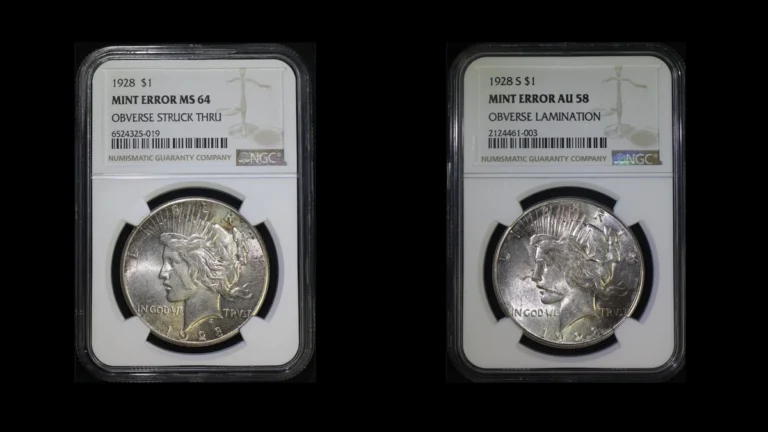
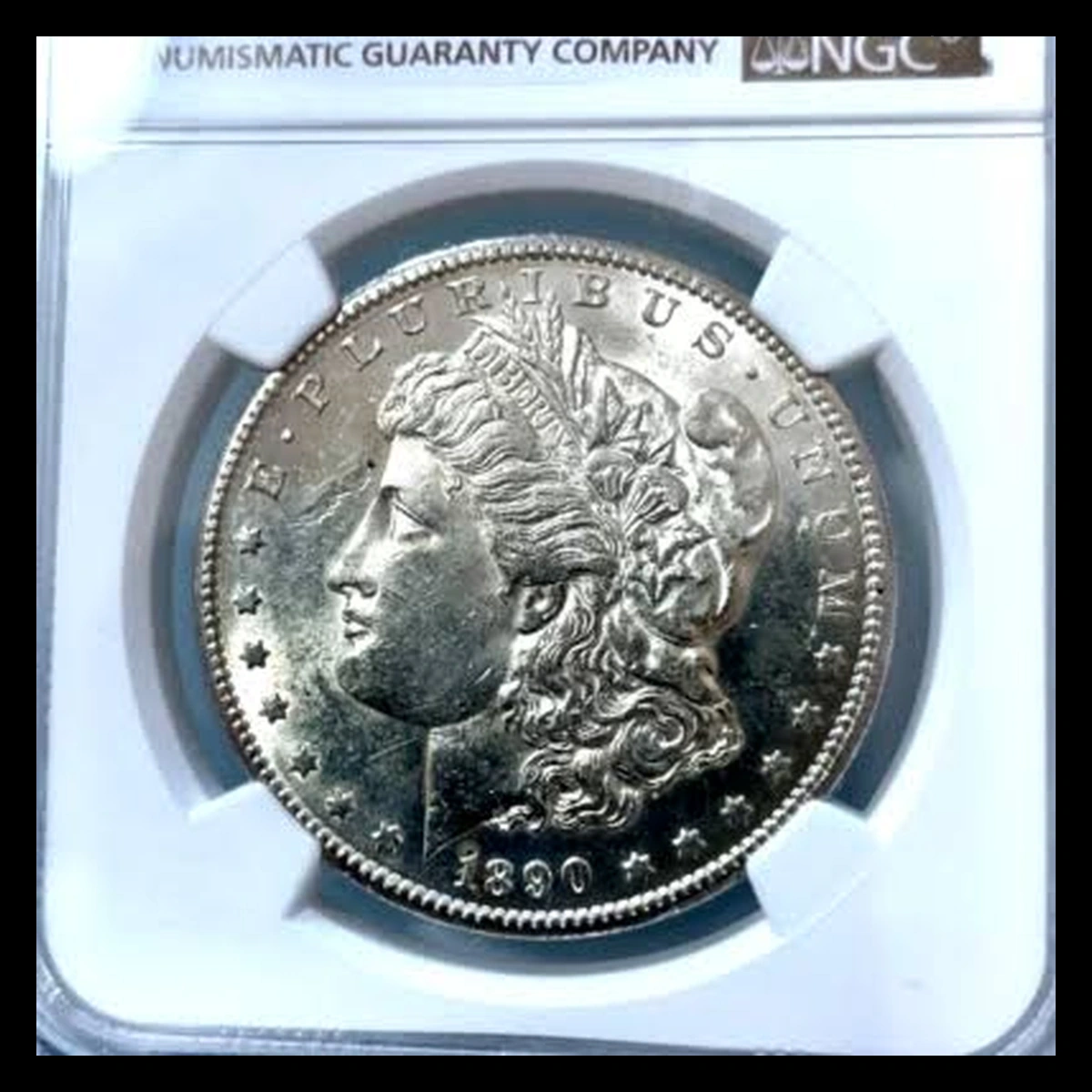
Cataloged Philadelphia examples include an NGC MS64 front-side error and a separate PCGS MS63 reverse error. These are unworn coins, while a collector gallery also reports a minor Carson City example.
The category does not identify the blocking material. Its shape must be examined before calling it cloth, grease, wood, or metal.
How to Identify
Follow the boundary between the affected patch and the surrounding design. Note which details stop there and whether the rest of the coin remains strongly struck.
Compare wear on the exposed high points rather than judging only the weak patch. Scrape marks, pushed metal, or a peeling edge may suggest a different explanation.
The minor Carson City report does not specify a location. Its actual photographs are needed before pointing a reader to a particular area.
What It’s Worth
$100–$1,500 is an estimated range for authenticated Philadelphia examples, with $300–$4,000 for comparable Carson City coins. Size, clarity, and surface condition influence the amount.
An 1898 Philadelphia dollar with a broad rectangular reverse impression sold for $228 in June 2023. This different-year result offers context but does not identify the material involved in an 1890 error.
8. 1890 Dollar A Two-Level Edge: Partial Collar Error
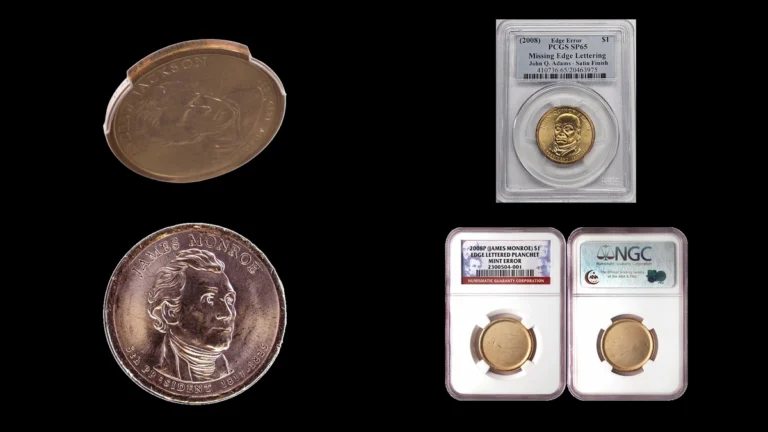
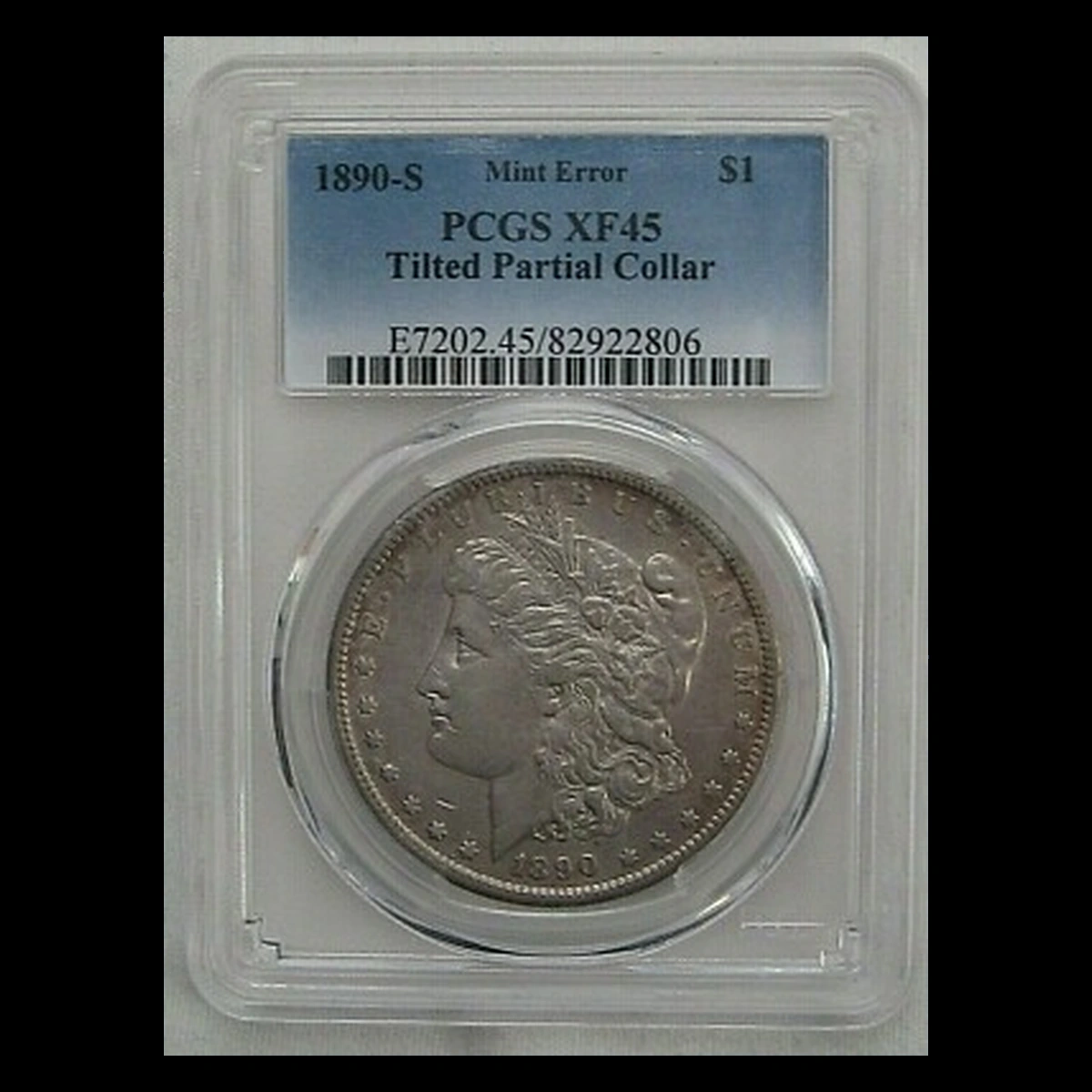
A partial collar error creates a step along the edge. Part of the blank sits inside the collar ring and receives edge grooves, while the unsupported metal spreads farther out.
A circulated Philadelphia listing describes this effect around the full edge of an 1890 dollar. Its “railway track” nickname refers to the step, not an added band of metal.
How to Identify
View the edge from the side and locate the ledge between its two levels. Follow it around the coin, checking how the grooved and expanded portions meet.
Filing can make a smooth patch but removes metal and may leave parallel tool marks. That differs from metal spreading beyond the collar during the strike.
The listing did not provide professional certification, so the edge itself is the useful evidence. Leave a coin in its holder and use existing edge photographs when the holder blocks the view.
What It’s Worth
$150–$2,500 is an estimated range for authenticated Philadelphia partial collars from circulated to ordinary unworn condition. A clear step around much of the edge makes the effect easier to appreciate.
A seller’s nickname is not a sale result. Compare the actual expansion, surviving grooves, and condition before choosing a price within the range.
9. 1890 Dollar Metal Missing from the Rim: Clipped Planchet Error
A curved gap can begin before the dollar is struck. The blank cutter may overlap an earlier hole in the metal strip, leaving the new blank incomplete.
A collection listing identifies an 1890-O rim clip graded ANACS MS61, an unworn grade with noticeable marks. Philadelphia and Carson City clips are also reported, with fewer specimen details.
How to Identify
Inspect the exposed gap for saw grooves or filing marks. Then examine how the raised rim and nearby design approach both ends of the missing section.
Weakness on the opposite rim can provide supporting evidence. A loose clipped dollar should also weigh less than the normal 26.73 grams, although later cutting reduces weight too.
Keep the year and mint mark visible in the photographs. Do not assign the New Orleans example a gap size or clock position taken from another coin.
What It’s Worth
$150–$1,500 is an estimated range for ordinary Philadelphia or New Orleans clips. Comparable Carson City examples have an estimated range of $300–$3,000.
A slightly worn 1921 Philadelphia dollar with a curved clip brought $84 in March 2024. That different-year sale shows a modest clip comparison, not the value of the listed 1890-O MS61.
More missing metal can make the error easier to see, but condition remains important. These ranges include the dollar’s normal collector value.
10. 1890 Dollar The Design Misses Part of the Blank: Off-Center Strike Error
A misplaced blank can leave an unstruck crescent opposite the design that runs beyond its edge. Unlike a clip, an off-center strike does not itself remove metal.
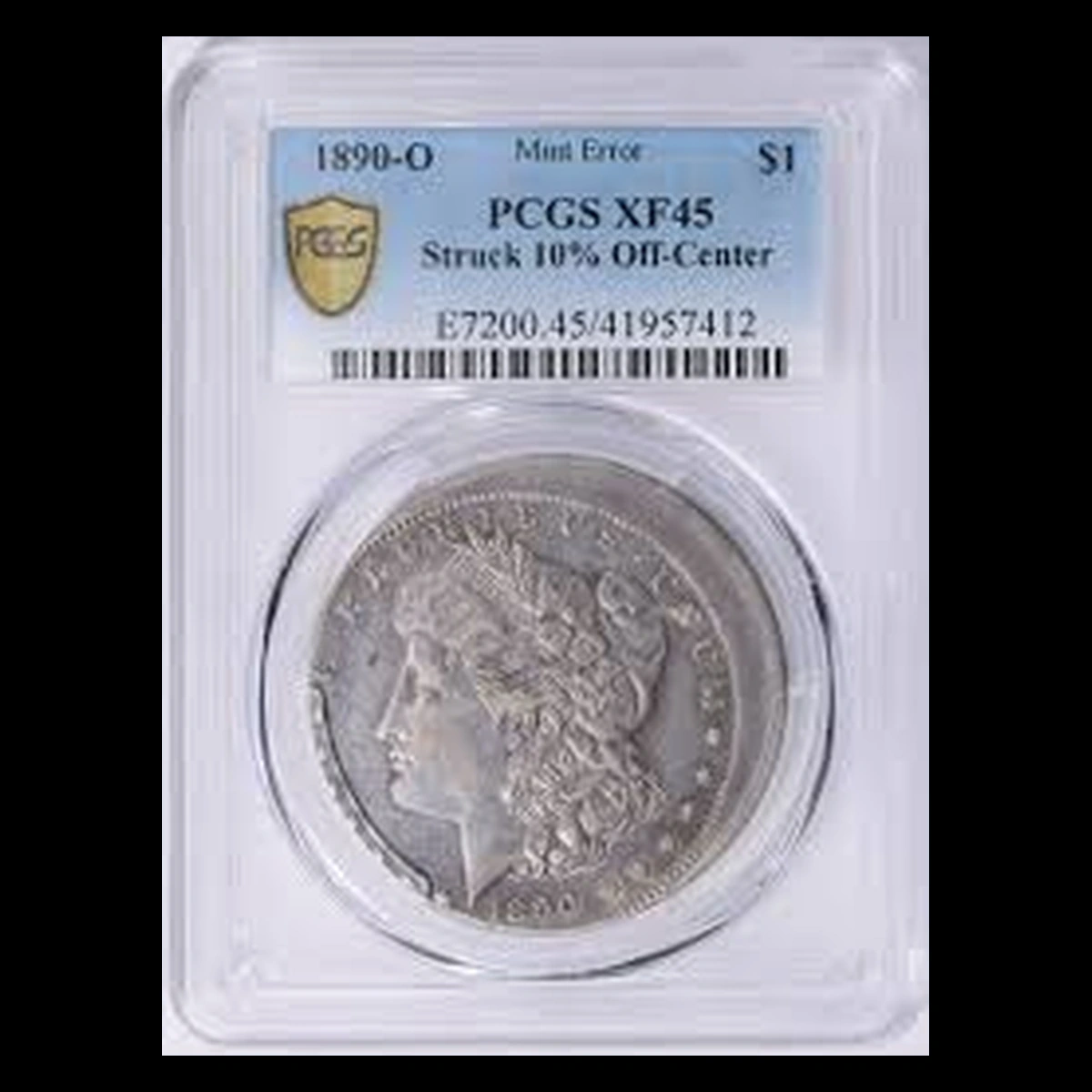
A documented 1890-O dollar was struck 7% off center. Its blank arc runs roughly from three to seven o’clock on the front and from ten-thirty to three o’clock on the back.
A separate New Orleans example is listed at 10% off center. San Francisco examples are also reported, but their positions and percentages need their own photographs.
How to Identify
Compare both faces and trace the same physical blank area through the two views. Its clock positions can differ when each photograph shows its design upright.
Confirm the date and the O mint mark on a New Orleans candidate. A design shifted on just one face may instead come from a misaligned die.
Examine the blank crescent’s outer edge for later cutting. The lost design should result from the strike missing part of the blank, not someone removing struck metal afterward.
What It’s Worth
$1,500–$12,000 is an estimated range for authenticated examples in circulated through ordinary unworn condition. The visible date, mint, surfaces, and overall displacement all affect demand.
The 7% off-center New Orleans dollar, graded PCGS VF30, sold for $2,880 in March 2024. A separate 10% example graded XF45 brought $6,405 in January 2026 at Heritage.
XF45 normally retains more detail than VF30. The price difference therefore cannot be assigned only to three extra percentage points of displacement.
Conclusion
For an unusual 1890 dollar, connect the visible feature to the correct mint before comparing prices. A raised Tailbar, a peeling sheet of alloy, and a blank crescent each require different evidence.
The estimated $100–$30,000 span includes very different coins and conditions. Full views of both faces, followed by a clear detail or edge photograph, make a comparison more useful than an error name alone.