Rare 1795 Flowing Hair Dollar Errors (List & Pictures)
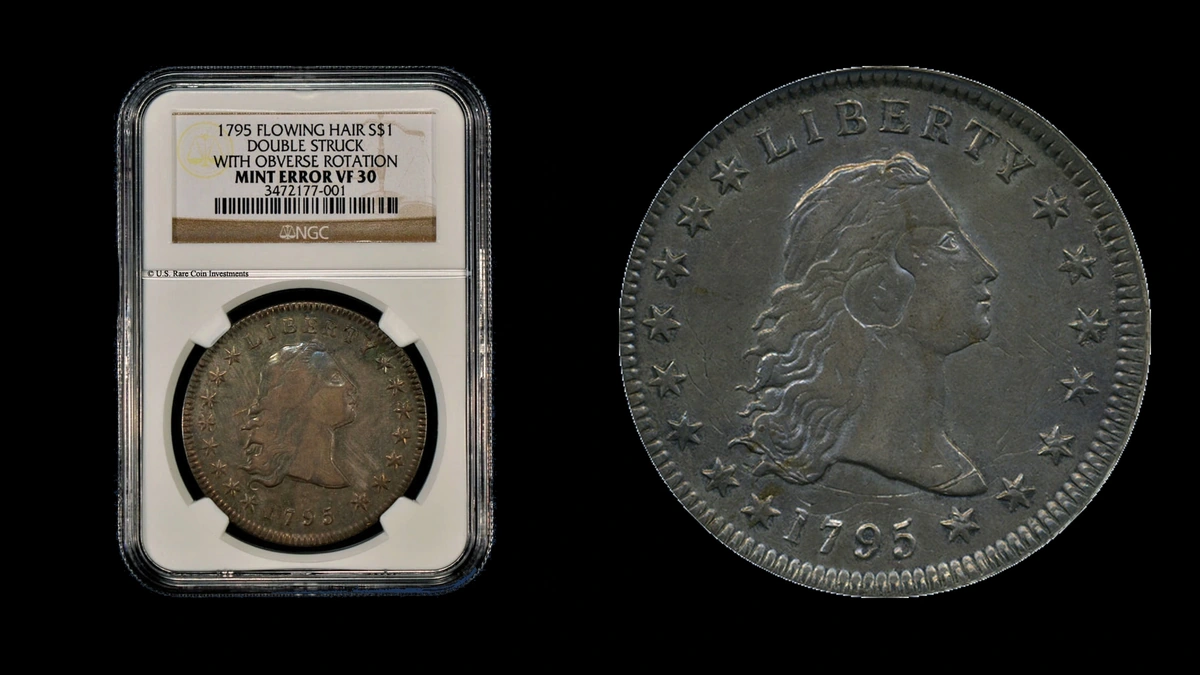
One 1795 dollar preserves an older 1794 dollar beneath its design and sold for $175,375 in August 2004. Other 1795 Flowing Hair dollar errors involve smaller die marks, weak metal, or shifted strikes.
Estimated whole-coin values span $2,000–$300,000. Confirm the Flowing Hair portrait first, since the different Draped Bust design also appears with this date.
1. 1795 Dollar A Raised Line below the Wreath: Die Crack Error
On BB-27, a fine line connects the left wreath stem beneath the small eagle with the lower rim. Silver entered a crack in the die and formed a raised ridge.
The coin itself did not split along that route. The line is a repeated tool feature rather than a scratch cut into one finished dollar.
How to Identify
Keep the left stem and bottom rim together in the close-up, then follow the line between them. Use side lighting to distinguish a ridge from a cut with displaced edges.
Wear can interrupt its visible course. Match the complete area with BB-27 instead of assigning that name to a line elsewhere.
What It’s Worth
$2,000–$40,000 is the estimate across well-worn through lightly worn matching examples. Much of the value comes from the early dollar and its surfaces.
The crack can help identify a die without adding a measurable premium. Deep scratches elsewhere still affect the total.
2. 1795 Dollar Eagle and Wreath Fragments near Liberty: Die Clash Error
A BB-13 auction account describes transferred eagle and wreath outlines around Liberty’s head. The dies had collided without a blank, and later coins received traces of the opposite design.
A separate BB-27 report mentions marks before the nose and lips, although that reference’s author had not personally seen the example. It needs its own comparison.
How to Identify
Match the unexpected curves with recognizable parts of the small eagle or wreath. Keep the portrait and nearby normal detail visible so random scratches do not become a false outline.
Use the correct die variety for the location. A complete repeated portrait points toward another event, unlike the small transferred fragments described here.
What It’s Worth
$2,000–$40,000 covers identified clashes from worn to appealing lightly worn condition. A readable fragment can interest specialists without dominating the price.
A coin that combines a crack and clash still receives one total valuation. Stronger marks do not automatically outweigh harsh cleaning.
3. 1795 Dollar Rough Areas or Separating Silver: Flawed Planchet Error
An old catalog describes rough metal near the bottom of Liberty’s neck and a long separated strip at N in UNITED. A separate dealer account shows an ICG MS60 dollar with severe blank defects on both faces.
Weak layers within the original silver can peel or detach. A round silver plug deliberately added by the Mint to adjust weight is a different feature.
How to Identify
Look for an actual layer boundary rather than a flat stain, and leave any attached strip alone. Compare the neck and UNITED areas only with the specimen described there.
The separate heavily flawed dollar needs both faces examined on its own terms. Later corrosion, scraping, repaired holes, and original weight-adjustment plugs should not all be labeled peeling metal.
What It’s Worth
$2,000–$50,000 is the estimate across worn and unworn examples with original blank defects. A conspicuous flaw may reduce visual appeal despite its unusual origin.
The dealer discussion quoted an old $30,000 wholesale guide value for a normal MS60 Two Leaves dollar. That was not a sale price for the flawed specimen.
4. 1795 Dollar Displaced Design and Unused Border: Off-Center Strike Error
Mike Byers reported handling an NGC VF20 Flowing Hair dollar struck 5% off center. The blank sat away from the proper position, leaving unused metal opposite design that failed to fit.
This is unrelated to the normal “Off-Center Bust” design name used for some Draped Bust dollars. An uneven early-dollar rim alone does not establish a striking error.
How to Identify
Inspect the stars and lettering around both faces for missing design paired with an original blank margin. One shifted face with a centered opposite face may involve a misaligned die.
Keep the full outline in photographs and confirm the loose-haired portrait with the small eagle inside a wreath. Do not infer the reported coin’s shift direction from its percentage.
What It’s Worth
$5,000–$60,000 is the estimate for genuine modest off-center examples in worn through lightly worn condition. Displacement, readable date, and surfaces guide the comparison.
The handled VF20 specimen has no supplied selling price. This estimate is not a claimed transaction for it.
5. 1795 Dollar Repeated Parts of Both Designs: Double Strike Error
A heavily worn BB-21 moved toward twelve o’clock between blows, leaving repeated bust, LIBERTY, wing, and wreath details. Its later BRINSMAID’S merchant stamp and old scratches are separate from the Mint strikes.
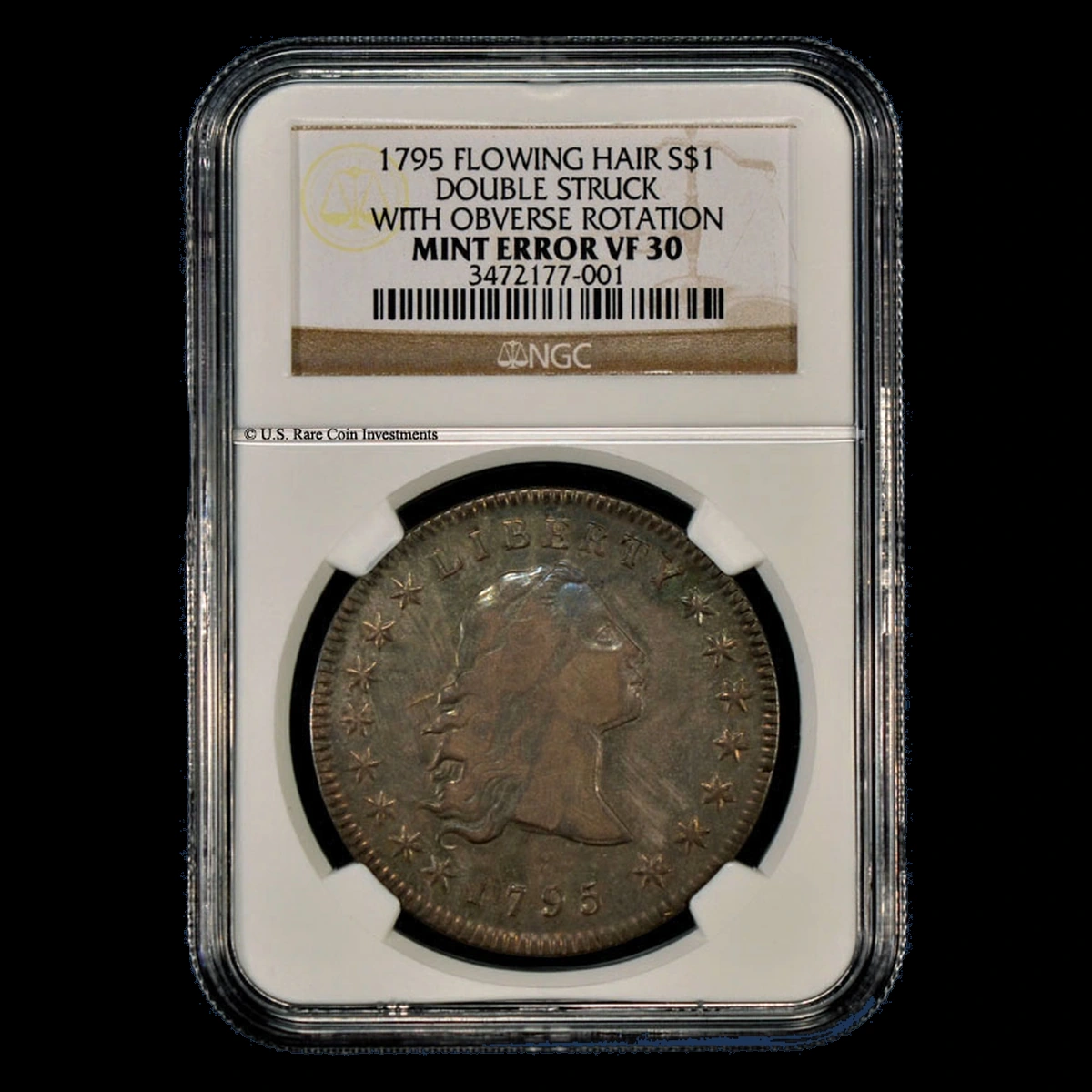
Another reported NGC VF30 example has front repetition with rotation. It should not inherit the BB-21’s direction or later countermark.
How to Identify
Follow several repeated areas into a consistent second picture. On BB-21, compare the lower bust and LIBERTY with the wings and wreath.
Ignore the later merchant lettering when tracing the original impressions. One thick letter or bright edge cannot explain a coin-wide double strike.
What It’s Worth
$5,000–$75,000 covers authenticated examples across damaged worn coins and better-preserved specimens. The countermarked BB-21 with NCS AG Details brought $6,037.50 on January 5, 2007.
That figure includes the complete coin’s heavy wear, problems, and merchant history. It is not a clean measurement of the double-strike premium alone.
6. 1795 Dollar An Earlier 1794 Design underneath 1795: Overstrike Error
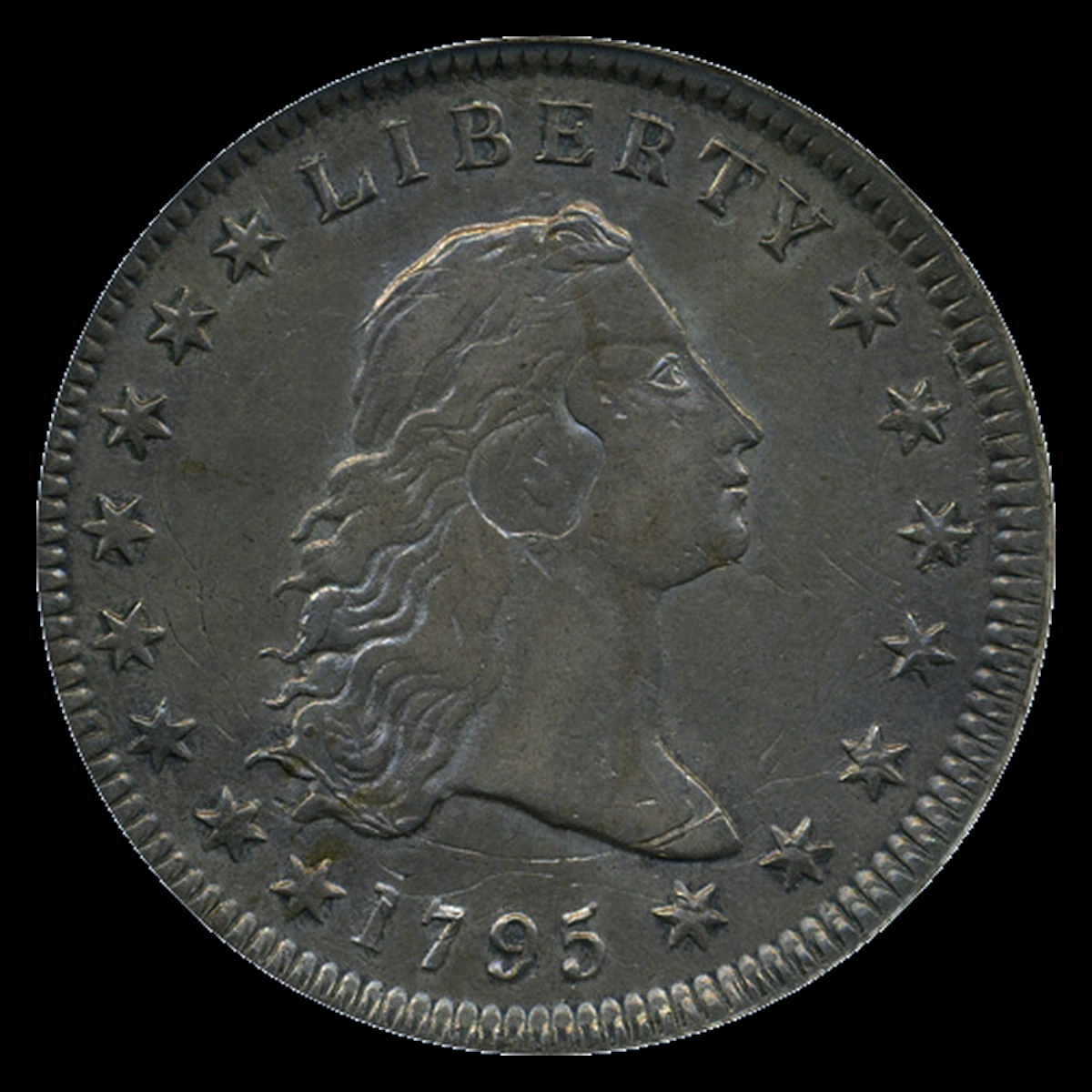
A previously struck 1794 dollar was struck again with the 1795 design. Remains of its eagle, wreath, portrait, and stars survive, with the earlier designs appearing on the opposite faces after the later strike.
NGC described the coin after grading it AU53. Whether the Mint deliberately reused the earlier dollar has been discussed, so the two-date history should not be presented as proof of an accidental intention.
How to Identify
Look for the earlier eagle and wreath around the later Liberty portrait, then examine older portrait-side fragments on the reverse. Their connected arrangement must fit a 1794 dollar.
A normal double strike repeats the current design instead. Compare both faces with the documented BB-14 overstrike rather than relying on one ambiguous numeral or scratch.
What It’s Worth
$150,000–$300,000 is a broad estimate for a comparable authenticated overstrike of this importance. PCGS records $175,375 for the NGC AU53 coin at Heritage in August 2004.
That transaction concerns the unusual overstrike itself, not an ordinary BB-14. The underlying 1794 designs must be demonstrated before using this rare-object comparison.
Conclusion
Begin with the portrait type, then distinguish small die traces from damaged blanks and repeated coin strikes. An overstrike goes further by preserving another year’s underlying design.
The heavily worn $6,037.50 double strike and the $175,375 overstrike represent very different objects. Keep condition, later countermarks, original features, and documented identity together when comparing their values.