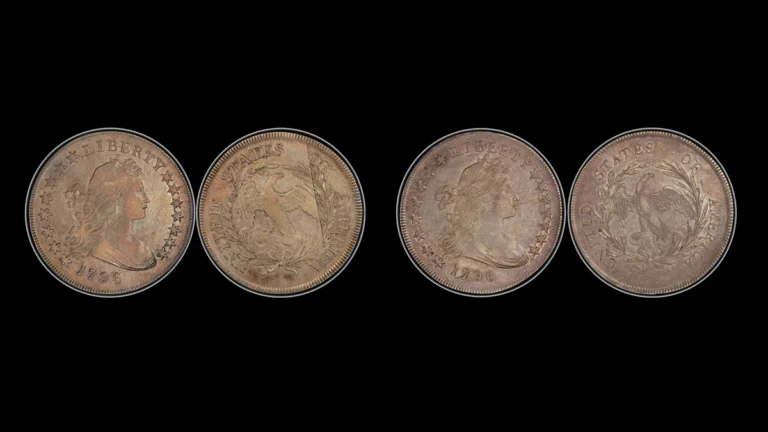
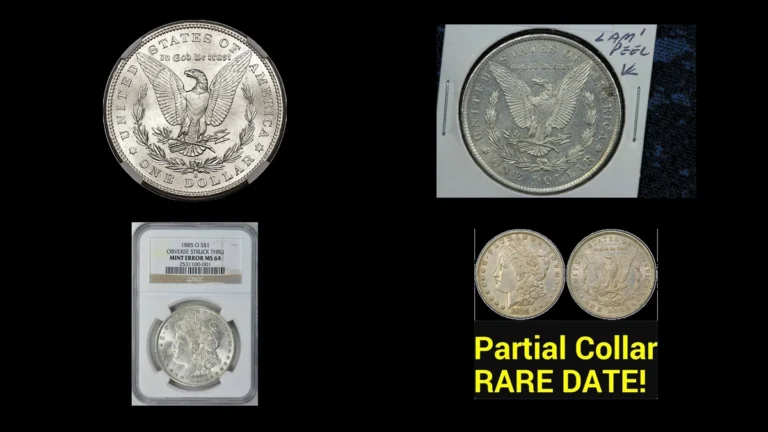
Rare 1873 Trade Dollar Errors (List & Pictures)
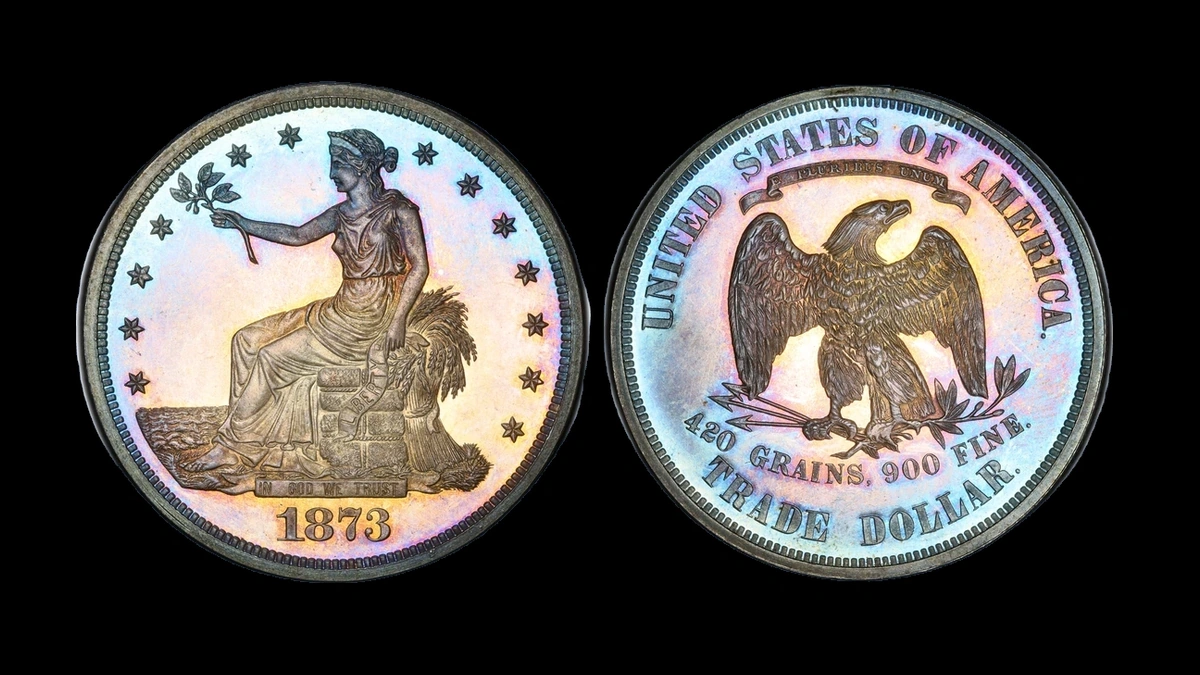
A few digit tops and a full backward portrait sit at opposite ends of the 1873 Trade dollar errors discussed here. Estimated whole-coin values span $200–$200,000, including a rare museum combination whose figure is an estimate, not a sale.
A misplaced-date 1873-CC brought $5,280 in April 2025. For broader context, a simpler 1877-S expanded strike sold for $6,300 in November 2018; it was a different coin without the full brockage.
1. 1873 Dollar An Unusual Mark on Liberty’s Arm: Arm Worm Variety Error
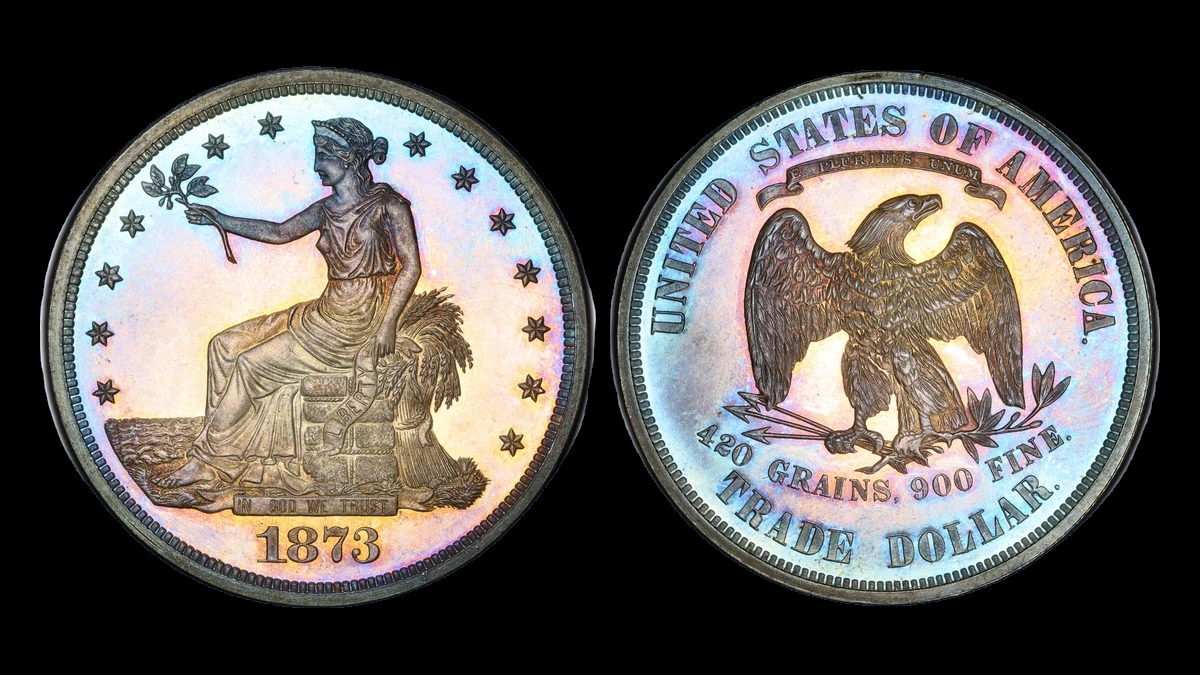
PCGS lists Arm Worm as a Philadelphia 1873 Trade dollar variety. The nickname identifies an arm feature, but does not by itself describe its exact shape or prove how it formed.
It is not evidence that an insect was trapped in the coin. A repeated die feature and a later scratch need different comparisons.
How to Identify
Begin with a photograph specifically identified as Arm Worm. Match the mark’s position against Liberty’s arm and clothing rather than inventing a shape from the name.
Use side lighting to distinguish raised detail from a cut and its pushed edges. Keep the whole front visible in your records so an isolated close-up remains tied to the dated coin.
What It’s Worth
$200–$6,000 is the estimate for identified Philadelphia examples across worn and ordinary unworn grades. Much of the value belongs to the Trade dollar itself.
A matching feature on original surfaces is more useful than an unexplained nickname. Cleaning and portrait scratches can lower appeal despite a genuine die variety.
2. 1873 Dollar Extra Numeral Tops in the Border: Misplaced Date Error
An early date-punch impression placed too low in the die can leave digit fragments below the proper date. One Carson City auction example shows tops of 87 among the border teeth.
A separate pattern has a deeply misplaced 7 near the normal 7. The misplaced-87 coin also has a die line through D in DOLLAR, but that is a companion feature on the same object.
How to Identify
Keep 1873 and the border beneath it in the same enlarged view. Match the curves and spacing of the extra 87 tops, distinguishing them from ordinary teeth.
Compare the separate single-7 pattern with its own photograph. Inspect for recent cuts in the border rather than accepting any numberlike shape as an original punch trace.
What It’s Worth
$1,000–$15,000 is the estimate for matched examples across circulated and ordinary unworn condition. The Carson City misplaced-87 coin graded PCGS AU55 sold for $5,280 in April 2025.
That amount includes the dollar’s Carson City rarity and remaining detail. It should not automatically be assigned to the separate single-7 pattern or added to a second value for the die line.
3. 1873 Dollar Expanded Metal and a Recessed Backward Liberty: Broadstrike with Brockage Error
A museum specimen combines an expanded outline with a sunken mirror image of Liberty where the eagle normally appears. The broadstrike came from missing normal collar support, while contact with an already struck coin produced the brockage image.
The reported coin graded PCGS AU55. Its Carson City attribution depends on documented history and professional assessment because the reverse brockage covers the usual mintmark area.
How to Identify
Inspect the reverse first for a recessed, backward version of the front design. Then compare that original impression with the way the metal spread around the normal outline.
A later-flattened dollar can be wide without explaining the mirror image. Solder at twelve o’clock on the museum coin is later damage and must remain separate from the striking evidence.
Do not require a visible CC where the brockage has covered the normal location. This specimen’s documented identification matters, and its two effects must be examined as one object.
What It’s Worth
$50,000–$200,000 is an estimated comparison range for a comparable authenticated major Trade dollar broadstrike with full brockage. It is not a recorded sale or official appraisal of the museum coin.
A simpler 1877-S broadstrike sold for $6,300 in November 2018. That coin lacked the full backward portrait and cannot directly price the more complex museum specimen.
Conclusion
The arm variety requires an exact named comparison, and the misplaced date needs recognizable digit tops in their proper positions. The expanded museum coin instead combines a full brockage with a history-based mint attribution.
Keep those identities intact when using the figures. The $5,280 misplaced-date sale is a transaction, while the much larger museum comparison remains an estimate for a rare combined error.