Rare 1802 Dollar Errors (List & Pictures)
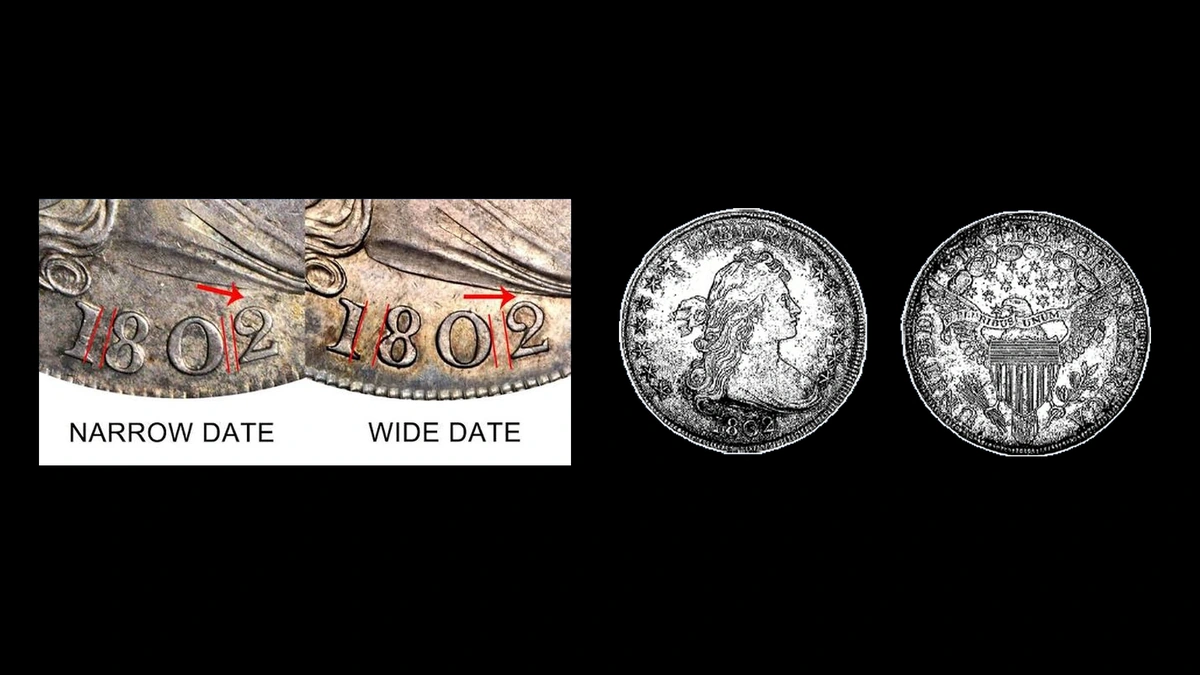
The final 2 on an early dollar can preserve part of an older 1. An 1802/1 graded AU58 sold for $26,400 in April 2020.
These five groups of 1802 dollar errors span estimated whole-coin values of $1,200–$50,000 for circulated examples. Begin at the date, then follow die marks before checking whether the reverse is merely tilted or the coin actually received a second strike.
1. 1802 Dollar An Older 1 beneath the 2: Overdate Error
The date on a die was changed from 1801 to 1802 without fully removing the earlier final digit. Its remaining strokes appeared on coins struck from that altered tool.
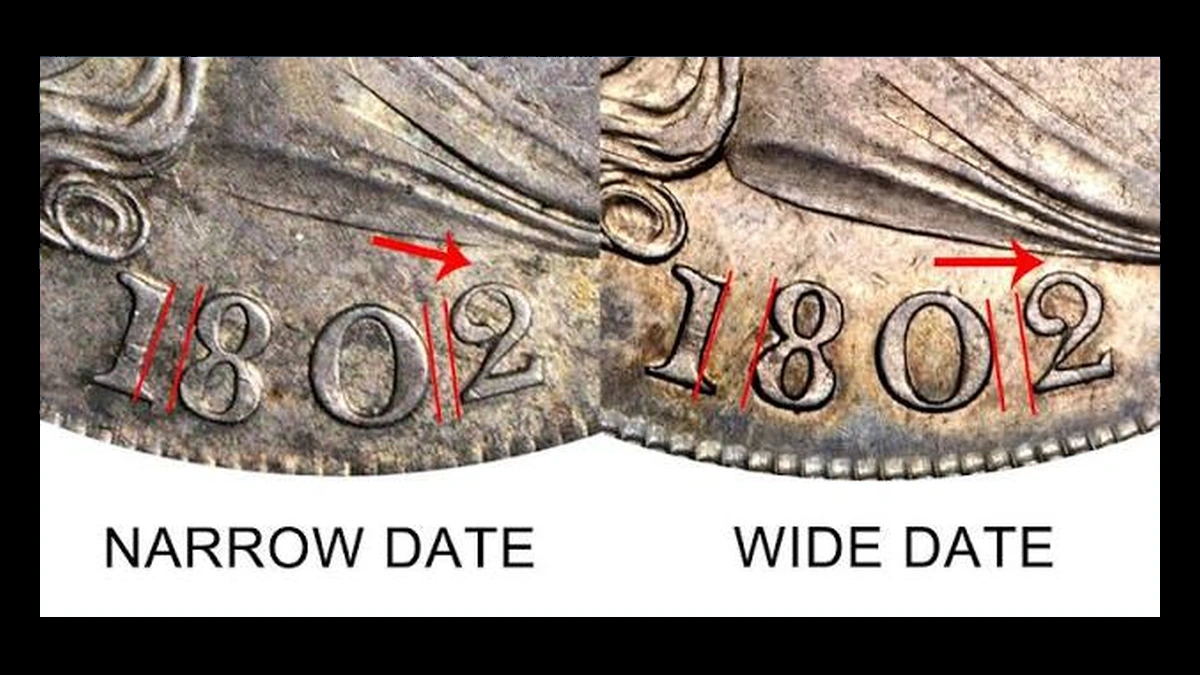
Several die combinations have different date spacing. On BB-235, the old 1’s upper-left end aligns with the left side of the 2.
How to Identify
Inspect the last digit for surviving raised strokes near the top and bottom of 2. Compare the full date spacing with the same variety, not just one unexplained bump.
A scratch will not reproduce the matching raised numeral shape. This is a changed die date, not proof that a complete 1801 coin was struck again in 1802.
What It’s Worth
$1,200–$40,000 is the estimate for circulated overdates. PCGS records an AU58 at $26,400 in April 2020.
That lightly worn coin is a different comparison from a damaged low-grade example. Use the appropriate date-spacing group and preservation level.
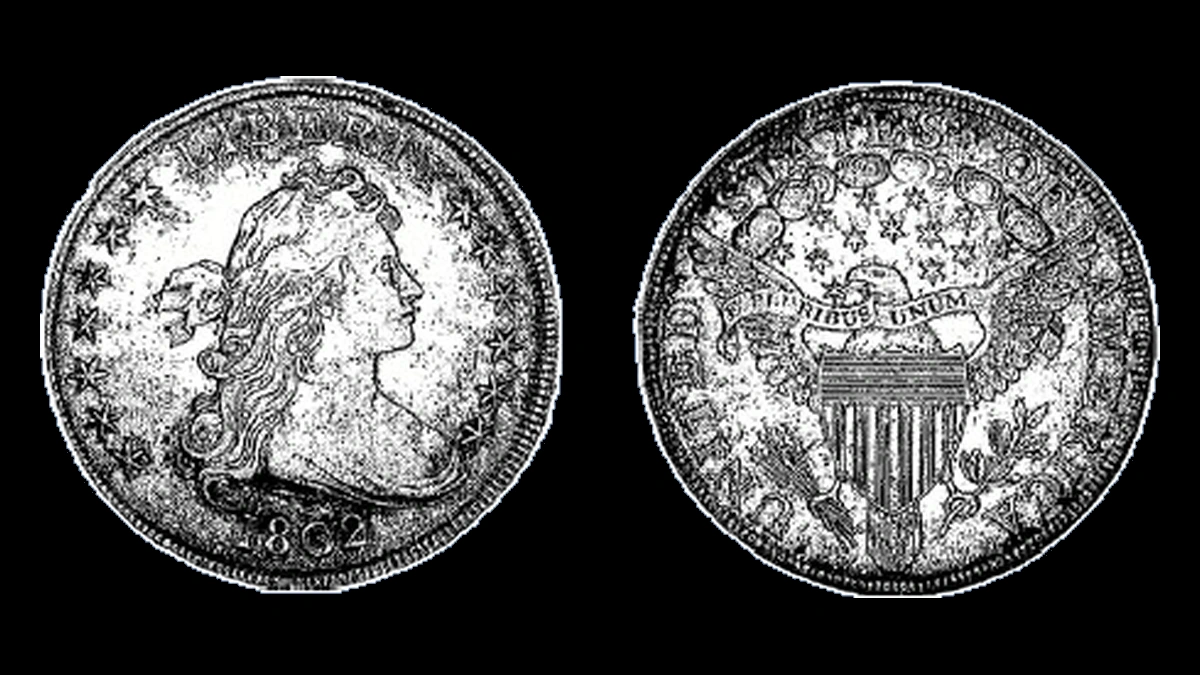
2. 1802 Dollar Raised Paths through Date and Stars: Die Cracks Error
BB-235 overdates can show a crack from about five o’clock into the drapery and another through the right stars. Later stages add a path through 02 toward the space above 8.
A small reverse crack lies between the arrows and eagle’s leg. Silver filled the die’s openings during striking, creating ridges rather than necessarily splitting the dollar itself.
How to Identify
Confirm the overdate and follow the raised paths across their landmarks. An early BB-235 need not show every branch that developed later.
Use side light on the front and the small arrow-to-leg ridge on the reverse. A cut through finished detail needs a different explanation from a continuous raised line.
What It’s Worth
$1,500–$30,000 is the estimate for identifiable circulated BB-235 dollars. An NGC VF25 example sold for $2,760 in July 2022.
That same-variety sale does not prove the auction coin carried every later crack. Several branches on one dollar do not create several separate premiums.
3. 1802 Dollar A Trace above the Clouds: Die Clash Error
Some BB-234 overdates have a faint line from the fifth cloud toward the border above O. The reference identifies it as a clash trace from the dies contacting each other without a blank.
The line belongs to a particular die combination. It is not a feature required on every 1802/1 dollar.
How to Identify
Keep the full cloud row, O, and nearby border in the same view. Compare the cloud-five route with a documented BB-234 clash photograph.
Change the lamp angle to reveal the light trace, then confirm the matching front variety. A random scratch or normal cloud edge does not establish the same path.
What It’s Worth
$1,500–$30,000 is the estimate for circulated BB-234 coins with an identified clash. A PCGS VF30 BB-234 brought $4,200 in January 2021.
That figure gives same-variety context without confirming the auctioned coin’s particular clash. A clear date and original surfaces usually matter more than this faint line.
4. 1802 Dollar A Modest Tilt between the Faces: Rotated Dies Error
Stack’s Bowers described a Narrow Date BB-241 graded PCGS AU58 with the reverse turned about 10–15 degrees counterclockwise. Each face can have one clear design despite the alignment difference.
This modest tilt is not a second strike. The catalog description also does not guarantee a separate error designation on a grading holder.
How to Identify
Set Liberty upright and flip the holder top to bottom without twisting sideways. Compare the eagle’s centerline with a straight vertical guide.
Repeat the flip and check that the same lean remains. A tilted holder or separately rotated photograph can create a misleading appearance.
What It’s Worth
$1,500–$20,000 is the estimate for circulated Narrow Date dollars with a comparable modest turn. The ordinary variety value and surface quality remain the main price drivers.
A large added error premium would require more than this small angle. Cleaning and worn detail can outweigh the alignment difference.
5. 1802 Dollar A Displaced Second Picture: Double Strike Error
A dealer recorded a Narrow Date BB-241 graded PCGS VF25 with a second strike that landed off center. Parts of the earlier design remain beside the later impression.
The two strikes and off-center second blow describe one coin’s history. Unlike a modest reverse tilt, this event produces repeated design.
How to Identify
Follow both impressions through the portrait, date, stars, and reverse lettering. Several separated features should explain the same movement of the coin.
Keep both full faces and the complete boundary visible before assigning a direction or percentage. A flat shelf beside a lone letter is insufficient evidence for another blow.
What It’s Worth
$5,000–$50,000 is the estimate for identified circulated double strikes. Clear separation, readable date, and absence of repairs strengthen the comparison.
A damaged and countermarked 1795 Flowing Hair double strike brought $6,037.50 in January 2007. That older different-year result is not a sale price for the listed 1802 VF25.
Conclusion
An older 1 beneath 2 records a changed die date, while a crack or cloud-side clash records later marks on a die. A turned reverse and a repeated strike require entirely different checks.
Match the complete variety before choosing a sale comparison. Combined features still belong to one dollar, and its condition remains part of every whole-coin estimate.