Rare 1852 Half Dollar Errors (List & Pictures)
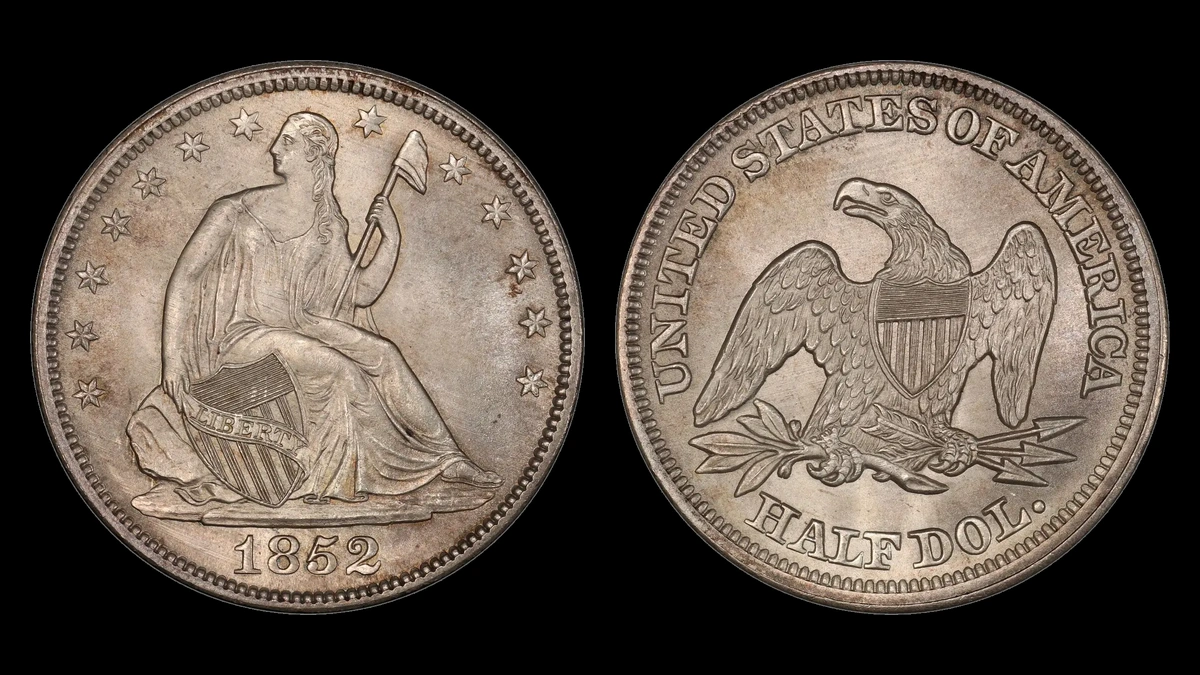
Small raised details, rather than a misshapen outline, guide the search for these 1852 half dollar errors. Their estimated $800–$4,000 span depends on the mint, wear, and surfaces.
A documented $3,120 Philadelphia sale from December 2025 provides an ordinary-coin comparison, without an identified error. After checking the mint, use the date and shield sections below to locate the two different features.
Check the Mint and Denomination
An O below the eagle means New Orleans; Philadelphia half dollars have no mintmark. Read HALF DOL. on the back too, since a seated Liberty also appears on smaller coins.
The normal 1852 half dollar weighs 13.36 grams when unworn and measures about 30.6 mm across, with a grooved edge. These basic checks apply to both features below; neither weight nor size proves an error.
1852 Half Dollar Extra Numeral Edges in the Date: Repunched Date Error
Begin at the bottom of the front and study all four digits together. A remnant of an earlier date impression can survive beside the final numerals.
Those small raised fragments reproduce an earlier date impression in the steel stamping tool, or die. Reapplying the date punch in a slightly different position left parts of the first impression uncovered.
The Seated half dollar date reference lists low and partial impressions for Philadelphia and partial repunching for New Orleans. These reports concern different dies, so a single arrangement of extra strokes does not identify every example.
How to Identify
Use the mintmark you recorded on the back to choose the right comparison. Then view the complete date under a 10× magnifier, looking for small rounded pieces of numbers rather than general thickening.
The Philadelphia report includes a lower date impression. That direction is a lead for the relevant variety, not a rule that every 1852 or 1852-O must follow.
Check each suspected stroke under more than one lighting angle. A scratch through a digit or a flat ledge alongside it can resemble an extra number in a single photograph.
Save a close view with all four digits visible. Matching their spacing and the surviving extra outlines is more useful than enlarging one unexplained bump until it resembles a numeral.
What It’s Worth
Estimated range: $800–$3,500 for circulated examples with clear repunching. This covers roughly Very Fine through About Uncirculated, from noticeable wear to only slight wear.
Heritage sold an ordinary 1852-O graded ANACS VF25 for $840 and an ordinary Philadelphia ANACS AU50 for $3,120 in December 2025. Neither was identified as a repunched-date sale.
The comparison involves both a different mint and a different level of wear. It therefore cannot establish a separate premium for the extra date strokes.
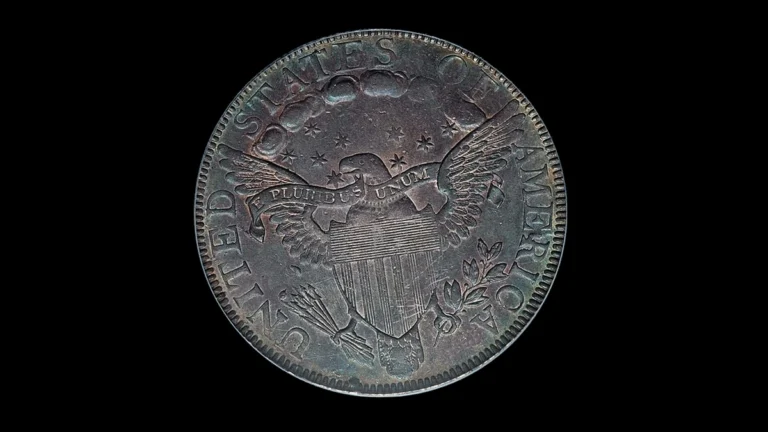
1852 Half Dollar Faint Shapes Inside the Shield: Clashed Dies Error
Move from the date to the rightmost stripes in Liberty’s shield. Extra traces in this area were described on the Philadelphia variety called WB-101, Die Pair 3.
These are clash marks, made after the front and back dies met with no coin blank between them. The tools picked up traces of one another’s designs and left those traces on later coins.
The catalog described double clash traces, which does not mean the coin received two strikes. Repeated contact between the dies can produce more than one set of faint marks.
How to Identify
Establish the shield’s normal stripe pattern before looking for anything extra. Direct light across the stripes on the far right and compare the additional shapes with a documented Die Pair 3 example.
A clash should relate to detail from the opposite die’s design. An isolated scratch or an ordinary stripe edge does not establish that connection.
The described coin had no circulation wear, but its PCGS holder stated “Streak Removed.” That wording records a later surface treatment, separate from the original die clash.
Do not use a treated patch as a diagnostic mark. The relevant evidence is the position and shape of the extra design traces within the shield.
What It’s Worth
Estimated range: $2,500–$4,000 for lightly worn or unworn examples with similar small clashes. A surface problem can reduce the price even when the design remains sharp.
The ordinary Philadelphia AU50 sold for $3,120 at Heritage provides a same-year condition reference. It is not the “Streak Removed” clash coin described above.
Because the clash is small, the grade and surfaces remain central to the comparison. The estimate values the complete 1852 half dollar rather than each extra shield line separately.
Conclusion
The date and shield offer two distinct places to search. Extra numeral outlines come from repeated date punching, while faint shapes in the shield can trace back to contact between the dies.
Estimated values span $800–$4,000 for the conditions discussed. Use the correct mint, remaining detail, and surface quality when comparing a coin; the $840 and $3,120 records concern ordinary examples.