Rare 1896 Half Dollar Errors (List & Pictures)
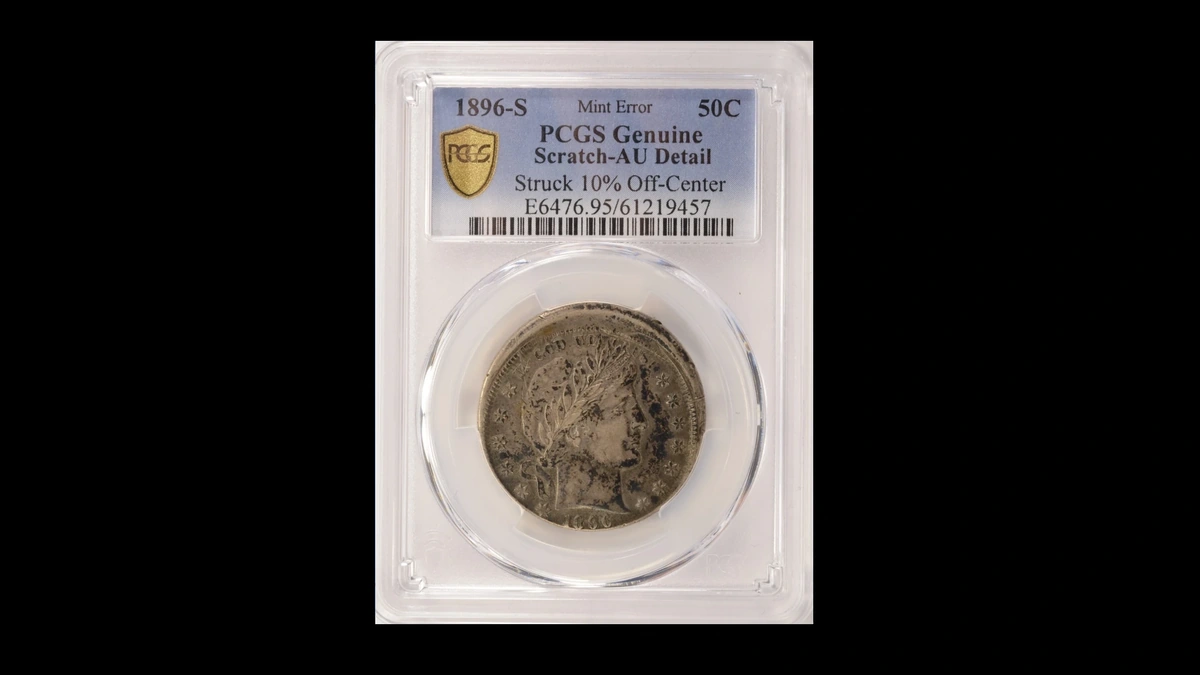
A rough cheek and an off-center design are different kinds of clues. The 1896 half dollar errors here involve a displaced strike and marks copied from a rusty, cracked die.
Estimated comparisons run from $3,500–$55,000, with the high end limited to exceptional preservation. The Duckor MS67 sold for $54,625 at Heritage in August 2010.
Check the full design placement first, then inspect the height and shape of the small surface marks.
1896 Half Dollar Missing Border on Both Faces: Off-Center Strike Error
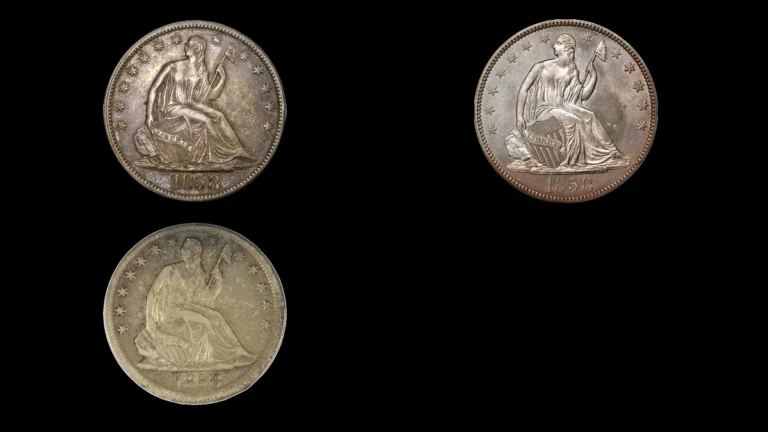
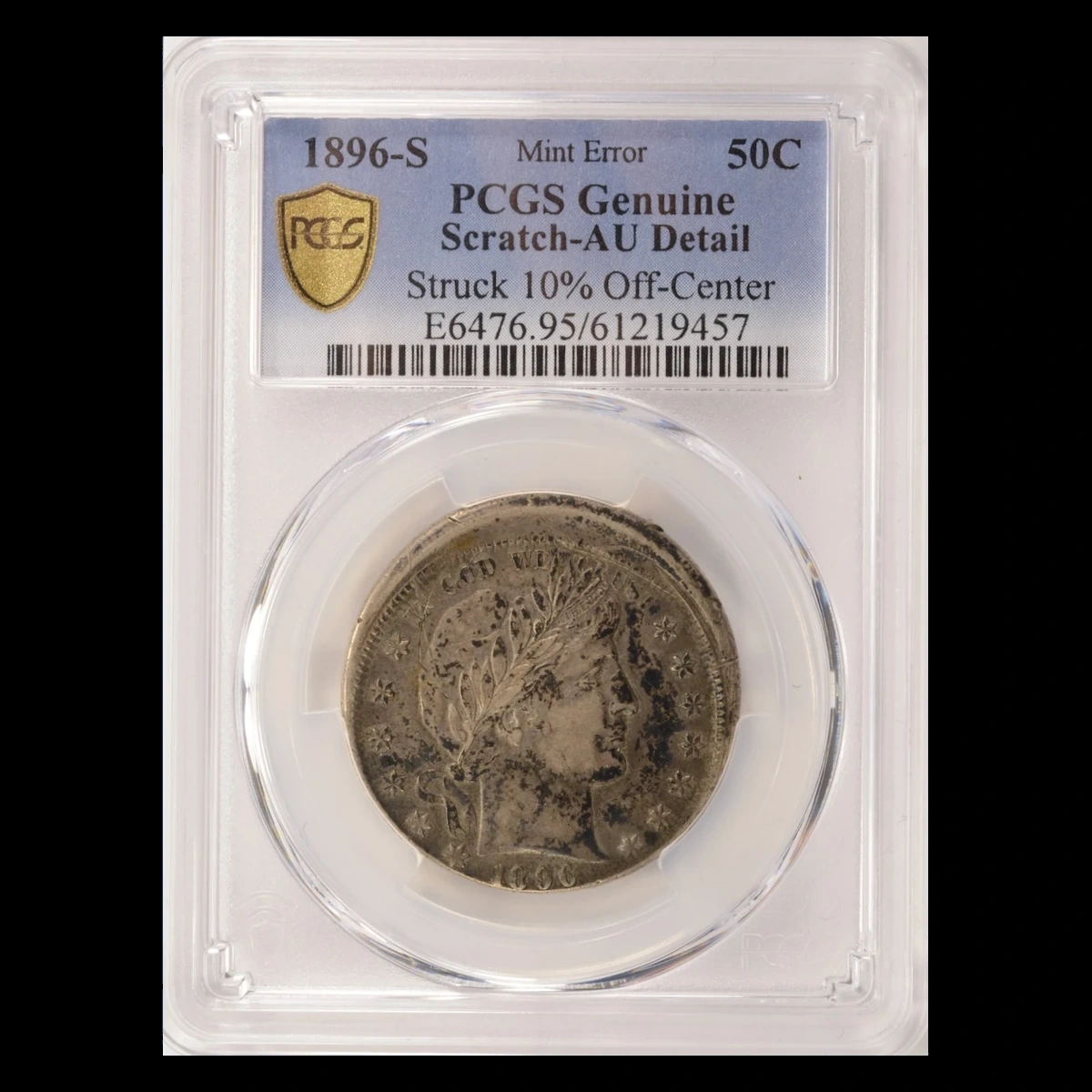
The reported 1896-S off-center half loses parts of its toothlike border on both sides. Sullivan Numismatics describes the shift as about ten percent toward seven o’clock.
Its blank was out of position when the steel stamping tools, or dies, came together. That misplaced strike left a margin beside the missing design.
The coin also has a scratch and carries a PCGS AU Details label. This means it has light wear but a surface problem that prevents a normal numerical grade.
How to Identify
Use the Sullivan example to compare which parts of the border are absent. An uneven rim on only one face can instead point to a die-alignment problem.
Inspect the unstruck margin with a magnifier. Look for intact blank surface rather than filing or cutting that removed part of a finished coin.
Keep the date and the S below the eagle visible in full photographs. A close-up of one empty edge cannot establish the year or mint.
If the coin is loose, compare its weight with the normal 12.50 grams, allowing for wear and damage. Its usual diameter is about 30.6 millimeters, though an unusual strike may change the outline.
Record the edge grooves and any damage separately. The scratch on the listed coin affects condition; it did not cause the two-sided design shift.
What It’s Worth
Estimated range: $3,500–$5,000 for a comparable 1896-S off-center half around AU Details. Its age, mint, and visible striking error all belong in that comparison.
Sullivan’s eBay offer showed an asking price of $4,820.40 for the scratched example. An advertised amount is not proof of a completed sale.
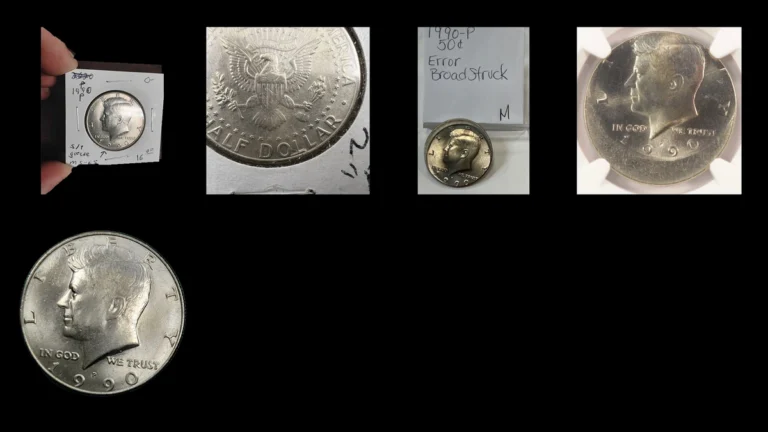
A different-series comparison is a 1976 Kennedy half struck fifteen percent off center that sold for $480 in December 2025. Its NGC MS64 grade and modern collector market make it an example of the error type, not an equal-value substitute.
1896 Half Dollar Raised Texture on the Cheek and Neck: Rusted and Cracked Die Error
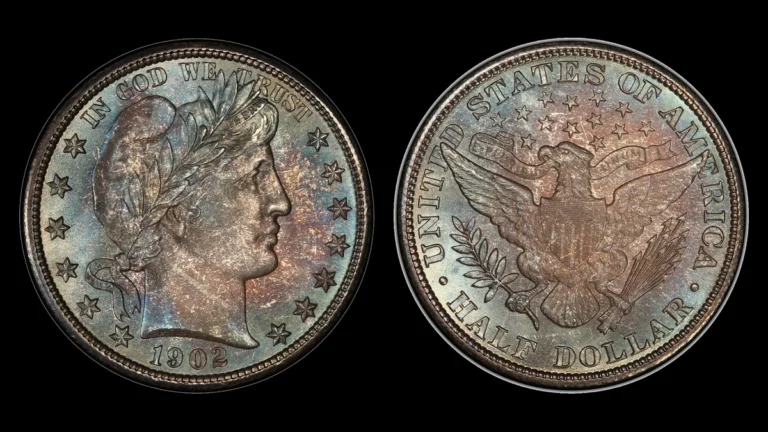
On the Duckor 1896-S, tiny raised bumps are especially noticeable on Liberty’s cheek and neck. The rust was in the steel die, not growing on the silver coin.
Rust left small holes in the tool. Coin metal entered those holes during striking and emerged as bumps above the surrounding surface.
The Heritage catalog also describes cracks on both faces and traces of work to remove rust from the front die. Together, they record changes to the tools used for this coin.
How to Identify
Light the cheek and neck from the side to judge whether the texture rises or sinks. Later corrosion can leave pits in the coin itself, which is a different effect from raised copies of holes in a die.
Compare the small bumps and nearby lines with clear photographs of the Duckor coin. Fine scratches from cleaning should not be grouped automatically with the marks described in the catalog.
Use the same reference for the cracks on the front and back. Combining one face from each of two unrelated examples can create a false match.
Find the S below the eagle and check the overall coin as well. Bright or reflective areas do not make this regular San Francisco half a Proof specially made for collectors.
The normal size, weight, and grooved edge described above are supporting checks. The specific raised facial texture and crack pattern provide the closer comparison.
What It’s Worth
Estimated range: $45,000–$55,000 for a comparison at the exceptional MS67 level. This grade describes an unworn coin with unusually fine preservation.
The Duckor MS67 brought $54,625 at Heritage in August 2010. Its surfaces, overall appearance, and history in a noted collection contributed to that result.
A worn coin with raised texture does not belong automatically in this range. The figure prices an outstanding 1896-S, not a fixed bonus for rust marks and cracks.
Conclusion
For the off-center coin, match missing border details and original blank metal on both faces. For the rusty-die example, judge raised texture against pits or later scratches before comparing the crack pattern.
Keep the $3,500–$5,000 and $45,000–$55,000 ranges apart. One concerns a scratched error coin around AU Details; the other concerns an exceptional MS67 specimen.