Rare 1927 Half Dollar Errors (List & Pictures)
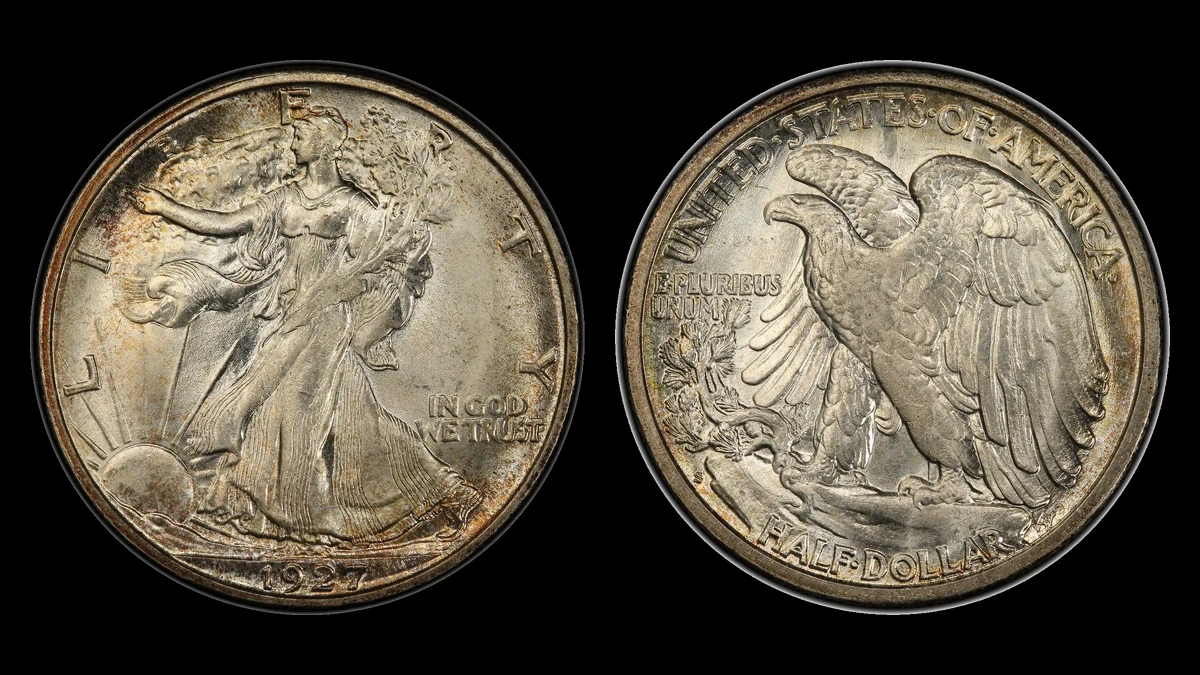
Soft detail is not always wear, and a missing piece is not always a mint error. These distinctions matter when checking 1927 half dollar errors and strike features.
The estimated comparisons below span $100–$2,000. A regular 1927-S graded MS62 sold for $1,920 at Heritage in January 2025, providing condition context rather than a confirmed weak-strike error sale.
Check the coin’s outline, any separating metal, and the surface detail in that order.
| What you notice | Possible explanation | Estimated range |
|---|---|---|
| A curved or straight missing edge | Clipped blank | $200–$1,000 when circulated |
| A thin flake or shallow peeling patch | Lamination | $150–$500 when circulated |
| A narrow raised line | Die crack | $100–$400 when circulated |
| Faint detail with original shine | Weak strike | $1,500–$2,000 around MS62 |
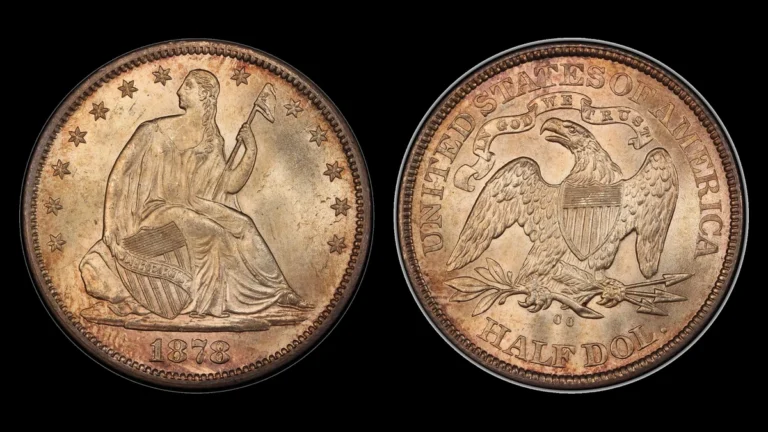
The issue covered here has an S near the lower left of the reverse. A normal unworn half weighs 12.50 grams, is about 30.6 millimeters across, and has a grooved edge.
1. 1927 Half Dollar A Curved Bite or Straight Missing Edge: Clipped Planchet Error
A planchet is the metal blank prepared to become a coin. Part of its outline can be missing before the design is struck.
A punch overlapping an earlier hole in the metal strip can produce a curved gap. Cutting too near the strip’s end can instead leave a straight missing edge.
Both forms are reported for 1927-S without a fixed size or location. The shape is a starting clue, not proof that the metal was missing before minting.
How to Identify
Weigh a loose coin and compare the remaining round section with the normal diameter. Missing metal can lower the weight, but later cutting can do the same.
Inspect the boundary with a magnifier for saw marks, filing, or edge grooves cut off abruptly. Those signs suggest damage to a finished coin.
Look directly opposite the missing section for a weak rim. This can support a genuine clip, though it is not equally visible on every example.
Photograph the whole coin so the date and S remain connected to the edge close-up. The nearby struck design should also be included.
What It’s Worth
Estimated range: $200–$1,000 for a circulated 1927-S with a genuine clip. The amount of missing metal and the coin’s condition affect the comparison.
A 1942 half with a one-percent clip brought $126 at Heritage in September 2019. It graded PCGS AU58, indicating very little wear.
That sale concerns a tiny clip on another date. It does not make every straight-edged 1927-S valuable, or price every larger clip the same way.
2. 1927 Half Dollar A Thin Layer Lifting Away: Lamination Error
A visible flake can reveal a weak layer inside the silver strip used to make the blanks. When that layer separates, collectors call it lamination.
The reported 1927-S category does not have one fixed position on Liberty or the eagle. Its layered boundary matters more than where it appears.
How to Identify
Leave attached metal untouched. Breaking off the flap changes the feature and removes clues about how it formed.
Examine the edge of the patch from a shallow angle with a 10× magnifier. Look for a thin layer meeting the solid surface rather than separate pits or a cut made by a tool.
Check the surrounding areas and the reverse for scraping or chemical damage. A rough missing patch alone does not establish a natural separation.
A very thin flake may cause almost no noticeable weight loss. Do not use a nearly normal reading to dismiss a clearly visible layered boundary.
What It’s Worth
Estimated range: $150–$500 for circulated 1927-S halves with visible lamination. The basic value of the date and the appearance of the flaw both matter.
A 1912-S Barber half with an attached lamination sold for $89 at Heritage in March 2026. It graded PCGS VG8, a heavily worn grade.
The other-year sale illustrates a similar metal flaw on a different design. A large peel may interest an error collector while making the coin less appealing to someone seeking clean surfaces.
3. 1927 Half Dollar A Narrow Raised Route into the Design: Die Crack Error
Unlike a peel, a die-crack line adds a narrow ridge to the struck surface. It records silver entering a fracture in the steel stamping tool.
Reports for 1927-S do not establish one exact route. Follow the actual line instead of assigning a location from an unrelated photograph.
How to Identify
Inspect the line from the border toward the design with magnification. Check whether it stays above the surface along its route.
Move the lamp to the opposite side. The bright edge of a scratch can look raised from one direction even when the main mark is a cut.
Check nearby edge damage as another possible cause of displaced metal. A broad raised rim patch also needs a different explanation from a fine crack.
Do not scrape the line as a test. Lighting and a clear photograph preserve the evidence.
What It’s Worth
Estimated range: $100–$400 for a circulated 1927-S with a small genuine crack. Much of that value belongs to the date and condition rather than the ridge itself.
The 1927 half dollar guide places ordinary moderately to lightly worn examples in the low hundreds. That gives context for the whole-coin estimate.
A clear line may attract extra interest, while a faint one may add little. Cleaning, damage, or heavy wear can affect the price more than the crack’s length.
4. 1927 Half Dollar Faint Fingers or Feathers with Original Shine: Weak Strike Error
A coin can leave the Mint with soft detail if its metal does not fully fill the deepest parts of the dies. On 1927-S, compare Liberty’s hand and gown folds with the eagle’s breast feathers.
This is mainly a strike-quality issue. Weak detail does not automatically create an error premium, and collectors may prefer a sharper coin.
How to Identify
Choose a sharply struck 1927-S of similar condition as the comparison. A worn coin cannot show how much detail an unworn one should have.
Tilt the soft areas beneath one light and look for original shine continuing across them. Wear tends to rub that shine away from exposed high points.
Compare several areas together rather than deciding from one smooth patch. Examine the hand, gown, and eagle’s breast as parts of the same coin.
Keep condition separate from sharpness. An unworn half may have a weak strike, while a sharply struck coin may later acquire considerable wear.
What It’s Worth
Estimated range: $1,500–$2,000 for a softly struck example around MS62. MS62 is an unworn grade that can still include noticeable marks.
A regular PCGS MS62 sold for $1,920 at Heritage in January 2025. It was not sold as a confirmed weak-strike error.
The estimate allows for soft detail at comparable preservation. The sale does not establish an extra payment for weakness.
Conclusion
Missing edges need evidence of an original clip, peeling patches need a layered boundary, and crack lines need to stand above the surface. For soft design details, look at the surviving shine and compare several areas together.
The $100–$2,000 span combines circulated error comparisons with an unworn strike-quality comparison. Keep those condition differences attached to the prices.