Rare 1898 Half Dollar Errors (List & Pictures)
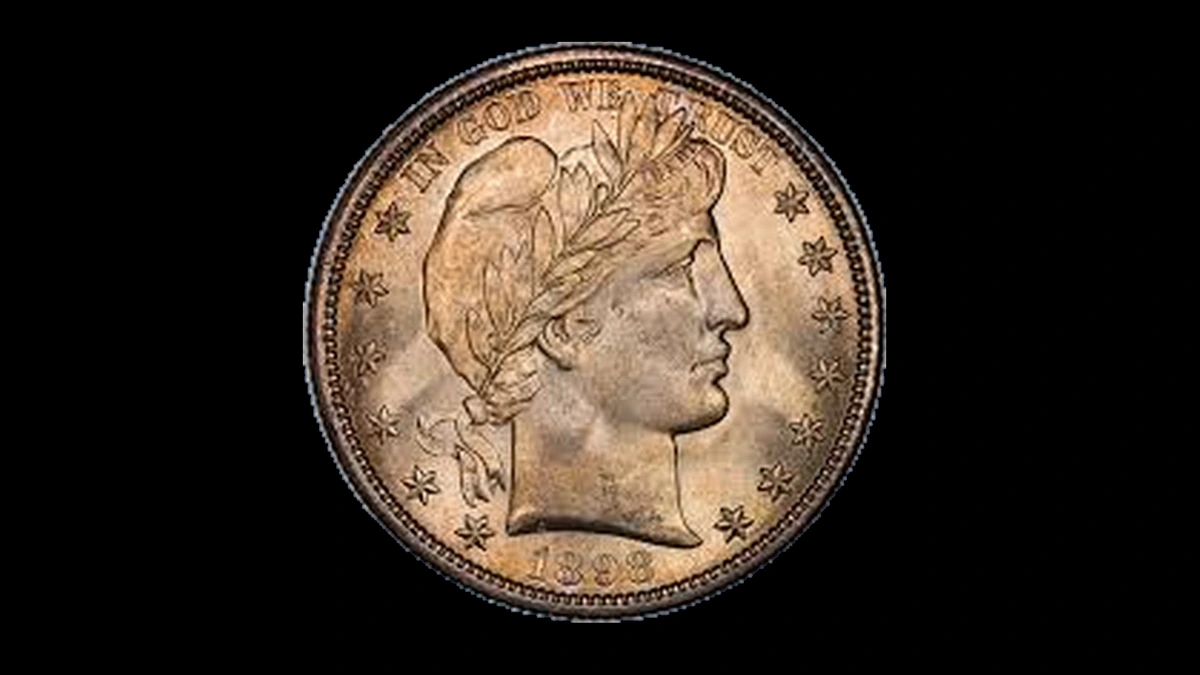
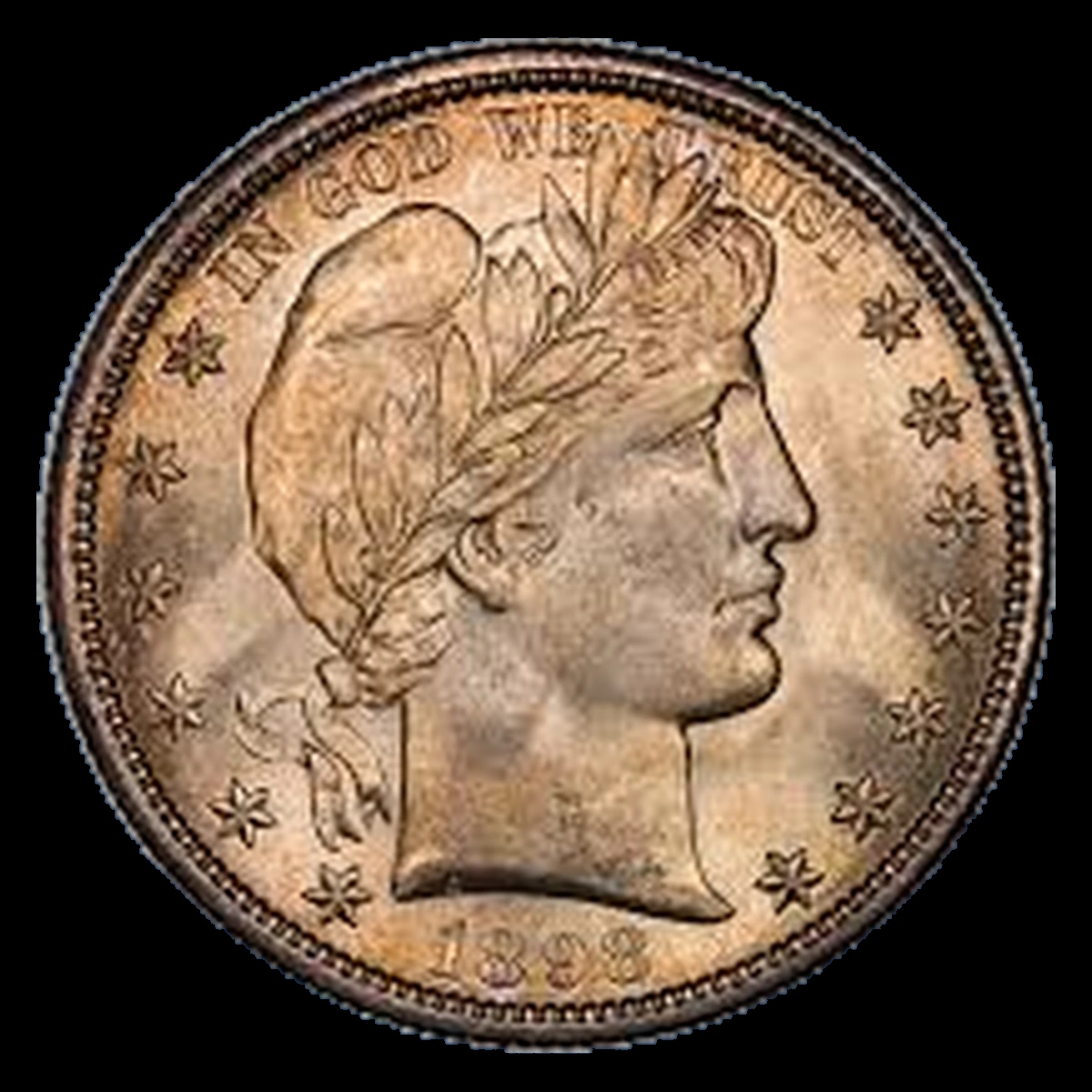
A small letter can need just as much attention as a dramatically widened coin. These 1898 half dollar errors and reported varieties have estimated values of $150–$10,000.
The $25,300 ordinary 1898-S auction record from August 2010 belongs to exceptional preservation, not an identified inverted-S sale. Keep that distinction in mind when comparing the smaller features below.
Begin at the date and mintmark, then inspect the design and outline.
| Check | Feature | Estimated comparison |
|---|---|---|
| 9 and final 8 | Reported repunched date | $150–$500 when circulated |
| O below the eagle | Reported Small O | $500–$850 around VF |
| Both ends of the S | Inverted mintmark | $200–$1,200 circulated; $8,000–$10,000 around MS65 |
| Local interrupted design | Reported strike-through | $150–$750 |
| Expanded complete design | Broadstrike | $2,250–$3,500 around AU58 |
| Blank margin beside missing design | Reported off-center strike | $2,500–$8,500 for substantial shifts |
A normal unworn Barber half weighs 12.50 grams and measures about 30.6 millimeters across, with grooves around the edge. Record the mint separately from the error, and leave certified coins in their holders.
1. 1898 Half Dollar Extra Curves Beside the Date: Reported Repunched Date Error
Older reports direct attention to the 9 and final 8. A date punched more than once into the steel stamping tool can leave pieces of the earlier numbers beside the final impression.
Another guide mentions San Francisco, but the reports do not establish one shared mint-specific pattern. Do not assume an S or a particular direction for every extra stroke.
How to Identify
Enlarge the whole date, then inspect the final two digits under changing light. Look for a rounded earlier number fragment rather than a shadow or flat shelf.
Compare with an identified 1898 half dollar of the same mint, not an 1898 dime. Keep the reverse photograph with the date close-up to preserve that connection.
What It’s Worth
Estimated range: $150–$500 for matching circulated examples around Fine through Extremely Fine. The 1898-S guide gives ordinary-coin figures of about $150 at F12 and $500 at XF45.
Those are condition comparisons, not repunched-date auction results. They also do not establish that every reported repunched date is from San Francisco.
2. 1898 Half Dollar A Smaller Outside O Outline: Reported Small O Error
A reported Jules Reiver collection coin graded VF35 had an O described as the size of a dime’s mintmark. This is a claim about the letter’s dimensions, not just the size of its center opening.
The observation suggests a punch-size comparison without proving which punch was used. It is separate from the famous 1892-O Micro O variety.
How to Identify
Compare the O’s outside height and width at equal physical scale. Two photographs enlarged by different amounts cannot establish a size difference.
Use a magnifier to judge whether wear has distorted the outline, then consult the society’s Reiver report. Keep the complete mintmark and nearby reverse details visible.
What It’s Worth
Estimated range: $500–$850 for a matching circulated example in Very Fine condition. Ordinary 1898-O value accounts for much of this comparison.
PriceCharting lists a PCGS VF35 sale at $680 in December 2025. It was an ordinary-coin comparison, not a verified Small O sale or a reason to borrow the 1892-O Micro O premium.
3. 1898 Half Dollar Reversed Ends on the S: Inverted Mintmark Error
The S has different top and bottom ends, so turning it upside down changes its shape. The 1898-S half-dollar variety is cataloged as FS-501.
The mintmark punch was inverted when it entered the die. This differs from a tilted letter or part of an earlier S remaining after a second punch.
How to Identify
Hold the reverse upright and compare both ends of the S with a confirmed FS-501. A damaged end or a slight tilt does not establish inversion.
Inspect the curve joining the ends and the nearby silver for signs of alteration. An upside-down image of a normal S can explain the shape, but an actual variety photograph is the better identification reference.
What It’s Worth
Estimated range: $200–$1,200 for circulated examples and $8,000–$10,000 around MS65. Greysheet’s guide lists $8,250 at MS65 and $10,000 at MS65 CAC.
The ordinary 1898-S record of $25,300 from August 2010 is not an identified FS-501 transaction. The inverted-S figures here are guide comparisons, with their stated grades attached.
4. 1898 Half Dollar A Local Hollow or Weak Patch: Reported Strike-Through Error
Material between the die and blank can block detail or leave a depression. The surrounding design may remain sharp because it received normal contact.
The supplied report does not name a particular object or location. A shallow mark should not automatically be called grease, wire, or another material.
How to Identify
Inspect the boundary under soft and side lighting. Compare the weak or hollow area with intact detail immediately beside it.
A gouge may push metal into a ridge, corrosion can leave a rough hollow, and wear often flattens exposed high points. Check both faces because the report does not fix the affected side.
What It’s Worth
Estimated range: $150–$750 for a genuine modest strike-through on a circulated coin. The mint, wear, and overall surfaces remain part of the price.
An ordinary 1893-O graded PCGS AU55 sold for $840 at Heritage in September 2025. That other-year, lightly worn coin offers context for Barber-half value rather than an 1898 error transaction or a separate strike-through premium.
5. 1898 Half Dollar A Complete Design in a Wider Outline: Broadstrike Error
A broadstruck coin spreads beyond its normal width because the collar does not contain the metal properly. The collar is the ring that controls the edge during striking.
An 1898-O graded NGC AU58 appears in both a dealer list and a Heritage catalog. The matching date and grade alone do not prove those appearances show the same physical coin.
How to Identify
Trace the complete portrait, eagle, and outer lettering. Compare the expanded outline with the AU58 auction example.
Measure a loose coin across several directions and inspect its edge. Natural outward spread differs from a finished coin flattened later, which may show crushed design or other damage.
What It’s Worth
Estimated range: $2,250–$3,500 for a comparable lightly worn 1898-O. The 2007 Al’s Coins list asked $2,250 for an AU58, while older Barber broadstrike guides provide comparisons around $2,500–$3,000.
The estimate combines a historical offer and guide values. The Heritage catalog identification does not, by itself, supply a completed sale price.
6. 1898 Half Dollar Missing Design Beside a Blank Crescent: Reported Off-Center Strike Error
A blank placed off center receives the design too close to one edge while another part remains untouched. Some intended detail misses the metal entirely.
The 1898 guide reports shifts without establishing a graded coin at each stated percentage. Judge the amount and direction from an actual example.
How to Identify
Compare both faces for the misplaced strike and inspect the blank crescent for grinding or cutting. A shifted die can affect only one face, while an off-center blank should explain both incomplete designs.
Read all four digits of 1898 and check whether the mintmark region survives. An unstruck mintmark area cannot be taken as proof that the coin came from Philadelphia.
What It’s Worth
Estimated range: $2,500–$8,500 for substantial genuine off-center Barber halves with readable dates. Small shifts need a lower comparison than the dramatic examples supporting the upper bracket.
An 1894 half struck forty percent off center sold for $7,800 at Heritage in December 2022. It graded NGC AU53, so both its major displacement and light wear must remain part of this other-year comparison.
Conclusion
Small mintmark claims need scale and orientation, while larger striking errors need full views of both faces. Keep the coin’s mint and condition with each close-up rather than relying on an error name alone.
The $150–$10,000 estimates combine guide figures, historical offers, and stated sale comparisons. The ordinary $25,300 record does not price the inverted-S variety.