Rare 1872 Half Dollar Errors (List & Pictures)
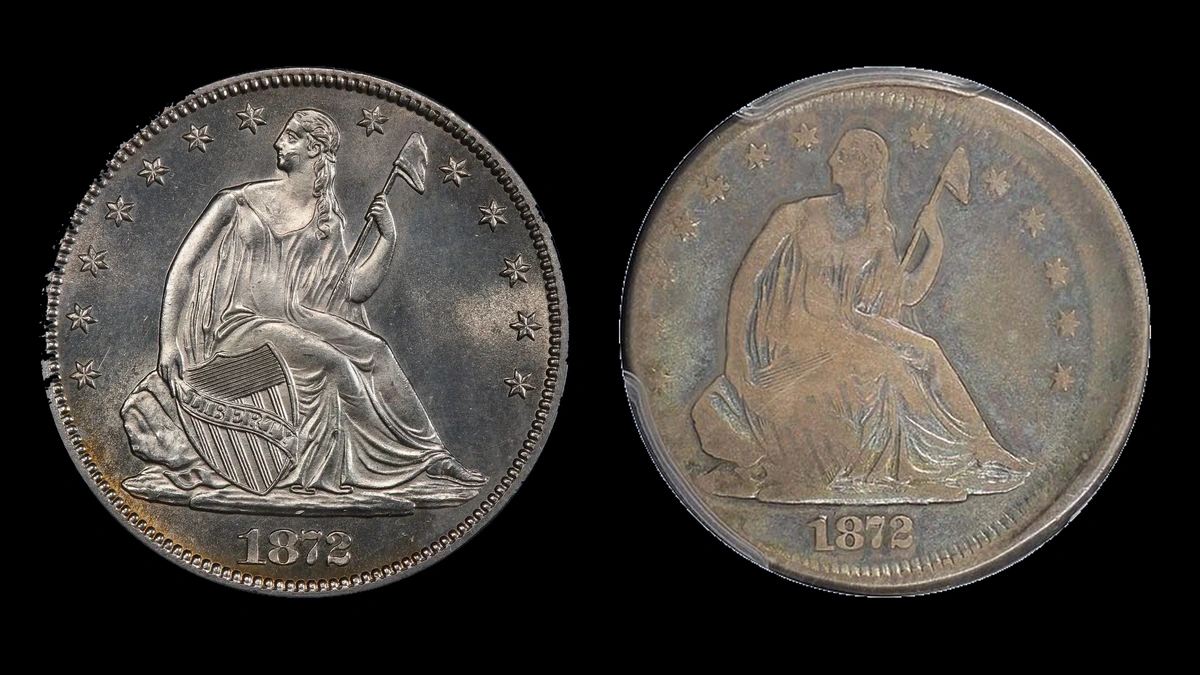
The mint letter helps choose where to look on an 1872 half dollar. Philadelphia date fragments, San Francisco die marks, and a Carson City off-center strike need different reference coins.
Estimated comparisons for these 1872 half dollar errors span $150–$6,500. A high-grade misplaced-date example sold for $6,000 in November 2019 and $5,280 in April 2024.
Begin at the rock above the date, then follow the star, gown, reverse, and edge checks below.
| Location | Feature | Estimated range |
|---|---|---|
| Rock above 72 | Misplaced date | $5,000–$6,500 around MS65 |
| Date and stars on 1872-S | Die crack | $250–$1,500 |
| Gown and shield on 1872-S | Die clash | $250–$1,500 |
| Reverse on Philadelphia coins | Doubled die | $150–$1,200 |
| Outline of 1872-CC | Off-center strike | $1,500–$4,000 |
A normal unworn 1872 half weighs 12.44 grams and measures about 30.6 millimeters across, with a grooved edge. Read the area below the eagle for S or CC; Philadelphia coins have no mint letter.
1. 1872 Half Dollar Number Fragments Below the Rock: Misplaced Date Error
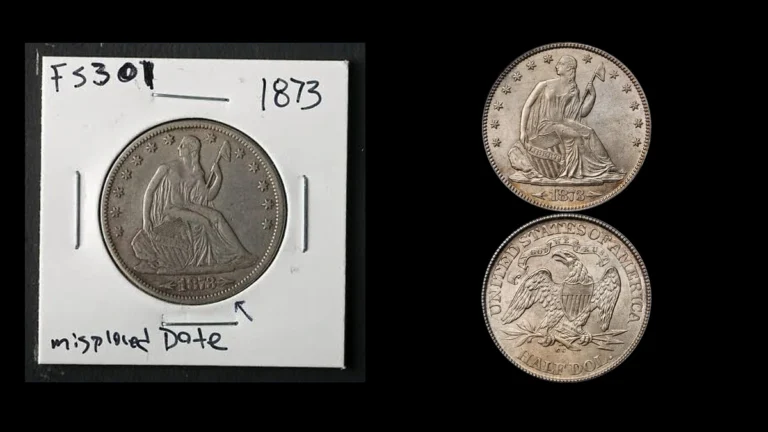
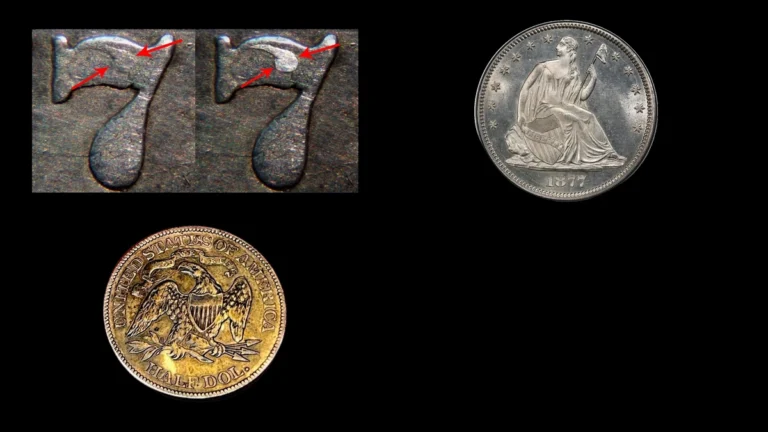
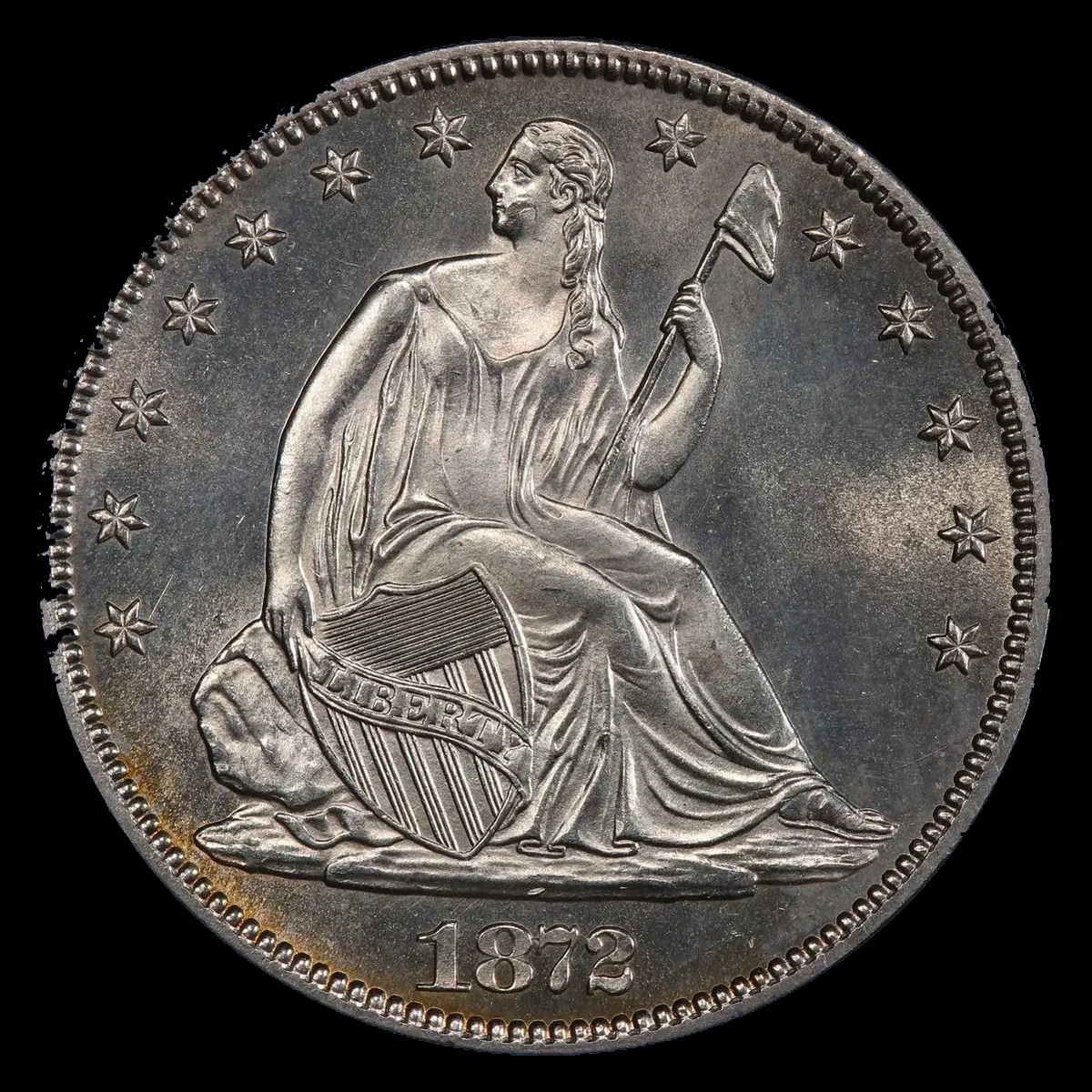
Look above the normal 72, along the lower edge of Liberty’s rock. Small numeral fragments project from the rock on the Philadelphia misplaced-date variety.
The first date punch landed too high in the die, the steel tool that stamps coins. Much of that unwanted impression was hidden within the rock design, leaving only pieces visible.
How to Identify
Keep the rock and the complete date in one close-up. Compare the projecting shape directly above 72 with a confirmed example under a 10× magnifier.
An uneven rock outline alone is not enough. Change the light to separate a raised numeral fragment from a scratch, cut, or reflection.
Use a half-dollar reference and confirm the absence of a mint letter. A same-year half dime is a different coin with different diagnostic details.
What It’s Worth
Estimated range: $5,000–$6,500 for coins comparable to the documented MS65. That grade describes well-preserved unworn condition.
PCGS records $6,000 in November 2019 and $5,280 in April 2024 for the example. Its surfaces and grade contribute alongside the visible fragment.
A worn half with the correct mark needs a worn-coin comparison. This range is not a minimum for every misplaced-date example.
2. 1872 Half Dollar Raised Routes Near the Date and Stars: Die Crack Error
Recorded 1872-S cracks include lines at the date base and near stars 4, 5–6, and 10–12. These describe several routes, not one pattern present on every coin.
Silver entered fractures in the stamping die and formed narrow ridges. Those fractures could grow while the die continued to strike coins.
How to Identify
Confirm the S, then use a full-front photograph to locate each visible line among the stars. Follow one continuous route rather than joining unrelated marks mentally.
Low side lighting helps show a ridge above the surface. A scratch generally cuts into the metal, even if its bright edge seems raised from one angle.
Match the route to the correct 1872-S reference. Being near the right star is only a starting point if the rest of the path differs.
What It’s Worth
Estimated range: $250–$1,500 for worn through slightly worn examples. Their underlying date and condition explain much of the price.
Recorded 1872-S comparisons include $516 for XF45 in September 2025 and $1,140 for AU58 in April 2025. XF45 retains strong detail despite wear, while AU58 has very little wear.
These are complete-coin prices rather than separate crack premiums. Cleaning or other damage can reduce value even when the line is clear.
3. 1872 Half Dollar Extra Lines in the Gown and Shield: Die Clash Error
The 1872-S WB-3 variety shows additional traces below Liberty’s elbow and beside her right leg. A related mark appears in the upper-right part of the reverse shield.
The dies contacted each other without a blank between them and picked up traces of the opposing designs. Later coins could then show those unwanted shapes.
How to Identify
Compare the gown below the elbow with an ordinary 1872-S, then check the right-leg area. The extra shapes should differ from the intended folds.
Use Bugert’s San Francisco reference to compare the shield mark with the same variety. Keep both faces linked in your photographs.
Changing the light can reveal shallow traces. A collection of scratches or polishing lines does not establish a clash unless the shapes relate to the opposite design.
What It’s Worth
Estimated range: $250–$1,500 for worn through slightly worn examples of this type. An AU58 WB-3 brought $1,140 in April 2025.
That sale values the complete coin struck from the described dies. Its overlap with the crack discussion does not create two amounts to add together.
4. 1872 Half Dollar Repeated Outlines on the Back: Doubled Die Reverse Error
A reported Philadelphia variety has doubled details on its reverse. The repeated outlines were already present in the die, so the coin did not need a second strike to receive them.
The published variety list does not map a particular letter or eagle detail. A verified matching photograph is needed before assigning an exact diagnostic location.
How to Identify
Photograph the whole reverse before enlarging a suspected area. Compare the actual shape and position of repeated details with a confirmed 1872 Philadelphia example.
A thick letter or a low flat shelf alone is insufficient. Check for raised repeated detail while ruling out glare, scratches, or stuck material.
Confirm that the mintmark area is intact and has no letter. Do not borrow a doubled letter from a different year’s reference.
What It’s Worth
Estimated range: $150–$1,200 for worn through slightly worn examples with a clear variety match. A related comparison is an 1853 Arrows and Rays doubled-reverse half graded AU50 that sold for $1,020 in August 2025.
The other coin has a different year and reverse design. Its sale offers context for doubled details rather than an 1872 auction record.
5. 1872 Half Dollar A Slightly Displaced Design: Off-Center Strike Error
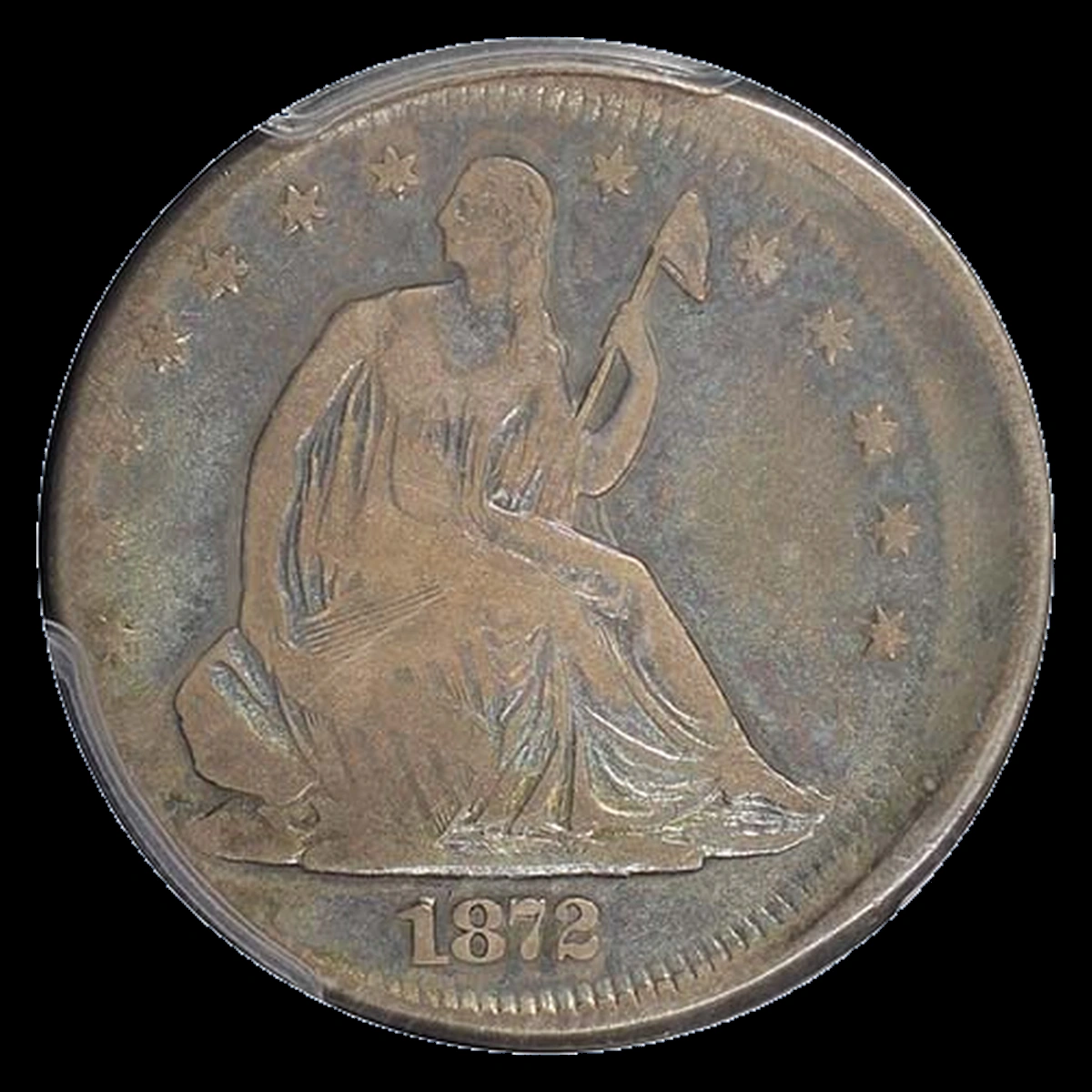
Not every off-center coin has a huge empty crescent. An illustrated 1872-CC is described as five percent off center and graded VG10, with heavy wear but enough detail to identify it.
The blank sat slightly out of position during striking. A modest shift needs both-face inspection to separate it from a single misaligned die.
How to Identify
Compare the full outline with the VG10 example on page 111. Confirm 1872 on the front and CC below the eagle.
Examine where the design approaches the blank’s edge, then check the reverse for the same displaced strike. Five percent describes the illustrated coin, not every uneven 1872-CC border.
Inspect the edge for filing or impact damage. The date, mint letters, and both faces must support the identification together.
What It’s Worth
Estimated range: $1,500–$4,000 for a heavily to moderately worn Carson City example with a readable date. One comparison is a 1900-O Barber half offered at $2,450 with a five-percent off-center strike.
That later coin carries an XF Details label, indicating remaining detail along with a condition problem. The $2,450 is an asking price, not a completed sale of the 1872-CC.
Conclusion
Use the mint letter and the visible location together: rock fragments for the Philadelphia date variety, gown or star marks for the described San Francisco dies, and both-face displacement for Carson City.
The $150–$6,500 comparisons span different grades and features. Where cracks and clashes share a coin, compare its whole value rather than adding a separate price for each mark.