Rare 1839 Capped Bust Half Dollar Errors (List & Pictures)
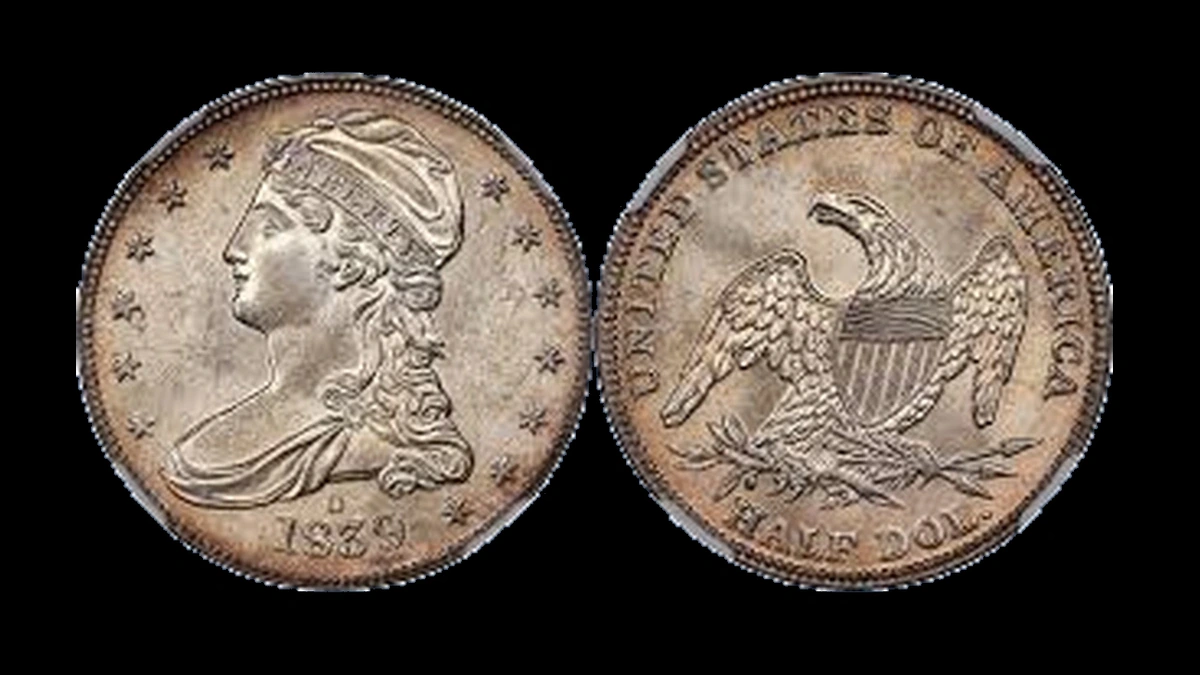
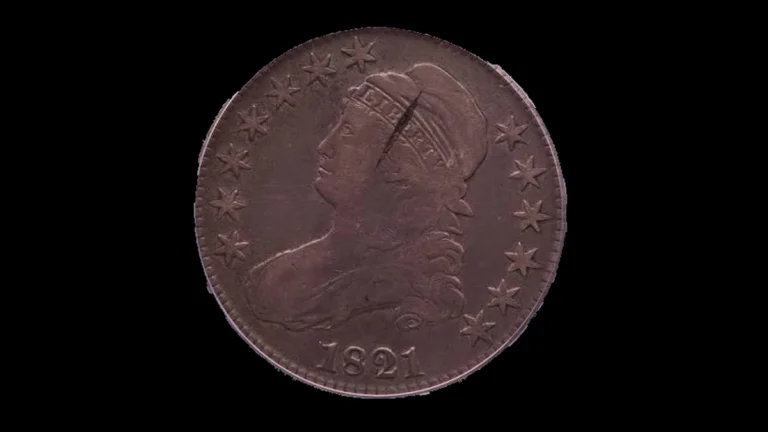
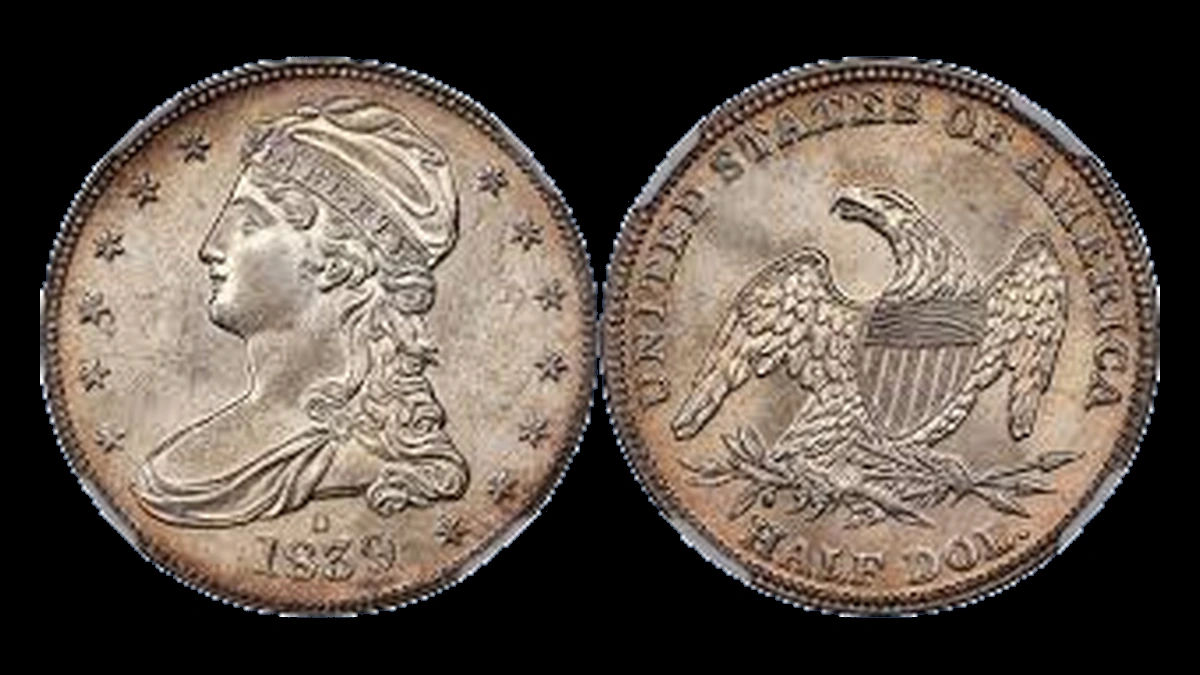
On an 1839-O Capped Bust half dollar, the O sits above the date on the front. That location is a useful first check before comparing it with other half-dollar designs.
Estimated values for these 1839 Capped Bust half dollar errors span $800–$12,000. A repunched-mintmark example graded PCGS MS61 brought $11,400 at Stack’s Bowers in 2025.
Inspect the O, follow the raised lines, examine the reported reverse mark, and finish with a controlled flip.
| Where to look | Feature | Estimated range |
|---|---|---|
| O above the date | Repunched mintmark | $1,000–$12,000 |
| Stars, date, and STATES | Die cracks | $800–$3,000 |
| M in AMERICA into the wing | Reported lint strike-through | $1,500–$3,500 |
| Relationship between the faces | Half-turn reverse rotation | $800–$6,000 |
This design reads HALF DOL. on the reverse and has grooves around its edge. A normal unworn example weighs about 13.36 grams and measures roughly 30 millimeters across.
1. 1839 Half Dollar An Extra Arc beside the O: Repunched Mintmark Error
The mintmark was punched into the stamping die by hand. If a later impression shifted, a piece of the earlier O could remain visible.
Recorded arrangements include traces below or to the right and a tilted impression toward the upper left. These belong to separate examples rather than one combined pattern.
How to Identify
Inspect the O above the date with a 10× magnifier, including both its inside and outside edges. A surviving earlier punch may appear as only a small arc.
Match the arc’s shape and position to a confirmed example of that arrangement. A thick O alone does not establish a repunched mintmark.
Change the light to separate raised remnants from a recessed nick or low flat shelf. Keep enough of the date and portrait in the photograph to identify the correct design.
What It’s Worth
Estimated range: $1,000–$12,000 from circulated examples through lower unworn grades. Original surfaces and condition explain much of that spread.
A PCGS MS61 brought $11,400 at Stack’s Bowers’ 2025 Summer Showcase sale. An NGC AU53 brought $3,120 at its June 2025 auction.
MS61 is unworn but can have noticeable marks; AU53 has light wear. The extra O is part of an already scarce coin, rather than a separate charge added without regard to grade.
2. 1839 Half Dollar Raised Lines around the Stars and Lettering: Die Cracks Error
An ANACS VF35 described in a 2007 auction had cracks following the front stars and date. A large reverse branch ran from the AT area of STATES toward the eagle’s beak.
Silver entered fractures in the dies and left raised ridges. A network can become more extensive as the tools remain in use.
How to Identify
Follow the front lines with the whole star arrangement visible, then inspect the branch near STATES on the reverse. Keep the two sides associated with the same reference coin.
Use low side lighting to judge whether the paths rise above the metal. Scratches cut into the surface and can have rough or dragged edges.
Different stages of a growing crack may not show identical lengths. Match the actual route instead of assuming that every line in the network must be equally strong.
What It’s Worth
Estimated range: $800–$3,000 for circulated examples with recognizable cracks. Much of the value belongs to the New Orleans issue and its preservation.
A Gerry Fortin Rare Coins listing asks $2,195 for a PCGS VF30 with extensive cracking. That is an offer, not an auction result.
The network may appeal to a specialist, but its separate branches do not each add another premium.
3. 1839 Half Dollar A Mark from AMERICA into the Wing: Reported Lint Strike-Through Error
A 1992 auction description calls a mark from the M in AMERICA into the eagle’s wing a lint impression. The same description also calls the area a metal flaw.
The cause is therefore reported rather than settled. Trapped lint could leave a shallow impression during striking, while a separating layer of silver would represent a different kind of flaw.
How to Identify
Follow the mark from the M into the feathers under magnification. Examine how its boundary crosses both the lettering and the design.
A pressed-in shape differs from a lifted flap or a gap between metal layers. Do not lift loose silver to test it.
Look for later cuts or displaced metal beside a gouge. The correct location alone does not establish the catalog’s proposed lint explanation.
What It’s Worth
Estimated range: $1,500–$3,500 for a circulated 1839-O with the reported feature. This values the whole coin rather than a separate lint premium.
The NGC AU53 repunched-mintmark coin that sold for $3,120 in June 2025 provides date-and-condition context. It is not the 1992 lint example, and damage or peeling would require its own assessment.
4. 1839 Half Dollar An Upside-Down Eagle after a Flip: Rotated Reverse Error
A reported example has the reverse half a turn away from normal U.S. coin alignment. This is also called medal alignment.
Stack’s Bowers described it on an NGC AU58+ in 2012. The same coin also showed an extra O outline, so both features belong to one specimen.
How to Identify
Hold Liberty upright and flip the coin straight from top to bottom without twisting sideways. On the reported half-turn error, the eagle finishes upside down.
Repeat the motion in a secure transparent holder. A sideways flip instead can leave the eagle upright and hide the distinction.
Record the movement or keep the camera fixed between the two views. Separately straightened photographs cannot demonstrate the relationship between the faces.
What It’s Worth
Estimated range: $800–$6,000 across worn coins through attractive lightly worn examples. The 2012 auction record lists $3,525 for the AU58+ with this alignment.
The result includes its condition and repunched O as well as rotation. It cannot be divided into a fixed amount for each feature.
Conclusion
The mintmark close-up, connected crack routes, surface boundary, and controlled flip each answer a different question. Keep those observations tied to the same complete coin and the correct Capped Bust design.
The $800–$12,000 comparisons cover different grades and sometimes several features on one specimen. Compare its overall preservation rather than adding the separate ranges together.