Rare 1806 Half Dollar Errors (List & Pictures)
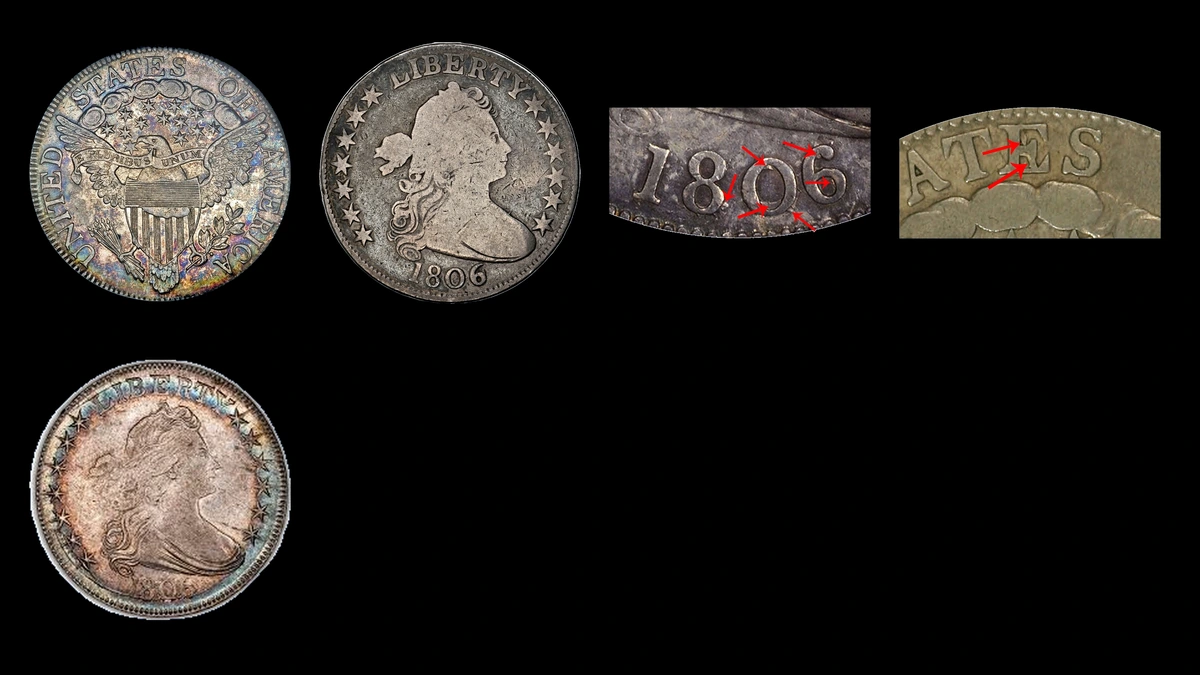
The most valuable supplied sale among these 1806 half dollar errors involves a corrected date: the PCGS MS64 Norweb 6 over inverted 6 brought $82,250 in 2015. Estimates across the errors and major varieties below extend from $300 to $90,000, with the highest figures reserved for exceptional unworn coins.
Examine the outline, rim, date, lettering, and shield in that order. Each area can distinguish a manufacturing feature from wear or later damage.
| Visible clue | Category | Approximate value context |
|---|---|---|
| Displaced design with bare area | Off-center strike | $7,000–$14,000 comparable circulated coins |
| Another design position | Double strike | $1,200–$6,000 worn, damaged examples |
| Raised patch at border | Rim-connected die break | $400–$3,500 circulated |
| Small repeated character strokes | Repunched date or letters | $300–$2,500 circulated |
| Part of a 5 under 6 | 1806/5 overdate | $500–$7,000 circulated |
| Turned-over 6 under 6 | 6 over inverted 6 | $2,000–$9,000 circulated; exceptional coins much higher |
| A strokes beneath E | E over A in STATES | $1,500–$6,500 circulated |
| Ridges through stars and date | Die cracks | $350–$3,000 circulated |
| Raised patch covering shield stripes | Broken Shield | $400–$4,500 circulated |
| Extra outlines inside shield | Die clash | $350–$2,500 circulated |
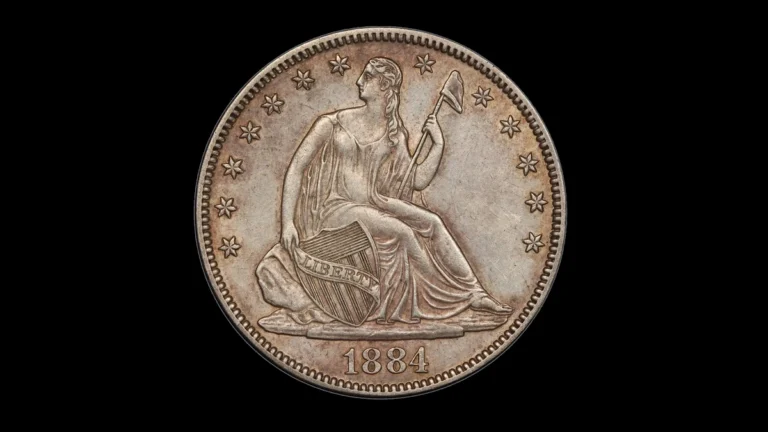
The Philadelphia Draped Bust half has no mintmark and carries lettering around its edge. Its original standard was 13.48 grams and approximately 32.5 millimeters; circulation and distortion can affect measurements.
1. 1806 Half Dollar A complete date on a displaced design: Off-center strike Error
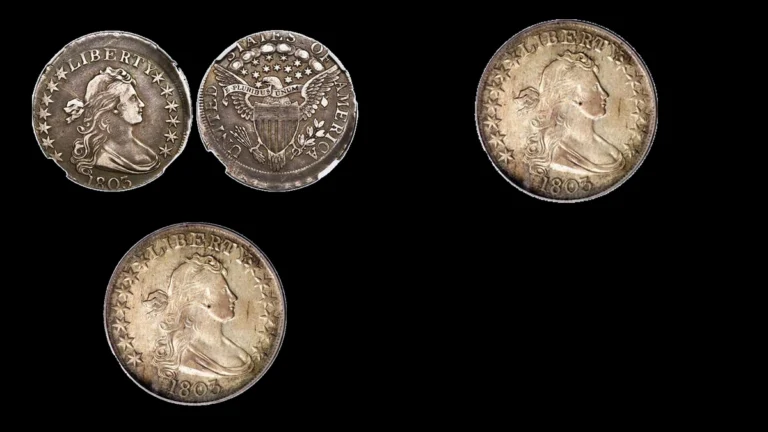
A documented O-115a half retains its date despite being struck about 15% off center. With each face held upright, the front design shifts northeast and the reverse southeast, leaving corresponding unstruck areas.
How to Identify
Check the relationship between the blank area and design on both faces. A cut removes metal, whereas this strike left part of the original blank outside the dies.
The cataloged coin has a separate dent or bulge near seven o’clock on the front edge and was graded NGC VF Details because of damage. Its possible mint origin was suggested but not established, so keep that mark separate from the confirmed off-center strike.
What It’s Worth
Comparable dramatic circulated examples with a readable date are estimated around $7,000–$14,000. The NGC VF Details O-115a sold at Heritage for $9,987.50 on October 4, 2016.
That result already reflects the coin’s damage and its retained very fine detail. The uncertain edge disturbance does not justify an automatic second error premium.
2. 1806 Half Dollar Surviving pieces of a second design position: Double strike Error
A specialist described an 1806 Pointed 6, Stem half with evidence of a second strike and later graffiti on the obverse. NCS graded the heavily worn coin VG Details, but the supplied account does not locate the extra impression or state its direction.
How to Identify
Search for several related remnants that fit one additional design position. A single extra stroke beside a hand-punched letter is insufficient to prove that the whole coin was struck twice.
Separate scratched graffiti from raised struck features when examining the specialist’s reported half dollar. Later damage does not automatically negate an earlier mint error, but both need to remain visible in the description.
What It’s Worth
A worn example with clear double-strike evidence and comparable surface problems is estimated at $1,200–$6,000. No realized price is supplied for the NCS VG Details specimen.
An 1812 Large 8 half with a doubled front strike, graded PCGS VF30, sold for $1,200 at Heritage in February 2018. It belongs to the later Capped Bust design, so its price provides context rather than a direct match for the 1806 coin.
3. 1806 Half Dollar Raised metal joining the border: Rim-connected die breaks Error
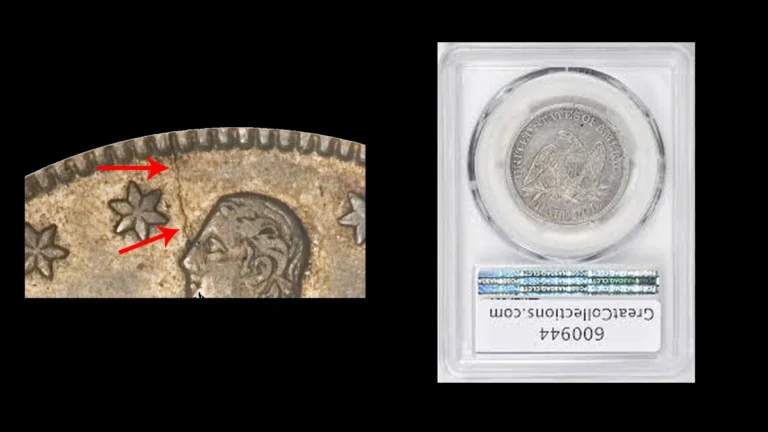
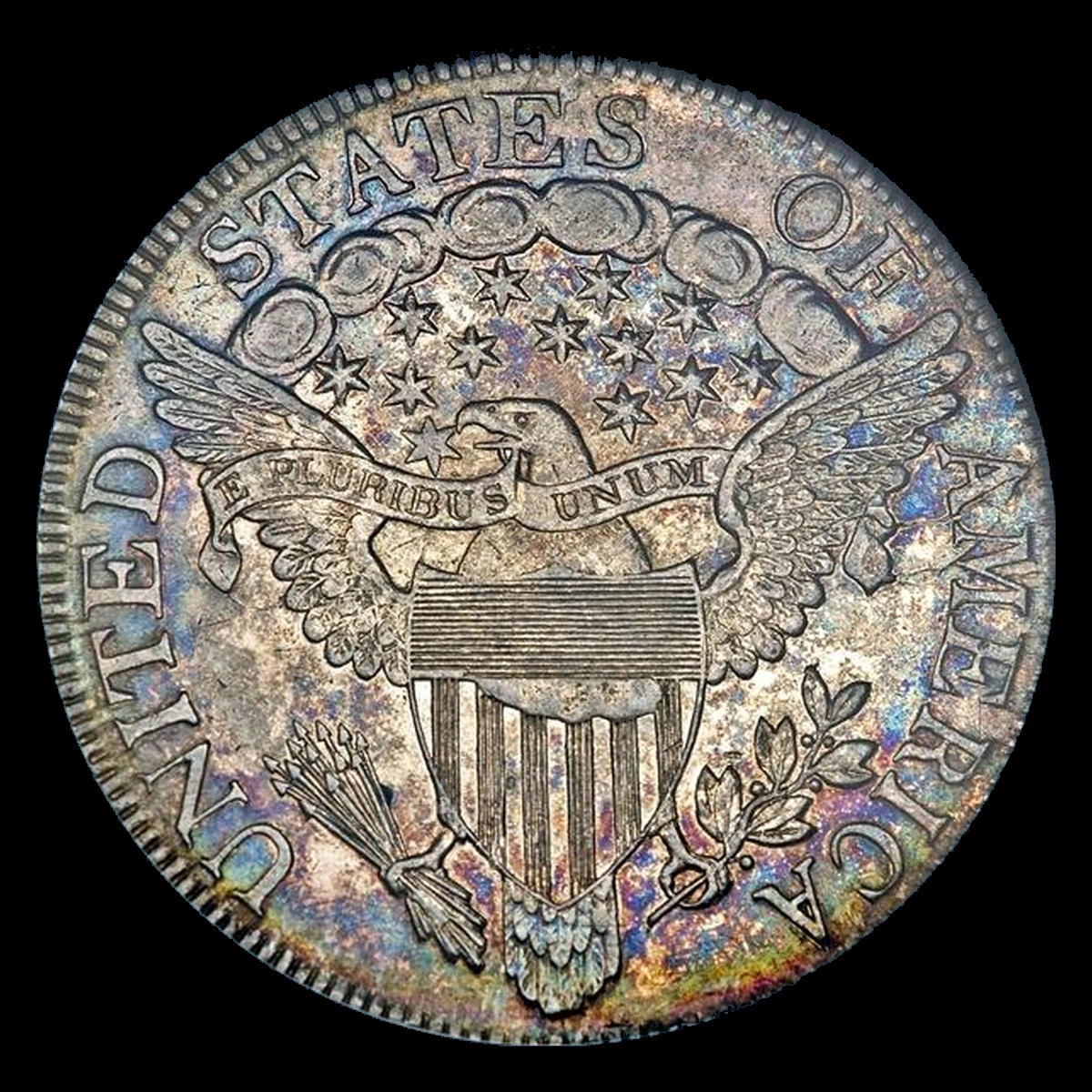
Documented breaks appear above LIB, above UNITE, and below the arrow shafts on separate 1806 dies. The affected portion of the die broke at its perimeter, sometimes staying partly in place and sometimes falling away.
How to Identify
Match one location to the corresponding John Reich Collectors Society example. Do not expect all three breaks on the same half.
The raised or uneven area must connect to the rim. Some design can survive within a retained break if the fractured piece remained in the die.
A later edge blow crushes or pushes already struck metal instead. Photographs of the edge and opposite face help distinguish that damage from a die break.
What It’s Worth
Circulated examples with recognizable rim breaks are estimated around $400–$3,500. Size helps visibility, but surfaces and wear still influence the whole coin’s value.
The $10,350 result for an MS62 1806 with cracks and clashes, discussed below, is not a cud sale. It demonstrates the value of high preservation without establishing a premium for these separate rim breaks.
4. 1806 Half Dollar Extra strokes beside the 6 or TY: Repunched date or letters Error
An O-115a can show additional strokes at the final 6, while an O-114a has reported repunching beside TY in LIBERTY. These are different die pairings, with characters entered more than once into the steel tools.
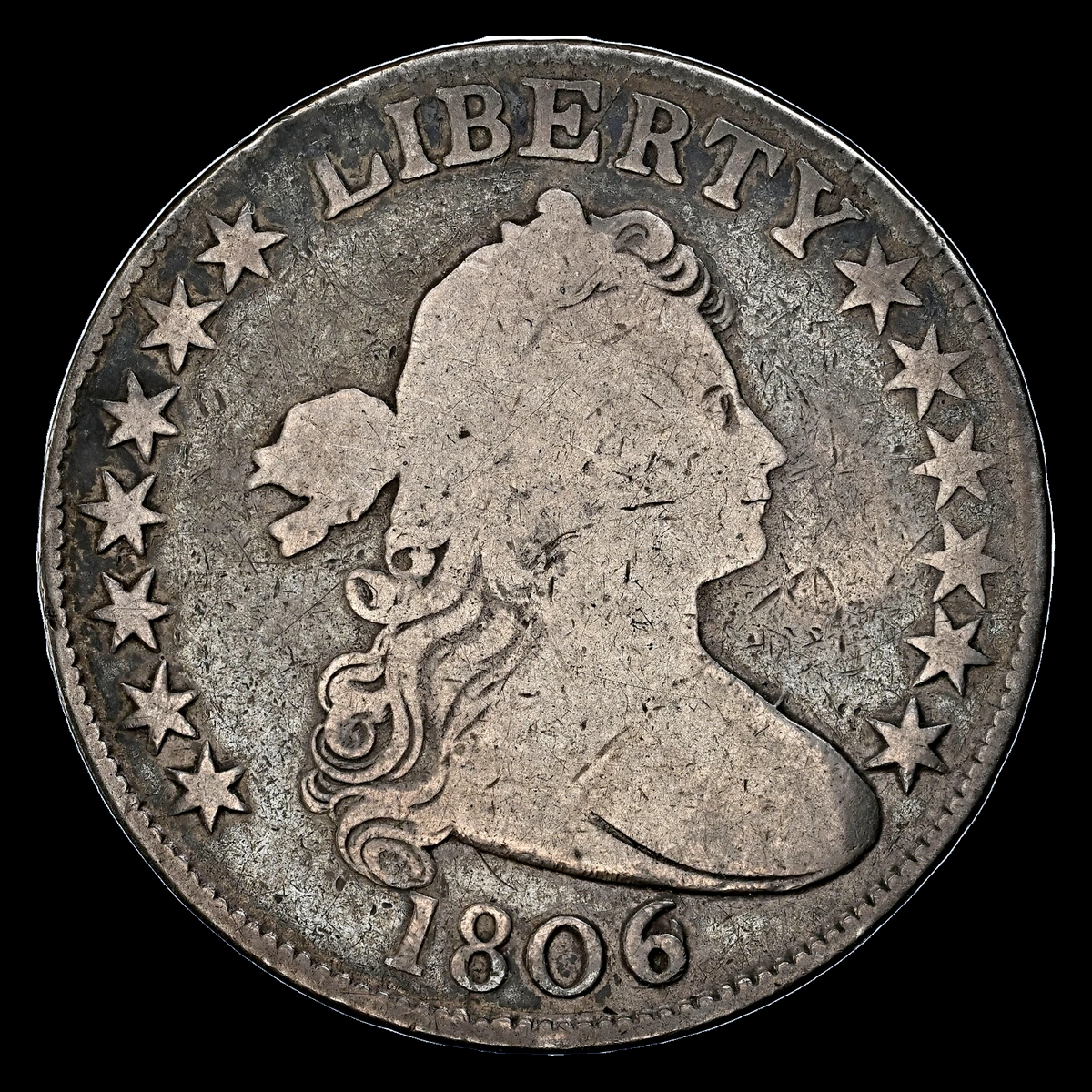
How to Identify
Compare the extra stroke with the shape of the same numeral or letter. Keep the full date or full word in the photograph so the small mark can be tied to the correct die variety.
Repunching does not require another portrait or displaced border. A flat striking shelf, a scratch, or remnants of a different underlying digit call for another explanation.
What It’s Worth
Clearly matched repunching on circulated coins is estimated at $300–$2,500. Variety, wear, and surface appeal determine which comparisons are useful.
The O-115a that sold for $9,987.50 also had the dramatic off-center strike described above. A centered coin with matching extra strokes at its 6 does not inherit that compound-error price.
5. 1806 Half Dollar An earlier 5 beneath the last digit: 1806/5 overdate Error
On the 1806/5 Large Stars variety, remnants of a 5 remain below the final 6. A previously dated die was altered, allowing the new digit and surviving earlier strokes to be struck onto coins together.
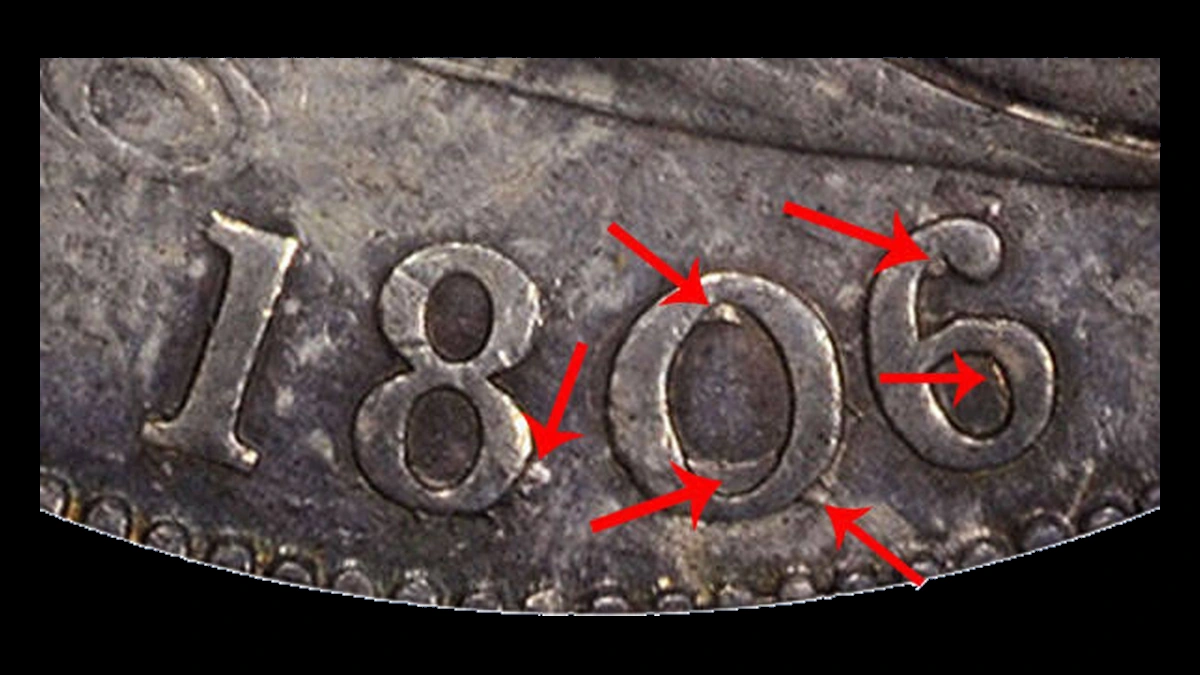
How to Identify
Match the remnants to a verified Large Stars overdate while retaining the neighboring date digits and stars in view. They must fit pieces of a 5, not merely create a doubled-looking edge.
Inspect for cuts or altered surfaces around the numeral. This variety records a change to the die and does not mean a finished 1805 coin was struck again.
What It’s Worth
Readable very good through extremely fine examples are estimated around $500–$3,500, with attractive about-uncirculated pieces around $3,000–$7,000. These figures describe the complete overdate.
The different 6 over inverted 6 variety brought $7,871 in XF40 in August 2022. Its distinct rarity means matching grades should not automatically receive matching prices.
6. 1806 Half Dollar An upside-down shape beneath the 6: 6 over inverted 6 Error
An inverted 6 resembles a 9, giving this variety its older “1806/9” name. The accepted explanation is an upside-down 6 in the die corrected by an upright impression, rather than a date intentionally advanced by three years.
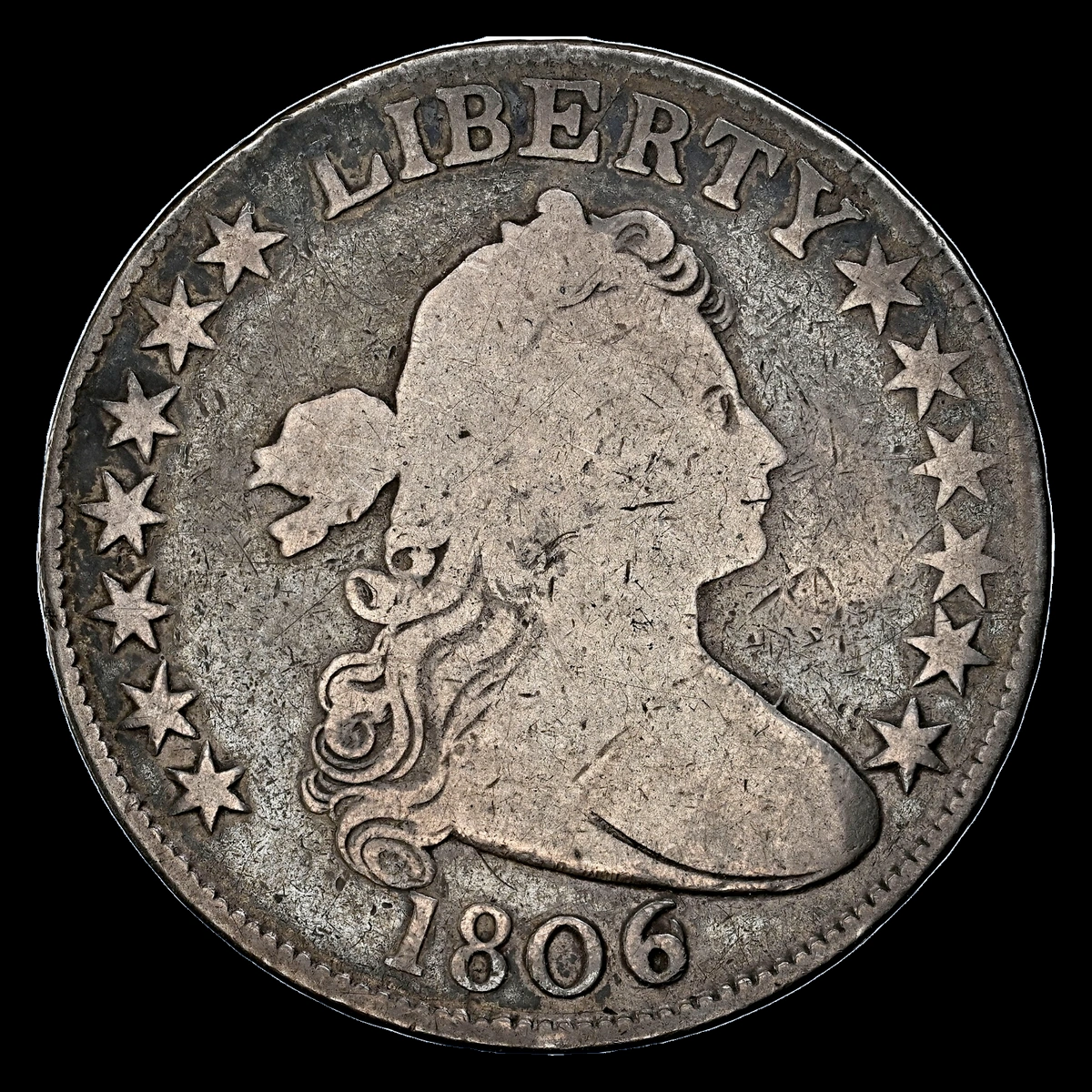
How to Identify
Compare the underlying contours with a turned-over 6 using the PCGS variety explanation. The earlier shape differs from the 5 on the overdate in the preceding section.
The corrected obverse was used with two reverse dies, so record both faces. Look for disturbed metal around the date before accepting a rare-looking extra line as an authentic remnant.
What It’s Worth
Circulated examples have an estimated range of $2,000–$9,000, while exceptional mint-state coins can reach $60,000–$90,000. An XF40 O-112 sold through Sheridan Downey for $7,871 in August 2022.
The PCGS MS64 Norweb specimen brought $82,250 in 2015. That result reflects exceptional preservation and cannot be applied to a worn coin simply because its date correction is genuine.
7. 1806 Half Dollar Remnants of an A beneath E in STATES: Corrected letter punch Error
The reverse E on O-124 covers part of an earlier A. The wrong letter was corrected in the die, leaving strokes that remain visible on some substantially worn examples.
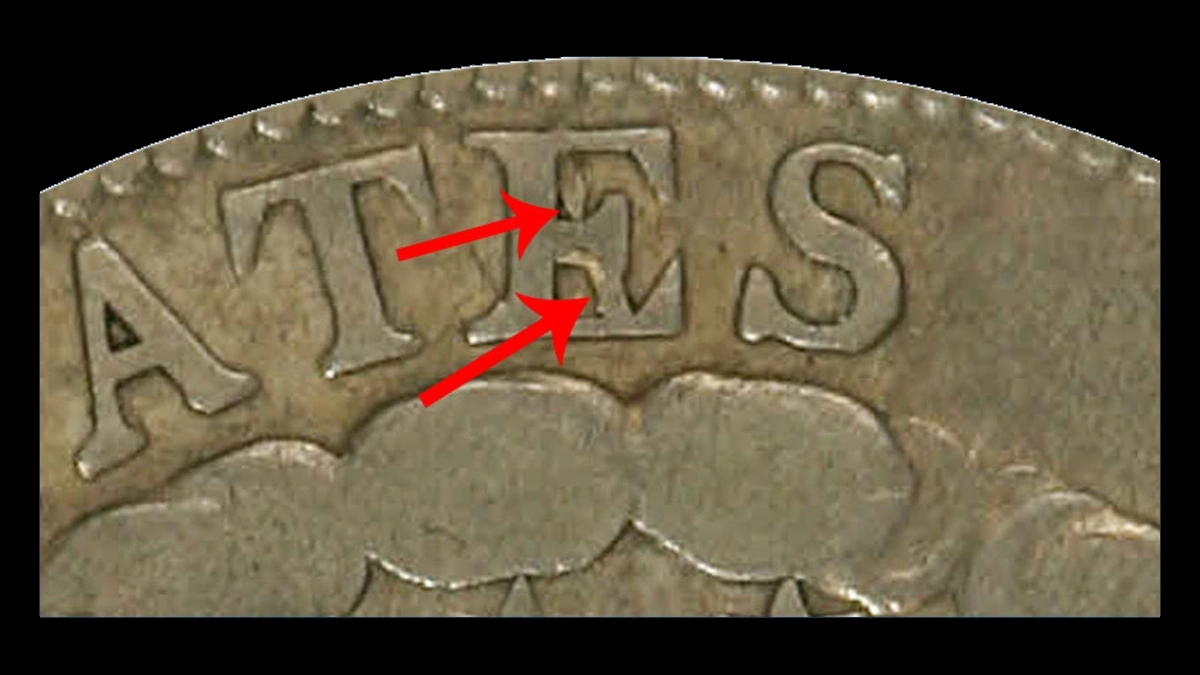
How to Identify
Enlarge the E in STATES and compare the surviving strokes with an 1806 O-124 reference. The similarly named 1814 E/A belongs to a different design and is not the correct diagnostic photograph.
Distinguish raised A-shaped remnants from dirt, scratches, and the normal ends of the E. General thickness of the letter does not establish the correction.
What It’s Worth
Circulated examples are estimated at $1,500–$6,500. Heritage sold a PCGS VG10 O-124 for $2,040 on June 7, 2019.
A sharper example with surface damage realized $3,300 including the buyer’s fee in Sheridan’s Mail Bid Sale 47. Both prices cover the entire coin, illustrating why better detail alone does not guarantee a top result.
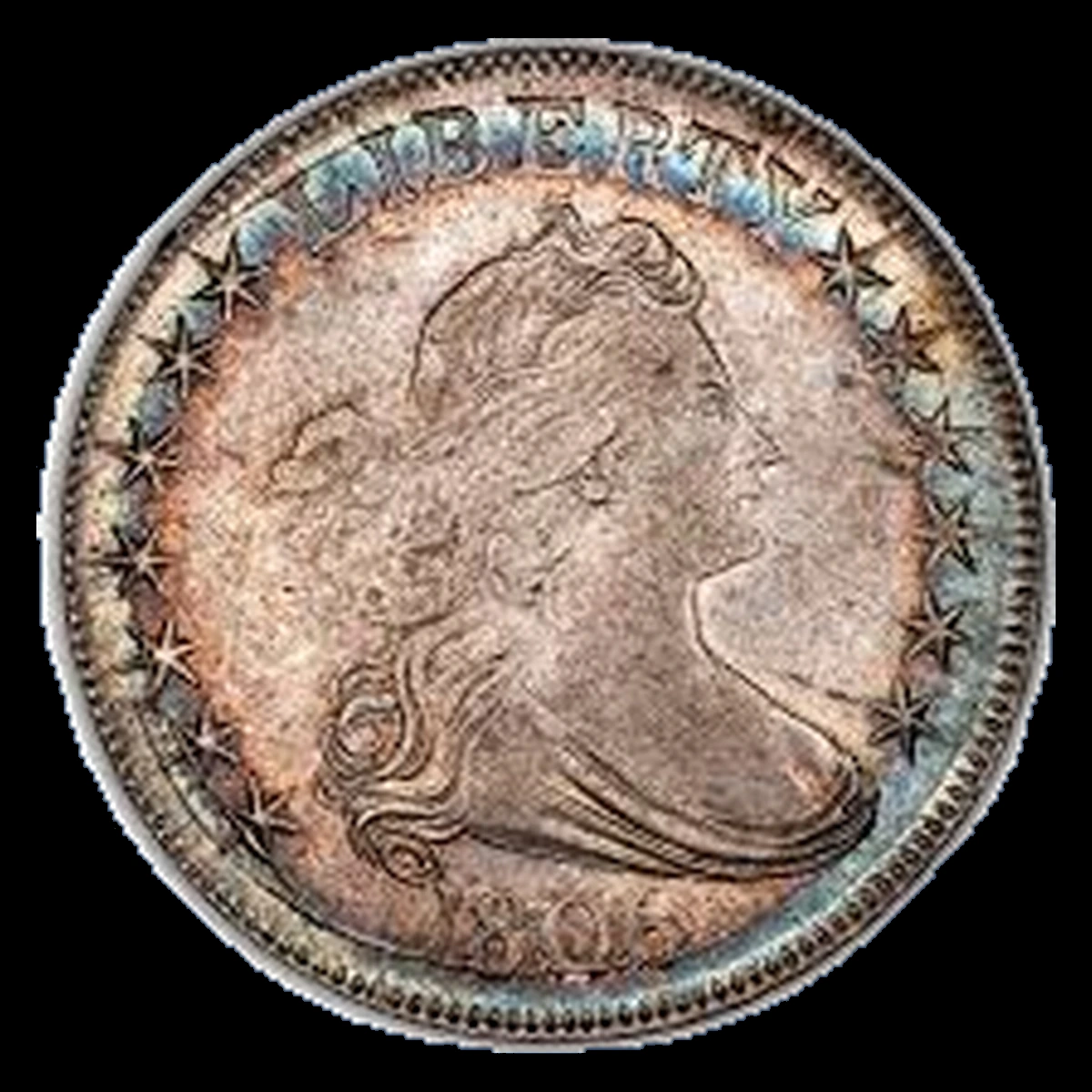
8. 1806 Half Dollar Branching ridges through the date and stars: Die cracks Error
The O-116 pattern includes branches through the date and left-side obverse stars, plus a reverse line through STATES. Metal entering fractures in the dies left these raised paths on the coins.
How to Identify
Follow connected landmarks through the date and stars, then check the lettering on the reverse. A matching network is stronger evidence than one isolated line in approximately the right area.
Angled light should show ridges rather than cut channels. File marks or a physical split through the coin’s metal do not have the same origin.
What It’s Worth
Circulated examples with clear branching cracks are estimated at $350–$3,000, while comparable MS62 coins are estimated around $8,000–$15,000. An MS62 has no circulation wear but can retain handling marks.
The PCGS MS62 O-116 with CAC approval sold for $10,350 on August 11, 2010. It also has shield clash marks, so that sale is shared with the clash discussion below rather than counted twice.
9. 1806 Half Dollar A raised patch over shield stripes: Broken Shield Error
On documented O-120 examples, raised metal covers the upper ends of several vertical shield stripes. The broken area was inside the reverse die and does not reach the coin’s rim.
How to Identify
Illuminate the shield from the side and examine the patch’s height and boundary. Circulation can wear stripes down, but does not build a raised area over their ends.
Match the pattern to an O-120 photograph rather than relying on generally weak shield detail. Older descriptions may call the feature a cud, but its interior location distinguishes it from a rim-connected break.
What It’s Worth
The supplied circulated estimate is $400–$4,500, with attractive very fine to extremely fine examples toward the stronger end. This range does not price the registered MS63 specimen.
The $10,350 MS62 O-116 sale concerns cracks and clashes on a different variety. It does not establish a Broken Shield premium, and individual covered stripes should not be assigned separate prices.
10. 1806 Half Dollar Unexpected outlines inside the shield: Die clash Error
The O-116 graded PCGS MS62 with CAC approval has cataloged clash marks inside its shield. Contact between the dies without a blank transferred traces of the opposing design to the tools, which then marked later coins.
How to Identify
Look for extra contours beyond the normal shield stripes and compare them with a reversed view of the front design. The catalog does not identify every small transferred shape, so avoid insisting that a particular portrait detail must be visible.
These outlines differ from the broad raised Broken Shield patch. The O-116’s cracks also have a separate cause and should not all be counted as clash lines.
What It’s Worth
Circulated halves with readable clash marks are estimated around $350–$2,500, versus $8,000–$15,000 for comparable well-preserved mint-state examples. The MS62 O-116 realized $10,350 in August 2010.
This is the same coin and transaction used for the branching cracks. Its price includes preservation and both features, rather than measuring the added worth of the shield clash alone.
Conclusion
Begin an 1806 attribution by separating changes to the dies from repeated or displaced strikes of the coin itself. At the date, identify the underlying shape; at the shield, distinguish a broad raised break from fine transferred outlines.
Keep damage in the description even when a mint error is genuine. Prices are most informative when the comparison matches the variety, wear, surfaces, and any combination of errors on the same coin.