Rare 1967 Half Dollar Errors (List & Pictures)
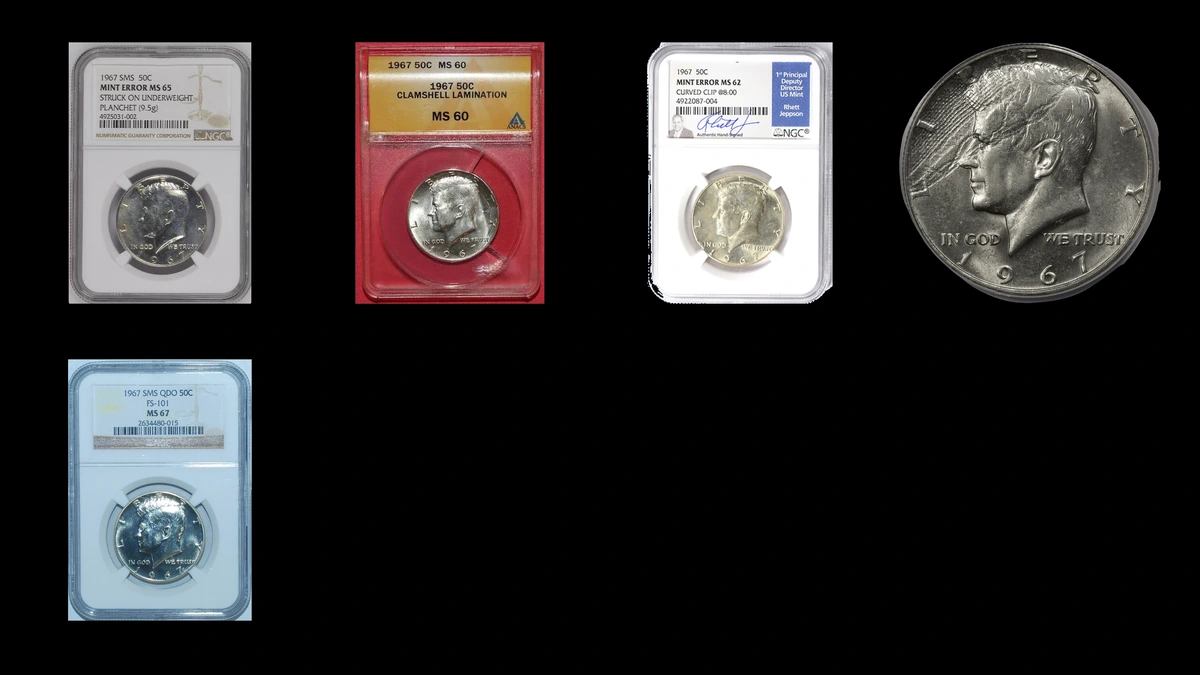
Two 1967 halves can weigh almost the same yet have different errors: a documented underweight blank weighs 9.5 grams, while a missing-layer example weighs 9.53 grams. Their surfaces explain the difference.
Estimated values for 1967 half dollar errors span $50–$3,000. A high-grade Special Mint Set lettering variety reached $935 at auction.
Compare the outline and layers first, then check interrupted designs and repeated lettering.
| Observation | Error to investigate | Estimated value |
|---|---|---|
| Smaller metal beneath large design | Wrong planchet | $600–$3,000 |
| Low weight, intact surfaces | Underweight planchet | $150–$600 |
| Exposed core or separating pieces | Split or missing clad layer | $200–$900 |
| Curved gap | Clip | $50–$350 |
| Depressed pattern or hollow | Struck through | $75–$500 |
| Repeated letter outlines | SMS doubled die obverse | $100–$1,000 |
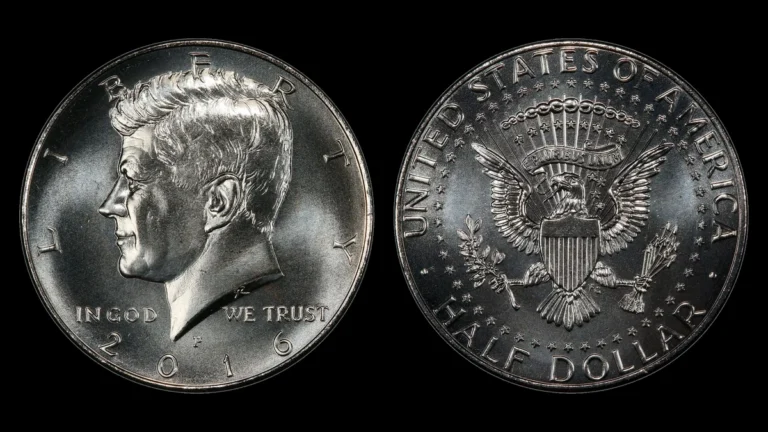
The normal 1967 half weighs 11.50 grams, measures 30.61 millimeters, and contains 40% silver overall. Its silver-rich outer layers surround a core that also contains silver, so exposed inner metal is not pure copper.
SMS means Special Mint Set, a collector issue with a distinct finish. Absence of a mintmark alone does not establish which mint made a 1967 half.
1. 1967 Half Dollar The design overfills a smaller blank: Wrong Planchet Error
A documented SMS quarter-blank error was discovered in a sealed set and graded NGC MS62. It weighs 5.6 grams, with portions of the half-dollar design beyond the available metal.
A nickel-blank half is also reported in a published 1967 error list. Its metal and standard weight differ, and the sealed-set discovery belongs only to the quarter example.
How to Identify
Compare accessible weight, diameter, thickness, and edge metal with the proposed blank. A clad quarter starts near 5.67 grams and 24.3 millimeters; a nickel starts near 5.00 grams and 21.21 millimeters.
Either blank can spread during striking, so its final width need not equal that starting diameter. Inspect for trimming and check whether the large design ends naturally at the smaller boundary.
The quarter’s layered edge helps distinguish its metal from a nickel blank. A shaved normal half can be small and light without having entered the press on the wrong blank.
What It’s Worth
The estimated range is $600–$3,000 across confirmed wrong-blank examples. The NGC MS62 SMS quarter-blank coin sold for $840 at Heritage in August 2019.
The upper allowance includes the more unusual reported nickel-blank form, not a supplied nickel-blank auction result. Readable identity, actual metal, and surviving surfaces must guide the comparison.
2. 1967 Half Dollar The coin is light without an obvious lost layer: Underweight Planchet Error
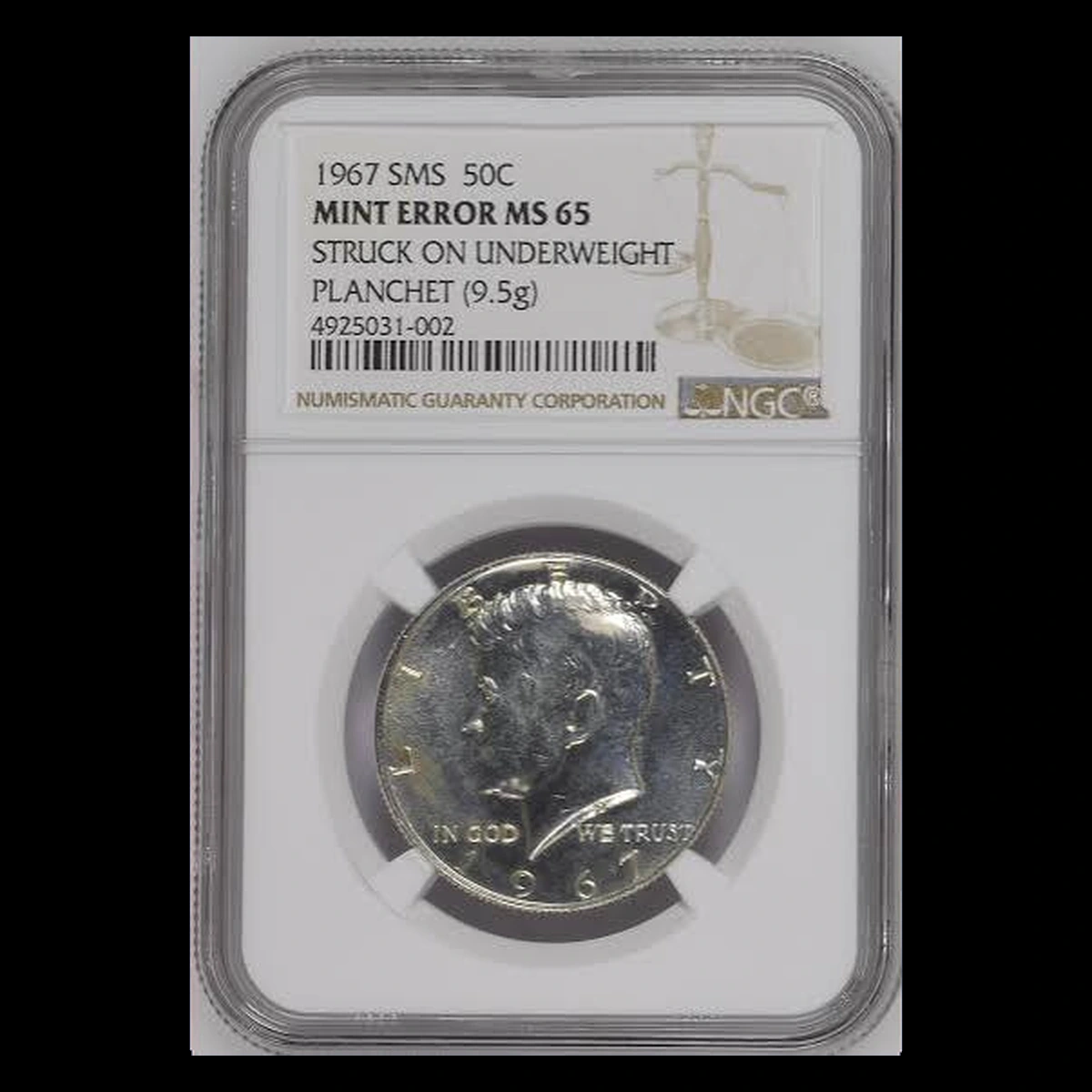
Heritage described a 9.5-gram SMS half in NGC MS65 as an underweight planchet error. A planchet is the prepared metal blank before striking.
That description identifies insufficient weight without establishing a blank for another denomination or a detached outer layer. The nearly matching weight of a separate missing-layer coin makes a surface examination especially useful.
How to Identify
Check the scale with a calibration weight before relying on a low reading. Compare thickness and width, looking for an intact half-dollar outline with unusually thin metal.
Inspect both faces and the edge for original outer layers and struck surfaces. Grinding, acid damage, and exposed interior metal each offer alternative explanations for lost weight.
A thinner coin with intact surfaces can fit the underweight-blank description. The number on the scale alone cannot choose between that cause and missing metal.
What It’s Worth
A confirmed thin or otherwise underweight blank has an estimated $150–$600 range. No separate realized price is supplied for the 9.5-gram MS65 SMS coin.
A different 1967 defective-blank coin in MS62 weighed 10.8 grams and sold for $161 in 2010. The $250 offer for a missing-layer MS63 is another comparison, but concerns a different mechanism and is an asking price.
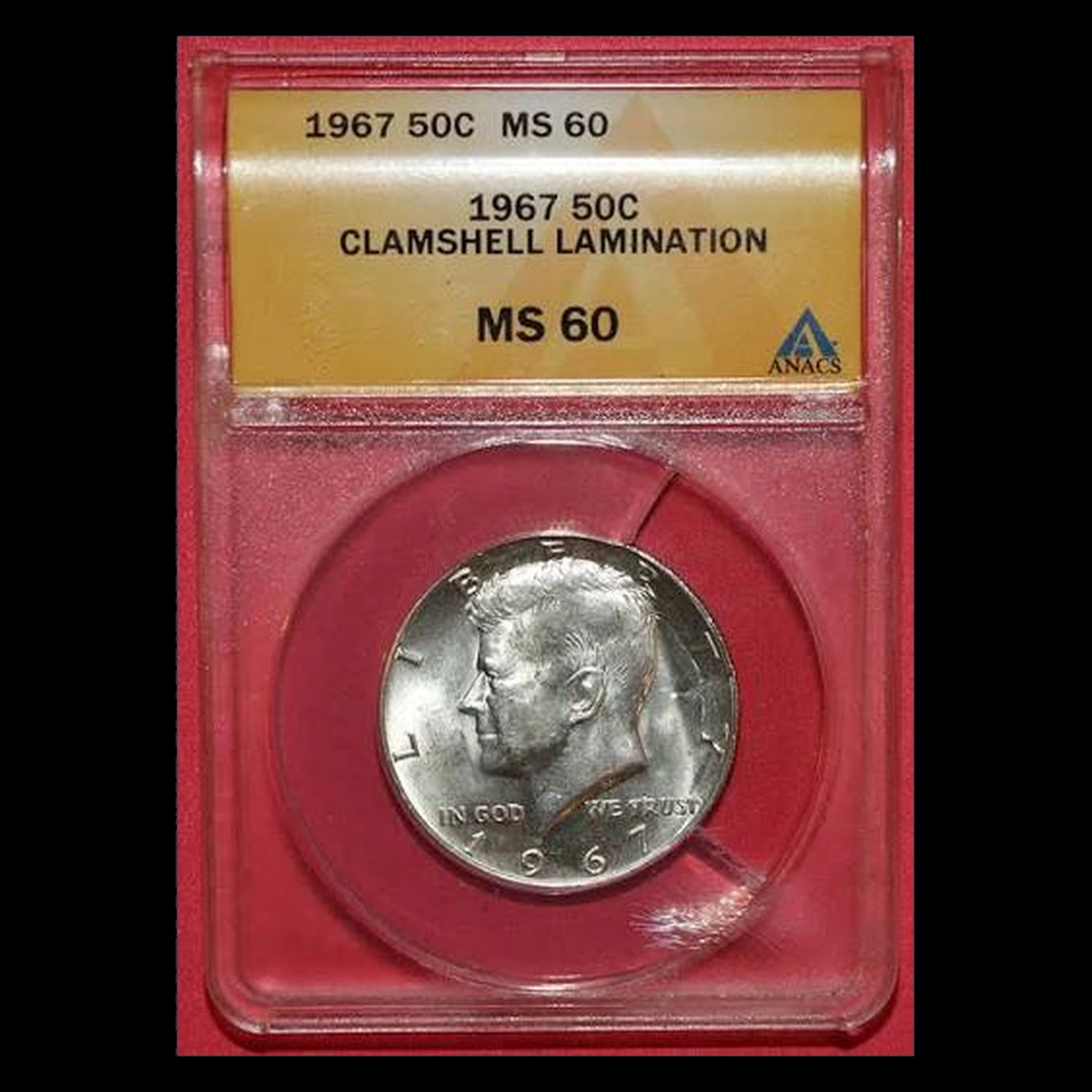
3. 1967 Half Dollar A layer opens, detaches, or exposes the core: Split or Missing Clad Layer Error
A failed bond between layers can leave a hinged opening, an attached flap, or separate matching pieces. The supplied records describe all these outcomes on different 1967 halves.
Examples include a hinged MS64, an attached-layer MS62, an AU58 with a faulty front layer, and a PCGS MS63 missing its front layer at 9.53 grams. Their measurements and grades should remain attached to their individual specimens.
How to Identify
Leave attached layers in place and keep matching pieces together. An edge view can reveal the separation without pulling a hinge farther open.
For detached pieces, compare their internal surfaces, outlines, and remaining exterior designs for a physical match. Photograph the exposed boundary and surviving edge grooves to check for trimming.
The exposed core contains silver as well as copper. Neither its changed color nor a 9.53-gram reading alone proves that a layer is missing.
What It’s Worth
Estimated values run from $200–$900 across these layer errors. Two matching pieces from one 1967 coin sold for $671 in June 2026.
Sullivan Numismatics offered the missing-front-layer MS63 for $250, an asking price. No individual realized amounts are assigned here to the other hinged or attached-layer examples.
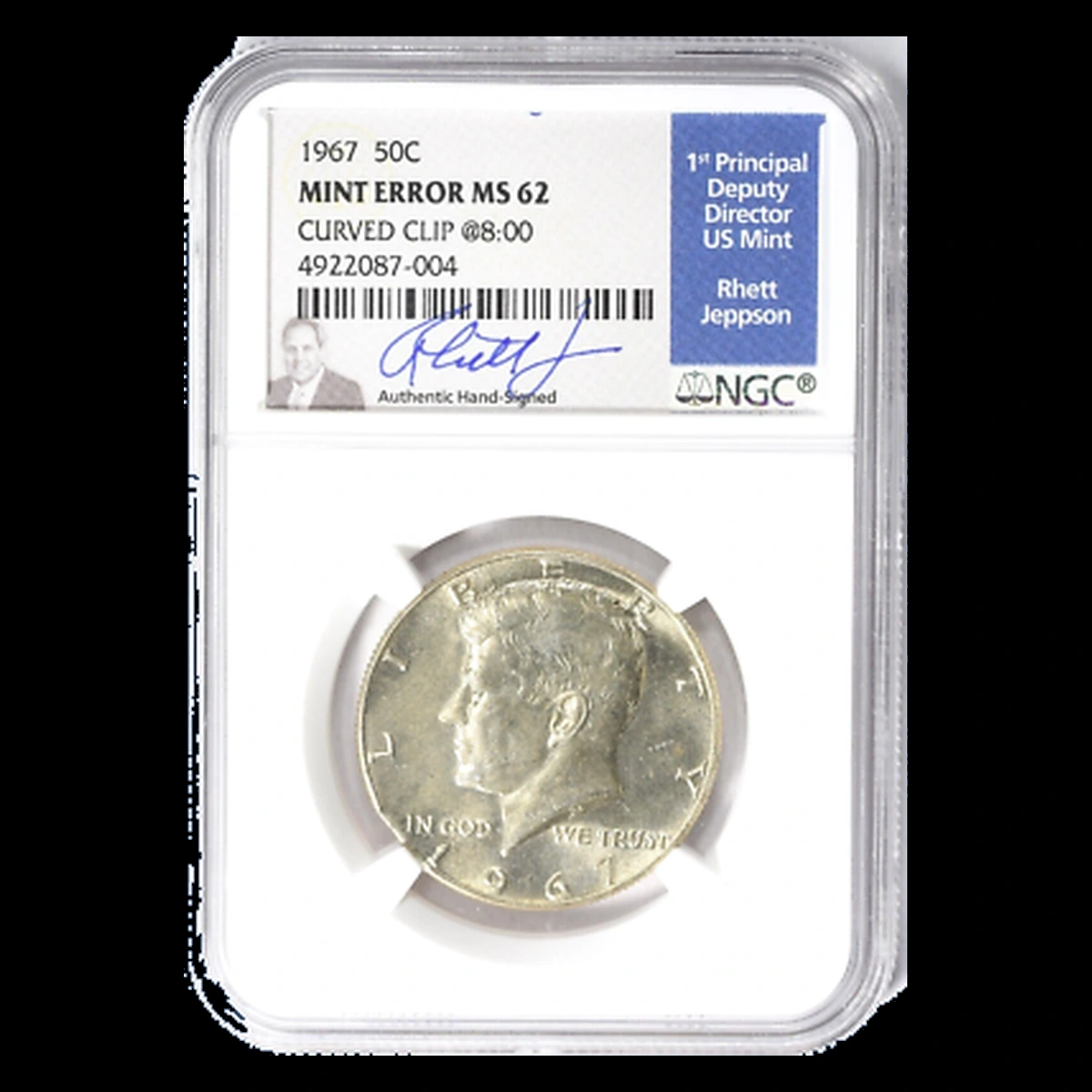
4. 1967 Half Dollar A curved piece is absent from the rim: Curved Clip Error
The documented SMS clip has its gap at 1 o’clock and was cataloged as NGC MS68. Its exceptional preservation came after an incomplete blank had already been formed.
A blanking punch overlapping an earlier hole in the strip removes a disc with a curved gap. The later strike shapes the nearby rim and design around that existing space.
How to Identify
Follow the edge grooves into the gap and inspect the nearby border for naturally formed detail. Saw marks or a fresh cut wall can instead indicate metal removed from a finished coin.
Weakness opposite the clip is a supporting clue rather than a required feature on every example. Weight should reflect missing metal, while intact spans can remain near normal diameter.
What It’s Worth
Small genuine clips have an estimated $50–$350 range, with excellent SMS preservation supporting stronger comparisons. No realized price for the documented MS68 is supplied here.
A dealer asks $90 for a 1971-D in PCGS MS64 with a 10% clip. That later, different-metal coin is neither an SMS example nor a completed sale.
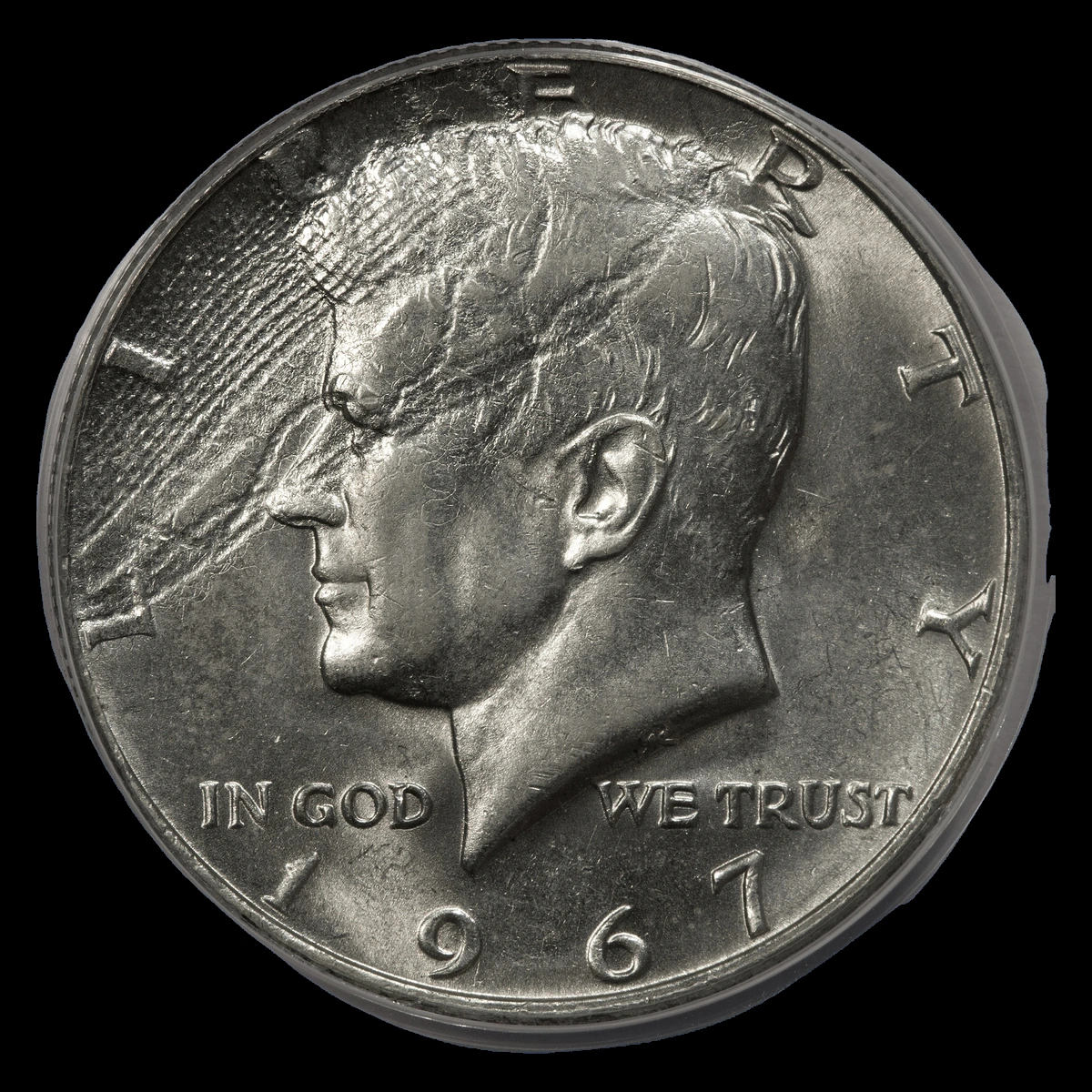
5. 1967 Half Dollar A hollow or pressed pattern interrupts the design: Struck Through Error
The struck-through SMS records include two MS66 coins and an MS67 Cameo. Cameo describes contrast between frosted designs and smoother surrounding areas.
A cloth impression is reported separately on a circulation coin. All involve material obstructing a strike, but the SMS descriptions do not identify that material as cloth.
How to Identify
Inspect the depressed area under low light without rubbing the surface. A cloth attribution needs a repeated woven pattern, while a smooth hollow may have a different origin.
Check how the affected area meets the portrait and lettering. Later impacts may push up a lip, and ordinary wear can lighten a patch without pressing a distinct pattern into it.
What It’s Worth
The estimated range is $75–$500, covering small visible impressions through larger examples on attractive SMS coins. Clear patterns and preservation influence the comparison.
An undated Kennedy in PCGS AU58 with strike-throughs on both faces has a $125 Sullivan Numismatics asking price. That is neither a dated 1967 transaction nor an SMS condition match.
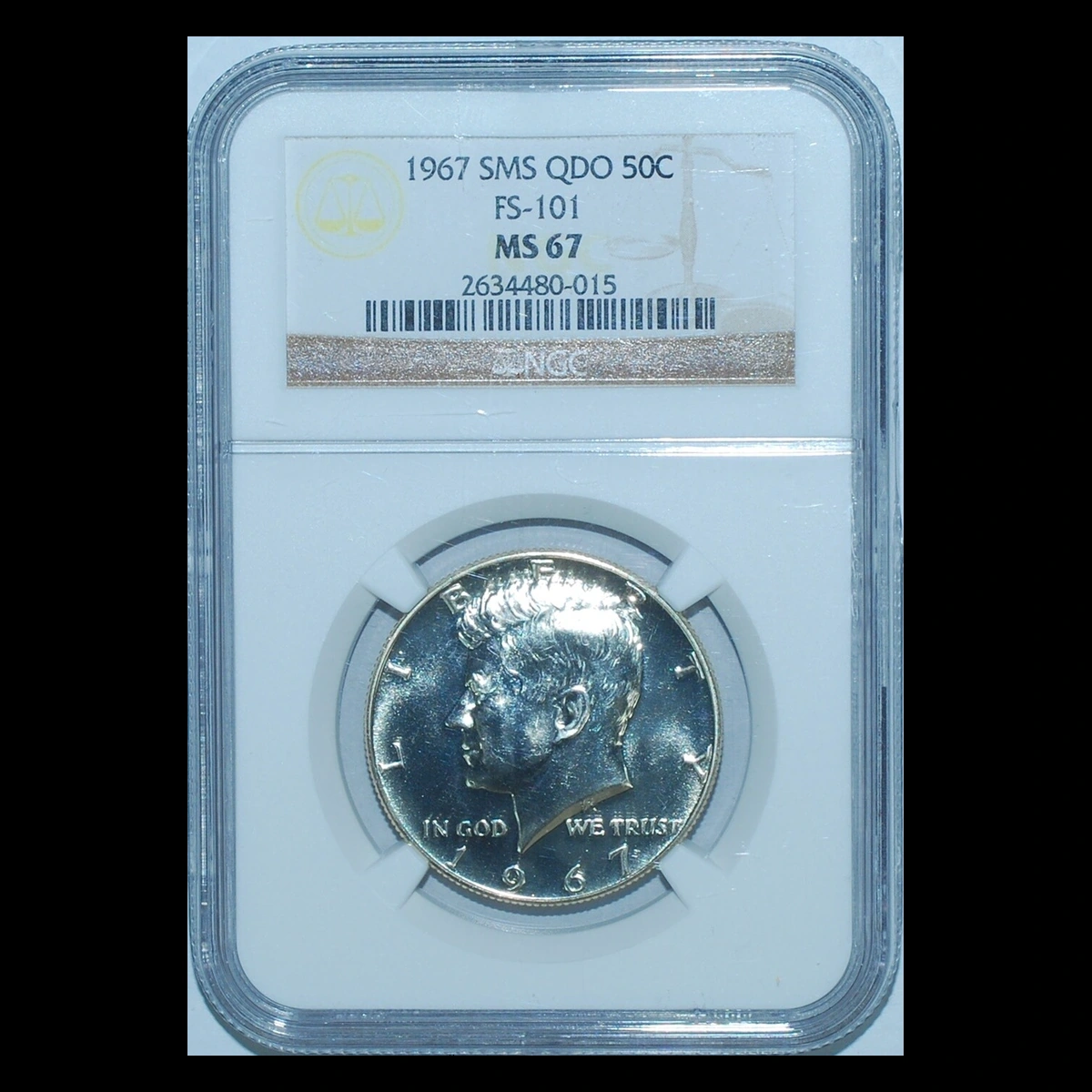
6. 1967 Half Dollar Several narrow outlines crowd the letters: SMS Doubled Die Obverse Error
The SMS FS-101 variety directs attention to LIBERTY, TRUST, the upper hair, and portions of the date. Repeated detail existed in the die, rather than coming from several off-center blows to the individual coin.
References use doubled, quadrupled, and quintupled descriptions for the overlapping impressions. The correct attribution rests on the matching pattern rather than the chosen shorthand.
How to Identify
Begin at letter corners, where small notches and rounded extra edges can be easier to separate than thick central strokes. Compare all relevant areas with clear FS-101 photographs.
A flat shelf can cut into the apparent letter shape after movement during striking. The variety instead needs matching raised separations across multiple details, not a doubled-looking date alone.
What It’s Worth
Recognized examples have an estimated $100–$1,000 range. An ANACS MS65 illustrated in a specialist book sold for $159 in March 2024.
PCGS records a $935 SP67 sale at GreatCollections in August 2014. Its high preservation and visible pattern explain why thick lettering without a match should not receive the same comparison.
Conclusion
The metal boundary often answers a question that weight cannot: an intact thin blank, exposed core, and matching separated pieces are different evidence. Preserve those boundaries and any attached layers while documenting the coin.
For collector-set examples, identify the finish and the particular lettering or strike-through feature before comparing prices. The wrong-blank quarter sale, layer-pair result, and FS-101 record each concern a distinct kind of error.