Rare 1971 Half Dollar Errors (List & Pictures)
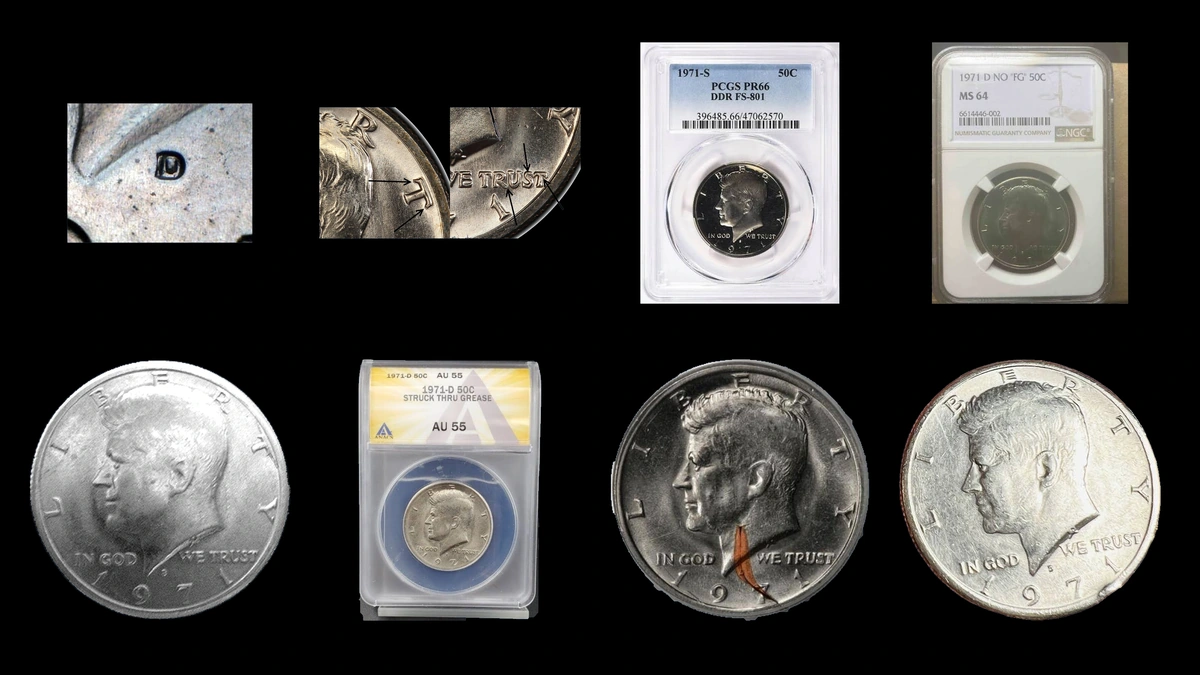
A leftover silver blank accounts for one of the best-documented 1971 half dollar errors: a Denver AU55 sold for $6,037.50 in 2003. A later $13,000 silver-sale report has less complete material confirmation in its price listing.
Estimated values across the errors below span $20–$15,000. Inspect small design details first, check how the two faces align, and reserve weight and metal testing for coins whose surfaces or size suggest a blank problem.
| Initial clue | Check for | Estimated range |
|---|---|---|
| Changed lettering or initials | Repunched mintmark, doubled die, missing FG | $20–$1,500 |
| Unusual orientation or border | Misalignment, rotation, off-center strike | $20–$1,500 |
| Extra shapes or interrupted surfaces | Clash, cud, wire impression, indent | $50–$5,000 |
| Missing edge or overlapping designs | Clip or double strike | $20–$4,000 |
| Abnormal thickness, size, or metal | Thin stock, wrong blank, silver transition | $100–$15,000 |
Ordinary 1971 halves, including Proofs, use copper-nickel clad metal with a standard weight of 11.34 grams and diameter of 30.61 millimeters. Take measurements without cleaning or disturbing the surfaces, since weight alone cannot distinguish every manufacturing problem from later metal loss.
1. 1971 Half Dollar An Extra Curve beside D or S: Repunched Mintmark Error
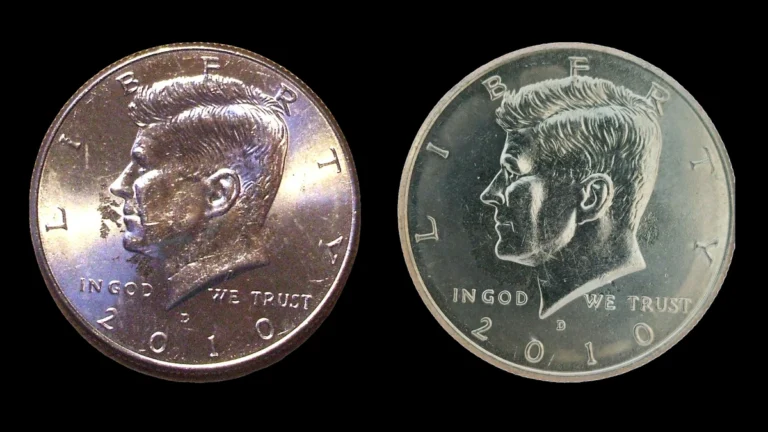
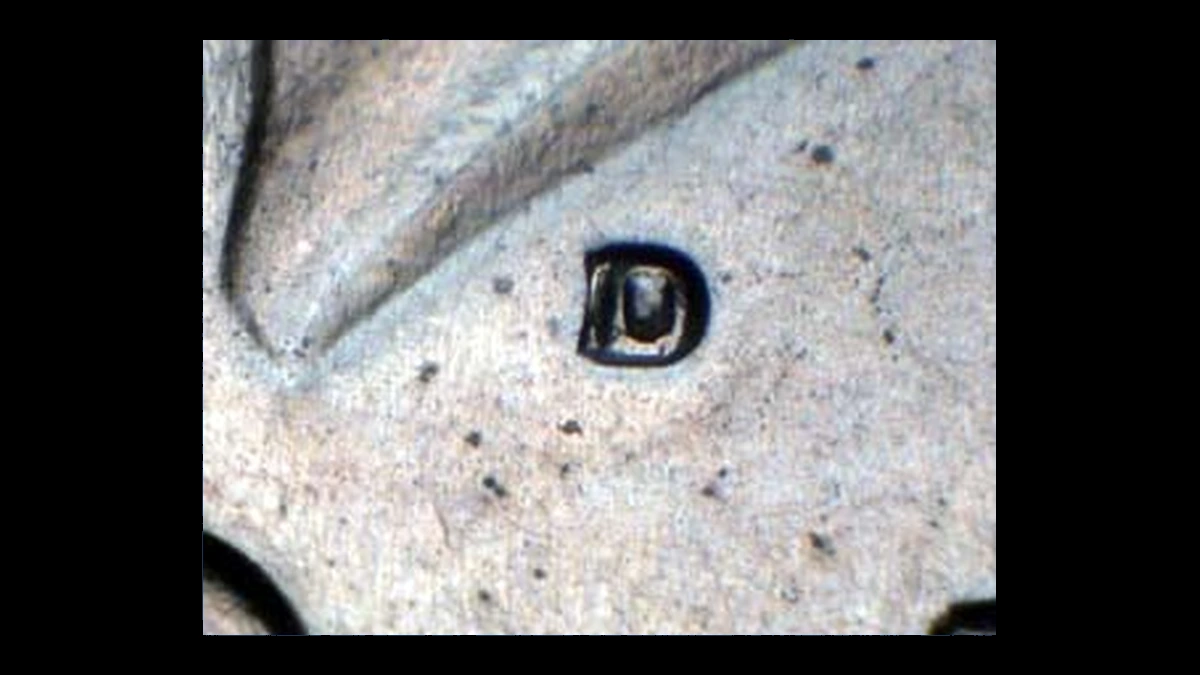
Follow any small curve beside the mintmark to see whether it belongs to another impression of the same letter. Repeated punching of a mintmark into the die could leave an earlier outline partly exposed.
Denver reports include tilted and differently displaced D impressions, while San Francisco Proof reports include an extra S to the left. Each pattern requires its own comparison.
How to Identify
Match the shape and direction of the second letter, then use nearby small marks only as supporting evidence. A hit can push metal sideways, and a flat shelf beside a letter is not enough to establish repunching.
What It’s Worth
Estimated values are $20–$250, with visibility, attribution, and surface quality affecting the result. A reported $40 market comparison for a 1969-D MS65 concerns another year and is not a recorded sale for these 1971 patterns.
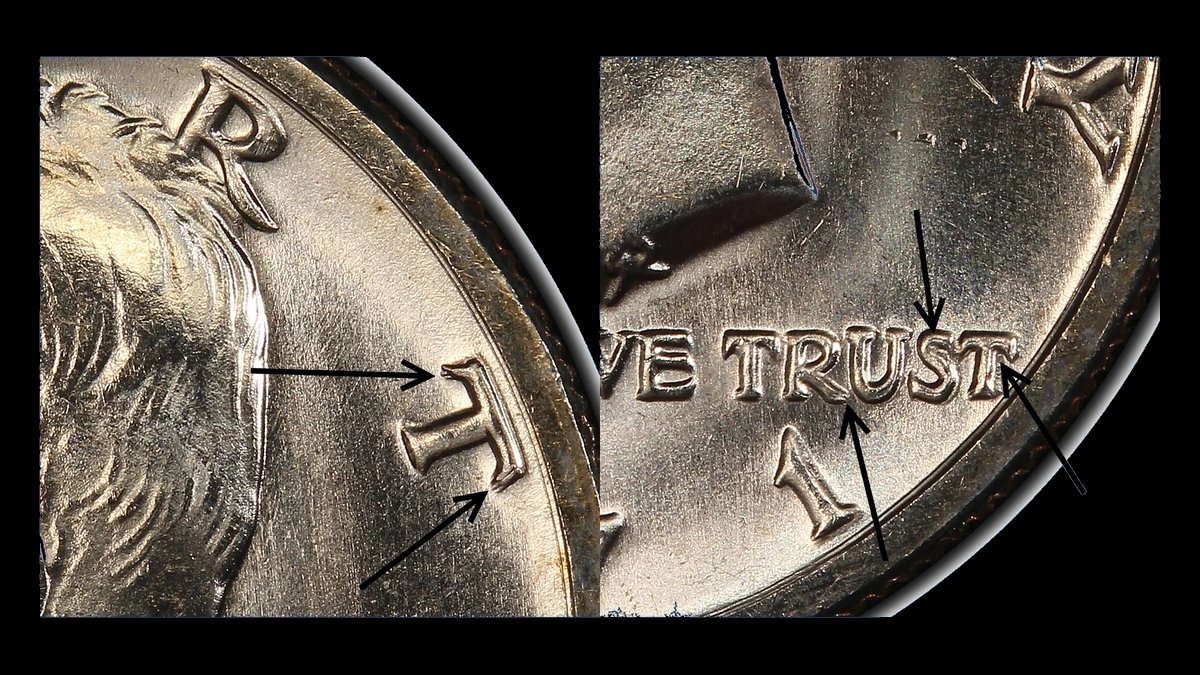
2. 1971 Half Dollar Repeated Front Letter Edges: Doubled and Tripled Die Obverse Error
The base of I in IN is a useful starting point for Denver’s FS-102: four small tips form part of its characteristic pattern. Other Denver varieties affect different combinations of the motto, LIBERTY, date, or hair.
Philadelphia doubling is reported in WE TRUST, BERTY, and the last three date digits. San Francisco Proofs have their own patterns, including close tripling produced in the die rather than by a displaced second strike on the coin.
How to Identify
Check several features of the same variety after locating the first convincing split or extra outline. Four tips at the I identify an FS-102 candidate, not every doubled 1971 half.
Some Denver varieties combine doubled fronts and backs. Later cracks or clash marks may help confirm a die, but can be absent on coins struck earlier from it.
What It’s Worth
Modest attributed varieties are estimated at $20–$250; stronger Proof patterns or exceptional preservation may reach $75–$1,500. Reported Denver FS-101 sales range from $18–$106, while a San Francisco FS-101 PR67 sold for $79 in September 2016.
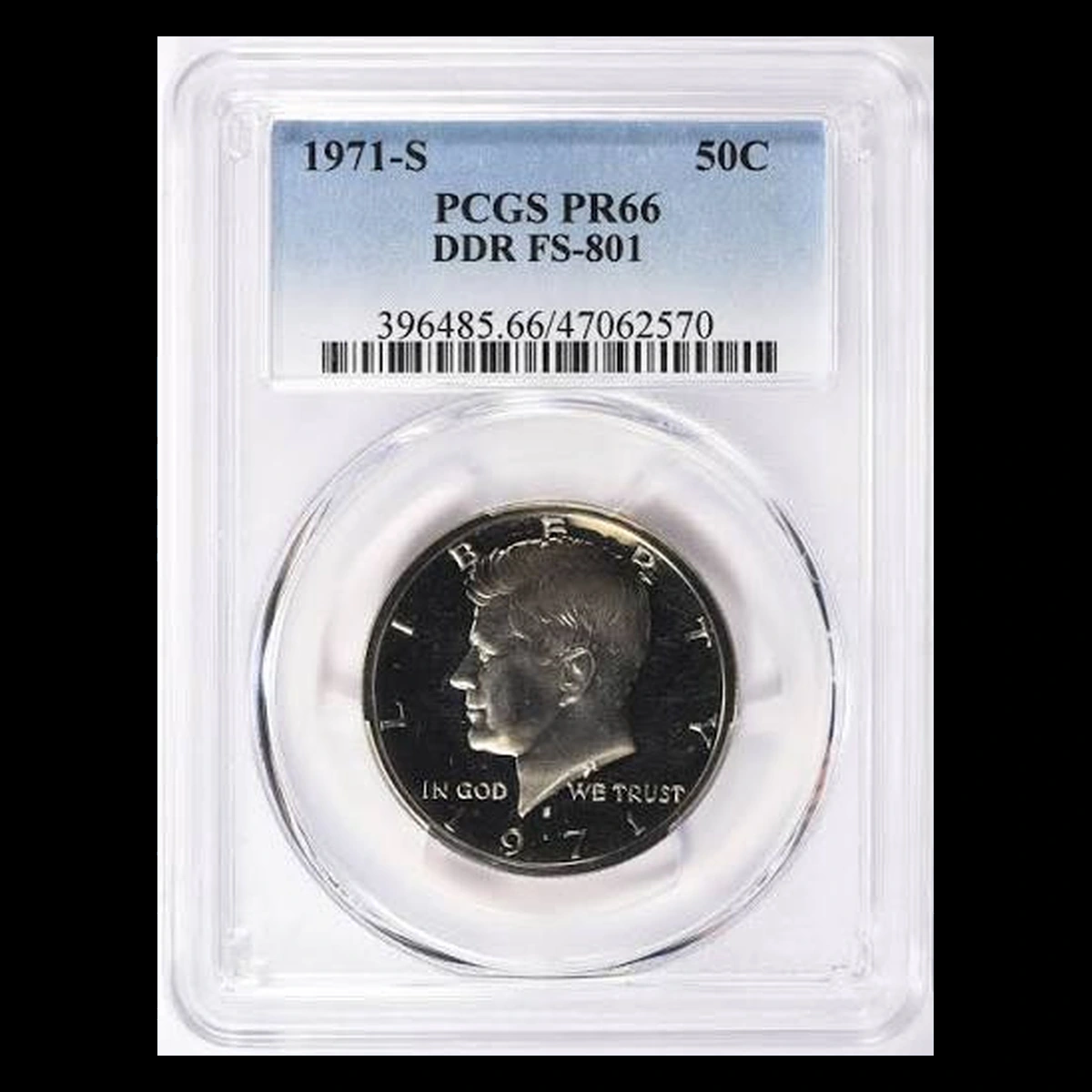
3. 1971 Half Dollar Split Feathers, Arrows, or Letters: Doubled Die Reverse Error
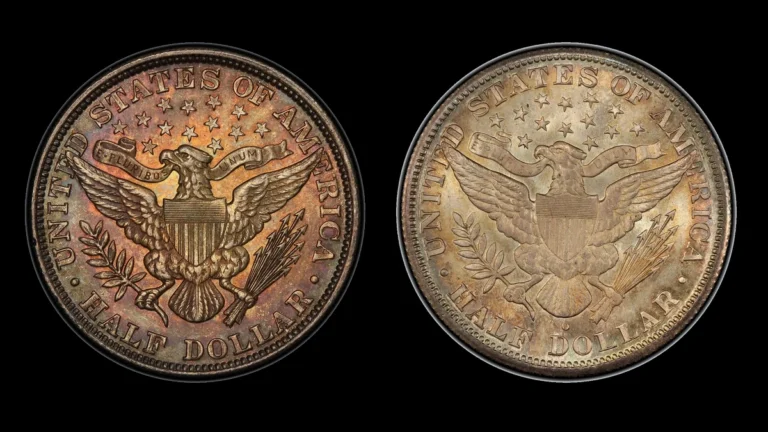
Reverse doubling can be easiest to see in small eagle details rather than the largest letters. The San Francisco FS-801 Proof has a pattern involving feathers, arrow shafts, HALF DOLLAR, and nearby stars.
Philadelphia and Denver reports describe their own separated or thickened reverse details. Similar descriptions do not make those coins, or every other Proof report, FS-801.
How to Identify
Compare a clearly pictured feather or arrow shaft with the FS-801 reference, then confirm the pattern in the denomination and stars. Change the light angle to separate real relief from reflections.
What It’s Worth
Minor confirmed varieties are estimated at $25–$250, with stronger named Proofs around $100–$1,000. A 1976-S clad FS-801 PR66 sold for about $881 in 2016, but that different reverse design supplies only a general Proof-variety comparison.
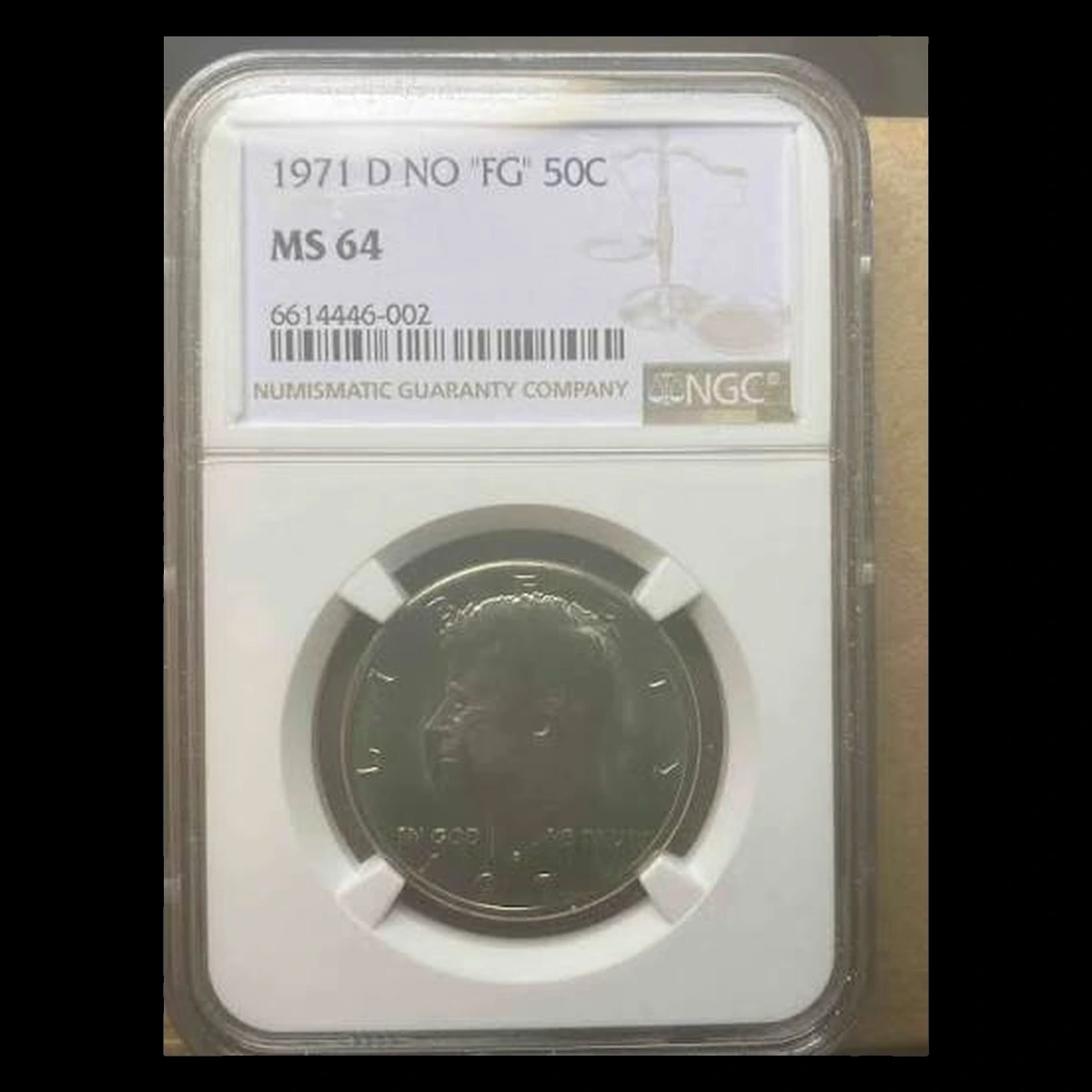
4. 1971 Half Dollar No Visible FG near the Tail: Missing Initials Report Error
Frank Gasparro’s FG initials sit between the eagle’s leg and tail. A 1971 report describes their absence and suggests that polishing removed the shallow detail from the die.
How to Identify
Use low side lighting to search for faint strokes, then compare the adjacent feathers and background. Worn feathers, scraping, or a smoothed depression can explain missing initials without a mint-made variety.
The report supplies no particular mint, finish, or recognized variety number. A blank-looking area in one photograph should not be promoted to a firm attribution.
What It’s Worth
A convincing original example is provisionally estimated at $20–$100. This is a type estimate with no completed sale supplied for a named 1971 missing-FG variety.
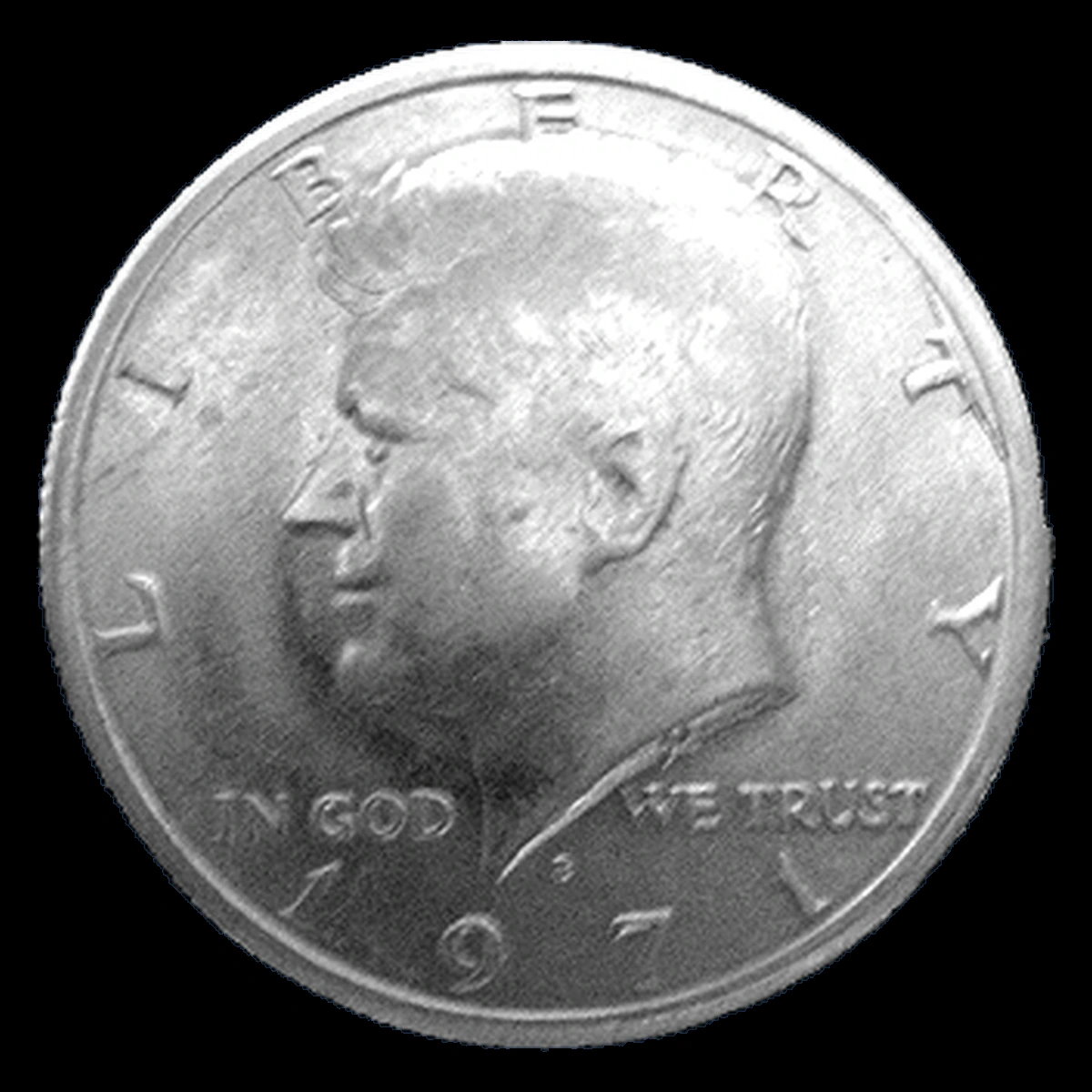
5. 1971 Half Dollar Faint Opposite-Side Shapes and a Bordered Patch: Clash with Retained Break Error
The reported Denver combination has extra traces above the D in GOD and behind Kennedy’s neck, with part of a head outline between the eagle’s left wing and arrows. These transferred shapes resulted from the dies contacting each other without a blank.
A separate outlined area on the front records a retained die break: a cracked section of die remained in place. That break and the clash traces are distinct features on one coin.
How to Identify
Check whether each faint trace corresponds to a recognizable part of the opposite face, rather than a random scratch. Then examine the retained-break boundary separately and note what design survives inside it.
What It’s Worth
The combined error is estimated at $50–$500, without adding separate clash and break premiums. A 1970-S PR65 Cameo clash sold for $159 in April 2022, although its date, metal, finish, and accompanying features differ.
6. 1971 Half Dollar An Empty Groove or Attached Wire: Struck Through Debris Error
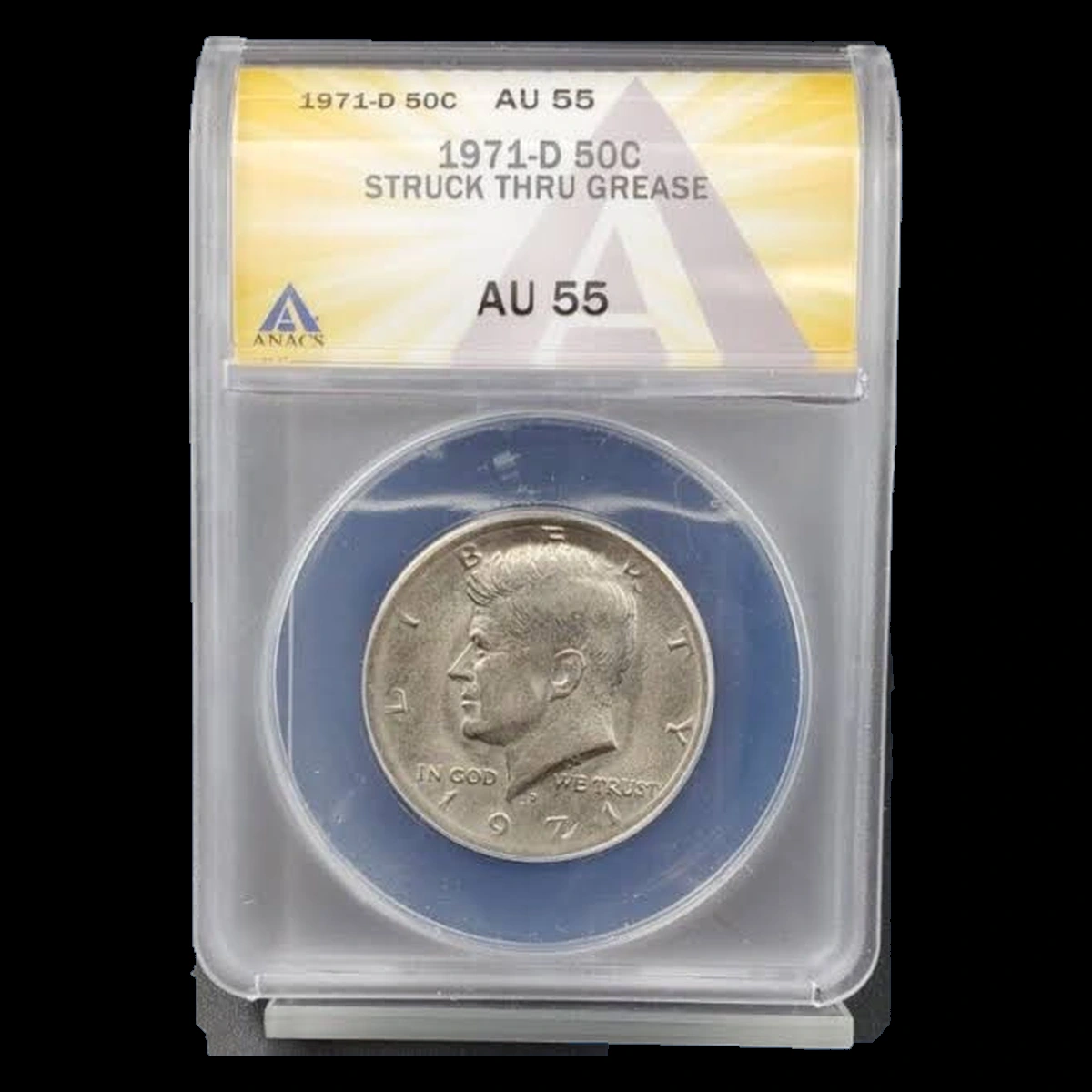
Two Denver examples show what happens when wire comes between a die and blank. An AU58 retains only an obverse impression, while a separate MS64 still has wire on its reverse.
How to Identify
Study the boundary where the normal design stops at the wire or its impression. Leave retained material untouched and check for glue, fresh gouging, or an object pushed into a finished coin.
Other reports name no material at all. A smooth depression should remain an unidentified strike-through unless its texture establishes something more specific.
What It’s Worth
The range is approximately $50–$2,000. The empty wire-impression AU58 sold for $1,320 in December 2022, whereas the retained-wire MS64 brought $228 in August 2017, so retention alone does not predict the higher price.
7. 1971 Half Dollar Peeling or Exposed Copper: Missing Cladding and Defective Surfaces Error
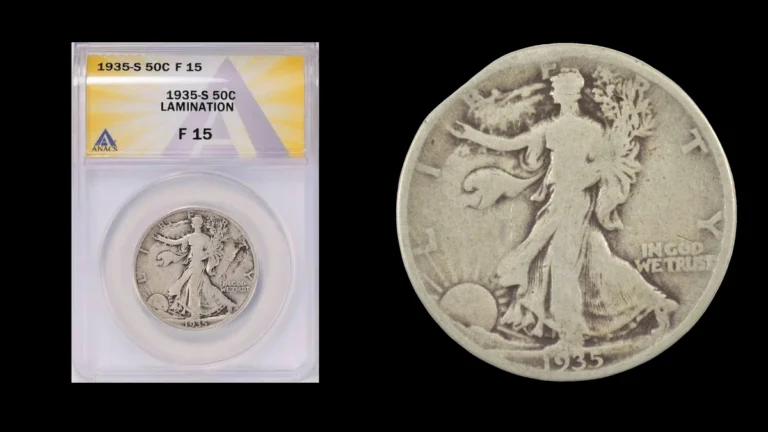
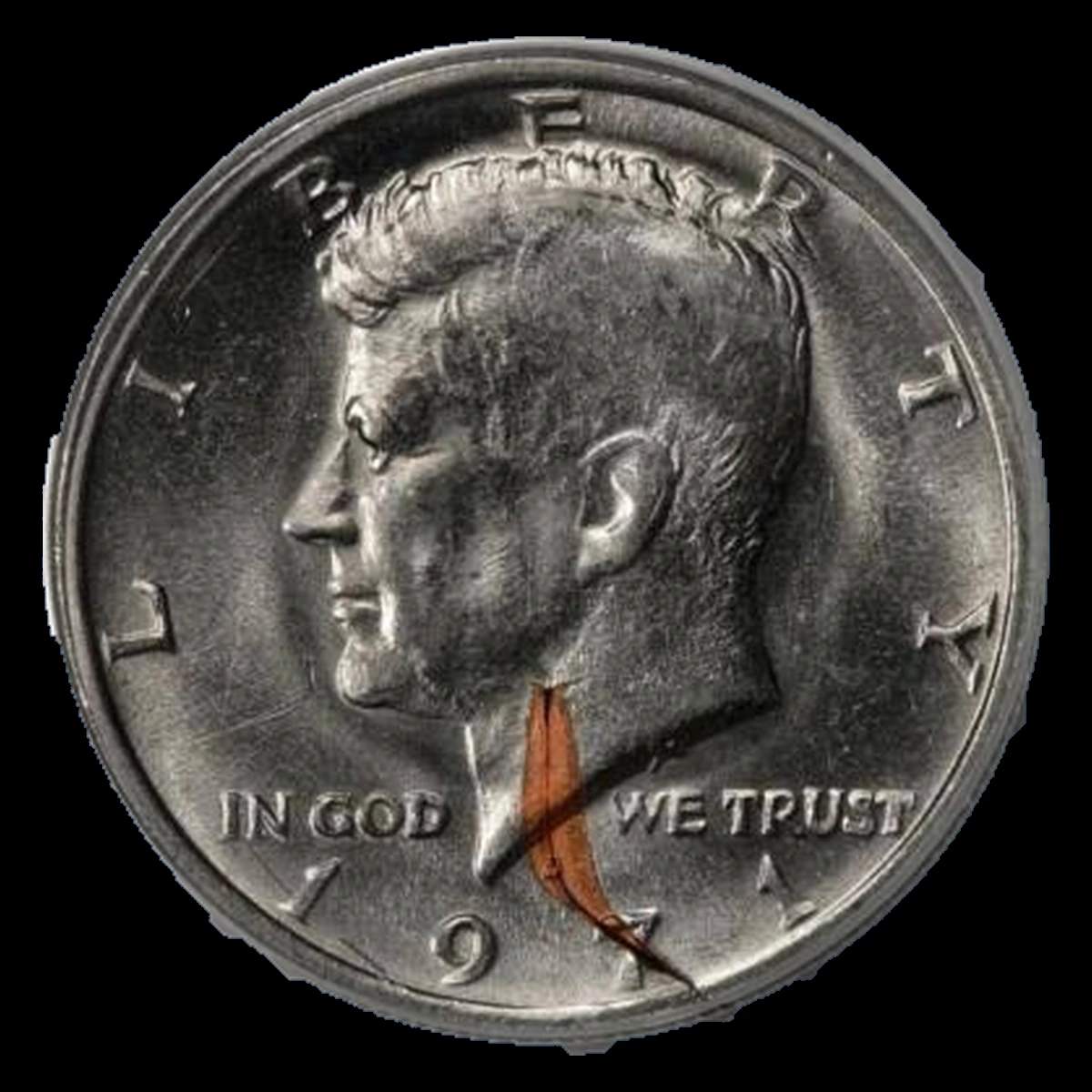
A flap, torn layer boundary, or exposed copper area can reveal a failure in the blank’s layered metal. Philadelphia and Denver reports cover missing cladding, lamination, and more generally defective surfaces.
How to Identify
Follow the defect into the edge and determine whether the design was struck into exposed metal or interrupted by later separation. Do not lift an attached flap, and do not treat brown color as proof that a layer is gone.
The amount missing differs from coin to coin, so there is no universal error weight. Chemical damage, plating, and scraping require separate explanations.
What It’s Worth
Genuine examples are estimated at $50–$800, from minor surface flaws to substantial layer loss. A different-year 1976-D obverse missing-layer MS61 sold for $258.50 in January 2017 and provides a comparison with a known face and grade.
8. 1971 Half Dollar A Shallow Raised Rim Patch: Reported Obverse Cud Error
Near 3:15 on the Denver obverse, Cud Book 71D-1 describes a broad, shallow patch joined to the rim. The raised metal filled a space left by failure at the edge of the striking die.
How to Identify
Match the patch’s boundary and its relationship to nearby design details with the catalog image. A folded rim may lie over already completed lettering and show crushing along the edge instead.
What It’s Worth
Estimated value is $50–$750, but the historical record supplies neither a grade nor a specific auction coin. A 1976-D MS62 with a reverse cud and strike-through sold for $264 in March 2021; it is a different-year compound error.
9. 1971 Half Dollar Missing Arcs or a Straight Shortage: Clipped Planchet Error
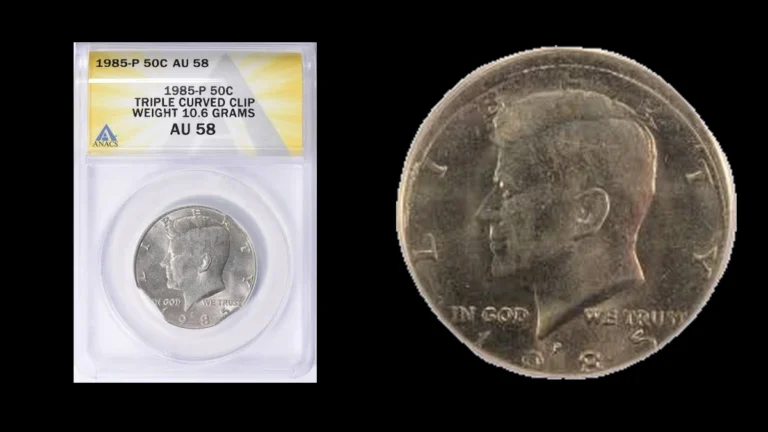
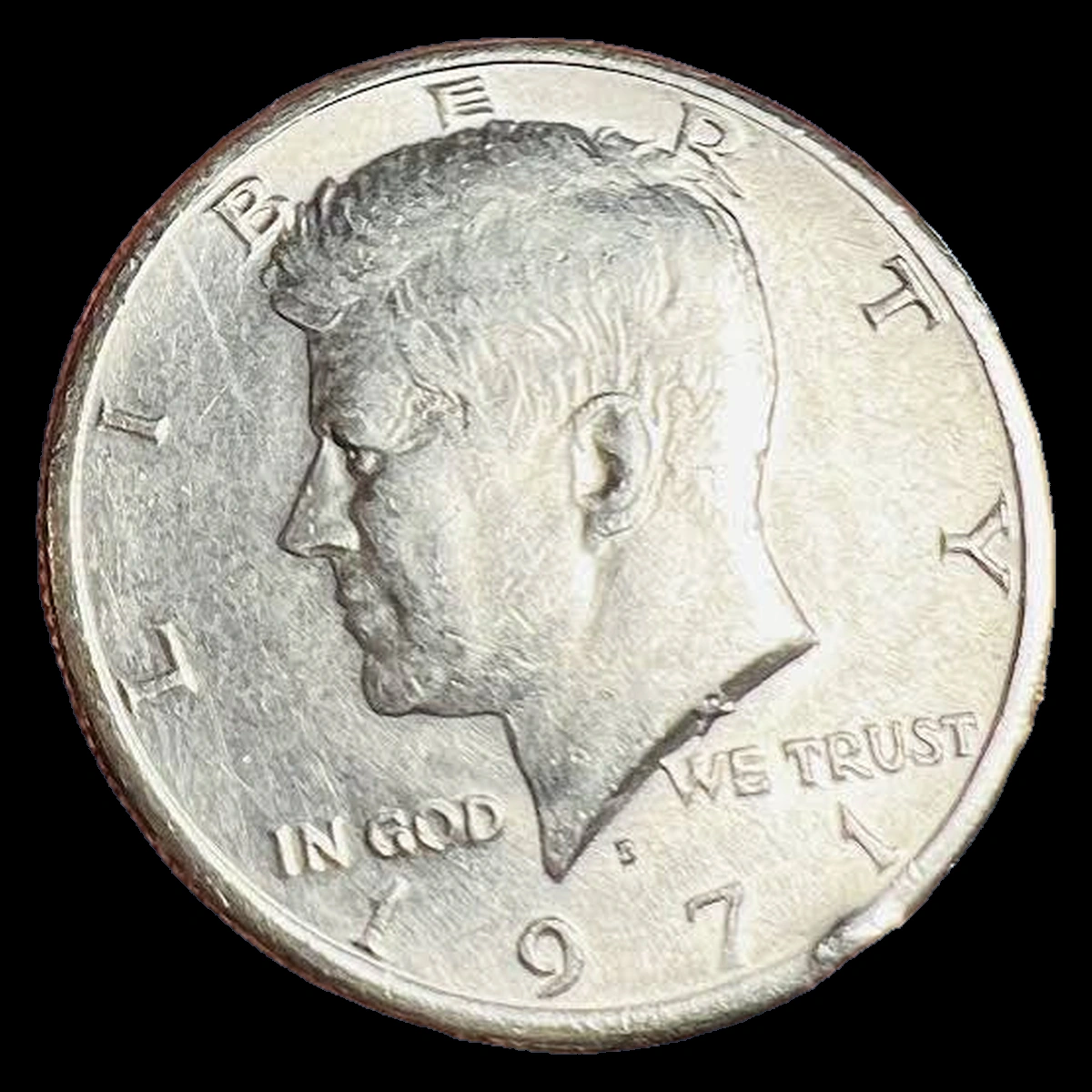
Reported Denver clips range from a small 2% curved gap on an MS66 to double and triple clips on separate coins. A straight-clip report adds another outline without identifying a particular graded specimen.
How to Identify
Inspect every gap for original rim and lettering changes where the shortage existed before striking. Fresh cuts can slice through finished detail; weakness on the opposite rim can support a genuine clip but is not mandatory on every example.
What It’s Worth
Estimated prices span $20–$600. The MS65 double clip sold for $74 in July 2021, while a separate MS64 10% clip was offered at $90; neither figure is a sale of the AU55 triple clip.
10. 1971 Half Dollar One Face Sits Unevenly inside the Rim: Misaligned Die Error
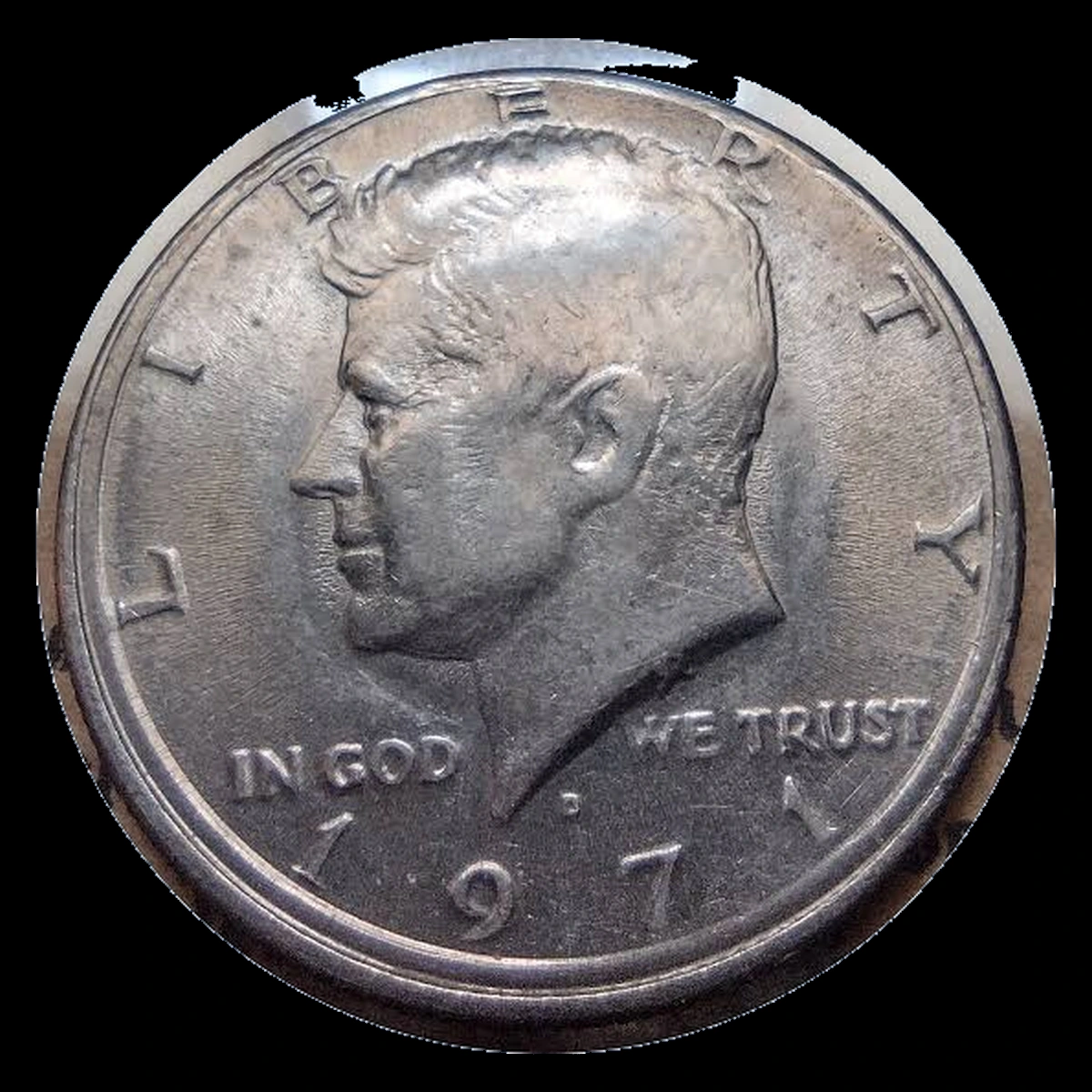
The Denver MS62 misalignment shifts Kennedy sideways relative to the border while the reverse stays normally centered. One die moved laterally without requiring the blank itself to be off center.
How to Identify
Photograph both faces straight on and compare their wide and narrow borders. Similar displacement on both sides suggests an off-center blank, while a filed rim or tilted camera can create a misleading one-sided appearance.
What It’s Worth
A genuine misalignment is estimated at $20–$300, with slight shifts at the lower end. The $312 sale of a 1971 Philadelphia 70% off-center MS64 in 2023 concerns a much stronger, different striking error.
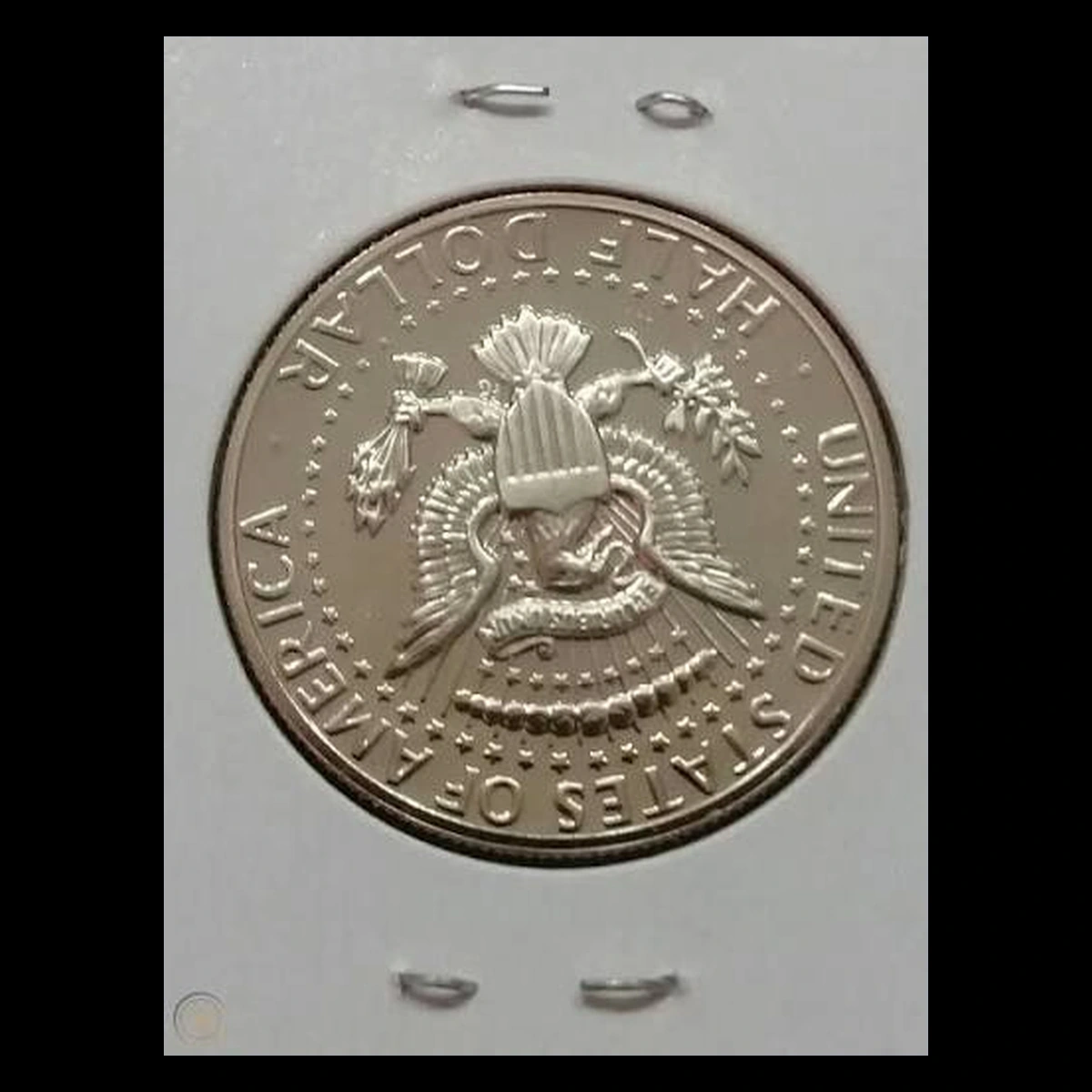
11. 1971 Half Dollar The Eagle Tilts after a Straight Flip: Rotated Dies Error
A rotation changes the orientation of the two designs without necessarily changing their centering. Reports exist for Denver and San Francisco, but neither supplied account establishes an angle or direction.
How to Identify
Hold Kennedy upright and turn the coin top to bottom without twisting it sideways; the eagle should finish upright on a normal coin. Repeat the motion and document any consistent angle, then inspect for an edge seam that could indicate assembled pieces.
What It’s Worth
A clear rotation is provisionally estimated at $50–$400, although a tiny deviation may carry little premium. No auction result accompanies these two historical reports, and neither should be assumed to describe a 90-degree or 180-degree turn.
12. 1971 Half Dollar A Large Crescent without Design: Off-Center Strike Error
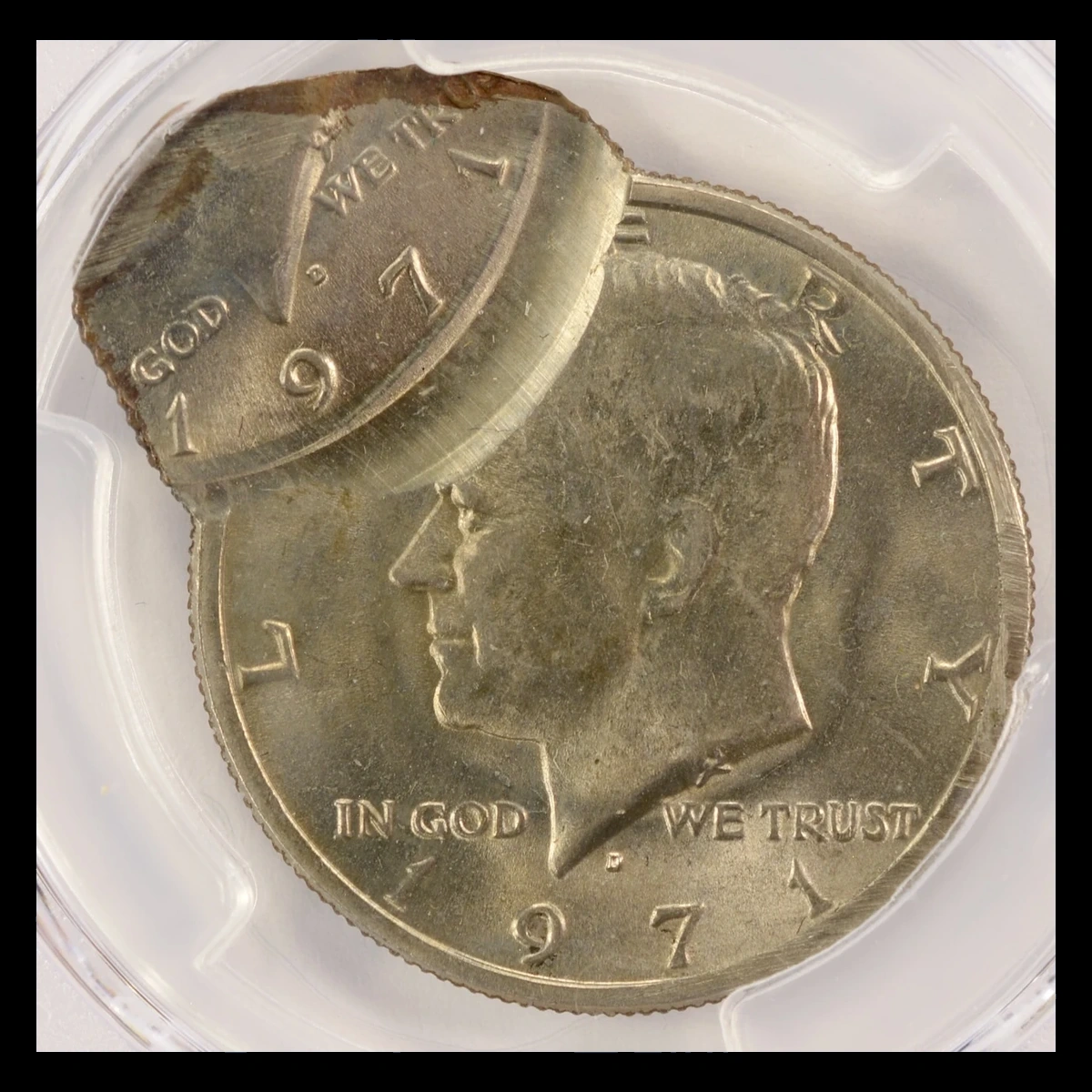
The Philadelphia MS64 was struck about 70% off center, leaving most of its blank untouched. A separate Denver MS66 shows a 55% displacement.
How to Identify
Look for original blank texture beside the struck area and corresponding displacement on both faces. The percentage describes design placement, not missing metal.
Read whatever date and mintmark remain before assigning identity. A covered D area does not establish Philadelphia, and an unreadable date needs other reliable evidence before calling the coin 1971.
What It’s Worth
Collectible examples are estimated at $150–$1,500. The Philadelphia 70% off-center MS64 sold for $312 in March 2023; the Denver MS66 is a different specimen with no sale assigned here.
13. 1971 Half Dollar A Smaller Depression on a Full-Sized Half: Dime-Blank Indent Error
A CONECA publication identifies a Denver PCGS MS62 indented by a dime blank. The small blank overlapped the half and blocked part of the design during striking.
How to Identify
Establish that the receiving coin is a full-sized half dollar, then examine the depression’s boundary and surrounding design. A later circular impact can crush an already complete image, while this event interrupted the image as it formed.
The published identification does not mean the extra blank remains attached. It also differs from a half-dollar design struck directly on a dime-sized blank.
What It’s Worth
A genuine example of this type is estimated at $1,000–$5,000. The supplied $3,840 result from 2020 belongs to a related 1969-D MS64, not the illustrated 1971 MS62.
14. 1971 Half Dollar Two Date Groups or Overlapping Designs: Double Strike Error
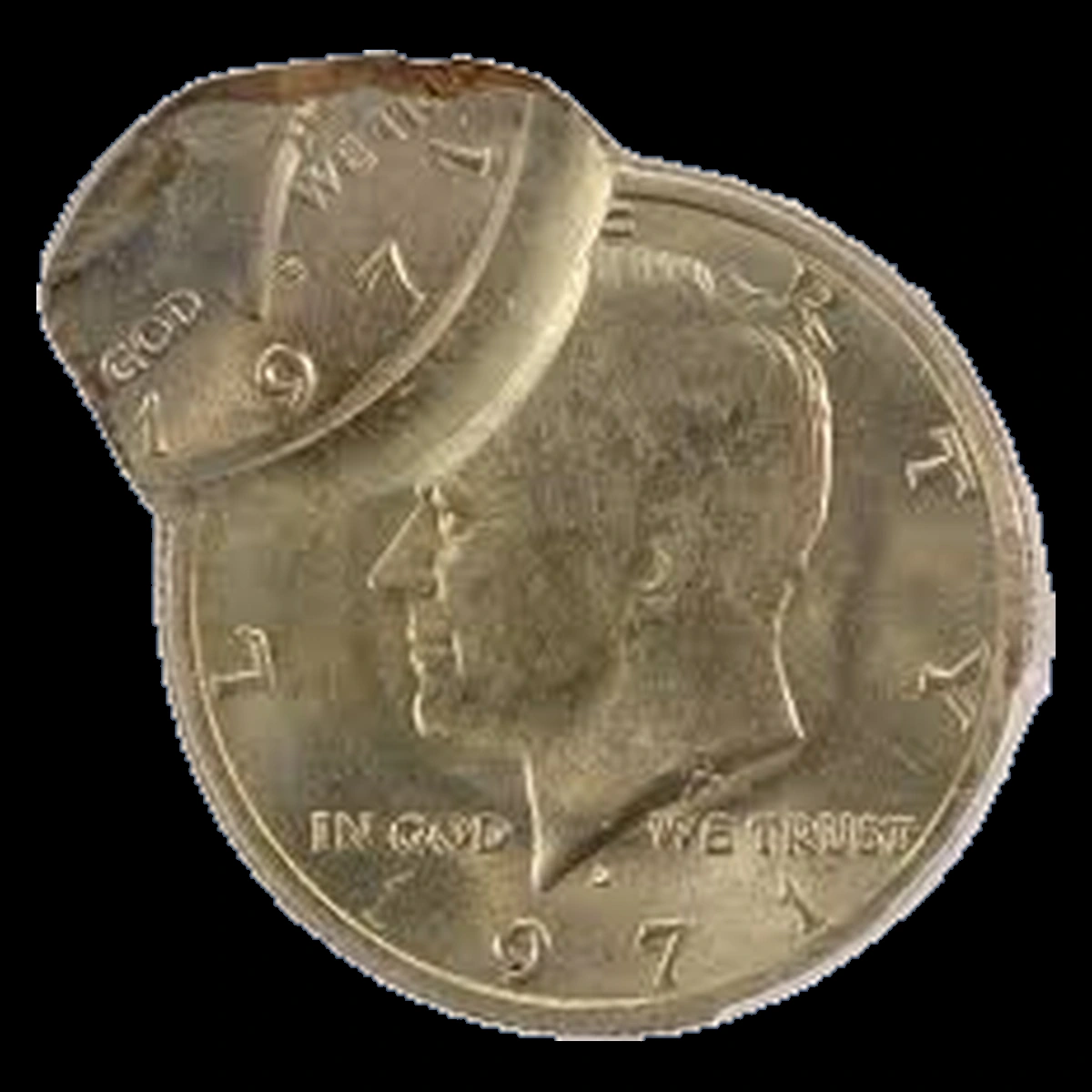
On the Denver MS62, two dates and two D mintmarks survive because the second strike landed 25% off center toward 10 o’clock. Overlapping detail near Kennedy’s ear helps trace the two positions.
A separate San Francisco PF64 received displaced strikes, while a historical PR66 Deep Cameo report describes a second strike on the reverse only. Normal aligned Proof striking does not explain these shifted impressions.
How to Identify
Follow connected groups of design through the overlap rather than counting a flat edge on one letter. Each claimed strike should fit the same continuous piece of metal, without seams or added pieces.
What It’s Worth
Estimated values range from $500–$4,000. The Denver MS62 sold for $1,265 in January 2007, another Denver MS64 brought $720 in December 2024, and the displaced San Francisco PF64 realized $2,880 in August 2022.
15. 1971 Half Dollar Normal-Sized but Unusually Light: Thin Stock or Underweight Blank Error
Three different measurements illustrate this group: a Philadelphia AU55 at 9.96 grams, a Denver MS64 at 10.7 grams, and a Denver MS60 at 8.77 grams. The first lacked a matching foreign-blank identification, the second was attributed to quarter-thickness stock, and the third was described as rolled thin.
How to Identify
Combine low weight with thickness measurements and an inspection of the surviving layers. A half-dollar-sized blank cut from thin stock is different from a small quarter blank.
Corrosion, filing, and missing cladding can also reduce weight. The 9.96-gram reading alone does not justify assigning a foreign denomination.
What It’s Worth
Original examples are estimated at $100–$750. The Philadelphia AU55 sold for $161 in January 2007; a separate Denver ANACS MS63 thin-stock coin brought $228 in October 2022, not the 10.7-gram NGC MS64.
16. 1971 Half Dollar Kennedy on a Small Copper Blank: Cent Planchet Error
The Denver MS62 Red and Brown has a clear D and a faint but complete date on a blank too small for most outer wording. Its cent alloy runs through the body, unlike a half dollar with a copper center exposed by layer loss.
How to Identify
Compare the surviving date tops, mintmark, and cropped lettering with the certified example. A period cent blank starts around 3.11 grams, and its unlayered edge should be original rather than trimmed or plated.
What It’s Worth
Comparable identifiable pieces are estimated at $2,500–$5,000. Sales with the MS62 Red and Brown description include $3,720 in September 2019 and $3,360 in December 2024, but those appearances need not represent two different surviving coins.
17. 1971 Half Dollar Cropped Wording on Pale Metal: Nickel or Quarter Blank Error
The Denver nickel-blank MS63 is nearly centered, yet only the tops of its date digits fit on the small surface. A separate Denver MS66 uses a clad quarter blank, while an unresolved report claims a silver quarter blank without fixing the mint or finish.
How to Identify
Nickel blanks start around 5.00 grams, clad quarter blanks around 5.67 grams, and silver quarter blanks around 6.25 grams. Combine those clues with edge construction and metal testing, because cropped designs do not establish composition.
What It’s Worth
Nickel- and clad-quarter-blank examples are estimated at $1,000–$4,000; the nickel-blank MS63 sold for $2,040 in August 2020. The suggested $5,000–$10,000 range for the reported silver-quarter type is conditional on verification and is not a confirmed 1971 sale.
18. 1971 Half Dollar An Off-Center Design on Foreign Metal: Mexican Blank Error
The documented Denver MS64 combines a Mexican 50-centavos planchet with an approximately 30% off-center half-dollar strike. The wrong blank and its displacement describe one coin’s striking event.
How to Identify
Compare the actual dimensions, weight, composition, and grading photographs before accepting the foreign identity. The unstruck area shows displacement but cannot, by itself, identify the Mexican denomination.
What It’s Worth
A comparable authenticated piece is estimated at $1,500–$6,000. The PCGS MS64 sold for $1,880 in April 2013; a newer cent-blank sale concerns different metal and does not replace this foreign-blank record.
19. 1971 Half Dollar Unexpected Silver Content: Transitional Planchet Error
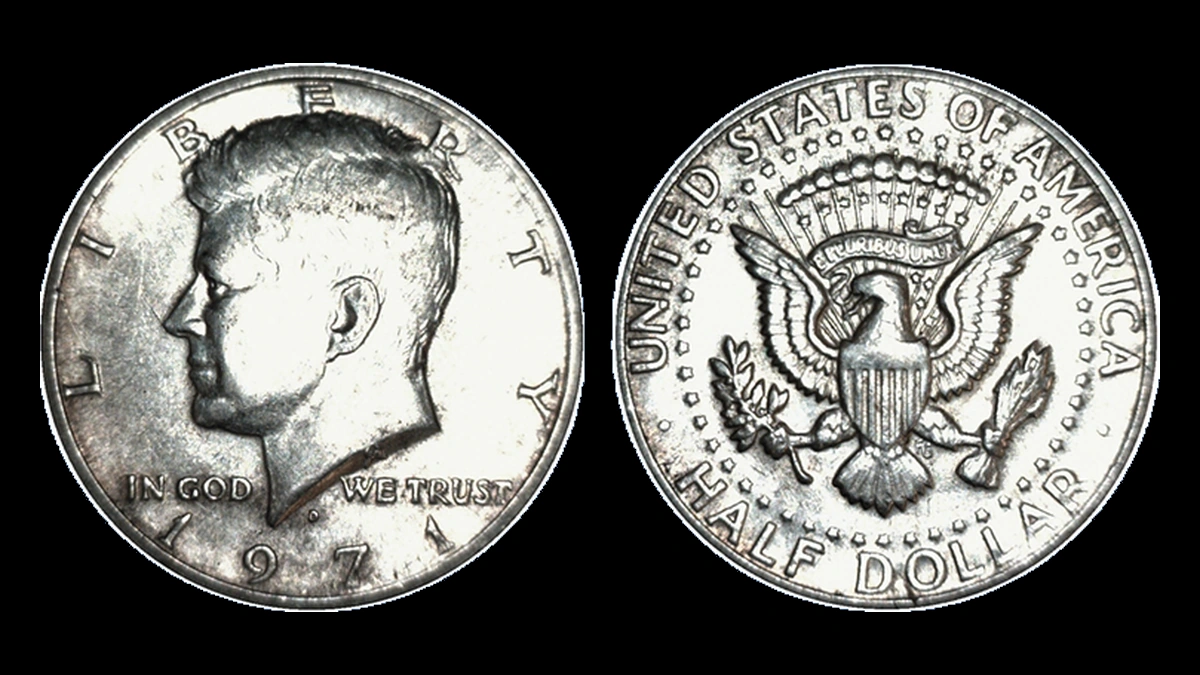
A leftover 40% silver blank could enter 1971 production after regular half dollars switched to copper-nickel clad composition. A certified Denver AU55 documents this transitional error.
A separate Denver examination reported 11.44 grams and a density near 9.5 times that of water. The San Francisco silver-Proof claim instead cites 12.50 grams, a figure requiring its own explanation and material confirmation.
How to Identify
The normal 40% silver-half standard is 11.50 grams, only slightly above 11.34 grams for clad, so wear and measurement differences can overlap. Professional nondestructive metal testing is more decisive than silver color or a single scale reading.
The Denver specimen’s density supports that particular coin, not the separate Proof claim. Check suspected pieces for altered edge layers or plating as part of the examination.
What It’s Worth
Verified transitional silver strikes are estimated at $4,000–$15,000. The Denver AU55 sold for $6,037.50 in September 2003.
A reported $13,000 MS61 sale in 2018 appears in an index under ordinary Denver coins without independent confirmation there of its silver composition. The San Francisco Proof report has no confirmed auction result in the supplied material.
Conclusion
The most productive check is the one that tests a specific observation: compare letter patterns for varieties, flip the coin for rotation, and inspect thickness and composition for blank problems. Keep the measurements and sale history of each specimen together.
That distinction matters especially for 1971 silver claims, where a documented Denver error does not establish the material or value of a different reported Proof.