Rare 1804 Dime Errors (List & Pictures)
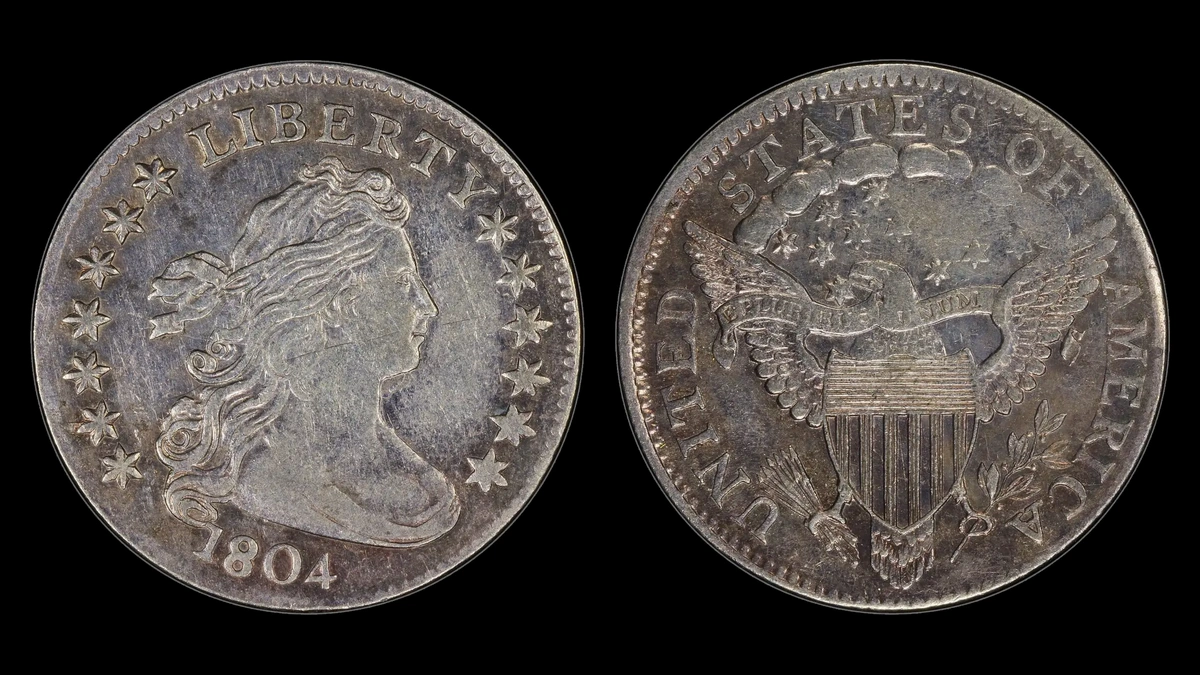
An exceptional fourteen-star 1804 dime graded AU58 with CAC approval sold for $632,500 in 2008. The 1804 dime errors below have estimated whole-coin ranges of $2,000–$100,000 for the circulated examples discussed.
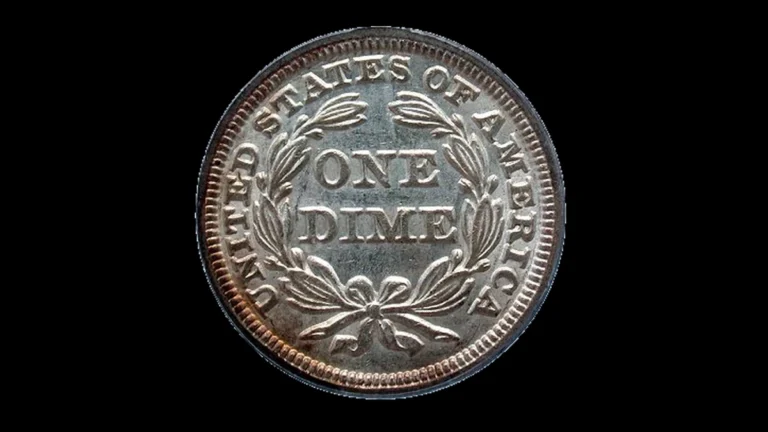
Count the reverse stars before comparing front-side marks, metal flaws, or displaced impressions. The Draped Bust type normally weighs about 2.70 grams, measures 19.8 millimeters, and contains roughly 89.24% silver.
| Inspection area | Feature | Estimated whole-coin range |
|---|---|---|
| Front line networks | Cracked dies | $2,000–$50,000 |
| Left front rim | Rim cuds | $3,000–$50,000 |
| Beside Liberty | Clashed dies | $3,000–$50,000 |
| Beginning of date | Original metal voids | $3,000–$35,000 |
| Peeling surface | Reported lamination | $2,000–$25,000 |
| Plain crescent and missing design | Reported off-center strike | $5,000–$75,000 |
| Separate overlapping impressions | Reported double strike | $7,500–$100,000 |
1. 1804 Dime Raised routes across Liberty: cracked dies Error
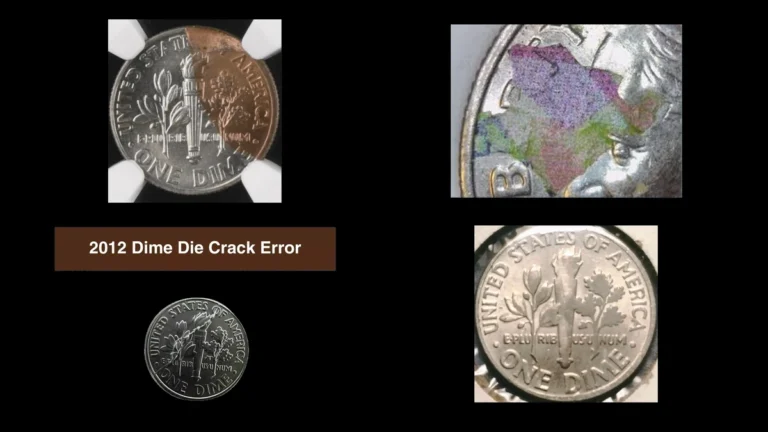
The fourteen-star JR-2 has a crack from above front star 13 through Liberty’s chin and face, continuing through the hair toward the left base of B in LIBERTY. Other branches connect T toward the temple and star 10 toward the nose.
Additional cracking occurs near the bust, while thirteen-star JR-1 coins have their own head, chin, and star-area paths. These ridges form when metal enters openings in the dies during striking.
How to Identify
Count the stars above the eagle to select JR-1 or JR-2 before tracing the front. Then follow the complete relevant route rather than identifying a variety from one cheek line.
For JR-2, connect the star-13 area to the chin and B, checking the branches independently. Do not import a JR-1 line into that network.
Use low-angle light to confirm that the line stands above the surface. Scratches and old adjustment cuts sink into the metal, and a raised die-crack trace does not require a split through the coin itself.
What It’s Worth
The estimated whole-coin range is $2,000–$50,000 for worn examples, roughly Good through Very Fine. The rare date and reverse variety account for much of that value.
PCGS records a fourteen-star AU58 CAC at $632,500 in 2008. That exceptional higher-grade coin lies outside the stated range and does not establish a six-figure price for a crack.
2. 1804 Dime Two long patches above the stars: rim cuds Error
The documented PCGS VF20 thirteen-star dime has two elongated raised breaks along the left front rim. One lies above stars 1–2, and the other above stars 3–4.
These cuds record missing pieces at the die’s edge, where metal entered the openings during striking. A depression below I in UNITED on the same coin has an unestablished cause and is a separate observation.
How to Identify
With Liberty upright, follow the left rim past the first four stars. Compare both patches, including their elongated outlines and connections to the struck border.
Confirm thirteen stars above the eagle before using the JR-1 comparison. A rim irregularity on a fourteen-star coin does not automatically represent these same breaks.
Inspect the edge for folded metal, dents, or added-metal repair. The unexplained reverse depression should not be used as proof that the front patches are cuds.
What It’s Worth
Circulated thirteen-star examples with these features have an estimated whole-coin range of $3,000–$50,000 from heavy wear through strong VF detail. No sale price is supplied for the documented VF20 cud coin.
A thirteen-star ANACS AU55 Details dime sold for $30,550 in 2013. It is a sharper coin with different condition issues, not a transaction for the VF20 specimen.
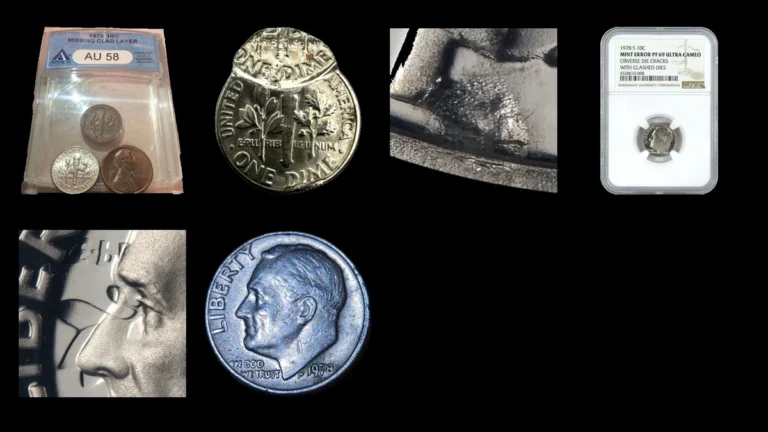
3. 1804 Dime Cloud and eagle shapes beside Liberty: clashed dies Error
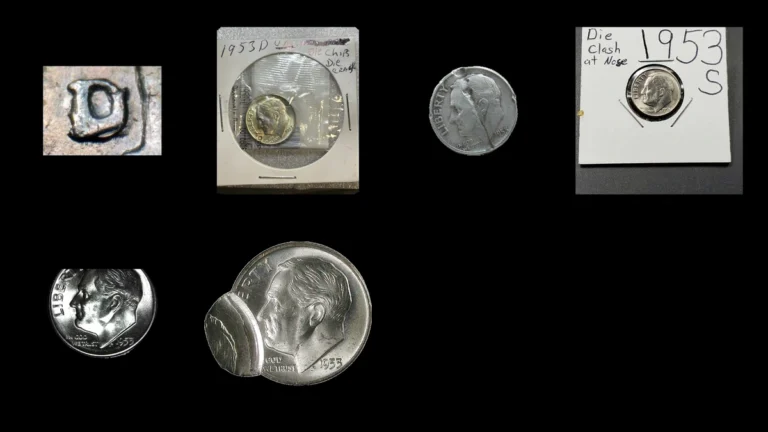
The Parmelee thirteen-star dime shows cloud, wing, and tail contours beside Liberty. Those shapes belong to the reverse design, making their presence on the front diagnostically useful.
The dies had collided without a blank between them and acquired traces of each other’s designs. Later strikes carried the transferred marks.
How to Identify
Compare the fields beside Liberty with the clouds, eagle wing, and tail on the reverse. Look for recognizable corresponding contours under changing light.
A random crack or scratch does not reproduce those shapes. A deep backward portrait pressed into the coin would also require a different explanation from a faint die clash.
Keep the thirteen-star reverse in the comparison. The fourteen-star JR-2 uses a different reverse tool and cannot supply interchangeable diagnostics.
What It’s Worth
Circulated JR-1 examples with clashes have an estimated whole-coin range of $3,000–$50,000. The rare date and preservation remain major parts of that estimate.
Heritage sold the Parmelee-Lovejoy dime for $30,550 in April 2013. Its ANACS AU55 Details grade reflected light wear and scratches.
This is one complete coin’s price, including its condition issues. Any cracks and clash marks on it do not create separate full estimates to add together.
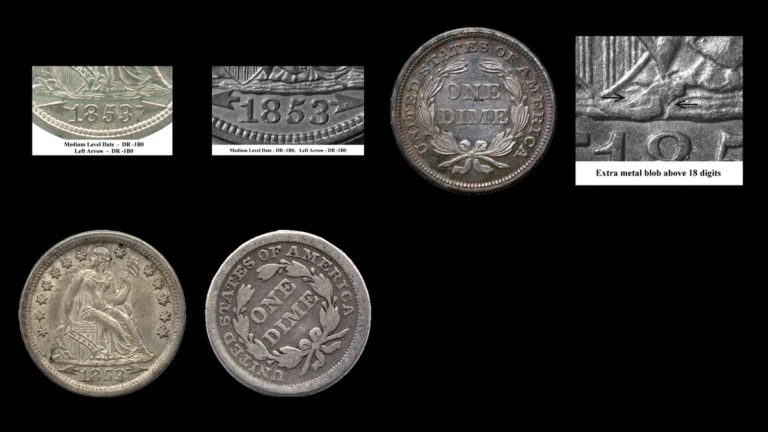
4. 1804 Dime Small openings beside the date: planchet voids Error
A documented fourteen-star JR-2 dime has a small cluster of empty pockets near the beginning of the date. Its NCS VF holder described a flaw in the original metal disc.
The catalog treated these voids as original defects on that particular coin. A void does not require an attached flake or establish that a whole layer peeled away.
How to Identify
Keep the whole date visible while locating the cluster near its first digits. Confirm the fourteen-star reverse and the JR-2 attribution.
Inspect the openings’ walls and the way the surrounding struck surface meets them. Darkness alone cannot establish whether a pocket was present before striking.
Corrosion, later punctures, and pores in a cast copy need separate consideration. The documented holder description should not be transferred to every early dime with pits.
What It’s Worth
Collectible circulated fourteen-star examples with original voids have an estimated whole-coin range of $3,000–$35,000. Remaining detail and the effect of the flaw on the design matter.
No realized price is assigned here to the NCS VF coin. The $30,550 thirteen-star AU55 Details sale concerns another reverse and another condition level, so it cannot isolate a premium for these voids.
5. 1804 Dime A separating silver layer: reported lamination Error
A thin layer of metal may lift or peel, leaving a flap or a shallow irregular patch. This separation is called lamination.
The supplied 1804 report identifies neither a particular specimen nor its reverse star count. It is therefore a reported category requiring evidence from the coin itself.
How to Identify
Look for an actual thin-layer boundary rather than isolated pits or a scraped groove. The documented voids near the date on JR-2 are not automatically an example of peeling metal.
Leave an attached flap untouched and examine both faces for corrosion or tool damage. A later blow can push metal upward without creating original lamination.
Read the date and count the reverse stars before choosing a price reference. Record the flaw’s extent without assigning an unsupported standard location.
What It’s Worth
A genuine circulated example has an estimated whole-coin range of $2,000–$25,000. The scarce date accounts for much of that price, and a small peel need not add value.
The $30,550 thirteen-star AU55 Details sale is a sharper-coin comparison, not a lamination sale. A flaw removing important design can reduce appeal even when it originated at the Mint.
6. 1804 Dime An unstruck crescent beside missing design: reported off-center strike Error
An off-center blank can receive only part of the design, leaving plain metal opposite the area where the design ran beyond its edge. Both faces should reflect that displaced strike.
The supplied year list reports the category without a graded specimen, amount of displacement, or reverse star count. An uneven or weak early border alone does not fill that evidentiary gap.
How to Identify
Connect the missing outer detail on both faces with the same original unstruck area. A shifted front opposite a centered reverse may instead indicate one misaligned die.
Read 1804 directly and count surviving reverse stars where possible. Do not infer a star variety from an incomplete photograph.
Check the plain area for original texture, filing, or polishing. Examine the edge as well, since alteration can create false blank space around an otherwise normal design.
What It’s Worth
A genuine circulated, readable-date example has an estimated whole-coin range of $5,000–$75,000. This is not a documented 1804 off-center auction result.
An 1821 Large Date dime struck 30% off-center sold for $2,640 in December 2022, graded NGC XF Details with cleaning. Its later design and less rare date make it only a broad striking-error comparison.
7. 1804 Dime Two overlapping arrangements: reported double strike Error
A coin struck twice can retain overlapping portraits, letters, or date fragments if it moves between blows. The complete arrangement should reveal separate impressions rather than one repeated letter edge.
The 1804 report gives no specific specimen, direction, or star count. Those details remain unestablished until a candidate coin provides them.
How to Identify
Trace the second set of details across the face, checking whether its date or lettering agrees with the displaced portrait. Look for corresponding evidence on the reverse.
A local extra contour might come from the die or movement during one strike. It does not establish a second blow without a coherent broader pattern.
Check for crushing, tool marks, or incompatible backward impressions from coins pressed together later. Keep the date and star arrangement visible in full-coin photographs.
What It’s Worth
A genuine circulated example with convincing separate strikes and a readable date has an estimated whole-coin range of $7,500–$100,000. This is a comparison-based range, not a recorded sale of an identified 1804 double strike.
The $30,550 thirteen-star AU55 Details transaction shows the underlying date’s price scale. It establishes neither a double-strike attribution nor a specific premium for a second impression.
Conclusion
The reverse star count is the first useful division on an 1804 dime. After that, match raised tool marks, original metal flaws, or separate strike impressions using their actual shapes and positions.
Several reported categories still lack a specific documented specimen in the supplied evidence. Keep those limits clear, and remember that the date’s rarity and the complete coin’s preservation explain much of the substantial price range.