Rare 1900 Dime Errors (List & Pictures)
A San Francisco dime missing part of UNITED STATES beyond its edge sold for $862.50 in January 2005. The 1900 dime errors below span estimated whole-coin values of $20–$1,500, from small die lines to displaced designs.
Inspect the mintmark and date, compare weak or raised surface features, then follow the outline to distinguish missing metal, die misalignment, broadstrike, and off-center striking.
| Visible clue | Category | Estimated range |
|---|---|---|
| Extra mint letter or date stroke | Repunching | $40–$800 |
| Localized weak LIBERTY or date | Filled die | $50–$250 |
| Raised line or rim patch | Crack or cud | $20–$650 |
| Missing segment | Clip | $100–$550 |
| Only one design shifted | Misaligned die | $40–$350 |
| Wide coin with full design | Broadstrike | $200–$1,000 |
| Blank crescent and incomplete designs | Off-center strike | $350–$1,500 |
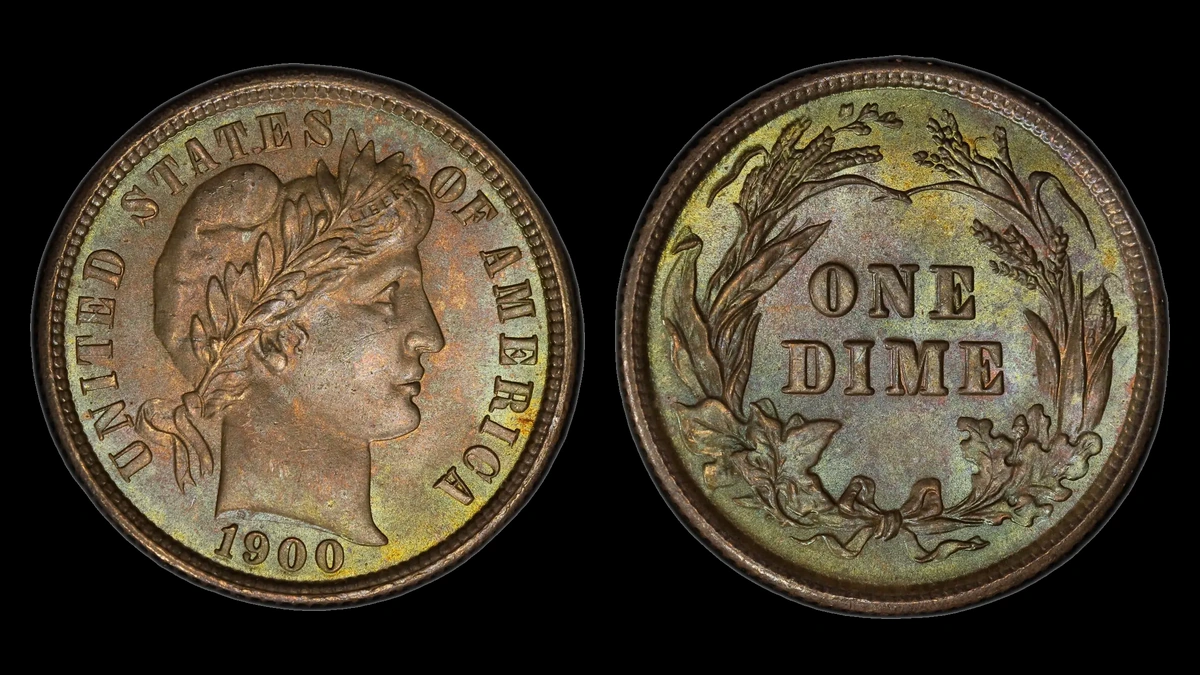
The normal Barber dime is 90% silver, originally 2.50 grams and about 17.9 millimeters across, with a grooved edge. An O or S below the reverse bow identifies New Orleans or San Francisco; keep that mint identity with every variety and price comparison.
1. 1900 Dime Another O or S Outline: Repunched Mintmark Error
An earlier letter can remain when the mintmark punch entered the die more than once in different positions. The guides report New Orleans and San Francisco examples without one shared direction.
How to Identify
Photograph the whole mintmark and follow the extra curve until it fits part of another O or S. A higher or lower mintmark position alone does not prove repunching.
Inspect the surrounding field for seams, tooling, or disturbed metal from a later addition. Corrosion and impact damage can also distort one edge without preserving another letter.
What It’s Worth
Genuine circulated examples are estimated at $40–$500. This is a whole-coin estimate based on modest variety premiums, with separate comparisons needed for O and S issues.
The familiar 1900-O/CC Morgan dollar belongs to another denomination. Its overmintmark identity and price do not apply to a Barber dime.
2. 1900 Dime Earlier Strokes below 1 and 9: Repunched Date Error
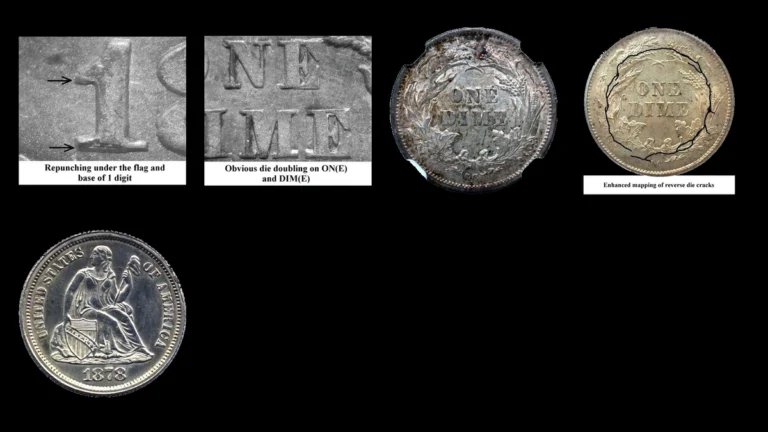
The San Francisco RPD-001 has an earlier 1 below its serif and base, plus an extra 9 edge below the numeral’s middle. Repeated date-punch placement left these remnants in the die.
The auctioned example was graded ANACS AU53. Philadelphia reports concern different marks near 1 and 9 or the final 0 and require their own references.
How to Identify
Confirm S before applying the San Francisco pattern, then compare the lower remnants on both 1 and 9. Keep the full numerals visible instead of isolating one suggestive notch.
Each extra shape should fit an earlier number stroke. A thin flat shelf from movement during striking is not equivalent to the documented repunching.
What It’s Worth
Clear repunched dates are estimated at $40–$800 from worn through lower unworn condition. The 1900-S RPD-001 AU53 sold for $139 on March 4, 2024.
Its slight wear and actual pattern belong to that specimen. A Philadelphia dime should not inherit the result merely because it also has a repunched date.
3. 1900 Dime Localized Weakness in LIBERTY or the Date: Struck Through Grease Error
The headband word LIBERTY and portions of the date are reported with grease-related weakness. Material filling a die recess can prevent the blank’s metal from forming that detail fully.
The report identifies no specific cloth texture or retained object. A worn headband can also lose its lettering, so nearby detail is crucial.
How to Identify
Compare LIBERTY with the hair and other high points before interpreting the missing word. Similar flattening across those areas may be ordinary circulation wear.
For a possible local blockage, inspect the weak zone alongside sharper undisturbed detail. Scratches, polishing, or scraping can indicate that a finished design was removed later.
What It’s Worth
Genuine circulated examples are estimated at $50–$250, extending the guide’s $75–$200 working figures for variations in clarity and surfaces. No specific completed sale is supplied, and a word simply worn away has no added error value.
4. 1900 Dime A Thin Raised Line near Liberty or the Wreath: Die Crack Error
Silver entering a crack in the striking die can leave a narrow ridge across the finished design. The year guide names general portrait and wreath areas without mapping one specific die.
How to Identify
Move the light from opposite directions and follow the continuous raised route. A stain may have no relief, while a scratch cuts down even when metal is pushed up along its edges.
Do not connect unrelated scratches into a supposed crack. A narrow line also differs from a broad patch produced by a larger missing die piece.
What It’s Worth
Ordinary circulated examples are estimated at $20–$150. This is a whole-coin guide range, not a recorded sale of a particular crack.
Mint and grade can already contribute more than the small feature itself. A better New Orleans coin needs a suitable underlying-issue comparison before any crack premium is considered.
5. 1900 Dime A Raised Patch Reaches the Rim: Cud Error
A die-edge piece breaking away leaves an opening that fills with silver during striking. The resulting cud joins the rim and replaces part of the intended design.
The supplied guides fix neither mint nor clock position for a particular 1900 cud. A later rim hit can also push metal up, so the boundary needs direct examination.
How to Identify
Trace the patch from rim to design and determine whether normal detail is absent where the die failed. A low-angle view helps distinguish original raised relief from a folded edge.
Check the opposite face for possible weakness and the edge for crushed grooves. Opposite-side weakness can support a cud but is not required for every small break.
What It’s Worth
Genuine collectible circulated cuds are estimated at $150–$650. The figures concern the complete coin and are not an auction record for a named broken die.
6. 1900 Dime A Four-Percent Edge Shortage: Clipped Planchet Error
The Philadelphia Rippere Collection AU55 has a cataloged 4% clip. Its blank lacked that metal before the coin’s design was struck.
The listing title establishes the amount but not a particular gap shape or clock position. Those details must be read from the actual specimen.
How to Identify
Examine the two ends of the gap and the way the rim formed around them. Original transitions differ from tool lines slicing through completed grooves and design.
Weighing can support the missing-metal description but cannot decide when removal occurred. Wear and a later cut also reduce the mass.
What It’s Worth
Small genuine clips are estimated at $100–$550 for worn through lightly worn examples. The September 2024 Rippere listing identifies the 4% AU55 without a final price used here.
A 1906 MS62 with a 12% straight clip sold for $288 in July 2021. Its different date, larger clip, and unworn grade make it a comparison rather than an exact valuation.
7. 1900 Dime One Design Sits Closer to the Rim: Misaligned Obverse Die Error
A laterally displaced die can shift one face while the blank and opposite die remain properly positioned. A small shift mainly changes rim spacing; a larger one may interfere with outer lettering.
The reported category supplies no single mint or measurement. Slightly uneven borders alone can also occur without a substantial collectible error.
How to Identify
Photograph both sides straight on at equal scale, keeping the full edge visible. Compare the obverse’s narrow border arc with the reverse centering.
A tilted camera can exaggerate apparent misalignment. Matching displacement on both faces instead points toward the blank-position problem described below.
What It’s Worth
A clear circulated one-face shift is estimated at $40–$350. The upper portion assumes visible displacement and useful remaining detail, not a barely perceptible border difference.
The off-center auction result cannot be transferred to this category. One moved tool and a misplaced blank are different events.
8. 1900 Dime A Wider Border around Complete Designs: Broadstrike Error
A collar normally limits width and forms edge grooves. When it fails to contain the blank, the coin can spread while retaining all its intended design.
The design may sit unevenly within that expanded outline. A magazine lists a large 1900 AU example without naming its mint, while a separate auction identifies a San Francisco VF30.
How to Identify
Follow the outside lettering and complete reverse design before judging the wide border. If no design is lost beyond the metal, unevenness alone does not make it an off-center strike.
Measure several spans and inspect the edge and fields for original flow. Later hammering can expand a coin while crushing details, which is a different history.
What It’s Worth
Circulated through AU examples are estimated at $200–$1,000. The 1900-S NGC VF30 sold for $341.60 on March 23, 2026.
The separate AU magazine entry supplies no sale price here. Mint, wear, expansion, and surfaces all affect the usefulness of either comparison.
9. 1900 Dime UNITED STATES Extends beyond the Metal: Off-Center Strike Error
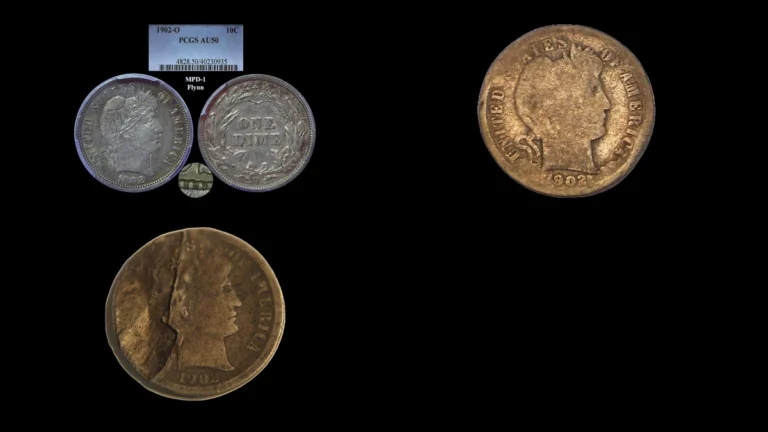
The documented San Francisco AU55 was struck 15% off center toward 9:30. Part of UNITED STATES missed the blank, while the surviving date and mintmark identify the coin.
Original unstruck metal remains beside the incomplete design. Other reported percentages and directions belong to different specimens.
How to Identify
Keep both complete outlines in view and compare the blank crescent with missing outer detail on each side. The two faces should describe the same misplaced-blank event.
For the cataloged coin, confirm the partial UNITED STATES, readable date, and S together. Scraped or ground metal does not reproduce original blank texture, and a one-face shift may instead be die misalignment.
What It’s Worth
Readable-date circulated examples are estimated at $350–$1,500. The 15% PCGS AU55 sold for $862.50 at Heritage on January 15, 2005.
That historical result concerns a clear, lightly worn error. Damage, lost date digits, or a much smaller offset can make it a poor comparison for another dime.
Conclusion
Use the small date and mintmark patterns only with the correct mint, and distinguish localized strike weakness from ordinary wear. Around the edge, missing metal, a raised cud, one-face displacement, and outward spread each explain different observations.
A broadstrike preserves complete designs, while an off-center strike loses some beyond the blank; keeping that distinction clear makes both identification and price comparison more reliable.