Rare 1960 Dime Errors (List & Pictures)
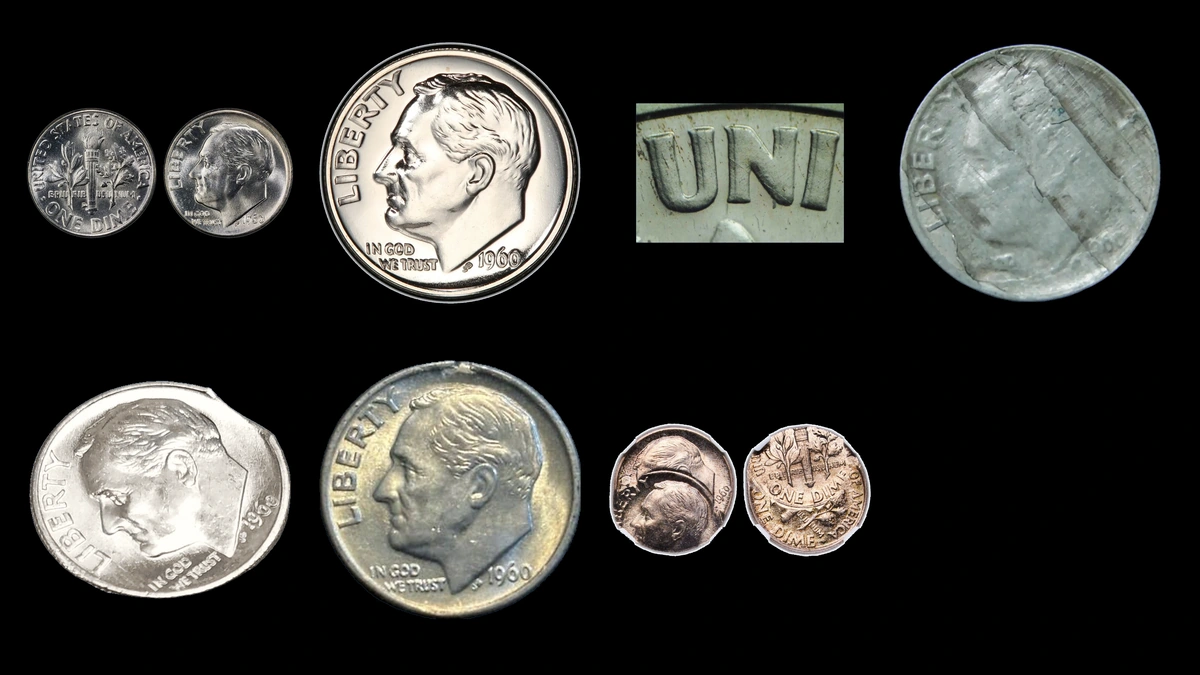
A Proof FS-102 with doubled front details brought $1,160.90 in February 2014, a historical result rather than a routine current price. The 1960 dime errors below span working estimates of $20–$1,200 when that auction level is included.
Compare the small mintmark and Proof letter patterns first, then inspect metal defects and distinguish a displaced second strike from doubling already present in a die.
| Visible clue | Category | Estimated range |
|---|---|---|
| Earlier D outline | Repunched mintmark | $20–$200 |
| Repeated 60 and front lettering | Proof FS-102 doubled die | $75–$350 practical; $1,000–$1,200 historical level |
| Repeated UNITED and branch detail | Proof doubled reverse | $75–$700 |
| Peel, gap, or flawed metal | Lamination, clip, defective blank | $25–$500 |
| Untouched margin beside cropped design | Off-center strike | $100–$750 |
| Overlapping design groups | Reported double strike | $200–$1,000 |
Normal 1960 silver dimes weigh 2.50 grams and measure about 17.9 millimeters with grooved edges. Philadelphia Proofs normally lack a mintmark, so that absence is not a missing-S error.
1. 1960 Dime Another Letter beside D: Repunched Mintmark Error
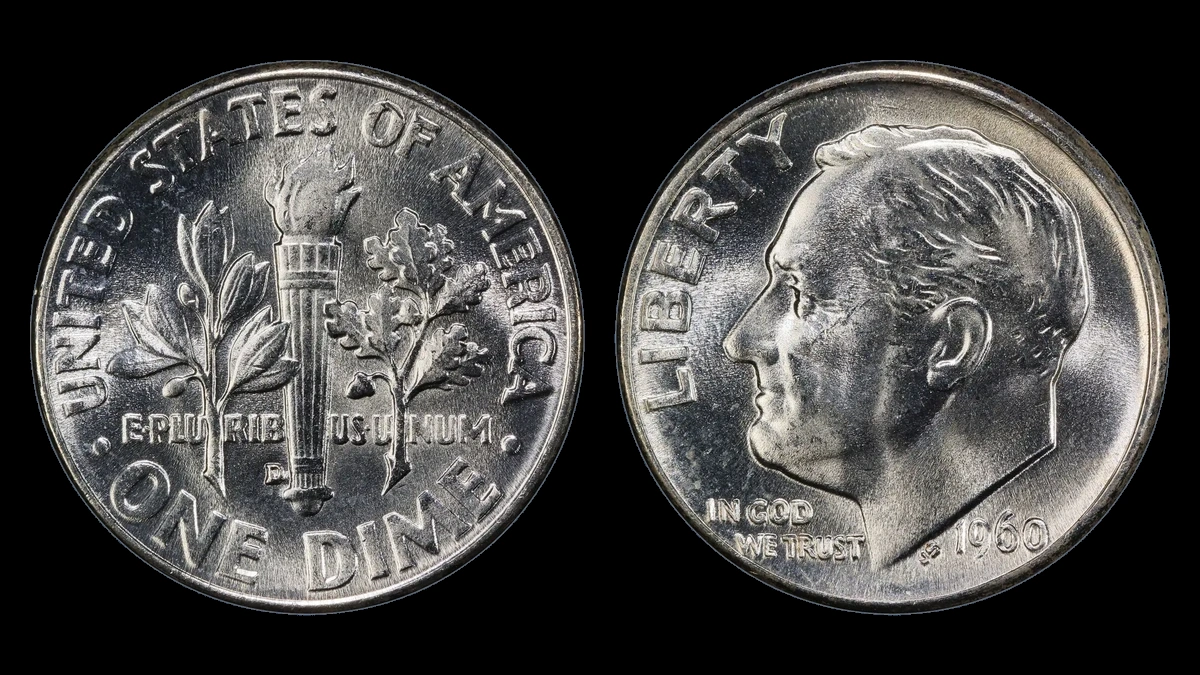
The Denver report describes traces of an earlier D beside the principal reverse mintmark. Repeated hand punching into the die could leave remnants that appear on many coins.
How to Identify
Find D left of the lower torch and trace the extra curve as part of another letter. Compare the specific variety rather than assuming every earlier D points in one direction.
A dent or flat shelf can add an apparent edge without preserving a second D. A thick-looking letter by itself is not sufficient evidence.
What It’s Worth
Minor circulated examples are estimated at $20–$75, with sharper unworn coins around $75–$200. These comparisons draw on similar silver Roosevelt varieties and are not recorded sales for a specific 1960-D pattern.
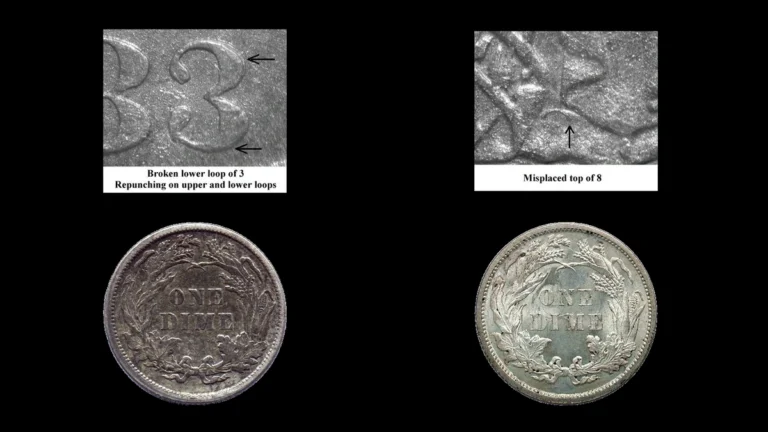
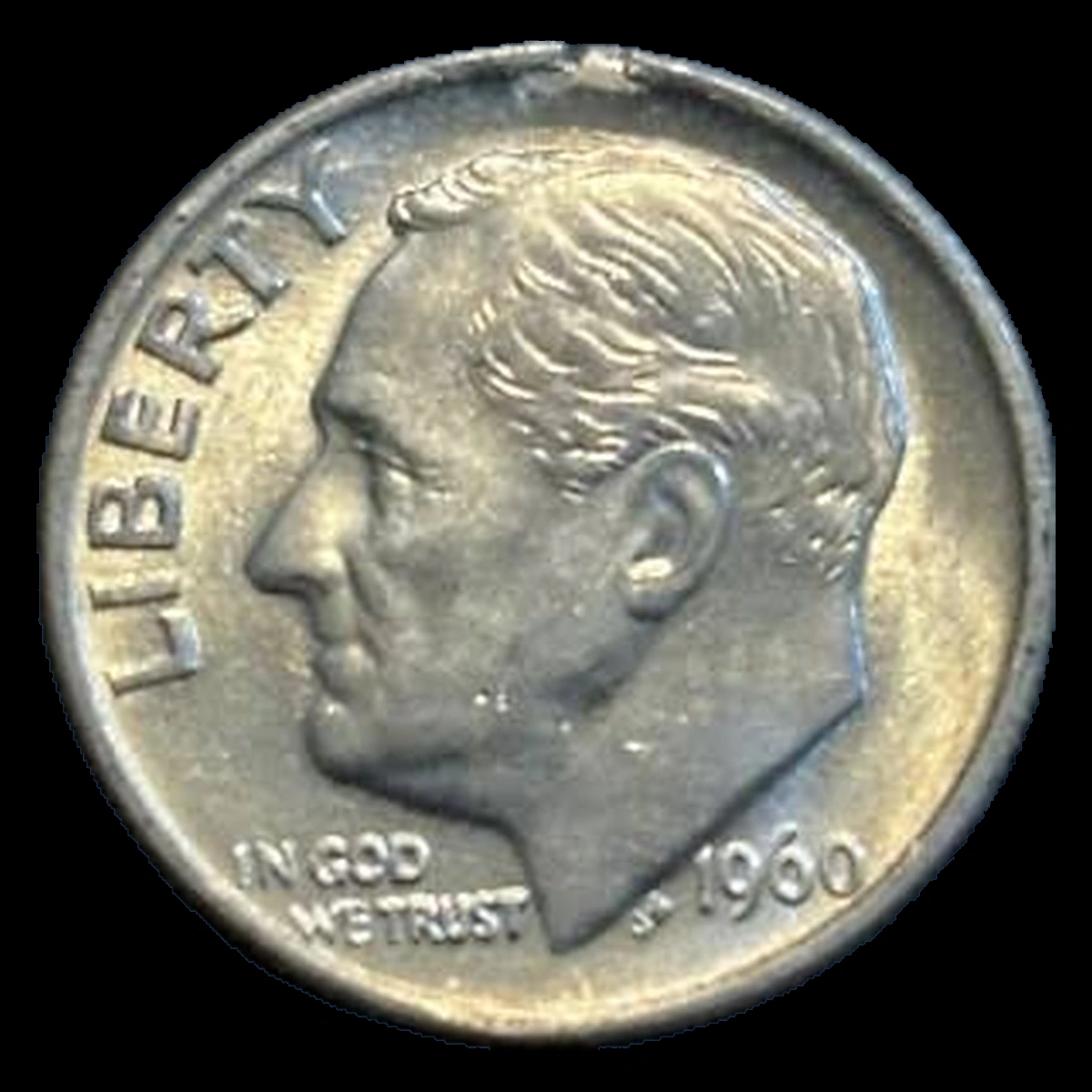
2. 1960 Dime Extra Outlines around 60: Proof Doubled Die Obverse Error
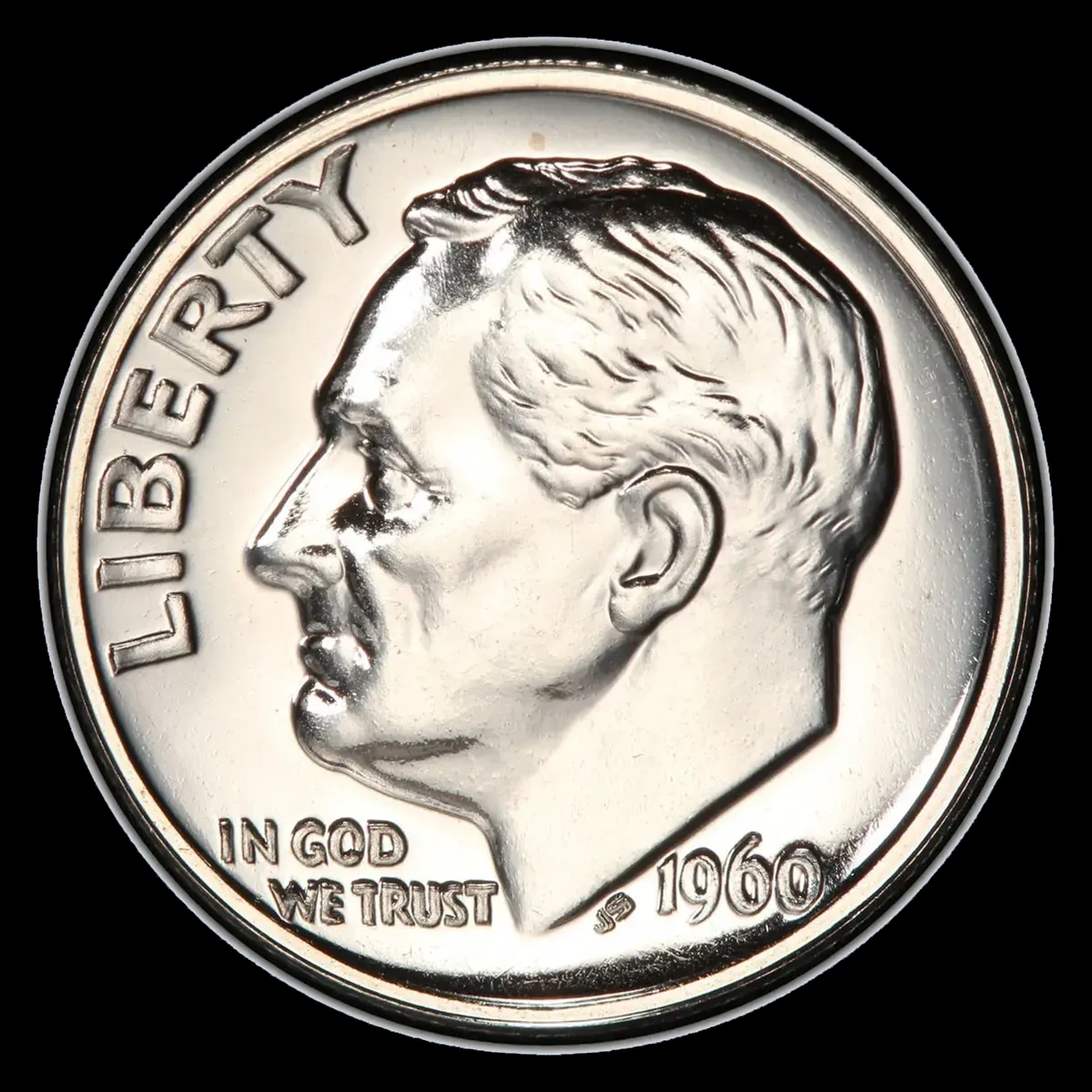
The FS-102 Proof has repeated contours around 60, with supporting doubling in the motto, LIBERTY, and JS. The die carried the duplicate design before striking.
Normal repeated Proof blows should remain aligned and do not explain this particular pattern. A bright field is the finish; the matching extra contours identify the variety.
How to Identify
Compare the whole 60 with a sharp FS-102 reference, then confirm the same relationship in the lettering and initials. Change the light to distinguish fixed relief from reflections.
A doubled photograph shifts everything, including scratches, whereas a die variety affects particular design details. A single uncertain bright edge should not replace the full pattern match.
What It’s Worth
A practical estimate is $75–$350 for ordinary clear examples, with roughly $1,000–$1,200 describing the supplied historical auction level. PCGS records $1,160.90 for a PR65 in February 2014.
A PR67 listing from 2026 supplies no final price here. Its $40 starting bid was not a sale, and a higher grade does not guarantee repetition of the older result.
3. 1960 Dime Doubled UNITED and Reverse Details: Proof Doubled Die Reverse Error
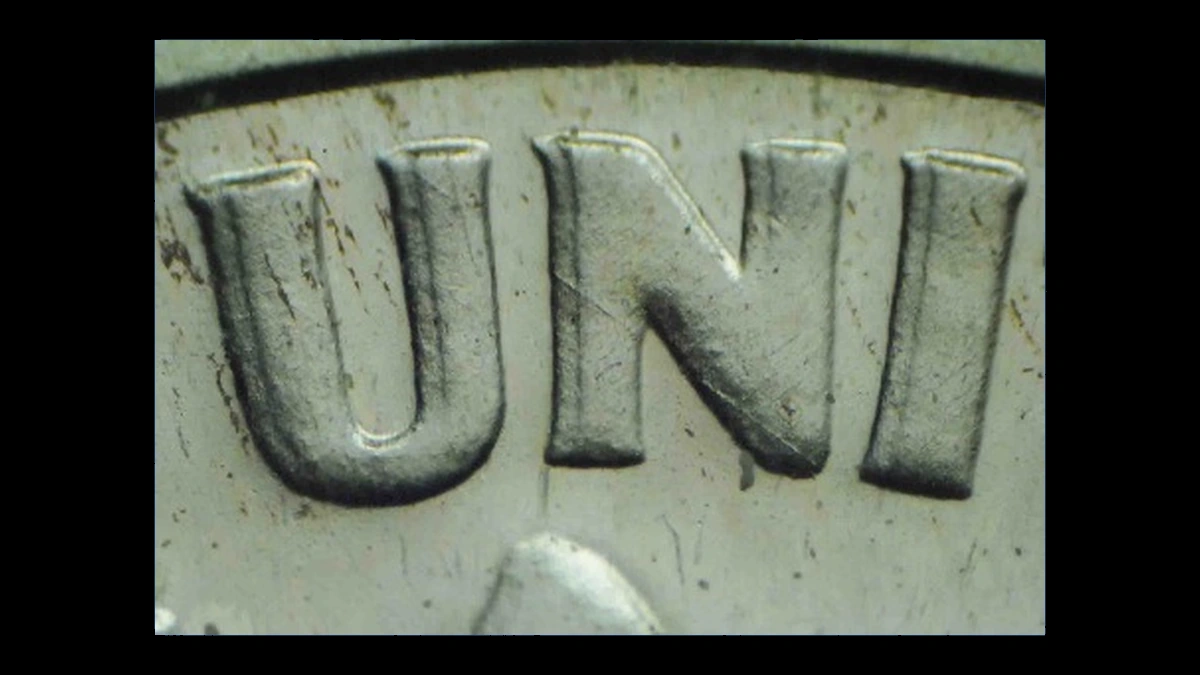
The reverse variety shows extra outlines in UNITED and other letters, dots, and the right-hand branch. These details came from the die rather than a separate displaced strike on the coin.
Some Proofs also have doubled front details. Both sides still describe one coin, so their full prices should not be added together.
How to Identify
Compare several reverse features with Wexler’s photographs, beginning at UNITED. The branch and dots help test whether a bright letter edge belongs to the actual pattern.
Move the lamp across the reflective field while keeping the coin fixed. Genuine contours remain in position as glare shifts.
What It’s Worth
Clear examples are estimated at $75–$700. A PCGS PR68 Cameo FS-801 sold for $533.50, reflecting very fine preservation and frosted designs against reflective fields.
Faint detail and scratched surfaces make different comparisons. The price concerns the whole Proof, including any associated obverse doubling.
4. 1960 Dime A Thin Surface Peel: Lamination Error
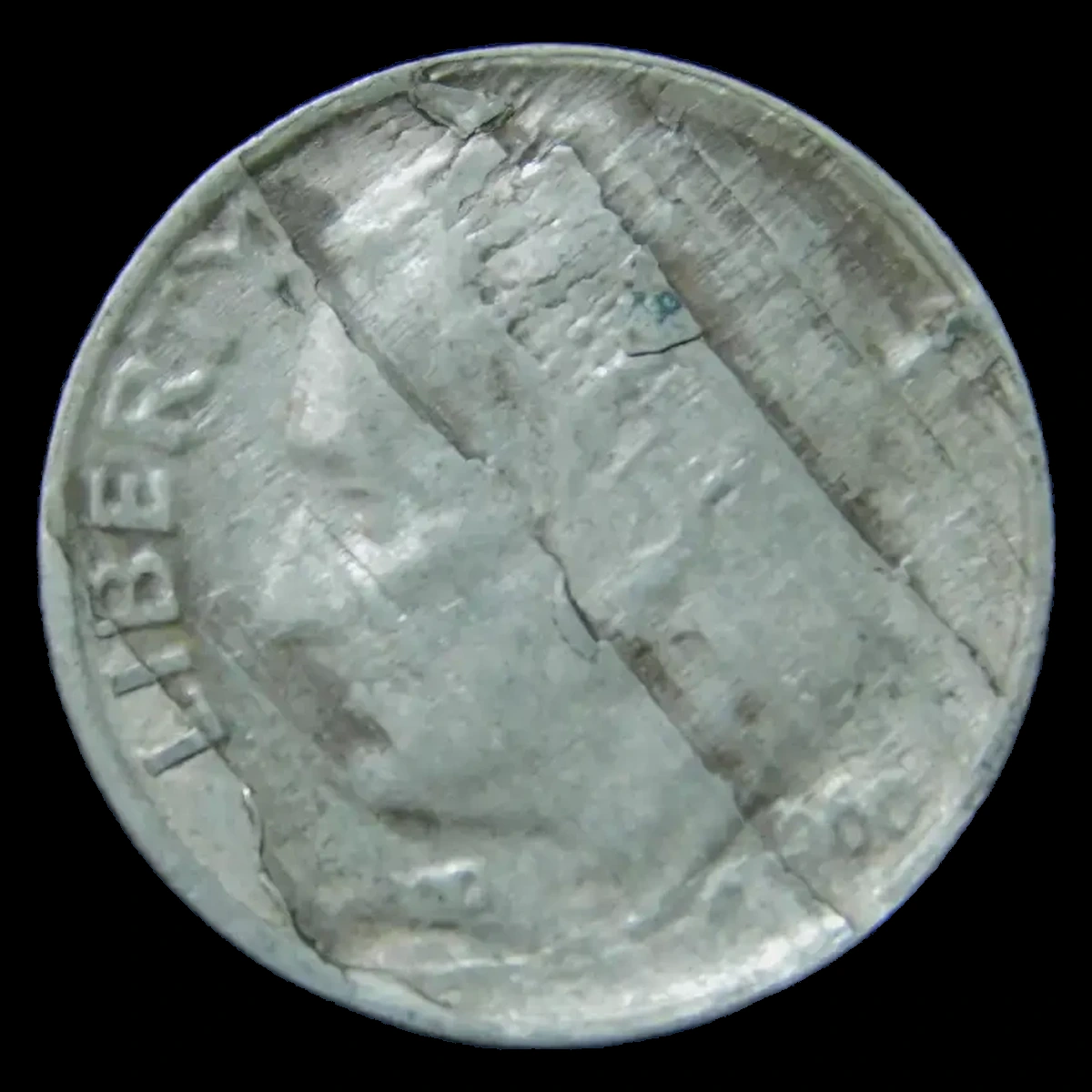
A Denver NGC MS65 has reported obverse peeling, while a separate Philadelphia Proof has a reverse peel near 5 o’clock. Their metal separated within the original blank.
The reflective Proof and regular-strike Denver example require different images and condition comparisons. One coin’s peel location should not be assigned to the other.
How to Identify
Look for a thin layer lifting from the coin’s own metal and leave it attached. Dirt, glue, and corrosion can roughen a surface without showing the same separation.
Examine the Proof’s reverse near 5 o’clock, or use an obverse reference for the Denver specimen. An attached layer may preserve normal weight, while detached metal can reduce it.
What It’s Worth
Small visible laminations are estimated at $25–$150, with stronger attractive examples around $150–$350. Brian’s Variety Coins offered the reverse-peel Proof at $24.95, an asking price rather than a sale.
A 1942 Mercury dime with major obverse lamination sold for $89 in March 2023. Its different design and flaw provide only general context for the 1960 pieces.
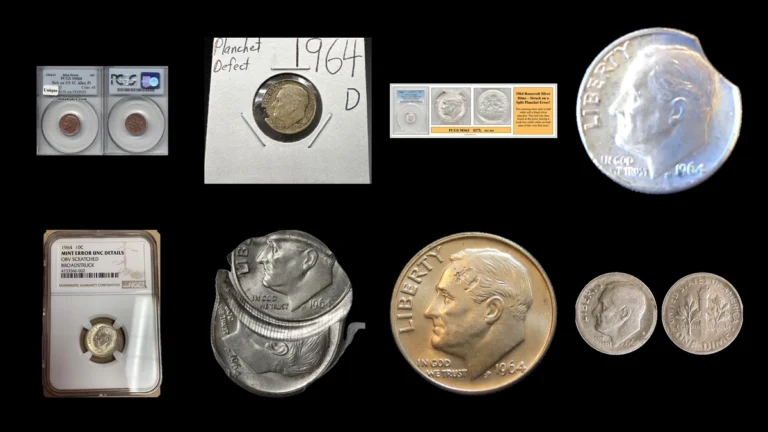
5. 1960 Dime A Curved or Rough Edge Shortage: Clipped Planchet Error
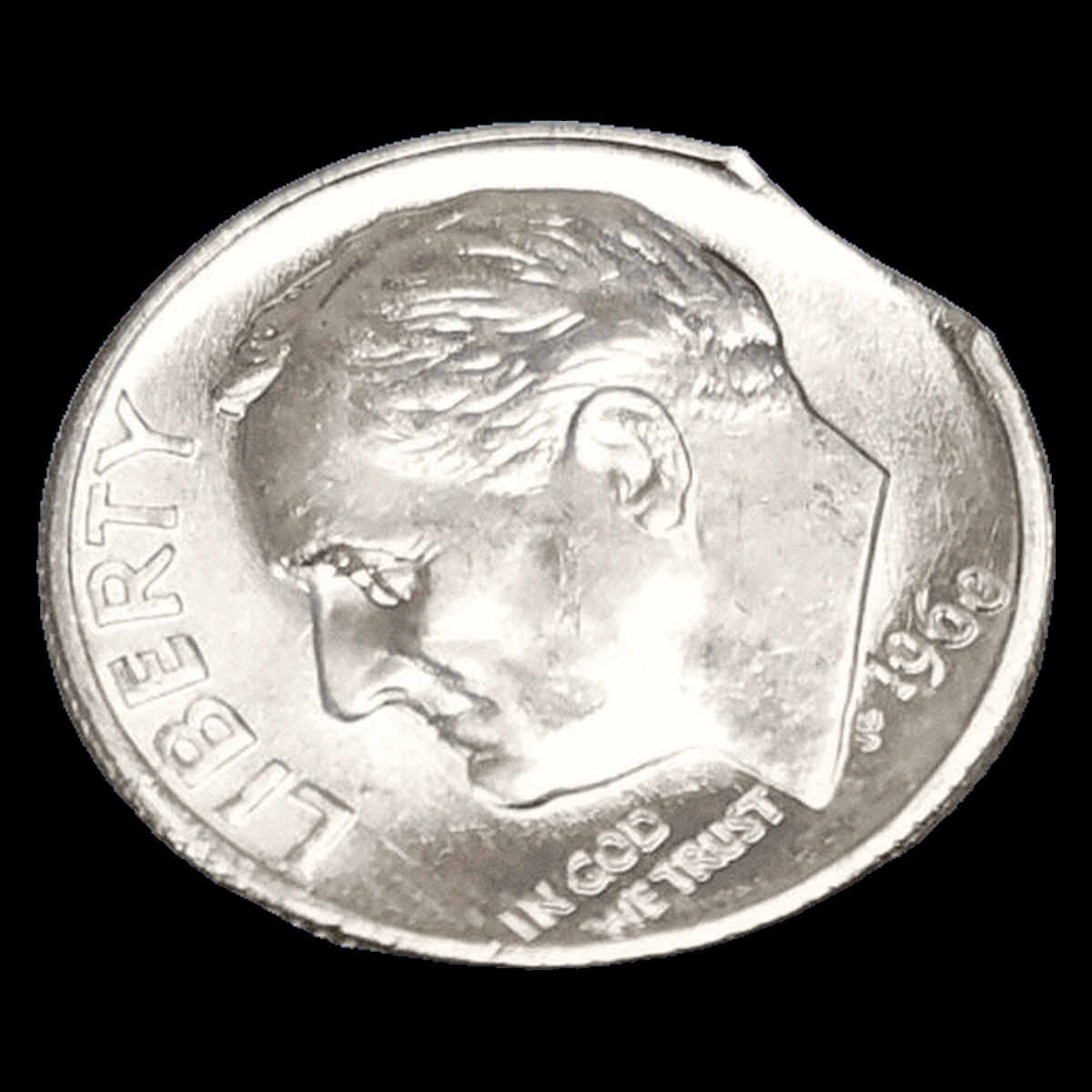
The Denver MS63 Full Bands has a curved clip at 3 o’clock and weighs 2.2 grams. A separate Philadelphia ANACS MS63 has a rough missing edge, consistent with a different incomplete-blank shape.
A smooth arc can result from a blanking punch overlapping an earlier hole, while a rough shortage can involve the strip’s edge. Full Bands describes reverse strike detail and does not define the clip.
How to Identify
Inspect both ends of the actual gap for original metal flow and rim formation. The Denver weight fits missing metal but cannot alone exclude a later cut.
Look for fresh saw marks and compare possible weakness on the opposite rim. Do not demand a smooth arc on the separately reported rough-edge Philadelphia coin.
What It’s Worth
Clips are estimated at $50–$400. A 1947-S 10% curved clip graded NGC MS66 sold for $104 in December 2024, providing a different-year silver Roosevelt comparison.
No separate sale amount is supplied for either 1960 example. The Philadelphia coin appeared in a two-coin lot, whose total would not automatically be its individual price.
6. 1960 Dime Design Formed around Flawed Metal: Defective Planchet Error
An NGC collector’s set lists a 1960 AU55 struck on a defective planchet. The broad label does not specify a hole, uniform thinness, or another precise metal problem.
A planchet is the prepared blank that enters the press. The key question is whether the defect existed as the design formed or was imposed on the finished coin later.
How to Identify
Compare the actual coin with its label and follow the design into the flawed area. Letters formed around a preexisting shortage differ from a gouge cutting through completed strokes.
Check for fresh cuts, displaced metal, or corrosion pits before narrowing the diagnosis. Measurements can document abnormal thickness or missing metal, but cannot invent a hole absent from the description.
What It’s Worth
A genuine visible blank defect is estimated at $75–$500, with no sale amount supplied for the AU55. A 1980-P defective-planchet MS62 sold for $139 in March 2023, but its later clad composition and defect are different.
7. 1960 Dime Original Blank Metal beside an Incomplete Design: Off-Center Strike Error
The reported regular-strike category concerns a blank that sat partly outside the correct die position. Some intended design missed the metal while another area stayed unstruck.
No single mint or percentage is established for a particular 1960 specimen. A readable date is needed before assigning the coin to this year.
How to Identify
Compare the two faces for corresponding design loss and untouched margin. A shift affecting only one design can instead reflect a misaligned die.
Inspect the struck-to-blank boundary and surviving edge grooves for later tooling. A missing piece cut away after manufacture is not an original unstruck crescent.
What It’s Worth
Modest readable-date examples are estimated at $100–$300, extending to $300–$750 for stronger or better-preserved pieces. A known 1947-S 15% off-center dime illustrates the general shape, while a 1934-D 10% example was offered at $350.
Those are different-year comparisons, and the $350 figure is an ask. Proof errors require separate market comparisons from regular silver dimes.
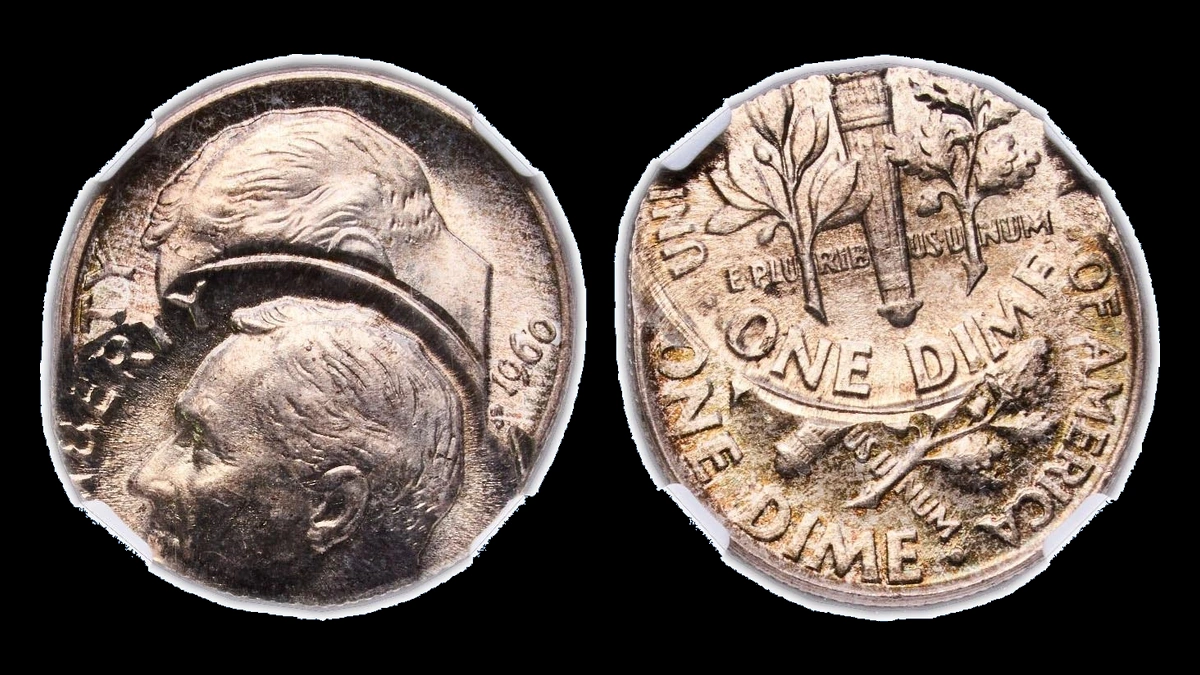
8. 1960 Dime A Second Design Crosses the First: Reported Double Strike Error
An owner in 2025 described a 1960 NGC MS65 with an off-center second strike, reportedly purchased at auction in Spain. The account supplies no exact displacement and its grading record was not independently checked in the source.
A genuine double strike preserves evidence of an additional blow after the coin remained in or returned to the press. This requires more than a thin extra edge on one letter.
How to Identify
Find a coherent second piece of portrait, date, or lettering crossing the first design. Compare the complete photographs and grading label as evidence for the same specimen.
Later pressure between two coins can produce recessed reversed impressions instead. Examine the overlap and edge for that different sequence or other alteration.
What It’s Worth
Authenticated 1960 double strikes are provisionally estimated at $200–$1,000. A 1964-D NGC MS64 with a 75% off-center second strike sold for $312 in March 2023.
That sale belongs to another year, not the owner’s 1960 coin. The actual overlap, condition, and verified identity should guide its comparison.
Conclusion
A repeated numeral from a doubled die and a separate overlapping strike preserve different evidence. Match Proof varieties to their exact letter patterns, while clips, laminations, and broad defective-planchet labels require examination of the metal boundaries.
Keep ordinary estimates separate from the older FS-102 auction level, and compare each whole coin once even when both faces or several manufacturing features are involved.