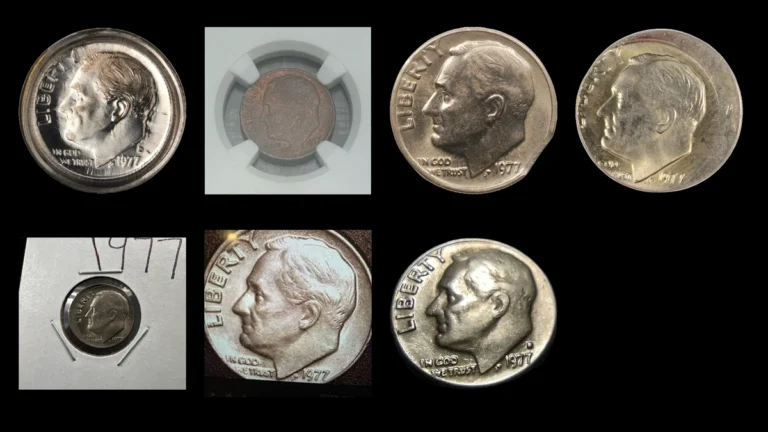
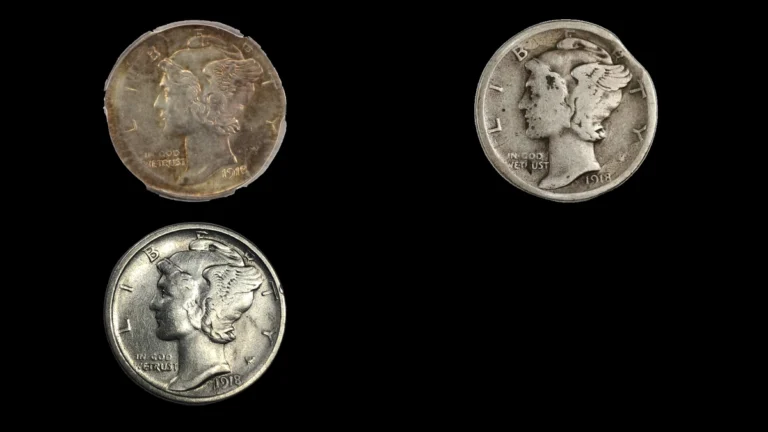
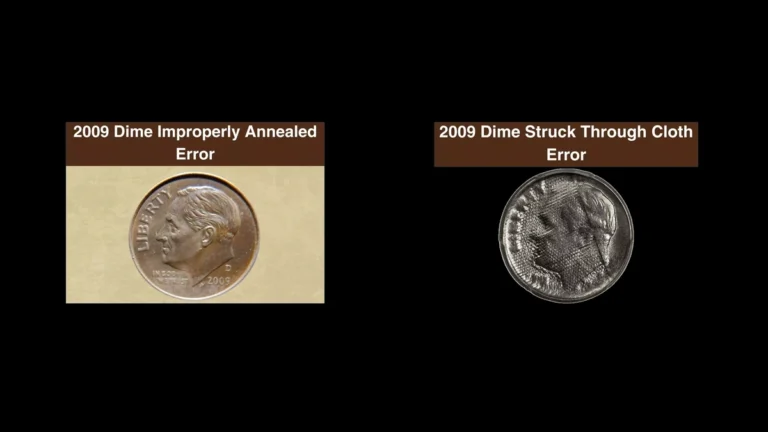
Rare 1991 Dime Errors (List & Pictures)
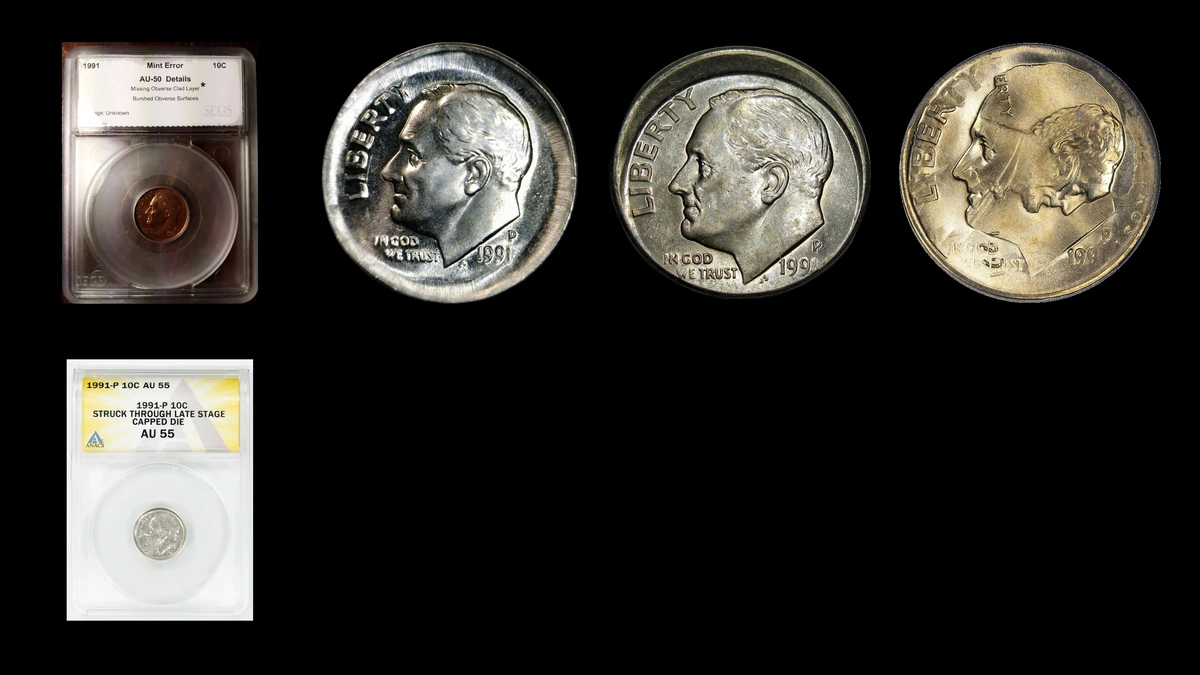
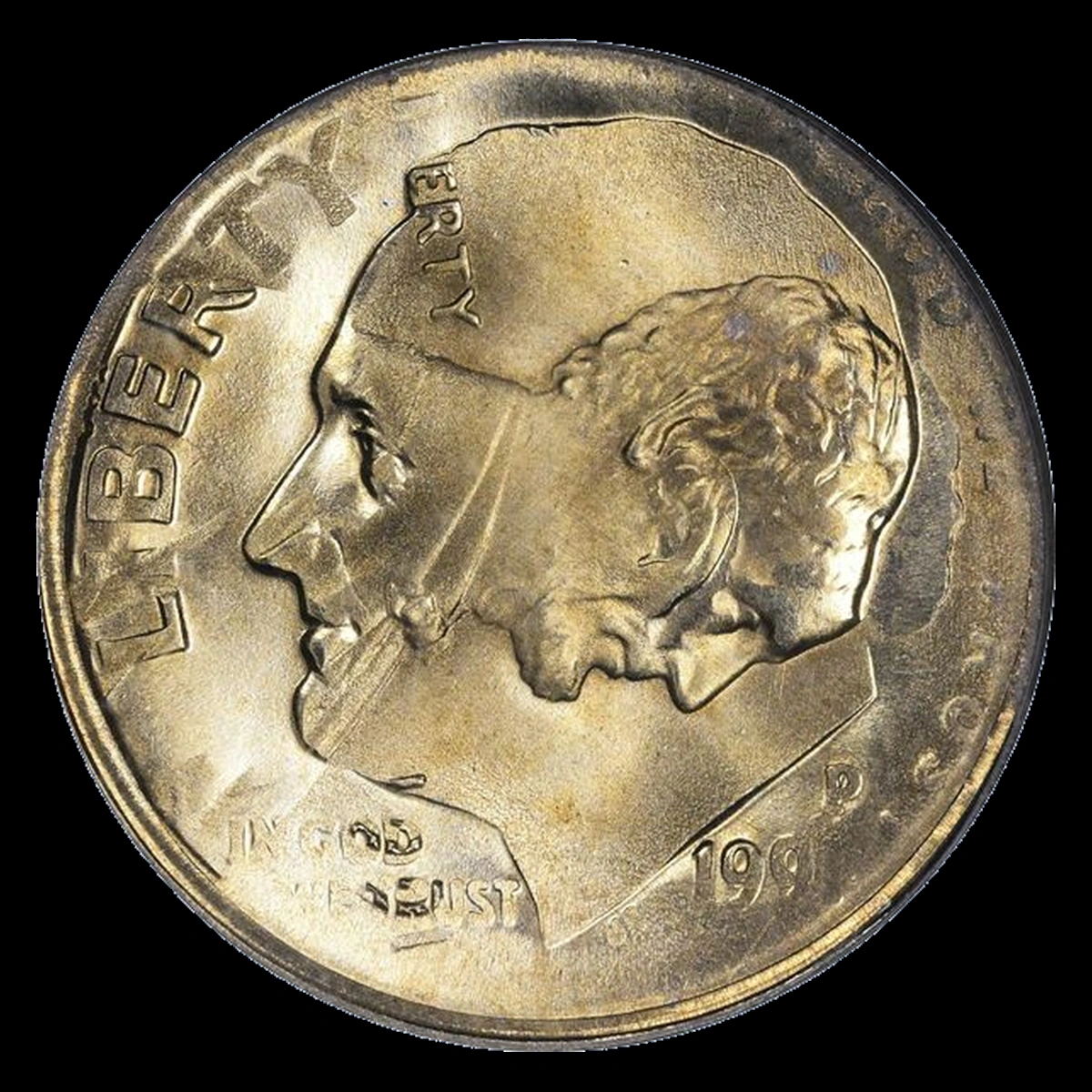
The most unusual 1991 dime-related error in this group carries both dime and cent designs. Cataloged as a 1991 cent struck over a 1991-P dime, it sold for $747.50 in April 2006.
Estimated values across these nine groups of 1991 dime errors run from $10–$2,000. Sort the coin’s physical shape and layers first, then compare its designs and surface details.
| What is different? | Category | Estimated value |
|---|---|---|
| Part of the outline is absent | Clipped blank | $10–$100 |
| One face exposes copper | Missing clad layer | $75–$300 |
| The object is a thin separate layer | Layer from a multiple strike | $250–$1,000 |
| Design is complete on widened metal | Broadstrike | $50–$300 |
| Design misses part of the blank | Off-center strike | $25–$250 |
| Lincoln and Roosevelt overlap | Double denomination | $500–$2,000 |
| Detail is weak or distorted | Strike-through or thin-cap effect | $25–$350 |
| A large raised patch replaces detail | Major die break | $30–$450 |
| Small extra design contours | Minor doubled die | $10–$150 |
An intact clad dime normally weighs 2.268 g and measures about 17.9 mm, with copper-nickel coverings around a copper core and a grooved edge. A precise scale and calipers help document accessible coins; leave sealed specimens in their holders.
Use magnification and neutral lighting without cleaning the surface. The relationships between layers, struck detail, and edge boundaries often matter more than the feature’s size.
1. 1991 Dime Metal Is Missing at the Edge: Reported 1991 Clipped Blank Error
A clip begins before the coin receives its design. The incomplete disc enters the press with a portion already absent.
Overlapping an earlier hole in the strip can create a curved gap, while other strip problems can leave different edges. The year reports do not establish one certified 1991 specimen, mint, or clip location.
How to Identify
Follow the lettering and rim into both ends of the opening with a 10× magnifier. Original missing metal can affect how those nearby features formed during striking.
Weakness in the opposite rim may support a genuine clip but is not equally apparent on every coin. Fresh tool marks or a cut through finished letters suggest metal removed afterward.
What It’s Worth
An original clip on a collectible 1991 dime has an estimated $10–$100 range. Small worn examples make lower comparisons than clear clips on attractive unworn coins.
No sale is tied to the general year report. Surviving date and mintmark detail help identify the coin, while multiple little cuts do not create multiple error premiums.
2. 1991 Dime Copper Shows on One Face: Reported 1991 Missing Clad Layer Error
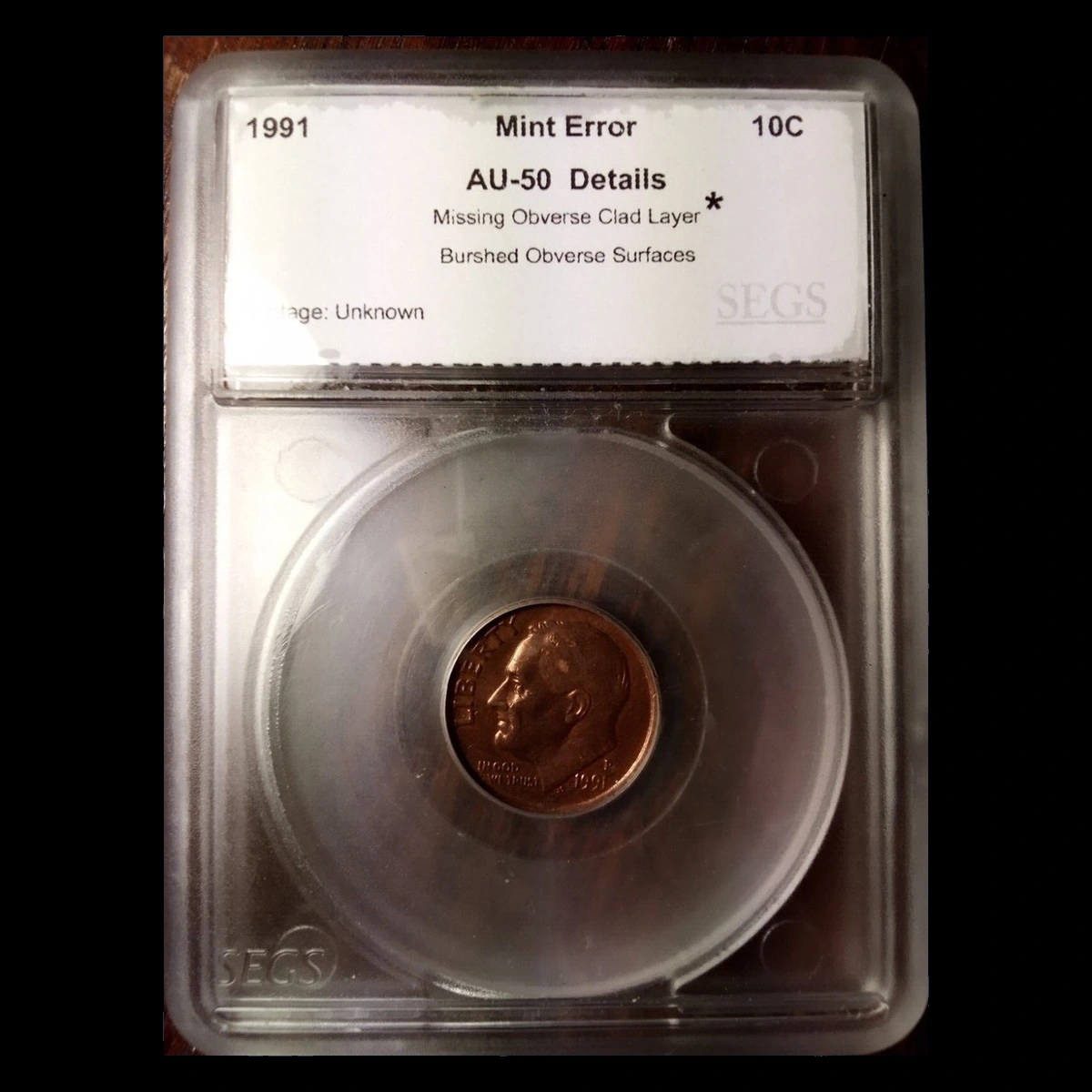
An outer covering absent before striking allows the design to form directly in the copper beneath it. The resulting dime can combine one copper-colored face with reduced weight.
The 1991 guides include this category without naming a certified specimen or establishing which face was affected. Color, edge construction, and struck detail therefore need to be checked on the actual coin.
How to Identify
Compare both faces under neutral light and examine the edge layers. A phone’s warm color setting or a chemical stain can make normal metal appear coppery.
Check reduced weight alongside original detail in the exposed face. Grinding, pitting, or a peeling coating can explain an unusual appearance without an outer layer having been absent during minting.
What It’s Worth
Identified single missing-layer dimes have an estimated $75–$300 range in collectible worn through unworn condition. This is a year-guide appraisal rather than a documented 1991 transaction.
A clean exposed face with readable design provides a stronger comparison than a rough, corroded surface. Being light and copper-colored is not sufficient by itself.
3. 1991 Dime A Thin Piece with Repeated Front Detail: 1991 Separated Layer from a Multiple Strike Error
The object in this record is the separated front layer itself, not an intact dime lacking its covering. Repeated design details connect the layer to a multiple-struck 1991-P error.
NGC graded it MS64, an unworn grade with relatively few marks. The short description does not establish when the layer detached or the direction and number of all the blows.
How to Identify
Inspect the thin edge and visible repeated impressions through the holder when possible. Fragile separated metal should not be bent or handled merely to make its thinness clearer.
Distinguish the front design’s overlapping positions without inventing a strike count. No measured weight is supplied, and this separate layer should not be expected to weigh as much as an intact dime.
What It’s Worth
A comparable identified piece has an estimated $250–$1,000 range. The estimate concerns the layer as a collectible object, not an extra premium added to the price of a complete dime.
PCGS records its $546 sale at Stack’s Bowers in November 2011. Readable repeated detail and an undamaged fragment are important when using that historical comparison.
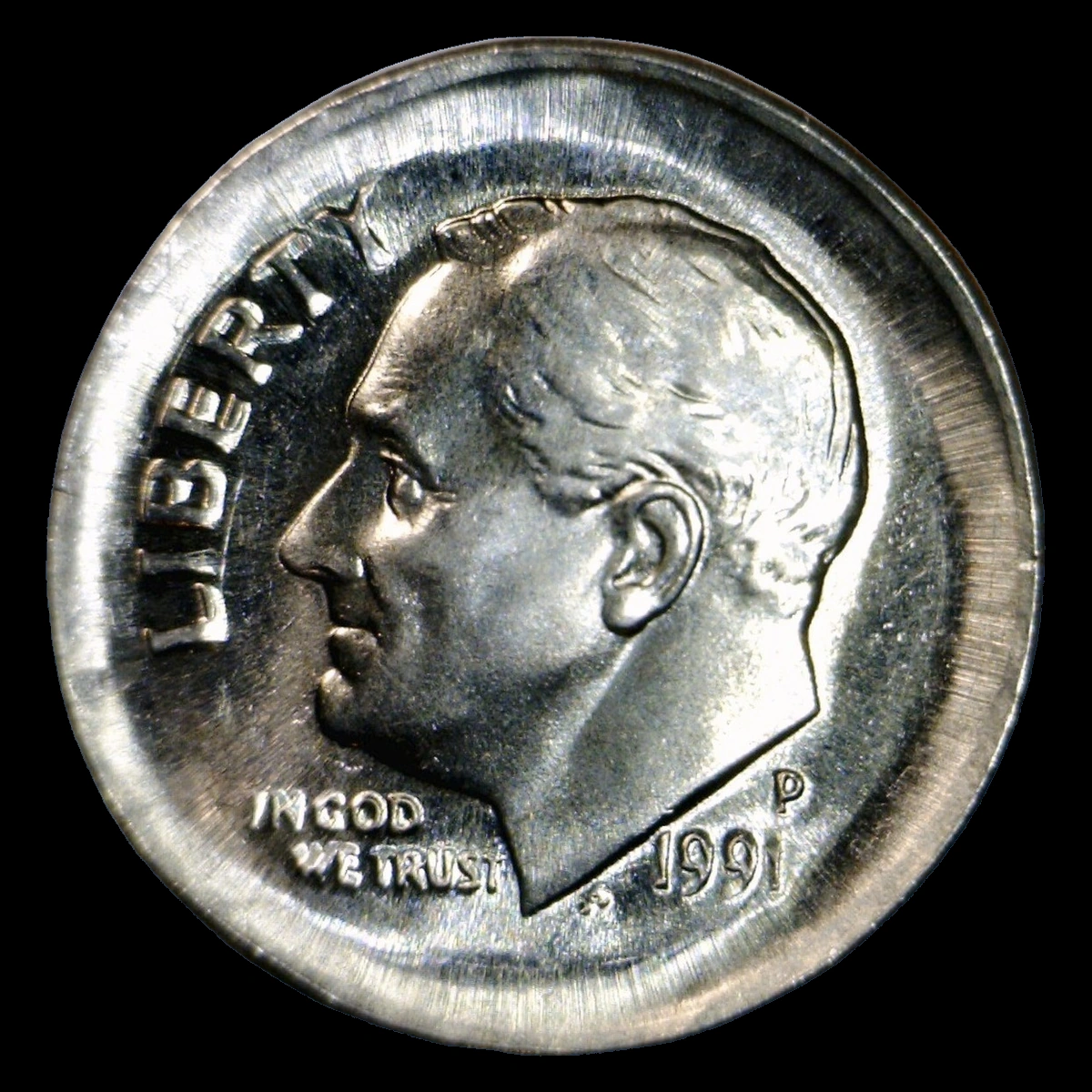
4. 1991 Dime More Width Around a Complete Design: Reported 1991 Broadstrike Error
A complete design surrounded by expanded metal may show that the blank escaped normal edge restraint. The collar normally controls diameter and forms the dime’s grooves.
When the collar does not contain the blank properly, the blow can spread metal outward. The broad category appears in 1991 guides without a single precise specimen covering all mints and finishes.
How to Identify
Read the outer lettering all the way around both sides and measure more than one diameter. A broadstrike should preserve complete major designs within the expanded outline.
Inspect the edge for evidence of escaped collar restraint. Later squeezing may widen a coin while crushing raised detail, and weight can remain normal in either case.
What It’s Worth
The combined guide estimate is $50–$300, with worn examples around $50–$150 and unworn coins around $100–$300. A clear, undamaged spread is easier to recognize and compare.
These are guide figures rather than a particular 1991 coin’s sale history. Width alone does not establish the mechanism that gives the coin its error value.
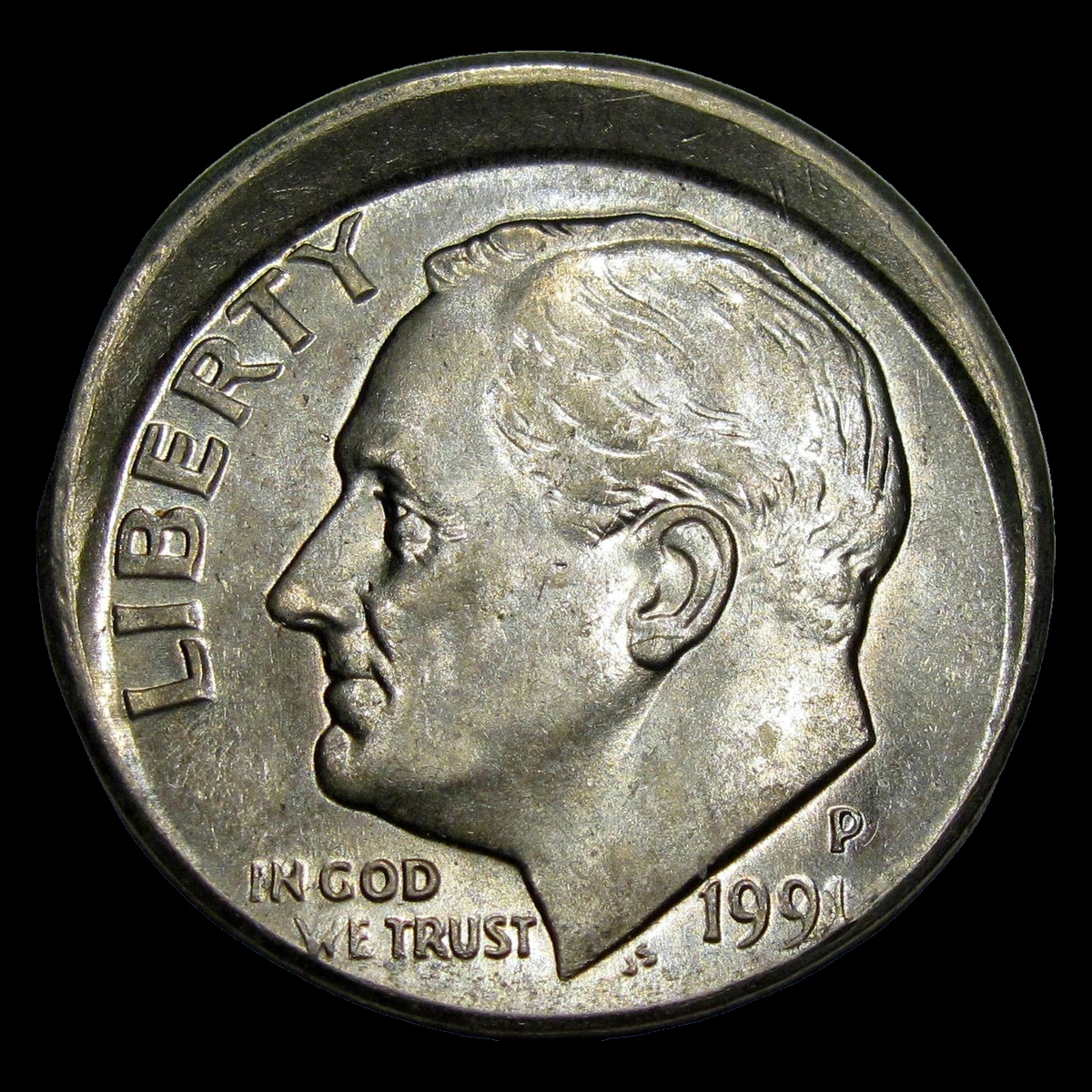
5. 1991 Dime An Unstruck Area Beside the Picture: 1991 Off-Center Strike Error
The cataloged Philadelphia example was struck twenty percent off center toward two o’clock. Its blank was out of position, leaving part of the metal beyond the dies’ reach.
ANACS graded the coin MS63, meaning no circulation wear but noticeable marks. The plain area remains metal, unlike the missing segment of a clipped blank.
How to Identify
Keep the front upright when comparing the recorded direction, and retain the date and P in photographs. Both faces should show incomplete designs beside the same original unstruck portion.
Check for grinding inside the seemingly blank area. A front-only border shift paired with a centered reverse can involve a misplaced die rather than an off-center blank.
What It’s Worth
Readable-date examples have an estimated $25–$250 range across modest worn coins and attractive unworn pieces. Date preservation and clean blank metal help determine the appropriate comparison.
A year guide reports an approximately $185 Heritage result, but the amount is not securely tied to this exact MS63 entry. It remains a guide report rather than the confirmed sale of the twenty-percent specimen.
6. 1991 Dime Lincoln Over Roosevelt: 1991 Cent Design Struck over a Dime Error
Two different denominations share the metal on this coin. A finished dime entered a cent press and received Lincoln’s portrait and the Memorial reverse over its existing Roosevelt designs.
The catalog identifies a 1991 cent struck over a 1991-P dime, while noting that only 199 and P remain readable from the dime. The full date belongs to the cent impression.
How to Identify
Turn Lincoln upright and locate Roosevelt facing toward the lower left on the recorded example. On the back, look for recognizable elements of both the torch design and cent reverse.
Retain the catalog’s wording while explaining that the dime’s last date digit is unreadable. Genuine struck details from both denominations supply better evidence than random overlapping scratches.
The original host was dime metal, so a cent’s usual weight is not the correct starting standard. Record any changed outline without assuming the second denomination changed the metal’s original identity.
What It’s Worth
Comparable cent-over-dime errors with readable identifying details have an estimated $500–$2,000 range. This values the entire coin and its combined impressions.
The ANACS MS63 example brought $747.50 on April 29, 2006. Its historical result provides context for the clarity and preservation of another example, rather than a fixed price for every two-design coin.
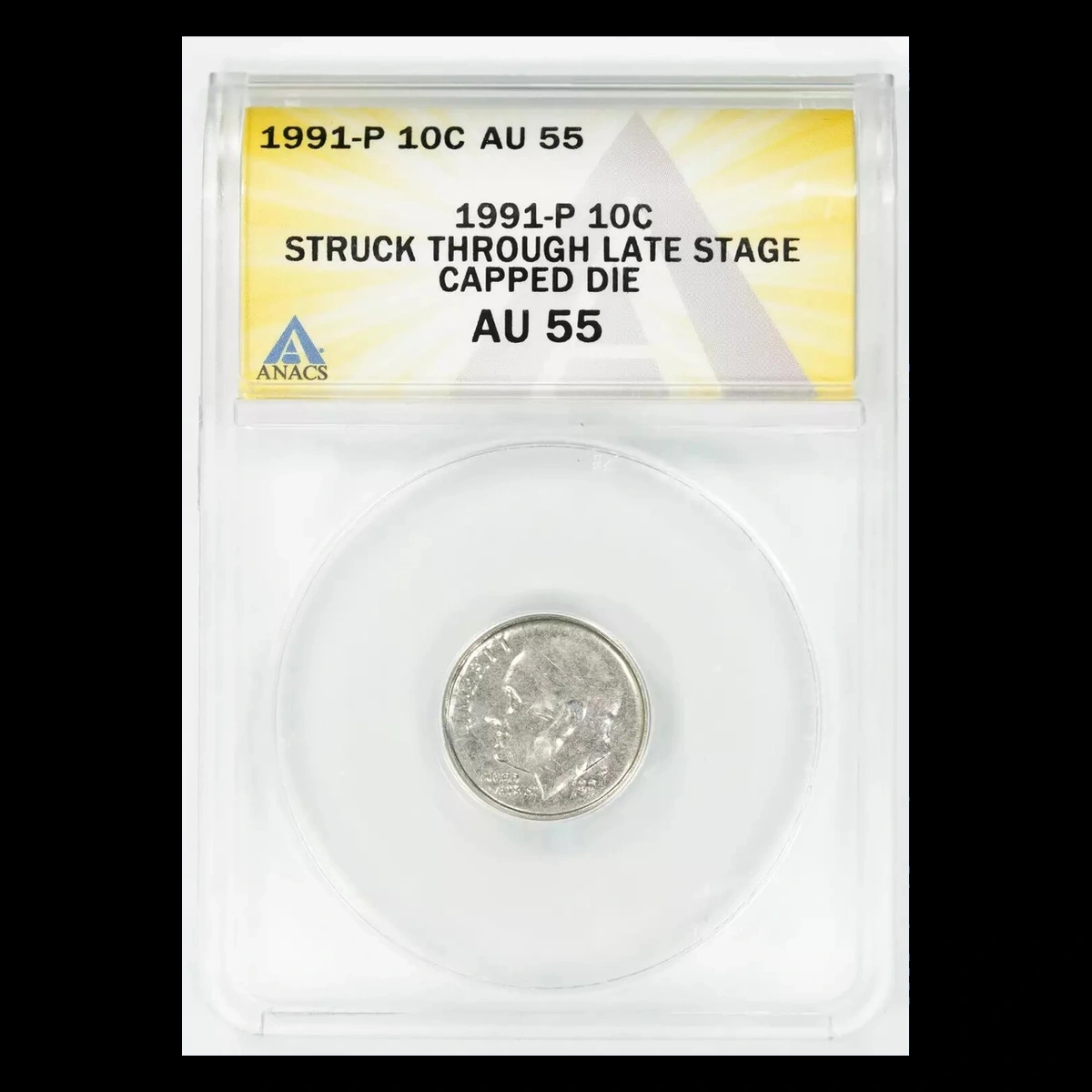
7. 1991 Dime Soft or Distorted Detail: Reported 1991 Strike-Through and Thin-Cap Effects Error
Material between the die and blank can block part of the design. Grease may suppress detail, while a struck coin stuck over the die can thin into a cap that distorts later impressions.
Collector discussions describe a 1991-P thin-cap candidate and a separate coin with weak reverse detail. For the latter, both cap effects and other strike-through explanations were suggested.
How to Identify
Study the transition between clear and weak detail for original struck surface. Wear, polishing, and abrasion can also make designs faint, so the complete pattern matters.
On the second reported coin, a shape initially called a backward E was identified in discussion as the M of UNUM. Its uneven front border is a separate observation from the weak leaves, flame, and wording on the back.
Neither report proves a common obstruction or that the examined coin itself became a cap. Match the evidence before choosing a specific cause.
What It’s Worth
A professionally identified mint-made example has an estimated $25–$350 range. Simple blocked detail suggests lower comparisons, while an obvious thin-cap effect with a readable date may support more.
The collector reports have no documented sale prices used here. This estimate does not assign an error value to an unresolved photograph.
8. 1991 Dime A Large Raised Patch: 1991-P Major Die Break Error
A missing piece of the stamping tool leaves space for metal to rise where design should normally appear. A 1991-P major die-break example was cataloged in ANACS MS64.
The title does not establish the break’s location or whether it meets the rim. Those details must come from the actual coin rather than the broad error name.
How to Identify
Light the patch from the side and follow its full boundary. Original raised metal should replace normal detail rather than sit as dirt or solder over completed features.
Check whether the patch actually joins the rim before calling it a cud. An interior break can be substantial without having that rim connection.
What It’s Worth
Recognizable major breaks have an estimated $30–$450 range, from worn pieces to attractive unworn coins. The recorded MS64 specimen confirms an example but has no adopted sale amount here.
Clear disruption of the design is easier to appreciate than an ambiguous lump. Nearby cracks do not each add another full error value to the same dime.
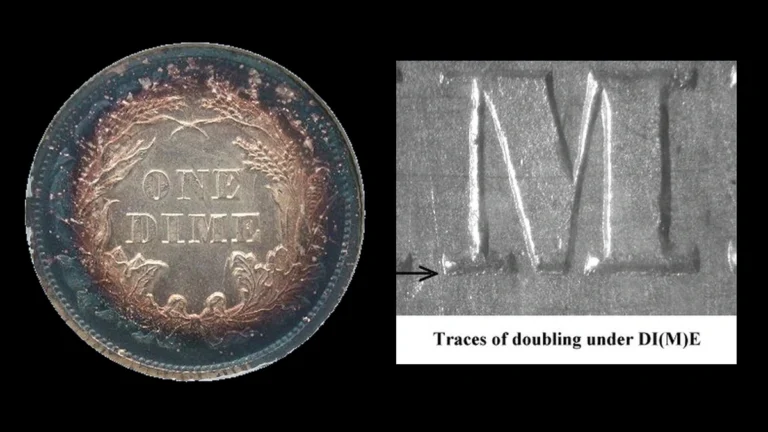
9. 1991 Dime Small Repeated Design Edges: Reported 1991 Minor Doubled Die Error
A rounded extra contour around a numeral or inscription can originate in a doubled die. The steel tool already carries the repeated design and passes it to coins it strikes.
The year guide reports minor doubling without naming one die or establishing one mint and face for every example. The specific pattern still needs identification.
How to Identify
Examine the whole letter or numeral under magnification and follow the suspected second contour. Rounded separation differs from a low, flat ledge left by movement during striking.
Record mintmark, face, and finish before selecting a comparison. A Proof is a specially made collector issue, and neither a shiny surface nor a thick letter is enough to establish a variety.
What It’s Worth
Correctly identified minor doubling has an estimated $10–$150 range across worn through ordinary unworn examples. The estimate is not a sale record for a named 1991 die.
Clear extra detail and sound surfaces make stronger comparisons. Heavy wear may leave too little of the original pattern to support identification or a meaningful premium.
Conclusion
A missing layer, a separate layer, and a missing edge segment describe three different objects. Identifying which one is present prevents misleading weight comparisons and inappropriate prices.
Then consider the designs: an off-center image, repeated impressions, and a cent design over a dime each record a different event. Use the $10–$2,000 estimates with the coin’s condition and evidence, keeping unresolved reports separate from documented auction specimens.