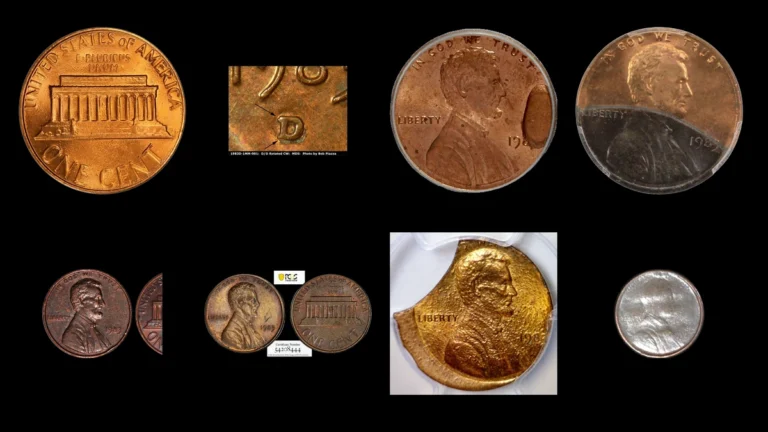
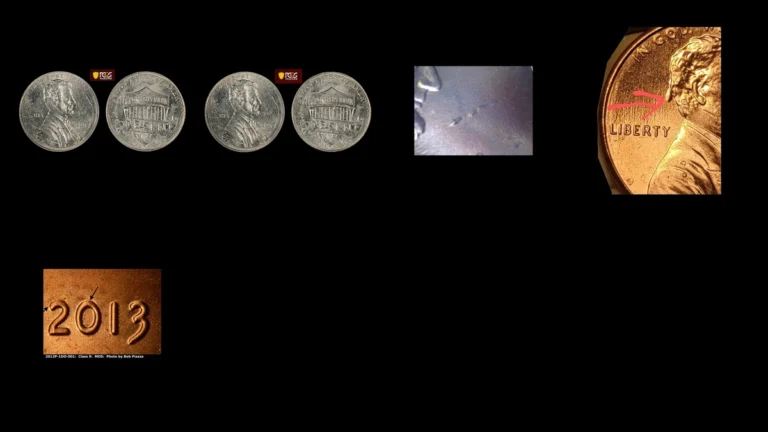
Rare 1992 Penny Errors (List & Pictures)
The highest-profile 1992 penny errors can hide in ordinary-looking lettering. A Philadelphia Close AM graded MS67 Red sold for $25,850 in January 2017.
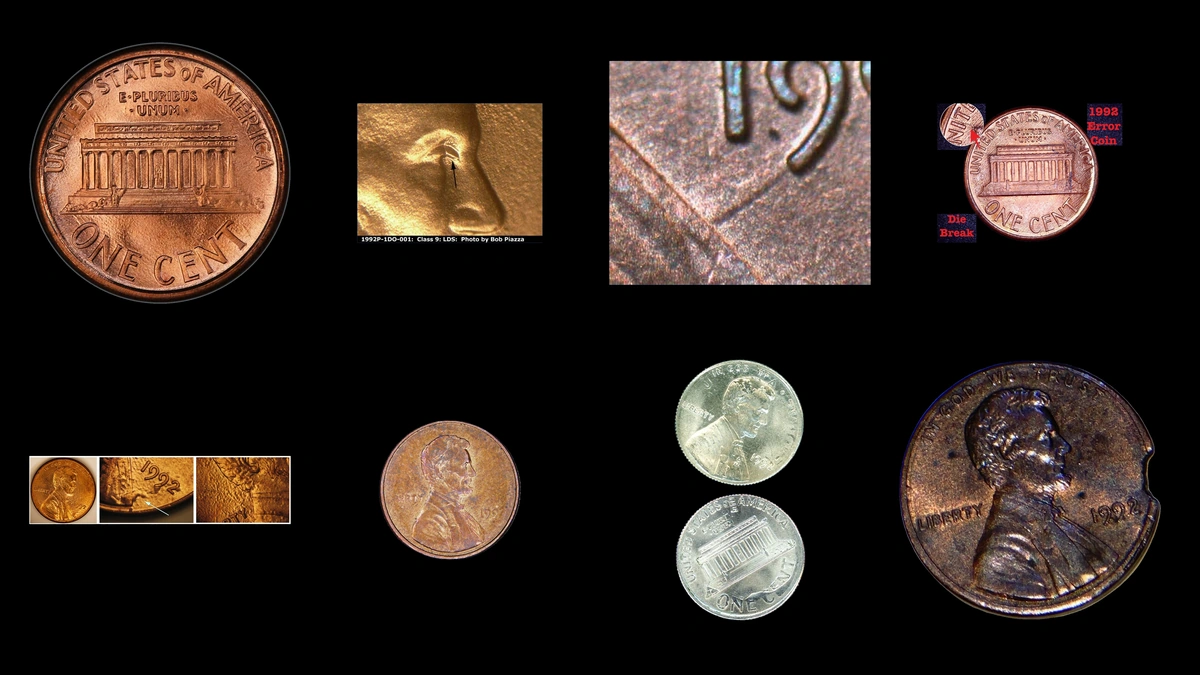
Seventeen groups below span estimated values of $2–$30,000, including small coating defects and dramatic striking errors. Examine the reverse design first, then compare raised features, metal, and changes to the coin’s shape.
| Where to look | Feature | Estimated value |
|---|---|---|
| AMERICA and FG | Close AM reverse | $1,000–$30,000 |
| Memorial steps | Denver wavy steps | $5–$50 |
| Columns, statue, and lettering | Doubled designs | $5–$150; disputed eyelid $2–$30 |
| Unexpected design fragments | Die clash | $5–$150 |
| Raised lines and blobs | Cracks, chips, and cuds | $2–$250 |
| Lifted copper coating | Blisters or peeling | $2–$75 |
| Weak or impressed area | Struck-through | $5–$300 |
| Original gray zinc surface | Unplated blank | $75–$500 |
| Cent design on smaller clad metal | Dime blank | $300–$1,200 |
| Dime details under cent details | Cent over dime | $600–$2,000 |
| Curved missing section | Planchet clip | $10–$150 |
| Two matching sheared pieces | Strike-clip pair | $300–$1,500 together |
| Wider coin, complete designs | Broadstrike | $20–$350 |
| Original plain crescent | Off-center strike | $20–$500 |
| Separate groups of cent details | Double strike | $100–$800 |
| Contact from an adjacent blank | Chain strike | $150–$1,000 |
| Stretched cup-shaped coin | Die cap | $200–$1,000 |
Normal 1992 cents are copper-plated zinc, with a 2.50 g weight, 19.05 mm diameter, and smooth edge. A dime’s usual starting figures are about 2.268 g and 17.91 mm, with copper-nickel outer layers around a copper center.
Measure safely accessible examples and allow for metal spreading or loss appropriate to the suspected error. Keep certified coins sealed and use their recorded specifications rather than disturbing a holder.
1. 1992 Penny Nearly touching AM with different FG placement: Close AM Error
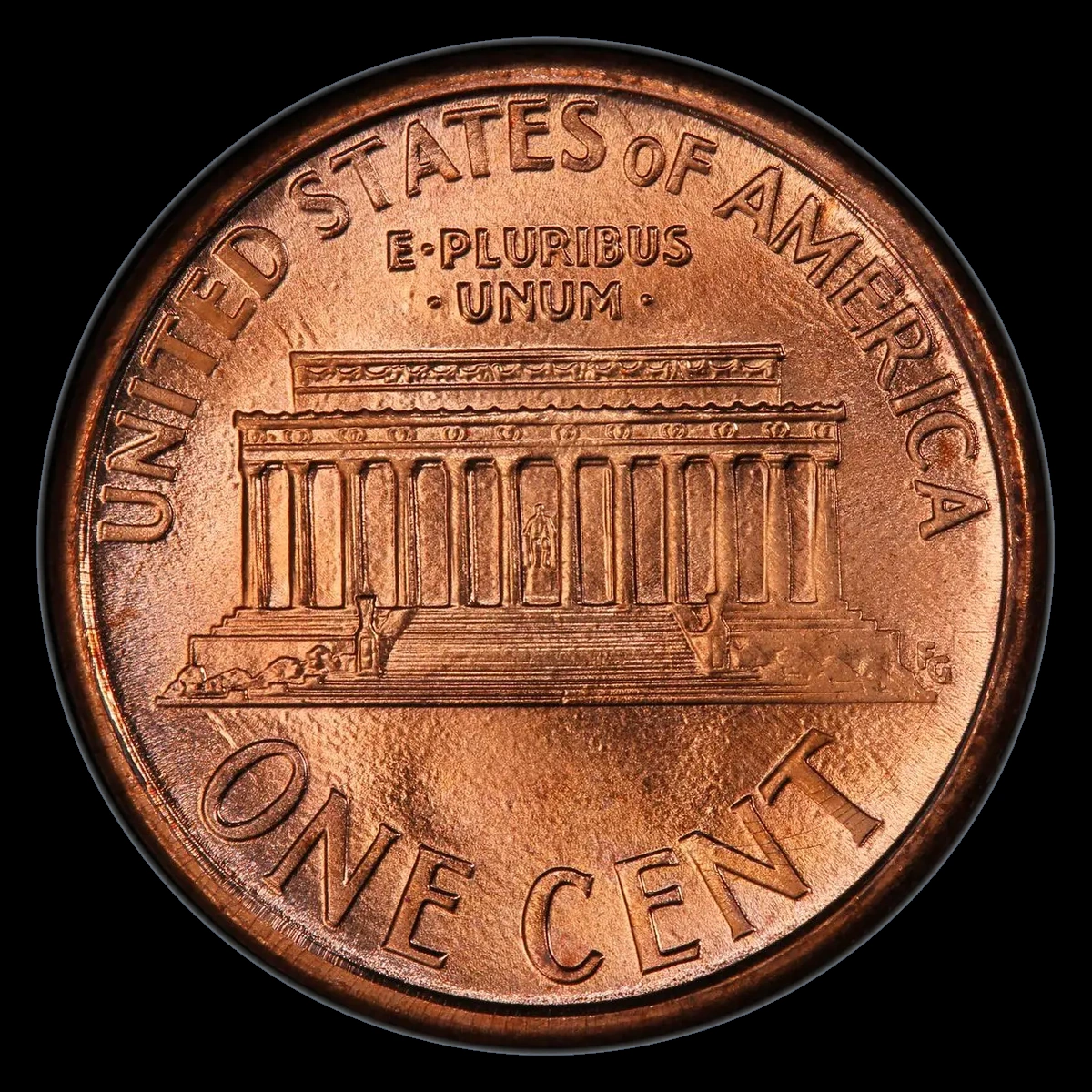
Inspect the bases of A and M in AMERICA, then check the small FG initials beside the Memorial. The rare 1992 reverse brings AM nearly together and places FG farther from the building than the normal design.
This is a complete reverse-design change intended for 1993, used on a few 1992 Philadelphia and Denver cents. Close AM is ordinary on 1993 coins, making the front date essential.
How to Identify
Confirm 1992 and record whether D is present before enlarging AM. Compare FG as well: the G lacks the older design’s small upper projecting stroke.
Nearly touching letters alone cannot substitute for the full reverse match. Wear or impact can alter spacing without producing the correct FG position and shape.
What It’s Worth
$1,000–$30,000 is the estimated range across authenticated examples and conditions. Philadelphia pieces generally command stronger prices, although Denver examples can also reach five figures.
The Philadelphia MS67 Red record is $25,850 from January 2017. A Denver MS65 Red sold for $14,100 in 2014; both grades describe unworn coins, with Red indicating preserved copper-red color.
2. 1992 Penny Uneven lines beneath the Memorial: Denver Wavy Steps Error
At the building’s base, short extensions can make the steps appear wavy. The Denver variety was formerly listed as a doubled reverse but was later moved by Coppercoins to trail varieties.
Describe the observed step pattern under that revised classification. It differs from an additional partial column or another clearly repeated building element.
How to Identify
Verify D below the date and compare the entire run of steps with an identified example. Look for the same wave-like pattern and extensions tied to the design.
Random scratches, wear, and changing reflections can all make straight lines look uneven. An older doubled-die label is not a substitute for matching the photographed trails.
What It’s Worth
$5–$50 is estimated for clear matched wavy-step examples. This is a modest variety estimate rather than a recorded transaction for the exact Denver coin.
Sharp detail and attractive surfaces support the stronger end. General wear around the steps does not justify a doubled-die premium.
3. 1992 Penny Extra columns, statue detail, or letter strokes: Doubled Designs Error
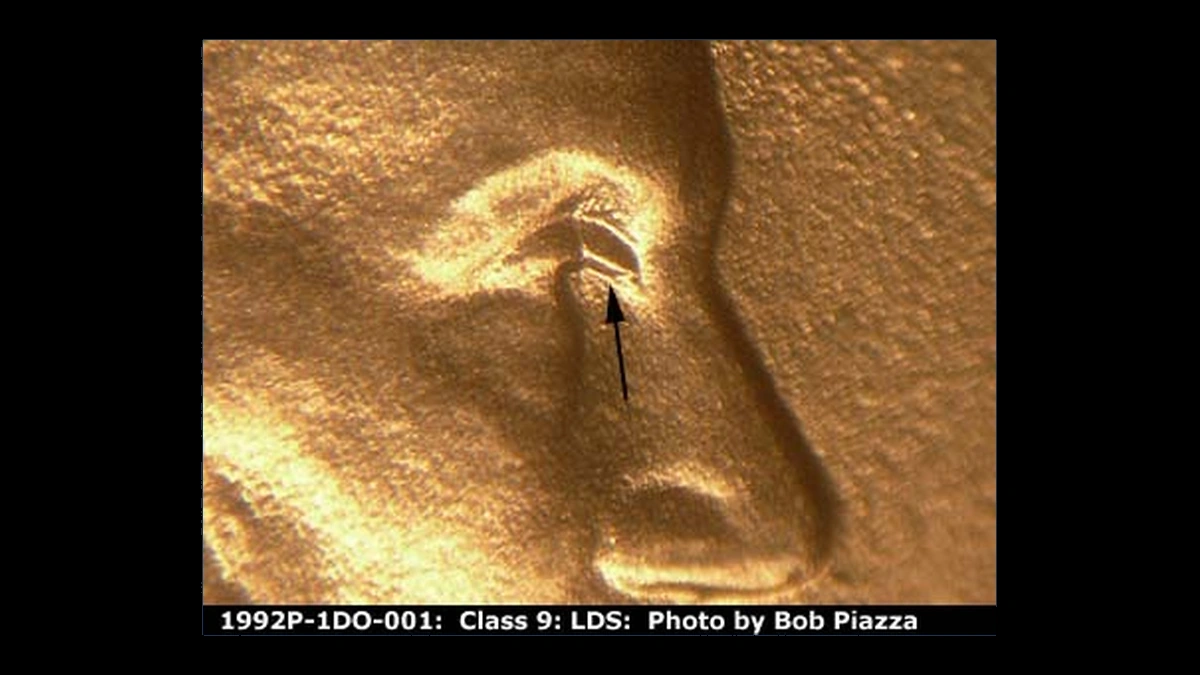
Search between the Memorial columns as well as around the larger lettering. Reported varieties include partial columns, repeated statue features, and thicker or split obverse and reverse letters.
One Philadelphia example repeats a knee beside the statue’s feet, while some Denver examples affect ONE CENT. These are separate die patterns, each originating in a tool with repeated design detail.
How to Identify
Select the correct mint’s comparison and match the specific repeated shape. Do not assemble several unrelated column, date, and motto features into a single imagined variety.
Flat strike-related shelves and splits exposing zinc around lettering are common lookalikes. A separate extra-eyelid feature remains disputed between doubling and a mark in the tool, so it cannot establish the lettering or column varieties.
What It’s Worth
$5–$50 is estimated for minor identified doubled designs, rising to approximately $50–$150 for stronger sharp examples. These are comparison estimates, not verified sales of every reported pattern.
For the disputed eyelid feature alone, use the more modest $2–$30 estimate. Its older doubling label should not be treated as a settled explanation.
4. 1992 Penny Faint building or portrait traces in the background: Die Clash Error
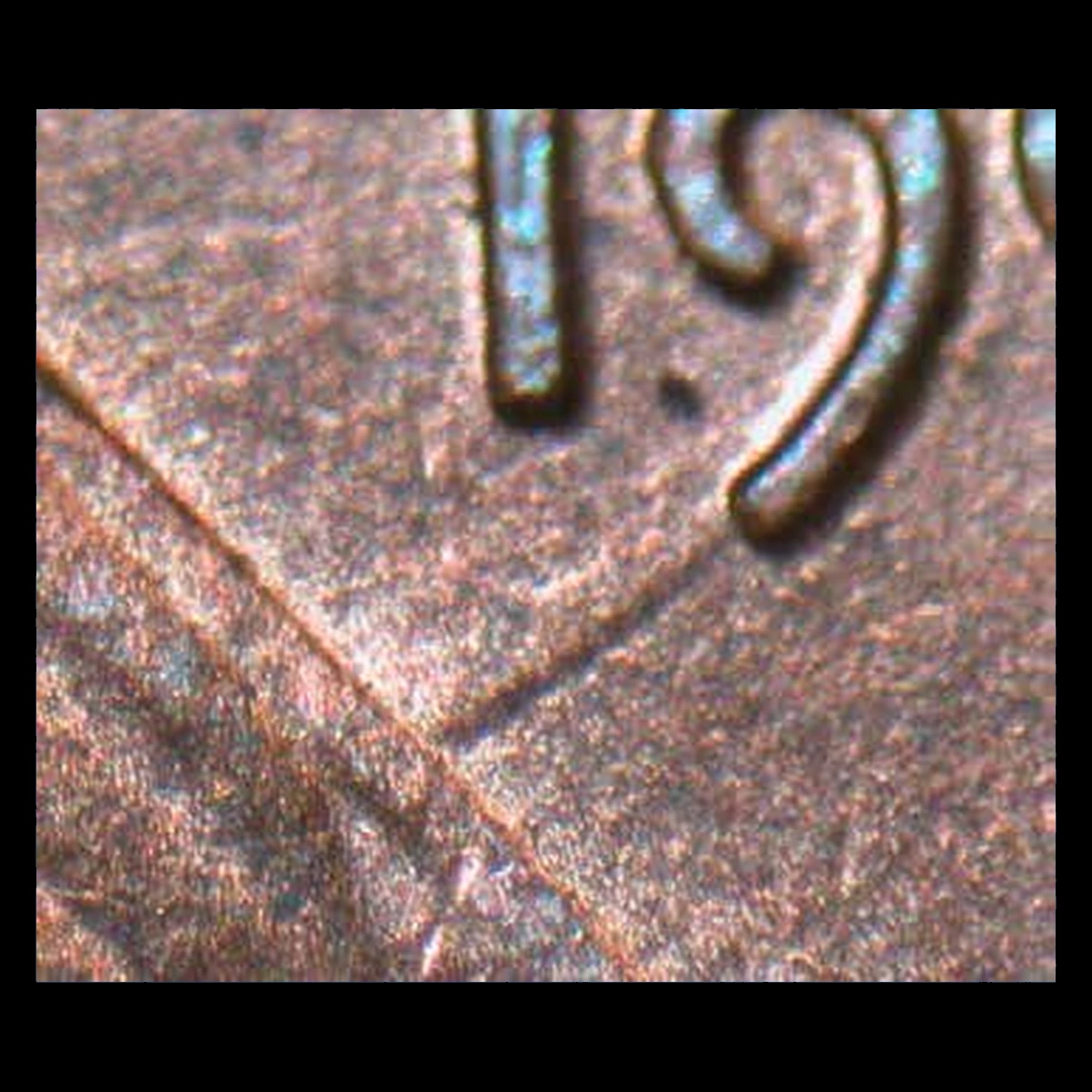
Unexpected Memorial lines near Lincoln can record contact between the dies without a blank in place. The tools can acquire parts of the opposite design and pass those marks to later coins.
1992 examples range from small neck-area traces to several shifted sets. One variety mainly retains reverse marks after replacement of the obverse die.
How to Identify
Trace recognizable building contours around the head and neck, or portrait-related shapes around reverse columns, base, and lettering. Their positions should fit the opposing design.
Several displaced contours can reflect repeated die contact, not repeated strikes on this particular coin. A normal-looking front does not automatically disqualify a documented reverse-only example.
What It’s Worth
$5–$30 is estimated for faint identifiable clashes, with approximately $30–$150 for stronger shapes or several clear sets. Visibility on the actual coin matters more than arrows added to a photograph.
No specific auction amount is assigned to the cataloged varieties. Die polishing can remove portions of a genuine clash and leave a less dramatic example.
5. 1992 Penny Raised letter chips, ridges, and rim patches: Cracks, Chips, and Cuds Error
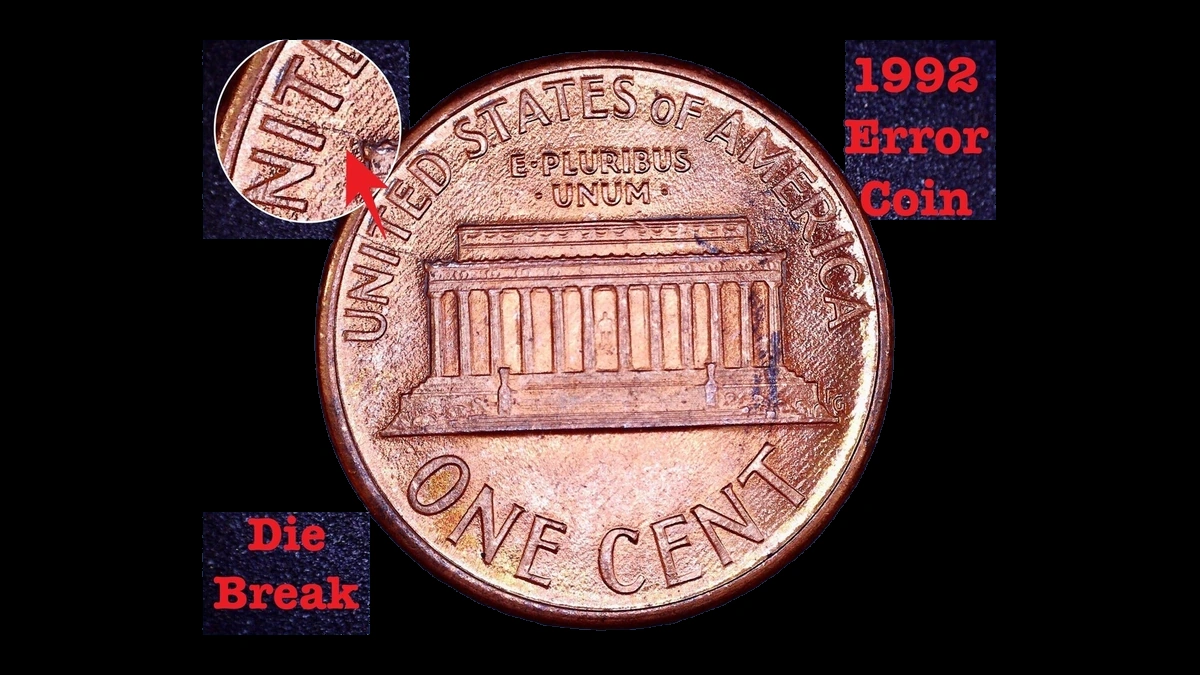
Metal filling a die’s cracks or missing sections can leave lines and lumps above the normal design. Reported 1992 forms include narrow rim breaks, a larger patch entering the left side of LIBERTY, and separate reverse features.
A solid patch connected to the rim is a cud. The BIE nickname applies specifically to a bar between B and E, not chips beside L, I, or TY.
How to Identify
Start with the boundary: establish whether the feature is a raised line, internal bump, or rim-connected patch. Side lighting helps separate these from recessed scratches.
Compare the actual location of small letter chips and inspect the coating for hollow-looking bubbles. Leave the feature untouched rather than scraping it to decide whether it is solid.
What It’s Worth
$2–$25 is estimated for fine cracks and small chips, with approximately $25–$250 for larger raised patches. Size and the coin’s preservation determine the appropriate comparison.
A 2021-D retained cud sold for $186 in September 2025, involving a broken die section that stayed partly in place. That Shield-cent result is not a sale of a 1992 feature or a direct price for a tiny TY chip.
6. 1992 Penny Rounded copper bubbles or a peeling skin: Plating Defects Error
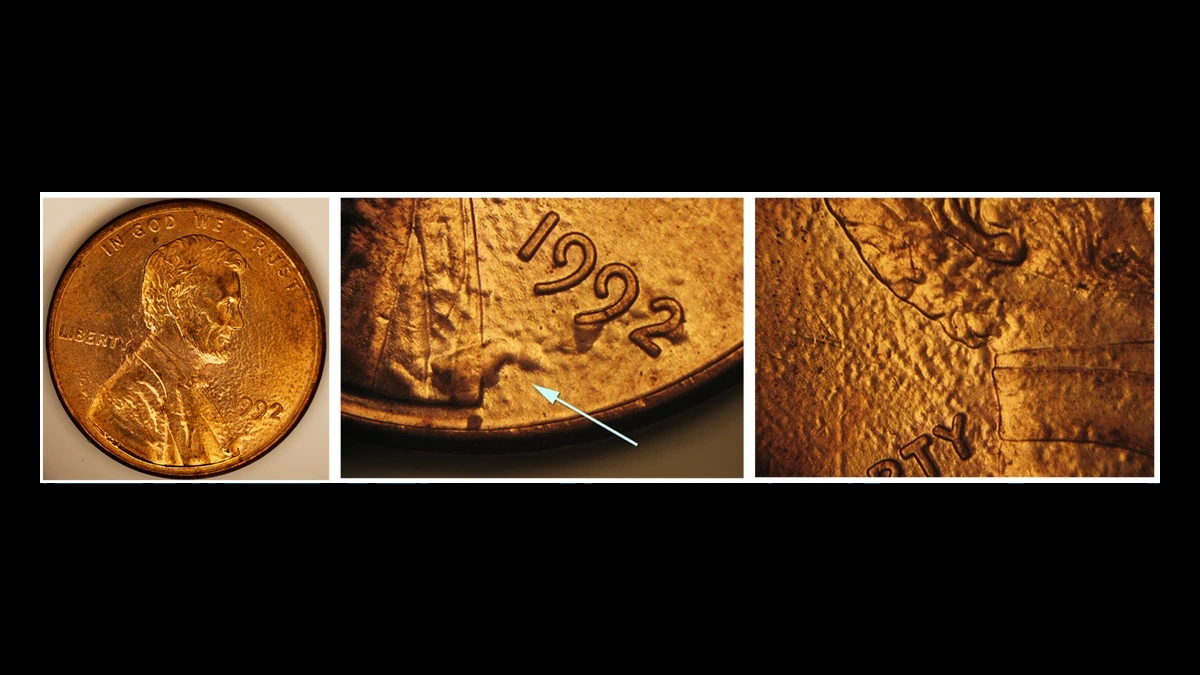
A thin shell rising from the surface directs attention to the coating rather than a broken die. The photographed 1992 example has round and oval blisters, with its largest irregular bubble crossing Lincoln’s coat and extending below the date.
Other reports describe peeling copper over zinc. Although sometimes called lamination, this concerns the thin covering rather than a thick layer within a solid copper-alloy cent.
How to Identify
Use side lighting to follow the shell or lifted edge without pressing it. The coat-to-below-date location identifies the photographed bubble, not every blister from 1992.
For peeling, inspect the copper boundary and exposed zinc for corrosion. Rough eaten-away metal can provide a different explanation from an original intact lifted skin.
What It’s Worth
$2–$20 is estimated for small mint-made coating features, with about $20–$75 for larger clear defects on attractive coins. No sale price is assigned to the pictured blister.
Preserved metal around the feature helps explain its origin. A larger exposed area does not automatically add value when corrosion or chemical damage has destroyed that evidence.
7. 1992 Penny An impression or localized weak detail: Struck Through Material Error
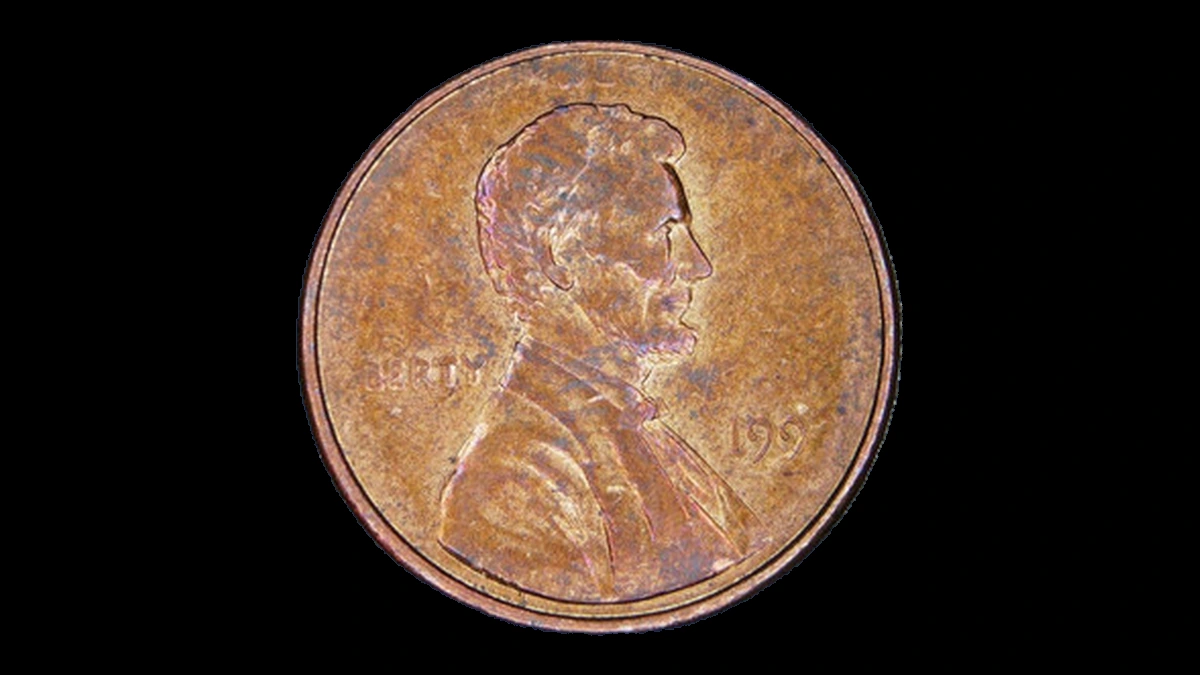
An obstruction can prevent part of the die design from reaching a blank. A certified Philadelphia 1992 example shows an obverse strike-through without identifying the object involved.
A separate collector report describes minor grease-related weakness and die wear. Neither report makes every weak letter a grease error.
How to Identify
Examine the transition from sharp adjacent design into the affected area. A later impact may flatten completed detail and push a lip of metal beside the depression.
Compare weak lettering with wear across Lincoln and inspect for corrosion or scraping. Do not describe wire, cloth, or a particular missing word without evidence on the actual specimen.
What It’s Worth
$5–$30 is estimated for minor grease-related weakness, with approximately $30–$300 for larger clear impressions. Depth, visibility, and original surfaces influence the comparison.
A 2021-D grease-struck cent sold for $84 in September 2025. That different reverse design and date provide context, not the price of either 1992 report.
8. 1992 Penny Original zinc without its copper skin: Unplated Blank Error
Certified unplated cents are reported from both Philadelphia and Denver. Here the prepared blank lacked its normal copper coating when struck, rather than merely developing a bubble or peeling patch.
The recorded Denver specimen was labeled 2.4 g. That measurement belongs to one coin and is not a required weight for every unplated cent.
How to Identify
Inspect fine struck detail in the gray metal across both faces and the edge. Pitting, rough areas, and damaged copper remnants can indicate chemical stripping after minting.
Weight and color support the examination but do not establish timing on their own. Preserve the surface for a professional finding that the blank was originally unplated.
What It’s Worth
$75–$500 is estimated for professionally identified unplated examples. Original zinc surface quality and condition affect the amount.
A 1996-D unplated cent brought $129.25 in November 2014. That historical same-construction comparison is not a sale of either certified 1992 specimen.
9. 1992 Penny A crowded cent design on smaller layered metal: Dime Blank Error
A PCGS MS66 1992 cent struck on an unused dime blank was recorded at 2.3 g. The smaller blank can leave cent lettering outside the available metal.
It had no earlier Roosevelt or torch design. A separate certified 1992 example has a different grade and requires its own measurements.
How to Identify
Compare composition and weight together, examining the layered edge rather than relying on pale color. A cent strike may enlarge the blank beyond its original dime diameter.
An unused dime blank lacks the grooves produced during a normal dime strike. Search both faces for earlier dime details, which would indicate a finished dime received another denomination’s design instead.
What It’s Worth
$300–$1,200 is estimated for authenticated examples, depending on condition and surviving identity. The PCGS MS66 coin recorded at 2.3 g sold for $540.50 on June 11, 2017.
That result concerns an unused dime blank, not a cent struck over a finished dime. The distinction affects both identification and comparison value.
10. 1992 Penny Roosevelt or dime lettering under Lincoln: Cent Struck Over a Dime Error
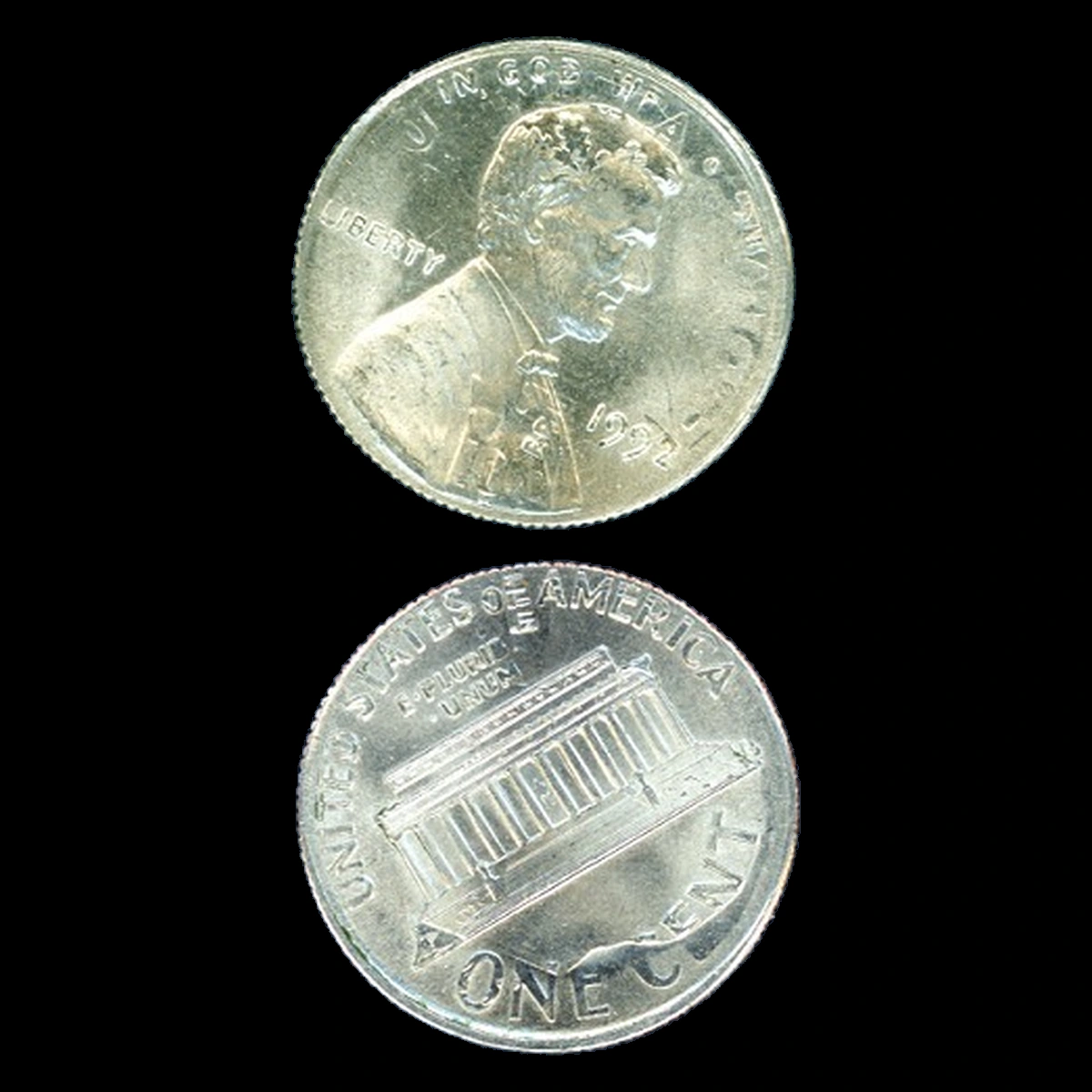
A finished dime can enter a cent press and receive a second denomination’s design. Philadelphia reports include a cent over a 1992-P dime, while a Denver specimen was labeled 1992-D over 1992-D.
On the Denver coin, Roosevelt’s outline remains above Lincoln’s ear and the dime’s D lies near Lincoln’s shoulder. The underlying dime date was flattened away, so its labeled year is not a visibly readable second date.
How to Identify
Search for a recognizable dime feature before trying to read another date. An earlier mint letter displaced by the cent strike should not be mistaken for an extra cent mintmark.
Check the layered metal, weight, and any surviving or distorted edge grooves. Other specimens need their own underlying design identified instead of inheriting the Denver coin’s exact remnants.
What It’s Worth
$600–$2,000 is estimated for clearly identified 1992 cent-over-dime errors. The Denver specimen graded NGC MS66 sold for $747.50 in May 2011.
A 2001 cent over a 2001-P dime brought $1,320 in September 2025. Both are finished-dime overstrikes, with visible portions of the two designs contributing to appeal.
11. 1992 Penny A curved opening in the outline: Planchet Clip Error
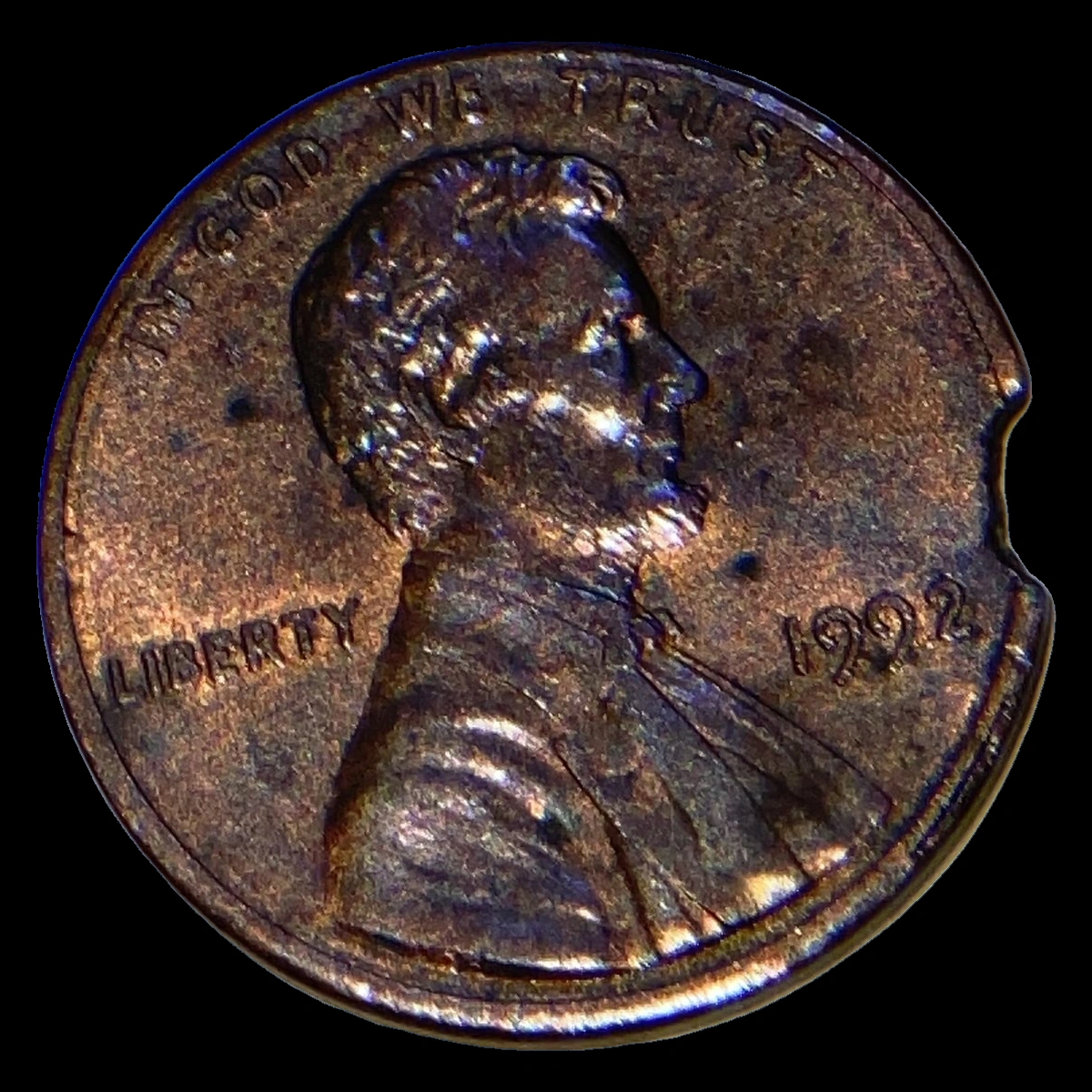
A curved clip begins when a blanking punch overlaps an earlier hole in the metal sheet. The resulting incomplete blank receives its coin design afterward.
The 1992 reports do not impose one mint or opening position on all examples. This production stage differs from the strike-clip pair described next.
How to Identify
Inspect the gap and how neighboring design approaches it for evidence the metal was absent before striking. Saw marks and fresh filing can expose later cutting.
Possible rim weakness opposite the clip is supporting evidence rather than proof by itself. Measure surviving full spans and consider weight loss alongside the opening’s surface.
What It’s Worth
$10–$150 is estimated for genuine curved clips. A clear original boundary and readable date support stronger comparisons than a small worn gap.
A 2021 cent with a five-percent straight clip brought $114 in September 2025. Its different clip shape and Shield design do not establish a location or percentage for any 1992 example.
12. 1992 Penny Two pieces reconstructing one blank: Matching Strike-Clip Pair Error
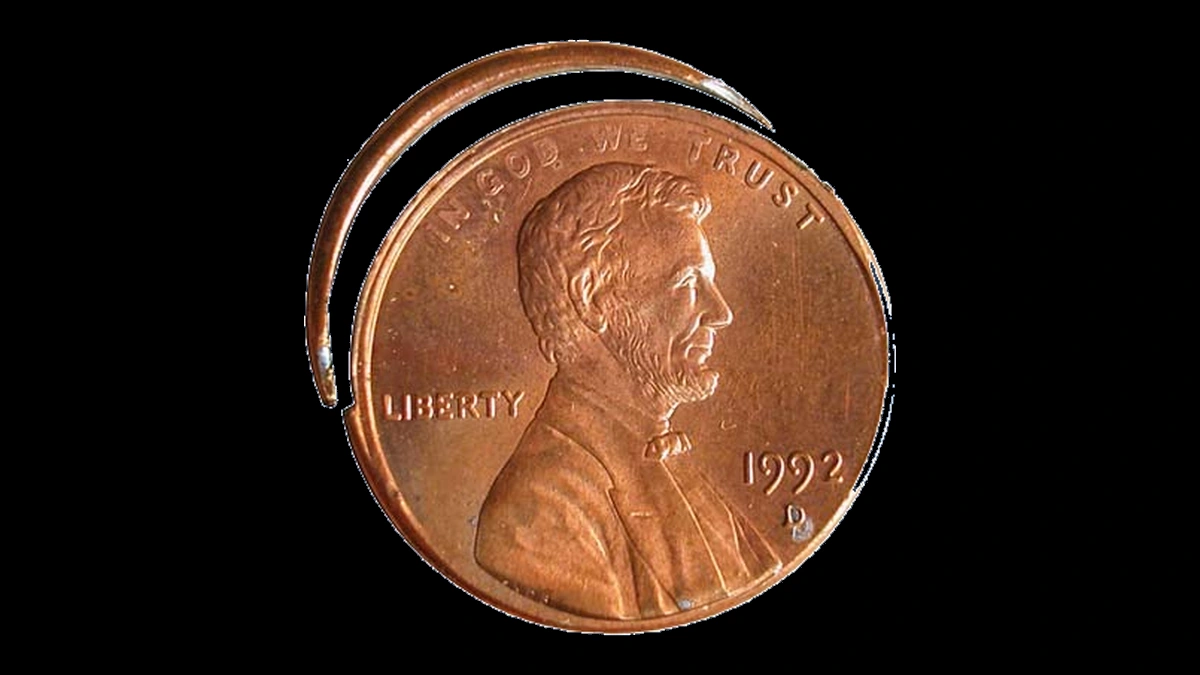
The distinctive evidence is the surviving pair: an elliptical struck piece and a plain crescent that fit together. The separation occurred during striking rather than when blanks were punched from a sheet.
Mike Diamond described shearing between the descending die and the raised collar ring. Keeping both pieces preserves the relationship between the cut and the struck area.
How to Identify
Photograph the outlines together without forcing them or using adhesives. Their combined form should account for one blank, with struck and plain portions clearly distinguished.
Examine how the cut meets the design to exclude sawing through a finished cent. Combined weight and the reconstructed outline provide supporting records while allowing for movement of metal during striking.
What It’s Worth
$300–$1,500 is estimated for an authenticated matching pair, priced together. No completed sale is supplied for Diamond’s example.
The matching surfaces add evidence beyond a single fragment. Neither piece should receive a separate complete-error price that is then added to the other.
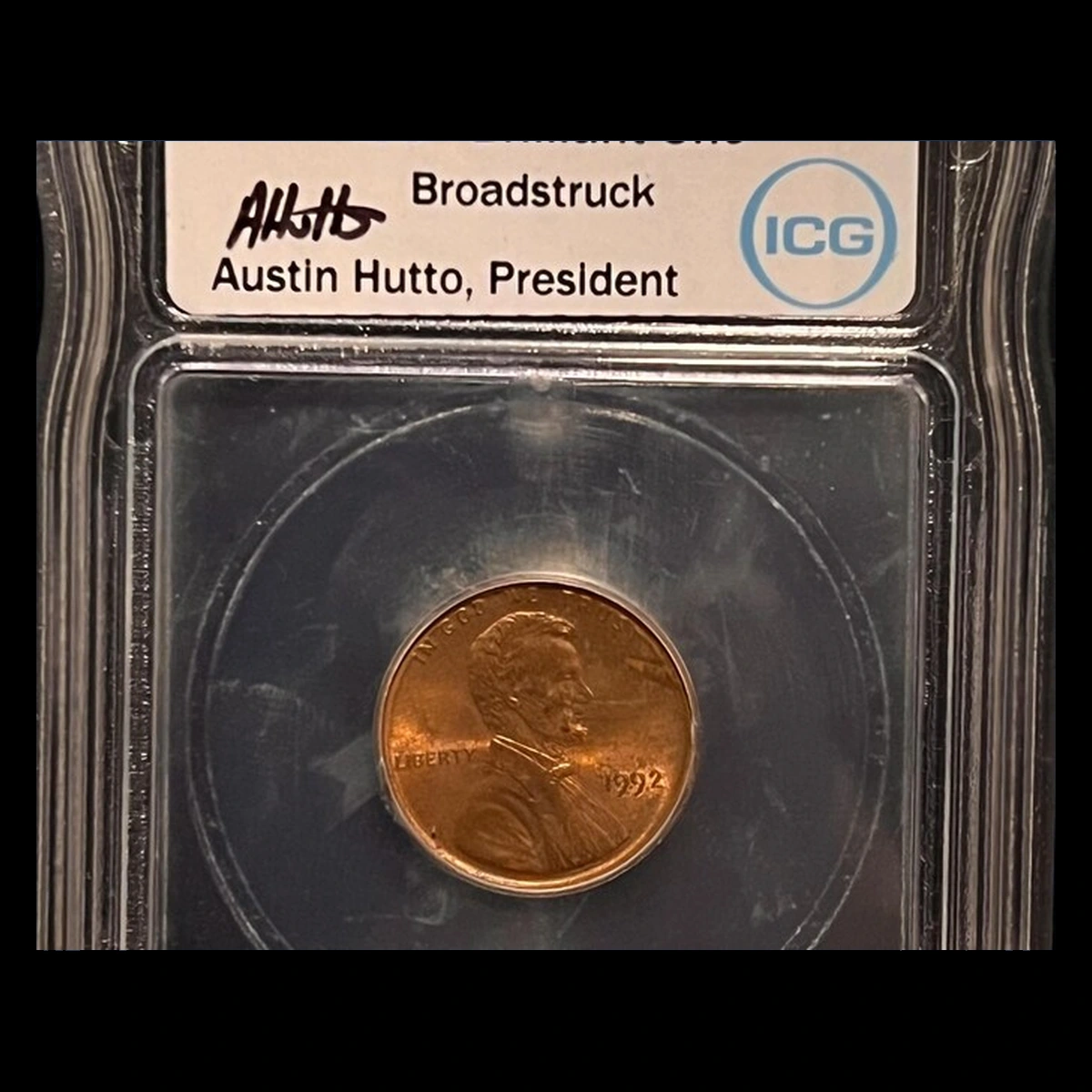
13. 1992 Penny Extra width around the full design: Broadstrike Error
The Memorial and outside lettering can remain complete while the metal spreads beyond normal width. A broadstrike results when the collar fails to restrain the blank’s edge normally.
A certified Philadelphia 1992 example has been offered. Unlike an off-center strike, its cent design remains on the available metal.
How to Identify
Compare the outline with an ordinary penny and follow the lettering on both faces. Expansion can be uneven without disqualifying the strike.
Inspect for flattened portrait details or tool marks from later hammering. Original design within the widened border needs to explain the width together with the retained metal.
What It’s Worth
$20–$350 is estimated for modest through stronger broadstrikes with original surfaces. Visibility and preservation influence the useful comparison.
A 1999 Memorial-cent broadstrike graded MS65 Red sold for $67 in March 2023. Its same reverse design makes it relevant context, but the result is not a fixed price for a 1992 coin.
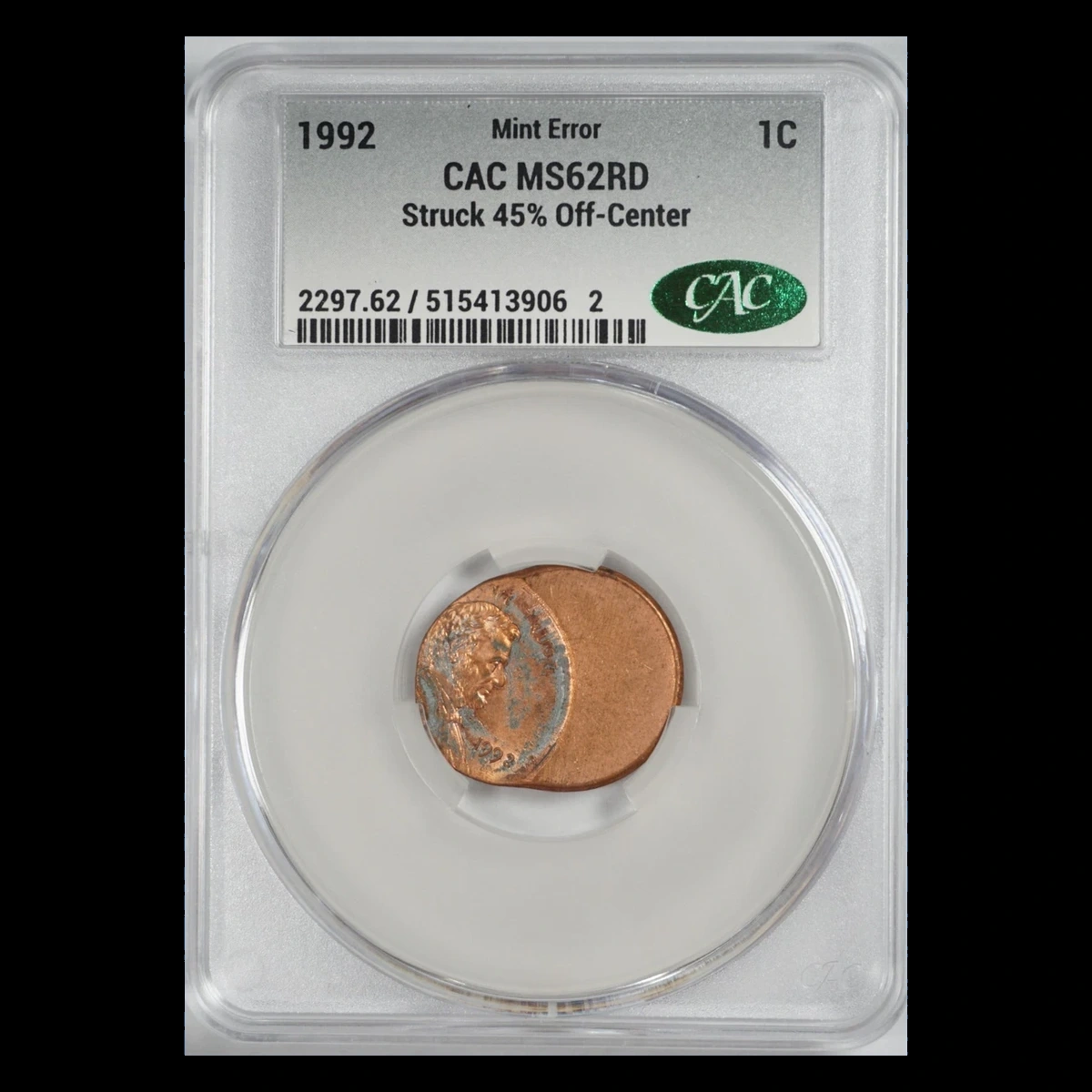
14. 1992 Penny Plain metal beyond a displaced design: Off-Center Strike Error
A recorded Philadelphia 1992 example retains its date despite being seventy percent off center. Other certified specimens have different displacements and must remain separate comparisons.
The blank lay partly outside the dies, so only their overlapping area received the design. The untouched crescent still contains metal rather than representing a clipped section.
How to Identify
Keep the entire outline visible and compare design loss on both faces. A shift confined to one side requires a different alignment explanation.
Inspect the plain-to-struck transition for scraping or grinding that removed lettering later. The actual surviving date and original surfaces matter more than an estimated offset alone.
What It’s Worth
$20–$500 is estimated for genuine examples, with the stronger portion favoring dramatic shifts and readable dates. High displacement without clear identity or good surfaces need not command the top amount.
A four-percent off-center 2006 Memorial cent sold for $39 in March 2025. That modest example cannot directly price the much stronger seventy-percent 1992 specimen.
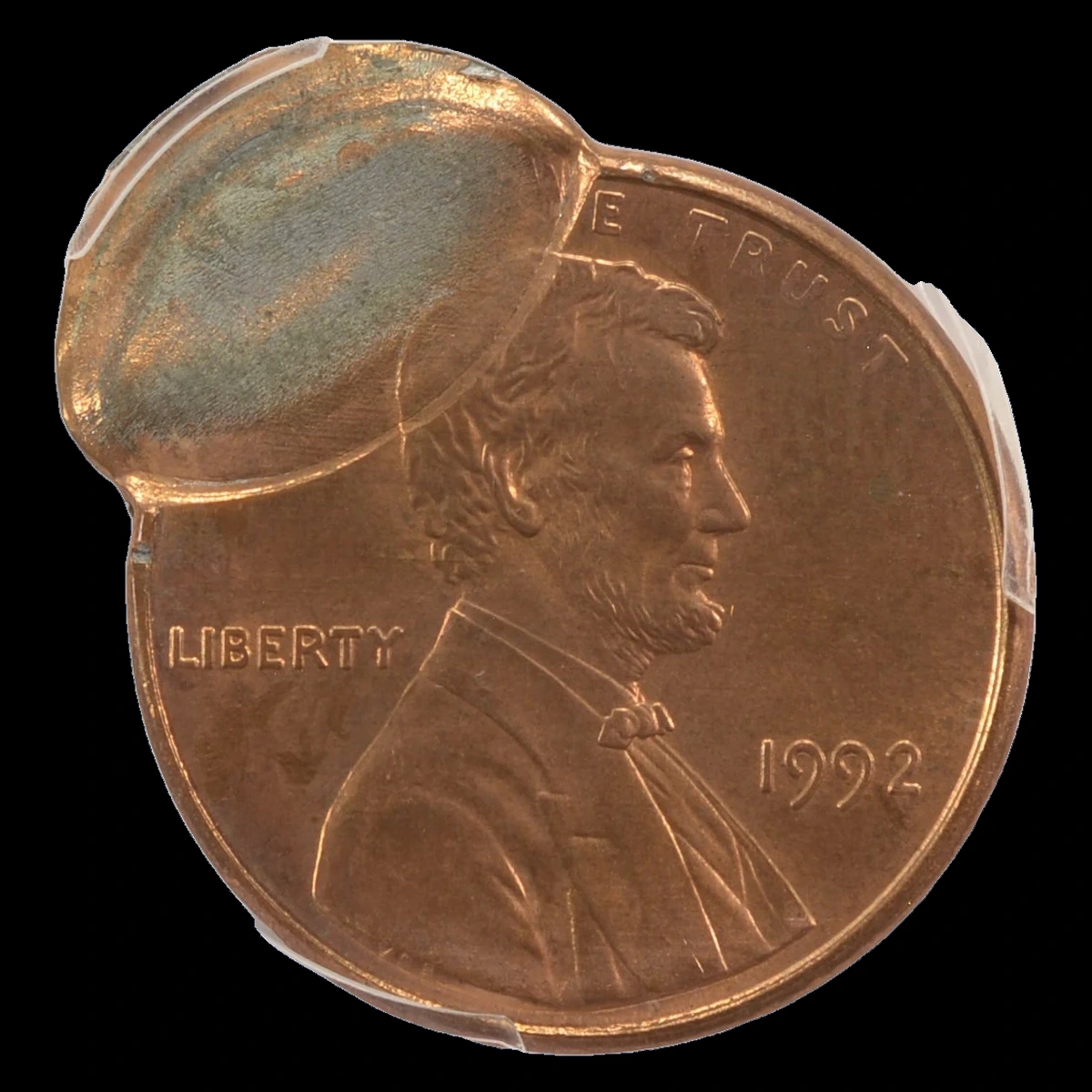
15. 1992 Penny Two displaced groups of cent details: Double Strike Error
A coin that fails to leave normally can move before another blow, receiving a second cent design. The recorded Philadelphia example has a second strike seventy-five percent off center, while a separate Denver coin has a ninety-percent off-center second strike.
Another 1992 compound example shows stretching associated with a blocked face during the second strike. Its sideways metal movement does not make every oval cent a genuine double strike.
How to Identify
Locate connected groups of repeated rim, portrait, or lettering that establish the second striking area. A doubled die repeats smaller details within one design rather than creating two widely separated strikes.
Inspect both faces of a stretched example for the blocked area and related flow. Later pressure transfers from finished coins need to be excluded before accepting the sequence.
What It’s Worth
$100–$800 is estimated for genuine double strikes, depending on separation, condition, and readable identity. Compound displacement and stretching belong in one appraisal of the same coin.
A 1979 cent with an off-center second strike brought $204 in September 2023. Its copper-rich construction differs from the plated zinc used in 1992.
16. 1992 Penny An adjacent blank’s contact boundary: Chain Strike Error
Two blanks touching during a strike can press against each other as they expand. The resulting contact boundary gives a chain strike its name; it does not refer to a chain-shaped surface mark.
A Philadelphia 1992 specimen was cataloged at ninety percent off center with a chain strike. Its condition was estimated by the auctioneer rather than assigned by a grading service.
How to Identify
Examine the boundary beside the surviving strike and compare how the metal could have contacted a neighboring blank. A later edge dent does not establish simultaneous striking contact.
Use views of both faces and retain any surviving date. A large plain area alone establishes neither a chain strike nor another blank’s presence.
What It’s Worth
$150–$1,000 is estimated for genuine clearly identified chain strikes. Convincing contact evidence and readable identity are central to the comparison.
No recovered sale price is supplied for the ninety-percent 1992 coin. Its catalog condition must also remain an auctioneer’s opinion rather than being presented as a service grade.
17. 1992 Penny A cup with stretched walls: Die Cap Error
A certified Philadelphia 1992 cent is a deep obverse die cap. It remained stuck to a die, and subsequent blows against incoming blanks spread its metal around the tool.
The result is the actual cap with an upturned wall, not a separate coin struck beneath it. A finished cent bent into a bowl has a different history.
How to Identify
Look into the cup and follow original design from the center into the walls. The stretching should fit repeated striking rather than sharp folds or fresh tool marks.
Preserve the shape and avoid trying to straighten any part. Accessible width, height, and weight can document the unusual coin without requiring the normal flat diameter.
What It’s Worth
$200–$1,000 is estimated for an authenticated cap, with depth, surviving design, and condition guiding the value. Slight curling is a weaker comparison than a well-formed original cup.
A 2000 obverse cap graded MS64 Red sold for $312 in June 2025. That recent Memorial-cent result offers context rather than a transaction for the certified 1992 example.
Conclusion
The scarce Close AM requires a complete reverse-design match, while gray metal, lifted copper, and unusual outlines call for different evidence. Keep disputed eyelid features, reclassified trails, and separate striking specimens distinct as you compare them.
The $2–$30,000 estimates describe a wide range of identified coins. Precise photographs and preserved surfaces help establish which comparison belongs to a find, without borrowing another specimen’s grade, weight, or percentage.