Rare 1987 Penny Errors (List & Pictures)
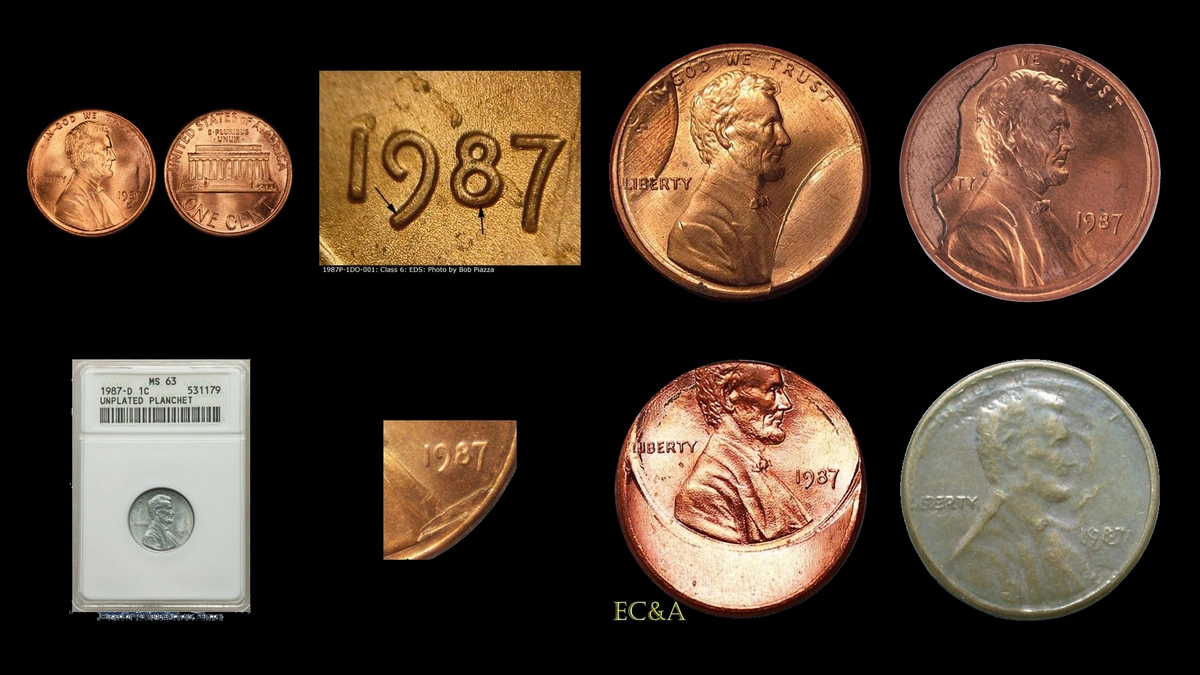
A second D, an intact copper bubble, and an older dime design point to very different 1987 penny errors. Estimated values across fifteen groups range from $1–$2,500.
A 1987 cent over a finished dime sold for $660 in 2020, while a different-year 2001 example brought $1,320 in September 2025. Begin with small design and surface features, then inspect the edge, shape, and any overlapping strikes.
| Clue | Category | Estimated value |
|---|---|---|
| Another part of D | Repunched mintmark | $3–$150 |
| Extra feet, column, or letter contour | Doubled die | $3–$200 |
| Faint opposite-design trace | Die clash | $5–$100 |
| Raised line, bar, or rim patch | Die cracks, chips, or cuds | $2–$400 |
| Rounded copper bulge | Plating bubble | $1–$40 |
| Gray zinc with copper remnants | Partly missing plating | $50–$400 |
| Plated fragment pressed near the rim | Struck-in rim burr | $50–$300 |
| Curved missing metal | Clip | $15–$200 |
| Extra width, complete design | Broadstrike | $15–$250 |
| Plain crescent, missing design | Off-center strike | $20–$500 |
| Upper depression and unusual date impressions | Shifted-cap strike | $100–$600 |
| Two strike positions | Double strike | $75–$800 |
| Design struck across a fold | Edge strike and foldover | $300–$1,200 |
| Cent design on smaller clad metal | Dime blank | $400–$1,500 |
| Older dime design beneath the cent | Double denomination | $600–$2,500 |
A standard 1987 cent has thin copper plating over zinc, a 2.50 g weight, a 19.05 mm diameter, and a plain edge. Measure safely accessible coins once as a reference, keeping certified examples sealed and using recorded measurements where available.
1. 1987 Penny A second upright or curve beside D: Repunched Mintmark Error
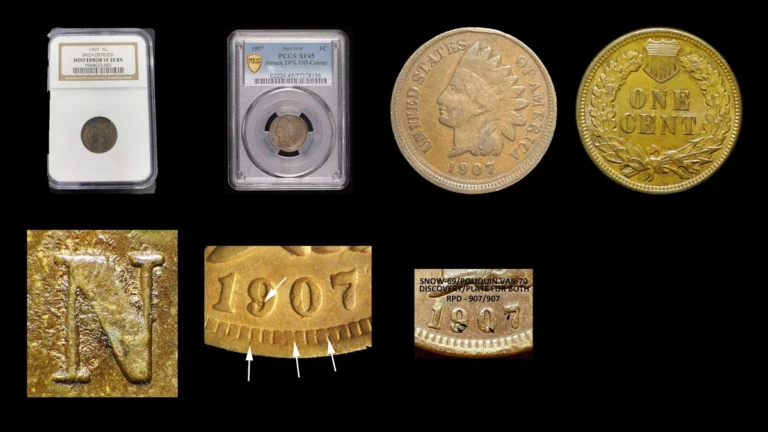
The D below the date was added separately to the die in this period. If the punch changed position between blows, part of an earlier letter could survive inside or beside the final D.
Several 1987-D varieties preserve different extra uprights, curves, or splits at the top and bottom. A mark far away between the date’s 1 and 9 has a disputed explanation and needs separate treatment.
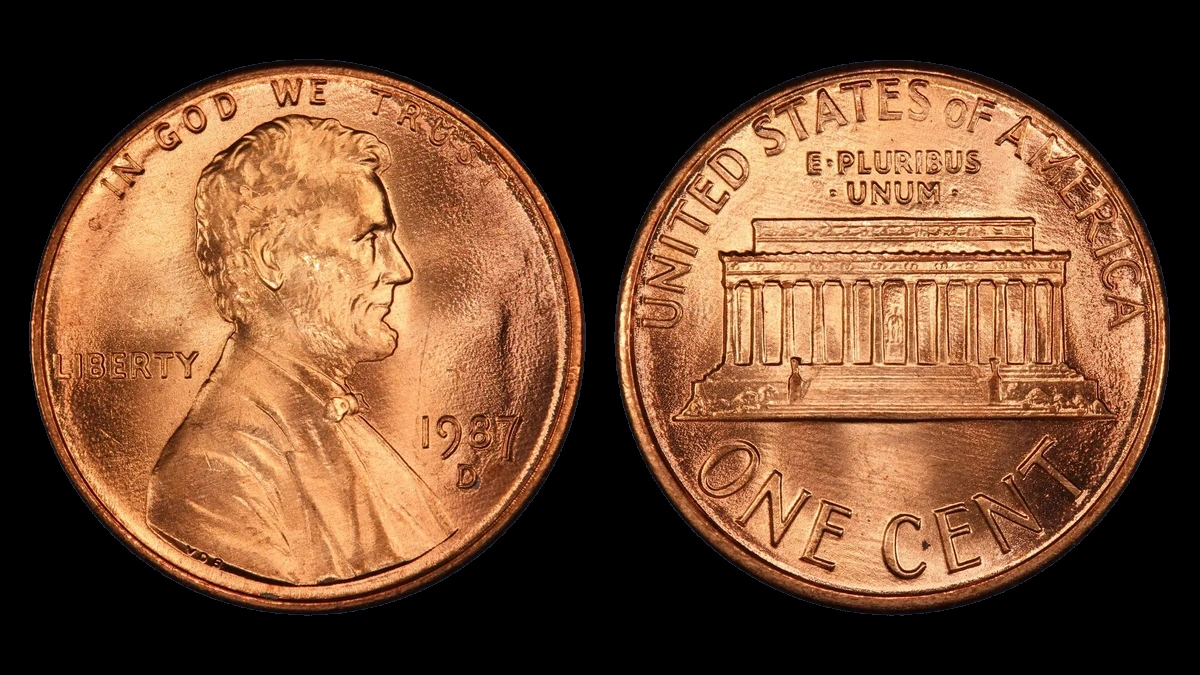
How to Identify
Inspect the complete D, including its top, stem, inner curve, and bottom, beside an ordinary Denver cent. A recognizable earlier part of the letter should match the exact variety rather than merely point in a similar direction.
The pictured D/D example supplies one specific comparison. Philadelphia coins have no mint letter, and the disputed distant mark should not be accepted as an established nearby D/D.
What It’s Worth
$3–$150 is estimated for confirmed repunched mintmarks, with clear extra letter shapes on unworn coins generally more appealing than close, slight overlaps. This is not a sale result for every catalog number.
The distant disputed mark needs confirmation before receiving the same error premium. A catalog label alone cannot resolve its origin.
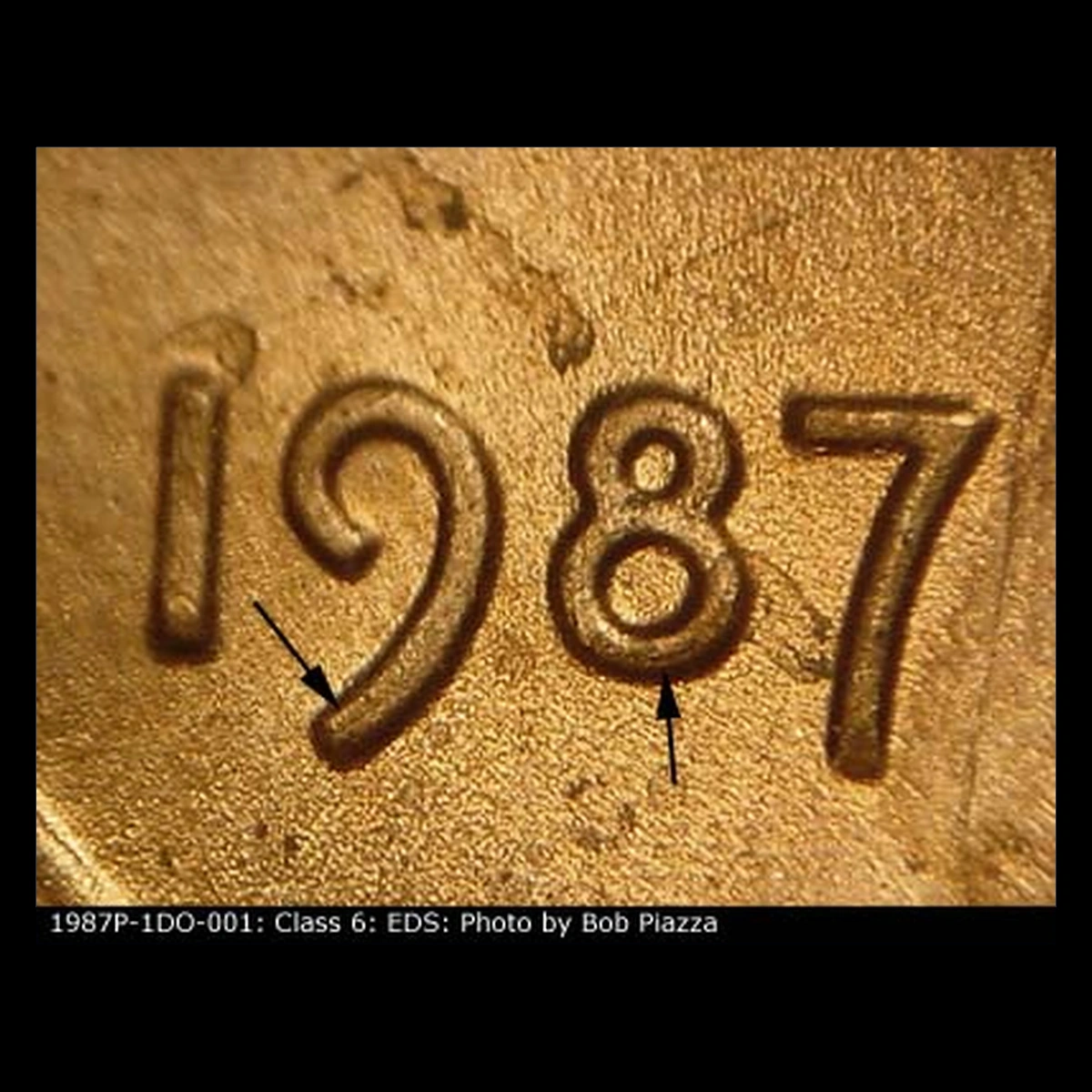
2. 1987 Penny Extra statue feet, a partial column, or split lettering: Doubled Dies Error
Look inside the Memorial when the reverse seems unusual. Some varieties show extra feet on the small seated figure, while another adds a narrow column.
Separate obverse patterns affect date digits or letters, including separation in 9 and 8 or small corner notches. These features originate in dies carrying repeated design detail, with different Philadelphia and Denver patterns.
How to Identify
Choose a comparison for the correct mint and face and follow a complete additional shape. One specimen need not show every listed foot, column, numeral, and letter feature.
A flat shelf from strike movement differs from rounded repeated design. Plating bubbles can coexist with a real variety, so evaluate each feature by its shape rather than assuming all irregularities have one cause.
What It’s Worth
$3–$200 is estimated across these minor doubled-design varieties. Recognizable feet or columns can display more readily than slight thickening requiring a careful comparison.
No published sale is assigned to each catalog entry. A reliable match and attractive surfaces support a stronger price than several unexplained thick letters.
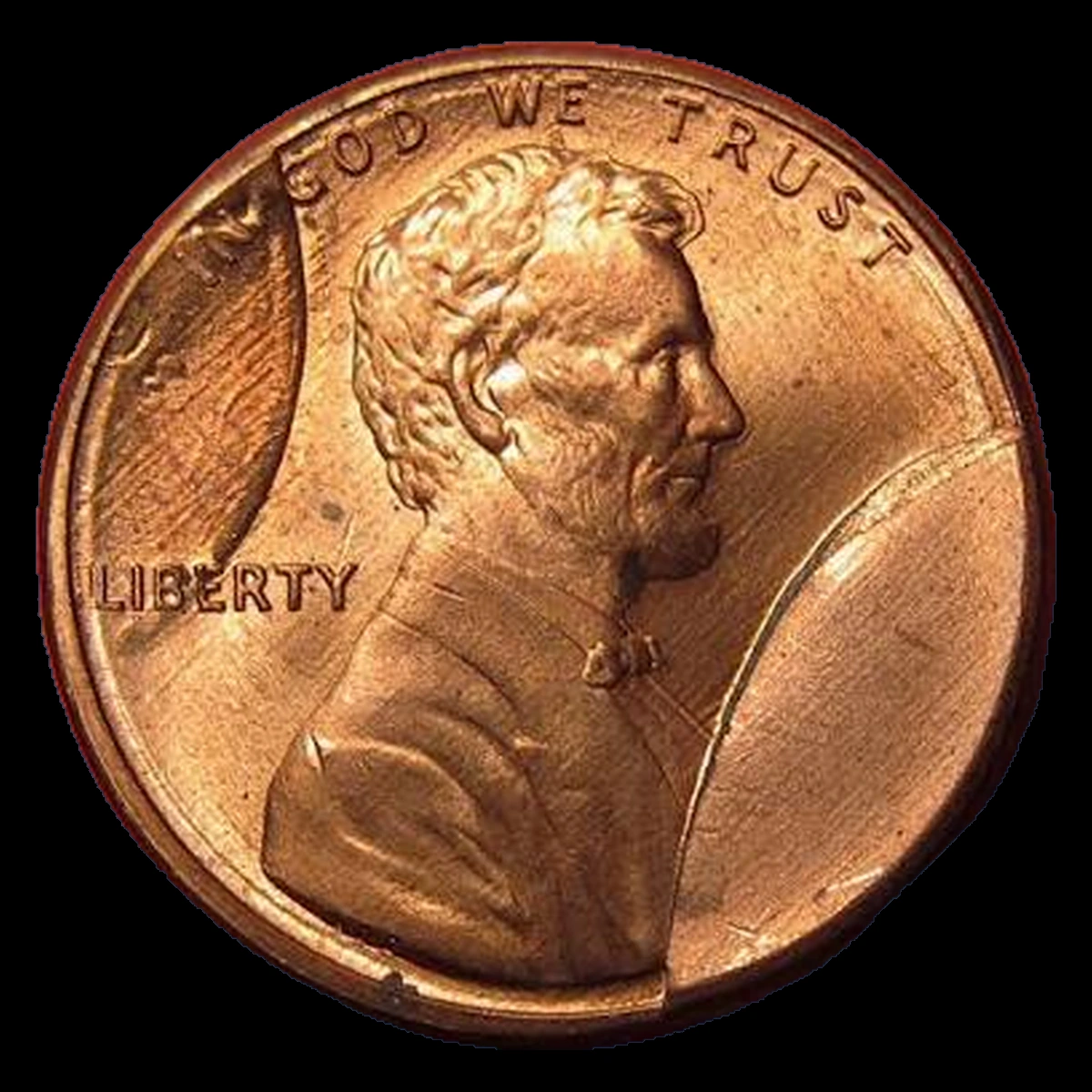
3. 1987 Penny An opposite-design shape in an open area: Clashed Dies Error
A faint building fragment beside Lincoln may have arrived through contact between the dies. If the tools meet without a blank, they can mark each other and pass those unwanted traces to later coins.
The historical 1987 report records this type of collision. Sharp normal lettering can coexist with shallow clash traces.
How to Identify
Compare the extra contour with photographs of the normal opposite design. A Memorial line needs the correct shape and position, not simply straightness.
Inspect both faces and the edge for later squeezing that could transfer an impression from another finished coin. A deeply pressed complete image requires a different explanation from faint die-contact traces.
What It’s Worth
$5–$100 is estimated for light, recognizable clashes, with clearer matching marks favoring the stronger amounts. These are minor Memorial-cent comparisons.
No verified individual sale is supplied by the historical report. Heavy wear or cleaning can obscure a genuine feature and reduce its appeal.
4. 1987 Penny Raised cracks, chips, and broken rim areas: Die Damage Error
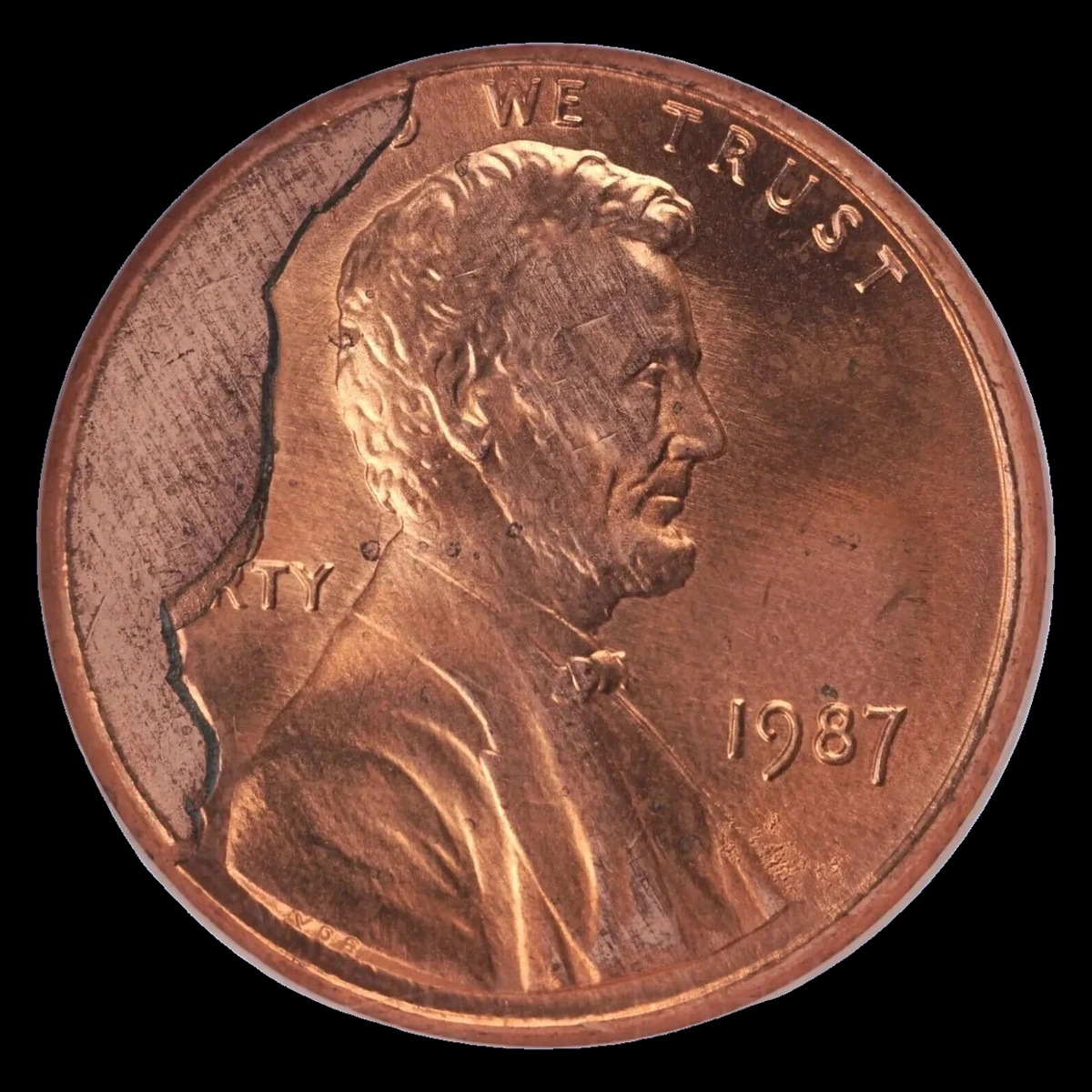
A damaged die can leave a narrow ridge, an internal bump, or a solid patch connected to the rim. The last form is a cud; a broken section retained in place may instead leave a step with surviving design.
1987 reports include BIE bars, date chips, and larger failures. One unusual loose fragment flipped during striking and left sunken 987 digits behind Lincoln’s head.
How to Identify
Use side light to distinguish a raised ridge from a scratch, then trace each feature’s boundary. A BIE bar occupies the B-to-E gap, while a cud requires a rim connection.
Compare retained steps and the special sunken-digit example with their own photographs. Other 1987 breaks do not share that fragment history or exact path merely because they have a similar nickname.
What It’s Worth
$2–$400 spans small BIE bars and fine cracks through more substantial or unusual die failures. A faint line cannot be appraised like a conspicuous rim patch.
A 1988 cud cent sold for $312 in March 2025, giving different-year context for a strong visible break. The unusual 1987 digit-bearing fragment requires an exact attribution before receiving a premium for that feature.
5. 1987 Penny Smooth rounded bulges in the copper: Plating Bubbles Error
Examine the copper around a bump to see whether it forms a lifted shell. Poor attachment to the zinc can allow a small area of coating to rise.
A bubble does not reproduce a column or letter outline like a doubled die. Zinc corrosion after circulation can also lift the skin, producing crust, deposits, or broken areas.
How to Identify
Change the light direction to trace the intact rounded coating without pressing it. Powder, an open pit, or rough material around the boundary may point toward corrosion beneath the copper.
Compare the bulge with nearby design rather than identifying it by proximity. A bump next to a column is not automatically an extra column.
What It’s Worth
$1–$40 is the estimate for original plating bubbles. Clear examples on clean coins can attract more attention than tiny bumps with little visual impact.
No auction result is assigned to a particular 1987 bubble. Corrosion does not receive the same premium, and grading expenses can exceed the value of a minor example.
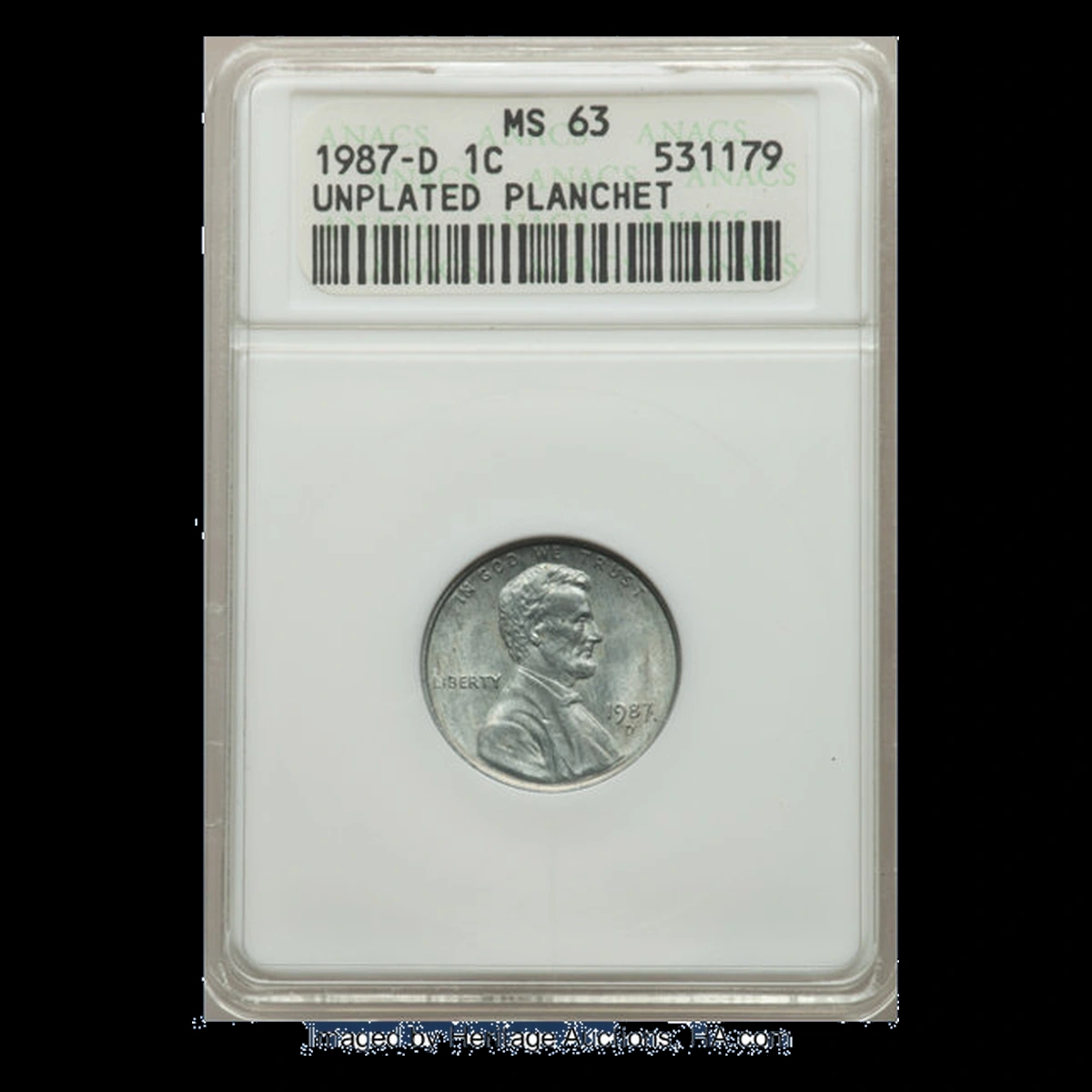
6. 1987 Penny Gray zinc across much of the coin: Partly Missing Copper Plating Error
The recorded Denver example lacks approximately eighty percent of its original coating. It was graded NGC MS63 Red and recorded at 2.4 g.
A blank with missing copper can receive normal struck detail directly in exposed zinc. Later chemicals can also uncover zinc, so a gray appearance and low weight do not establish the same history.
How to Identify
Inspect the copper-to-zinc boundary and the texture on both sides. Pits, etched details, or residues can reveal chemical attack after striking.
Record the candidate’s own weight and visible loss rather than assigning it the auctioned coin’s 2.4 g and eighty-percent description. Preserve both faces and the edge without cleaning the gray areas.
What It’s Worth
$50–$400 is estimated for comparable confirmed partial-plating errors. The described 1987-D sold for $97 on November 6, 2020.
A 1995-D unplated cent graded PCGS MS63 brought $180 in March 2023. That is another year’s coin, not a later transaction involving the 1987-D.
7. 1987 Penny A copper-covered fragment pressed near the edge: Struck-In Rim Burr Error
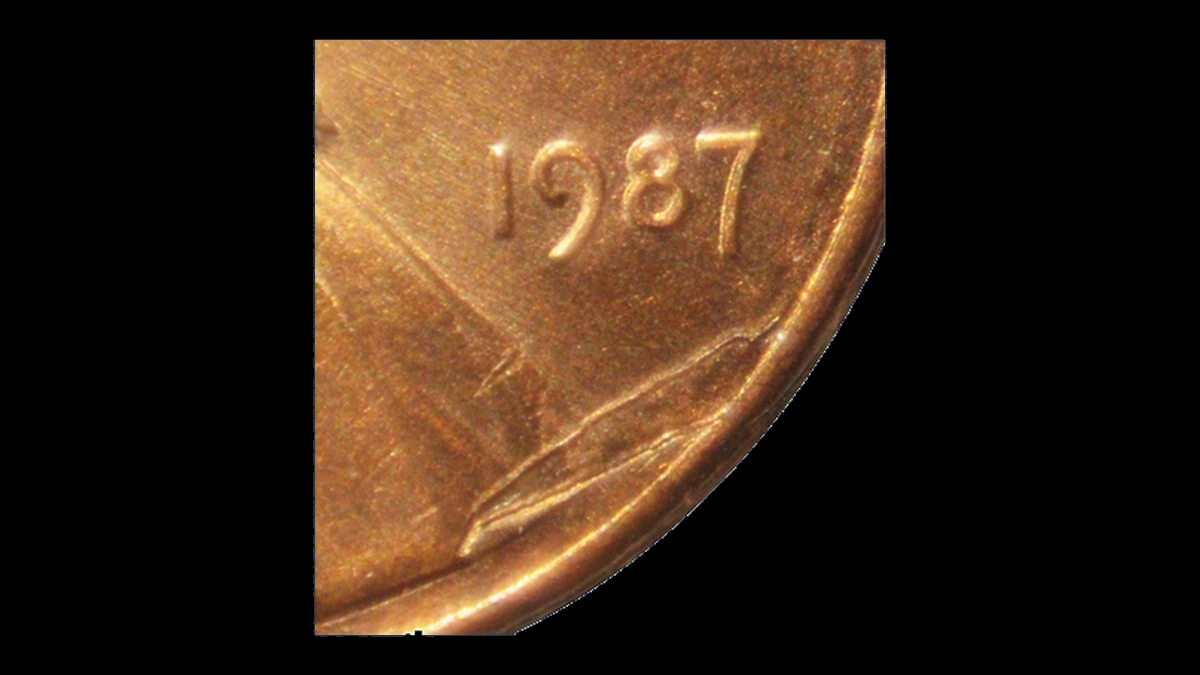
A small toothlike projection can preserve the order of several production steps. On the 1987 cent described by Mike Diamond, the burr formed before plating, received copper covering, and was then pressed into the surface during striking.
The fragment is associated with the rim rather than being a loose foreign object. Its original coating helps separate this sequence from a fresh tear after striking.
How to Identify
Follow continuous copper from the edge across the attached piece and inspect how the strike flattened it. Do not lift the fragment to expose its underside.
Check elsewhere along the edge for fresh tearing or tool marks. A later gouge can raise a flap but cannot recreate the same established pre-plating sequence.
What It’s Worth
$50–$300 is estimated for a confirmed pre-plating struck-in burr of this kind. No completed price is supplied for the described 1987 specimen.
Clear coating evidence and an undamaged surrounding surface make the feature easier to explain. An ordinary rim dent does not qualify for the same comparison.
8. 1987 Penny A curved missing section at the edge: Clip Error
The historical listed example has a curved opening at about nine o’clock, described as roughly ten percent of the disc. This shape can form when the blanking cutter overlaps a previously punched hole.
The incomplete blank receives its design afterward. Cutting a finished penny instead removes metal and design that were already present.
How to Identify
Inspect how the adjacent design meets the opening and look for natural metal flow at its ends. Tool grooves or a freshly filed surface suggest later removal.
Measure intact spans and assess weight loss alongside the boundary. Opposite-rim weakness may support a clip but is not a required feature on every genuine example.
What It’s Worth
$15–$200 is estimated for genuine clips, generally allowing more for a larger attractive example than a small worn gap. The historical 1987 listing supplies no verified realized amount here.
A 2021 straight-clip cent sold for $114 in September 2025. Its different shape makes it broad market context rather than an exact match to the nine-o’clock curved opening.
9. 1987 Penny An expanded border around complete designs: Broadstrike Error
The collar is the ring that normally limits a blank’s width during striking. If it fails to restrain the metal, the cent can spread while retaining the full design.
A historical 1987 listing describes expansion approaching nickel size. Another genuine example acquired scratches, showing that the original error and later damage can coexist.
How to Identify
Follow the outer lettering and compare several widths with a normal cent. The margin can be uneven without the design being incomplete.
Look for flattened high points and edge impacts that could indicate later hammering. Assess scratches separately: they affect condition but do not automatically erase a genuine broadstrike attribution.
What It’s Worth
$15–$250 is the estimate for typical 1987 broadstrikes. More obvious natural spread and better surfaces generally support stronger comparisons.
An undamaged 1999 example graded PCGS MS65 Red sold for $67 in March 2023. The scratched 1987 specimen should not automatically receive a clean coin’s value, while a more dramatic attractive coin may differ in the other direction.
10. 1987 Penny Blank metal beside an incomplete strike: Off-Center Strike Error
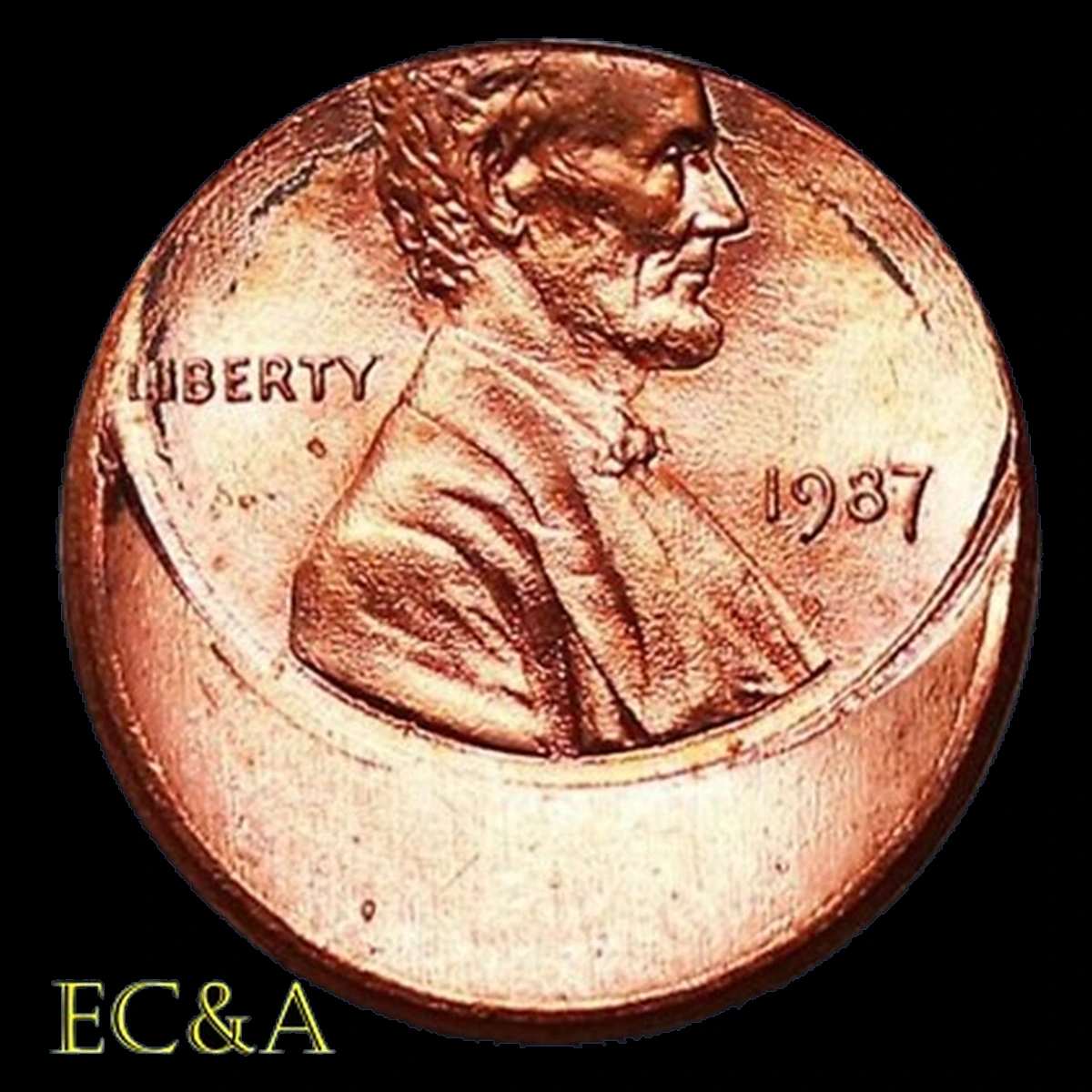
Recorded examples include a Philadelphia cent about sixty percent off center toward eight o’clock and a Denver coin about seventy-five percent toward nine o’clock. They are separate specimens with separate strike placements.
Part of each blank lay outside the dies, leaving an untouched area while intended design missed the metal. A surviving date determines whether the coin can be identified specifically as 1987.
How to Identify
Compare both faces at the transition between struck and plain metal. One shifted face without corresponding design loss on the other suggests another alignment problem.
Read only the surviving date digits and inspect for cutting or scraping. A listing title cannot supply a digit that the coin does not preserve.
What It’s Worth
$20–$500 is estimated across smaller shifts and bold dated examples. Amount of plain metal, clarity of the date, and preservation all contribute.
A 1982 zinc cent struck seventy percent off center sold for $74 in June 2025. That different-year result demonstrates that a large displacement need not produce a four-figure price.
11. 1987 Penny A top crescent with unusual date impressions: Shifted-Cap Strike Error
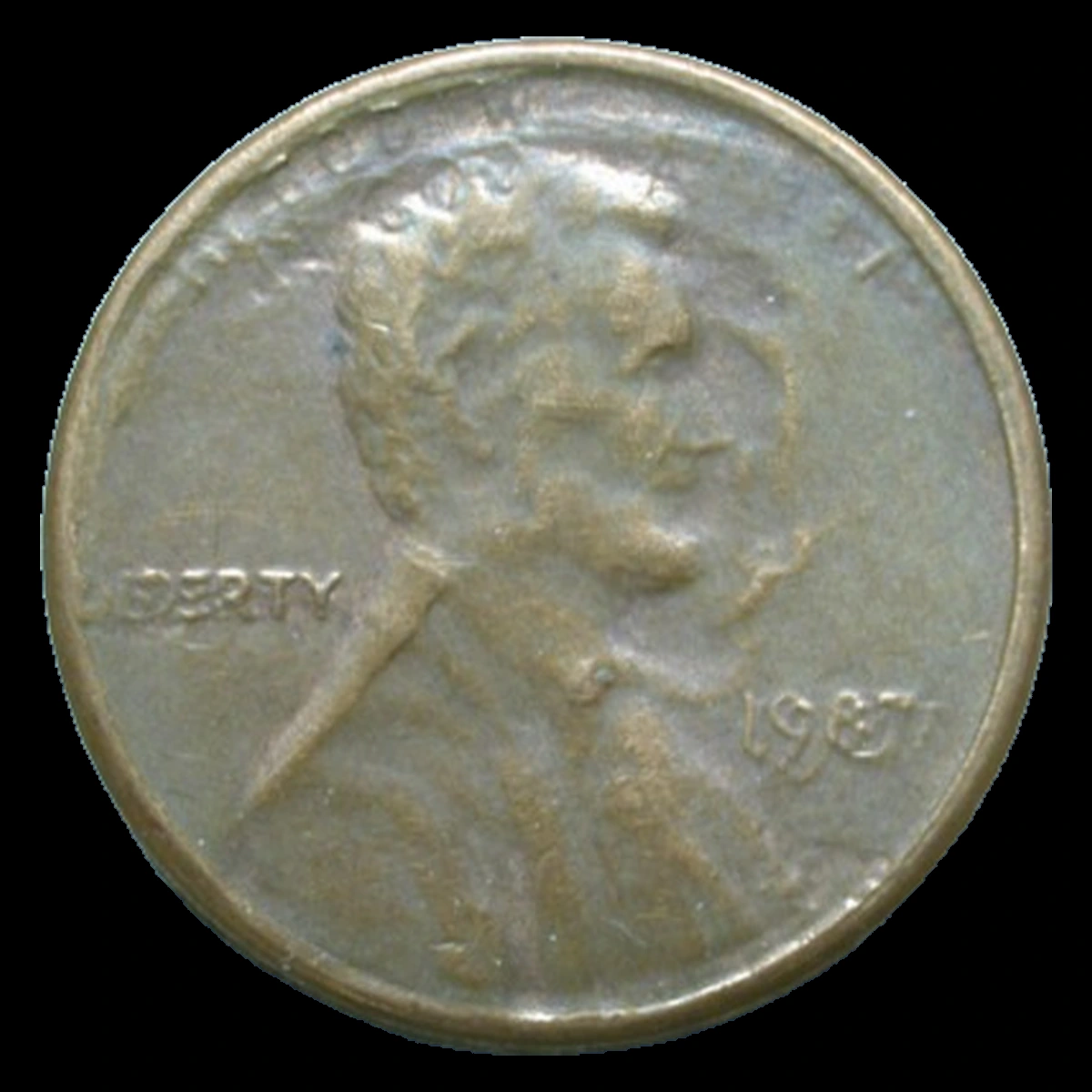
The documented 1987 coin has a depressed crescent near the top, normally facing sunken 987 digits, and raised doubling. A coin covering the die had shifted toward the lower right before this later blank was struck beneath it.
The covering coin is the die cap; the illustrated coin is the one struck through that cap. The small spacing of its raised doubling differs from the cap’s larger movement.
How to Identify
Compare the crescent and date effects together with the illustrated shifted-cap example. Separate recessed digits from raised doubling and note their actual direction.
Sunken does not automatically mean backward or mirror-image. Inspect for later pressure or scraping that could imitate a depression without explaining the complete pattern.
What It’s Worth
$100–$600 is estimated for a clear shifted-cap strike with recognizable date effects. This combination offers more specific evidence than a merely weak portrait.
A 1995 late-stage capped-die strike sold for $180 in March 2025. It did not share the exact 1987 pattern and serves only as a related comparison.
12. 1987 Penny Two dates or rotated design positions: Double Strike Error
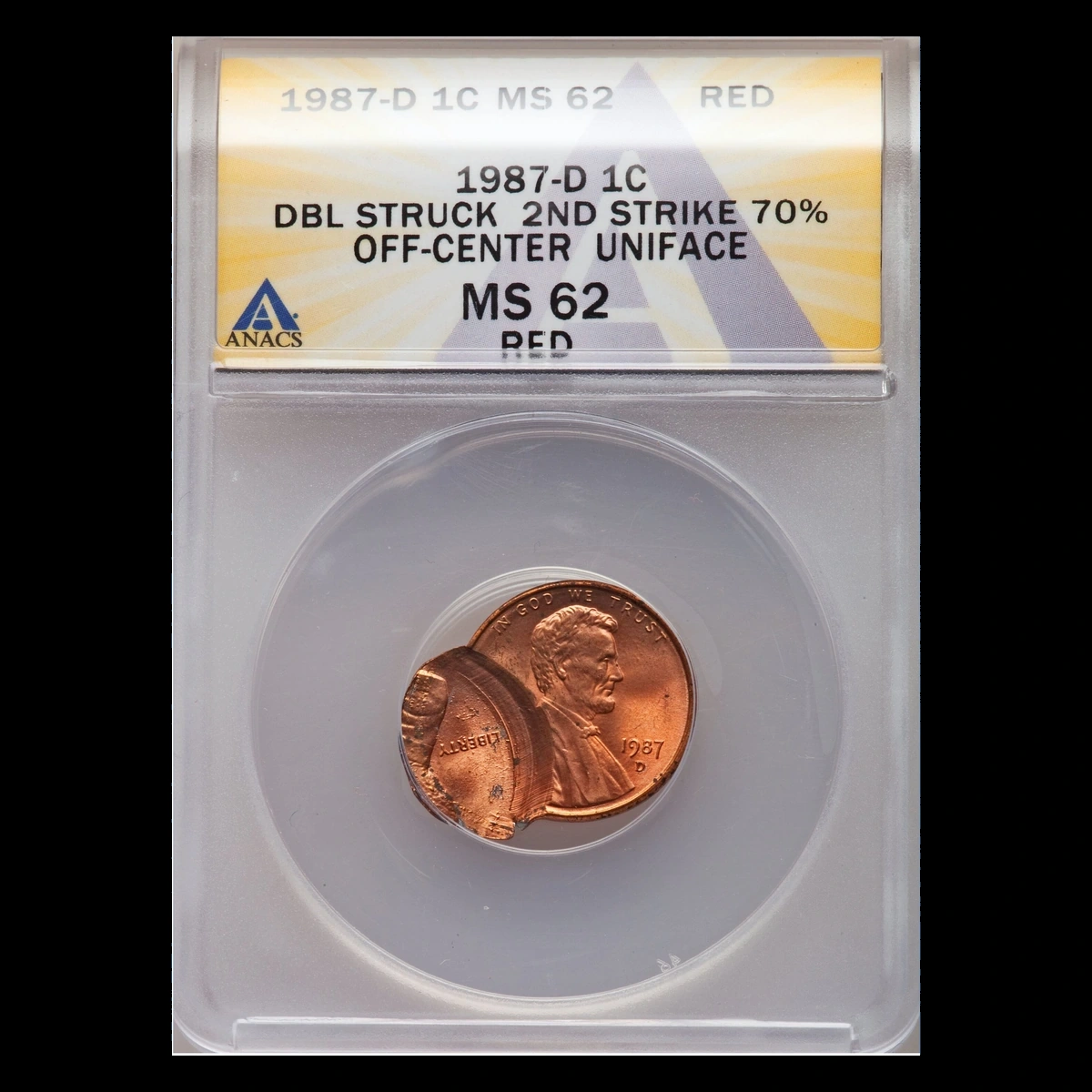
One 1987 specimen retains two complete dates after a normal first strike and a second about halfway off center. Other coins rotated between blows while remaining inside the collar.
A separate listed off-center example lacks normal reverse detail in its second struck area because another object blocked that face. These different second-strike patterns should not be combined into one specimen.
How to Identify
Trace the repeated dates, portraits, or lettering far enough to establish two strike positions. An in-collar rotation can leave a fairly ordinary outer shape despite overlapping designs.
Inspect the back of any second struck area for blockage rather than assuming missing detail wore away. Fine doubled-die contours or a flat shelf beside a letter do not demonstrate two separate blows.
What It’s Worth
$75–$800 is estimated for the group, with readable overlapping designs and condition affecting appeal. The two-full-date example brought $408 in June 2023, and a rotated in-collar coin sold for $312 in June 2025.
A 1987-D with a second strike ninety-five percent off center brought $104. These results show why the largest percentage alone does not determine value.
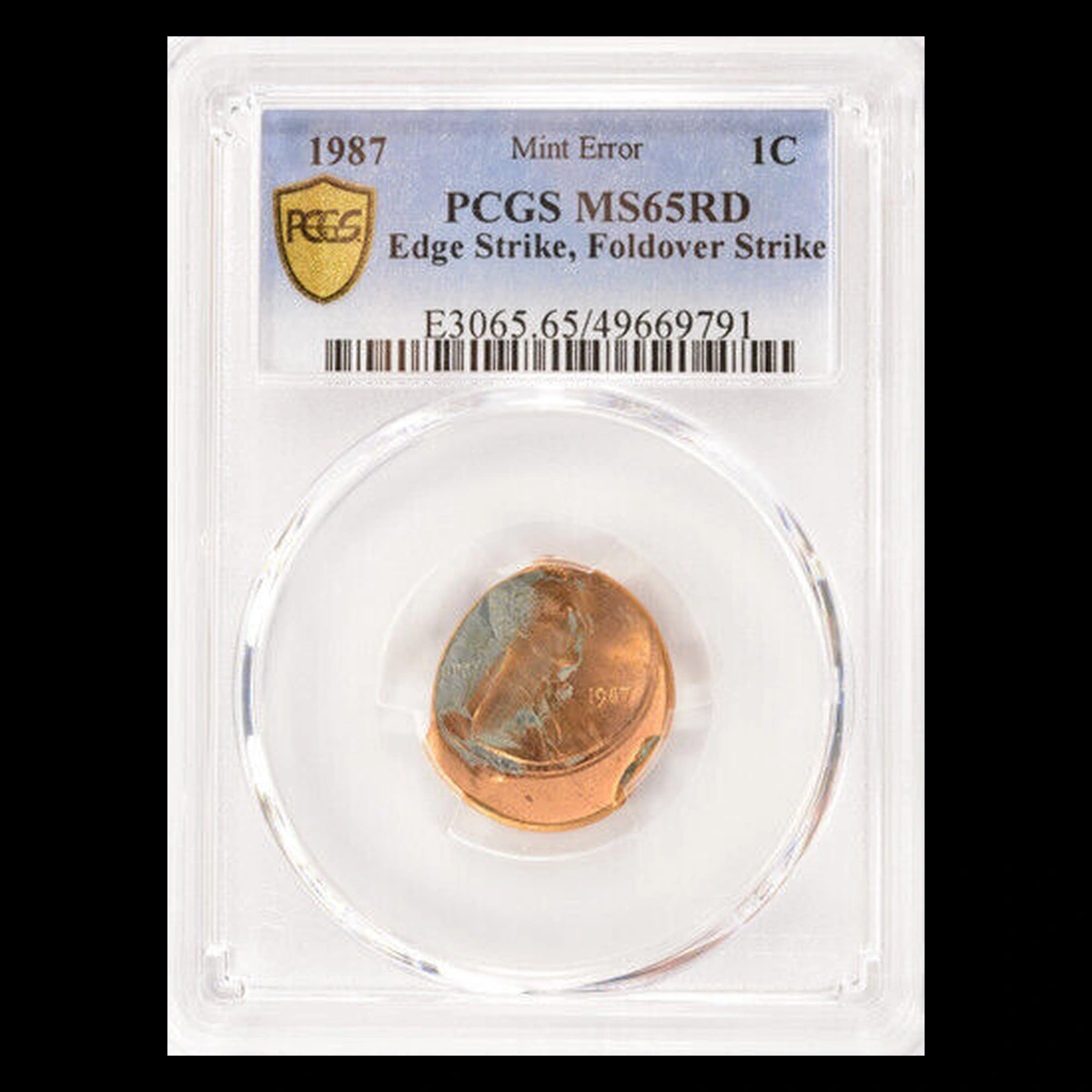
13. 1987 Penny Struck detail across overlapping metal: Edge Strike and Foldover Error
A blank entering on edge can fold under the force of the dies. The resulting ridge and overlap received portions of the design while the metal occupied that unusual position.
The reported 1987 example was graded PCGS MS65 Red. Bending a finished cent can also make a ridge, but it does not establish design applied during the fold.
How to Identify
Study the ridge from the side and locate details formed across the folded shape. Contrast those with a finished design merely broken or stretched by later bending.
Inspect surviving edge portions for cuts and tool pressure without opening the fold. Its present width cannot be evaluated as though it were an ordinary flat disc.
What It’s Worth
$300–$1,200 is estimated for an authenticated 1987 edge strike and foldover. The range compares dramatic folded plated-zinc cents, not a documented sale of the described PCGS coin.
A readable date and convincing strike detail across the fold support interest. Later-bent pennies do not qualify even if the overall shape appears similar.
14. 1987 Penny Cent details on a smaller layered disc: Struck on a Dime Blank Error
The recorded 1987 wrong-blank specimen weighs 2.3 g and was graded NGC MS66. A dime blank entered the cent press before receiving any dime design.
Its silver-colored outer layers surround a copper center, unlike a cent’s copper-coated zinc. The smaller starting disc can leave less space for Lincoln’s surrounding lettering.
How to Identify
Compare layered metal and weight with a dime’s normal 2.268 g and 17.91 mm starting size. A cent strike can expand that smaller blank, so final diameter need not remain unchanged.
Finished dime grooves are not required on an unused blank. Search both faces for older Roosevelt or torch details, which would indicate a different overstrike error.
What It’s Worth
$400–$1,500 is estimated for a confirmed 1987 cent on a dime blank. The NGC MS66 specimen establishes the type, but no selling amount is supplied for it.
A 2007-D example graded PCGS MS66 brought $600 in March 2023. That same basic wrong-blank event offers context, with date readability and preservation still important to the actual coin.
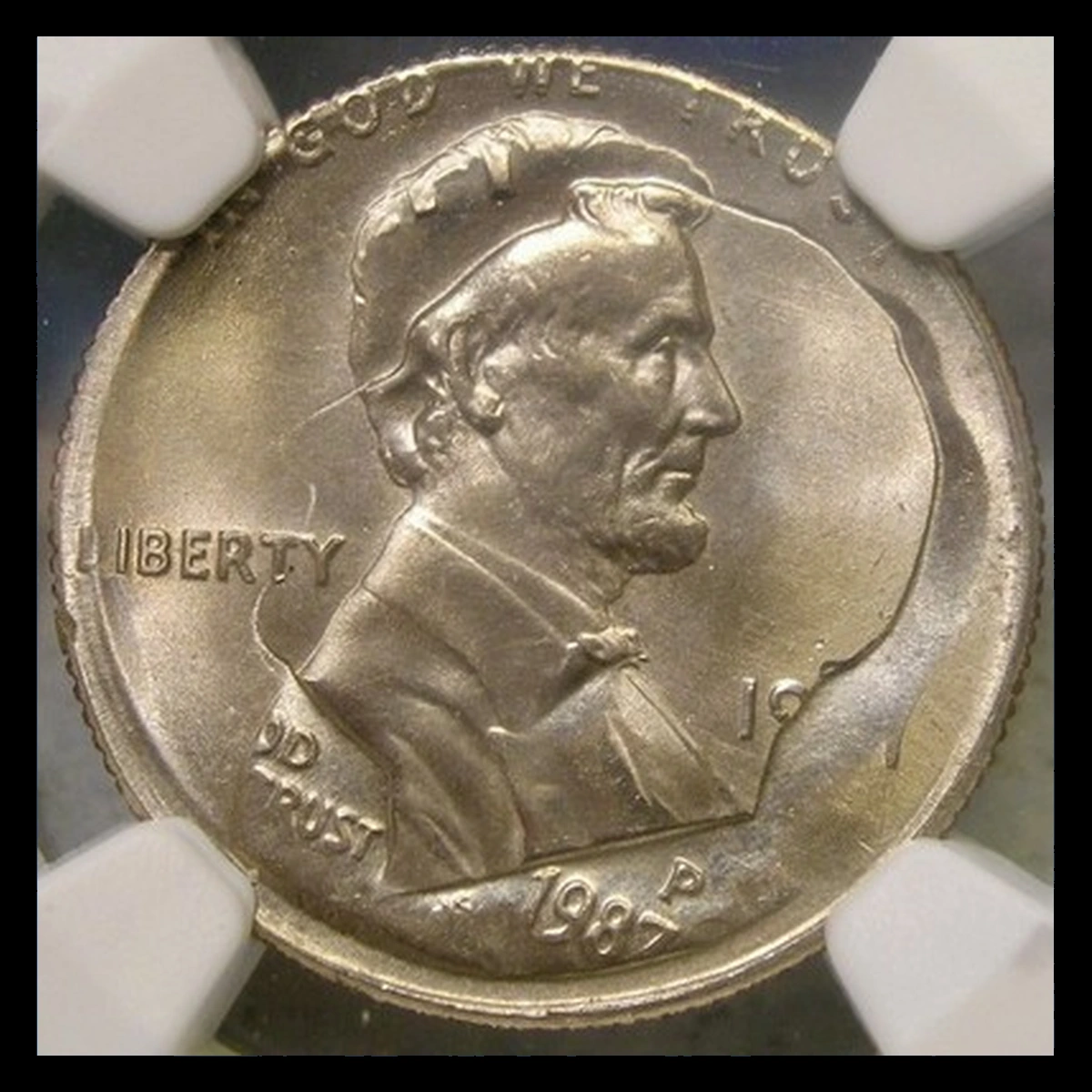
15. 1987 Penny A finished dime’s design beneath the cent: Double Denomination Error
An NGC MS67 example records a finished 1987-P dime receiving Lincoln and the Memorial over its existing designs. Portions of Roosevelt, the torch, or dime lettering can survive beneath the later strike.
Both denominations occupy one continuous piece of metal. That surviving older design separates the error from a cent on an unused dime blank.
How to Identify
Locate a recognizable dime feature, then follow where the cent design crosses it. Read each date independently rather than assuming one visible year proves both.
Inspect the dime-type layered edge and compare weight and expanded dimensions with its starting specifications. Two joined coins or a later pressure impression cannot substitute for evidence of the genuine strike sequence.
What It’s Worth
$600–$2,500 is estimated for this type, depending on condition and the clarity of both designs. The NGC MS67 example sold for $660 on April 29, 2020.
A 2001 cent over a 2001-P dime brought $1,320 in September 2025. That recent different-year comparison does not override the individual coin’s readable details and preservation.
Conclusion
Begin with the form of the evidence: a repeated D, a rounded coating shell, an original clip boundary, or an older dime image. Each directs the comparison toward a different production event.
The $1–$2,500 estimates assume the relevant feature is identified, with later damage assessed separately. Preserve attachments and folded metal, and keep every reported percentage, grade, and diagnostic location connected to its actual specimen.