Rare 1935 Penny Errors (List & Pictures)
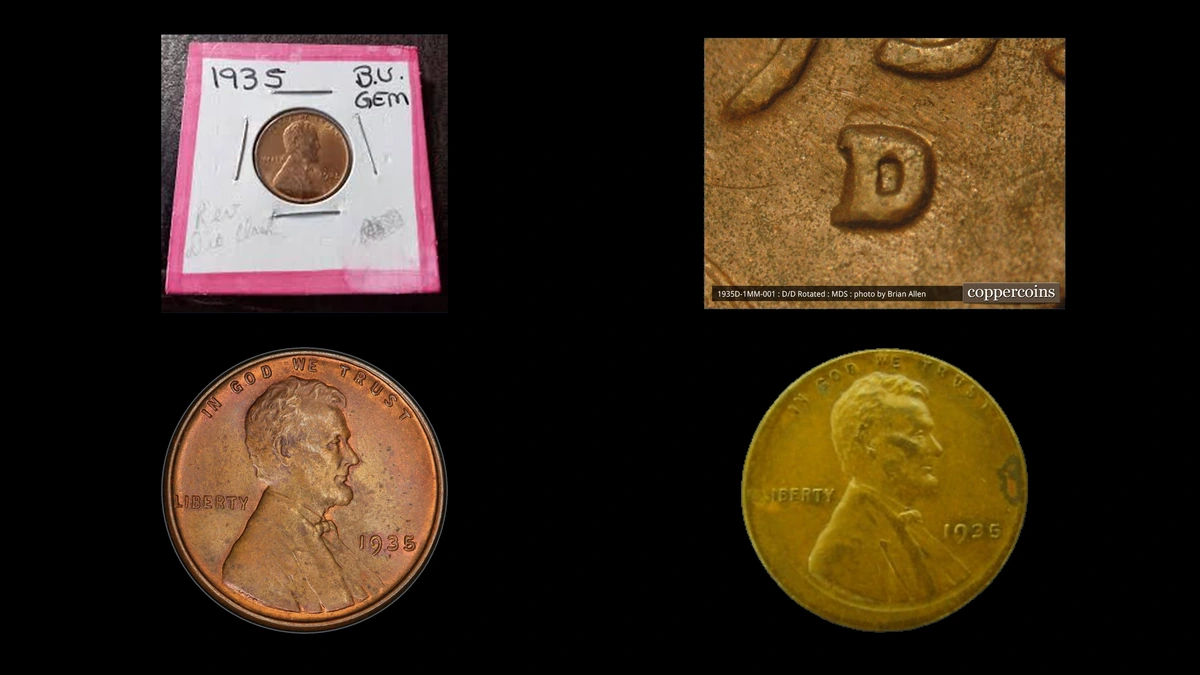
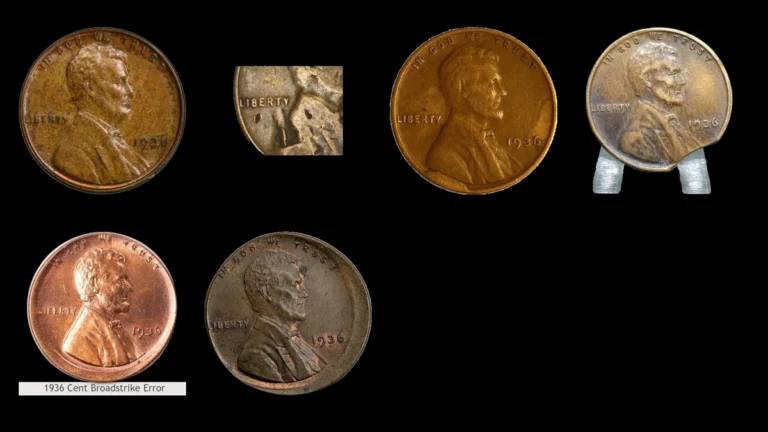
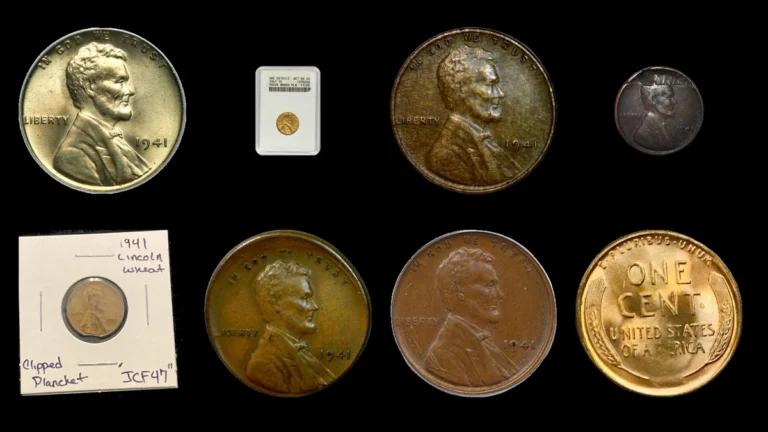
Thick Wheat lettering and two overlapping portraits can both catch your eye on 1935 penny errors, but they come from different events. A doubled-front example sold for $396 in 2012, while larger striking errors need their own comparisons.
The estimated ranges below run from $2–$1,500. Begin with small raised details, then decide whether you are seeing a changed die, a misplaced blank, or a coin struck more than once.
1. 1935 Penny A Line or Small Bar Rises from the Coin: Die Cracks and Chips Error
A die crack leaves a raised thread where coin metal entered a split in the stamping tool. A small missing die piece can instead leave a solid chip.
The 1935 reports include marks near Lincoln’s lower collar and on the Wheat back. A separate BIE report concerns a bar between B and E in LIBERTY.
How to Identify
Follow the feature under side light and check whether it rises without a central cut. A scratch can push up metal beside its groove, creating a misleading ridge.
For BIE, the location must be the B–E gap. An interior lump should not be called a cud unless it actually joins the rim.
A normal 1935 cent weighs about 3.11 grams and is about 19.05 millimeters across. Small die cracks usually leave those basic measurements unchanged.
What It’s Worth
$2–$75 is the estimate for most identified small cracks and chips. A visible BIE shape can be more appealing than a fine line requiring careful lighting.
This is a minor Wheat-cent die-break comparison, not a supplied sale of one certified 1935 specimen. A tiny raised dot may add little to a worn or damaged coin.
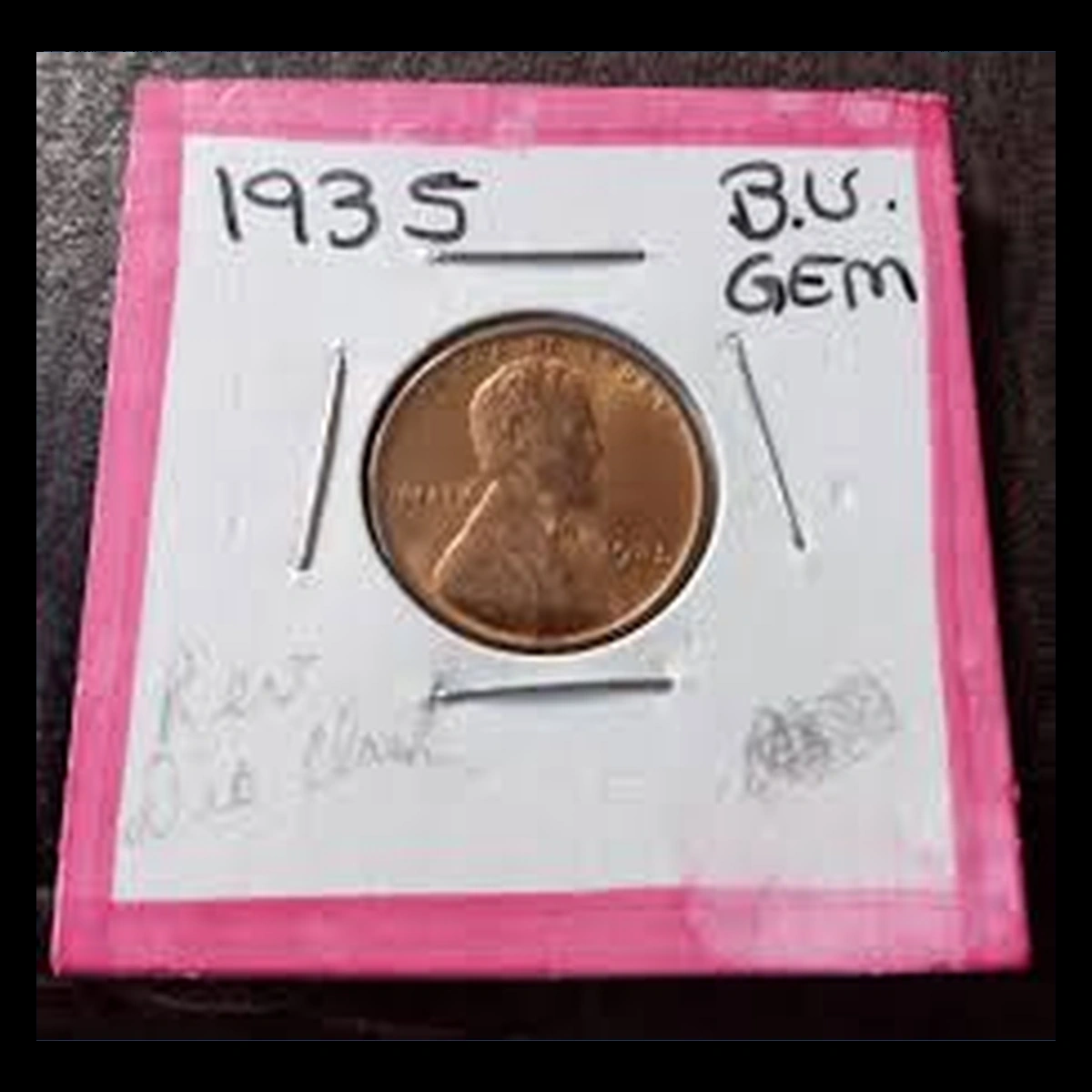
2. 1935 Penny An Unexpected Trace Sits in CENT: Die Clash Error
The Philadelphia report places a clash trace between the lower parts of C and E in CENT. It came from dies contacting each other without a blank and later passing the transferred detail to coins.
The normal Wheat design remains in place. This is not another complete strike on the penny.
How to Identify
Find the C–E area and compare the trace with the photographed 1935 catalog material. Its shape should relate to the opposite design rather than an arbitrary line.
Keep scratches and die-polish marks separate from the claimed clash. Being in the right area does not make every mark a match.
What It’s Worth
$5–$100 is the estimate for a clearly matched clash. A distinct original trace on a well-preserved coin makes a stronger example than a faint line hidden by wear.
No realized auction price is supplied for this particular trace. The normal coin’s condition still contributes to its overall appeal.
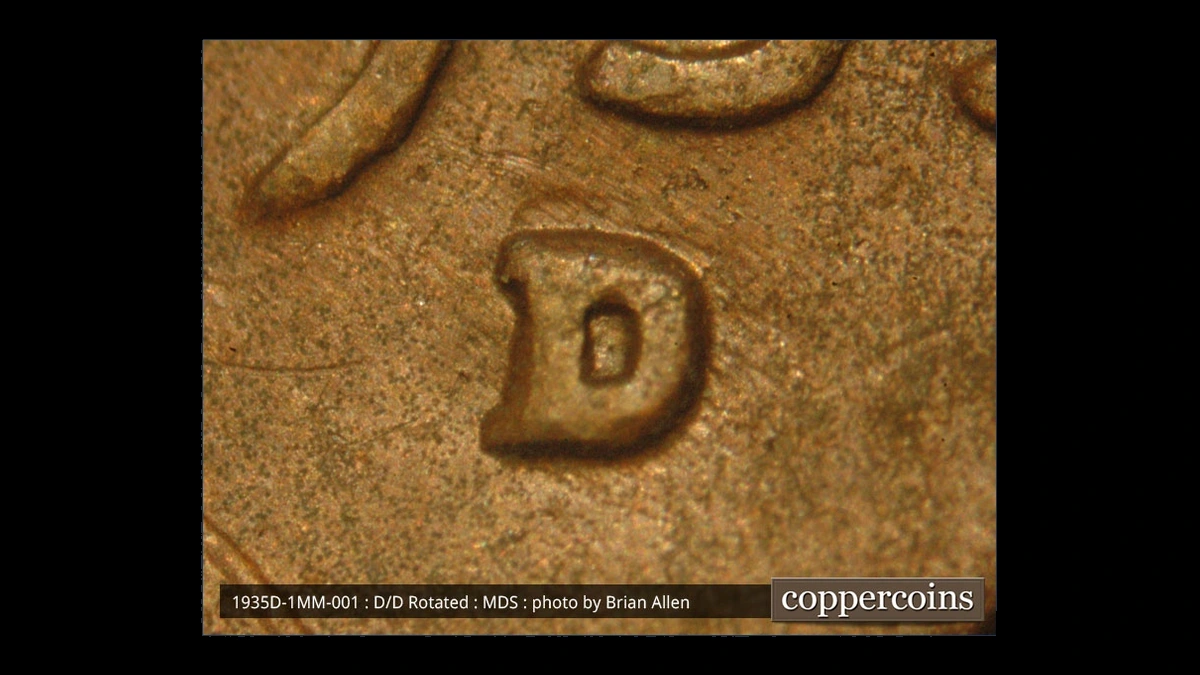
3. 1935 Penny D or S Has Another Partial Outline: Repunched Mintmark Error
Mint letters were added separately to the die with a hand punch. Repeating the punch at a slightly different position could leave part of an earlier D or S.
The surrounding date can remain normal. Denver and San Francisco reports require their own letter shapes and comparisons.
How to Identify
Trace enough of the extra curve or upright to recognize an earlier letter placement. A detached chip or flat shelf is weaker evidence than a coherent D or S segment.
Inspect the base of the mintmark for added metal or alteration. No mintmark is normal for Philadelphia and is not a repunching error.
What It’s Worth
$5–$150 is the estimate for minor through stronger genuine repunches. Clear extra strokes and attractive surfaces support the better comparisons.
The range draws on small hand-punched Wheat-cent varieties. It is not a verified sale for one specific 1935 D/D or S/S specimen.
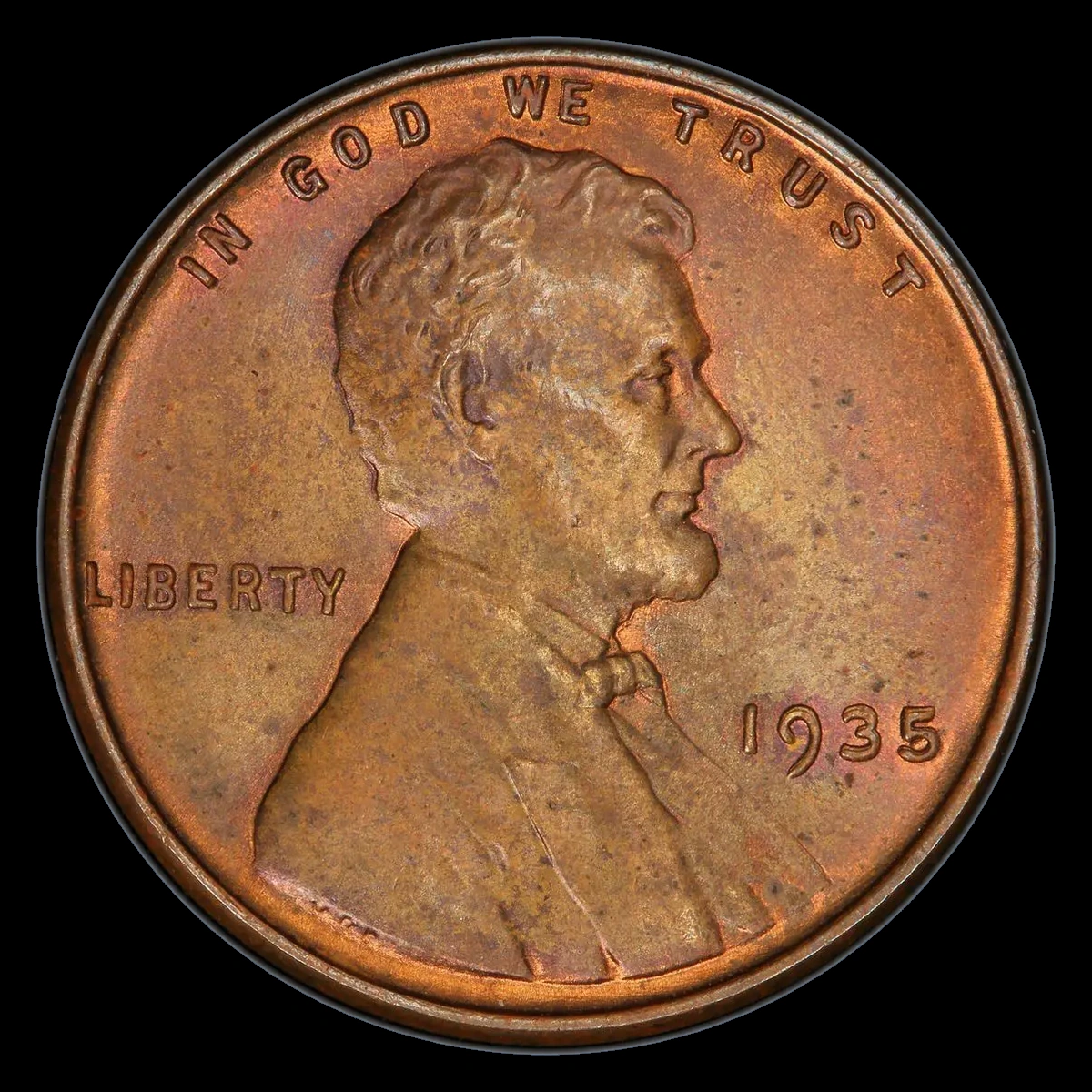
4. 1935 Penny Letters Repeat or Become Unusually Thick: Doubled Dies Error
Some Philadelphia back varieties show thickened letters, dots, and Wheat details instead of two widely separated outlines. Front varieties can affect the motto, date, or eyelid, depending on the die.
The tool carried the changed design before striking. A coin made from it may have received only one blow.
How to Identify
Compare the specific front feature or the back’s E PLURIBUS UNUM, dots, and Wheat ears under the same lighting. Certain back varieties need a shape-and-thickness match rather than two complete lines.
Do not combine an eyelid feature from one die with date details from another. Flat movement-related ledges and normal bold lettering need separate explanations.
What It’s Worth
$10–$100 is the estimated range for minor identified patterns, with stronger, well-preserved examples around $100–$800. Different front and back varieties do not all share one price.
PCGS records a $396 GreatCollections result on February 5, 2012 for an MS64 doubled-front example. That same-year sale concerns the front variety and its unworn condition.
5. 1935 Penny A Plain Crescent Borders the Incomplete Picture: Off-Center Strike Error
The recorded 1935 example is 10% off center. Its blank was misplaced, leaving some metal untouched while part of the design fell beyond the disc.
How to Identify
Compare the plain area with the missing design on both faces. A front-only border shift can have another cause.
Read the actual 1935 date and inspect the unstruck surface for abrasive lines. A large bare patch created by grinding does not have the same original striking boundary.
The blank generally retains its metal despite the displacement. Missing physical metal or cuts in the edge need to be considered separately.
What It’s Worth
$40–$500 is the estimate for genuine shifts from modest to stronger, attractive examples. Price does not rise automatically with every extra percent off center.
The 10% example graded NGC MS62 Brown sold for $144 at Heritage on March 23, 2026. A clear date, original surfaces, and visible shape help make that comparison useful.
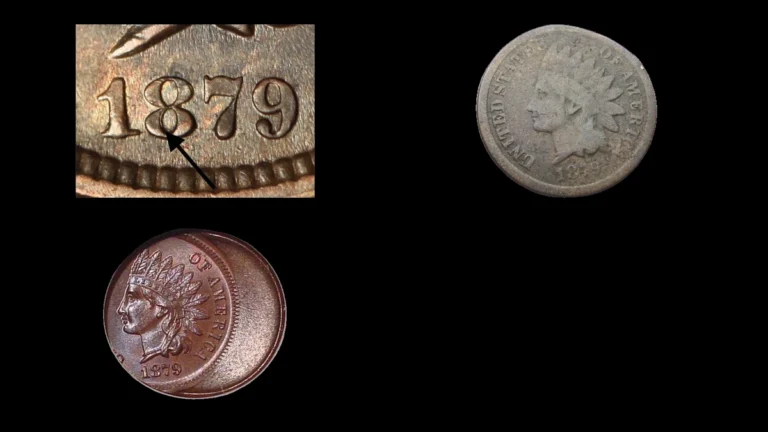
6. 1935 Penny Two Shifted Pictures Remain: Double or Multiple Strike Error
The published PCGS VF35 example has a centered first strike and a second strike 15% off center. The coin stayed in, or returned to, the press for another blow.
Its surviving earlier picture lies beneath the later one. Other multiple-struck 1935 cents need not share the same movement.
How to Identify
Trace one portrait or lettering group independently of the other. Both faces should support two genuine strike positions rather than a few doubled edges.
Later squeezing between coins can create misleading impressions. Inspect the surfaces and edge for crushed design or a seam before treating an overlap as mint-made.
What It’s Worth
$200–$1,500 is the estimate for genuine 1935 repeated strikes. How clearly the two impressions survive strongly affects their appeal.
The published dealer listing asked $550 for the VF35 example. That was an asking price, not a confirmed auction sale.
For a completed-sale comparison, a 1917 Wheat cent with a second strike 10% off center sold for $517.50 in June 2004. Its different year and condition require their own consideration.
Conclusion
A small letter chip, unusually thick Wheat detail, and a second portrait are useful clues for different 1935 errors. Identify the shape and its location before choosing a price.
Keep the coin’s wear and original surfaces in the comparison, and distinguish dealer asking prices from completed sales. For repeated designs, a clear view of both faces usually explains more than one enlarged word.