Rare 1957 Penny Errors (List & Pictures)
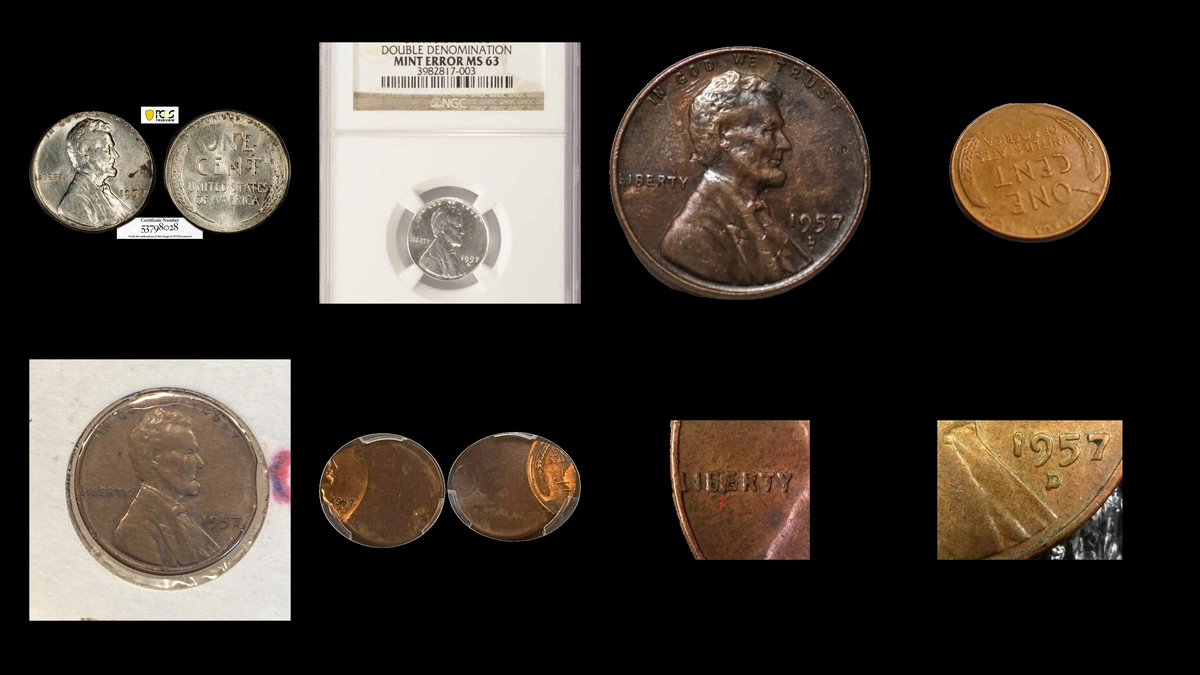
A hole in a cent usually calls for a damage check, but one documented exception began with the wrong object in the press. The washer strike leading these 1957 penny errors brought $7,475 on January 7, 2012.
Estimated values run from $3–$12,000. Inspect openings and metal first, compare displaced designs next, and finish with the small raised details that need magnification.
| Visible feature | Category | Estimated range |
|---|---|---|
| Original center opening | Washer strike | $6,000–$12,000 |
| Small copper disc with partial date | Honduras centavo blank | $500–$2,000 |
| Smaller silver disc, cent designs only | Silver dime blank | $400–$3,500 |
| Dime design under cent design | Double denomination | $2,000–$6,000 |
| Silver patch in the back | Retained silver scrap | $150–$1,000 |
| Thin original layer lifts | Lamination | $10–$200 |
| Missing edge section | Clip, sometimes off center | $15–$300 |
| Displaced design, sometimes flattened contact edge | Off-center or chain strike | $40–$600 |
| Smooth recessed area | Indent | $75–$500 |
| Raised bar, line, or retained break | BIE and die cracks | $3–$150 |
| Extra D strokes | Repunched mintmark | $5–$125 |
| Repeated letter or date outline | Doubled die | $5–$100 |
An ordinary 1957 Wheat cent is 95 percent copper alloy throughout, with a 3.11 g weight, 19.05 mm diameter, and plain edge. Use a scale and calipers for accessible coins, plus a 10× magnifier and photographs of both faces.
1. 1957 Penny The Design Surrounds an Original Hole: 1957-D Washer Strike Error
The documented Denver coin has a substantial central opening because the press struck a washer. The opening was present before the cent design formed around it.
PCGS graded the piece MS62. Neither the washer’s earlier use nor a story of deliberate placement is established by its appearance.
How to Identify
Inspect the inner boundary for metal shaped during striking and follow nearby design toward the hole. Spiral cutting marks, sharp burrs, or a cut through finished detail suggest later drilling.
Read the date and D and record the actual washer’s measurements. Ordinary cent specifications are reference points, not required dimensions for this object.
What It’s Worth
A comparable professionally identified washer strike has an estimated $6,000–$12,000 range. The original inner edge and visible cent identity are central to the comparison.
The PCGS MS62 example brought $7,475 on January 7, 2012. A hole drilled after striking is damage and does not share that identity.
2. 1957 Penny A Small Copper Disc Shows Only Part of the Last Digit: 195(7) Honduras Blank Error
The foreign blank identified as a Honduras centavo weighs 1.5 g. It entered cent equipment during a period when the United States Mint also made Honduras coinage.
The recorded date is 195(7): only the upper-left corner of the final digit survives, suggesting a 7. On this specimen, the strike meets the collar near seven o’clock.
How to Identify
Photograph the whole date and retain the qualification on its incomplete last digit. Do not convert a suggested 7 into a claim that all four numerals are fully visible.
Compare the low weight, metal, and reduced design with the professional attribution. Filing can lighten a normal penny, so inspect the edge before treating a small copper disc as a specific foreign blank.
What It’s Worth
A comparable identified foreign-blank error has an estimated $500–$2,000 range. Surface preservation and how much recognizable design remains influence the comparison.
The NGC MS66 Red example brought $646.25 in September 2015. That result belongs to the partially dated specimen and should be described with its incomplete final digit.
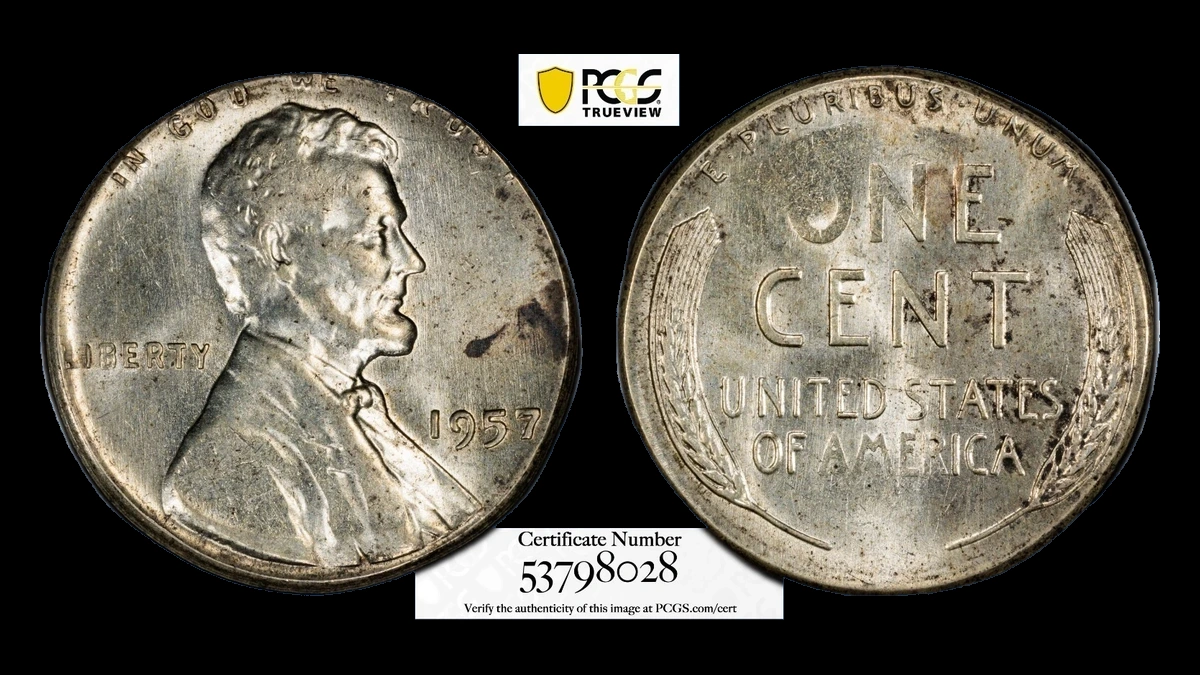
3. 1957 Penny Silver Metal Leaves Little Room for Cent Lettering: 1957 Dime Blank Error
Silver dime blanks are smaller and lighter than cent blanks. A cent strike can stretch outer letters toward their edges or leave parts without sufficient metal.
Philadelphia and Denver examples are separate coins. The Philadelphia AU55 specimen meets the collar near ten-thirty and has stretched rim lettering.
How to Identify
A silver dime blank begins near 2.50 g, a standard rather than a recorded weight for every example. Compare the smaller metal and its composition instead of judging by shine.
Inspect the edge for coating wear or exposed copper and both faces for an older dime design. An unused blank has no Roosevelt portrait or torch, unlike an overstrike on a finished dime.
What It’s Worth
Authenticated silver-dime-blank cents have an estimated $400–$3,500 range. Date strength and original surfaces help select suitable comparisons.
The Philadelphia PCGS AU55 coin brought $646.25 in January 2013. A separate Denver example is recorded as PCGS MS61, and it should not inherit the Philadelphia coin’s collar position or transaction.
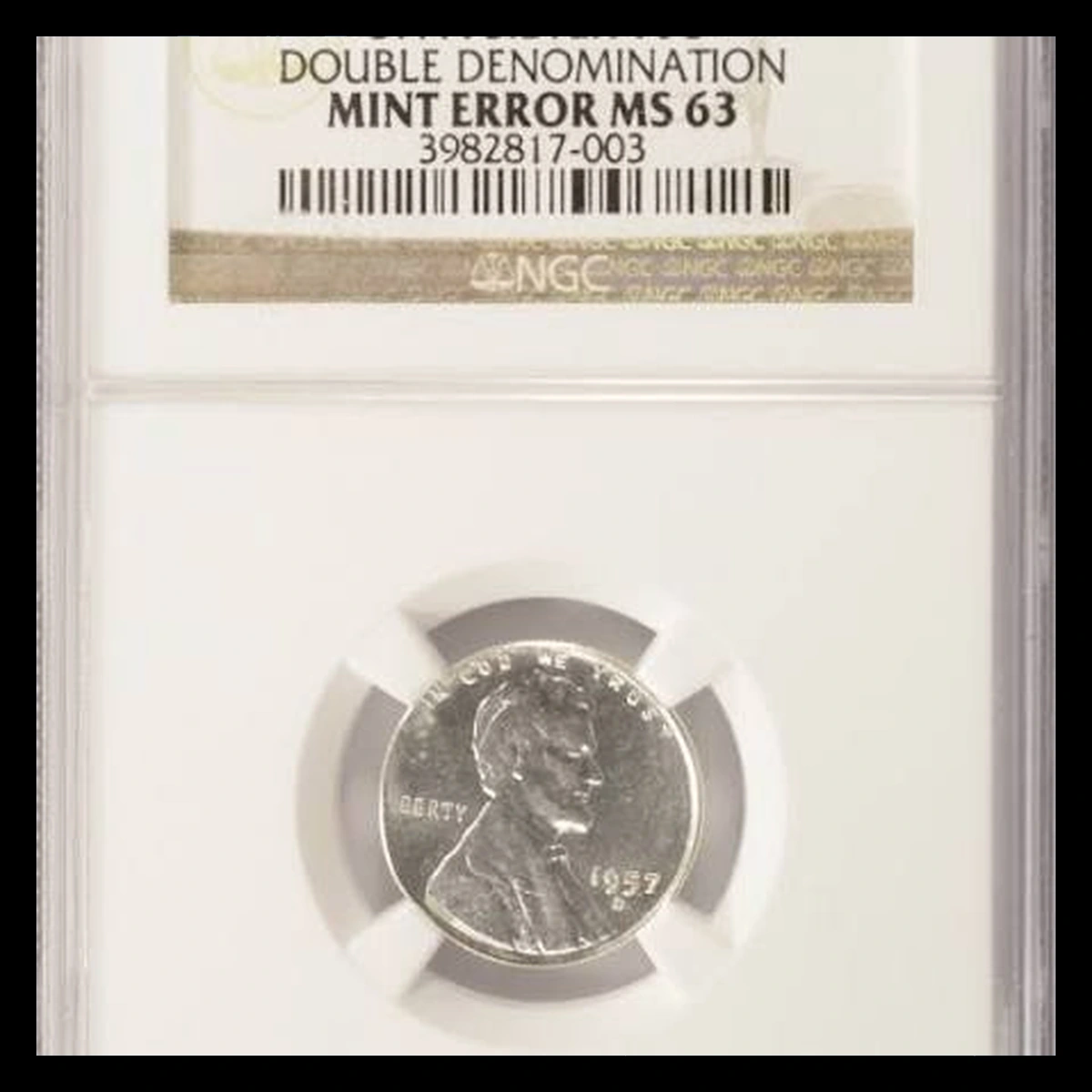
4. 1957 Penny Roosevelt and the Torch Survive beneath the Cent: 1957 Double Denomination Error
A finished silver dime already carried its designs when it received Lincoln and the wheat ears. Two denominations then occupy the same piece.
On the Philadelphia AU58 example, Lincoln sits inside Roosevelt’s remaining outline, with torch and leaf details also surviving. Its description places a 1957 dime date near IN.
How to Identify
Identify one definite dime feature and follow the older design on both faces. A silver-colored coin with only cent detail does not by itself prove that a finished dime was used.
The separate Denver NGC MS63 coin needs its own surviving-design comparison. Do not require its host date or leaves to occupy the Philadelphia specimen’s positions.
What It’s Worth
Comparable authenticated double-denomination cents have an estimated $2,000–$6,000 range. Clear evidence of both designs can outweigh a small numerical grade difference.
The Philadelphia PCGS AU58 example brought $3,720 in September 2025. The Denver NGC MS63 piece brought $3,172 in January 2026, a separate coin and sale.
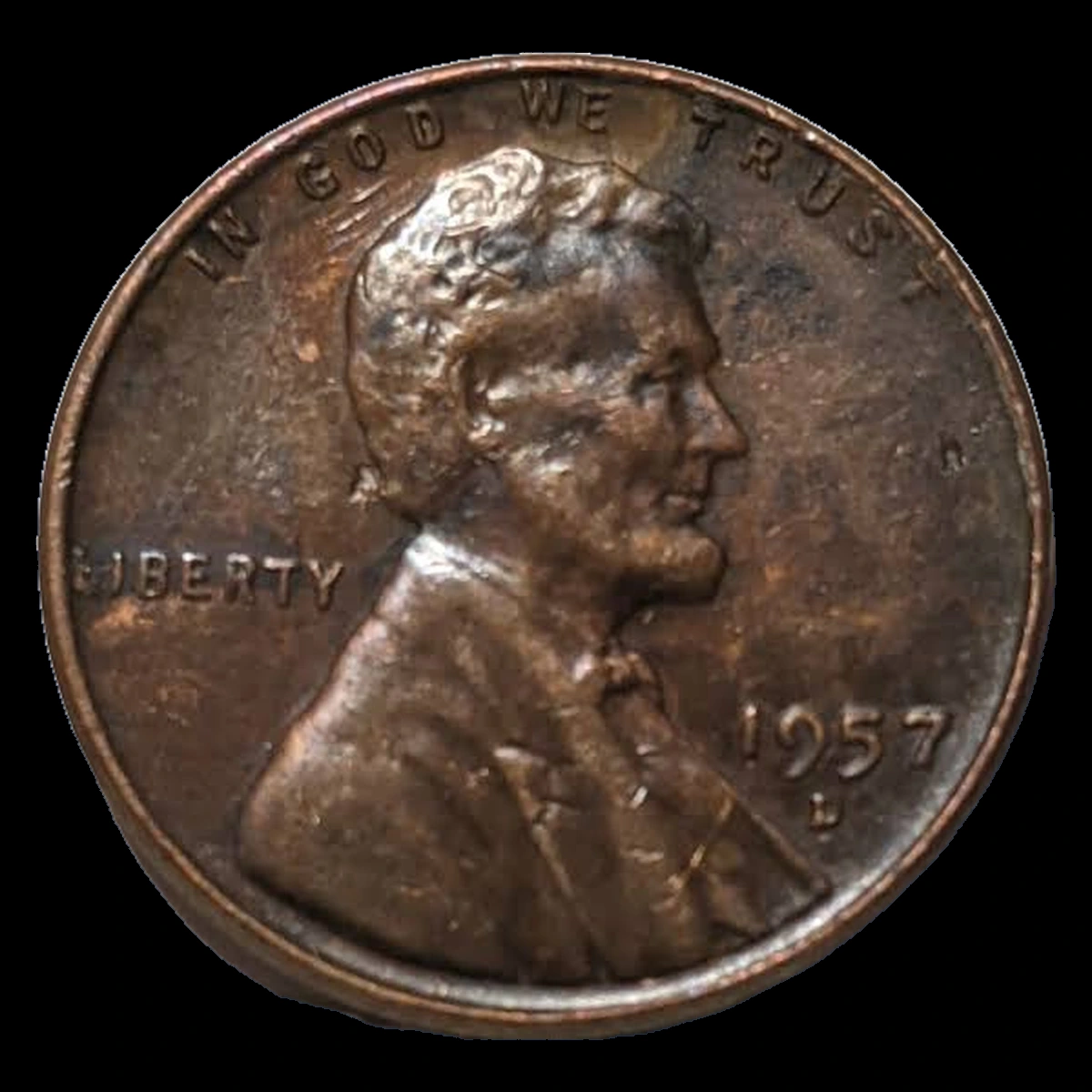
5. 1957 Penny A Silver Patch Is Pressed into the Back: 1957-D Retained Scrap Error
The recorded NGC MS64 Brown cent has silver scrap struck into its reverse. The copper-alloy coin and added scrap are different metal components.
Striking trapped the scrap and pressed it into the surface. This is not a cent made entirely from a silver dime blank.
How to Identify
Inspect the patch boundary and any coin detail impressed into the foreign metal. Original contact under striking pressure differs from solder applied afterward.
Do not pick or scratch the patch to test it. A specialist can assess composition without destroying the connection to the surrounding design.
What It’s Worth
Identified retained silver scrap has an estimated $150–$1,000 range. Visibility, size, and natural surrounding surfaces influence demand.
A 1961 retained-staple cent in NGC MS62 Brown brought $576 in June 2023. The different retained object supplies context rather than a sale price for the 1957-D silver scrap.
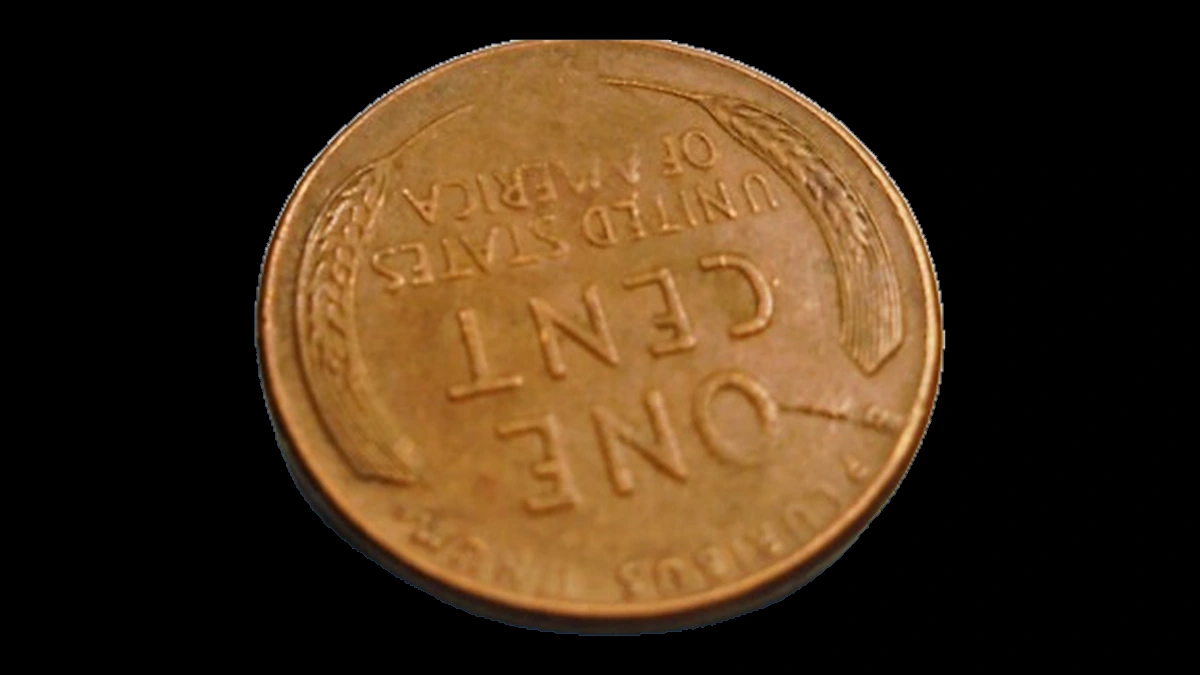
6. 1957 Penny A Thin Flap Separates from the Alloy: 1957-D Lamination Error
A shallow weak layer can peel while the rest of the cent remains intact. Collectors call this internal alloy separation lamination.
An ANACS MS62 Brown example appears in a Heritage catalog. A separate dealer report places an attached flake between about ten and two o’clock without establishing which face carries it.
How to Identify
Follow the flap to its original attachment without lifting it. The separating layer should relate naturally to the coin’s metal rather than sit on top as a glued object.
These are copper-alloy cents, not zinc-centered coins losing copper plating. Preserve the unspecified face in the dealer report instead of guessing front or back from its clock position.
What It’s Worth
Laminations have an estimated $10–$200 range. An intact prominent flap can explain the original defect more clearly than a tiny missing patch.
A dealer’s $7 asking price for a 1942-S front lamination provides an affordable Wheat-cent comparison. It is neither a completed sale nor a price for the larger 1957-D examples.
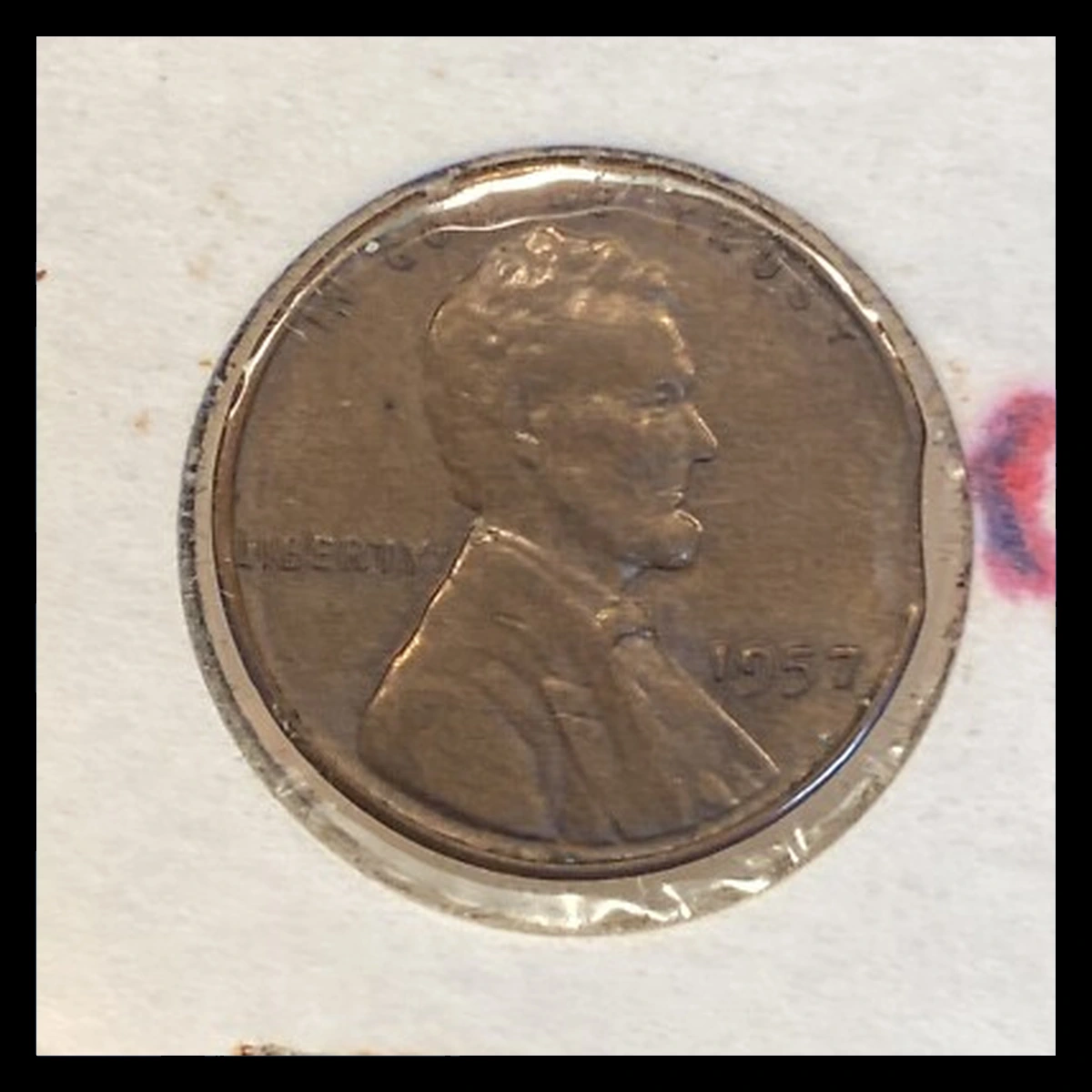
7. 1957 Penny The Blank Lost an Edge Section: 1957 Clips and Off-Center Combination Error
A blank cut from an incomplete area of metal strip can enter the press with part of its outline missing. The adjacent design then forms beside that gap.
A Denver clip is separately listed from a reported combination with roughly one-quarter of the blank missing and a fifteen-percent off-center strike. Those approximate percentages describe the combination alone.
How to Identify
Examine rim transitions and nearby letters for natural formation beside absent metal. File marks or a sharp cut through complete lettering suggest later removal.
Opposite-rim weakness can help but need not be strong. For the combination, locate attached unstruck metal separately from the actual missing section.
What It’s Worth
Ordinary clips have an estimated $15–$100 range; the reported clip-and-offset combination is approximately $75–$300. Both faults need evidence before using the combined estimate.
A dealer offered a 1957-D clipped cent for $20. That asking price is a modest comparison, not a confirmed transaction for the separate combination.
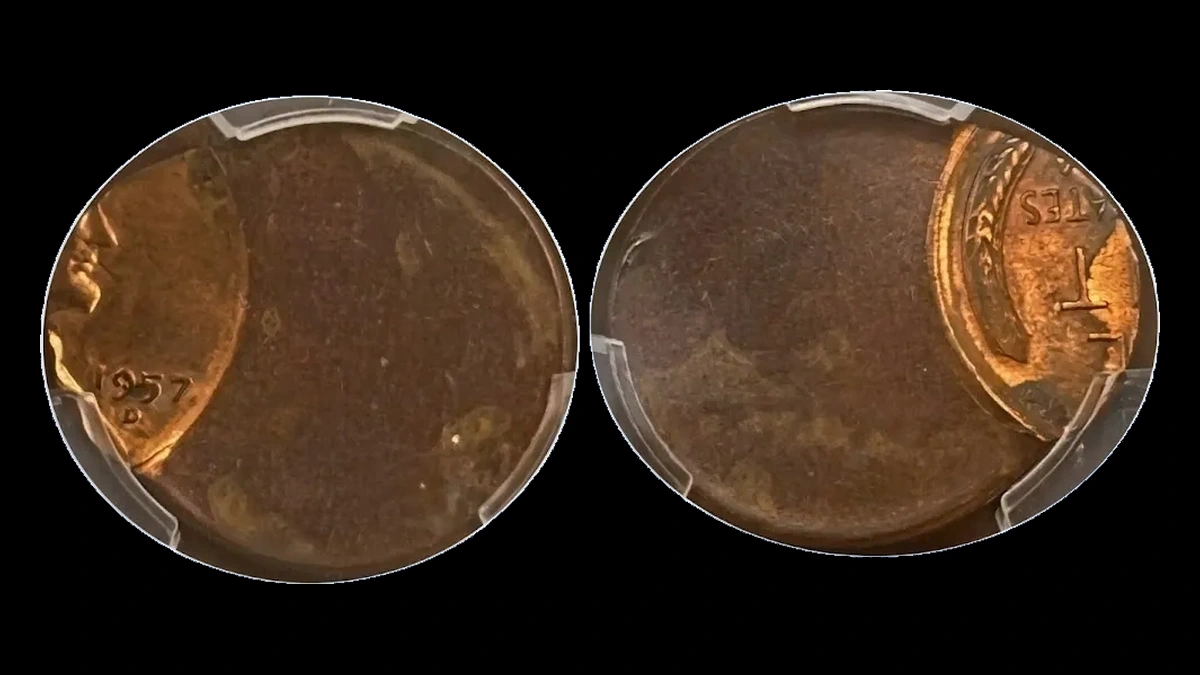
8. 1957 Penny Blank Metal Borders a Shifted Design: 1957 Off-Center and Chain Strikes Error
The Philadelphia report describes an eighty-percent off-center strike toward eight o’clock. Denver examples show other degrees and positions.
One Denver cent is seventy-five percent off center and also contacted another blank along its edge. That chain strike left a flattened contact area, without establishing a surviving matching partner.
How to Identify
Confirm incomplete design beside original blank metal on both faces. Complete outer lettering within an expanded outline instead suggests a broadstrike.
On a chain-strike candidate, inspect the flattened boundary for natural contact rather than vise grip marks. Its partner need not be present, and none is documented for this particular example.
What It’s Worth
Identified off-center and chain-strike examples have an estimated $40–$600 range. Visible date, color, and design presentation matter alongside percentage.
The seventy-five-percent Denver chain strike in PCGS MS64 Red brought $169 in December 2024. Separate Denver MS63 coins brought $139 at eighty-five percent and $234 at sixty-five percent in March 2025.
9. 1957 Penny A Smooth Hollow Replaces Part of the Design: 1957 Indent Error
An overlapping blank can block the die and press into the coin beneath it. The resulting indent retains metal within a depression rather than leaving a hole.
A March 2020 Stack’s Bowers catalog records an AU58 example. The available description does not establish its affected face or overlap size.
How to Identify
Inspect both faces and follow the design into the recessed area. A later punch may create torn boundaries, scratches, or a matching bulge with a different surface history.
Check for missing metal separately, since an indent itself does not remove a large piece. Keep a certified coin in its holder while using photographs to assess the transition.
What It’s Worth
A genuine indent has an estimated $75–$500 range. A distinct depression, readable date, and original surface help make useful comparisons.
No realized amount is supplied for the AU58 catalog coin. The range uses comparable copper-alloy Lincoln cent indents rather than inventing a result for that listing.
10. 1957 Penny LIBERTY Gains a Bar or the Design Gains a Ridge: 1957 Die Chips and Cracks Error
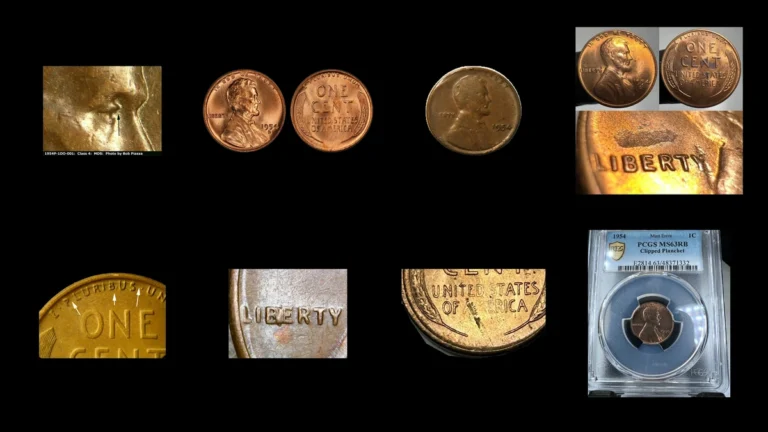
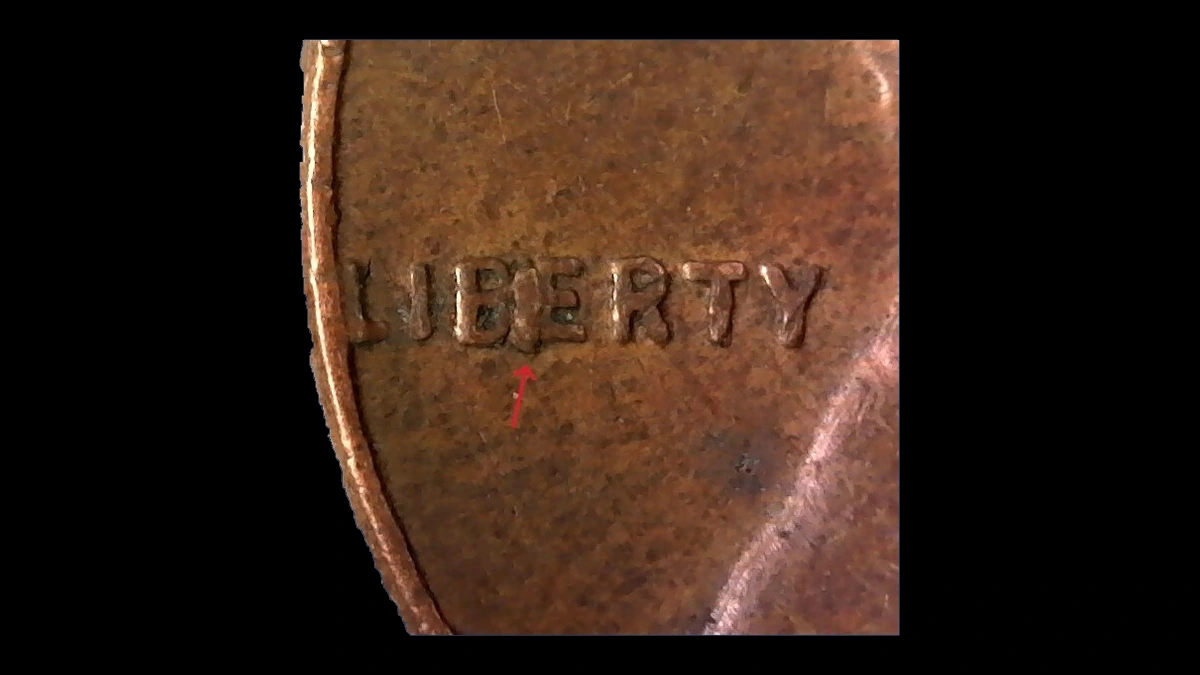
A die chip between B and E creates the BIE bar, while a narrow die crack can leave a raised line through Lincoln’s hair. Both involve raised metal rather than cut grooves.
A separate Denver seller listing reports a retained break near the lower right wheat ear with front chips and cracks. A retained break requires a rim connection before the more specific retained-cud label fits.
How to Identify
Use low lighting to trace the feature’s height and continuity. Check the B-to-E gap for BIE and the hair for the reported head crack.
For the Denver combination, compare the right wheat ear, 9, and shoulder, then follow the claimed retained-break boundary to the rim. Pushed scratch edges or attached dirt can imitate isolated raised marks.
What It’s Worth
Small BIE bars and head cracks have an estimated $3–$30 range. Stronger identified breaks are approximately $15–$150.
The uncertified Denver combination was listed at $9. Its asking price and seller description are not an auction result or an independent grade.
11. 1957 Penny Extra Curves Follow the D: 1957-D Repunched Mintmark Error
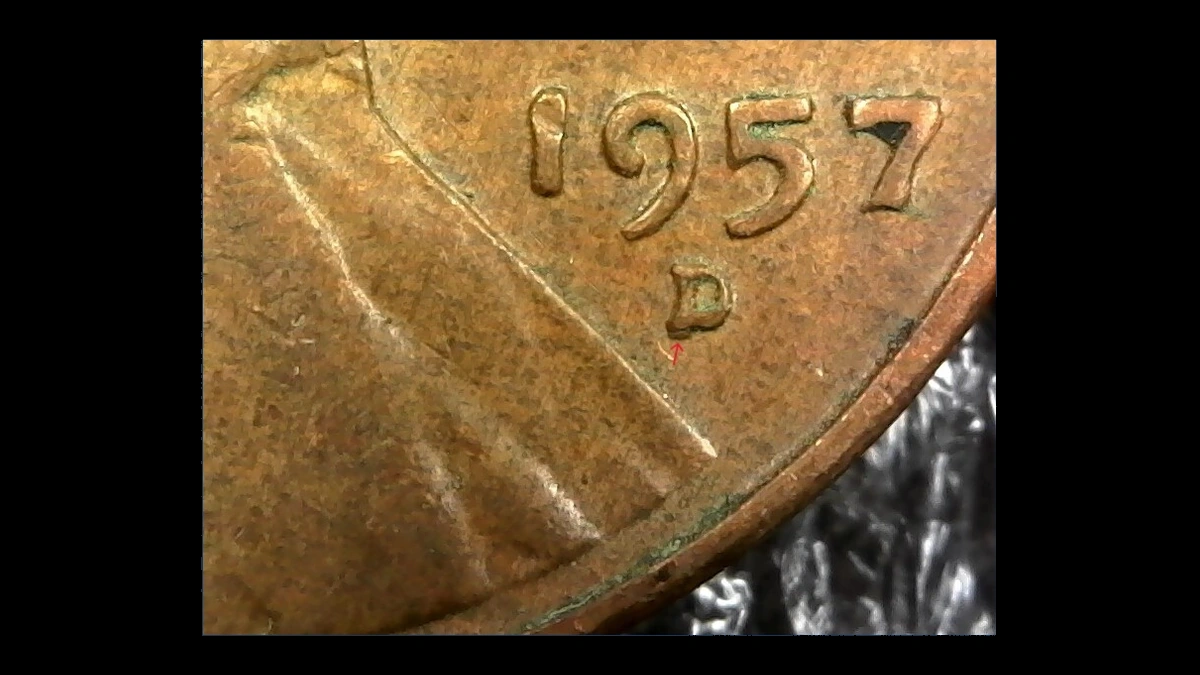
The small D was hand punched into the die separately from the main design. Shifted placements can leave curved or upright remnants of another letter.
Reports include more than two impressions. A filled opening or irregular bump alone does not establish a triple punch.
How to Identify
Trace the complete extra stroke and compare its direction with an identified variety. A Philadelphia coin without a mintmark cannot supply a D/D identification.
Inspect nearby letters for broad flat strike-movement shelves and check the D for tiny die chips. Reflections should not be counted as separate punch impressions.
What It’s Worth
Identified repunched mintmarks have an estimated $5–$125 range. Strong separation and original unworn detail generally support better comparisons.
Separate 1953-D repunched-mintmark cents were dealer-listed at $10 and $15. Those other-year asking prices show modest variety context rather than transactions for 1957-D.
12. 1957 Penny A Letter or Date Digit Has Another Raised Edge: 1957 Doubled Die Error
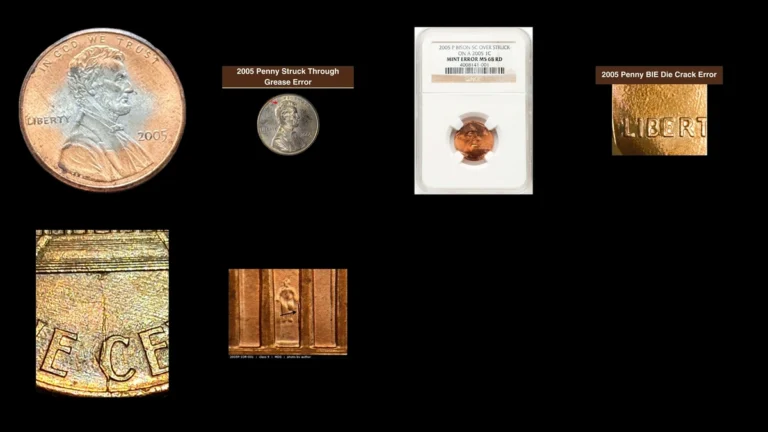
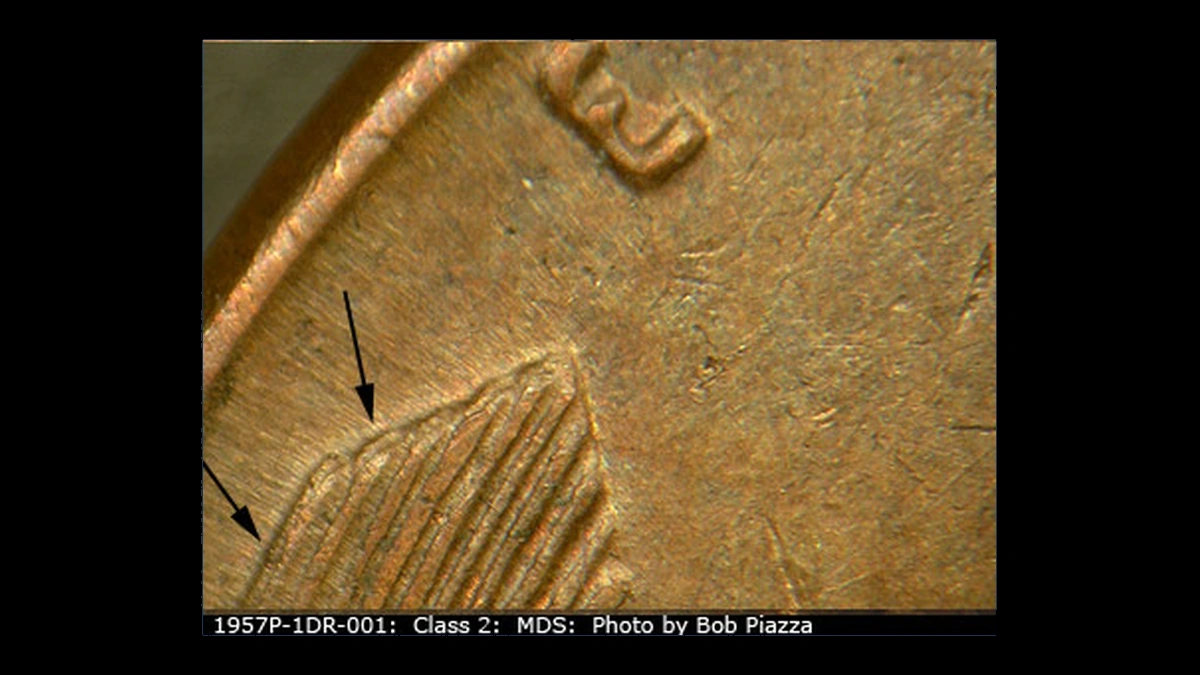
The broad year reports include front and back doubled dies without establishing one universal mint or pattern. A repeated design in the die reaches each coin without requiring a second blow.
Front search areas include the date, LIBERTY, and motto. Reverse reports direct attention to ONE CENT and the wheat details, without requiring all those features on one coin.
How to Identify
Keep the coin and camera steady, then vary the light to distinguish a physical raised repeat from glare. A blurred photograph can create an apparent double image.
Compare the exact mint and strike type with an attributed example. Die wear may stretch letters, while flat shaved-looking ledges can result from movement during striking.
What It’s Worth
Minor confirmed front varieties have an estimated $5–$100 range; modest reverse varieties are around $5–$75. Clear features and little wear support stronger comparisons.
These are small-variety estimates rather than prices borrowed from famous doubled dates. Photographs need to show the actual additional stroke that supports the identification.
Conclusion
The estimated $3–$12,000 range covers defects of very different scale, from small letter chips to a washer receiving a cent design. Begin with the actual metal and shape before selecting a comparison.
Preserve the limitations that identify each specimen: a partial final digit stays partial, a dealer’s price stays an asking price, and an attached flake stays untouched. Views of both faces help connect the visible feature to its original cause.