Rare 1933 Penny Errors (List & Pictures)
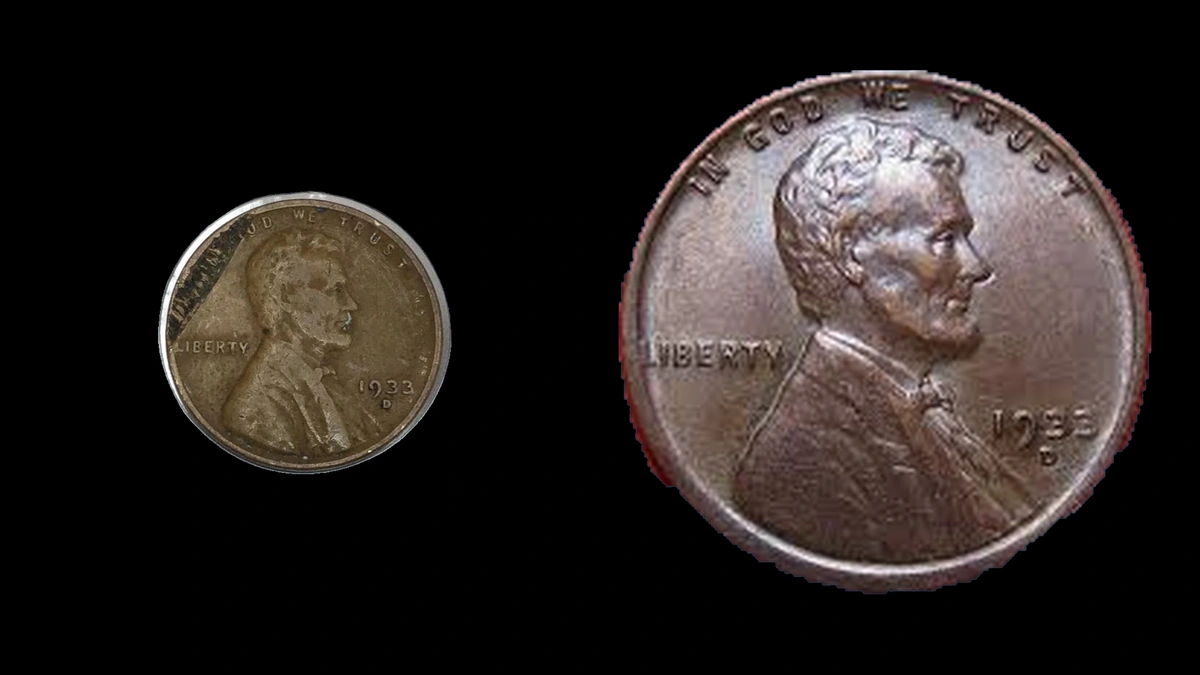
The recorded 1933-D struck-through cent brought $30 despite considerable wear. The highest supplied comparison for these 1933 penny errors is from another year: a 1937 off-center cent brought $126 in September 2019.
Estimated values span $3–$500. Follow peeling metal and missing sections first, then inspect interrupted designs, raised die-break features, and the small Denver mintmark.
| Visible clue | Category | Estimated value |
|---|---|---|
| Thin layer lifting or missing | Lamination | $10–$200 |
| Curved section absent at edge | Clipped blank | $15–$250 |
| Unstruck metal beside partial design | Off-center strike | $20–$500 |
| Local weak detail or depression | Grease or debris strike-through | $3–$100 |
| Letter-space bar or rim patch | BIE or cud | $5–$400 |
| Another D stroke | Repunched mintmark | $5–$150 |
Normal 1933 cents use bronze containing 95 percent copper, weigh 3.11 g, and measure 19.05 mm across a plain edge. Use a scale and calipers where safe, with a 10× magnifier and photographs of both faces to document the feature.
1. 1933 Penny A Thin Bronze Layer Lifts Away: 1933 Lamination Error
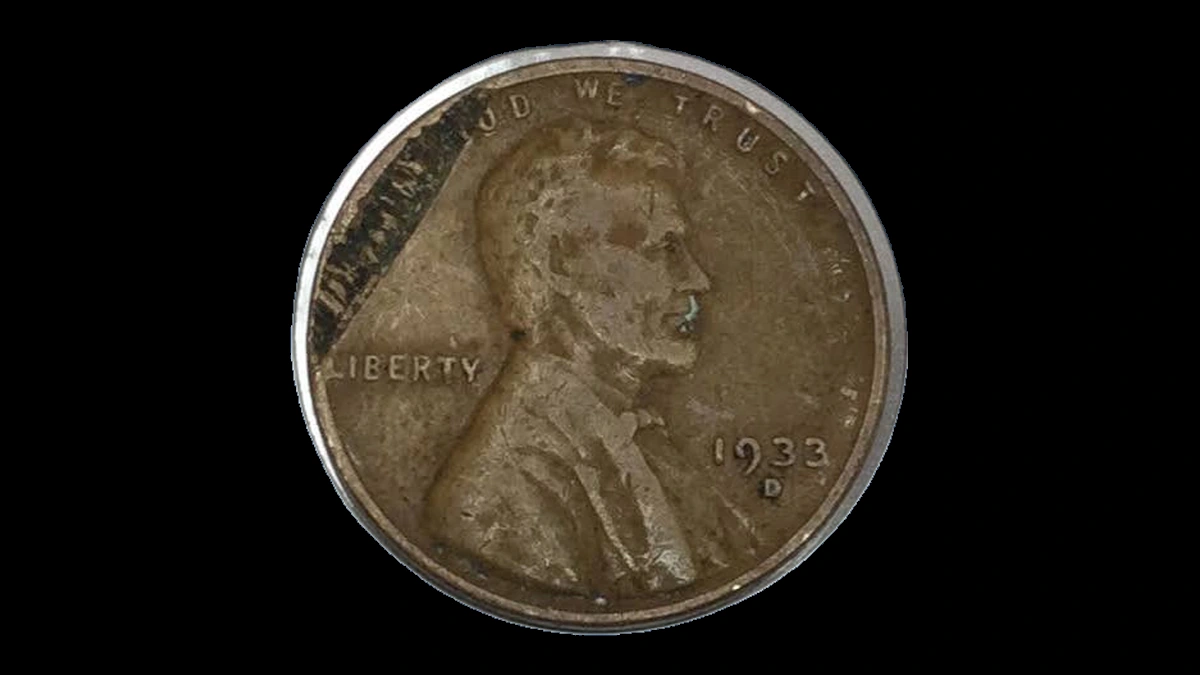
Philadelphia and Denver reports describe metal separating within the original alloy. A flap may remain attached or leave a rough shallow patch after detaching.
The metal construction matters here. An ordinary 1933 cent has no separate coating over a different core, so missing plating is the wrong explanation.
How to Identify
View the layer at a low angle and follow it to its natural attachment without lifting it. If the metal is gone, inspect the exposed separation texture.
A narrow gouge with piled metal along its sides differs from a shallow alloy layer. Keep any attached flap intact and use recorded measurements for a coin already sealed in a holder.
What It’s Worth
Shallow worn laminations have an estimated $10–$40 range, with larger attractive examples reaching about $200. Visibility and preservation govern the comparison.
A 1941-S retained reverse lamination in PCGS MS66 Red brought $69 in April 2020. Its unworn red surface supplies an other-year comparison rather than a transaction for a reported 1933 piece.
2. 1933 Penny A Curved Bite Interrupts the Outline: 1933 Clipped Blank Error
An incomplete blank can result when a cutting punch overlaps an existing hole in the metal strip. The remaining disc still receives its cent design.
The published 1933 category gives no fixed mint or clock position. A convincing-looking curve needs evidence that the metal was absent before striking.
How to Identify
Start at either end of the gap, following rim and lettering as they approach the missing arc. Local or opposite-rim weakness can support the identification without being equally strong on every clip.
Inspect the boundary for parallel cutting grooves and folded metal. Measure an intact span rather than across the gap, and keep the specimen’s actual remaining weight with its photographs.
What It’s Worth
Identified clips have an estimated $15–$250 range. Readable date, undamaged boundary, and shape matter alongside size.
A 1920 cent with a seven-percent curved clip in PCGS AU55 brought $49 in March 2025. Its percentage and weight are not measurements of an unexamined 1933 coin.
3. 1933 Penny Original Blank Metal Remains beside the Design: 1933 Off-Center Strike Error
An off-center blank receives only the design that reaches its metal. The attached unused crescent distinguishes it from a physically missing clip.
The reports do not establish a universal displacement percentage. A readable 1933 date is needed to make a direct year identification from the surface.
How to Identify
Compare incomplete designs on both faces and check whether they fit the same misplaced blank. The original disc can retain its normal metal content even with a distorted outline.
Turn the light across the supposedly untouched area to look for sanding or filed-away detail. A genuine but unreadable-date error should not automatically be assigned to 1933.
What It’s Worth
Identified dated examples have an estimated $20–$500 range. A clear, appealing displacement and natural surface support stronger comparisons.
A 1937 cent struck twenty percent off center in PCGS MS64 Brown brought $126 in September 2019. That unworn comparison does not establish the percentage or condition of a different 1933 piece.
4. 1933 Penny A Patch of Detail Is Weak or Interrupted: 1933 Strike-Through Error
Grease can fill a die recess and prevent a local letter from forming normally. Other debris may leave a depression or missing-design patch without remaining attached.
Year guides report grease-related weakness, while the auctioned Denver example has a reverse strike-through of unspecified material. Those descriptions should remain distinct.
How to Identify
Compare the affected feature with nearby details at similar height. If all exposed areas are rubbed down, circulation may explain the weakness.
Inspect for scraping or sharp cuts through completed design. On the auctioned Denver coin, begin on the reverse and avoid naming grease when the record establishes only an obstruction.
What It’s Worth
Small supported blocked-design and strike-through features have an estimated $3–$100 range. A clearly defined affected area offers more to assess than a barely faint letter.
The 1933-D reverse strike-through in PCGS VG10 brought $30 in October 2022. Its considerable wear remains relevant, and its result does not prove the material behind every similar weak patch.
5. 1933 Penny A Bar or Rim Patch Rises above the Design: 1933 BIE and Cud Error
A small missing die section between B and E produces the I-like BIE bar. A larger missing section touching the rim leaves a raised patch called a cud.
The supplied year reports include both forms without establishing that they occur together on one coin. Their different size and location explain why they need separate comparisons.
How to Identify
For BIE, keep LIBERTY in view and confirm the B-to-E gap. Side lighting should show original raised metal rather than a downward scratch.
For a cud, trace the patch to the rim and identify the normal detail it replaces. Inspect for seams, solder, or pushed-up metal that could imitate a die break.
What It’s Worth
Small BIE chips have an estimated $5–$25 range; genuine rim cuds are around $25–$400. Preservation and the amount of replaced design influence their appeal.
These are separate type estimates rather than premiums to add automatically to one cent. No exact 1933 sale is supplied for either reported shape.
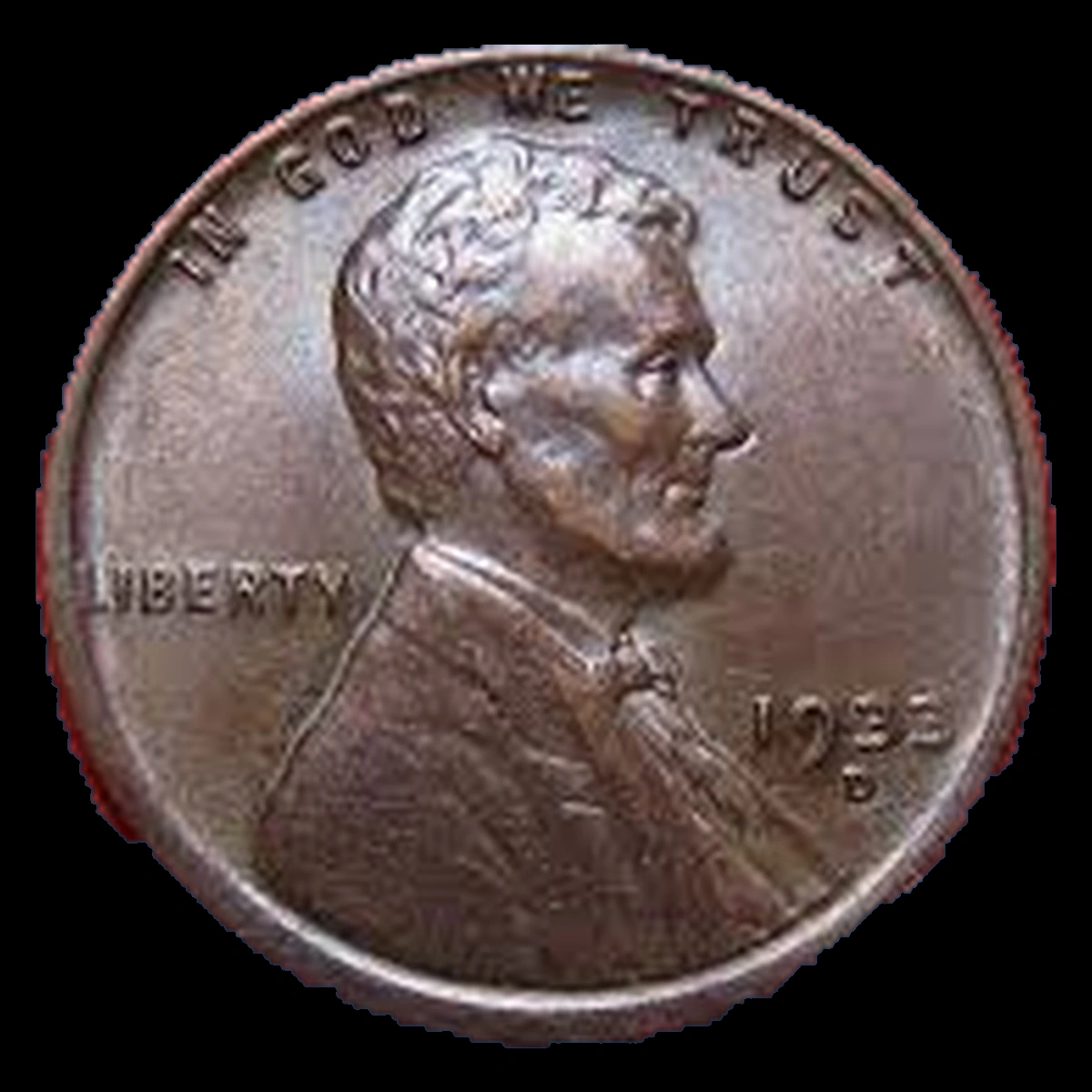
6. 1933 Penny A Second D Outline Appears below the Date: 1933-D Repunching Error
The mintmark was hand punched into the die, and a changed placement could leave an earlier D stroke visible. Coins struck afterward repeated that small pattern.
The year-guide report provides no reliable direction or catalog number. It supports examining the whole mintmark rather than borrowing a northward or sideways pattern from another year.
How to Identify
Confirm 1933 and the D before enlarging the letter. No regular 1933-S cent was issued, so an apparent S raises a different identification question.
Trace the rounded side and short ends for recognizable parts of another D. A filled opening, flat shelf, or reflection cannot establish repeated punching by itself.
What It’s Worth
A confirmed repunched mintmark has an estimated $5–$150 range. Legible extra curves and preserved original surfaces support the stronger comparisons.
This is an early Wheat-cent variety estimate, not a sale for a named 1933 die. A thick D with no distinct second outline should not automatically receive the upper value.
Conclusion
The estimated $3–$500 range covers both small design interruptions and substantial displaced strikes. A clear description should separate what is visible from what remains uncertain, such as the material behind a reverse strike-through.
Preserve attached flakes, read the actual date, and keep each comparison’s year and condition explicit. For the reported repunched D, a complete mintmark photograph is more useful than searching in a direction the available record never established.