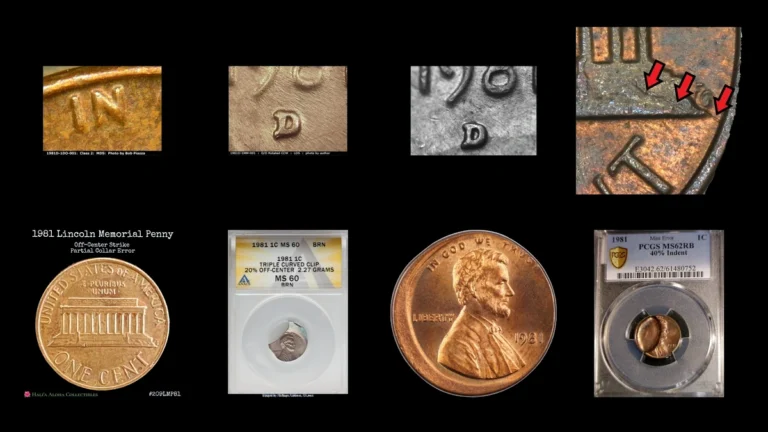
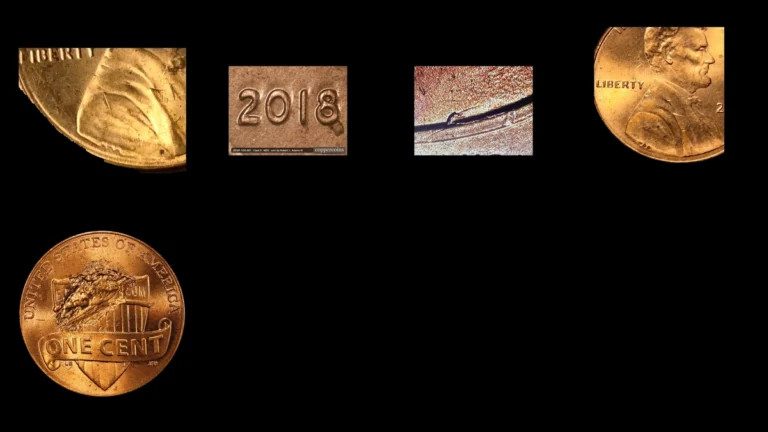
Rare 1930 Penny Errors (List & Pictures)
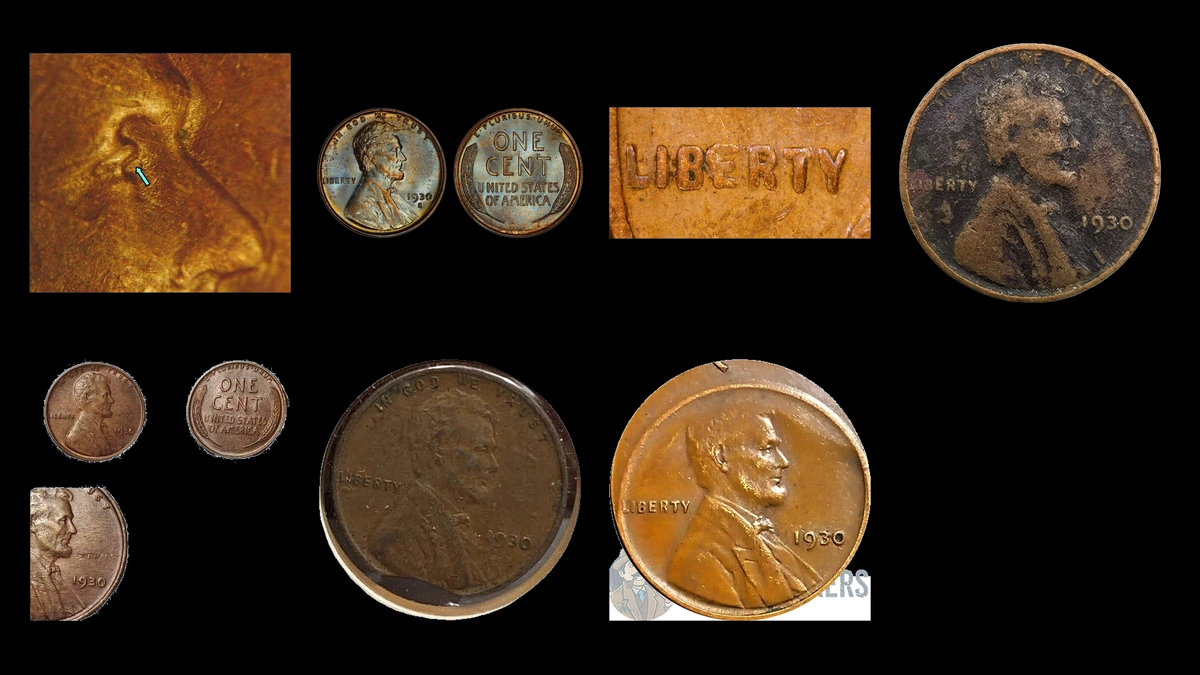
A small line below Lincoln’s eyelid and a crescent of unused metal require very different checks. Both appear in the range of features covered by 1930 penny errors, estimated at $3–$1,500.
A 1930-D off-center cent sold for $109 in January 2022; the highest supplied completed comparison is $119 for a different-year 1920 broadstrike. Start with the face details below, then inspect the surface and outline to find the explanation that fits your coin.
| Observation | Possible identification | Estimated range |
|---|---|---|
| Extra eye line or thick reverse detail | Doubled die | $5–$500 |
| Earlier D or S outline | Repunched mintmark | $5–$1,500 |
| Raised bar, line, or rim patch | BIE, crack, or cud | $3–$750 |
| Weak design or separating layer | Blocked die or lamination | $3–$300 |
| Missing edge or unusual width | Clip, broadstrike, or off-center strike | $15–$1,200 |
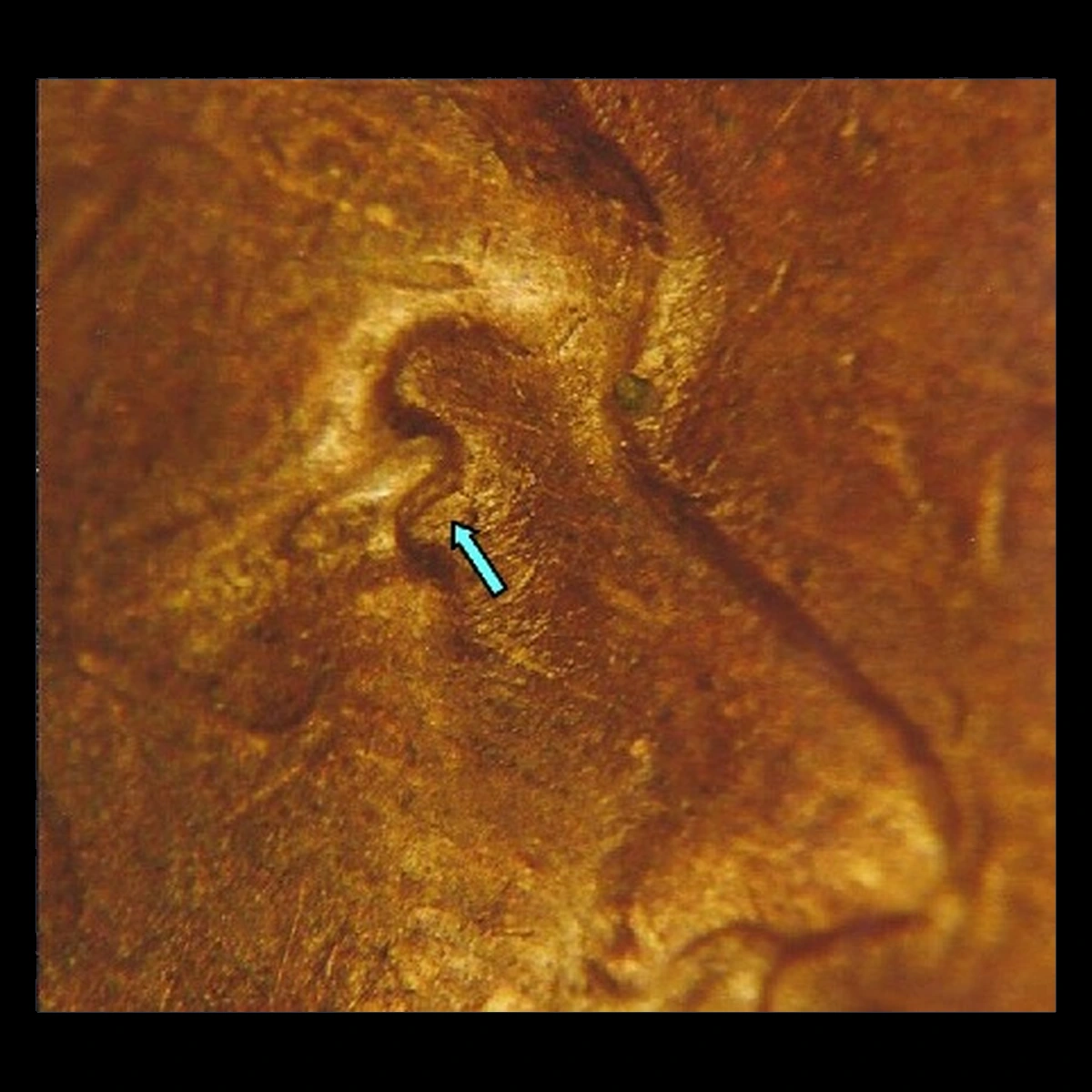
1. 1930 Penny A Line Beneath the Eyelid: Doubled Die Error
Several Philadelphia 1930 varieties have an additional line below Lincoln’s main eyelid. Because the repeated detail originated in the die, it could appear on many coins without any of them receiving a second strike.
How to Identify
Compare the entire eye and neighboring marks with the appropriate Philadelphia reference. The shared eyelid location does not make all the recorded forms one variety.
A separate reverse variety shows thickened lettering and Wheat details rather than requiring two clean outlines on every letter. Its paired front has a crack running from just above VDB near the portrait base toward the rim around 7:30; that crack is a marker, not the cause of doubling.
What It’s Worth
$5–$500 is the estimated range for these modest, correctly matched doubled designs. Sharp photographs and remaining design detail are necessary before choosing a comparison.
A 1936 FS-103 doubled-front cent graded ANACS MS63 Brown sold for $70 in June 2024. That unworn different-year coin provides context for a minor variety, not a sale record for a 1930 eyelid.
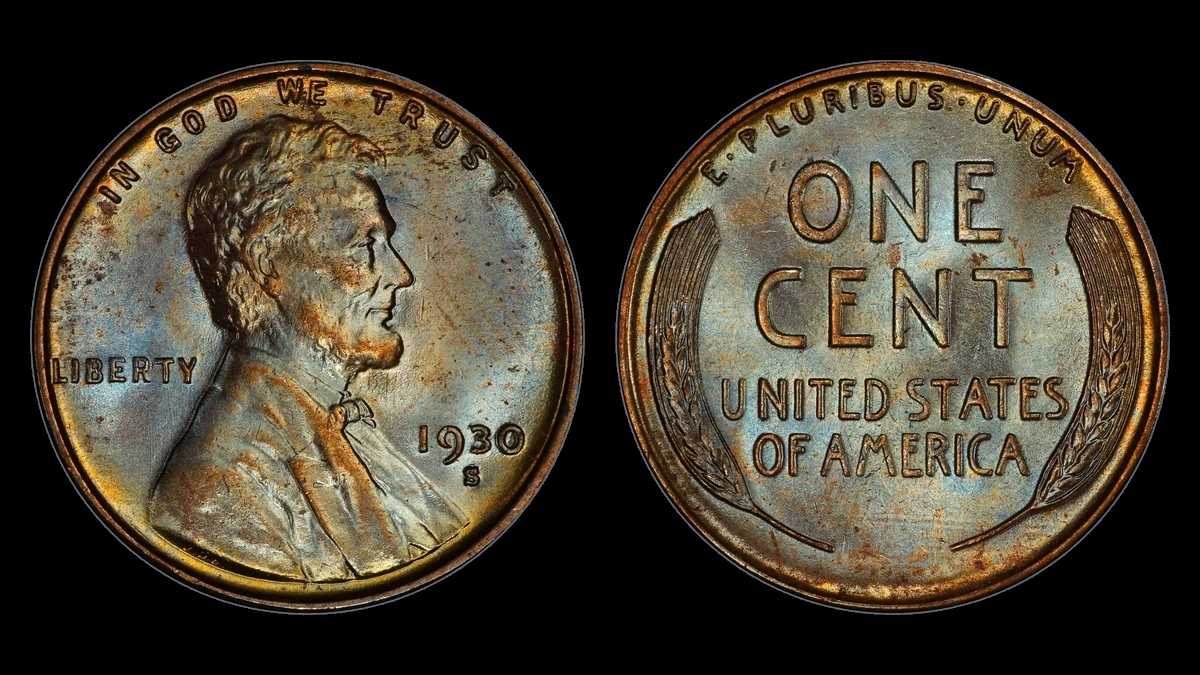
2. 1930 Penny Another Curve Around D or S: Repunched Mintmark Error
The mintmark below the date was punched into the die by hand. More than one placement could preserve an earlier letter outline, producing a repunched mintmark.
How to Identify
Several Denver varieties show earlier detail above the D. On FS-502, the fuller early curve may become incomplete as the die wears, so compare examples from the appropriate die stage.
San Francisco patterns include upward, sideways, and tilted overlaps, with FS-501 representing an upward repunch. Match the S shape, its position below the date, and nearby marks rather than treating every upward remnant as FS-501.
What It’s Worth
$5–$250 covers estimated values for modest identified repunches, with better-preserved named varieties extending toward $1,500. A thick letter without a matching earlier outline does not justify those variety prices.
No specific completed sale is supplied for the listed 1930 mintmark varieties. Both coin wear and the strength of the remnant at its die stage affect the comparison.
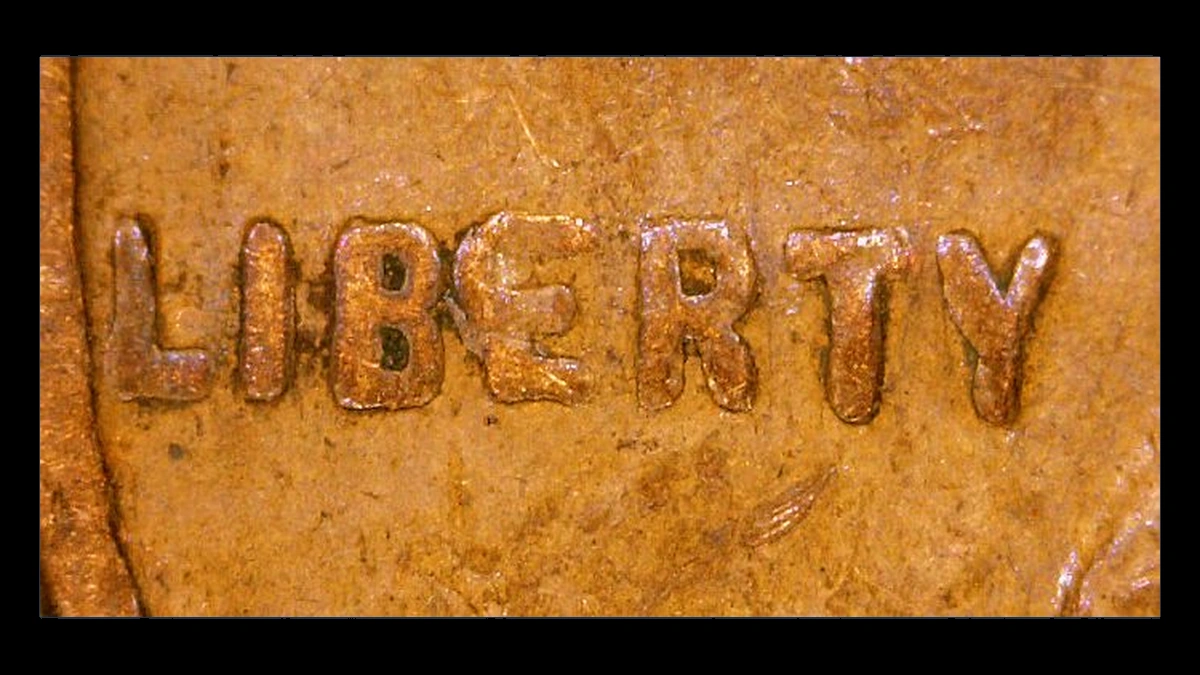
3. 1930 Penny An Extra Bar in LIBERTY or a Raised Rim Patch: BIE, Cracks, and Cuds Error
Read LIBERTY before interpreting a small raised bar beside its letters. A chip in the die between B and E can produce the familiar BIE appearance.
Larger die failures leave different shapes: cracks produce narrow ridges, and missing pieces at the die’s edge can produce broad rim-connected cuds. These defects are grouped here because each comes from a damaged stamping tool.
How to Identify
Change the light angle to distinguish raised metal from a scratch in the gap between B and E. For a broad patch, inspect its connection to the rim and whether it replaces normal design.
Surviving design inside a displaced section may indicate a retained break, while a thin line alone can reflect a crack without a missing die piece. No single crack or cud location applies to all the supplied 1930 reports.
What It’s Worth
$3–$50 is the estimated range for small BIE chips and fine cracks; larger genuine rim cuds may fall around $40–$750. These are whole-coin estimates.
A 1934 cent with a major break, graded ANACS F12, sold for $41 in August 2021. Its visible wear is part of that comparison, and an accompanying variety on a 1930 coin should not be priced as a separate second coin.
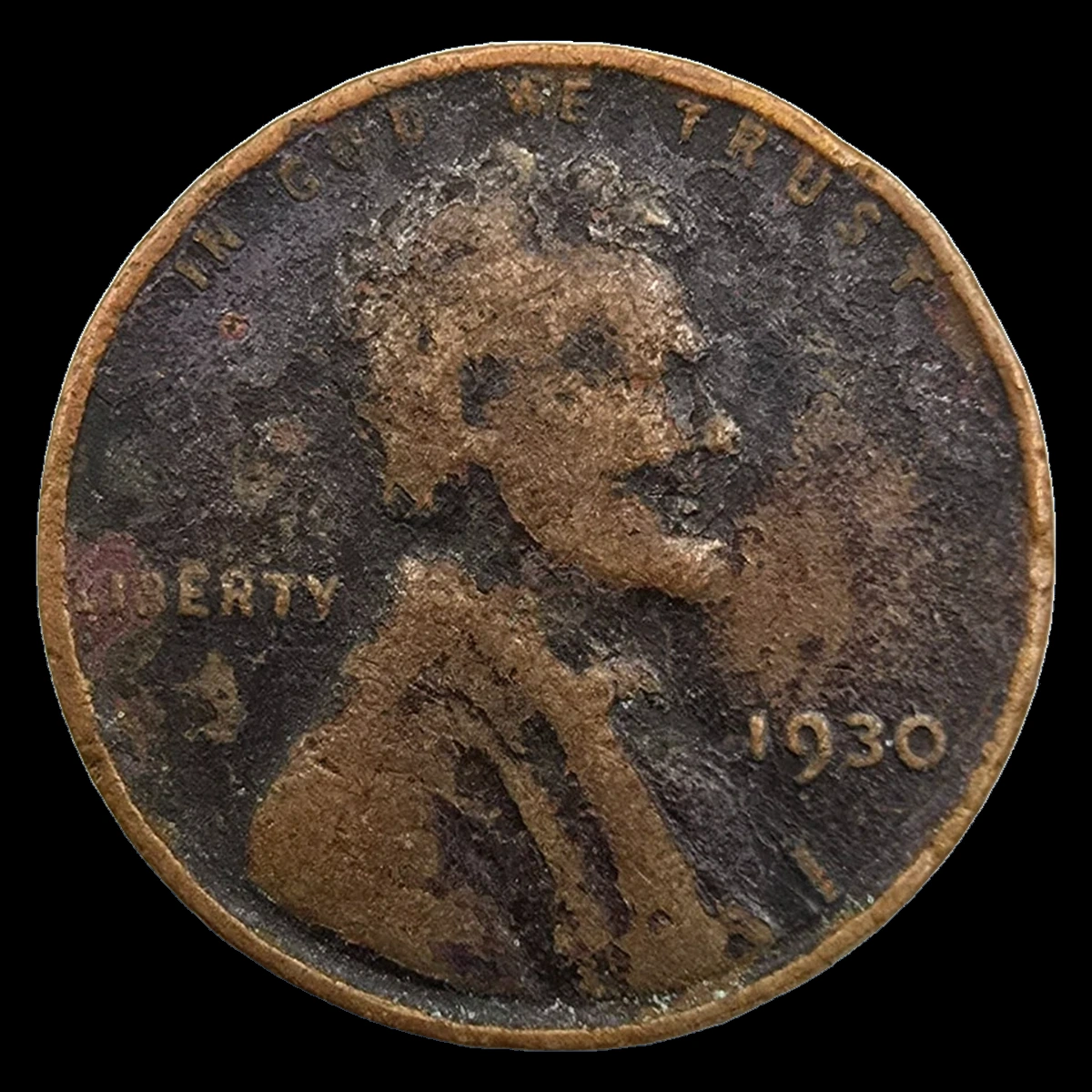
4. 1930 Penny A Local Patch of Faint Design: Grease-Blocked Die Error
A missing letter is more informative when the neighboring letters and portrait remain strong. Material blocking a recessed part of the die can stop that detail from forming on the coin.
How to Identify
Compare the weak patch with the exposed high points, where ordinary circulation wear should also be visible. Scratches, polishing lines, and generally worn dies offer other explanations for lost detail.
The 1930 reports do not establish a universal missing letter or mint. Grease is a proposed obstruction, so a photograph showing weakness alone cannot confirm its composition.
What It’s Worth
$3–$100 is the estimate for supported minor blocked-design errors. A faint letter explained by normal wear may contribute no error premium.
A worn 1933-D cent with a reverse struck-through error sold for $30 in October 2022. Its obstruction was unspecified, making it a general comparison rather than proof of grease on a 1930 coin.
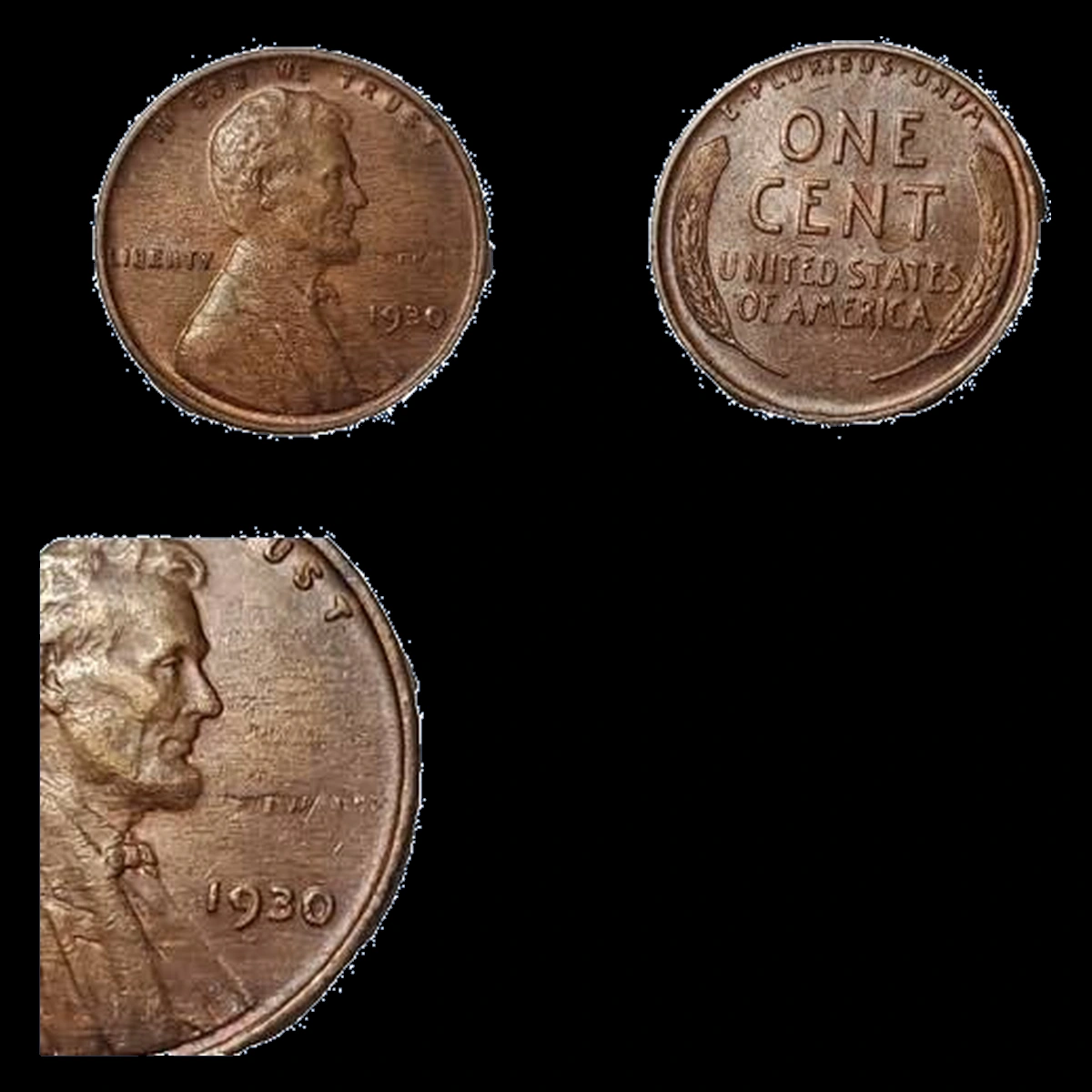
5. 1930 Penny A Thin Layer Lifts From the Surface: Lamination Error
A small opening beneath a sheet of metal can reveal separation within the cent’s alloy. The layer may stay attached or fall away and expose a rough patch.
How to Identify
Use low-angle light to inspect an existing gap without lifting the flap. A 1930 cent is copper-rich alloy throughout, so this is not the modern problem of copper plating peeling from a zinc core.
Look for a continuous separating layer or a convincing boundary where one detached. Color streaks, corrosion pits, and gouges through finished detail do not establish lamination by themselves.
What It’s Worth
$5–$300 is the estimated range for genuine 1930 laminations. Size, condition, and the survival of attached metal affect collector interest.
A 1941-S cent with a retained reverse layer, graded PCGS MS66 Red, sold for $69 in April 2020. That exceptionally preserved different-year coin does not establish a fixed peeling location or value for a 1930 example.
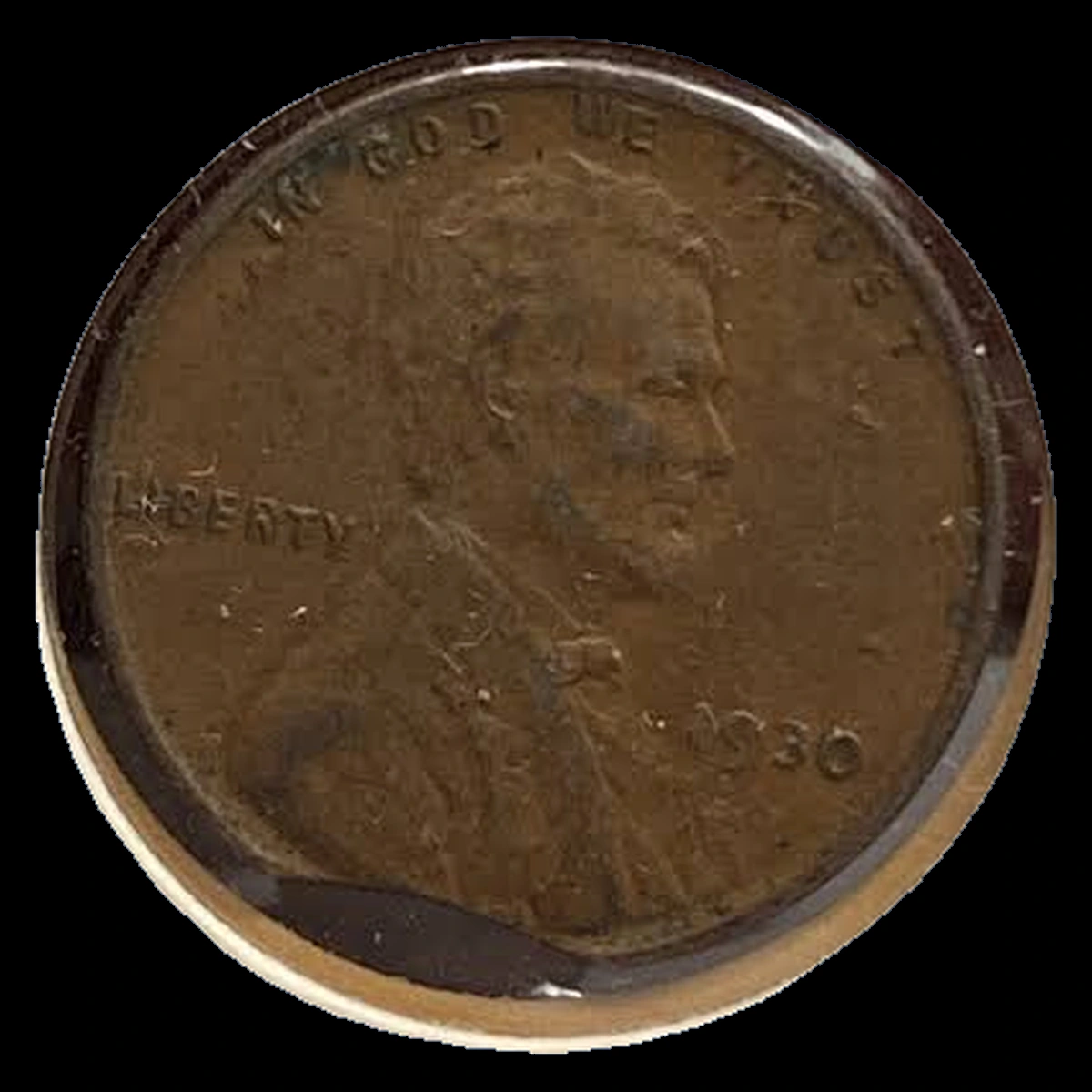
6. 1930 Penny Metal Is Missing From the Outline: Clipped Blank Error
At a clip, there is no metal where part of the blank should have been. The incomplete blank received its design afterward, unlike a finished coin that was cut or filed later.
How to Identify
Follow the rim and letters into both ends of the gap, looking for natural weakness instead of saw marks across a completed design. Weakness opposite the gap can support a genuine clip, but the original boundary remains essential evidence.
For a safely accessible loose cent, compare weight with the normal 3.11 g and an intact diameter with 19.05 mm, allowing for wear and missing metal. Use these references for the outline errors below as well; do not remove a certified coin from its holder or disturb a fragile layer.
What It’s Worth
$15–$350 is the estimate for genuine 1930 clipped blanks. The supplied reports leave the gap shape and position to be established from each actual coin.
A 1925 curved clip graded ANACS VF20, weighing 2.92 g, sold for $56 in March 2023. Its weight belongs to that worn comparison coin and is not a target measurement for a 1930 clip.
7. 1930 Penny The Complete Design Has an Expanded Border: Broadstrike Error
Check the outer lettering before focusing on a penny’s extra width. A broadstrike retains the intended design while the metal spreads because the collar, the ring controlling the outline, fails to contain it.
How to Identify
An uneven margin can still fit a broadstrike if the complete design remains present on both faces. If part of the design missed the metal, consider an off-center strike instead.
Inspect the widened margin and portrait for later hammering, a seam, or an added ring. The source reports no particular mint or measured width for 1930, and extra width alone does not prove a mint error.
What It’s Worth
$25–$500 is the estimated range for genuine 1930 broadstrikes. Natural spreading with well-preserved design makes a more useful comparison than a battered wide edge.
A 1920 broadstrike graded NGC MS62 Brown sold for $119 in March 2026. That unworn Wheat cent had noticeable marks and brown color, and it remains a different-year example.
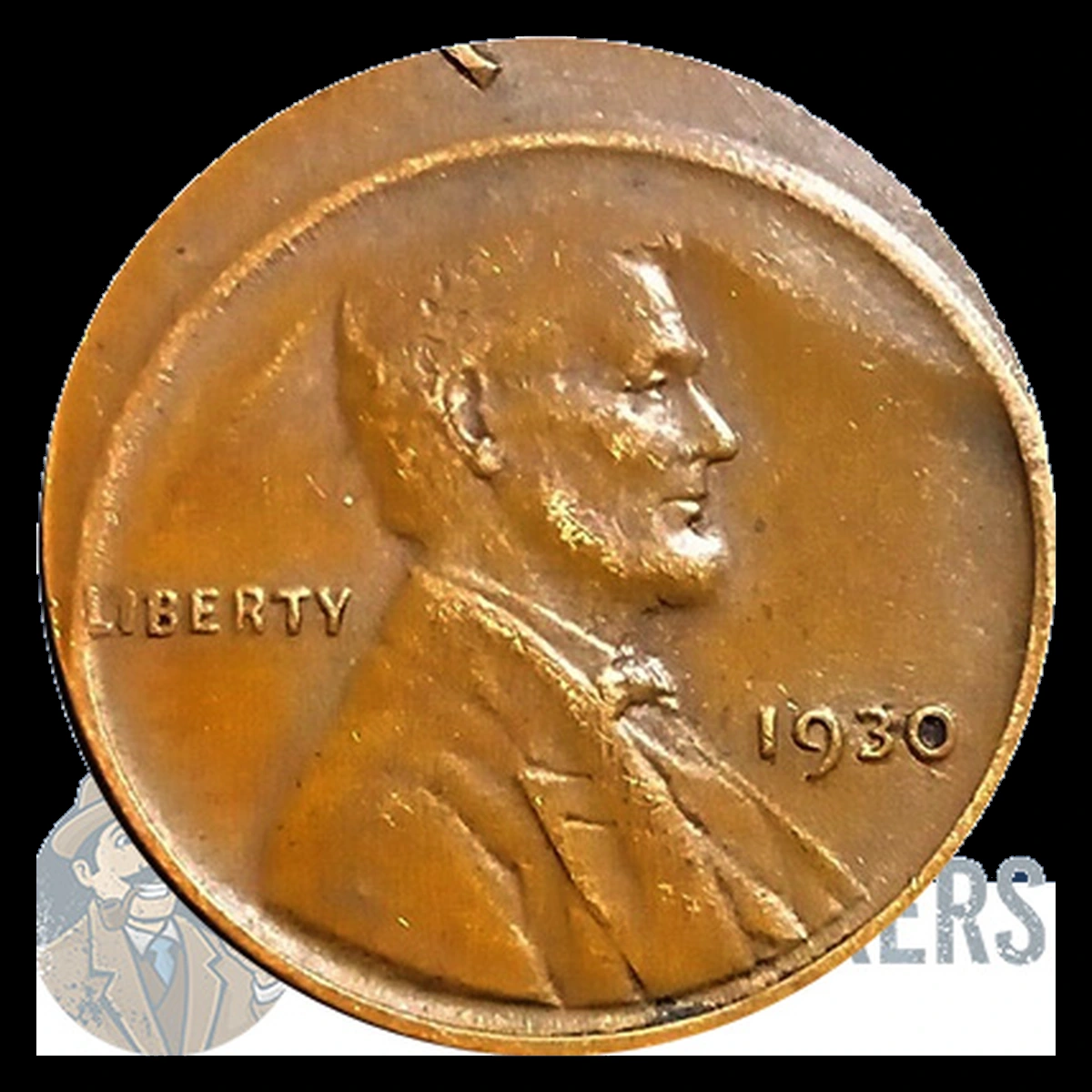
8. 1930 Penny The Design Misses Part of the Blank: Off-Center Strike Error
On an off-center cent, a bare crescent remains beside an incomplete portrait and lettering. The metal was present, but the displaced blank did not receive the full design.
How to Identify
The documented Denver coin is 20% off-center toward 8 o’clock. Orient the date upright and compare the D, surviving year, and strike boundaries on both sides before using that description.
Both faces should fit one displaced blank. Scraping or grinding a finished coin can remove design, but it does not create an original unstruck surface.
What It’s Worth
$30–$1,200 is the estimated range across genuine dated examples with different displacement and preservation. A readable year and original surfaces make the identification more useful.
The 1930-D 20% off-center cent graded ANACS AU58 sold for $109 on January 3, 2022. Its slight wear and specific strike belong to that transaction rather than every 1930 off-center penny.
Conclusion
Separate features built into the die from changes to the blank or the strike itself. A matching eyelid line or mintmark remnant identifies a different process from a peeling layer, missing edge, or displaced design.
The $3–$1,500 estimate covers a wide range of preservation and visibility. Record the mint and whole-coin appearance alongside closeups, and keep any attached lamination intact so its original structure remains available for examination.