Rare 1967 Nickel Errors (List & Pictures)
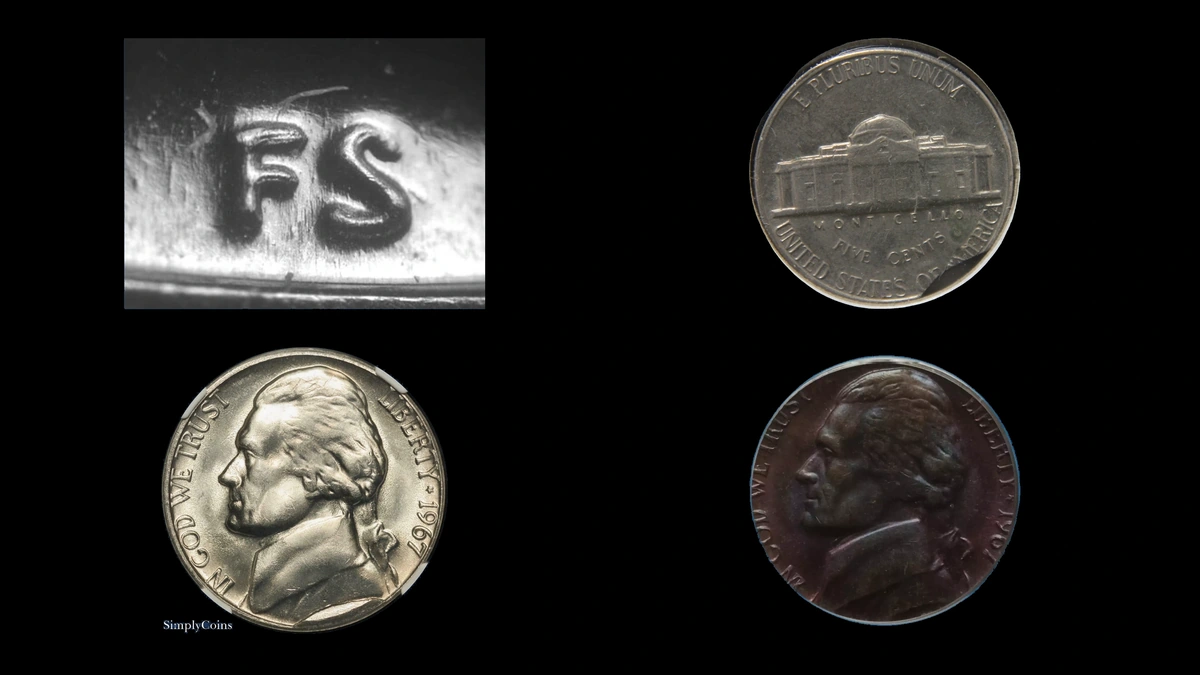
A 1967 nickel on a cent blank brought $1,725 in August 2010, while a large rim cud sold for $1,200 in March 2021. Estimated whole-coin values for 1967 nickel errors range from $15–$2,500.
Inspect small repeated details, missing edge metal, and raised patches before investigating a lightweight blank. A missing mintmark is normal on both circulation and Special Mint Set coins from this year.
| Observation | Category | Estimated value |
|---|---|---|
| Repeated letters or initials | Special Mint Set doubled die | $20–$250 |
| Missing section or unfinished cutting arc | Clip or incomplete clip | $15–$400 |
| Large raised top-rim patch | Cud | $50–$1,500 |
| Small lightweight disc | Cent or dime blank | $200–$2,500 |
An ordinary nickel weighs about 5 g and measures 21.2 mm, with a plain edge. Its uniform copper-nickel alloy differs from both contemporary copper-alloy cent blanks and layered dime blanks.
1. 1967 Nickel Extra Edges on Collector-Set Coins: Doubled Die Error
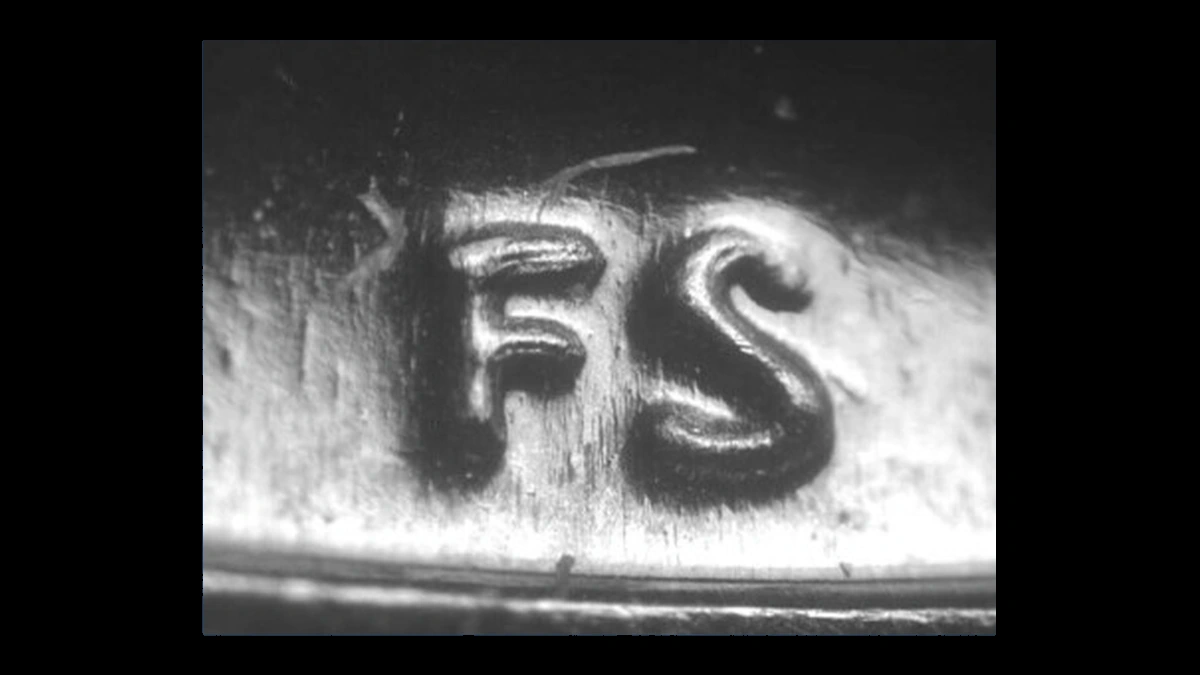
Recorded Special Mint Set examples show two separate doubled-die patterns. One affects reverse lettering more strongly toward the right; another affects IN GOD and the small FS beneath Jefferson’s shoulder.
These extra contours originated in the die. They do not require the finished coin to have received two blows.
How to Identify
For the reverse example, compare UNITED STATES OF AMERICA from left to right. For the separate front example, match IN GOD and FS with its own reference photograph.
FS here identifies designer Felix Schlag, not a variety number. Reliable holder information or a finish comparison is needed to establish a Special Mint Set coin; the absent mintmark does not do so.
What It’s Worth
Estimated values are $20–$250, including roughly $20–$75 for modest identified examples. Attractive collector-set coins with clear doubling may fit the higher range.
No completed sale is assigned to the recorded patterns here. Flat shelves, scratches, or a thick initial do not qualify without a match to the repeated design.
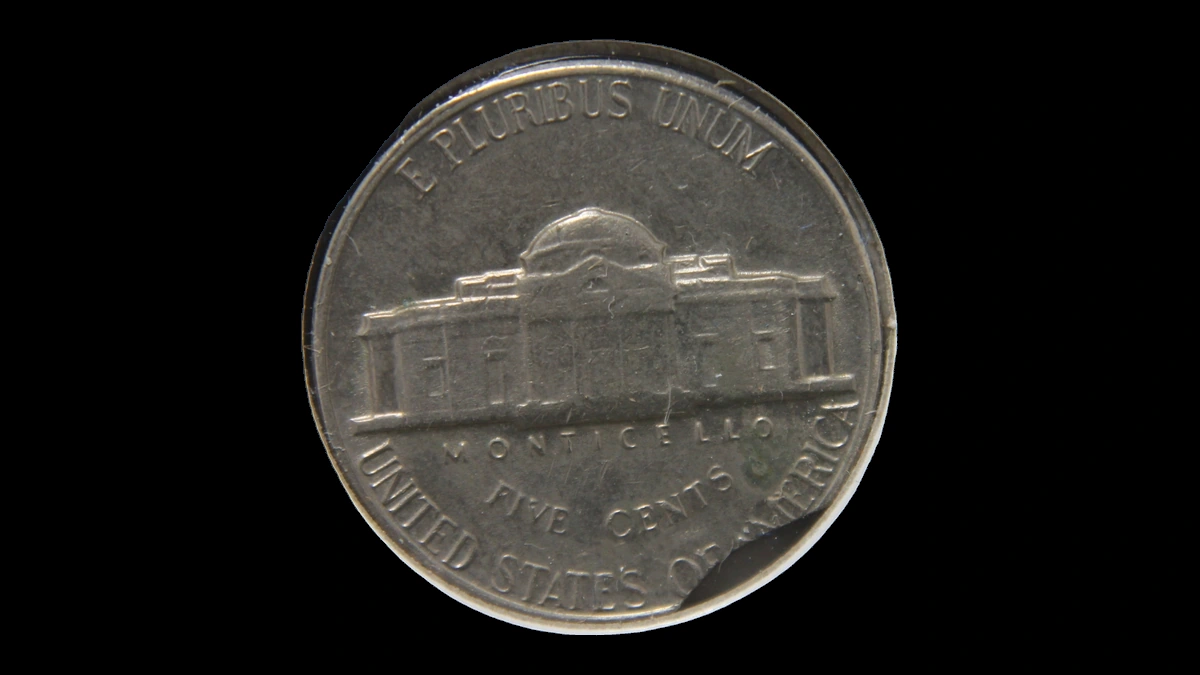
2. 1967 Nickel A Curved Gap beside an Unfinished Cut: Clipped Blank Error
An NGC MS66 coin combines a curved clip near twelve-thirty with an incomplete cutting arc. A separate auction coin has a straight clip.
The blank-cutting operation left incomplete metal before the press applied the design. An unfinished cut can preserve evidence of that earlier step.
How to Identify
Leave the incomplete arc closed and do not flex the coin. With Jefferson upright, inspect the recorded curved gap just right of the top.
Check how the design approaches both ends of the opening and inspect the edge for filing or saw marks. The straight-clip specimen requires its own boundary comparison.
What It’s Worth
Estimated whole-coin values are $15–$400, with modest worn clips around $15–$100. Strong, attractive combinations may occupy the higher range.
The NGC MS66 curved-and-incomplete-clip example sold for $230 in August 2010. That price belongs to the preserved combination, not the separate straight clip.
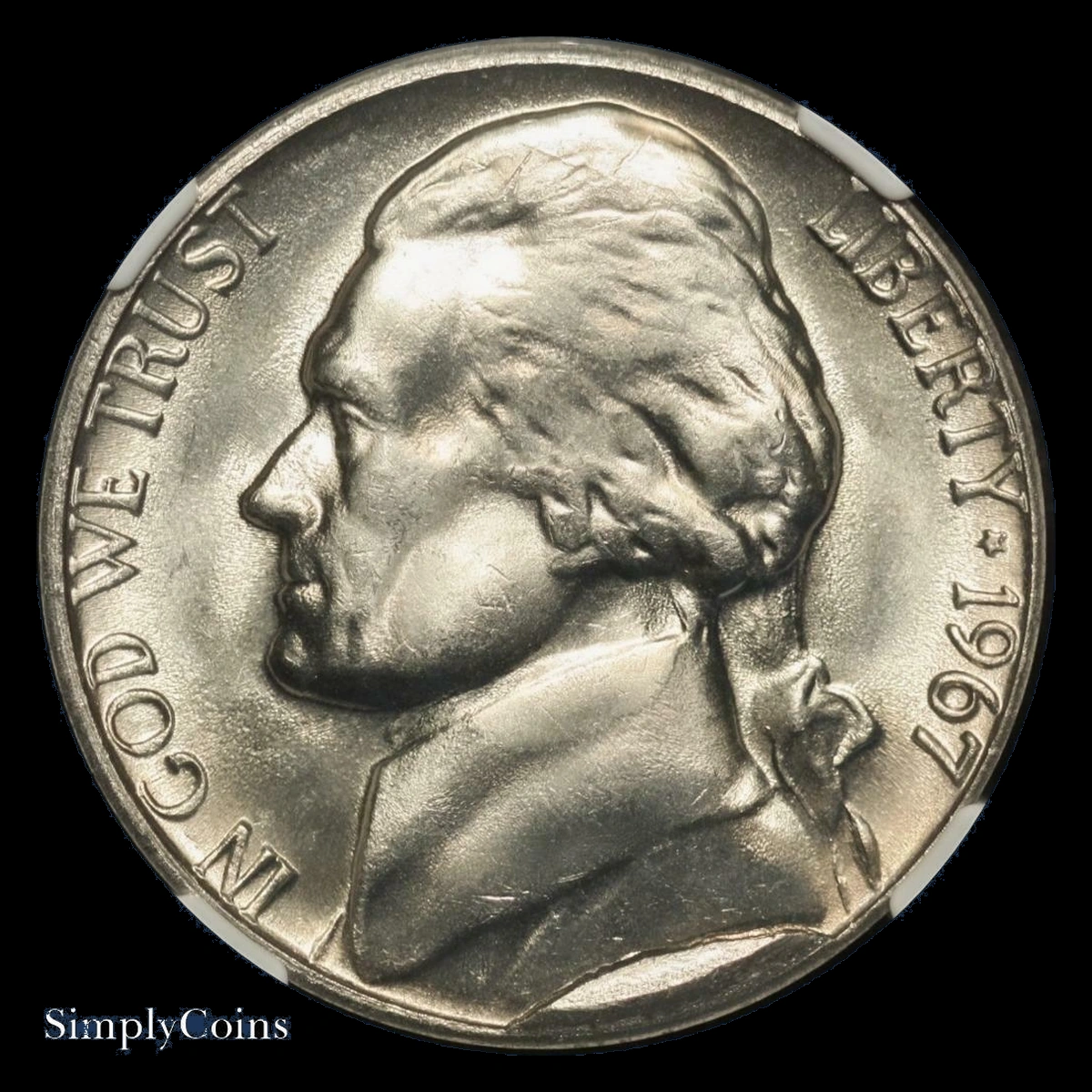
3. 1967 Nickel A Broad Raised Patch at Twelve O’Clock: Cud Error
A documented nickel graded PCGS MS64 has a major die break at the top rim. Missing steel allowed metal to rise into a patch that replaced normal design.
How to Identify
Follow the twelve-o’clock patch to its rim connection. A small isolated interior bump is a different form of die damage.
Inspect the edge for a dent, attached material, or folded rim metal. Compare the opposite face for any weakness associated with the large break, while keeping both designs visible.
What It’s Worth
Estimated values are $50–$1,500, with worn or less impressive examples around $50–$300. Strong clean breaks on attractive coins can bring more.
The PCGS MS64 twelve-o’clock cud sold for $1,200 in March 2021. Its prominent patch does not set a price for every small rim irregularity.
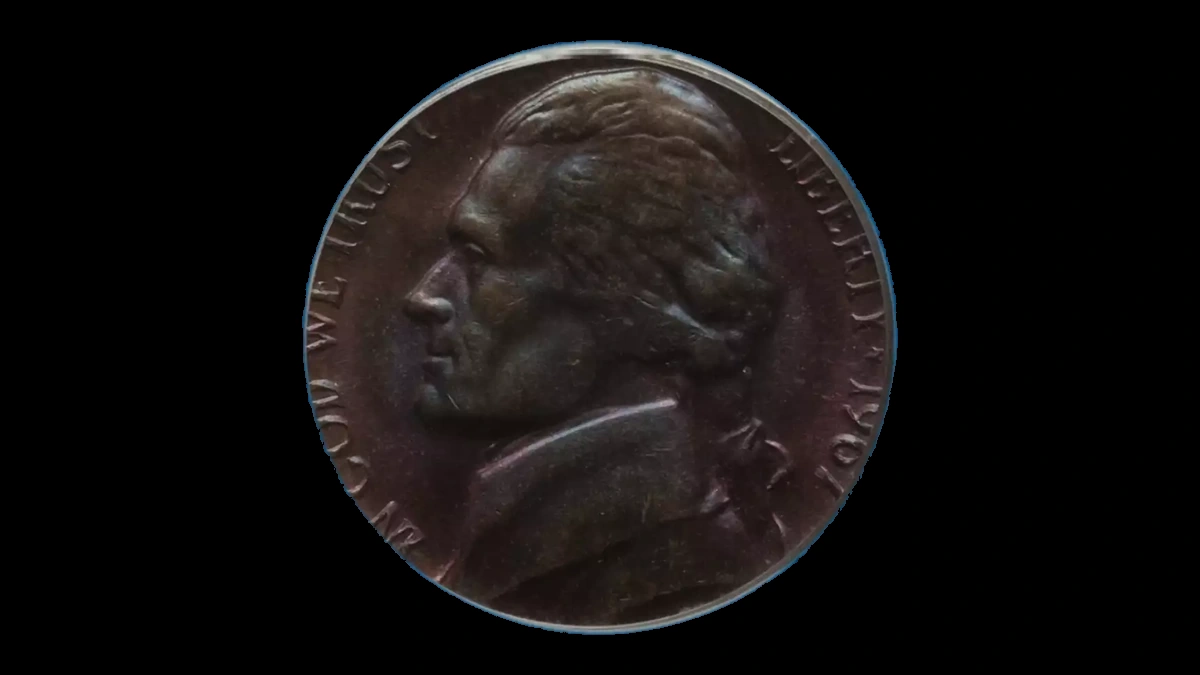
4. 1967 Nickel The Nickel Design Fills a Smaller Disc: Wrong Planchet Error
A copper-colored 1967 nickel on a cent blank weighs 3.1 g and was graded NGC MS66 Red. A separate dime-blank example weighs 2.20 g and was graded NGC AU58.
Contemporary cent blanks used copper alloy, while dime blanks used bonded metal layers. The two specimens need different metal comparisons despite both being smaller than normal nickels.
How to Identify
Assess weight with the edge, alloy, and naturally cropped nickel lettering. Plating or filing can imitate color or size without producing an original wrong-blank strike.
The intended blanks began around 19.05 mm for a cent and 17.9 mm for a dime. Striking can expand them, so final diameter need not equal the blank’s starting width.
What It’s Worth
Estimated values are $200–$2,500, with worn or less attractive wrong-blank coins around $200–$700. Strong unworn pieces occupy the higher range.
The 3.1 g MS66 Red cent-blank coin sold for $1,725 in August 2010. The separate 2.20 g AU58 dime-blank nickel brought $288 in October 2022.
Conclusion
A normal missing mintmark tells little about a 1967 nickel’s finish or error status. Small doubled details need a specific Special Mint Set match, while missing metal and raised rim patches require examination of their boundaries.
Preserve unfinished cuts and compare wrong-blank candidates by metal as well as weight. The cent-blank and dime-blank sales concern distinct coins, with different preservation and very different original blanks.