Rare 2005 Dime Errors (List & Pictures)
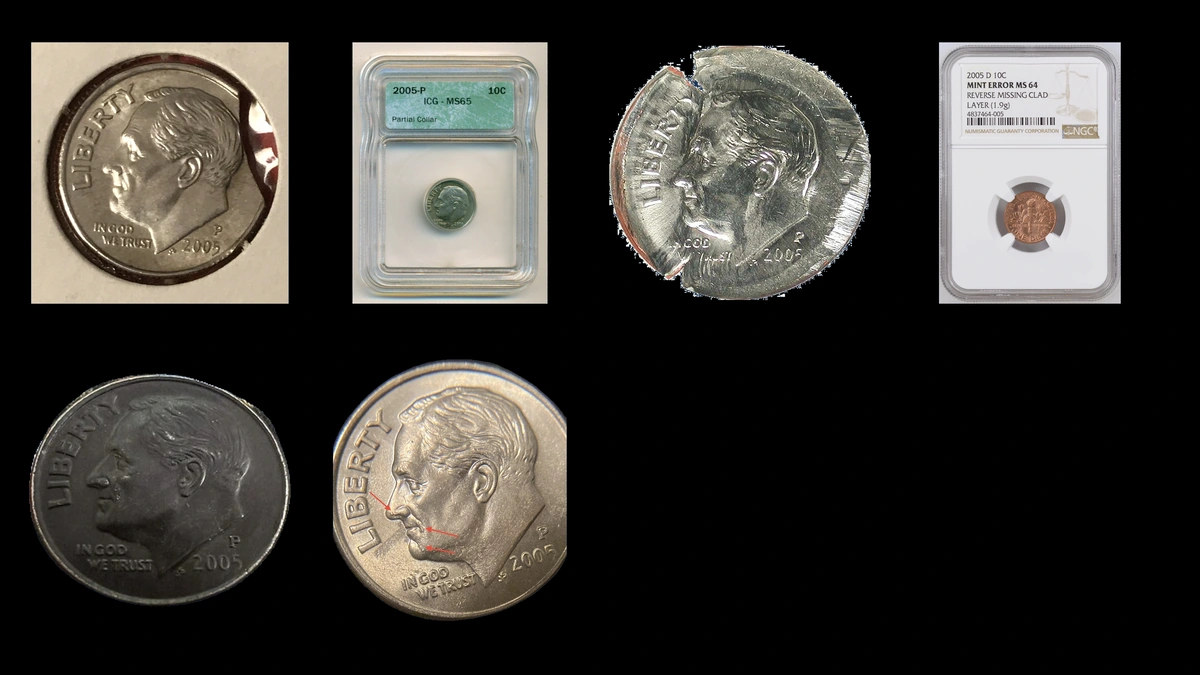
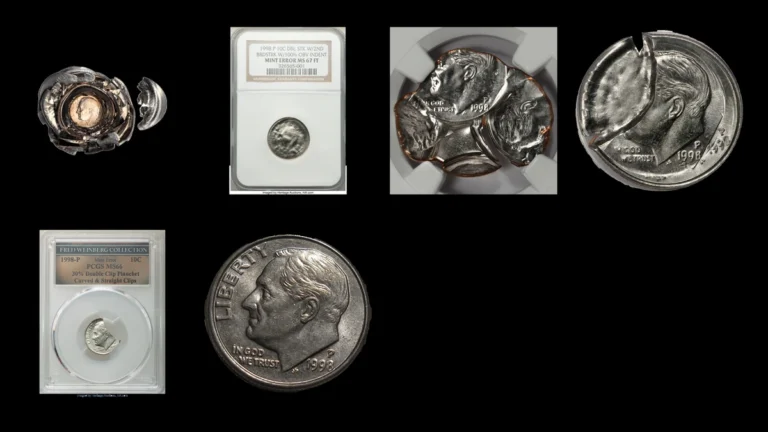
A 2005-D dime missing its reverse outer layer sold for $75, while a different-year compound broadstrike brought $159. Estimated values for 2005 Roosevelt dime errors range from $5–$1,000.
Check the edge and metal structure before deciding whether copper color means lost material, altered color or something else.
| Clue | Possible error | Estimated range |
|---|---|---|
| Straight missing section on satin coin | Clipped blank | $50–$300 |
| Edge step | Partial collar | $5–$150 |
| Expanded border, complete design | Broadstrike | $15–$400 |
| Unused crescent, missing design | Off-center strike | $40–$500 |
| Exposed copper with actual layer loss | Missing clad layer | $50–$600 |
| Changed color with layers intact | Improper annealing | $30–$200 |
| Object still embedded | Retained strike-through | $75–$1,000 |
| Parallel lines | Feeder-related marks | $5–$50 |
| Raised ridge or lump | Die crack, chip or cud | $5–$350 |
| Repeated date or motto outlines | Doubled obverse | $15–$250 |
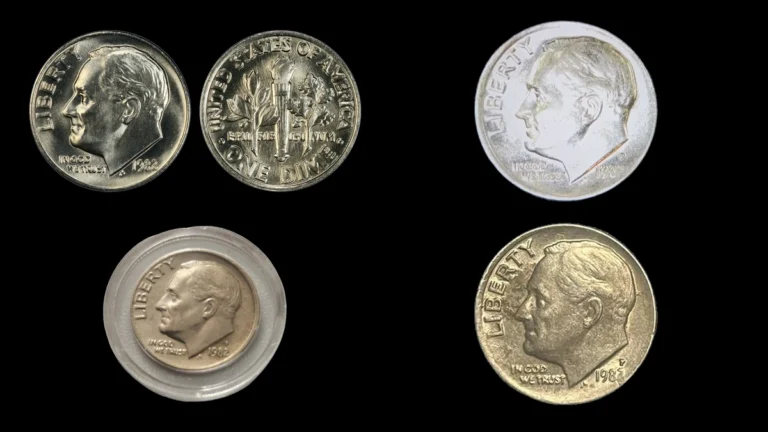
A normal clad dime has copper-nickel outer layers bonded to a copper center, weighs 2.268 grams and measures 17.91 millimeters across a reeded edge. The satin finish on 2005 collector-set coins is intentional and differs from the circulating finish.
1. 2005 Dime A Straight Gap in a Satin Dime: Clipped Blank Error
The Calkins collection records a 2005-P satin-finish dime with a 10% straight clip, graded PCGS SP62. Its blank was already incomplete when the design was struck.
The straight missing section is the error. The soft even satin surface is part of the collector coin’s normal manufacture.
How to Identify
Compare the opening with the listed satin-finish example. Inspect both ends for rim and design formed around an original shortage rather than a later cut.
Check remaining edge reeds for filing and the opposite rim for possible weakness. Establish the finish separately instead of assigning every 2005 clip a satin identity.
What It’s Worth
A genuine straight clip on a comparable satin-finish dime is estimated at $50–$300. The collection listing supplies no completed sale.
A 1997-P nickel with a 20% clip brought $124 in March 2025. Its different denomination and larger shortage make it a limited comparison.
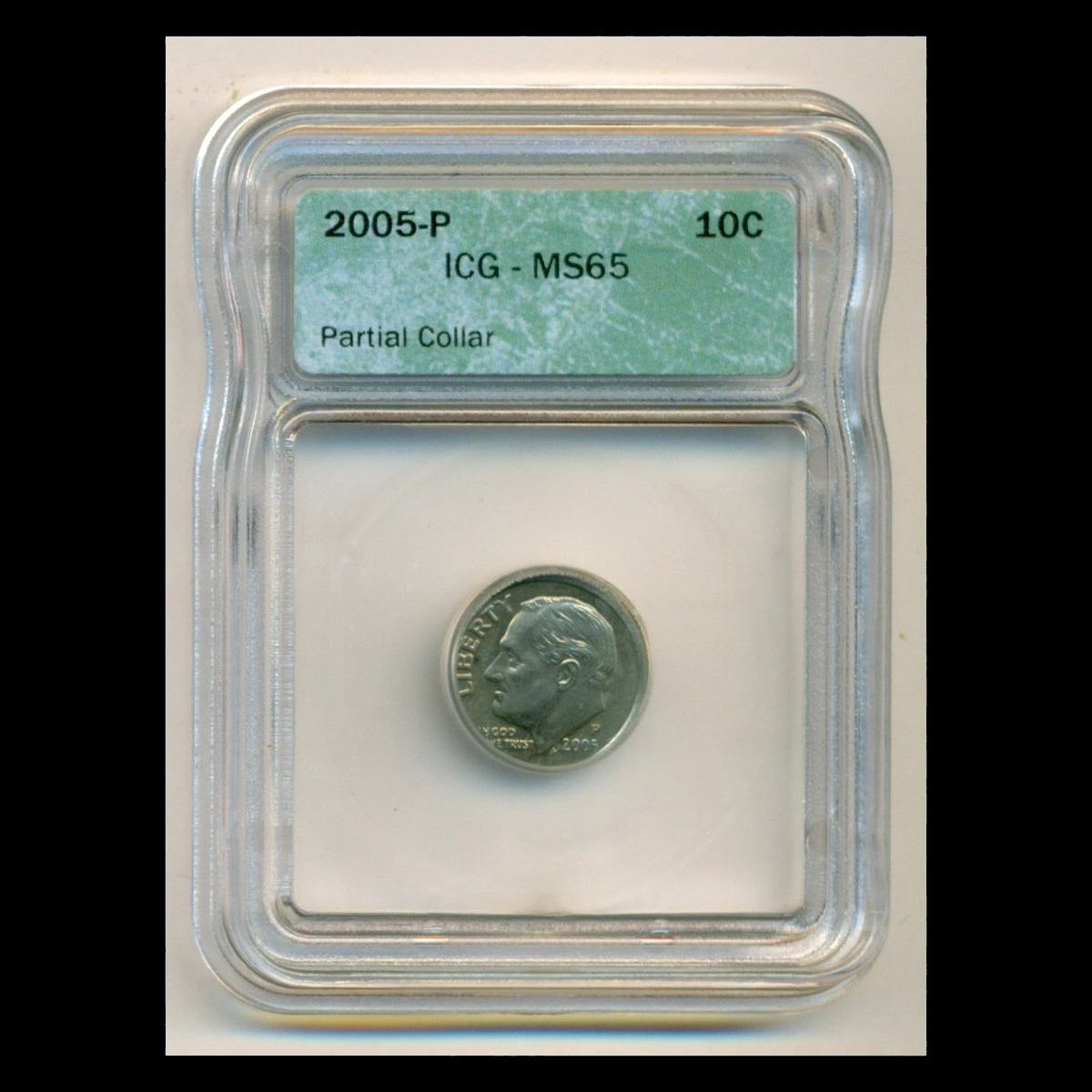
2. 2005 Dime Two Levels Along the Edge: Partial Collar Error
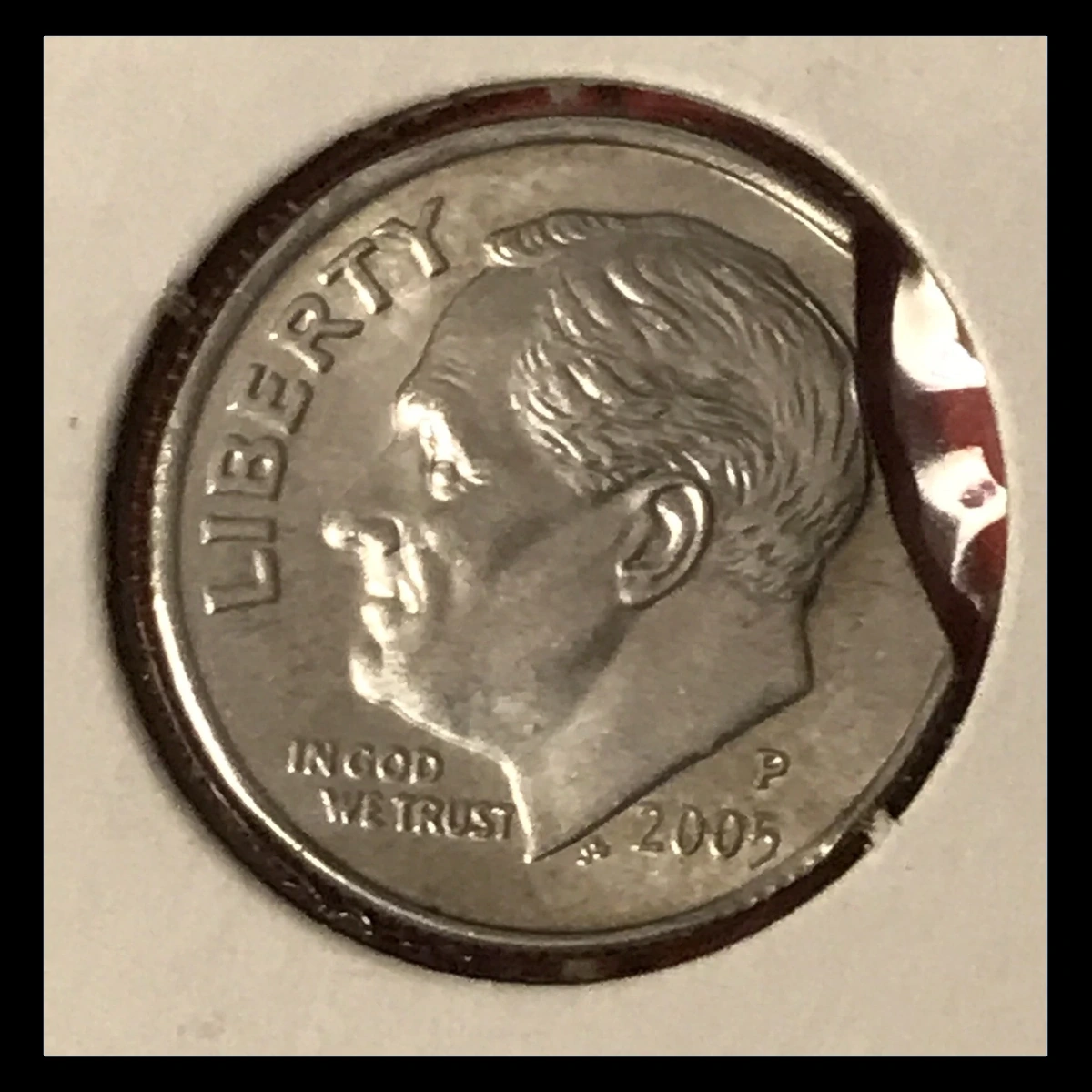
A blank held only partly inside the collar can spread above the ring while its contained portion receives normal edge grooves. The resulting step is sometimes compared to a railway track.
A historical dealer list records a 2005 partial-collar dime without a mint. Its separate uneven broadstrike listing is not the same documented coin.
How to Identify
View the edge from the side and follow the boundary between the grooved section and expanded metal. Inspect the transition for the original striking surface.
Rolling or pressure after minting can create a misleading ridge. Read the actual date and mint letter rather than assigning Denver from an unrelated report.
What It’s Worth
Comparable genuine partial collars are estimated at $5–$150. A clear edge step and original surfaces make the error easier to assess.
Fred Weinberg’s historical price list asked $5 for a 2005 example. That was a dealer offer, not an auction result.
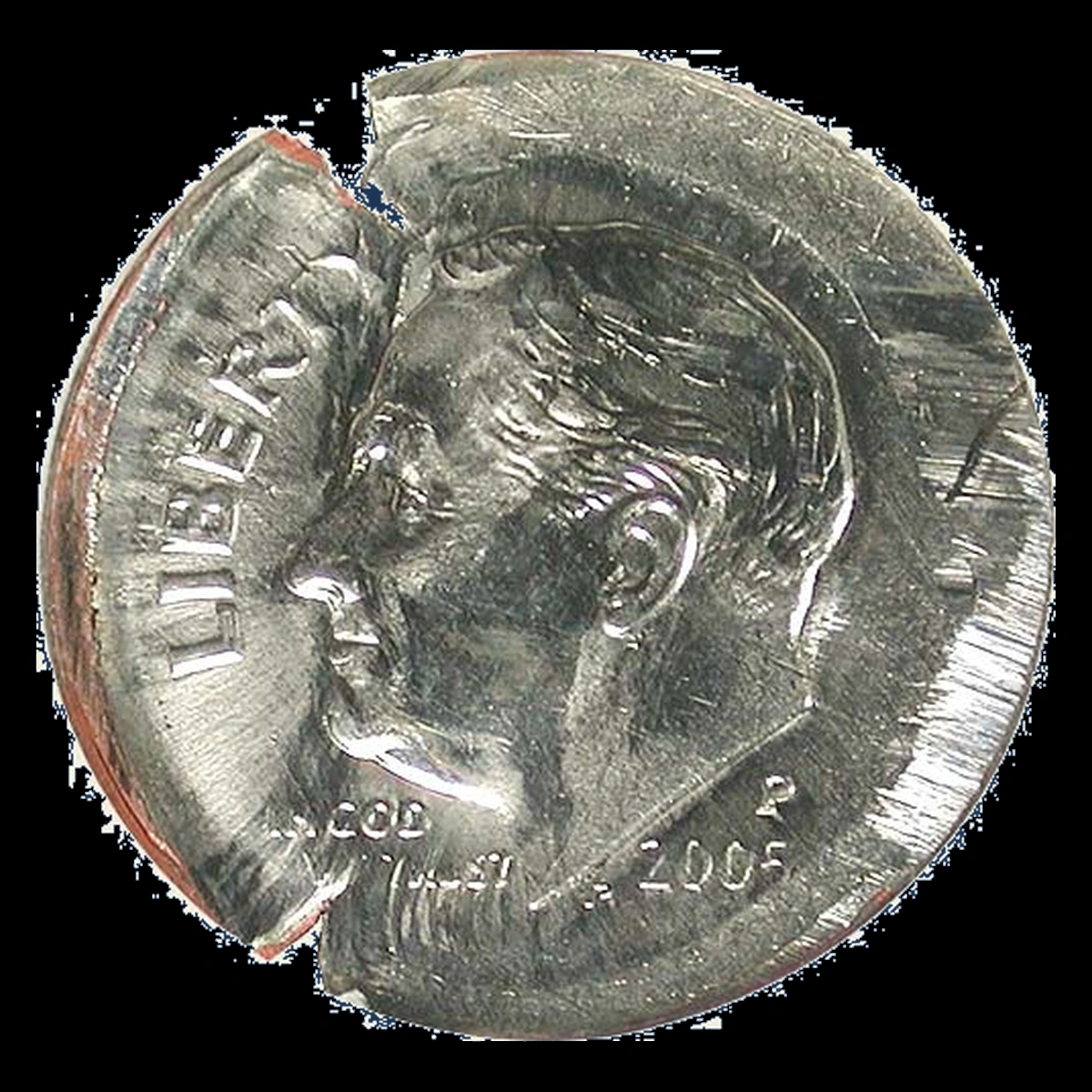
3. 2005 Dime A Wide Uneven Border: Broadstrike Error
A broadstrike spreads outward when the collar does not restrain the blank normally. The intended design remains within the enlarged metal.
Weinberg listed a 2005 uneven broadstrike, while a separate guide mentions a Denver example. The second report does not establish the dealer coin’s mint.
How to Identify
Follow the outer words on both faces to confirm that the whole design survives. An uneven margin alone does not make a strike off center.
Measure the widest and narrowest spans and inspect for later flattening or crushed detail. Record how the edge grooves change around the coin.
What It’s Worth
Genuine examples are estimated at $15–$400. The historical dealer listing’s $15 figure was an asking price.
A 2000-P dime combining broadstriking with repeated strikes sold for $159 in September 2025. Its different year and compound error prevent that result from becoming a direct 2005 broadstrike price.
4. 2005 Dime A Blank Crescent Beside Displaced Detail: Off-Center Strike Error
The reported 2005-D example is 15% off center and graded MS62. A blank sitting away from the intended center received only part of each design.
The report does not establish a clock direction. MS62 describes an unworn coin with noticeable marks.
How to Identify
Compare the bare area and the lost design on both faces. A one-face shift may instead involve the position of one die.
Inspect the unused metal for erased letter remains or grinding. Keep the surviving 2005 date and D visible without borrowing a direction from another example.
What It’s Worth
Genuine dated 2005 off-center dimes are estimated at $40–$500. Condition and remaining identification influence the comparison alongside displacement.
A 1977 dime struck 10% off center sold for $109 in June 2026. This is a different-year result, not an auction record for the reported Denver coin.
5. 2005 Dime Copper Exposed by Missing Metal: Missing Clad Layer Error
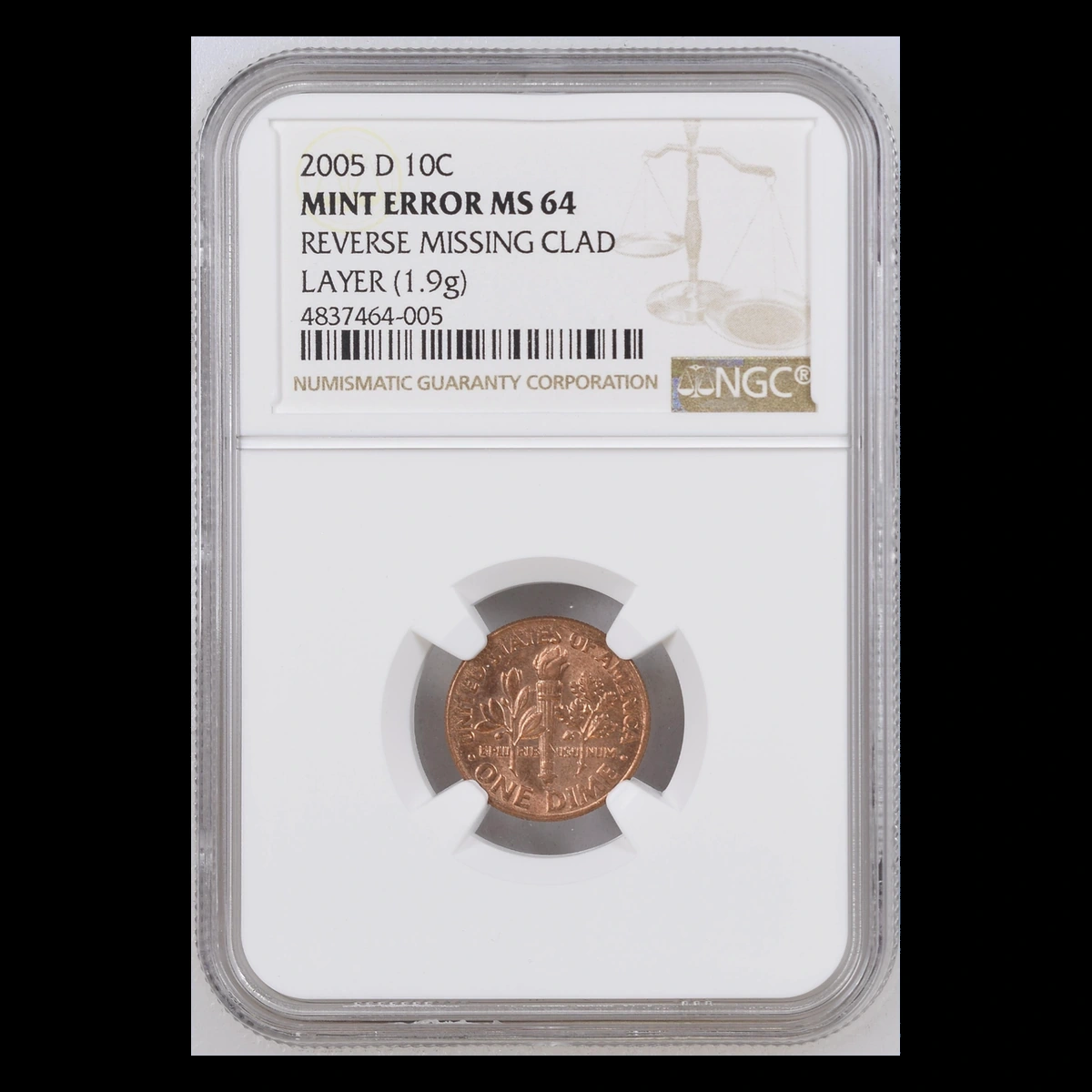
A recorded 2005-D dime missing its reverse outer layer weighs 1.9 grams and is graded NGC MS64. Its exposed copper reflects actual loss of the outer metal.
A separate Denver piece illustrated by Jon Sullivan has about 70% of an outer layer missing. It retains some silver-colored metal beside exposed copper.
How to Identify
Inspect both faces and the edge for the actual bonded structure. On partial loss, follow the boundary between copper and remaining outer metal.
Sullivan’s illustrated example shows why a genuine missing-layer face need not be completely copper-colored. Do not require its appearance or percentage on the separate 1.9-gram coin.
What It’s Worth
Comparable partial or complete layer-loss errors are estimated at $50–$600. An original boundary and preserved surfaces are important.
The 1.9-gram Denver reverse-layer-loss coin sold for $75 in December 2020. No sale amount is assigned to the separate 70% example.
6. 2005 Dime Altered Color with Layers Present: Improper Annealing Error
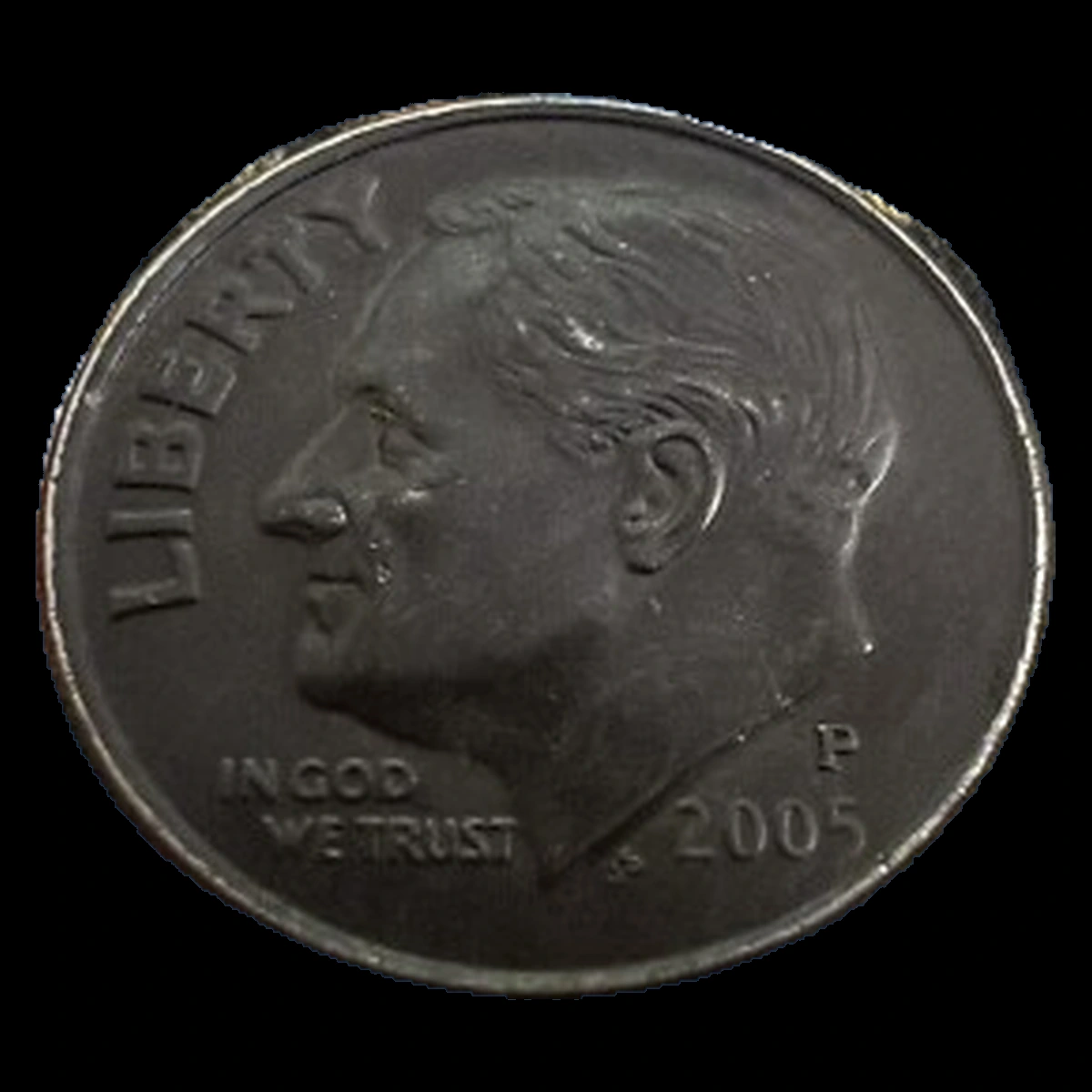
Annealing heats a blank to soften it before striking. A problem during that treatment can change the color without removing an outer layer.
The documented 2005-P NGC MS66 example belongs to this category. Its coppery appearance should not be treated as the same event as the Denver missing-layer coin.
How to Identify
Compare the colored face with the intact layered structure at the edge. A major weight shortage raises a different question from surface discoloration alone.
Look for pits, residues, coatings or scratches from later alteration. Chemicals and later heat can imitate dark color, so preserve the original texture for examination.
What It’s Worth
Comparable authenticated annealing errors are estimated at $30–$200. The identification depends on the original surface, not brown color alone.
The 2005-P MS66 coin sold for $74 in April 2015. This is a separate coin and cause from the $75 missing-layer example.
7. 2005 Dime An Object Still in the Coin: Retained Strike-Through Error
Material between the blank and die can remain embedded after it blocks the strike. The design around its boundary may be absent or weak.
A 2005-P MS60 example is reported without an identified material or position. The label does not establish cloth, wire or another specific object.
How to Identify
Photograph the boundary from several angles without pulling the material free. Original design should stop or weaken where the obstruction prevented contact.
Glue over complete letters or dirt in a later dent has a different relationship to the surface. Retained material may also affect total weight, so use the striking evidence rather than one required reading.
What It’s Worth
Genuine retained strike-throughs are estimated at $75–$1,000. Size, clarity and preservation determine which comparisons are useful.
No recorded sale is assigned to the reported Philadelphia piece. The dime and its attached material have one combined value.
8. 2005 Dime Parallel Horizontal Lines: Feeder-Related Marks Error
A reported 2005-D MS66 dime has horizontal lines described as feeder-finger marks. The feeding mechanism helps position blanks in the press.
A scrape on the die and direct interference against one blank are different events. The report names neither an affected face nor an exact position, so the actual relief must guide the explanation.
How to Identify
Use low light to decide whether the lines rise above or cut into the surface. Raised lines may copy grooves in the die; later scratches can cut through completed letters.
Keep the date, D and full group of lines visible. Parallel arrangement alone cannot identify the responsible press part.
What It’s Worth
Modest genuine Mint-made feeder-related marks have a conditional estimate of $5–$50. The reported MS66 grade does not establish how the lines formed.
This is a comparison-based range for minor press-related marks. Ordinary handling scratches do not qualify merely because several are parallel.
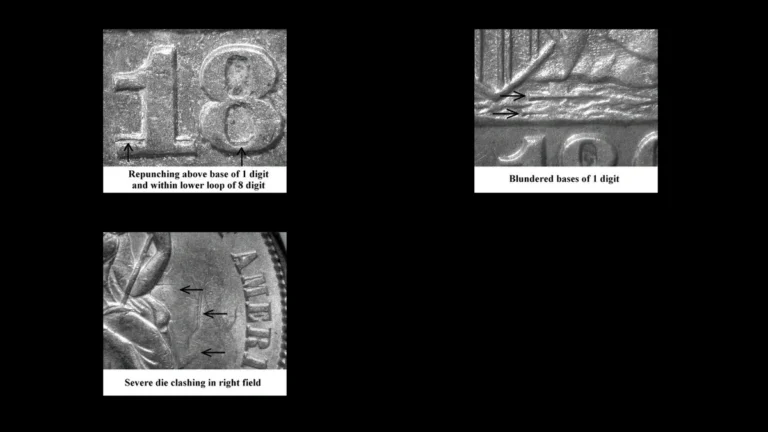
9. 2005 Dime Raised Lines, Lumps or a Rim Patch: Die Damage Error
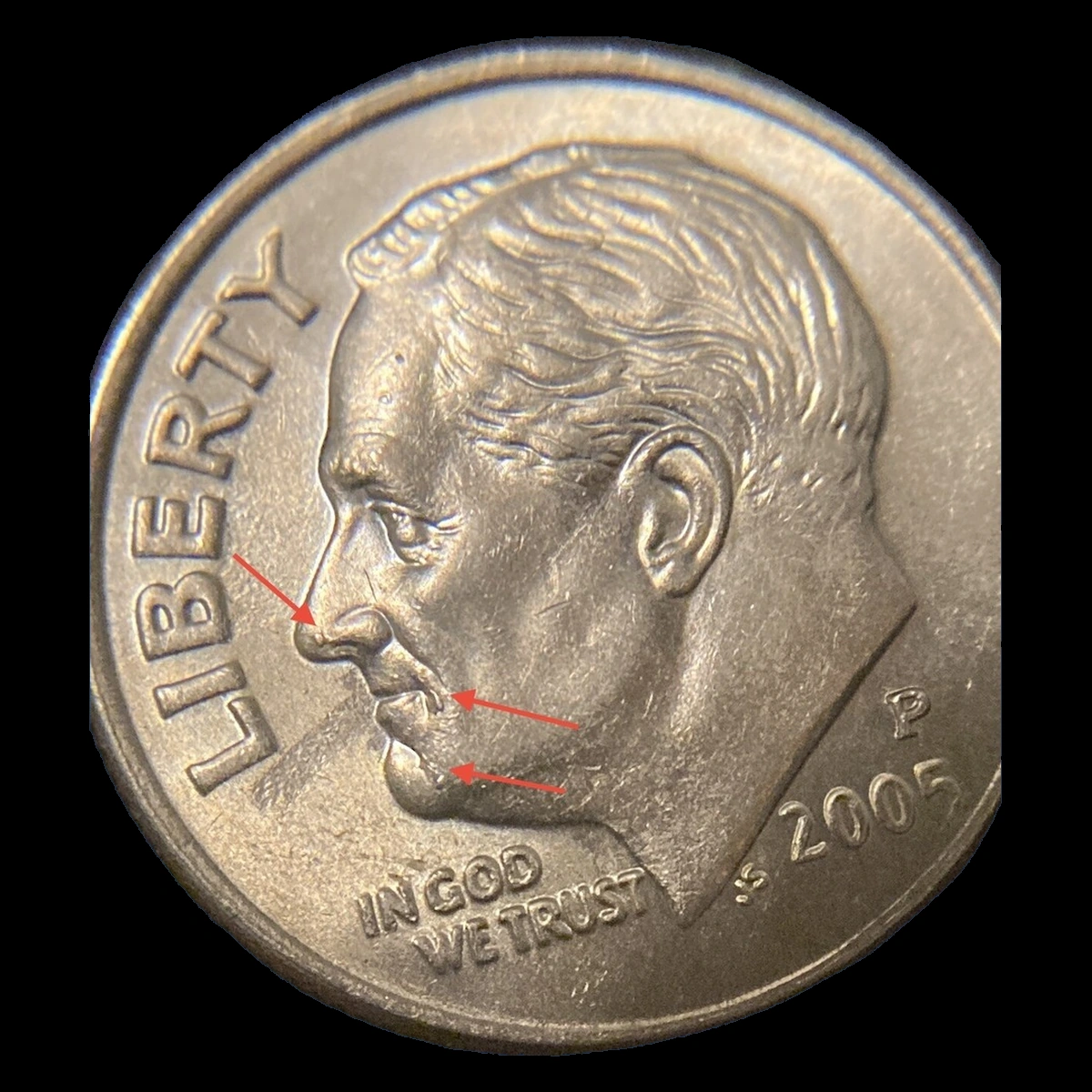
A cracked die can leave a ridge, while missing steel can leave a raised chip-shaped patch. Philadelphia reports include obverse chips and cracks on both faces.
A separate Denver report concerns a larger patch joined to the rim, called a cud. The reports do not define a universal path for every crack.
How to Identify
Distinguish a raised center from a scratch with a recessed middle. For a suspected cud, show the continuous connection to the rim.
Compare the area with a normal dime and inspect the edge for impact damage or added material. Do not scrape a lump to test it.
What It’s Worth
Estimated values span $5–$350 across minor chips, cracks and stronger rim breaks. Size, originality and condition determine the comparison.
No individual sale is assigned to either mint’s report. Several cracks on one coin do not each earn a separate maximum price.
10. 2005 Dime Additional Date or Motto Outlines: Doubled Obverse Error
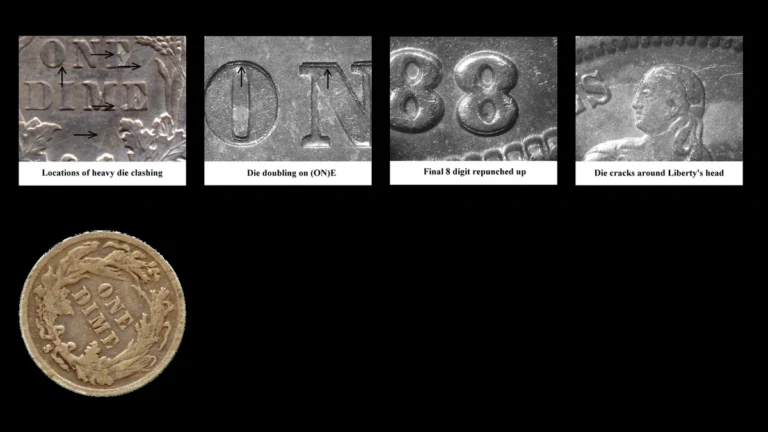
Slight repeated detail near the date or IN GOD WE TRUST is reported on 2005-P dimes. A doubled die already carries those repeated shapes before striking the coin.
The precise direction and outline require a photographed match. A thick letter by itself cannot establish that the die was doubled.
How to Identify
Compare several affected letters and digits under the same light with an identified example. Look for fixed repeated outlines or split ends rather than glare.
A flat shelf that reduces the apparent width of the main letter can result from movement during striking. Normal measurements establish coin type, not the variety.
What It’s Worth
Clearly identified minor doubled obverses have a working estimate of $15–$250. Sharp diagnostics and original surfaces support stronger interest.
No documented sale is supplied for this particular 2005-P pattern. A blurry date or motto should not inherit the top estimate.
Conclusion
On a 2005 dime, color and metal structure need to be read together. A missing layer can expose copper, while annealing can change appearance with the layers intact.
Keep the satin collector finish separate from the error itself, and use side views for collar and layer questions. Leave retained objects and original surfaces untouched, while preserving the distinction between dealer offers, comparison sales and the actual specimen being examined.