Rare 1938 Buffalo Nickel Errors (List & Pictures)
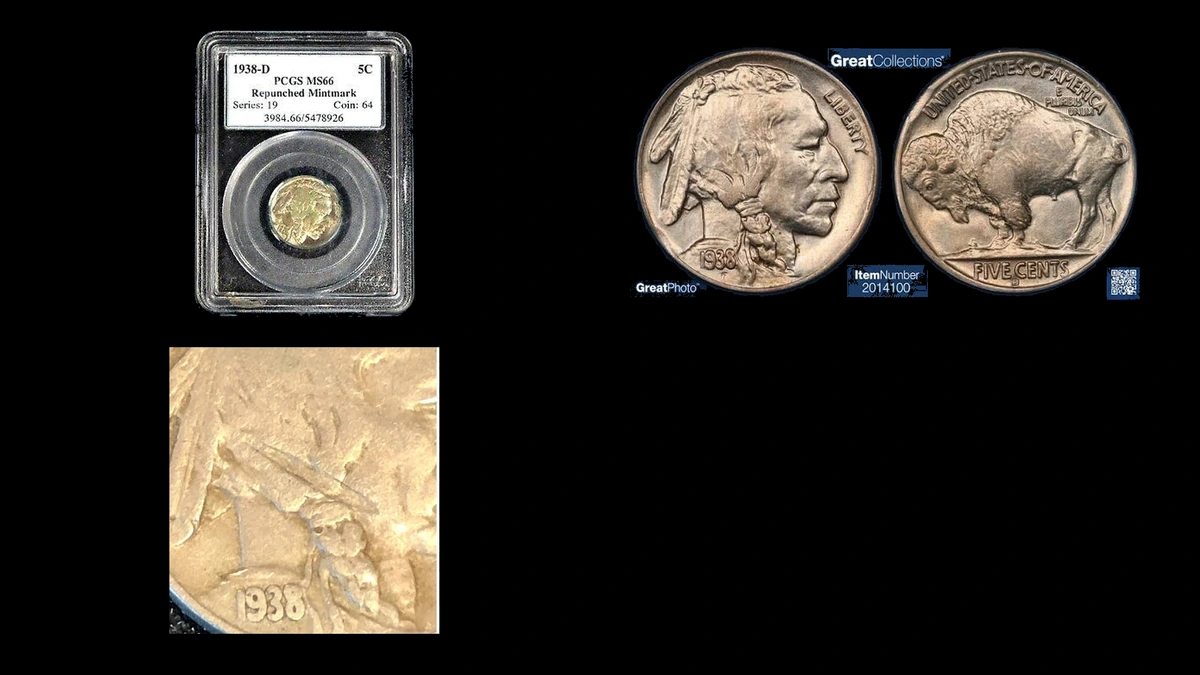
Two different nickel designs carry the date 1938, so begin by confirming the buffalo on the reverse. The 1938 Buffalo nickel errors below have estimated whole-coin values of $20–$26,000.
A superb D-over-S example reached $25,300 in August 2004. Examine the small Denver mintmark, then the buffalo’s legs and any missing metal to find the relevant comparison.
| Inspection point | Feature to distinguish | Estimated value |
|---|---|---|
| D below FIVE CENTS | Earlier D or S strokes | $20–$1,000 for D-over-D; ordinary D-over-S often $50–$600 |
| Buffalo’s legs | Reported missing segment | $200–$3,000, conditional on a match |
| Rim opening | Original straight clip | $100–$1,000 |
| Reverse surface | Separating metal | $30–$350 |
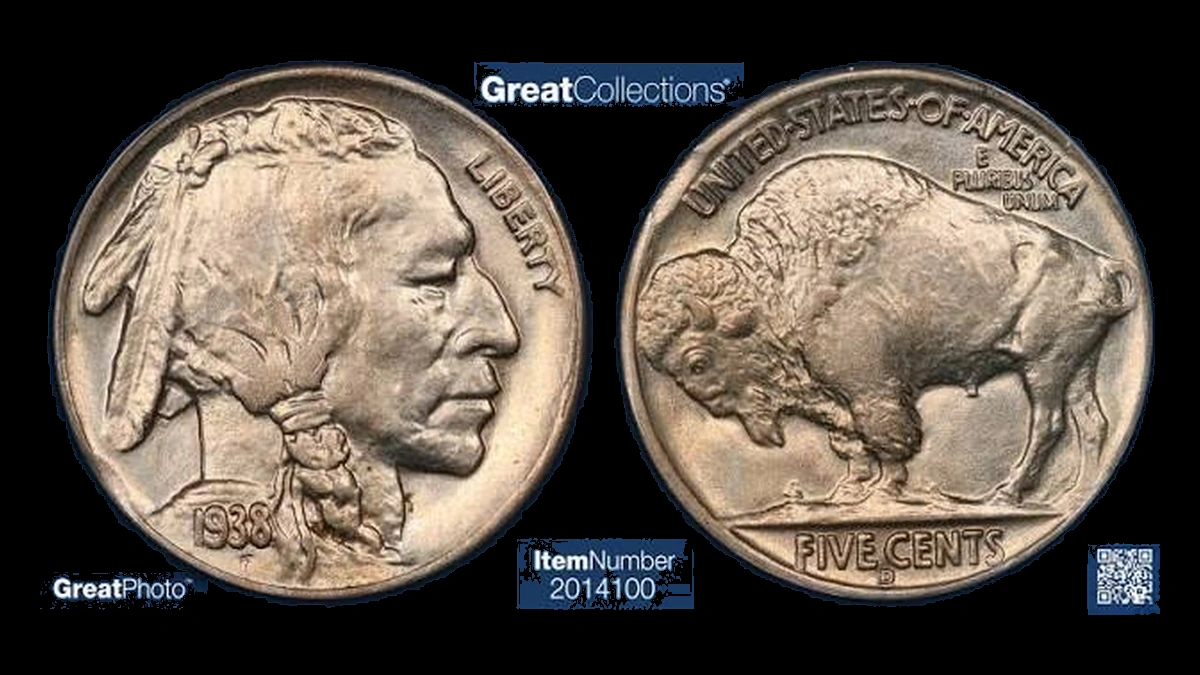
All regular 1938 Buffalo nickels were made at Denver. A normal example has a plain edge, weighs 5 grams, and measures 21.21 millimeters across.
1. 1938 Nickel Another D Beneath the Mintmark: Repunched Mintmark Error
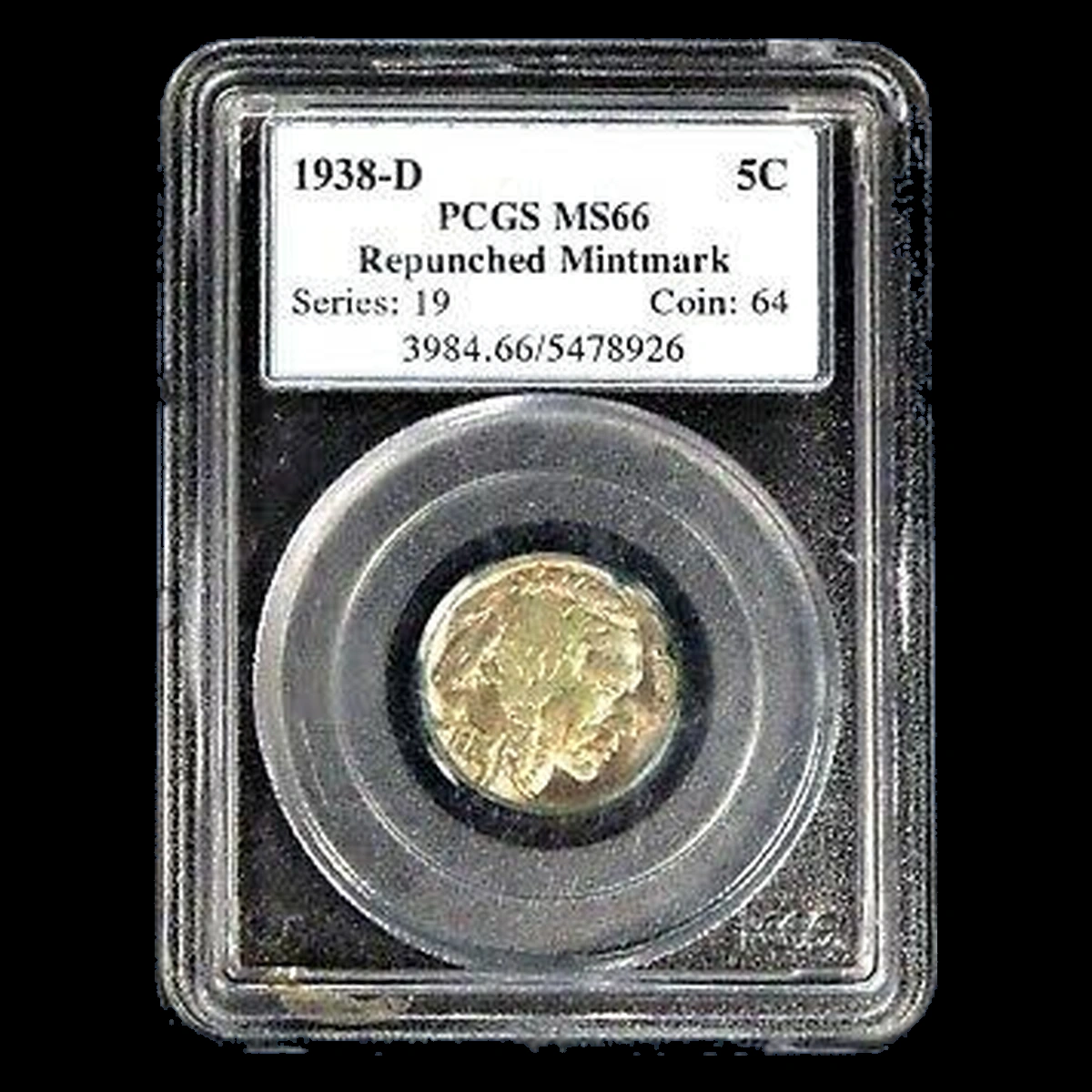
At the bottom of the reverse, a small extra stroke around the D may belong to an earlier impression of the same letter. Workers punched mintmarks into the dies, and a shifted repeat entry could leave part of the first D visible.
The die then passed that combined shape onto the coin in one strike. D-over-D examples are illustrated in a specialist collector’s set, while a year guide also describes a three-punch pattern.
How to Identify
Enlarge the mintmark below FIVE CENTS and trace both straight and curved portions of any extra strokes. They should fit the earlier D in a known matching pattern.
A lump beside the letter is not enough to prove another D, and a three-punch claim needs evidence of its own. Keep D-over-S comparisons separate until the earlier letter’s shape can be resolved.
What It’s Worth
Estimated D-over-D values span $20–$1,000, with many recognizable examples toward the lower part of that range. Stronger details and unusually fine surfaces can increase interest.
No realized price is supplied for a specific example here. Counting apparent extra impressions does not establish rarity or justify multiplying the value.
2. 1938 Nickel Curves from an Earlier S: D-over-S Mintmark Error
An overmintmark combines two different mint letters in one die. For this variety, the final Denver D overlies remnants of an earlier S.
The coin was struck at Denver, even though its die retains evidence of the other letter. It does not establish a regular 1938-S Buffalo nickel issue.
How to Identify
Compare the entire mintmark with an identified D-over-S example. Several patterns exist, so the visible parts of the S need not match every other specimen.
Follow the extra curves around and beneath the D instead of identifying the variety from one bump. If those strokes fit the straight side and bowl of another D, investigate repunching instead.
What It’s Worth
The broad estimated range is $25–$26,000, while many ordinary collectible examples fall around $50–$600. The extreme upper end requires exceptional preservation.
The PCGS D-over-S records include $25,300 for an MS68 example in August 2004. A separate MS67 certification record shows a $576 sale in October 2021, illustrating why the highest result is a poor shortcut for an ordinary coin.
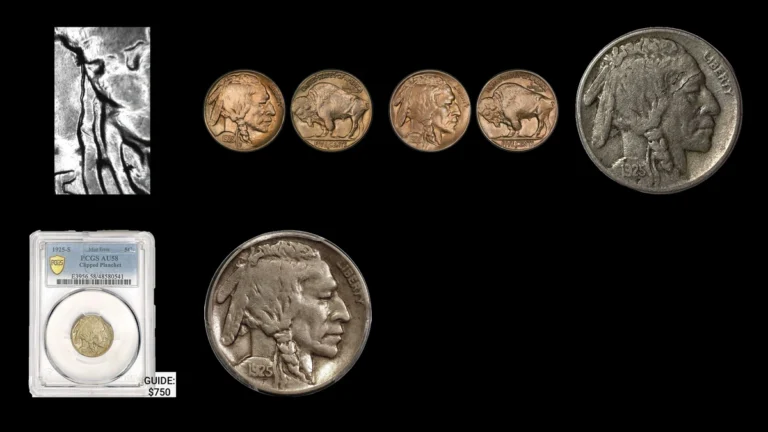
3. 1938 Nickel Part of a Leg Absent: Reported Three-and-a-Half Legs Error
A collector’s illustrated set includes a 1938-D nickel described by its owner as a three-and-a-half-leg minor variety and discovery coin. The displayed grade is PCGS MS62, indicating an unworn coin with noticeable marks.
The supplied description does not establish the exact missing segment or its cause. It also does not independently verify the full certification record for that variety claim.
How to Identify
Compare all four leg positions with the collector’s actual 1938 example and an ordinary reverse. Keep the whole buffalo in the photograph so the affected segment has a clear location.
Look for altered texture, scraping, or general wear around the absent detail. The familiar markers of a 1937-D three-legged nickel cannot be borrowed to authenticate this separate report.
What It’s Worth
A conditional $200–$3,000 estimate applies to a genuine coin matching the reported variety. It is not a recorded sale of the collector’s displayed specimen.
An unworn surface helps show whether the missing segment belongs to a consistent pattern. A worn or scraped leg does not qualify for the estimate simply because the silhouette seems similar.
4. 1938 Nickel A Straight Portion Missing at the Rim: Clipped Planchet Error
Move outward from the design to any gap in the coin’s edge. A straight clip begins when the blank-cutting punch crosses the end or edge of the metal strip.
The resulting incomplete blank is struck with that shortage already present. A year guide describes a 1938-D MS65 example with about 10% missing, without giving its clock position.
How to Identify
Inspect both ends of the straight gap, where the surviving rim resumes. Look for design and metal flow consistent with striking an incomplete blank.
File tracks, burrs, or letters sliced through after striking suggest later cutting. Weakness on the opposite rim can support a genuine clip, but its absence does not automatically exclude one.
For a loose candidate, record the remaining weight and intact width. Missing weight proves a shortage, not when the shortage occurred.
What It’s Worth
Comparable genuine straight clips suggest about $100–$1,000, depending on condition and the missing area. A readable date helps keep the identification secure.
The year guide reports a $630 sale for its approximately 10% MS65 example without a sale date. Treat that as a reported comparison with limited transaction detail, rather than a universal price for straight clips.
5. 1938 Nickel A Flap or Rough Opening on the Back: Lamination Error
A shallow seam inside the metal can open and allow a surface layer to lift. This is a lamination in the copper-nickel alloy, which has no separate plated coating.
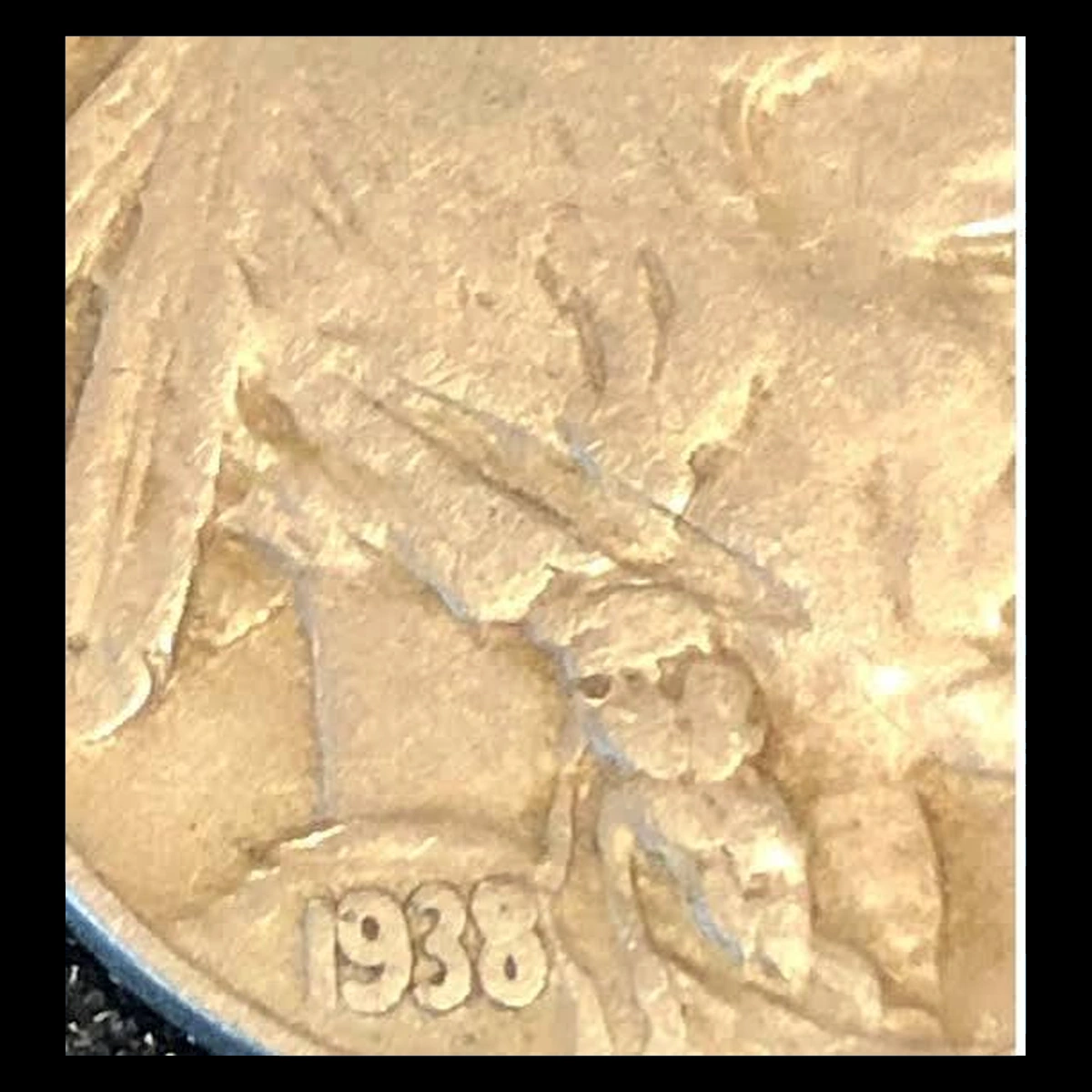
A seller described a reverse lamination on a golden-toned 1938-D nickel in an older PCGS MS65 holder. The description does not establish that PCGS also certified the claimed error.
How to Identify
Use side lighting to locate a thin separation boundary and any surviving design on the affected metal. Leave an attached flap untouched.
A stain changes color without creating an opening, while a scratch can push metal upward along a cut. Find the actual original separation before relying on either the seller’s wording or the condition grade.
What It’s Worth
Genuine laminations suggest an estimated $30–$350 for the complete coin. Large clear separations may attract more interest than shallow flakes.
The supplied MS65 listing has no documented sale amount. Its preservation and toning contribute to the whole coin’s value independently of the claimed defect.
Conclusion
For a 1938 Buffalo nickel, the mintmark provides a precise starting point: extra strokes must fit a D or an S before either variety name applies. Missing metal calls for a different check of the original surface and edge.
Keep the reported leg variety tied to its own evidence, and distinguish a holder’s condition grade from an error attribution. The exceptional $25,300 result belongs to an exceptional D-over-S coin.