Rare 1998 Quarter Errors (List & Pictures)
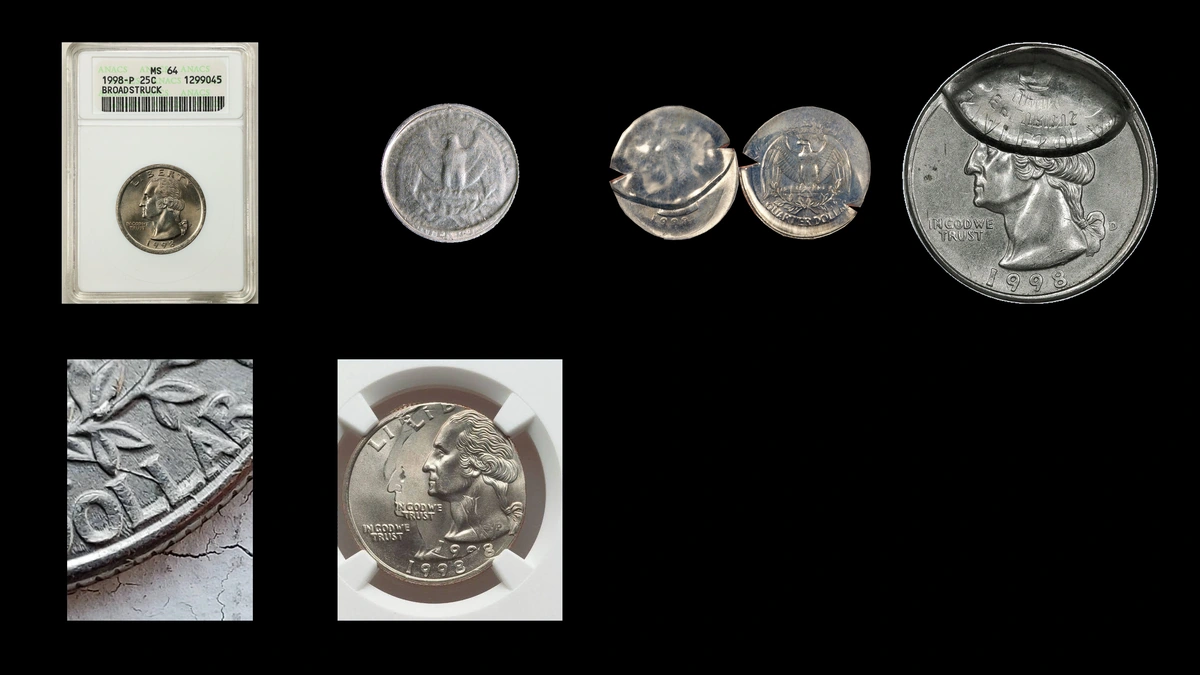
A round hollow across the eagle brought one quarter $1,292.50 in January 2013. A cent blank had blocked the strike, but that blank was not included with the coin.
Estimated values for 1998 Washington Quarter errors range from $2–$2,500. Inspect the outline and edge, then distinguish missing metal, plain depressions, backward impressions, and overlapping strikes.
| Feature | Useful distinction | Estimated value |
|---|---|---|
| Wide outline | Broadstrike with complete design | $40–$300 |
| Oval blurred reverse patch | Struck through another blank’s layer | $100–$500 for a clear match |
| Round eagle-side hollow | Indent from a cent blank | $250–$1,800 |
| Two related quarters | Matching error pair | $600–$2,500 for both |
The standard clad quarter weighs 5.67 grams and measures 24.26 millimeters with a grooved edge. Its copper core and bonded outer layers differ from the construction of a silver Proof.
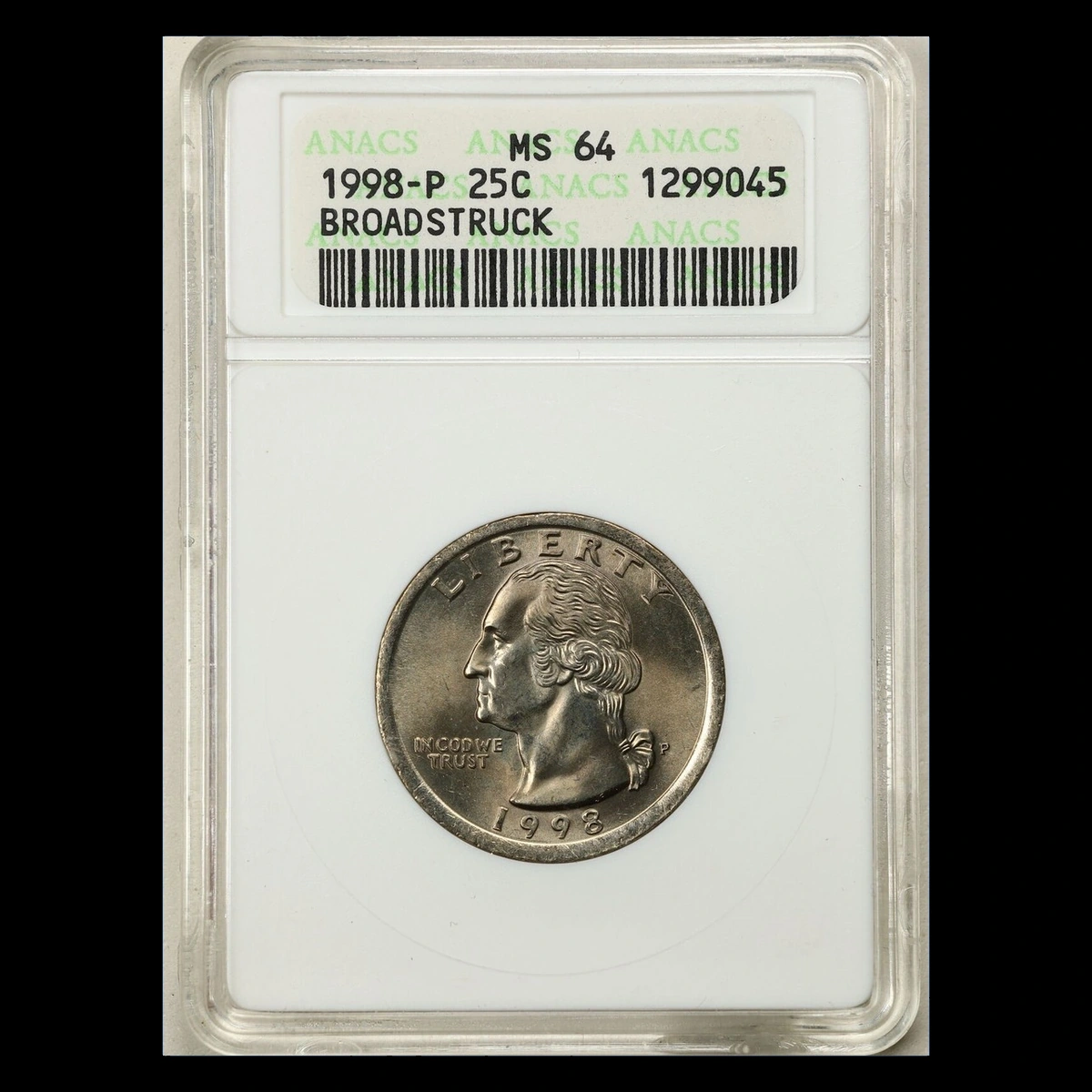
1. 1998 Quarter Complete Design inside a Wider Border: Broadstrike Error
A Philadelphia NGC MS67 example shows the expanded outline of a broadstrike. The collar ring failed to hold the blank at its normal width during striking.
Metal can spread unevenly, leaving a border wider on one side. Its exact diameter is not supplied and must not be replaced with the ordinary quarter’s measurement.
How to Identify
Check whether the full design remains inside the expanded metal and inspect several widths. Later flattening may also enlarge a coin while crushing its detail.
Look along the side for natural flow and incomplete grooves. Lost design beyond one edge requires an off-center assessment rather than expansion alone.
What It’s Worth
Clear genuine broadstrikes suggest $40–$300. Noticeable expansion and preserved surfaces make the stronger comparisons.
A 1990-P nickel with a partial-collar error sold for $99 in June 2025. Its stepped edge is a related but different mechanism from an unrestricted broadstrike.
2. 1998 Quarter Most of the Blank Remains Untouched: Off-Center Strike Error
A reported 1998 quarter was about 80% off center, with its date and parts of the motto surviving. It appeared in a mixed five-coin auction lot.
The supplied description gives neither an individual professional grade nor a visible mintmark. Its mostly blank appearance does not fill those gaps in identification.
How to Identify
Read the surviving date and compare both faces for corresponding design cutoff. The large unstruck region should remain original metal rather than an area ground smooth.
If the mintmark location missed the strike, an absent letter does not establish Philadelphia. Keep the group context separate from the quarter’s own features.
What It’s Worth
A genuine large dated off-center example suggests $100–$450, depending on shape, surfaces, and surviving detail.
A 1999-D Delaware quarter struck 80% off center sold for $139 in December 2024. That is a different-year comparison, and a mixed lot’s total should not be assigned to this 1998 quarter alone.
3. 1998 Quarter Gaps Combine with Displaced Strikes: Clipped Planchet Error
A Philadelphia example combines two curved clips with an off-center strike. Denver reports include 15% double clipping with a 10% offset, and a separate coin with about 35% total double clipping.
Other Philadelphia reports describe a 38% straight clip and an 8% strip-end clip. Each percentage belongs to its own coin and type of shortage.
How to Identify
Separate physically missing metal from an off-center crescent where metal remains untouched. Inspect each gap’s complete boundary for original blanking surfaces rather than saw marks or burrs.
Curved, straight, and strip-end gaps need different outline comparisons. Reduced weight supports a shortage but does not prove it existed before striking.
What It’s Worth
Small genuine clips suggest $30–$200; large gaps and attractive combined errors may fall around $150–$650.
A 1999-D Pennsylvania quarter with overlapping clips sold for $74 in December 2024. Every combined 1998 piece receives one whole-coin value rather than separate sums for each clip.
4. 1998 Quarter An Irregular Area Was in the Blank: Defective Planchet Error
A PCGS MS64 quarter is described as struck on a blank with about a 10% defect. That wording does not identify the flaw as a clip or a missing outer layer.
The strike’s effect on the existing irregularity is the evidence to examine. Later digging or corrosion can also leave an incomplete-looking area.
How to Identify
Follow nearby design into the flaw to see whether it formed around a pre-existing boundary. Fresh cuts through completed detail suggest later damage.
Record actual measurements and inspect the opposite face and edge. The reported 10% defect is not a measured 10% weight loss.
What It’s Worth
A genuine defect of this general size suggests $50–$300. Clear original boundaries and attractive remaining detail support the comparison.
No auction amount is supplied for the MS64 coin. A large rough patch alone does not establish either its cause or a premium.
5. 1998 Quarter Copper Appears on One Face: Missing Clad Layer Error
Both Philadelphia and Denver missing-layer examples are reported. An absent copper-nickel face can expose the copper core and lower the coin’s weight.
The affected side and actual measurement are not supplied as shared diagnostics. They must be established for each individual coin.
How to Identify
Confirm an ordinary clad issue, then compare the exposed design with the intact opposite face and surviving edge layers. A meaningful weight loss helps distinguish absent metal from staining.
Look for grinding, chemical attack, or added plating at the boundary. A silver Proof lacks the same copper-core structure and is a different comparison.
What It’s Worth
Genuine full outer-layer losses suggest $100–$700. Clear original struck copper is more desirable than corroded or heavily damaged surfaces.
A 1999-D Connecticut reverse-layer-loss quarter sold for $149 in December 2024. It does not establish which face is affected on either 1998 report.
6. 1998 Quarter A Shallow Oval Blurs the Reverse: Struck Through a Loose Layer Error
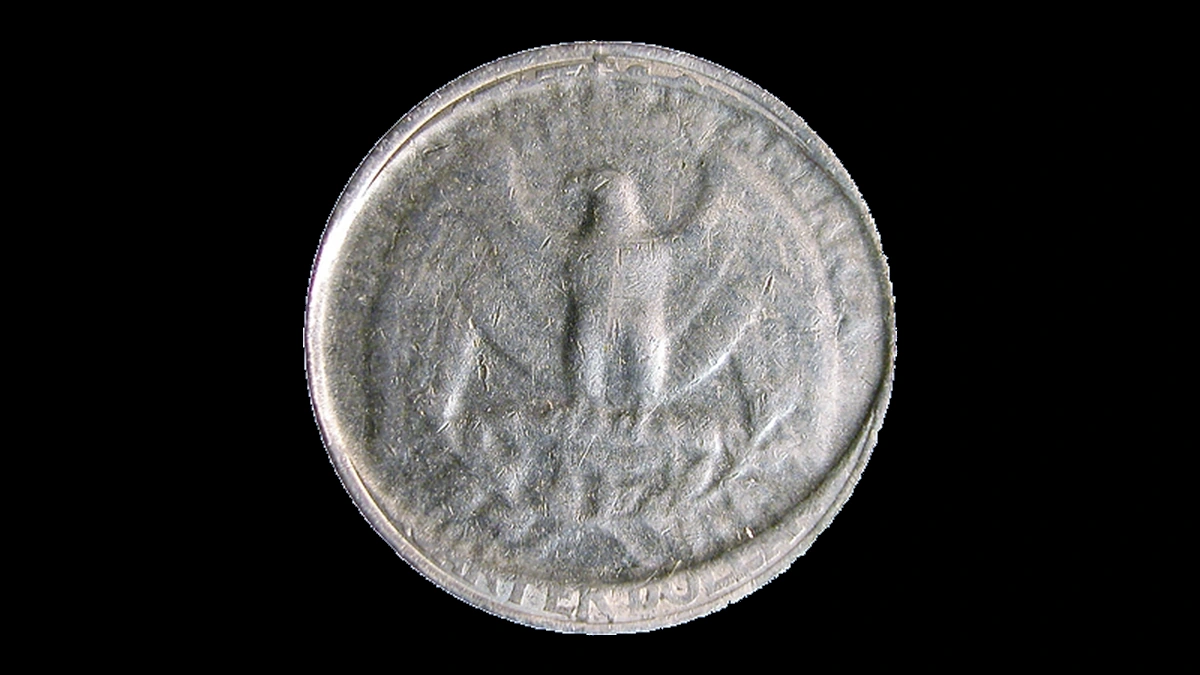
The Denver example has an oval depression with evenly blurred design inside and narrow normally struck bands above and below. It was described as struck through an outer layer detached from another elliptical blank.
The receiving quarter did not necessarily lose its own layer. A separate Philadelphia forum coin has a recessed struck-through claim with its own unspecified object and location.
How to Identify
For the Denver coin, compare the shallow reverse boundary, uniform internal blur, and normal bands together. Those relationships explain the sheet that blocked the strike.
A deep gouge or piled-up metal is a different appearance. Do not assign the same layer identity to the separate Philadelphia depression without evidence.
What It’s Worth
Small genuine struck-through marks suggest $20–$150, while a clear matching oval-layer impression suggests $100–$500.
A 1986-P nickel struck through material sold for $204 in June 2023. Its result supplies only a broad comparison for an original foreign-material impression.
7. 1998 Quarter A Round Hollow across the Eagle: Indent from Another Blank Error
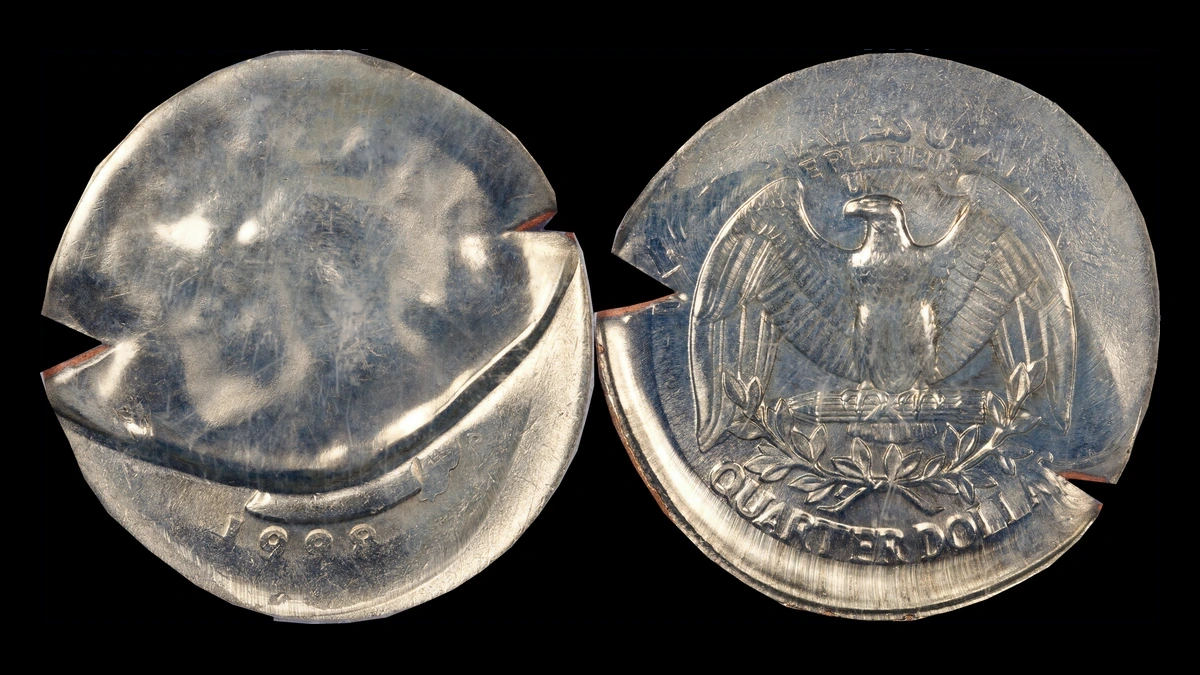
A cent blank blocked much of the reverse strike on a Philadelphia PCGS MS64 quarter. The eagle remains faintly visible inside the round hollow, with outer lettering rising around it.
The blocking cent blank was absent from the auction offering. Other Philadelphia indents combine broadstriking or a 25% offset with a 15% reverse indent and are separate coins.
How to Identify
Inspect the faint eagle within the centered hollow and its boundary against the raised surrounding design. That pattern differs from an empty later dent.
On the off-center combination, keep the 25% displacement separate from the 15% depressed area. Check for machining or squeezing that could alter an ordinary finished quarter.
What It’s Worth
Clear genuine indents suggest $250–$1,800, depending on size, definition, and associated striking features.
The centered cent-blank-indent PCGS MS64 sold for $1,292.50 in January 2013. That price covers the quarter alone, not a two-coin set.
8. 1998 Quarter Backward Detail Is Pressed into the Surface: Brockage Error
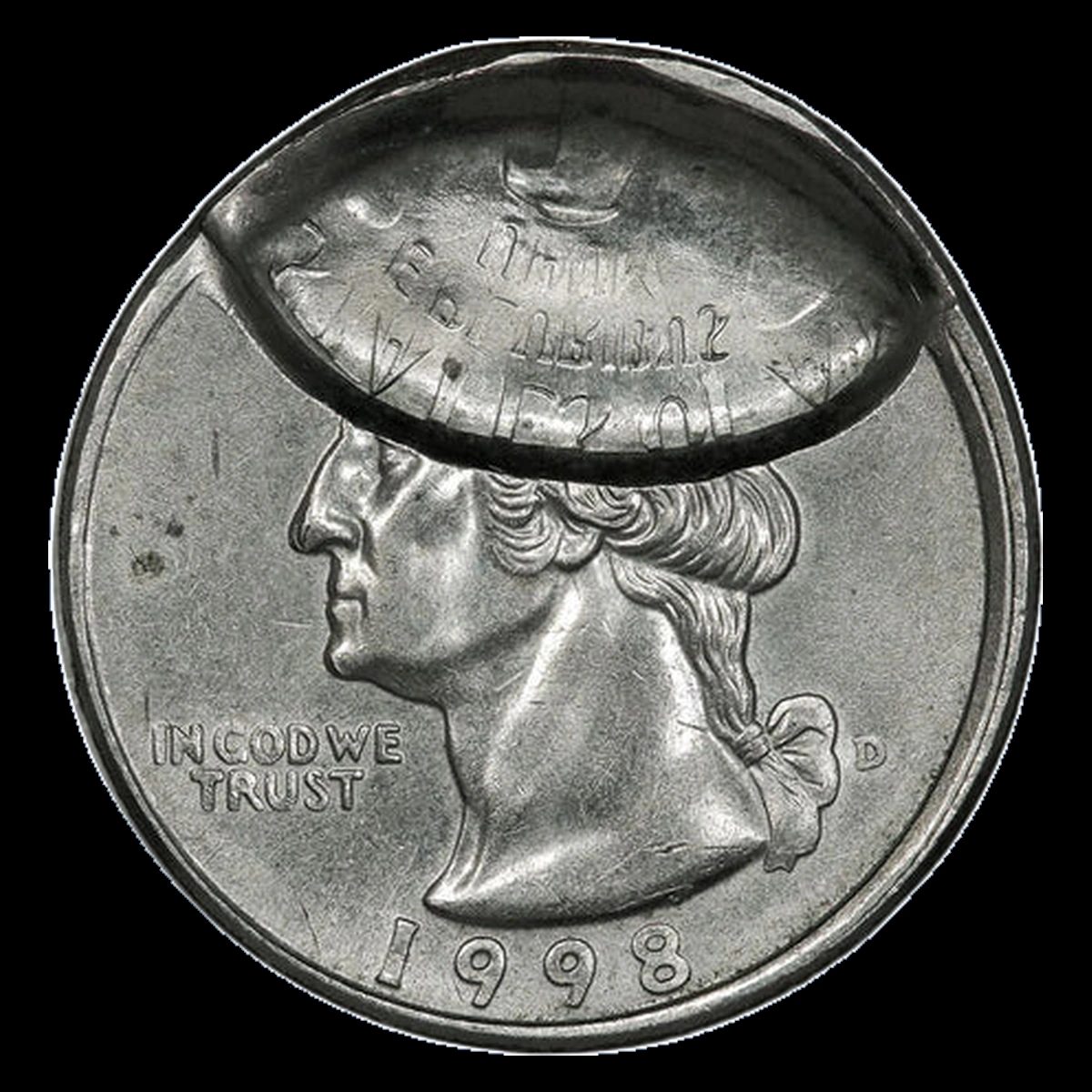
A Philadelphia PCGS MS66 example combines about 10% brockage with a broadstrike. A previously struck coin impressed its raised design into the receiving blank as a recessed mirror image.
The supplied description does not identify the affected face. The spreading and transferred impression belong to the same specimen.
How to Identify
Find recognizable backward letters or another reversed feature below the surrounding surface. Raised same-direction doubling or a plain hollow does not establish brockage.
Inspect both faces before assigning a location and check whether the expanded metal fits the original contact. Later squeezing can create misleading impressions on finished coins.
What It’s Worth
A clear partial brockage combined with broadstriking suggests $150–$800.
A 1999-P New Jersey quarter with 80% front brockage and broadstriking sold for $312 in December 2024. Its much larger affected area is a different comparison from this 10% example.
9. 1998 Quarter Scrapes Continue from Blank Margin into Struck Detail: Tool-Related Marks Error
Two studied Philadelphia quarters show scrapes crossing an unstruck front margin and continuing over freshly struck design near the end of LIBERTY. Their reverses also show tool scrapes and small blocked areas near the eagle’s legs.
These connected features support damage occurring through the striking process. A separate raised-line claim nicknamed Wounded Eagle does not identify every eagle scratch as the same event.
How to Identify
Compare the two studied examples by tracing the mark across the blank-to-struck boundary. The later example has stronger marks, but both require their full surface relationships.
For a raised eagle line, first verify that it actually rises above the surface. An unrelated circulation scratch does not inherit the studied coins’ explanation.
What It’s Worth
A small genuine raised die line suggests $5–$75; a well-established example of the continuing scrape pattern suggests $75–$400.
No specific sale is supplied for those studied coins. The stronger estimate requires their connected evidence rather than the nickname alone.
10. 1998 Quarter A Spike from the Head or a Rim Lump: Die Cracks and Cuds Error
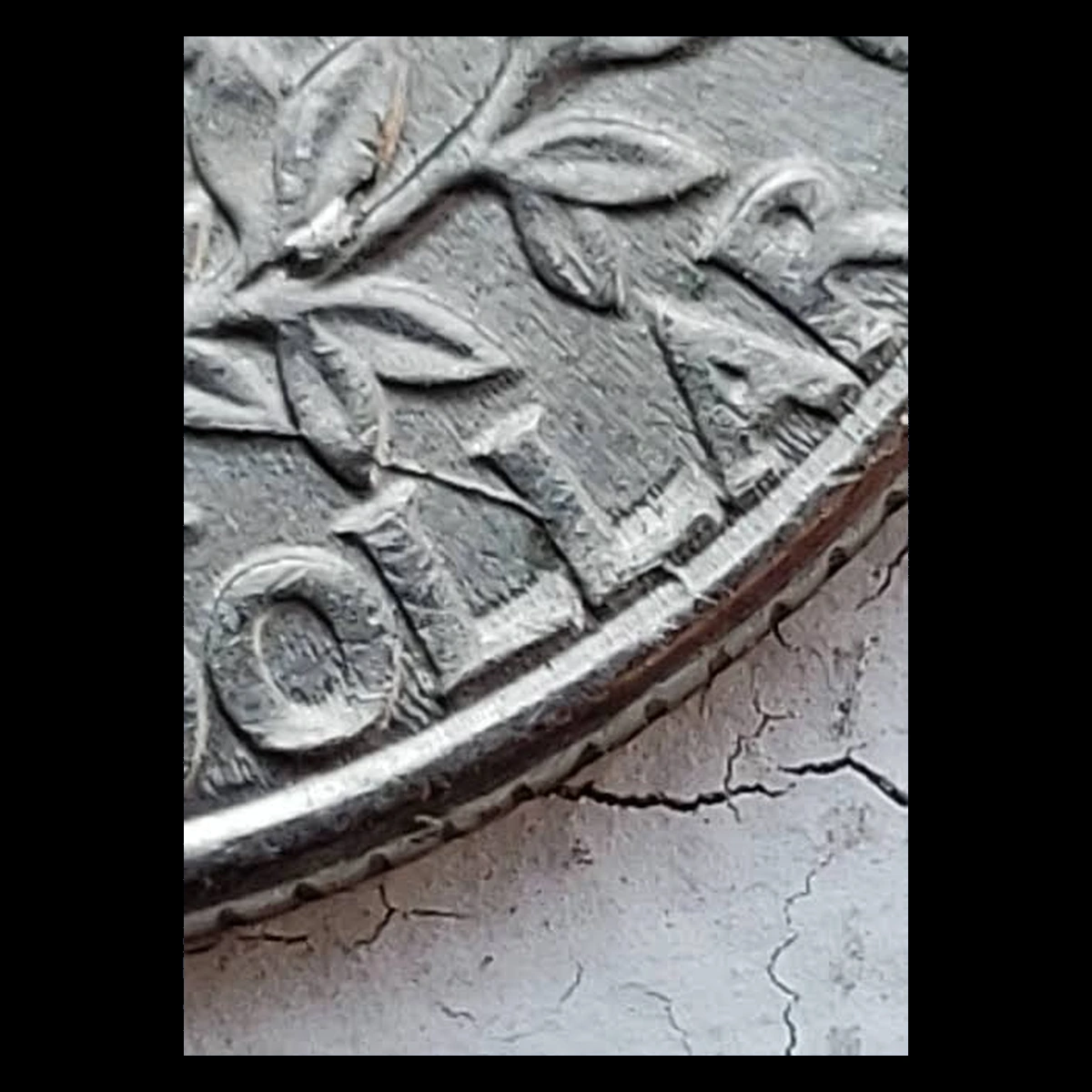
Several Philadelphia spike-head varieties show raised routes from Washington’s head toward the rim. Separate reports concern a Philadelphia reverse break and a Denver front break.
Coin metal fills openings in a damaged die, creating the raised features. A broad rim-connected break is a cud, while a thin head-to-rim ridge remains a crack.
How to Identify
Match the complete route with the spike-head catalog. The reverse LL crack in DOLLAR is a supporting feature for only its particular example.
One spike-head coin also has a partly constrained edge, which should not be assigned to all others. Inspect raised metal for impact damage or an attached substance before attributing a cud.
What It’s Worth
Small cracks suggest $2–$40; larger genuine rim breaks suggest $30–$250.
A 1970-D nickel with two cuds sold for $63 in October 2022. That different denomination does not price an individual 1998 spike-head pattern.
11. 1998 Quarter Rounded Extra Letter or Feather Edges: Doubled Die Error
Philadelphia front reports mention LIBERTY, the motto, and date. Reverse reports concern arrows, eagle feathers, and surrounding lettering.
Those are areas to investigate rather than one complete cataloged pattern. A true doubled die carried the second contour before the coin was struck.
How to Identify
Compare one suspect feature with a documented 1998 example of the same mint and face. Rounded duplicate contours differ from flat mechanical shelves.
Use matching light and follow the entire repeated shape. Normal measurements cannot establish a small die variety, and a broad-looking date alone is insufficient.
What It’s Worth
Genuine matched minor doubling suggests $10–$150. Clear separation and original surfaces support the stronger comparisons.
The report supplies no single realized price for these broad claims. Wear or cleaning can reduce appeal even when genuine doubling remains visible.
12. 1998 Quarter Several Portraits and Dates Overlap: Multiple Strikes Error
Philadelphia reports include triple and quadruple strikes with different movements. A Denver example was first struck 10% off center and then 90% off center.
Another coin has a 70% off-center second strike with part of its reverse blocked. A separate Philadelphia multiple-strike piece carries recessed backward UN in an upper-front indent, without an established strike count.
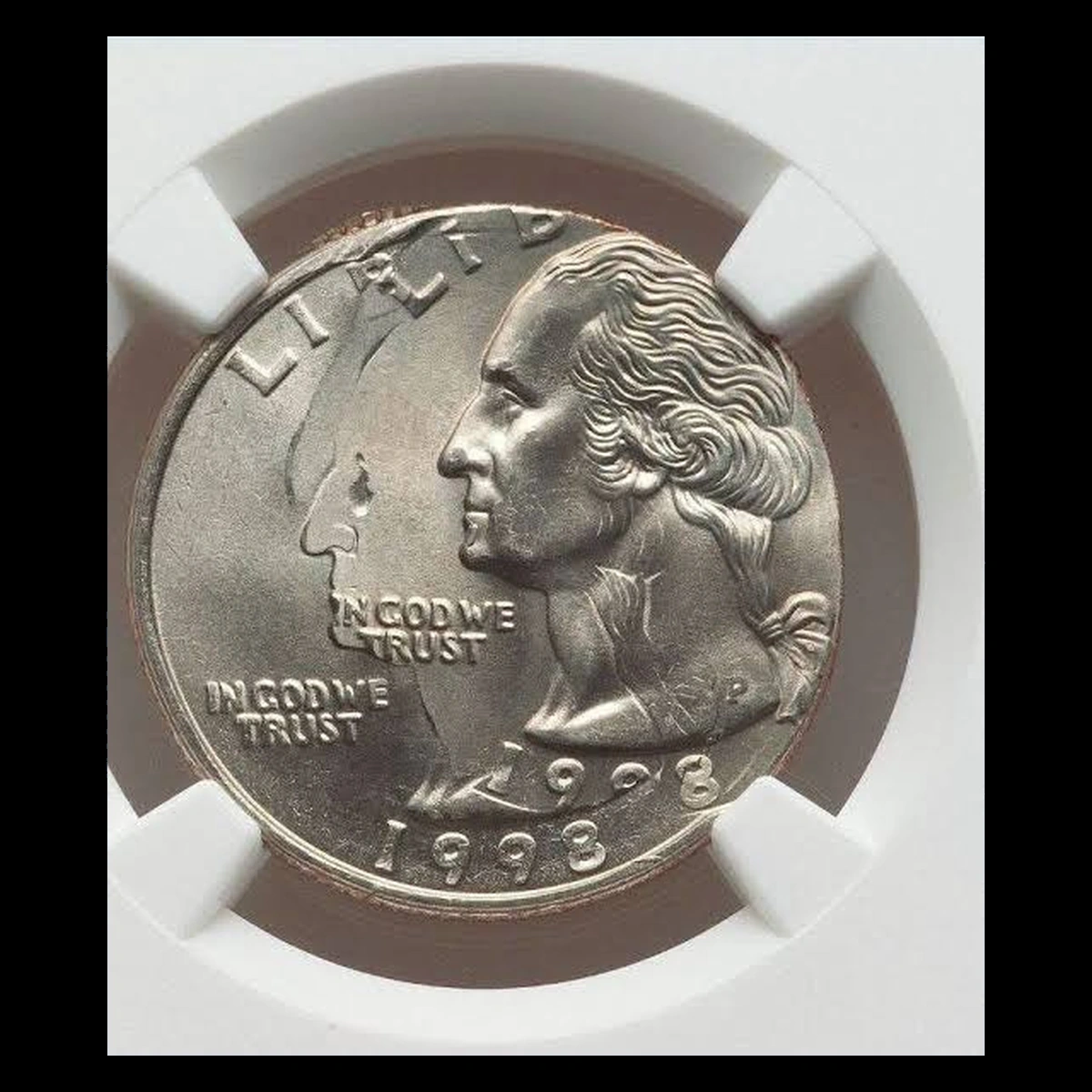
How to Identify
Associate each portrait or lettering group with its own strike border, noting where later detail flattens earlier impressions. On the documented 40% triple example, later positions are near 1:30 and 2:30.
Those directions do not apply to every multiple strike. Inspect both faces and actual surviving mintmark evidence before naming a sequence or assigning Philadelphia to a mostly unstruck area.
What It’s Worth
Clear doubles suggest $150–$600, while attractive triple, quadruple, or combined strikes suggest $300–$1,200.
A Philadelphia NGC MS63 double strike sold for $312 in December 2024. More blows do not automatically mean more value, and the backward UN is part of one combined coin’s total.
13. 1998 Quarter A Wall Grows around the Coin: Die Cap Error
The documented Philadelphia NGC MS68 cap has a narrow wall tallest near nine o’clock. Its front portrait stays sharp, while repeated contact has blurred the reverse.
A reversed trace of Washington’s nose also appears on the back. These changes fit a coin that remained attached to a die as more blanks were struck against it.
How to Identify
Compare the raised wall, sharp portrait, blurred reverse, and nose trace together. The entire combination is more useful than a cup-shaped outline alone.
Inspect for fresh bending marks without squeezing or flattening the wall. Later bending does not reproduce the same repeated-contact surfaces.
What It’s Worth
A recognizable attractive cap of this general form suggests $600–$1,500.
The Philadelphia NGC MS68 specimen sold for $1,035 on March 26, 2010. Its exceptional grade and exact wall shape should not be transferred to another cap.
14. 1998 Quarter Quarter Designs on Nickel or Cent Metal: Wrong Planchet Error
Recorded P and D nickel-blank examples include actual 5.0-gram coins. One Philadelphia specimen is slightly off center near one o’clock with readable lettering.
A separate Philadelphia PCGS MS65 quarter was struck on a cent blank without an actual weight supplied here. Neither blank description requires an earlier nickel or cent design underneath.
How to Identify
A nickel blank starts around 5 grams and 21.2 millimeters; a modern cent blank starts around 2.5 grams and 19.05 millimeters. Striking can expand those starting outlines.
Confirm composition and original design cutoff, and inspect the edge for grinding or plating. A reduced ordinary quarter is not a wrong-blank strike.
What It’s Worth
Typical authenticated nickel-blank examples suggest $200–$750; cent-blank quarters have a separate estimated range of $400–$2,000.
A Philadelphia PCGS MS64 quarter on a nickel blank sold for $276 in September 2024. It does not establish a realized price for the MS65 cent-blank coin.
15. 1998 Quarter Two Coins Preserve a Shared Accident: Matching Pair Error
The documented pair contains an NGC MS63 quarter with a stepped edge and an MS66 piece about 85% off center. The second piece’s 1998-P identity comes from the pair rather than a fully readable date claim.
The step reflects partial collar contact, while the other coin records the displaced strike. Their connected surfaces are the reason to keep the pair together.
How to Identify
Compare contact shapes and grading records with each coin identified separately. Do not force the coins together to demonstrate the relationship.
Inspect the first coin’s transition from grooved to expanded edge and the second’s small surviving struck area. Two errors with plausible measurements are not a pair without matching evidence.
What It’s Worth
A genuine matching set suggests $600–$2,500 for both coins together. The strength of their connection and individual preservation affect the whole-pair value.
The $312 single double-strike sale in December 2024 is only a lower-level comparison. No transaction is supplied for this pair, and its value should not be divided equally by assumption.
Conclusion
A distorted 1998 quarter can preserve several kinds of evidence, from untouched blank metal to a mirrored eagle or a rim grown into a cap. Name the visible relationship before selecting a category and price.
Keep each specimen’s measurements, mintmark, and affected face with its own record. Preserve true pairs together and leave fragile shapes intact so the surfaces can continue to explain the minting event.