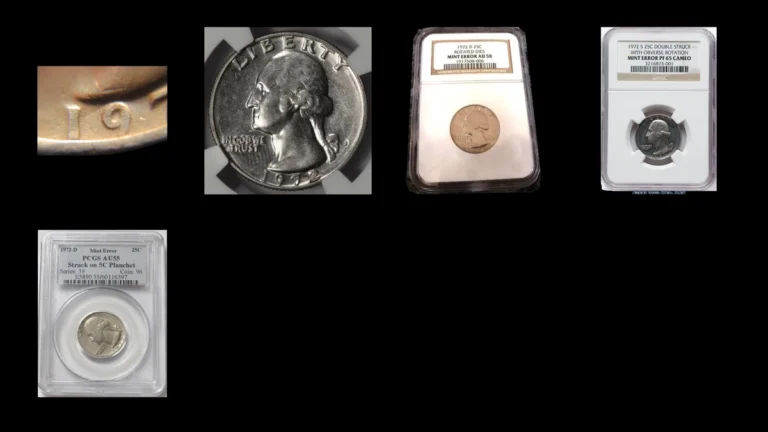
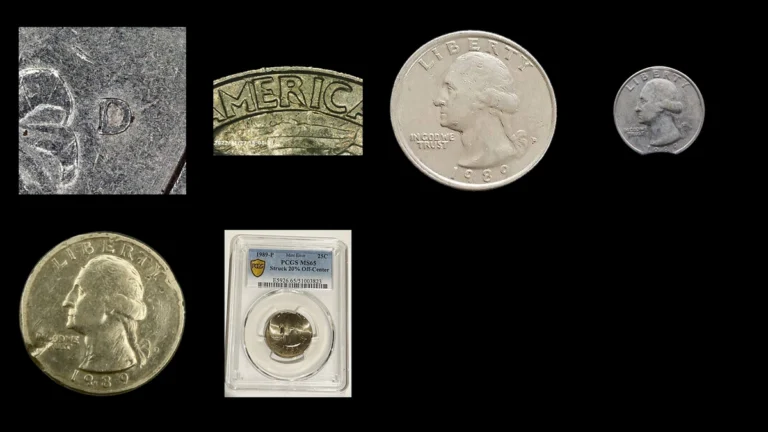
Rare 1927 Quarter Errors (List & Pictures)
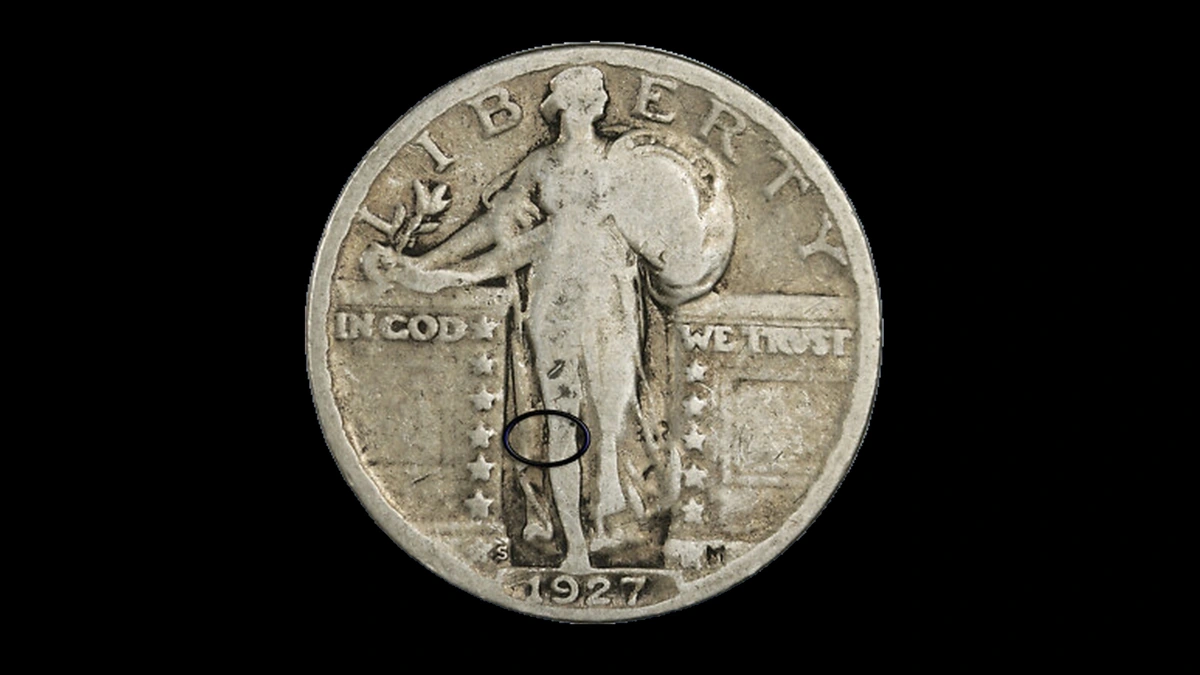
Estimated whole-coin values for 1927 quarter errors range from $25–$5,000. A different-series doubled-die comparison, a 1945 Washington quarter, sold for $552 in March 2018; the $3,000 figure for a notable 1927-D retained break was a dealer’s asking price.
This guide explains the specific features that distinguish these Standing Liberty errors and varieties.
| Category | Estimated value | Main comparison |
|---|---|---|
| Lamination | $25–$300 | Philadelphia alloy separation |
| Doubled front | $50–$1,200 | Philadelphia WDDO-001 |
| Repunched D | $75–$1,500 | Denver WRPM-001 |
| Very weak strike | $300–$2,000 | Original blank texture under faint design |
| Clashed designs | $30–$3,000 | Mint and normal date value matter |
| Off-center strike | $150–$3,000 | Dated Philadelphia comparison |
| High-grade retained break | $2,000–$5,000 | Denver Full Head example |
1. 1927 Quarter Peeling Metal Error
Philadelphia quarters have been reported with thin metal separating from the surface. This lamination begins with a weakness within the alloy rather than the removal of a modern bonded outer layer.
Standing Liberty quarters contain silver and copper mixed throughout. The reported flaw does not have one fixed size or location across all 1927 examples.
How to Identify
Follow any surviving gown line or lettering toward the separated area. A natural layer boundary should be distinguished from parallel cuts or a sharp scrape through the finished design.
Leave an attached flap untouched and photograph its connection to the surrounding surface. If the metal has fallen away, inspect the shallow opening without cleaning deposits from it.
What It’s Worth
Genuine Philadelphia laminations have estimated whole-coin values of $25–$300. A small worn patch can contribute little beyond the coin’s normal collector value.
A different 1932-S Washington quarter with a front lamination sold for $228 in September 2023. Its separate series and scarce mint issue prevent that full price from being treated as a universal lamination premium.
2. 1927 Quarter Doubled Front Details Error
The lower-left corner of S in TRUST provides a useful starting point for Philadelphia WDDO-001. Its distinct notch accompanies inward doubling on IN, TRUST, the date, lower gown, and lower stars.
The repeated pattern originated in the die before coins were struck. Several thick-looking details support identification only when they agree with that documented pattern.
How to Identify
Compare the S notch with the Wexler variety photographs, then inspect the date and lower design. A group of matching details is stronger evidence than one broad letter.
Change the light to distinguish rounded extra design from a flat shelf caused by movement during striking. Wear can broaden edges without reproducing the specified notch and inward pattern.
What It’s Worth
A correctly matched WDDO-001 has an estimated range of $50–$1,200. Preservation and the clarity of its identifying details affect the comparison.
A 1945 Philadelphia Washington quarter, FS-101 in MS65, sold for $552 in March 2018. That different design and doubled-die pattern provide context, not a recorded price for the 1927 Standing Liberty variety.
3. 1927 Quarter Repunched D Mintmark Error
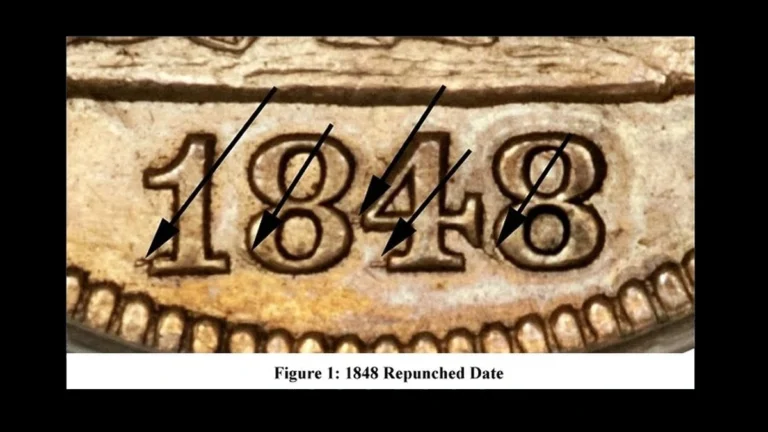
Denver WRPM-001 shows a second D remnant toward the left of the main mintmark. This is described as D over D shifted westward.
The mint letter was punched into the die separately from the principal design. A repeated punch in another position left a small outline that subsequent coins reproduced.
How to Identify
Locate the D on the front near the base of the design and keep the coin upright. Inspect the left contour against a confirmed WRPM-001 image.
Check whether the extra stroke fits a letter rather than an impact-raised lump, dirt, or reflection. Photograph the full D and its remnant together so their relationship remains clear.
What It’s Worth
An authenticated 1927-D repunched mintmark has an estimated whole-coin range of $75–$1,500. Grade and strike quality contribute to the total alongside the visible extra D.
A different 1949-D Washington D/D FS-501 in MS65 sold for $384 in March 2018. Its attribution and result do not supply a catalog number or guaranteed price for WRPM-001.
4. 1927 Quarter Very Weak Strike Error
The cataloged Philadelphia example retains original blank texture beneath faint central figures that fade toward the rims. That surface is crucial evidence that little detail formed during striking.
Stack’s Bowers listed the coin with NGC’s Die Adjustment Strike label. The label records its classification without proving an operator’s exact intention during production.
How to Identify
Compare protected areas with the high points and inspect the texture beneath Liberty and the eagle. Circulation wear removes previously formed detail, while a substantially understruck coin may preserve blank texture.
Examine both faces for a consistent explanation rather than judging one weak letter. Later polishing or abrasion can erase images but leaves different surface evidence.
What It’s Worth
A genuine substantially understruck quarter has an estimated range of $300–$2,000. Readable identity and original surface help distinguish useful comparisons from heavily worn coins.
The NGC-labeled specimen appeared as lot 4333 in the Winter 2014 Baltimore catalog. No auction result is supplied here, and the estimate should not be presented as its sale price.
5. 1927 Quarter Clashed Designs Error
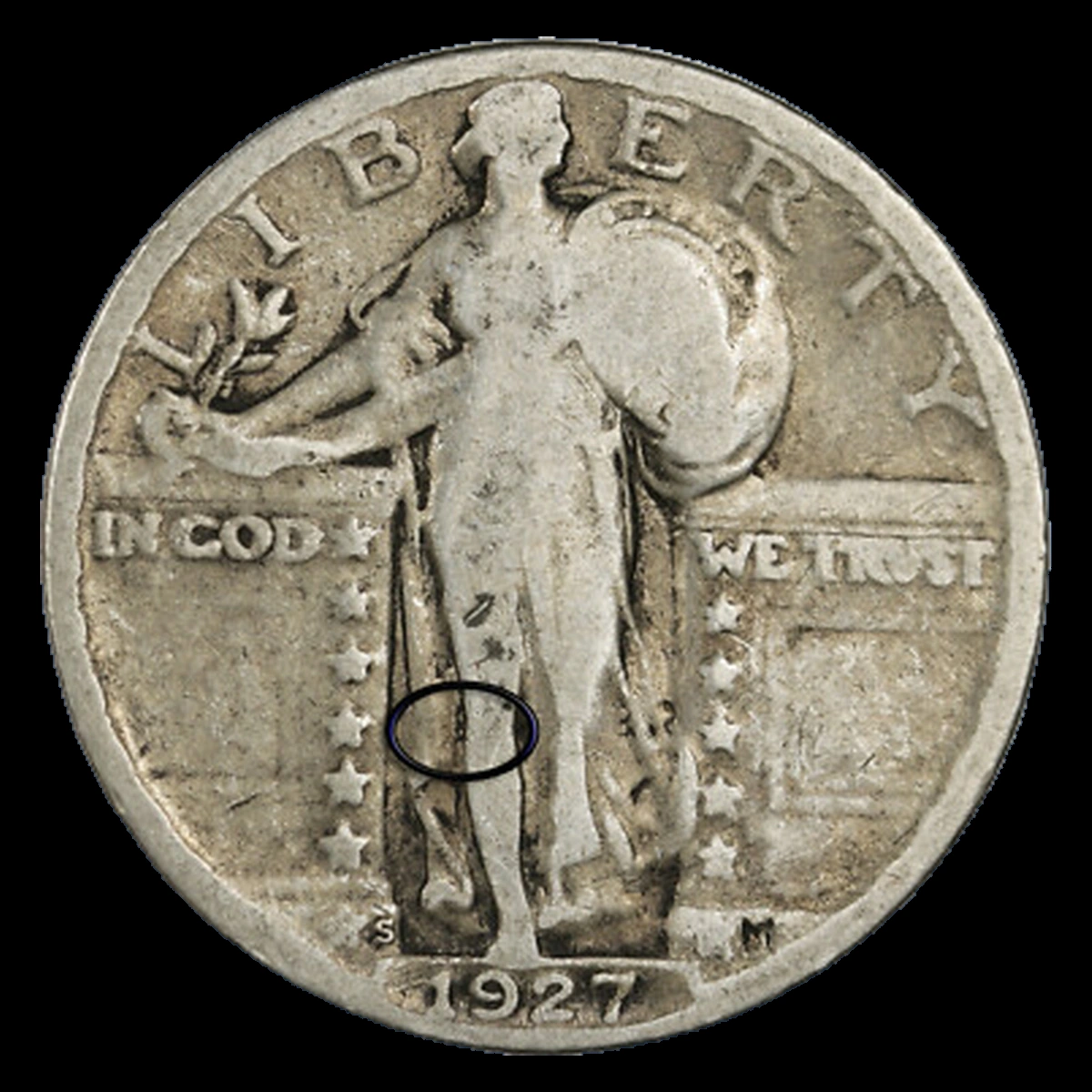
Faint eagle-side shapes near Liberty or her gown can reflect contact between the dies when no blank was present. Marks left on the tools then appeared on later coins.
Both Philadelphia and San Francisco clashes are reported for 1927. Fine polishing lines from die maintenance may appear nearby but need not represent any part of the opposite design.
How to Identify
Compare an unexplained trace with the normal opposite face and look for a recognizable related shape. An arbitrary cluster of straight lines is insufficient.
Keep surrounding design and the mintmark area in the photographs. A faint pattern is easier to assess when it can be positioned relative to Liberty and compared with the correct mint’s example.
What It’s Worth
Ordinary Philadelphia clashes have estimated whole-coin values of $30–$400. Comparable worn-to-well-preserved San Francisco examples have a separate estimated range of $100–$3,000.
The scarce S issue can account for much of that higher total. A tiny clash does not independently justify the upper range or give a Philadelphia coin the same value.
6. 1927 Quarter Off-Center Strikes Error
A misplaced blank can leave part of Liberty and the eagle beyond the available metal. Original unstruck metal remains beside the shifted images.
The 1927 reports do not establish one percentage or mint for every specimen. The recessed date is particularly useful when determining whether a displaced coin can be assigned to this year.
How to Identify
Locate the date, then compare both faces for design that fits the same displaced disc. A complete image surrounded by an expanded border may instead be a broadstrike.
Inspect the supposedly blank area for grinding or hammering. If the mintmark location missed the metal entirely, an absent letter cannot establish Philadelphia.
What It’s Worth
A genuine dated Philadelphia off-center example has an estimated range of $150–$3,000. A confirmed scarcer mint requires its own whole-coin assessment.
A different 1965 Washington quarter struck twenty-five percent off center sold for $180 in December 2025. Its copper-nickel construction and later design make it a limited comparison for a silver Standing Liberty quarter.
7. 1927 Quarter Retained Break across Liberty’s Head Error
The described Denver example has a strong boundary from the upper rim just right of B, through Liberty’s head, to the rim left of E. Some detail remains because the cracked die piece stayed in position rather than falling away completely.
This is a retained cud. The dealer described a PCGS MS65 Full Head coin but noted that the error was not named on the holder.
How to Identify
Trace the whole route through the head and inspect the surface levels on either side. A random scratch crossing the portrait does not reproduce the retained-break boundary.
Check the D independently and preserve the head detail in photographs. Full Head describes strike detail, while the retained break still needs identification from the actual surface.
What It’s Worth
A comparable high-grade Denver retained-break quarter has an estimated whole-coin range of $2,000–$5,000. Preservation, mint identity, and strong head detail contribute substantially to that value.
The historical Fred Weinberg listing asked $3,000 and quoted the same $3,000 as the normal coin’s guide value at the time. It establishes neither a completed sale nor a separate $3,000 error premium.
Conclusion
Several 1927 varieties offer precise inspection points: the notch in TRUST, the left side of D, and the retained boundary across Liberty’s head. Other reported categories require assessment of the complete coin rather than one assumed location.
Keep mint, condition, and strike quality attached to every price comparison. A scarce San Francisco issue or a high-grade Full Head quarter may owe much of its value to those qualities before an error is considered.