Rare 2008 Quarter Errors (List & Pictures)
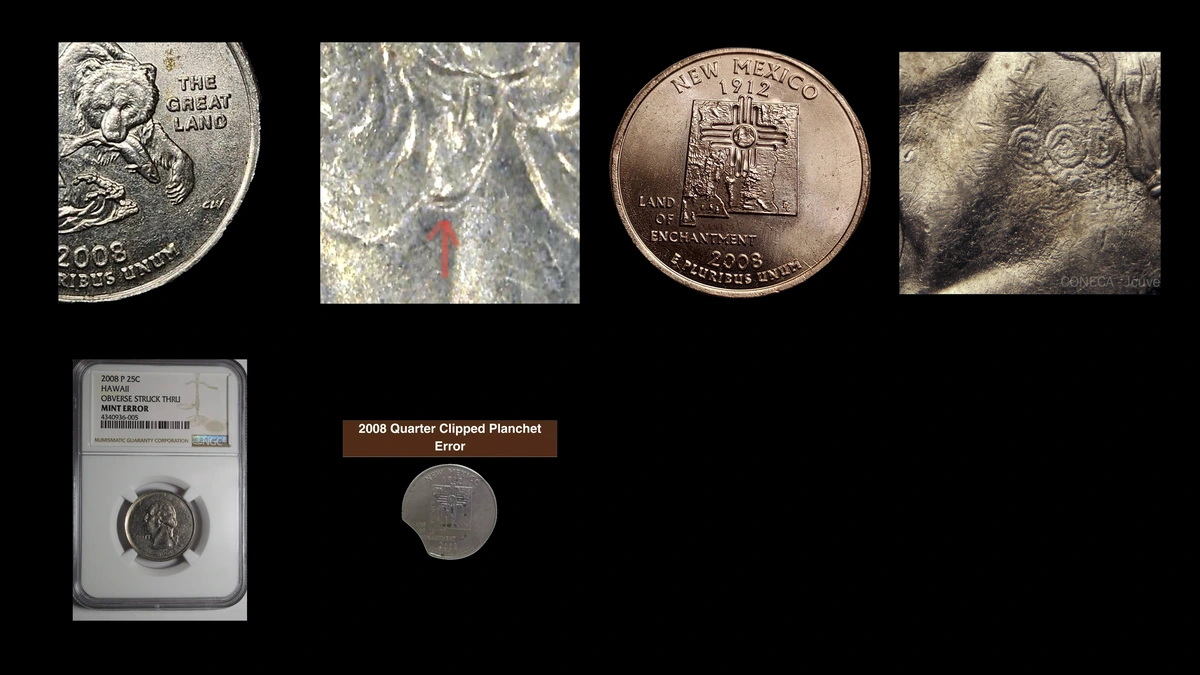
Small extra shapes and major denomination mix-ups both appear among 2008 quarter errors, with estimated values of $2–$15,000. A New Mexico missing-clad quarter realized $376 at auction in January 2015, while a separate publication reported a $13,378 Hawaii quarter-over-dime sale without a numerical grade.
Use the state name and the 2008 issue date to identify the coin, then work from design details to its surface and outline.
1. 2008 Quarter Extra Claw, Cactus, or Map Patches: Die Breaks Error
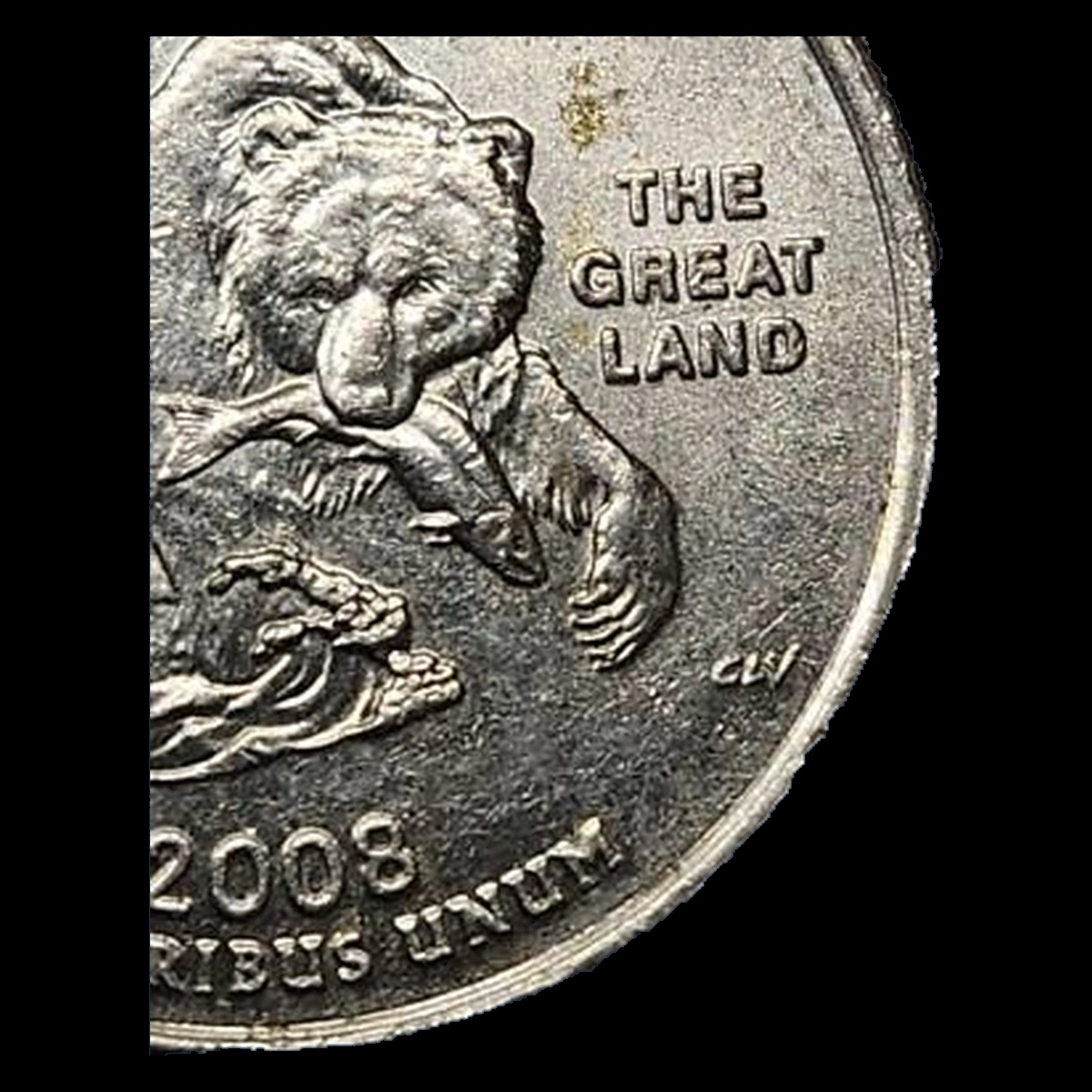
Alaska’s “extra claw” is extra metal between the bear’s front claws, and Arizona’s “extra cactus” also results from a broken area in a die. These features were not added to the intended artwork.
Arizona reports include longer raised cracks, while a separate Alaska break reaches the rim and forms a cud. A Philadelphia New Mexico coin has two raised patches along the map’s northern edge beside the sun symbol, accompanied by faint clash marks.
How to Identify
Compare the suspect area with a normal example of the same state. For a cud, follow the raised patch continuously to the rim; the internal Alaska claw chip does not require that connection.
Angled light helps separate raised metal from a scratch cut into the coin. On New Mexico, match both northern map patches rather than treating unrelated marks as the documented combination.
What It’s Worth
$2–$40 is estimated for small claw, cactus, or crack features, with prominent internal breaks around $40–$100. A substantial Alaska cud may fall around $75–$350, while the New Mexico breaks and clash should be valued together as one coin.
2. 2008 Quarter Small Repeated Curves: Doubled Die Error
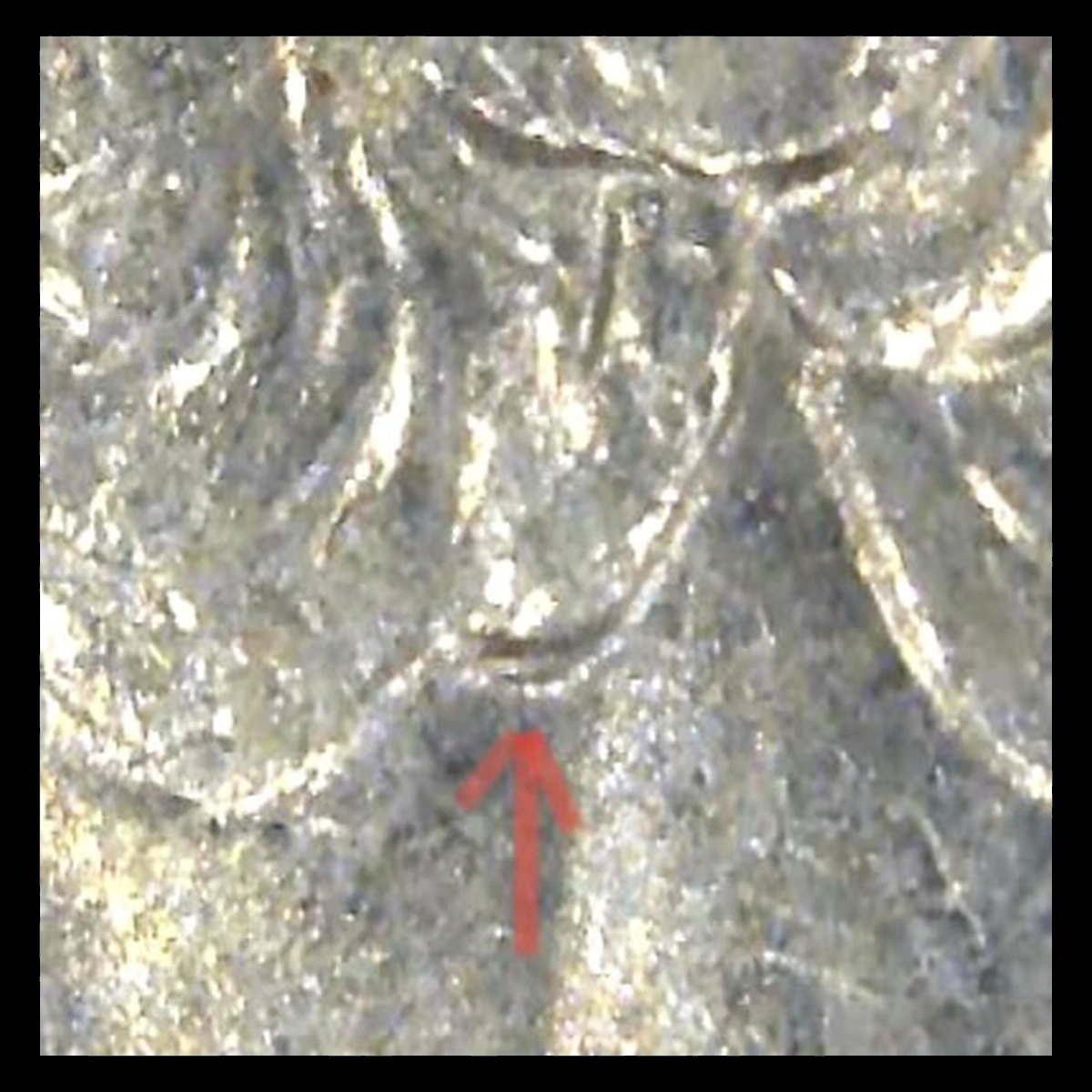
A Philadelphia New Mexico variety has an extra curve below Washington’s earlobe. Philadelphia Alaska reports place repeated detail near the bear’s nose and in the fur above the fish.
The duplication originates in the die before coins are struck. Reports also cover both faces of Denver Oklahoma quarters and front-side doubling on Philadelphia and Denver Hawaii issues.
How to Identify
Choose a comparison for the correct state, mint, and face. Oklahoma’s reported reverse areas include the bird’s wing or flowers, while Alaska doubling is separate from the extra-claw chip.
Look for a matching secondary raised outline rather than ordinary fur or feather detail. Flat ledges beside letters suggest mechanical doubling, and broad stretched outlines can come from die wear.
What It’s Worth
$10–$150 is a working range for these mostly small doubled-die features. An Oklahoma coin with confirmed doubling on both faces is still one coin, so separate estimated premiums should not simply be added together.
3. 2008 Quarter Hawaii Shapes Appear Near Washington: Die Clash Error
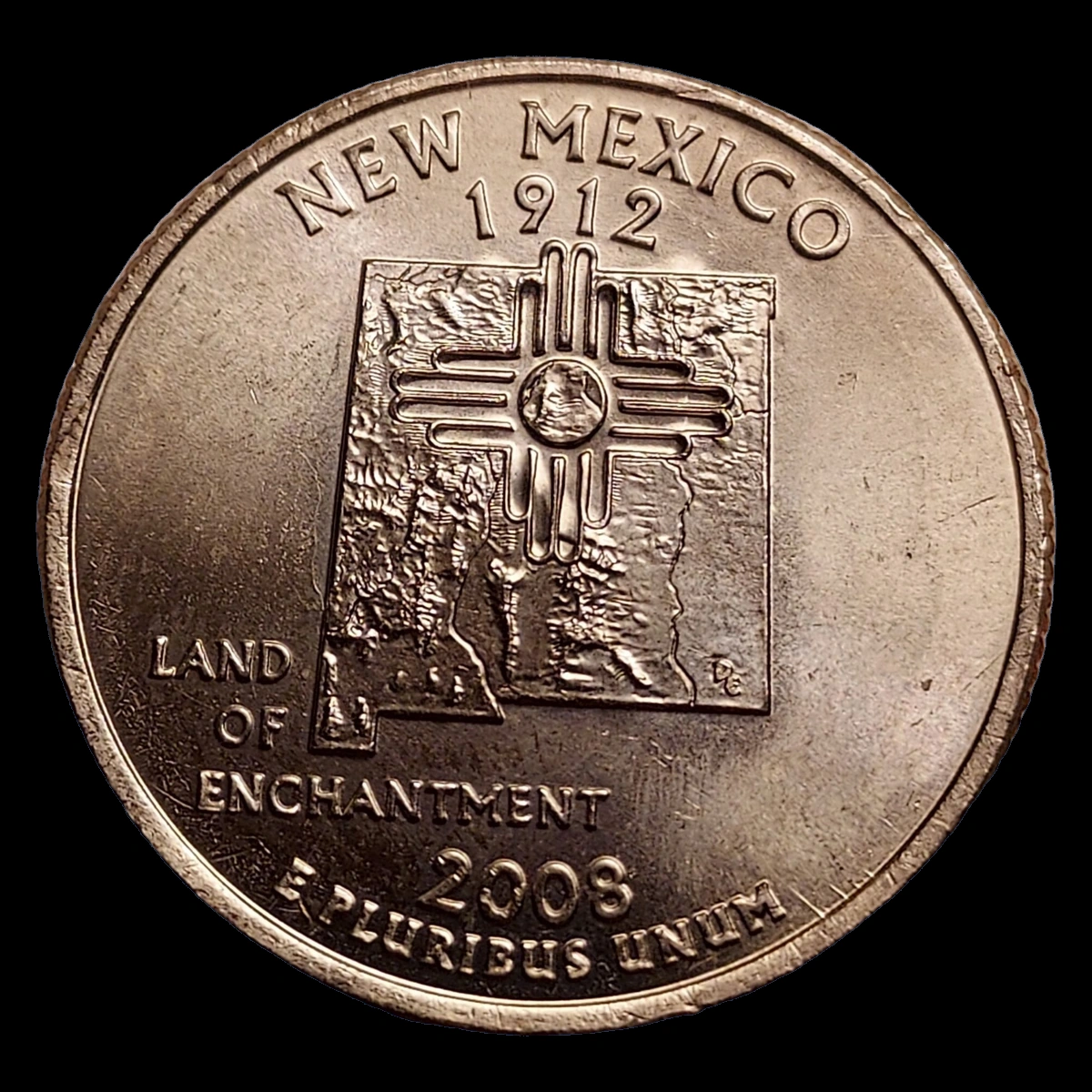
A Denver Hawaii report describes possible traces of the king or island chain on Washington’s side. A die clash can transfer such shapes when the dies contact one another without a blank between them.
How to Identify
Compare several nearby traces as a group with the opposing design, allowing for the mirrored relationship. One isolated arc that resembles an island is weak evidence by itself.
Inspect the marks for cuts, scrapes, or other damage, and do not assume that every genuine clash trace must be sunken. Pressing a finished coin against another coin is a different process from clashing dies.
What It’s Worth
$15–$150 is estimated for a recognizable Hawaii clash. Clear transferred contours on a clean surface are easier to assess than faint traces crossed by later scratches.
4. 2008 Quarter Raised Motto Letters on the Neck: Counterbrockage Error
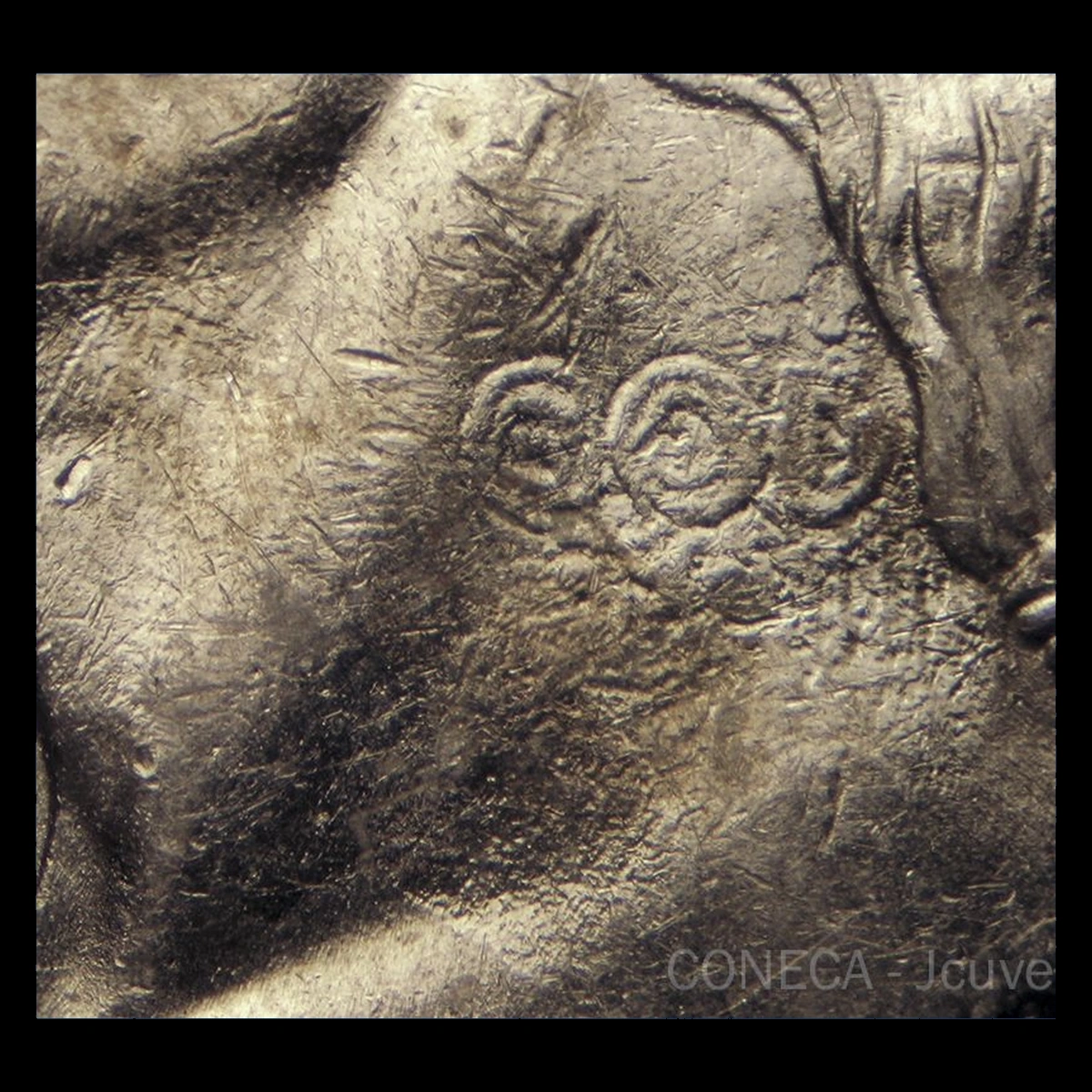
A studied Philadelphia Arizona quarter carries two close groups of extra motto letters within an unusual patch on Washington’s neck. Portions of IN GOD WE TRUST are raised and read normally.
Error-Ref proposes a grease-generated counterbrockage, in which packed material copied lettering from earlier coins and transferred it again. Another specialist described a floating counterbrockage, so the precise intermediate mechanism remains debated.
How to Identify
Establish that the extra letters are raised, readable in the normal direction, and grouped within the neck patch. A sunken mirror image would be a different observation.
Inspect the entire patch under changing light without disturbing its surface. Attached material or letters punched into a finished coin should not be confused with an originally transferred raised design.
What It’s Worth
$500–$3,000 is an estimate for a striking authenticated example with recognizable transferred lettering. No supplied auction result prices this Arizona specimen, and ordinary grease-filled missing letters are much simpler errors.
5. 2008 Quarter A Misplaced Sunken Letter: Dropped Filling Error
Packed material can fill a recessed letter in a die and then fall out onto a blank. If struck there, the loose filling may leave a letter-shaped impression below the coin’s surface.
A Denver Hawaii example is reported, but its particular letter and location are unspecified. The category is known as a dropped filling or dropped-letter error.
How to Identify
Use side lighting to confirm that the unexpected shape is sunken. Compare its ends and enclosed spaces with letters in the original design, allowing for the filling to have turned before being struck.
Later hand punches can also create letters but may leave strongly displaced metal or other evidence of an added blow. Keep the whole face in photographs so the actual location remains clear.
What It’s Worth
$100–$1,000 is an estimated range for a genuine recognizable dropped letter. A vague hollow or a character added after minting does not support the same premium.
6. 2008 Quarter A Diagonal Hollow or Weak Letters: Struck-Through Error
A studied Philadelphia New Mexico quarter has a deep diagonal impression through Washington’s neck and LIBERTY. Fine parallel marks inside the hollow reflect the obstructing object, while other scrapes on high points are later damage.
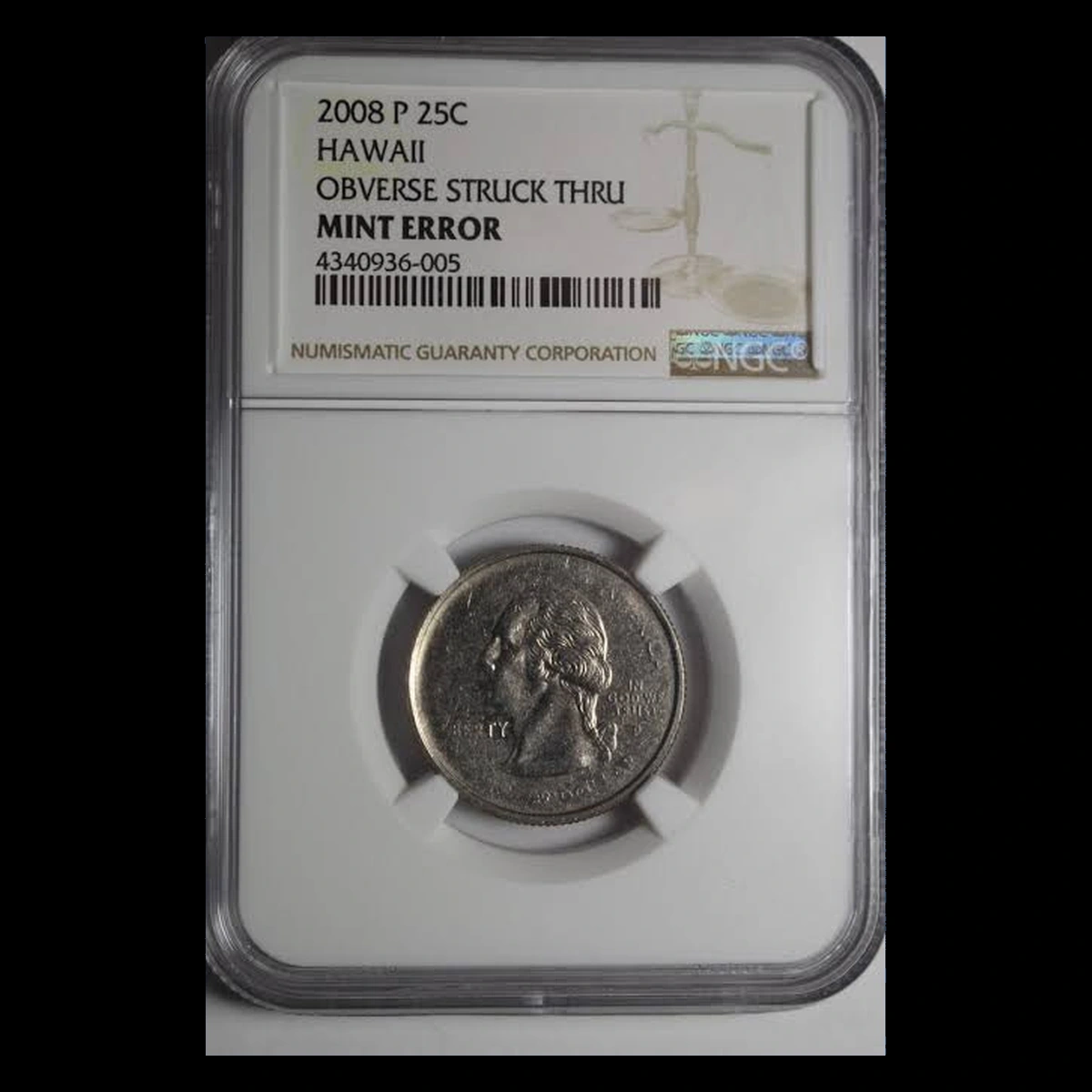
Philadelphia Hawaii reports include an NGC-labeled front strike-through and a separate weak-letter example attributed to grease. Both involve material interfering with the die’s contact, but their appearances differ.
How to Identify
On New Mexico, distinguish the recessed impression from scratches across the surrounding raised detail. Scraped-off material was proposed as the obstruction, but its exact source was not established.
For Hawaii, compare the front inscriptions and the reverse date and HA with a normal coin. Soft incomplete letters may fit grease obstruction, whereas flattened high points across the coin can indicate wear.
What It’s Worth
$5–$50 is estimated for light grease-filled detail, while a deep distinctive impression may fall around $75–$600. A different-year 2020-P Samoa reverse strike-through in AU58 sold for $104 in September 2024.
7. 2008 Quarter A Rough Opening in Alaska’s Surface: Reported Planchet Defect Error
A planchet is the metal blank that receives the coin design. A flaw already present in that blank may interrupt detail when the dies strike it.
Minor blank defects have been mentioned for Alaska, without an established specimen or common defect shape. This report should remain separate from a confirmed whole-face loss of cladding.
How to Identify
Inspect how the struck design approaches the rough area or opening. A preexisting flaw may affect the formation of neighboring detail, while a later scrape removes detail that had already formed.
Check the opposite face for an impact that could explain the distortion. Preserve any loose edge and avoid cleaning cavities, since corrosion can resemble a defective surface.
What It’s Worth
$10–$100 is a conditional estimate for a small genuine original-blank defect. An unexplained pit or a seller’s “defective planchet” description is insufficient to establish that value.
8. 2008 Quarter Unusual Oklahoma Color: Reported Annealing Error
Oklahoma reports, including a Denver example, connect abnormal surface color with annealing. This heating step softens blanks before striking, but a color change alone does not show when it occurred.
How to Identify
Examine the coin in neutral light for pits, crust, residue, and cleaning marks. Chemicals, soil, and heating after minting can produce either even or patchy discoloration.
Keep original surfaces intact for examination. Normal weight does not confirm annealing, and the ordinary copper-colored stripe on a clad edge is not evidence of abnormal heating.
What It’s Worth
$20–$200 is an estimated range for a confirmed heating-related mint error. Environmental staining generally adds no error value, even when its color is striking.
9. 2008 Quarter Exposed Copper on One Face: Missing Clad Layer Error
A Denver New Mexico quarter is documented with its front outer layer missing; separate New Mexico examples affect the reverse. Denver Alaska reports include partial loss and a separately reported missing reverse layer.
Oklahoma and Arizona are also listed, but the Oklahoma account does not consistently establish whether one or both faces were affected. The face and extent must therefore be determined from the individual coin.
How to Identify
Trace the exposed copper to the boundary of surviving cladding, looking for naturally struck detail rather than staining or chemical removal. Standard clad quarters weigh 5.67 grams; 2008 silver Proofs instead have a 6.25-gram standard and 90% silver composition.
One separately cataloged Denver New Mexico error weighed 4.7 grams. That measurement is specimen-specific and should not be assigned to every example or automatically to the sale coin below.
What It’s Worth
$75–$300 is estimated for partial loss, with clear whole-face loss around $200–$800. The 2008-D New Mexico front-layer error in PCGS MS64 sold for $376 in January 2015.
10. 2008 Quarter The Bear Is Tilted After a Flip: Rotated Die Error
A Philadelphia Alaska quarter is reported with roughly 50 degrees of rotation between its faces. Each design can remain centered even though their upright directions no longer align.
How to Identify
Hold Washington upright beside a vertical guide and flip the coin from top to bottom without a sideways twist. The bear should also finish upright on a normally aligned coin.
Repeat the controlled flip before measuring the consistent angle. Separately straightened photographs cannot prove rotation, and 50 degrees is an angle rather than an off-center percentage.
What It’s Worth
$40–$250 is estimated for a genuine rotation near the reported angle. A clear demonstration and strong preservation help distinguish an appealing example from an uncertain photograph of a tilted coin.
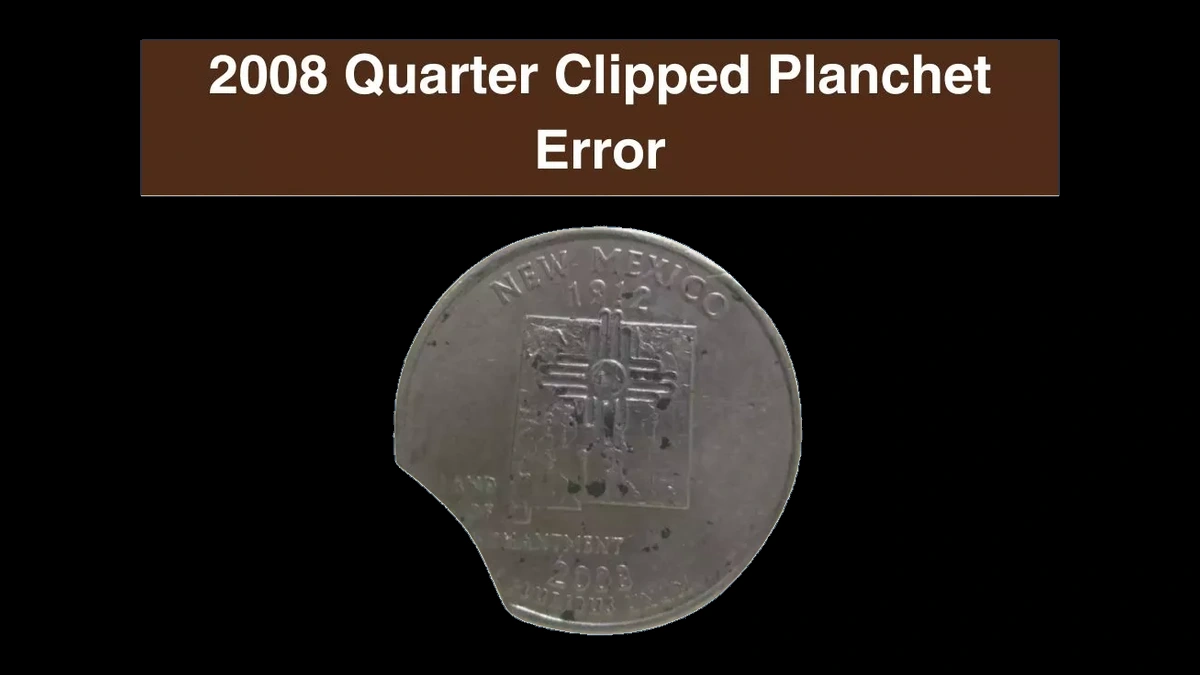
11. 2008 Quarter A Straight Gap near the King’s Arm: Clipped Planchet Error
A Philadelphia Hawaii quarter is reported with a straight missing segment near King Kamehameha’s outstretched arm. A straight clip can form when a blank is cut across the edge or end of the metal strip.
How to Identify
Examine the boundary from the side for saw lines, filing, or burrs. Struck detail beside an original gap may taper or stretch toward it instead of ending as a fresh cut through finished lettering.
Weakness on the opposite rim may support the diagnosis without proving it alone. Weight loss establishes missing metal but cannot determine whether it was removed before or after striking.
What It’s Worth
$40–$500 is an estimate for a genuine Hawaii straight clip. A 2000-P New Hampshire elliptical blank error in MS66 sold for $288 in September 2024, but its different shape and date limit the comparison.
12. 2008 Quarter A Blank Arc beside a Shifted Scene: Off-Center Strike Error
About 30% displacement is reported for a Denver Arizona quarter. A New Mexico coin was dealer-listed in PCGS MS65, while broader Oklahoma, Alaska, and Hawaii reports do not establish a specific percentage for each state.
The blank was partly outside the space between the dies, leaving original unstruck metal beside an incomplete design. That is distinct from a second strike on an already struck quarter.
How to Identify
Find 2008 near the bottom of the reverse; the larger date beside the state name records statehood. Check the mintmark on the front separately.
Both faces should fit the same displaced blank, with untouched metal rather than filed-away design. A centered reverse paired with an uneven front border suggests a shifted die instead.
What It’s Worth
$30–$1,000 is an estimated range, depending on displacement, readable identity, and preservation. The New Mexico MS65 carried a historical $275 dealer asking price, while a different-year 2000-P Virginia 20% error in MS64 actually sold for $154 in September 2024.
13. 2008 Quarter The Hawaii Design Appears Twice: Double Strike Error
A coin that moves between two blows can preserve the design in two positions. Dutch Country Auctions catalog 307 describes a Hawaii quarter with its second strike about 30% off center, without specifying a mint or numerical grade.
How to Identify
Trace connected details to separate the first impression from the second, especially where the later strike flattened earlier features. Thin doubled-looking edges on one letter are not enough.
Inspect both faces and the edge for a coherent repeated strike rather than pressure marks from squeezing finished coins together. Keep the unrecorded mint and grade unspecified.
What It’s Worth
$135–$1,500 is a working range for authenticated examples with differing clarity and condition. The Dutch Country catalog assigned a $135–$170 presale estimate to its coin, not a realized sale price.
14. 2008 Quarter Dime Details beneath Hawaii’s Design: Double Denomination Error
A quarter design struck over a finished dime can leave recognizable remnants of both denominations. Unlike an unused dime blank, that host already carried its own portrait and lettering.
A published sales table reports a 2008-P Hawaii quarter-over-dime with a flipover second strike. It does not specify the dime’s date or identify a grading service.
How to Identify
Find coherent dime details along with Hawaii’s design, the 2008 issue date, and the front P mintmark. Follow their relationships on both faces rather than assuming every extra line came from the host dime.
A modern clad dime starts near 2.27 grams and 17.91 millimeters, compared with a quarter’s roughly 24.3-millimeter diameter. These are reference standards rather than measurements of the reported piece, and later strikes can expand the host.
What It’s Worth
$5,000–$15,000 is a working estimate for a genuine identifiable combination. Mint Error News issue 27 reports a $13,378 sale with a BU, or unworn, description but no numerical grade or certification details.
Conclusion
Read the state and issue date before comparing an unusual 2008 quarter with an error photograph. A claw chip, a dropped letter, and transferred motto lettering may all add unexpected shapes, but their surfaces and causes differ.
Keep each price attached to its evidence: an auction realization, a dealer’s request, a presale estimate, or a published report. The rare quarter-over-dime account should not set expectations for ordinary small die breaks.