Rare 1908 Quarter Errors (List & Pictures)
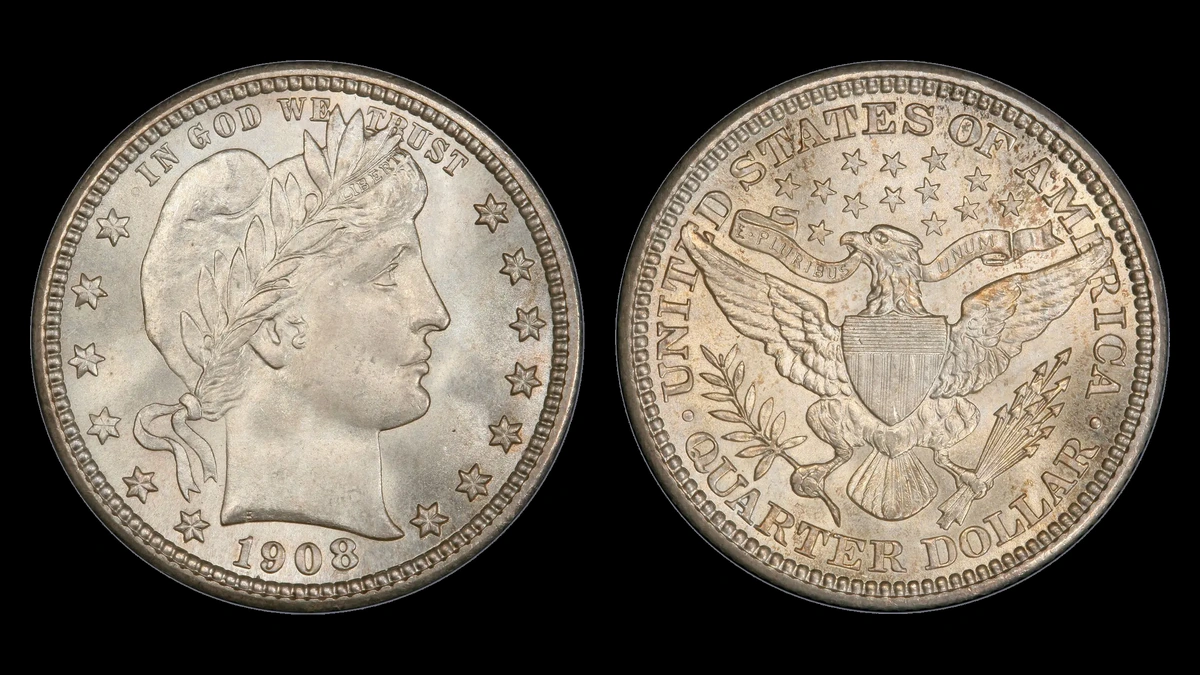
A Philadelphia quarter with misplaced digit tops among the border teeth sold for $432 in March 2024. Estimated values for 1908 quarter errors range from $40–$1,200 across the varieties discussed here.
This guide shows why the mint, affected face, and position of each extra stroke matter when choosing a comparison.
| Category | Mint and feature | Estimated value |
|---|---|---|
| Repunched mintmark | Separate Denver D patterns | $50–$600 |
| Doubled die | Philadelphia front or San Francisco reverse | $50–$1,000 |
| Repunched or misplaced date | Philadelphia, Denver, or New Orleans patterns | $40–$1,200 |
1. 1908 Quarter Repunched Mintmarks Error
Denver reports include earlier D impressions to the right, upper left, or below the final letter. These are separate patterns listed in the Barber Coin Collectors’ Society survey.
A repeated punch in a die could preserve parts of both mintmark positions. Another entry locates a repunched letter above D in DOLLAR, but position alone cannot prove the repeated impression.
How to Identify
Hold the reverse upright and find the small D below the eagle. Trace the main letter before checking whether an extra curve or upright fits part of an earlier D.
Use the direction appropriate to the proposed pattern. Do not require all three reported positions to appear on one coin.
A normal mintmark’s placement can vary between dies. Its location above a denomination letter must be supported by the actual secondary outline, not merely by where the main D sits.
What It’s Worth
Identified Denver repunched mintmarks have estimated whole-coin values of $50–$600 in worn through moderately unworn condition. Clear original remnants make a better comparison than a letter surrounded by damage.
The $139 sale of a lightly worn Denver misplaced-date coin provides nearby small-variety context. It is not a recorded repunched-mintmark sale.
2. 1908 Quarter Doubled Dies Error
Philadelphia front reports involve IN GOD WE TRUST above Liberty’s head. A separate San Francisco variety concerns the reverse, without a particular letter or feather specified in the supplied survey.
The repeated design originated in a die and could be reproduced on each coin it struck. It differs from a shifted second blow or flat shelves created by movement during one strike.
How to Identify
For Philadelphia, compare several motto letters with an attributed example at the same scale. Matching repeated corners and curves are stronger evidence than one thick edge.
For San Francisco, photograph the full reverse and the suspected repeated details with S visible below the eagle. Philadelphia motto diagnostics do not identify that reverse variety.
Change the light to distinguish raised secondary contours from glare or a flat ledge. The pattern should stay coherent across the relevant features.
What It’s Worth
Correctly identified examples have estimated whole-coin values of $50–$1,000 across ordinary circulated through modestly unworn conditions. Mint, preservation, and clear separation affect the comparison.
The year’s $432 Philadelphia misplaced-date sale concerns another feature. It is not a recorded price for either doubled die.
3. 1908 Quarter Repunched and Misplaced Dates Error
Extra date strokes can appear beside the main numbers or among the border teeth below them. Repeated punches near the intended position produce repunched dates, while misplaced punches can leave digit tops lower in the design.
One Philadelphia example shows the top of 0 and two 8s among the teeth. A Denver example has an 8 top below and left of the main 8, while New Orleans examples show 0 and 8 tops.
Other Denver reports involve a misplaced 0, and one Denver coin combines date repunching with a repunched mintmark. These descriptions should not be merged into one universal pattern.
How to Identify
Inspect the narrow strip between the date and rim as well as the standing digits. Photograph enough border teeth to locate a possible numeral remnant precisely.
Philadelphia reports include lower earlier 19 impressions and a date shifted left. Denver reports include a lower 1, a rightward 8, and other 19 or 8 remnants leftward or below.
The Denver misplaced 8 at the tooth tops and the reported misplaced 0 beneath 08 require separate reference matches. For the combined date-and-mintmark coin, document the reverse D independently.
Original punch remnants should be raised parts of the design. A scratch cutting through the surface cannot establish an extra digit.
What It’s Worth
Estimated whole-coin values are $40–$1,200 across worn through attractive unworn examples. The Philadelphia ANACS MS63 coin brought $432 at Heritage on March 4, 2024.
A Denver AU50 misplaced-date example sold for $139 that day, while a New Orleans VF30 brought $79. They are three separate coins with different patterns and levels of wear.
Clear digit shapes and preservation matter more than the length of a variety description. Do not assign one coin’s price to another merely because both have extra date strokes.
Conclusion
Look beyond the four main date digits when examining a 1908 Barber quarter. Small remnants in the border teeth can provide evidence that a date-only photograph misses, while the reverse mintmark determines which other comparisons belong.
Keep the repeated D, doubled design, and individual date patterns separate. Original raised strokes and consistent reference matches support attribution; a thick letter, convenient position, or unrelated auction price does not replace that evidence.