Rare 1881 Quarter Errors (List & Pictures)
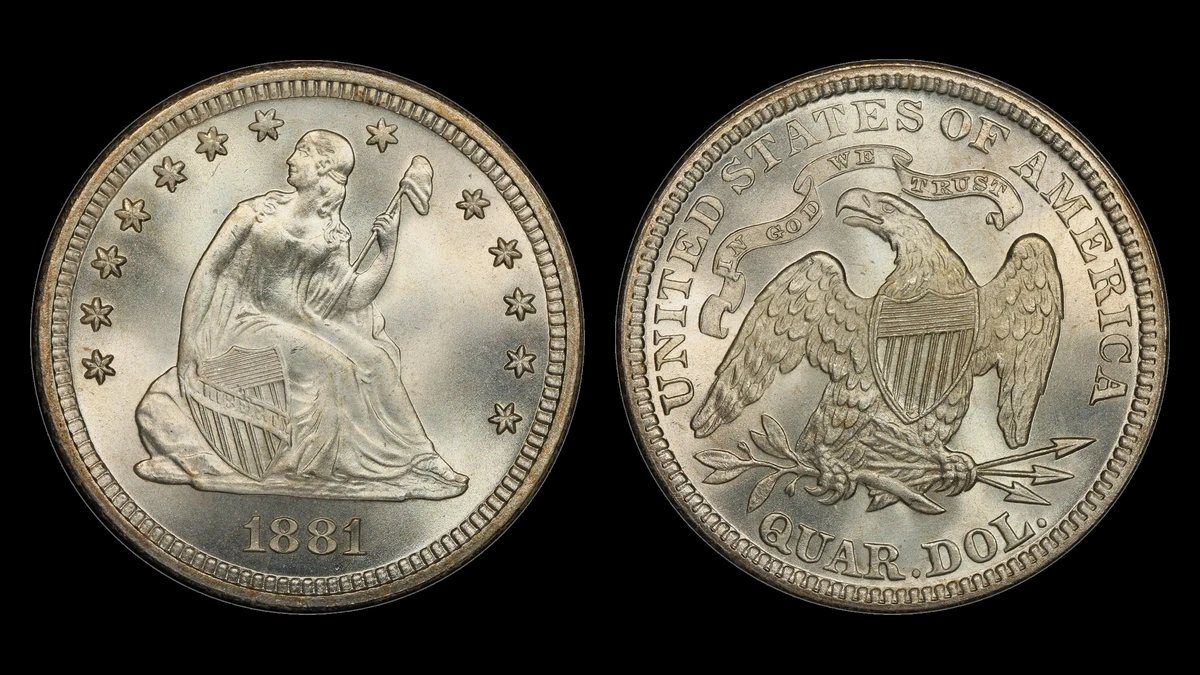
The two 8s offer precise checkpoints for 1881 quarter errors on Proofs, specially prepared collector coins. One documented Proof also has a tiny fiber impression on the reverse, with a different cause from the extra date strokes.
Whole-coin estimates span $500–$9,000. A repunched-date example brought a $3,250 hammer price on September 16, 2026, before the buyer’s fee; inspect both date loops and then the arrow area, keeping each specimen’s grade and marks separate.
1881 Quarter Extra Curves inside the Two 8s: Repunched Date Error
Flynn RPD001, also called Briggs 2-B, retains small remnants from an earlier date impression. The first impression sloped downward in the die and was largely removed before the date was entered again.
Parts of those earlier numerals survived the correction and became part of the tool’s finished design. They do not represent a second complete strike of the quarter.
How to Identify
Inspect the upper loop of the first 8 and the lower loop of the second 8. These are the two locations described on the recent CNG specimen, so keep both numerals visible in a clear date photograph.
Compare the actual curved remnants with an attributed Flynn RPD001 or Briggs 2-B. General thickness, a lone scratch inside one loop, or a bright reflection is less specific than matching the two shapes.
Move the lamp while keeping the coin level to determine which details remain fixed in the metal. Do not clean the loops to improve visibility.
Establish the Proof identity from the whole coin and its recognized attribution. An unusual-looking numeral alone cannot turn an ordinary circulation strike into a Proof.
What It’s Worth
$500–$9,000 is the supplied estimate for these repunched-date Proofs across a broad range of preservation. CNG’s PCGS PR66+ Cameo example realized a $3,250 hammer price on September 16, 2026, with the buyer’s fee additional.
PR66+ describes a very well-preserved collector strike. Cameo refers to the contrast between frosted designs and reflective backgrounds, which is separate from the date variety.
Marks, cleaning, color, and the quality of those surfaces affect the complete coin’s value. A readable earlier date stroke identifies the variety but does not establish the same price for a lower-grade specimen.
1881 Quarter A Short Threadlike Mark by the Arrows: Lint Strike-Through Error
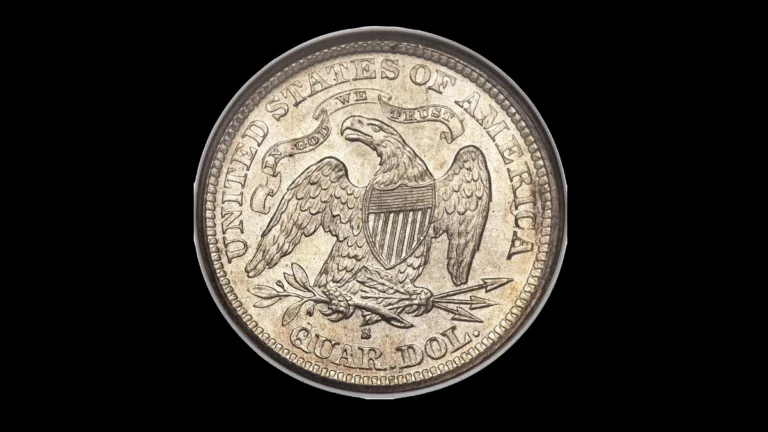
The NGC PR66 Cameo Proof described by Heritage has a mint-made lint mark just to the right of the highest arrowhead. A small fiber caught during striking could leave its outline where the die would otherwise form a smooth surface.
This coin also has the repunched date. The date originated in preparation of the die, while the fiber mark records material present at the moment of striking.
How to Identify
Locate the entire arrow group beside the eagle before enlarging the short mark by the uppermost arrowhead. Keeping that landmark in the image prevents a random mirror-field line from being mistaken for the cataloged feature.
Heritage’s PR66 Cameo description provides the location for the specific comparison. Examine its shape with light from either side, without rubbing the reflective surface.
A sharp groove with displaced metal along its edges can indicate a later scratch. The actual impression and undisturbed surrounding finish must support the fiber explanation.
Keep a certified Proof in its holder and assess the line through the clear surfaces. Not every faint line in a Proof’s mirrors is a mint-made lint mark.
What It’s Worth
$500–$4,000 is estimated for an 1881 Proof with a small genuine lint impression. The source does not supply an individual realized price for this PR66 Cameo specimen.
The $3,250 hammer result belongs to the separate CNG repunched-date Proof. Its description does not identify a lint mark, so that transaction cannot be presented as a sale of the arrow-area error.
Conclusion
Use the upper loop of the first 8 and lower loop of the second to test the repunched date. The reverse fiber mark has its own precise location beside the highest arrowhead.
Surface preservation matters greatly on these Proofs, and the recent hammer result excludes the buyer’s fee. Keep the CNG and Heritage specimens distinct, even though a single coin can carry both a date variety and a strike-through.