Rare 1979 Dollar Errors (List & Pictures)
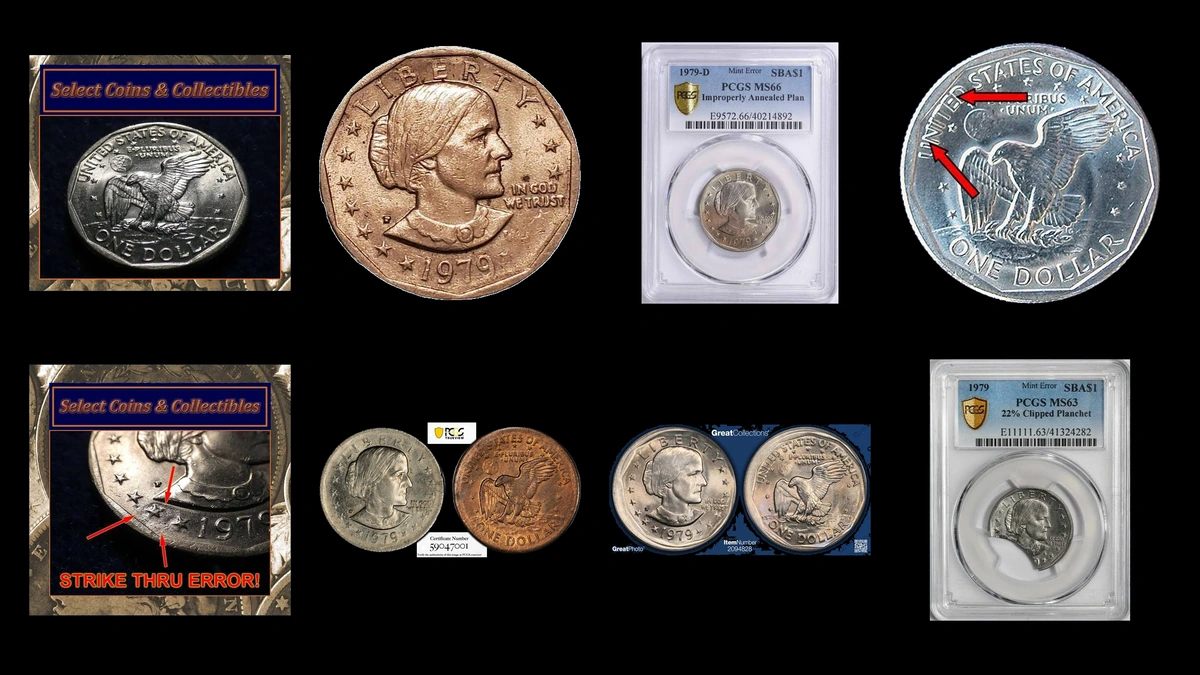
A 1979 Anthony dollar overstruck on a finished 1978 quarter sold for $13,200 in December 2022. The 1979 dollar errors in this guide range from roughly $5–$25,000.
Work from small surface clues to the rim and overall shape, then examine unusual coins for overlapping designs or evidence of a different starting blank.
| Area to inspect | Possible explanation | Guide range |
|---|---|---|
| Surface and lettering | Clash, doubled die, annealing, die break, or struck-through material | $5–$1,000 |
| Metal layers | Detached layer or missing outer layer | $100–$1,500 |
| Outline and edge | Partial collar, broadstrike, clip, or displaced strike | $50–$4,000 |
| Overlapping impressions | Indent, mated pair, or repeated strike | $150–$7,500 |
| Wrong starting material | Smaller blank or finished coin | $500–$25,000 |
1. 1979 Dollar Faint foreign outlines near the shoulder: die clash Error
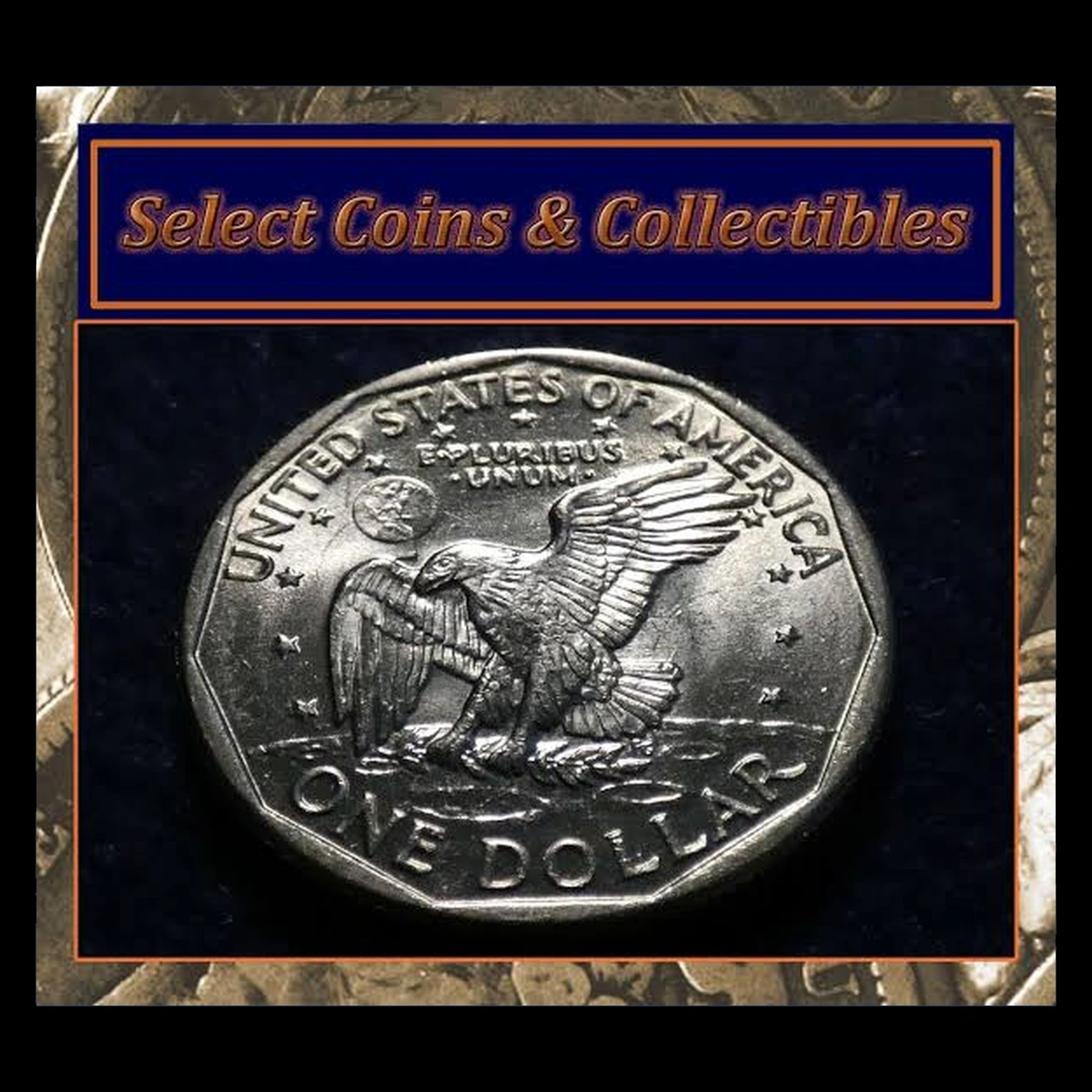
The open area above Anthony’s shoulder is a useful place to inspect a reported 1979-D clash. When the dies meet without a blank between them, each can acquire traces of the opposite design.
Those altered dies then transfer the traces to later dollars. The coin itself did not have to collide with another coin.
How to Identify
Use low light to follow the shallow outlines beside the portrait. Several points should agree with a documented clash pattern, rather than merely suggesting an eagle or the Moon.
Scratches and designs squeezed into a coin later need separate explanations. Include surrounding portrait details in photographs so the location can be checked.
What It’s Worth
Recognizable minor clashes have an estimated range of $10–$150. A faint trace on a heavily marked coin may add little.
Greysheet illustrated a 1979-D example and reported a $23 auction price. The supplied account does not give an auction date for that result.
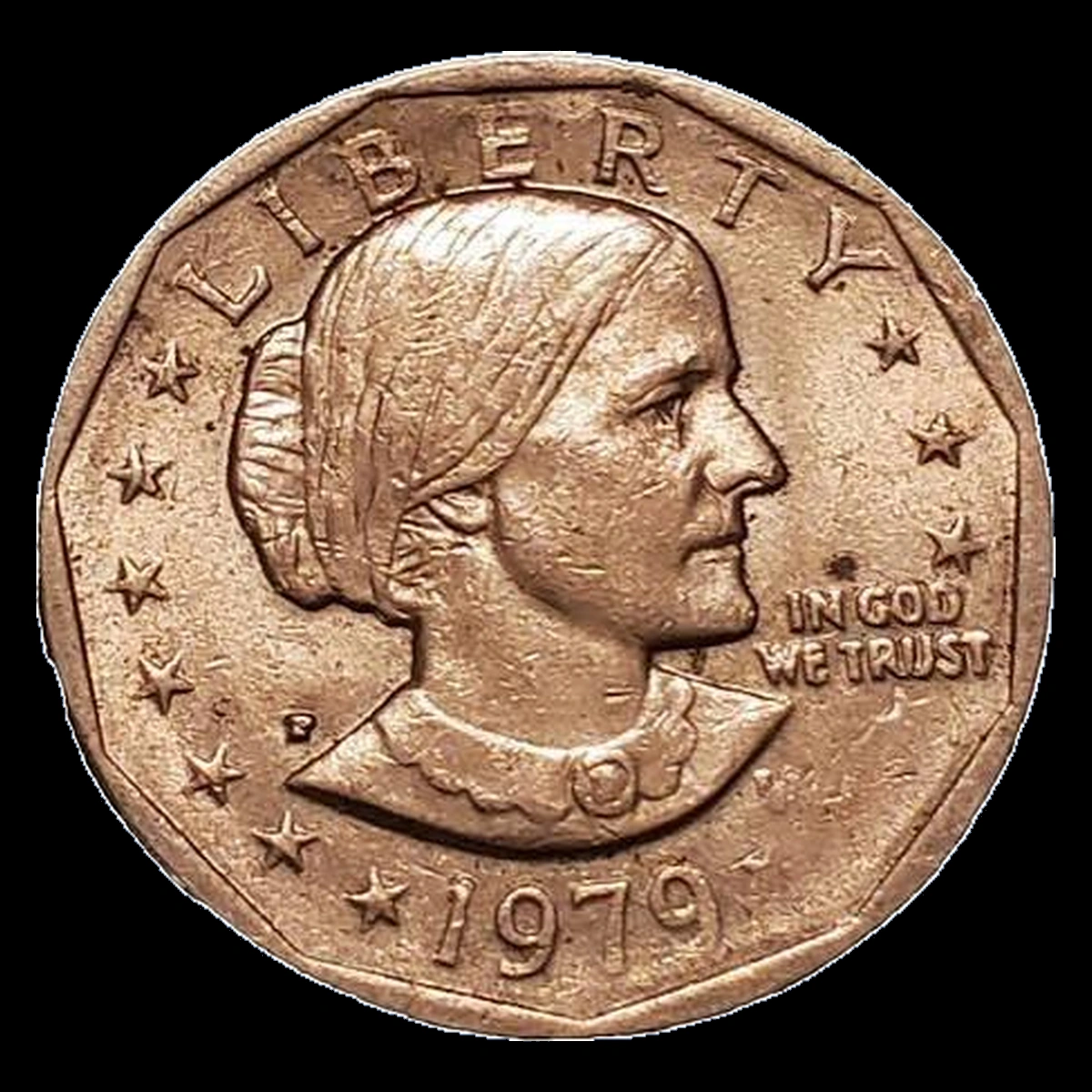
2. 1979 Dollar Repeated reverse details: reported doubled die Error
A seller’s report identifies doubling in ONE DOLLAR and eagle details on a 1979-D dollar. A true doubled die has repeated design features in the die itself, so the same arrangement can appear on more than one coin.
How to Identify
Compare several letter endings and nearby eagle features. A broad flat ledge differs from a distinct repeated contour and may be ordinary strike doubling.
The supplied report does not establish a confirmed variety attribution. Thick lettering alone should remain an observation until a specialist matches the actual pattern.
What It’s Worth
The conditional estimate is $20–$250 for a confirmed doubled-die example. It does not apply automatically to the seller-described coin or to flat strike doubling.
No completed sale in the supplied evidence resolves the reported variety’s identity or premium.
3. 1979 Dollar Dark or coppery color with intact layers: improper annealing Error
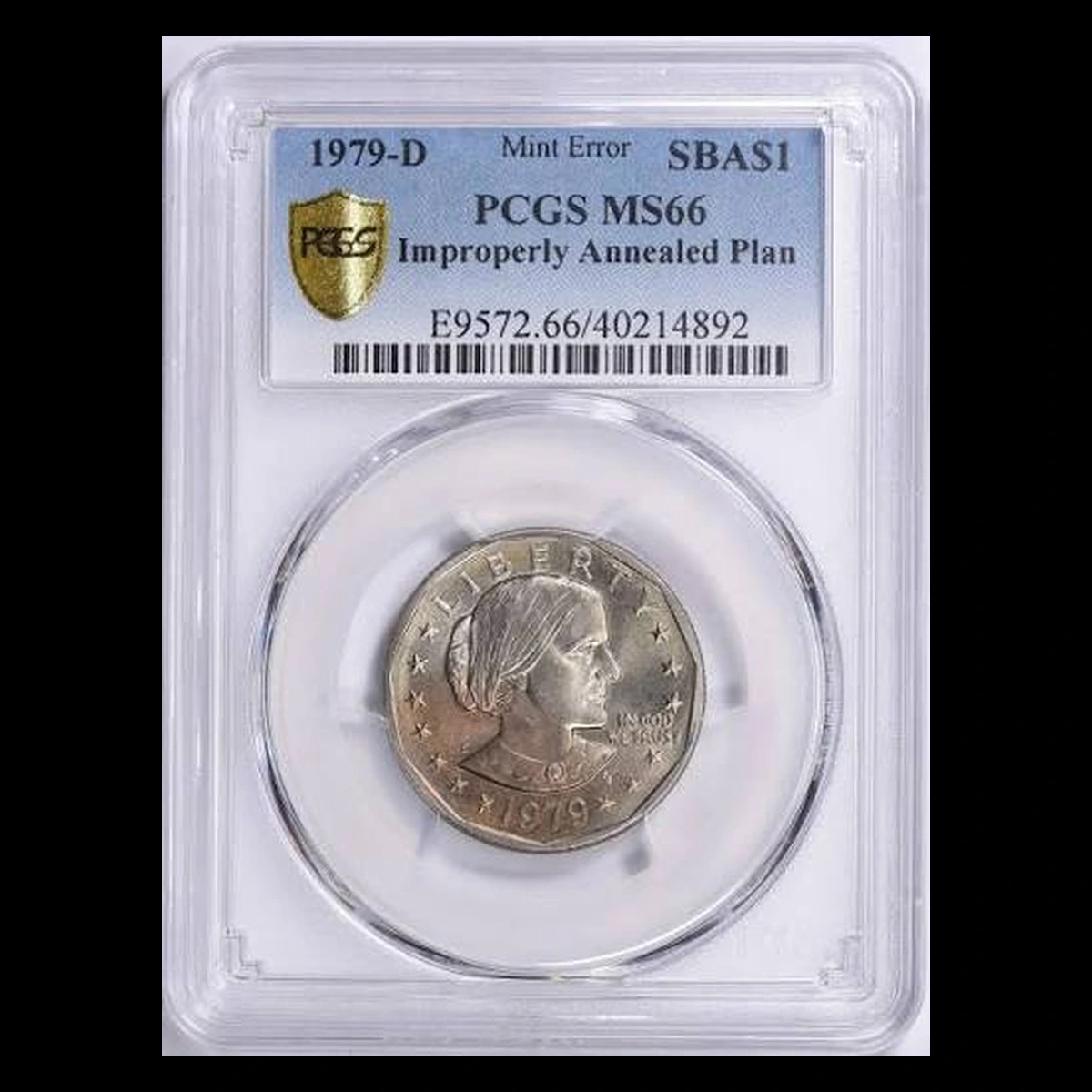
Some 1979-S dollars have unusual color attributed to the heating process used to soften blanks. This is an annealing error, not necessarily the loss of a metal layer.
Reported PCGS examples include MS66 and MS64 coins, with one described as affected on the reverse.
How to Identify
Examine the color under neutral white light and check whether the bonded layers remain intact. Chemicals, later heating, and natural tarnish can produce similar-looking color.
A complete Anthony dollar normally weighs 8.1 grams and measures about 26.5 millimeters across. These comparison standards help with several categories below, but normal weight alone cannot prove improper annealing.
What It’s Worth
Confirmed examples have a broad estimated range of $50–$400. The strength of the color and preservation of the underlying surface affect appeal.
A PCGS MS66 1979-S improperly annealed dollar sold for $139 in February 2022.
4. 1979 Dollar Raised lines or a lump attached to the rim: die break Error
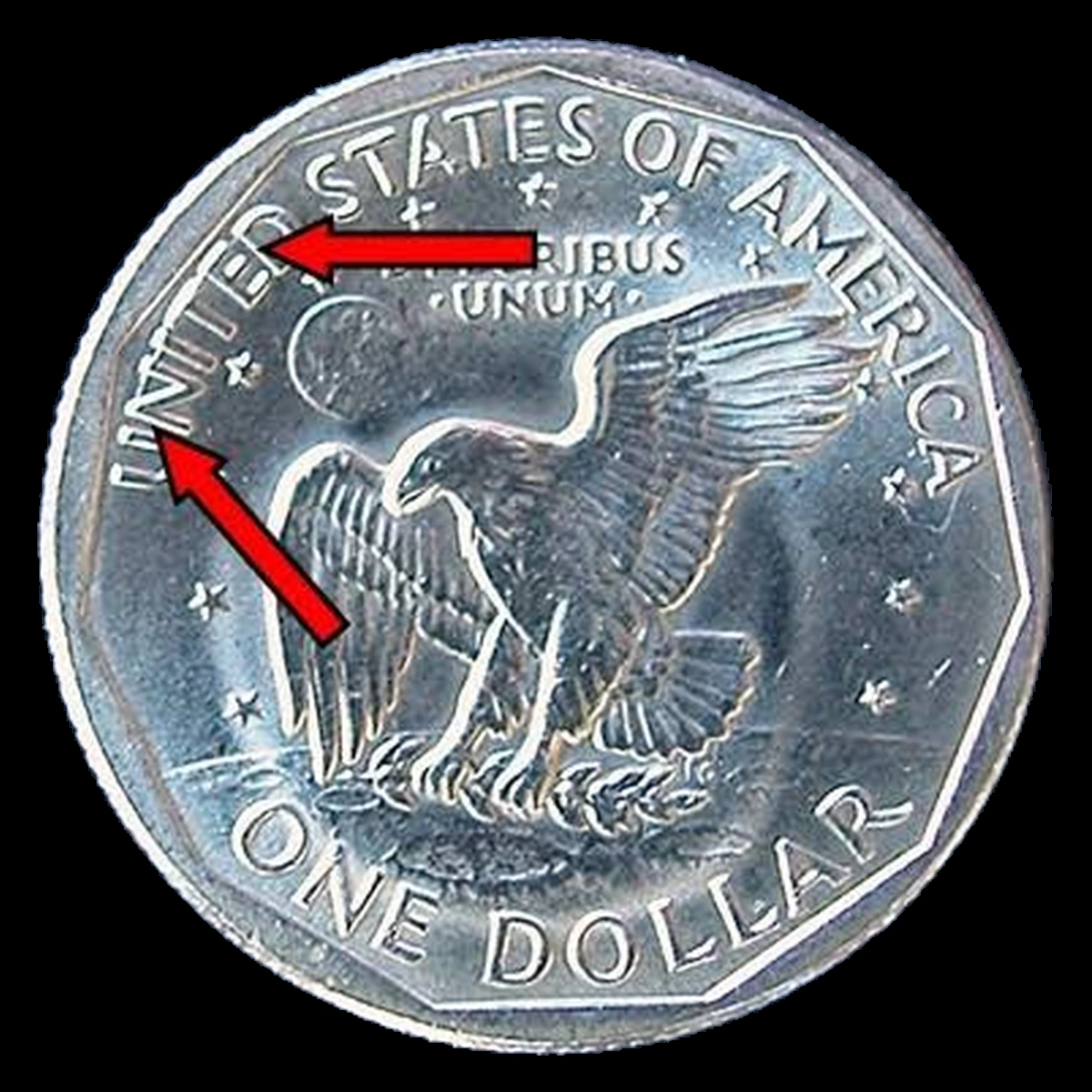
Cracks in a die leave raised lines on coins. A larger piece breaking away at the die’s edge can leave a raised patch connected to the rim, called a cud.
1979 examples are cataloged from all three mints. The Philadelphia A$C79P-2 group includes stages of a front-side break.
How to Identify
Check whether the feature is raised, then trace any large patch to the rim. An isolated interior lump does not meet that rim-connected description.
Match the complete shape and its endpoints to the appropriate mint’s catalog photograph. A San Francisco mintmark alone does not make an example a Proof.
What It’s Worth
The combined guide range is $5–$1,000: small cracks may fall around $5–$50, while larger recognizable breaks may reach $100–$1,000.
A Philadelphia A$C79P-2A front-break dollar graded NGC MS62 sold for $483.60 in April 2020. Its result cannot price an unrelated tiny rim bump.
5. 1979 Dollar Weak detail or an impressed patch: struck through material Error
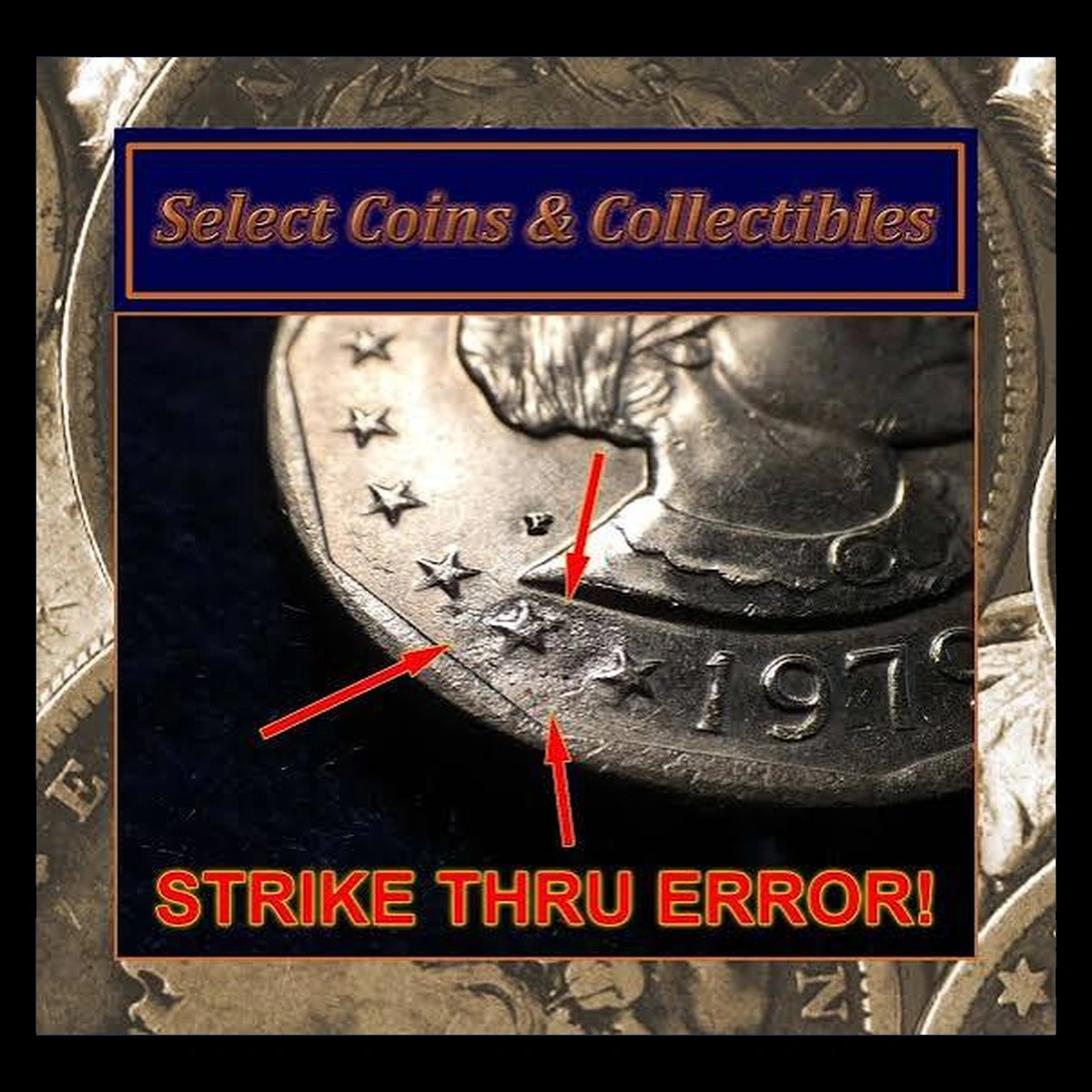
An obstruction between a die and the coin can leave missing detail or a depression. Grease is one possible obstruction, but a shape does not always reveal what made it.
The reports include a Philadelphia narrow-rim grease-filled type and a Denver coin with a heavy reverse impression plus a partial collar. Another Denver owner’s detached-layer explanation remains a reported interpretation of the material.
How to Identify
Compare weak detail with adjacent sharp design and the coin’s overall wear. On a large impression, inspect the boundary for damage that cuts through the finished surface.
Photograph the Denver combined error’s edge separately to show its collar feature. Do not identify an absent object more precisely than the evidence allows.
What It’s Worth
The overall estimate is $15–$1,000, with minor grease-blocked detail around $15–$150 and larger authenticated impressions around $150–$1,000.
A historical dealer listing asked $125 for the Denver reverse impression with partial collar. That figure was an asking price for the combined coin, not a realized sale.
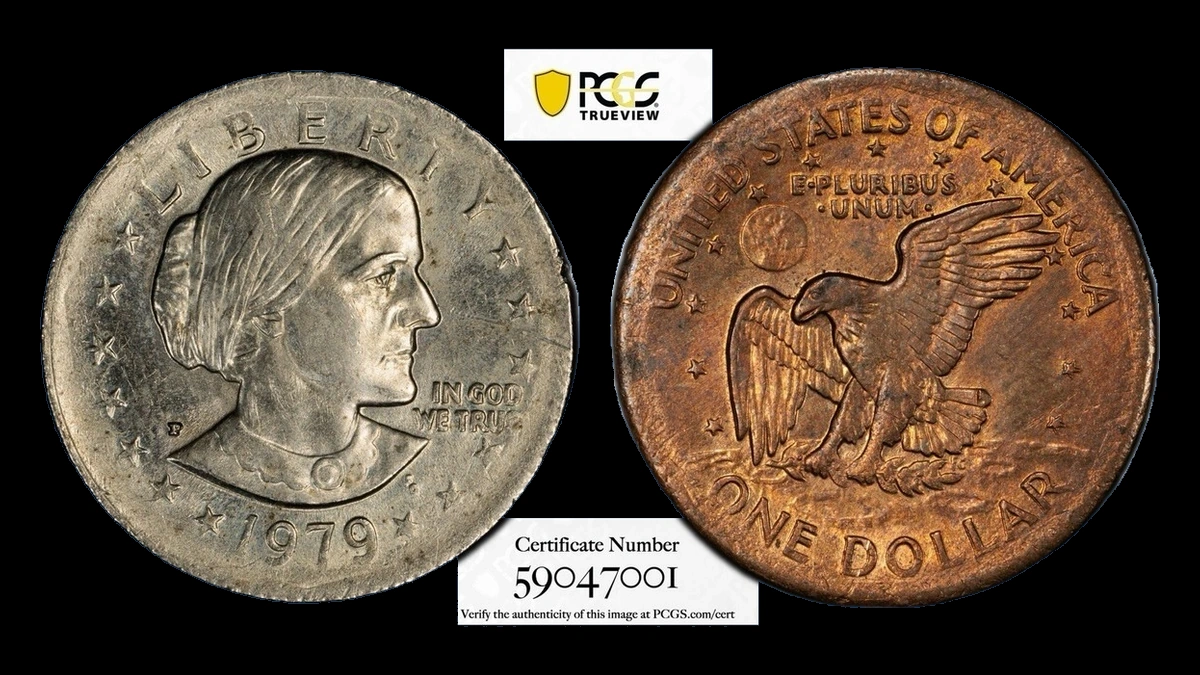
6. 1979 Dollar One exposed copper face: missing outer layer Error
An Anthony dollar contains a copper center between pale copper-nickel outer layers, with no silver. Losing one outer layer can expose a copper-colored portrait or eagle.
Philadelphia and Denver examples affect either face, while a San Francisco reverse example specifically lost its layer before striking. The timing should be established for each coin individually.
How to Identify
Compare both faces and inspect the edge for actual layer loss. Plating, staining, and grinding can imitate parts of the appearance.
One documented Denver front-layer coin weighs 6.08 grams. That is a specimen measurement, not a required weight for every missing-layer dollar.
What It’s Worth
Authenticated missing-layer coins have an estimated range of $150–$1,500. Surface damage and the clarity of the exposed design make a substantial difference.
A Philadelphia front-layer NGC MS64 example brought $322 in June 2008. A separate Denver reverse-layer PCGS MS63 coin sold for $552 in April 2020.
7. 1979 Dollar A loose, thin sheet with dollar artwork: detached layer Error
A layer can receive the design and then separate from the coin. The surviving sheet is a fragment of a struck dollar, rather than a complete dollar made on an unusually light blank.
A Philadelphia example graded PCGS AU58 weighs about two grams. A Denver reverse-layer separation has also been reported.
How to Identify
View the piece from the side and photograph both its struck face and separation surface. Check whether you have the detached sheet or the coin remaining after a sheet came away.
Tool marks may reveal a dollar that was deliberately thinned. Avoid bending or flattening a fragile layer while inspecting it.
What It’s Worth
About $100–$600 is the estimated range for authenticated post-strike separations. A readable design and intact outline improve the display.
The roughly two-gram Philadelphia outer layer has a reported auction price of $396 in June 2023. That price belongs to the detached piece.
8. 1979 Dollar A stepped edge: partial collar Error
The collar is the ring that restrains the blank and forms the edge grooves during striking. When a dollar sits only partly inside it, one band can remain restricted while another spreads outward.
How to Identify
Turn the edge toward the light and look for a step between bands with different expansion or groove formation. The faces alone may not show the error clearly.
Documented ordinary-strike examples include 1979-P ANACS MS61 and 1979-S ANACS MS60 coins. Crushed grooves and a rolled rim from later handling need to be excluded.
What It’s Worth
An individual partial-collar dollar may fall around $100–$700. A distinct ledge matters more than a barely uneven rim.
The two 1979 examples sold with a third dollar dated 1999-P for $1,080 in July 2021. That three-coin total does not assign an individual sale price to either 1979 coin.
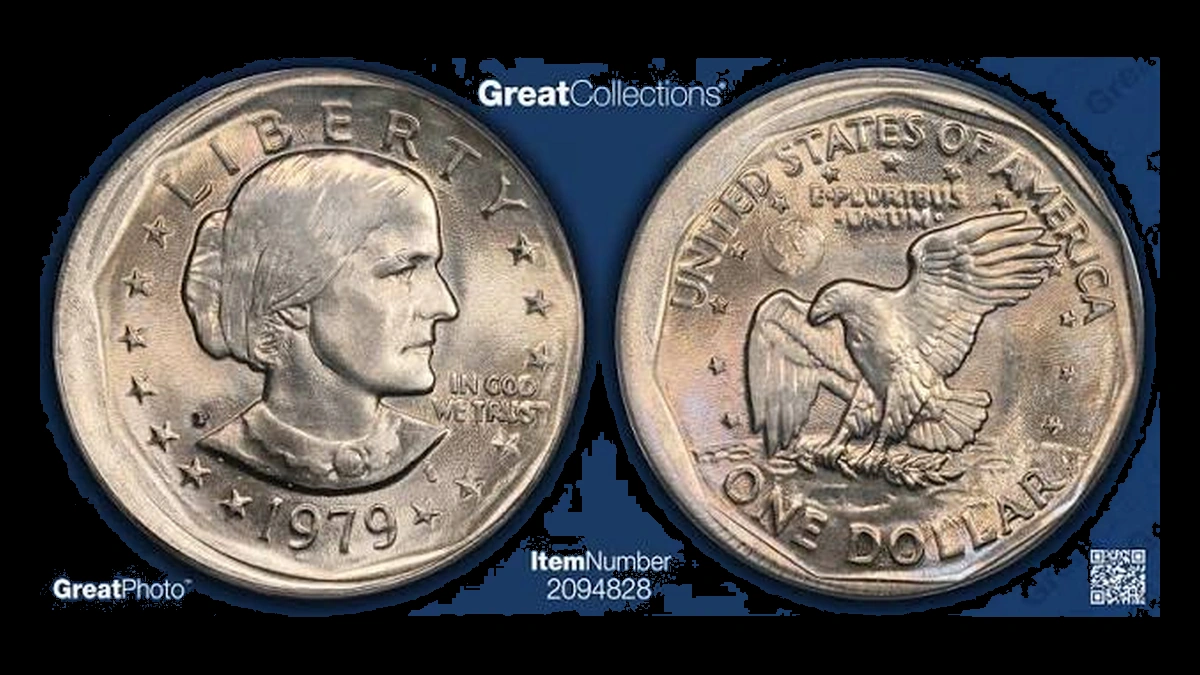
9. 1979 Dollar A wider outline with the design still present: broadstrike Error
A broadstrike forms when the coin spreads without proper collar restraint. The design can sit unevenly within the enlarged outline while remaining complete.
Philadelphia narrow-rim and wide-rim coins, along with Denver dollars, occur in this category. The Philadelphia rim styles themselves are normal varieties.
How to Identify
First compare the dollar with its correct normal rim variety. On the wide-rim variety, the date sits closer to the border without requiring a minting accident.
Check the outer lettering on both faces for completeness and the surface for signs of hammering. Missing design beyond the blank’s edge instead supports an off-center strike.
What It’s Worth
A useful estimate for ordinary broadstrikes is $100–$800. Clean surfaces and obvious expansion generally make the feature easier to appreciate.
A 1979-D NGC MS66 broadstrike sold for $228 in June 2024.
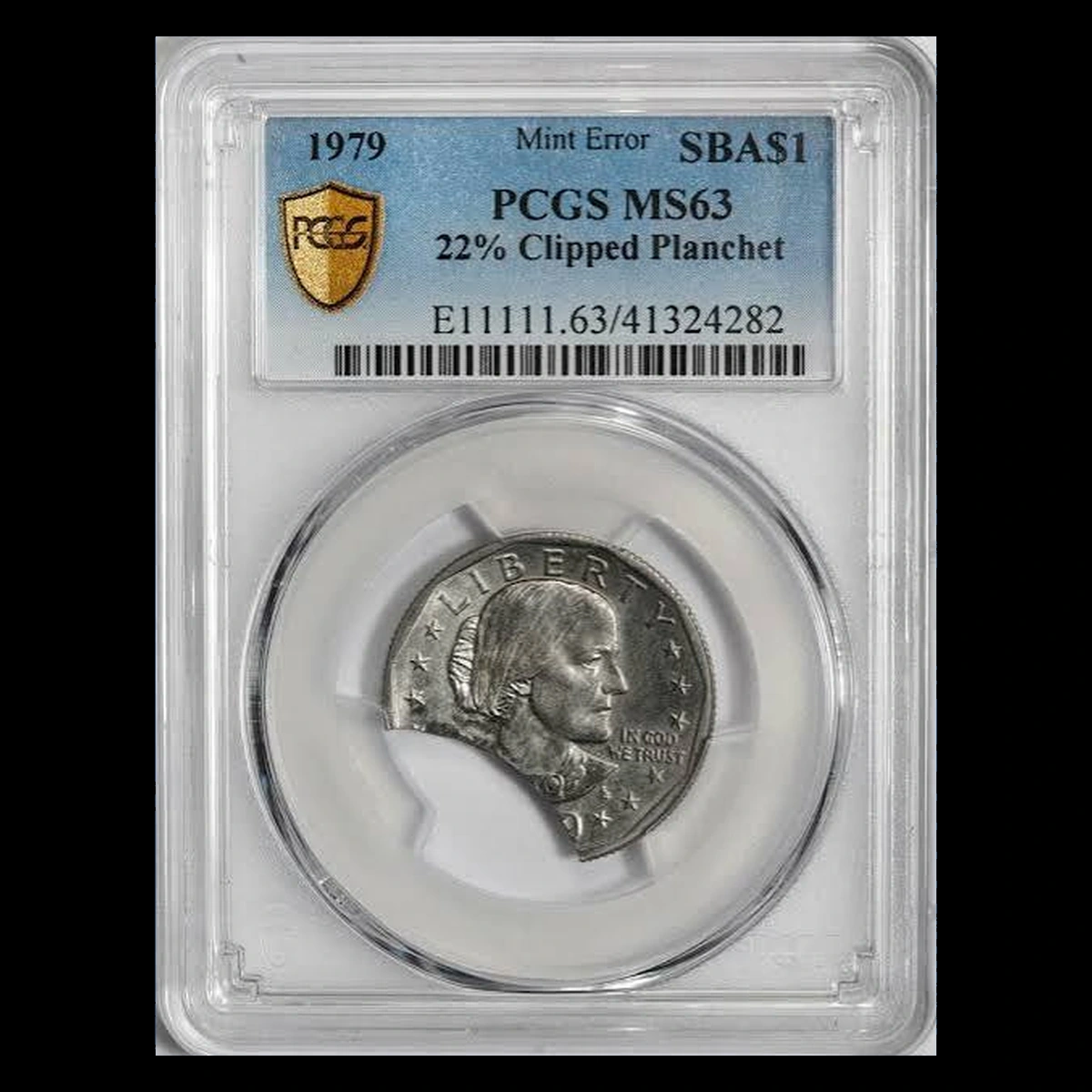
10. 1979 Dollar A missing portion of the outline: clipped planchet Error
A blank punched over an earlier hole or the strip’s edge begins with missing metal. The resulting clip can be curved, straight, irregular, or present in more than one place.
San Francisco reports include a 23% end-of-strip clip, a straight clip, a 5% double clip, and a curved gap with a small rim clip. A separate 33% straight clip also has a broadstrike.
How to Identify
Follow the original rim into each missing area and look for natural weakening or stretching of nearby details. Fresh burrs, saw lines, and filing suggest a finished coin was cut.
A Denver 6% straight clip weighs 7.5 grams; the separate San Francisco curved-plus-rim example weighs 7.13 grams. Neither measurement identifies the other specimen.
A weak rim opposite a curved clip can support the identification, but its strength varies.
What It’s Worth
The broad estimate is $50–$2,500, covering small clips through dramatic missing sections and combinations.
The San Francisco 23% end-of-strip PCGS MS64 example brought $1,560 in July 2021. A separate ANACS MS63 straight clip sold for $1,200 that month.
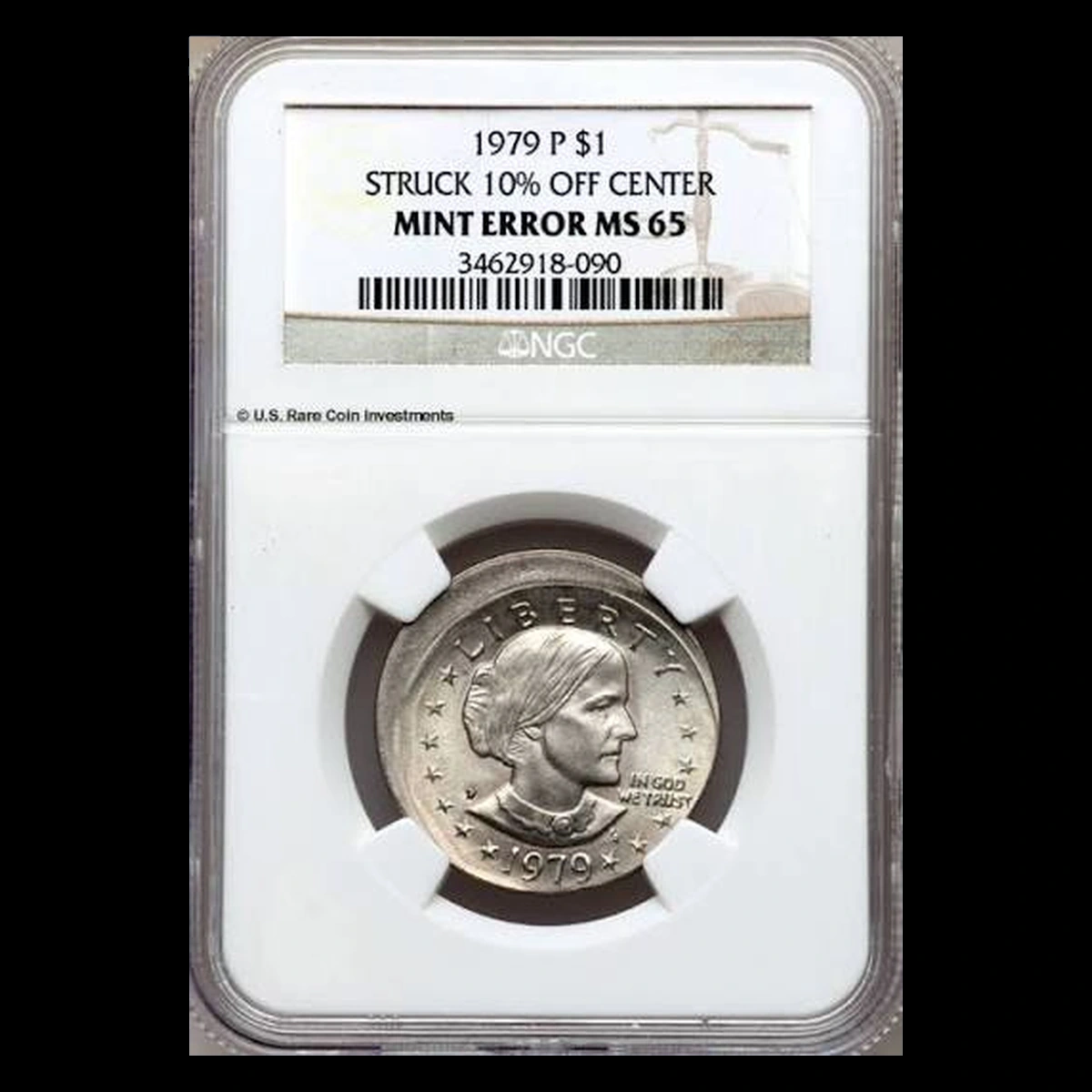
11. 1979 Dollar A blank crescent beside incomplete artwork: off-center strike Error
A misplaced blank receives only part of the dollar design. One PCGS MS64 example is 75% off center toward 11 o’clock, with all four date digits surviving.
Its mintmark area did not receive a visible impression. Other documented coins include a Philadelphia 15% and a Denver 55% off-center strike.
How to Identify
Read the surviving date and mintmark separately, then inspect where the design ends on both faces. A missing mintmark cannot be treated as evidence of Philadelphia production.
Look at the empty area for natural blank texture instead of grinding that erased an earlier design. Both faces must fit the same displaced strike.
What It’s Worth
Estimated prices span $100–$3,000. A readable date, attractive arrangement, and surface condition matter alongside the displacement percentage.
The 75% off-center PCGS MS64 example sold for $690 in January 2004. Its complete date and unavailable mintmark should remain separate parts of its description.
12. 1979 Dollar A straight contact edge beside a displaced strike: chain edge Error
A neighboring blank can block the dollar’s outward spread without deeply overlapping it. The resulting contact border is described as a chain edge.
A 1979-D NGC MS66 example combines that feature with a 45% off-center strike. The neighboring piece is not known merely because its contact is visible.
How to Identify
Relate the straightened edge to the metal flow and struck area on both faces. A straight clip removes part of the blank, while filing changes a finished edge.
Side lighting can expose parallel file marks that would contradict the proposed minting explanation. The contact border needs its own evidence beyond the off-center design.
What It’s Worth
An authenticated combination has an estimated range of $300–$3,000. This is a value for the complete coin.
The $690 January 2004 sale above provides only an off-center comparison. That 75% example was not described as having a chain edge, and no specific realized price is supplied for the 45% chain-edge coin.
13. 1979 Dollar Struck detail on the narrow side: edge strike Error
A historical listing describes a 1979-D dollar as 60% off center with an edge strike. The unusual side impression indicates that the metal was not flat in the normal striking position throughout the event.
How to Identify
Look for recognizable struck design on the narrow edge. Normal collar grooves and battered rim patches are not sufficient evidence.
Photograph the side impression together with the face boundaries, surviving date, and mintmark. The supplied listing does not provide a precise letter-by-letter checklist for that edge impression.
What It’s Worth
A broad estimate for an authenticated comparable combination is $500–$4,000. Clear design on the edge supports a stronger identification.
The historical catalog asked $900 for its specimen. That was an offer price, not a completed transaction, and it covered both features on one coin.
14. 1979 Dollar A curved hollow replacing the design: indent Error
When another blank overlaps a dollar during striking, it can press a curved depression into the coin beneath it. The covered area fails to receive the normal design.
Denver listings describe a 45% indent extending from about 9:30 to 1 o’clock and a separate 20% indent at 12 o’clock.
How to Identify
Trace the depression’s boundary across the lettering and open surface. Its outline should explain where the overlapping blank blocked the strike.
A later blow may instead crush already formed design and pile metal around the impact. Keep the two Denver examples’ sizes and positions separate when comparing photographs.
What It’s Worth
Estimated values are $150–$1,500 for authenticated indents. Large, clear depressions with well-preserved surrounding detail are easier to display.
Historical asking prices were $200 for the 45% indent and $125 for the 20% example. Neither listing establishes a completed sale.
15. 1979 Dollar Two coins with matching contact evidence: mated pair Error
The recorded 1979-D pair preserves both sides of an overlap event. Its PCGS MS64 coin was struck 75% off center toward 1:30, while the MS63 partner has a 25% front indent centered near 7:30.
The indented coin has a tall, thin rim beside the hollow. A shoulder clash belongs to the off-center coin.
How to Identify
Compare the contact boundaries in photographs and relate the first coin’s unstruck front area to its partner’s depression. Matching dates or similar percentages alone cannot establish a pair.
Keep the certification descriptions with the correct pieces. Pressing the coins together to test a fit could mark them or bend the thin rim.
What It’s Worth
A comparable authenticated pair has an estimated combined range of $1,200–$5,000.
These two dollars sold together for $1,645 in April 2017. The result is the total for the pair, not the price of each coin.
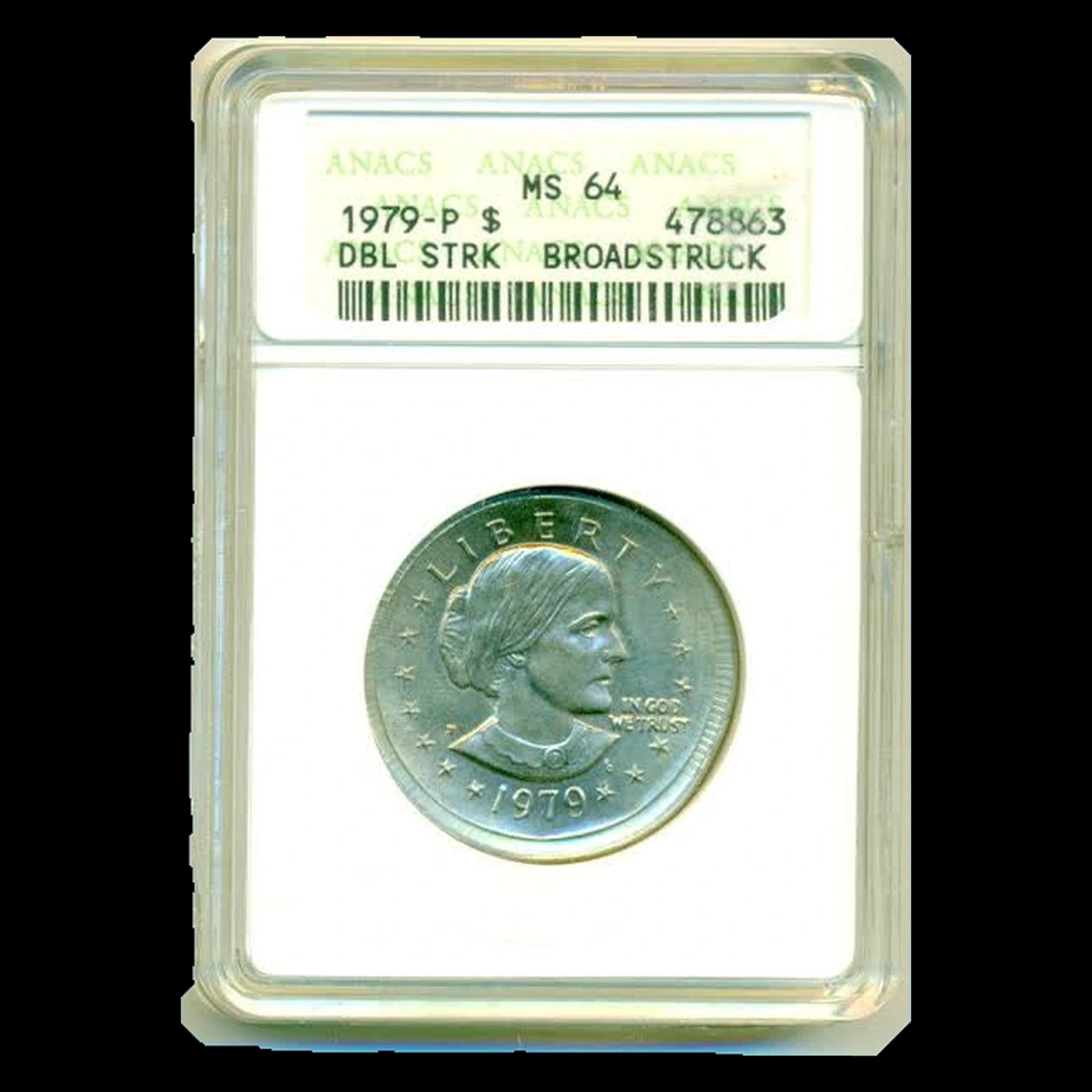
16. 1979 Dollar Shifted impressions from additional strikes Error
A dollar that moves between strikes can display repeated letters or portrait details. One Denver example remained inside the collar, while other Denver and Philadelphia examples expanded during an additional strike.
A San Francisco Type One Proof also spread outward and acquired displaced lettering. Proof manufacture normally uses repeated blows, so the spreading and movement are the errors in that case.
How to Identify
Follow distinct impressions that fit separate strikes, rather than a flat shelf along one letter. The Denver in-collar example retains full edge grooves; expanded versions require a different edge comparison.
On the Proof, examine GOD, TRUST, AMERICA, and DOLLAR for displaced detail. Its rounded Type One S is a normal mintmark style, separate from the striking error.
What It’s Worth
The combined range is $300–$7,500, with ordinary repeated-strike coins around $300–$1,500 and comparable expanded Proofs around $2,000–$7,500.
The Denver in-collar PCGS MS63 dollar has a recorded $840 sale in December 2025. The San Francisco NGC Proof 63 Cameo example sold for $4,887.50 in August 2007.
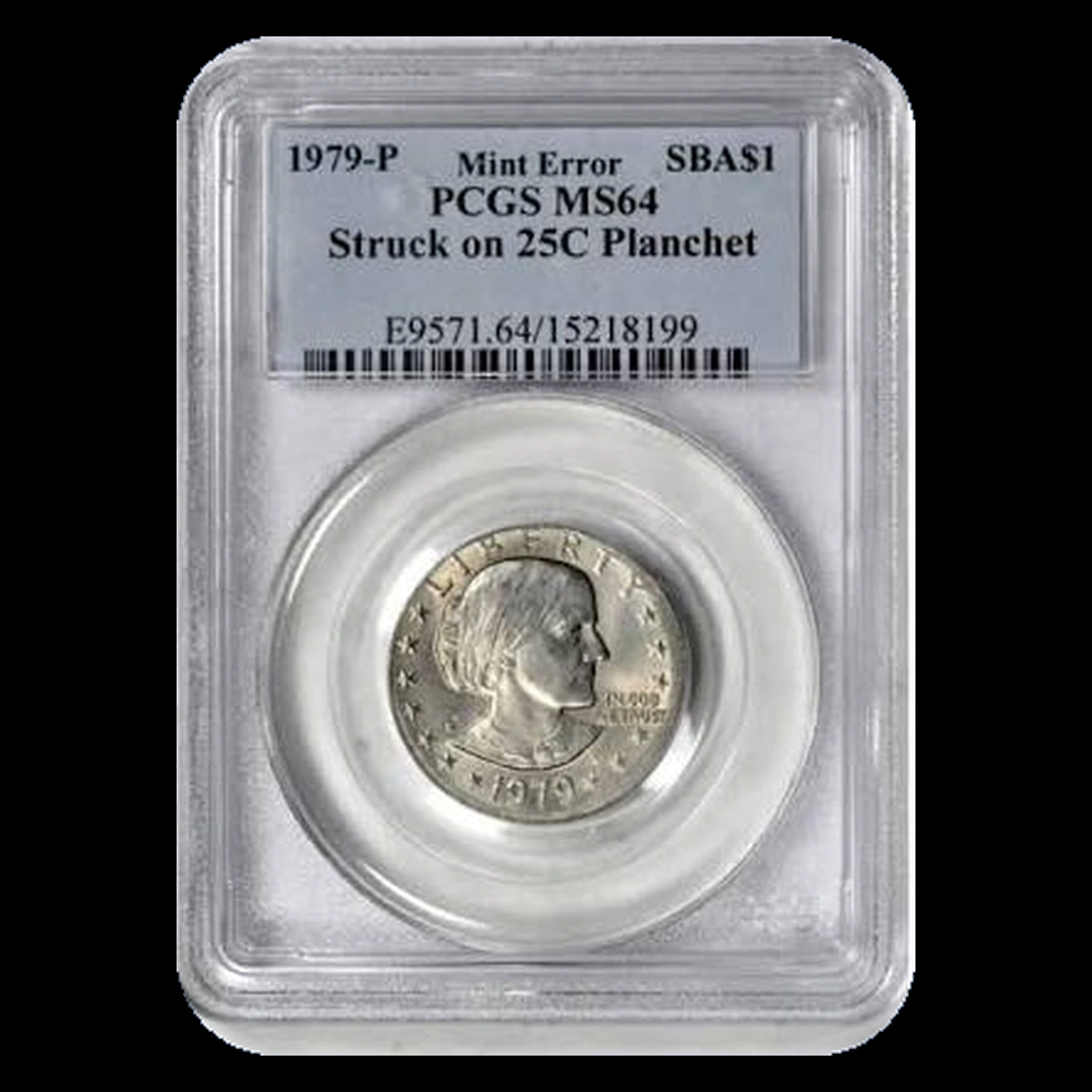
17. 1979 Dollar Dollar artwork on a smaller blank: wrong planchet Error
Cent, nickel, dime, and quarter blanks have received the 1979 dollar design. Each leaves a different combination of metal, size, and surviving artwork.
San Francisco examples include cent and nickel blanks, a nickel blank with an indent, and a dime blank retaining 1979-S. A separate cent-blank example expanded with one face blocked.
Philadelphia quarter-blank examples include an unfinished-rim blank and a coin with a recessed backward impression. A Denver quarter-blank dollar is also 75% off center, while an undated cent-blank coin is attributed to 1979.
How to Identify
Read the surviving design before selecting the proposed blank type. A backward recessed design transferred by another coin is called a brockage; it is an additional feature on the Philadelphia quarter-blank example.
Standard 1979 blank weights are 3.11 grams for a cent, 5 grams for a nickel, about 2.27 grams for a dime, and 5.67 grams for a quarter. These are standards, not measured weights supplied for each error.
Inspect the edge for intact layers, trimming, or plating. Do not supply missing date digits from another specimen’s photograph.
What It’s Worth
These authenticated combinations have an estimated range of $500–$15,000. The blank type and any additional strike features must stay attached to the individual price.
The San Francisco dime-blank PCGS MS65 coin brought $10,062.50 in January 2004. A Philadelphia quarter-blank coin with front brockage sold for $915 in June 2026.
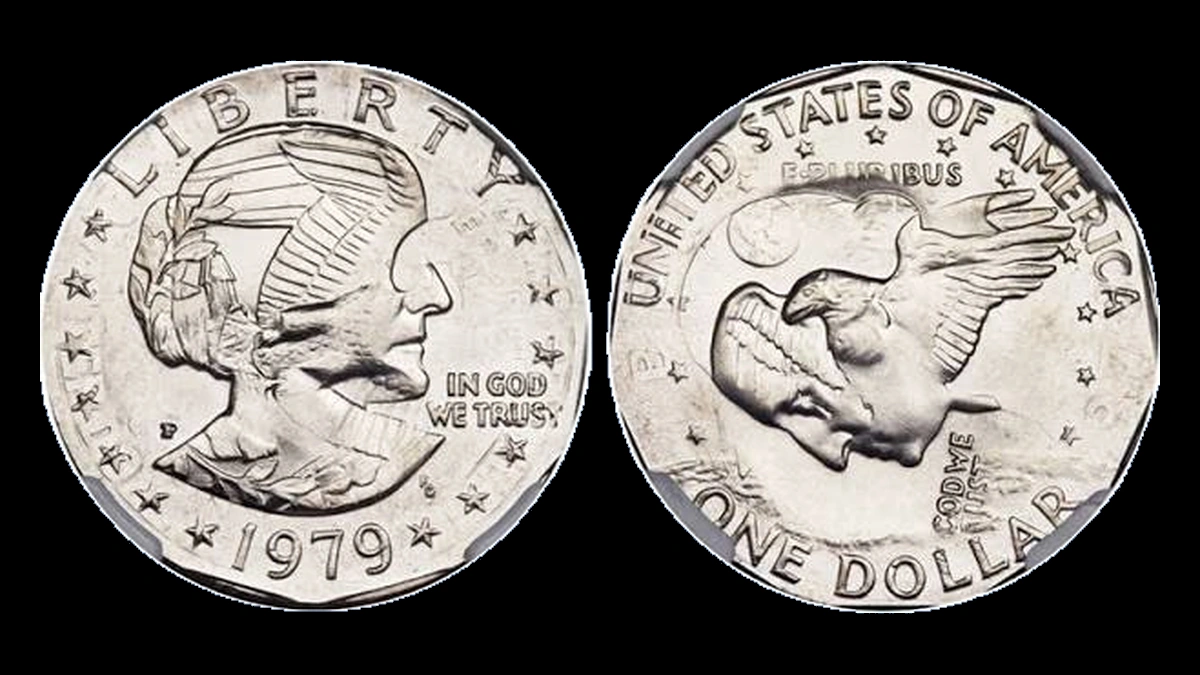
18. 1979 Dollar An earlier coin’s design beneath the dollar: double denomination Error
Visible artwork from another denomination shows that the dollar dies struck a finished coin. That differs from striking an unused blank of the same size.
Philadelphia examples involve a 1978 nickel, a 1978 quarter, a cent, and a dime. Other reports include a San Francisco cent and Denver nickel and 1978-D dime hosts.
How to Identify
The Philadelphia nickel-host example shows Monticello’s dome near Anthony’s nose and Jefferson near the eagle’s legs. Part of the nickel’s 78 survives near the eagle’s wing.
Each other host requires its own earlier portrait, lettering, or reverse details. On the Denver dime example, 1978-D belongs to the underlying dime while the dollar year is attributed.
Size and color cannot establish an earlier coin by themselves. Do not transfer the known 1978 dates to cent or dime hosts whose dates are unspecified.
What It’s Worth
A broad estimated range is $4,000–$25,000 for authenticated double-denomination combinations. Readable overlapping designs and strong preservation can have a large effect.
The Philadelphia dollar over a 1978 quarter, graded NGC MS67, sold for $13,200 in December 2022. That is the price of the complete overstruck coin.
Conclusion
A 1979 dollar can preserve evidence in its lettering, metal layers, edge, or overlapping designs. Record each feature before choosing a name, especially when two errors occur on the same piece.
Keep pair totals, historical asking prices, and individual auction sales separate. The strongest comparisons match the actual mint, error, and condition, while a missing date or mintmark should remain unresolved until the coin’s own evidence supports an attribution.