Rare 1852 Dollar Errors (List & Pictures)
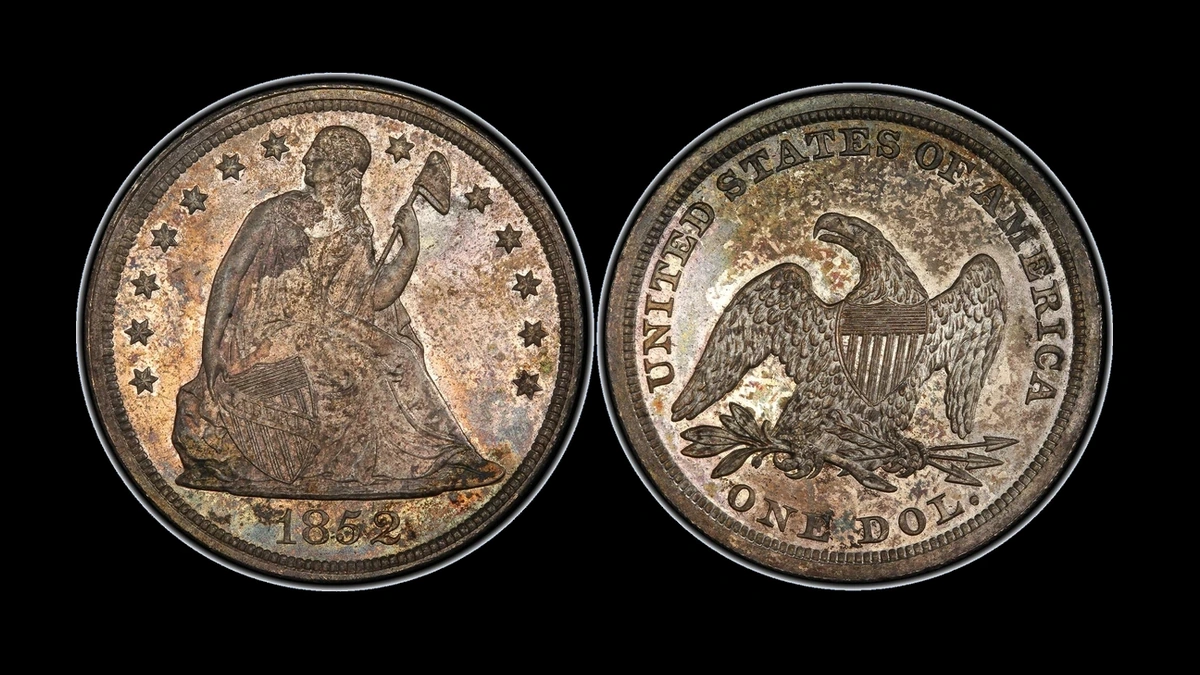
An original 1852 dollar graded MS63 sold for $91,062.50 in July 2022. In this guide to 1852 Liberty Seated dollar errors, the estimated $10,000–$100,000 range describes whole rare-date coins, not separate premiums for individual marks.
Inspect the eagle’s shield for lines copied from the die, then examine the reported ring on Liberty’s arm. These two observations carry different levels of evidence about their origin.
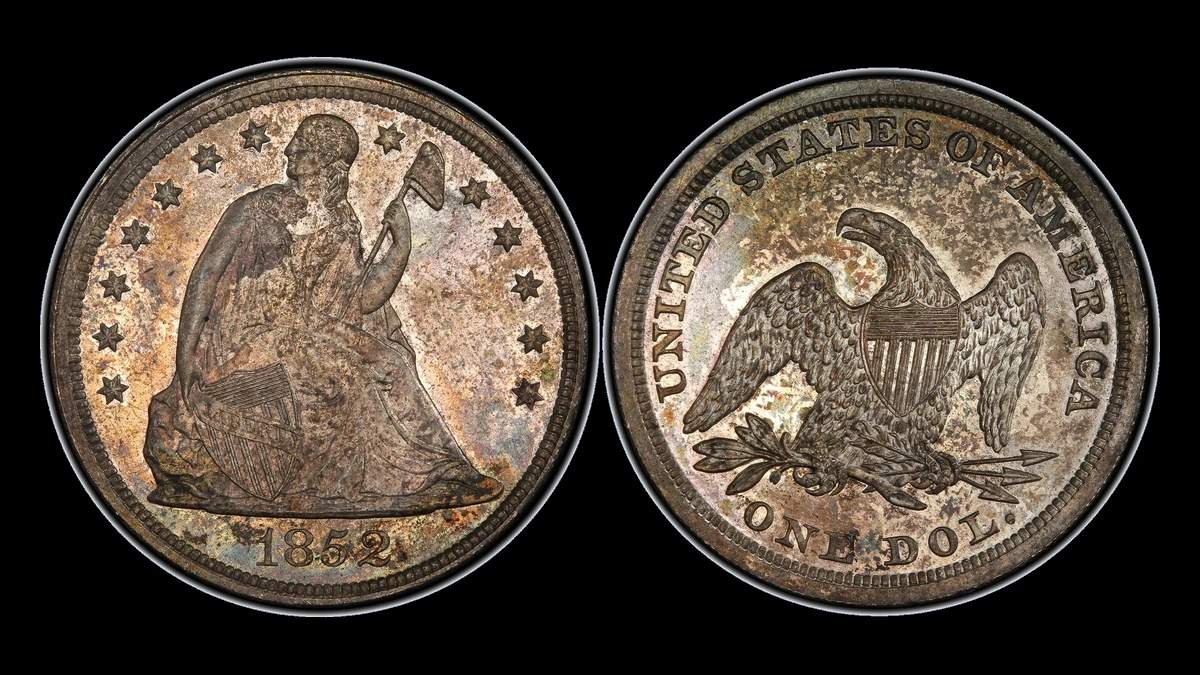
1852 Dollar Lines Crossing the Eagle’s Shield Border: Extended Stripes and Spur Error
The small shield on the eagle’s chest contains vertical stripes beneath horizontal lines. On original 1852 ordinary strikes, some verticals extend upward into that horizontal area or downward through the lower shield outline.
A small spur also projects from the right edge of the rightmost stripe group. It can remain visible on later examples after other fine marks from the tool have faded.
These details help identify the die, the steel stamping tool that made the reverse. They do not represent a second complete shield or require two strikes on the coin.
How to Identify
Turn to the eagle’s chest rather than Liberty’s shield on the front. With magnification, follow several vertical stripes through the intended boundaries and examine how each extension joins the original line.
Next tilt the light over the rightmost group to find the connected raised spur. An unrelated scratch can cross several design elements without following these particular extensions.
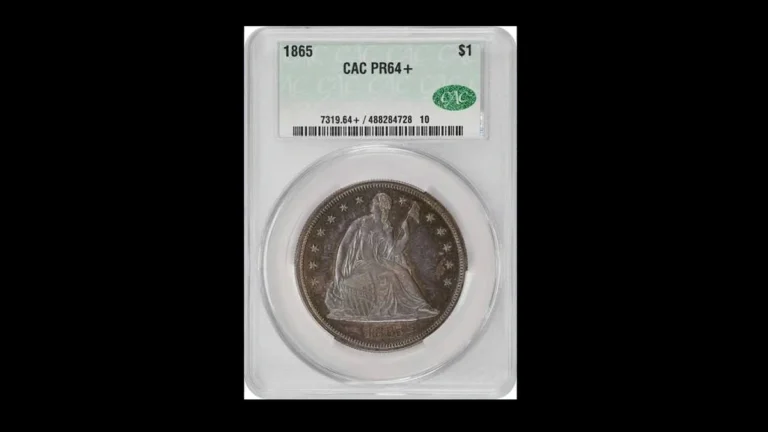
Use a photograph of an original 1852 dollar as the comparison. Later restrikes were produced after their inscribed date and can share front details while using different reverse dies.
What It’s Worth
$10,000–$100,000 is the estimated whole-coin range for genuine original 1852 dollars in differing states of preservation. The date’s scarcity is central to the valuation.
PCGS records an MS63 example at $91,062.50 in July 2022. MS63 describes an unworn coin with visible marks, and this result should not be interpreted as the price of a shield defect alone.
Cleaning, scratches, and wear alter the comparison. Counting several extended stripes does not multiply the value of the dollar.
1852 Dollar A Circular Feature on the Forearm: Reported Ring Mark Error
The Floyd Starr example was described as having a small “raindrop ring” on Liberty’s left forearm. That name describes the appearance without establishing water, a damaged die, or another specific cause.
The observation belongs to that coin. A round spot elsewhere may be a deposit, stain, or contact mark, and its circular outline alone does not make it a minting error.
How to Identify
Compare the entire forearm with the Starr specimen before enlarging the ring. The exact location matters as much as the general circular shape.
Illuminate it from opposite directions to distinguish raised edges, a depression, and color confined to the surface. Photograph those changes without rubbing or cleaning the area.
A matching feature at the same position on another coin from the same die would strengthen a tool-origin explanation. Until such evidence resolves the cause, preserve the description as a reported mark.
What It’s Worth
$10,000–$100,000 remains a whole-coin estimate for a genuine original 1852 dollar with this reported feature. There is no automatic separate ring premium.
The $91,062.50 result above concerns another rare-date comparison, not a documented sale of the Starr ring-mark coin. If a circular mark proves to be damage, it could reduce rather than increase desirability.
Conclusion
On an 1852 dollar, extended reverse shield lines and the small spur help identify original die work. The forearm ring has a less certain explanation and should retain that distinction.
Before using the $10,000–$100,000 range, establish whether the coin is an original or later restrike and assess its complete condition. The rare date accounts for the large values; small visible marks are not independent amounts to add together.