Rare 1876 Half Dollar Errors (List & Pictures)
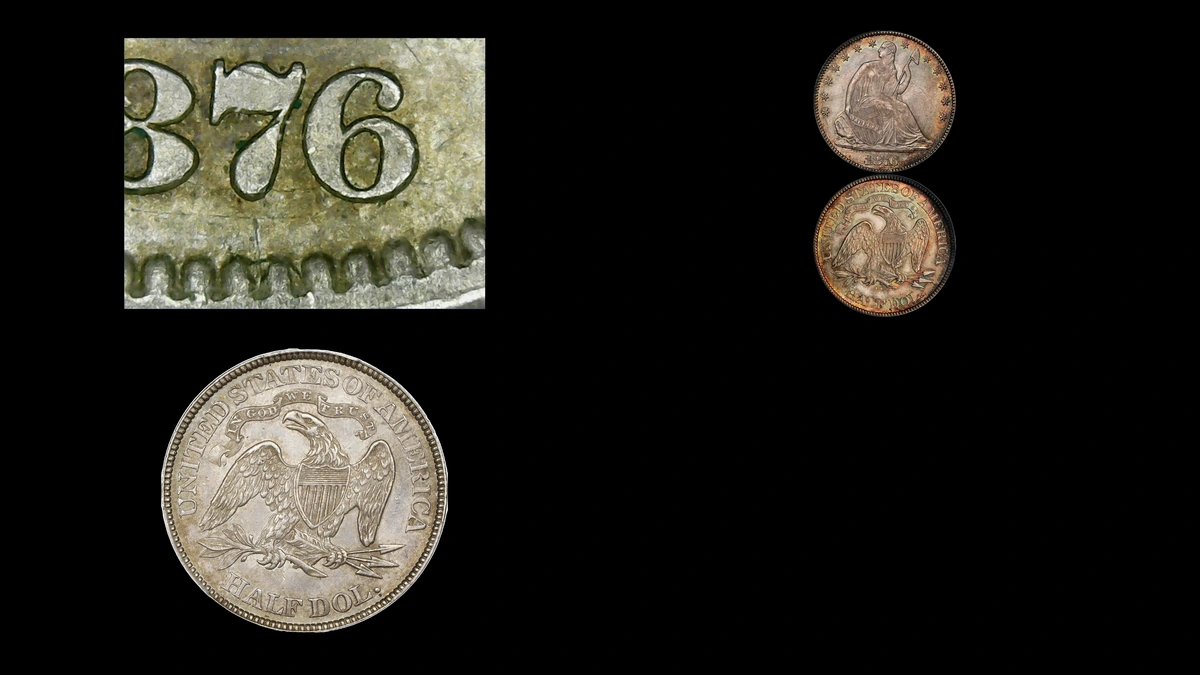
An 1876 Large over Small Date half dollar graded AU55 sold for $3,936 in 2013. The earlier numeral traces are part of the die variety, not a different year beneath 1876.
Estimated 1876 half dollar errors values span $100–$10,000. Inspect the date and Liberty’s hand, then the reverse and edge to distinguish the features below.
Normal specifications are 12.50 grams, approximately 30.6 millimeters, and a reeded edge. The alloy is 90 percent silver with copper.
| Inspection point | Possible feature | Estimated whole-coin value |
|---|---|---|
| Date and border teeth | Repunched or misplaced date | $200–$5,000 by variety |
| Liberty’s left fingers | Smoking Liberty die line | $150–$800 |
| Above right elbow | Carson City die clash | $350–$2,000 |
| Date, stars, denomination | Carson City die cracks | $300–$2,000 |
| Reverse inscriptions | Doubled die reverse | $500–$3,000 |
| S or CC | Repunched mintmark | $150–$2,500 by mint |
| Peeling metal | Lamination | $100–$750 |
| Raised rim-connected patch | Cud | $300–$1,500 |
| Stepped edge | Partial collar | $150–$1,000 |
| Expanded complete design | Broadstrike | $1,000–$4,000 |
| Blank area and missing design | Off-center strike | $1,500–$10,000 |
1. 1876 Half Dollar Extra Numerals Remain under the Date or Border: Repunched and Misplaced Dates Error
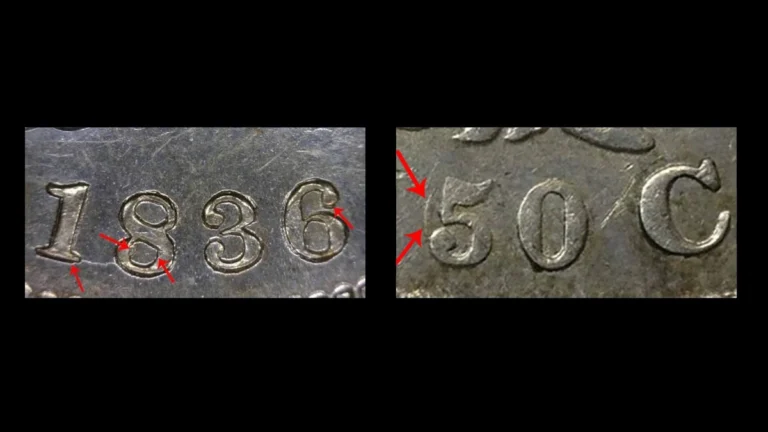
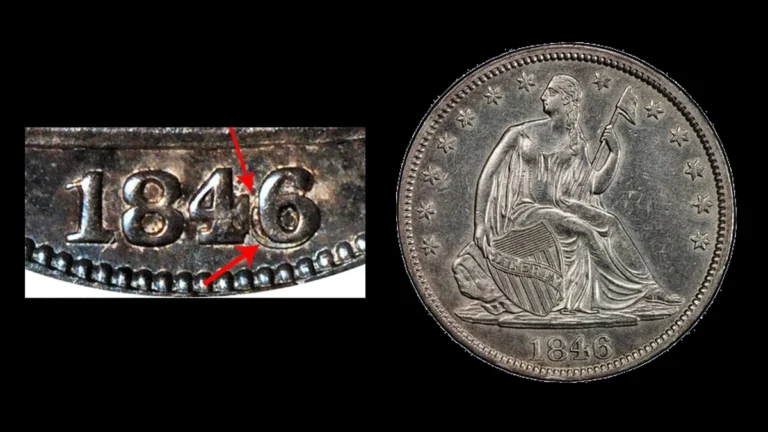
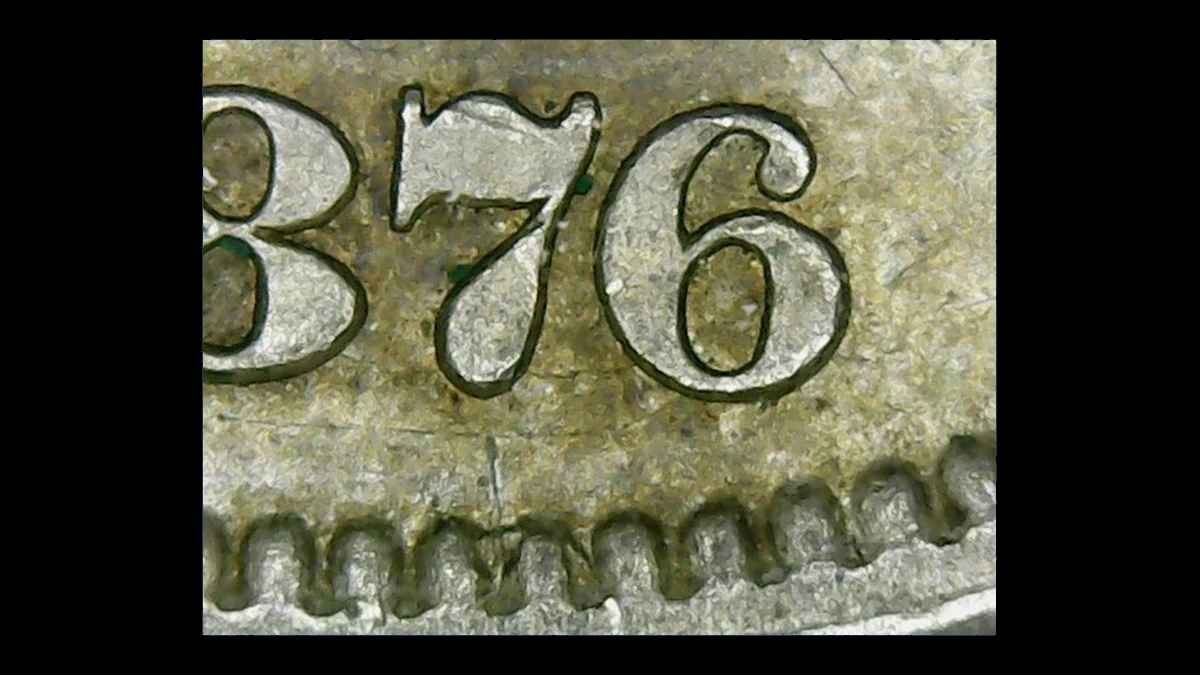
The Large over Small Date variety preserves smaller numeral traces beneath the final date. Other entries affected Philadelphia’s 76, San Francisco’s final 6, or dates on Carson City dies.
Some date punches landed farther away, leaving traces among the border teeth below the numerals. These are repeated or misplaced elements of 1876, not an overdate combining two different years.
How to Identify
Establish the mint before selecting a date comparison. A Philadelphia Large over Small Date needs smaller underlying numerals, while separate Philadelphia varieties show traces below 1 and 8.
Examine San Francisco’s final 6 against its own example. The Carson City misplaced-date description mentions an apparent top of an 8, so retain that qualification rather than interpreting every uneven border tooth as a numeral.
Look for shaped numeral remnants with relief compatible with the strike. Flat shelves, scratches, and ordinary border irregularities need other explanations.
What It’s Worth
Worn modest repunched or misplaced dates are estimated at $200–$1,200; Large over Small Date examples are estimated at $1,500–$5,000. Mint, variety, and preservation narrow those ranges.
A PCGS XF45 CAC Large over Small Date sold for $1,968.75, and an AU55 brought $3,936 in 2013. A Carson City ANACS AU55 with the apparent 8 top sold for $264.50 in 2001, an old result that should not be presented as a current CC valuation.
2. 1876 Half Dollar A Raised Stroke Crosses the Fingers: Smoking Liberty Die Line Error
Smoking Liberty’s “cigarette” is at her left hand, not her mouth. The 1876-S variety has a raised horizontal line crossing the fingers.
An unwanted groove in the obverse die filled with silver during striking and produced the line. That front die was paired with reverse dies carrying the Micro S and Very Small S mintmark styles.
How to Identify
Inspect the fingers under magnification and compare the line’s exact position with the Smoking Liberty illustrations. Confirm that the line rises above the hand rather than being a dark stain or cut.
Then compare the reverse mintmark with the appropriate pairing. The two small S styles can accompany the same named front feature.
A line elsewhere on Liberty does not inherit the nickname. Keep the hand and enough surrounding design visible in photographs to locate it accurately.
What It’s Worth
Worn through lightly worn Smoking Liberty examples have an estimated $150–$800 value. Clear identification helps, but wear and cleaning still affect the coin.
An ordinary 1877-S graded PCGS XF45 sold for $216 in December 2025. That nearby-year condition comparison is not a transaction for this variety.
3. 1876 Half Dollar Faint Opposite-Design Traces Appear near the Elbow: 1876-CC Die Clash Error
On a known Carson City variety, unwanted outlines occur above Liberty’s right elbow and in the adjacent open area. They represent parts of the opposite design transferred through contact between the dies.
When dies meet without a blank between them, one can mark the other. Later coins then receive incomplete traces without having been struck twice themselves.
How to Identify
Confirm CC on the reverse, then compare the front marks with recognizable elements of the reverse design. Random scratches near the elbow do not establish a clash.
Use angled light and follow the traces above the elbow into the field to its right. Only areas where the dies contacted may appear, so a complete second eagle is not expected.
Keep these small transferred outlines separate from large overlapping impressions. The latter require investigation as another strike.
What It’s Worth
Worn through lightly worn examples with visible clash marks have an estimated $350–$2,000 range. A faint clash may add little to the ordinary Carson City value.
Sale records include $336 for PCGS VF20 in April 2025 and $1,830 for AU55 in January 2026. Neither establishes a separate clash premium; they illustrate how much the whole coin’s preservation can matter.
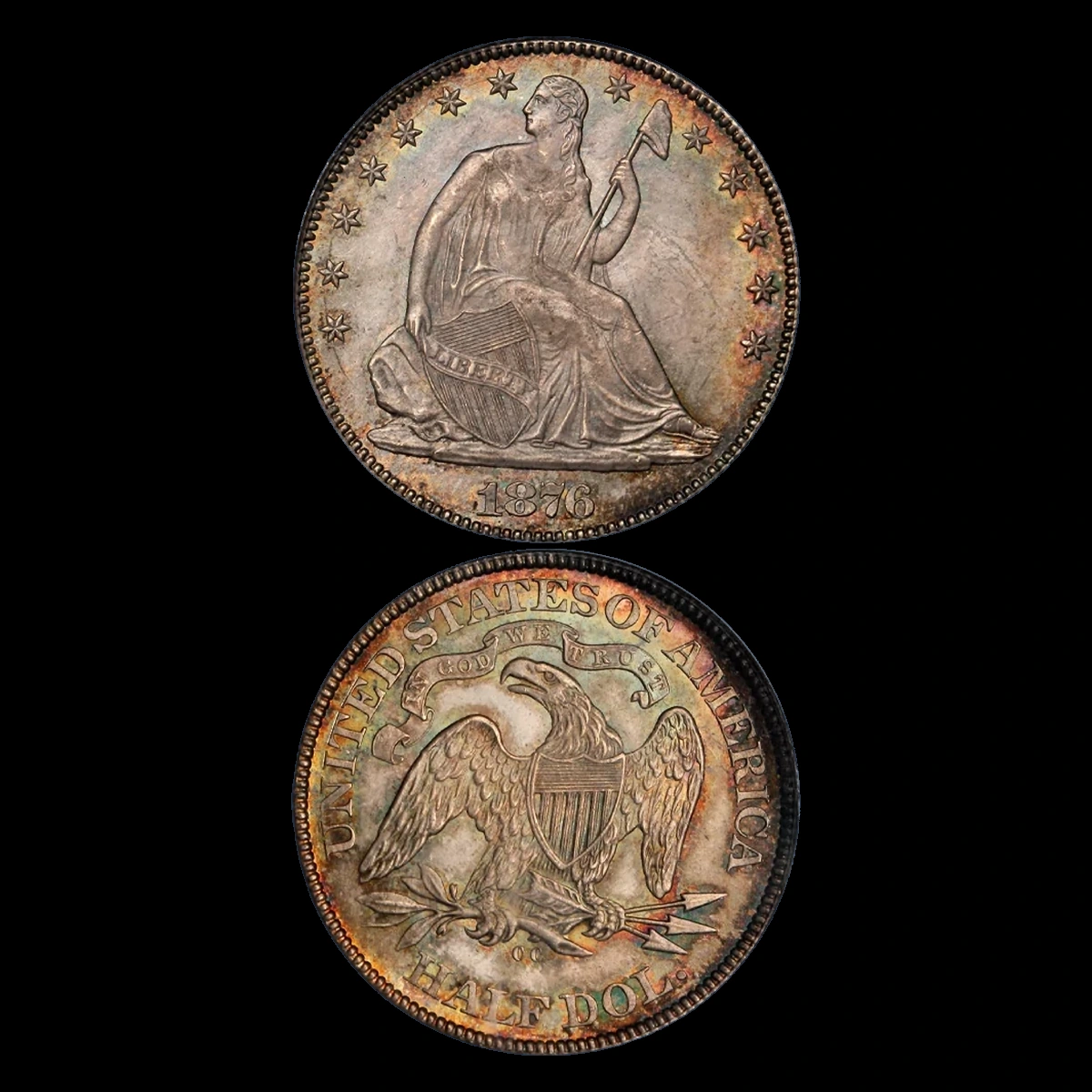
4. 1876 Half Dollar Raised Lines Follow Stars or Lettering: 1876-CC Die Cracks Error
Known Carson City dies have crack routes near the date, among the last three stars, or below HALF DOL. Each route belongs to its own die and stage of deterioration.
A fracture in the steel die receives metal during striking and leaves a raised line. The line does not mean the silver coin itself has split.
How to Identify
Choose one observed route and trace it from end to end under side lighting. Compare that route with one corresponding example rather than combining paths from different coins.
A scratch cuts into the surface and may push up a small lip beside it. Look for continuous raised relief compatible with the struck design.
Check the CC before applying these variety descriptions. Similar-looking cracks on other mints need their own identification.
What It’s Worth
Worn 1876-CC halves with moderate cracks are estimated at $300–$2,000. Much of that range reflects the scarce mint’s normal condition value.
The $336 VF20 and $1,830 AU55 records cited above are not crack-specific sales. A more visible line cannot make a heavily worn coin equivalent to a lightly worn AU55.
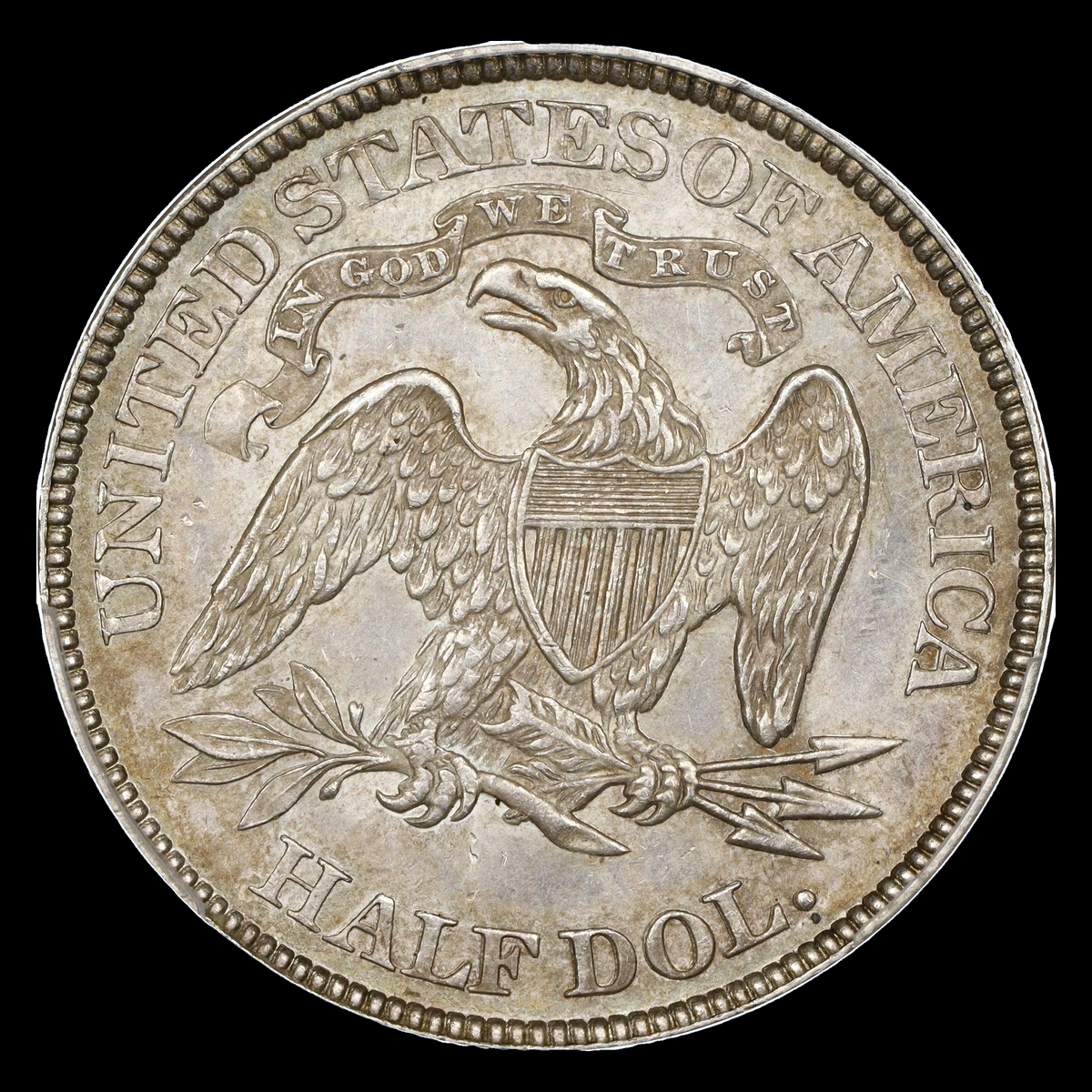
5. 1876 Half Dollar Two Reverse Inscriptions Have Extra Outlines: Doubled Die Reverse Error
The documented Philadelphia example shows repeated detail in UNITED STATES OF AMERICA and IN GOD WE TRUST. Those features were doubled in the reverse die before it struck the coin.
The same specimen also has misplaced date traces on the front. Its Type II reverse is an intended design version; that name does not itself signify an error.
How to Identify
Compare several letters in both inscriptions with the documented example. Rounded extra contours and consistent separation are more useful than one flat shelf beside a letter.
Confirm the Type II design and Philadelphia issue with an intact mintmark area. The misplaced front digits cannot replace evidence of reverse doubling.
Change the light while keeping the lettering aligned. Reflections should not be mistaken for additional raised strokes.
What It’s Worth
The estimated range is $500–$3,000 for worn through lower-grade unworn examples. The entire coin’s surface quality remains part of the assessment.
The PCGS MS63 CAC example sold for $2,280 in April 2025. Its price includes both reverse doubling and misplaced date traces, so it cannot be assigned solely to either feature.
6. 1876 Half Dollar An Earlier Letter Fragment Remains: Repunched S or CC Error
A mintmark entered more than once into a die can preserve part of the earlier placement beside the final letter. Reported 1876 varieties include recut S letters and a repunched CC.
Natural differences in mintmark size are a separate matter. A large, small, or thick S does not automatically establish repunching.
How to Identify
Determine the mintmark’s basic size and position, then select a comparison for that specific variety. Carson City’s two-letter mark needs its own reference rather than an S-based pattern.
Follow any extra curve along both inside and outside edges with changing light. It should resemble a coherent earlier letter fragment, not an isolated bump.
Inspect the neighboring surface for alteration and distinguish rounded punch remnants from flat strike-related shelves. Do not combine the best-looking marks from different varieties.
What It’s Worth
Estimated worn-coin values are $150–$800 for San Francisco and $350–$2,500 for Carson City. Clear detail and lighter wear may support the stronger end.
An ordinary 1876-CC AU55 sold for $1,830 in January 2026. It demonstrates substantial underlying coin value without establishing an added payment for repunching.
7. 1876 Half Dollar A Surface Layer Lifts or Peels: Reported Lamination Error
A natural weakness within the silver-copper alloy can let a thin layer separate. The result may be an attached flap or a rough shallow opening where metal has fallen away.
The category is reported for 1876, but no individually identified priced specimen is supplied. It concerns separation within the alloy, not loss of a modern clad covering.
How to Identify
Inspect the patch at a low angle and find an actual layer boundary. Color alone cannot distinguish lamination from staining, corrosion, or scraping.
Leave loose metal attached and check the edge for a related split or an added-piece seam. Weight may remain near normal if the layer has not detached.
Record the affected face and location from the actual coin. The broad category supplies no fixed area that every example should show.
What It’s Worth
Worn Philadelphia or San Francisco examples are estimated at $100–$750. A clear peel may attract interest, while cleaning or severe metal loss may reduce it.
An ordinary Philadelphia XF45 sold for $216 in November 2025. That provides underlying-coin context without documenting a lamination sale.
8. 1876 Half Dollar A Raised Patch Replaces Design at the Rim: Reported Cud Error
A cud forms when a piece breaks from the edge of a die and coin metal fills the missing space. The resulting raised area joins the rim and replaces details that the missing die piece should have formed.
The 1876 report supplies no exact mint or location. A thin crack or an isolated interior lump does not establish the same feature.
How to Identify
Locate the patch’s direct connection to the rim and determine which normal details are absent. A lump completely surrounded by design does not meet this rim-cud description.
Inspect the boundary for a seam from added metal and the edge for an impact that displaced metal upward. Weakness opposite the patch may support the diagnosis but need not be dramatic.
Document the actual size without assigning a location from a different-year illustration. The original metal should flow naturally into the surrounding surface.
What It’s Worth
Genuine clear cuds on worn Philadelphia or San Francisco halves are estimated at $300–$1,500. Size and remaining original surfaces affect the comparison.
The ordinary Philadelphia XF45 result of $216 in November 2025 is not a cud transaction. The upper estimate allows for an appealing substantial break rather than assigning every rim lump that price.
9. 1876 Half Dollar The Edge Has Two Levels: Partial Collar Strike Error
Turn the coin sideways to investigate a partial collar. Only part of the blank’s thickness sat within the collar, the ring that normally controls width and forms the edge grooves.
The restrained portion kept its intended shape while the exposed portion spread. A documented Philadelphia coin graded PCGS Good 6 preserves this error despite heavy wear.
How to Identify
Follow the edge around its circumference and compare the grooved section with the expanded level. A broad border seen from the front cannot substitute for this side view.
Measure the levels at several points and inspect for filing or a deliberately cut groove. The step should relate to natural spreading during striking.
Allow for circulation loss when comparing weight with the normal standard. Heavily worn examples need not retain their original full weight.
What It’s Worth
Worn examples with a clear step are estimated at $150–$1,000. Visibility and preservation help determine how useful the documented comparison is.
The PCGS Good 6 sold for $192 on August 15, 2020. That heavily worn result is not a fixed price for every partial collar.
10. 1876 Half Dollar A Complete Design Sits within Spread Metal: Reported Broadstrike Error
A broadstrike involves more complete failure of collar restraint. Metal expands outward while the dies still place the full intended design on it.
No named certified 1876 specimen is established in the supplied account. A later-flattened coin can also look wide but will show damage to details that were already present.
How to Identify
Measure several widths and compare the weight with what wear would reasonably leave. Spreading changes shape without removing metal.
Verify that the outer design survives on both faces and examine the edge for compatible original expansion. Crushed details or filing require another explanation.
A wide rim on one side alone is insufficient. Complete originally struck designs together with the enlarged outline provide the useful combination.
What It’s Worth
A confirmed worn through lower-grade unworn 1876 broadstrike has a comparison-based estimate of $1,000–$4,000. No supplied sale establishes a particular 1876 result.
The May 2025 Mint Error News guide lists later Barber half broadstrikes at $1,000–$2,000 worn and $2,000–$4,000 unworn. An 1876 candidate still requires its own mint, condition, and spread assessment.
11. 1876 Half Dollar Plain Metal Borders a Cut-Off Design: Reported Off-Center Strike Error
When a blank sits partly outside the dies, part of the design misses the metal while another area remains unstruck. Both faces should reflect the same displaced blank.
The supplied 1876 report identifies no certified specimen or mint. A readable date is necessary before assigning a candidate to this year.
How to Identify
Compare both faces at the boundary between struck detail and untouched metal. The plain area should explain the missing outer design, rather than resemble a filed crescent.
If only one face appears displaced, a misaligned die may be a better explanation. Record any surviving mintmark and do not infer a mint from an area that is missing.
Measure the actual outline and inspect remaining edge grooves for damage. No percentage is established by the broad report.
What It’s Worth
A confirmed 1876 with a readable date and clear displacement has an estimated $1,500–$10,000 value. Strong preservation and an appealing shift can increase interest.
The January 2025 Mint Error News guide lists worn Barber halves struck ten to fifteen percent off center at $4,000. That later-design guide figure is neither an 1876 sale nor a measured shift for this reported category.
Conclusion
An 1876 inspection benefits from precise locations: Smoking Liberty is at the fingers, misplaced digits may sit in the border, and a partial collar reveals itself at the edge. Similar-looking marks elsewhere need their own explanation.
Use the mint and condition with every comparison, and preserve uncertainty where no specific specimen is supplied. A coin carrying both date traces and reverse doubling still has one whole-coin value, not separate premiums to add.