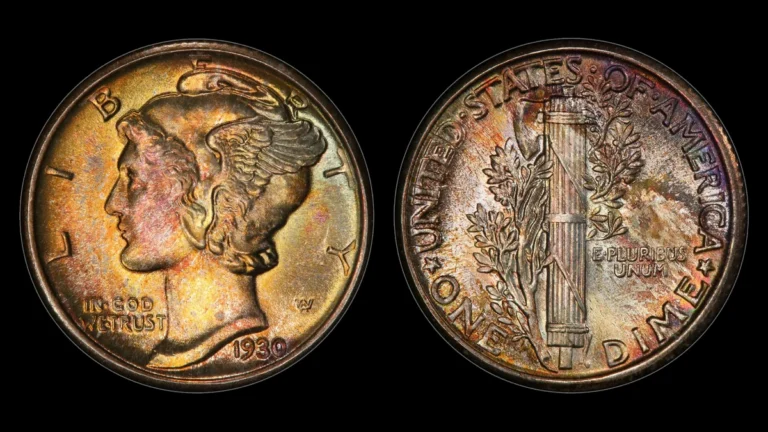
Rare 1814 Dime Errors (List & Pictures)
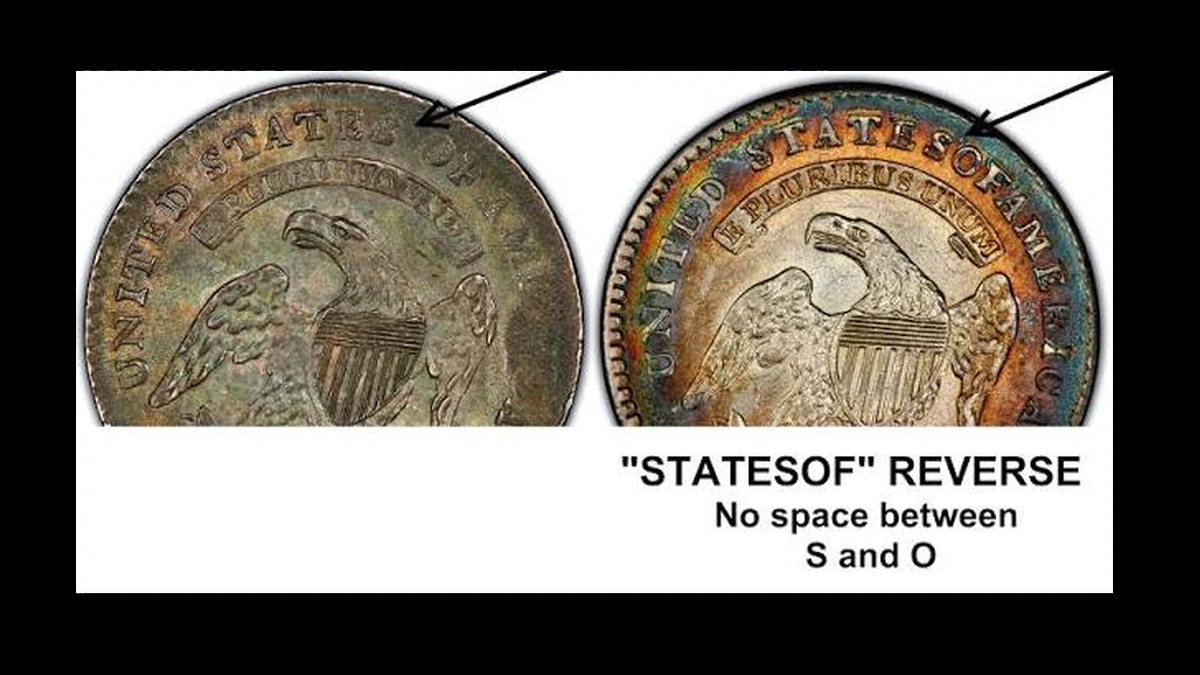
An 1814 dime with bunched reverse lettering sold for $1,573 in June 2025. The 1814 dime errors and varieties below have estimated whole-coin values from $200 to $5,000.
Read the reverse inscription, inspect its rim, then check whether the entire design is displaced. These early Capped Bust dimes normally weigh 2.70 grams, measure 19 millimeters, and contain about 89.2% silver.
| What you notice | Where to look | Estimated whole-coin range |
|---|---|---|
| Words crowded together | STATES OF AMERICA | $500–$3,000 in worn condition |
| Raised patch attached to rim | Above CA in AMERICA | $200–$2,000 in worn condition |
| Missing design beside plain metal | Both faces and the edge | $800–$5,000 |
1. 1814 Dime Almost no space between the words: bunched reverse lettering Error
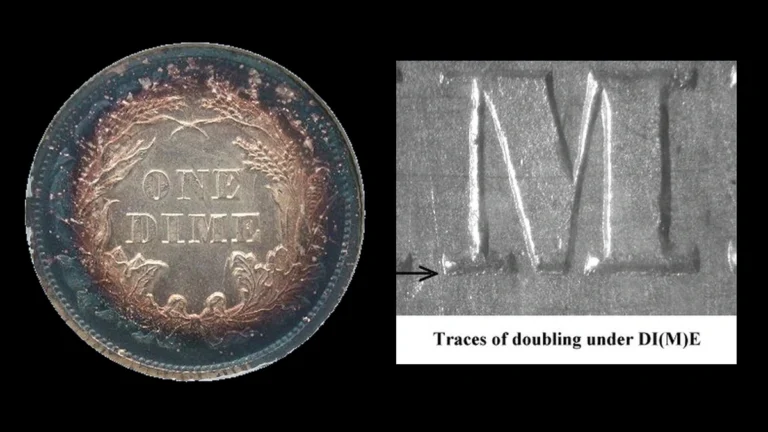
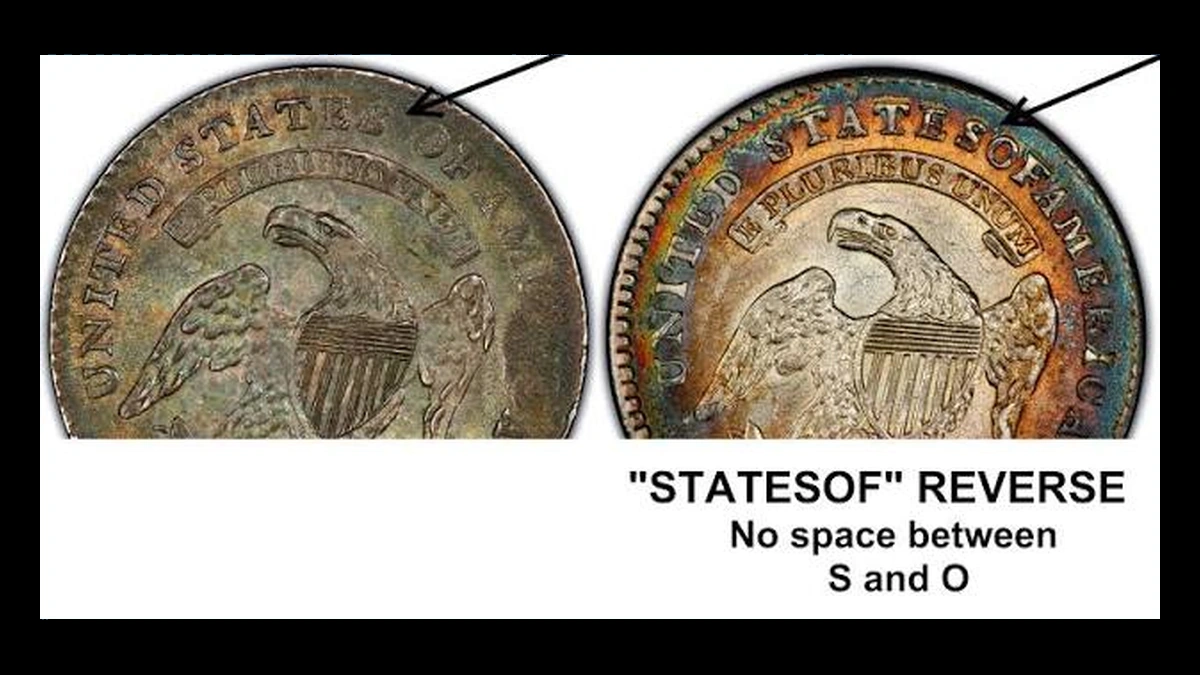
On the bunched-letter variety, STATES, OF, and AMERICA run unusually close together. The wording is still there; the distinction is how the words were arranged on the die.
This is a feature of the design tool, not lettering pushed sideways by a second strike. Comparing the spaces between complete words is more helpful than concentrating on the thickness of one letter.
How to Identify
Follow the upper reverse inscription from STATES through OF to AMERICA. Check both the space after STATES and the space after OF for the characteristic crowded arrangement.
Wear can soften the edges of adjoining letters, making an ordinary gap seem narrower. Judge the positions of the letters themselves rather than the dark line or dirt between them.
The expected finding is closely placed words, with no need for doubled outlines or missing letters. Those other features would require a separate explanation.
Use a clearly attributed comparison photograph with similar visibility of the inscription. A heavily worn or poorly lit image can obscure the gaps you are trying to assess.
What It’s Worth
Worn bunched-letter examples have an estimated whole-coin range of $500–$3,000. The condition of the entire dime matters alongside the recognizable lettering arrangement.
A CAC discussion of early Capped Bust dimes reports a VG08 sale of $744.70 in July 2023. Two VF25 examples each brought $1,380 in April 2025, followed by a VF30 at $1,573 in June 2025.
The higher Very Fine grades retain more detail than the Very Good example. These sales provide useful worn-coin benchmarks, but they do not demonstrate a $3,000 sale or a fixed premium at every grade.
2. 1814 Dime A lump above AMERICA: reverse rim cud Error
Move from the words to the rim above the final CA in AMERICA. A later state of the Small Date JR-1 dies can produce a raised patch in this location.
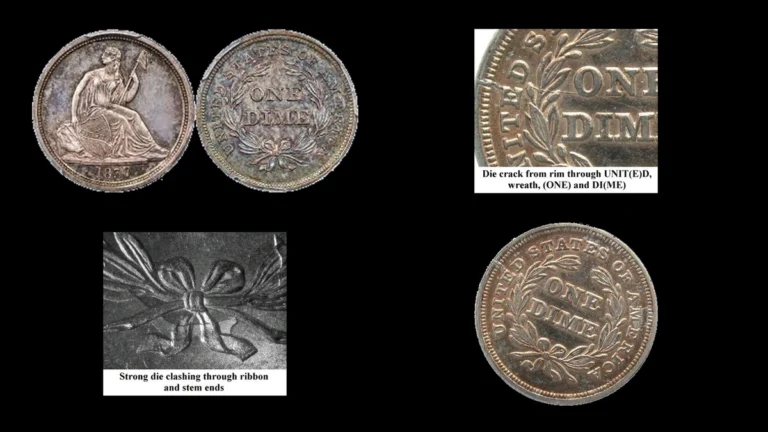
This rim-connected break is called a cud. A piece of the die broke away, leaving a space into which coin metal could flow during the strike.
How to Identify
Begin with the Small Date form on the front: the top of the 8 does not rise far above the two 1s. Then compare the rest of the coin with an attributed 1814 JR-1 reference.
The relevant reverse feature is a raised area connected to the rim above CA. It should look like metal struck into a missing portion of the tool, not a scrape through the coin or a dent pushed inward.
JR-1 is a die-pair identification, and the cud belongs to a later condition of those dies. Merely identifying JR-1 does not prove that the coin displays the break.
Weak stars or incomplete border details are not enough either. Such softness occurs on these early dimes without establishing this specific raised rim patch.
What It’s Worth
The estimated range for worn examples is $200–$2,000 for the whole coin. Visibility of the break and the underlying dime’s preservation affect where a specimen might fit.
An NGC VF35 Small Date dime with CAC approval sold for $840 in February 2022. The supplied record does not identify it as a matching cud example, so it supplies a condition-and-date comparison rather than a sale of this exact feature.
A buyer should therefore consider the strength of the cud separately from the ordinary value of a Small Date dime. This evidence does not establish a precise dollar amount to add for the break alone.
3. 1814 Dime A shifted portrait and reverse: off-center strike Error
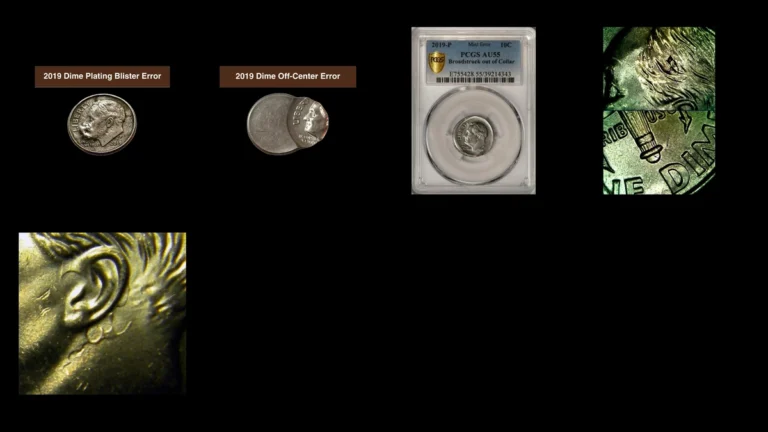
If the entire design runs off one side of the coin while plain metal remains on the other, examine both faces for an off-center strike. The blank was out of position when it received the main design.
A collector reported an 1814 JR-1 example in 2007 with photographs of the two faces and edge. The supplied account does not establish its exact displacement, grade, or sale price.
How to Identify
Find the boundary where the struck design gives way to unstruck metal. On the opposite side, some design should be missing because it landed beyond the blank.
The reverse should support the same misplaced strike. An uneven border on just one face, without the corresponding blank area, is not enough to call the coin off-center.
The edge requires a special point of context on this early issue: its reeding was prepared separately before the main strike. Edge grooves can therefore survive beside an unstruck area and do not, by themselves, rule out an off-center coin.
Check that the date and die details support the proposed 1814 identification. Any later filing or alteration to the edge needs to be distinguished from the metal left by the original strike.
What It’s Worth
An estimated $800–$5,000 covers this reported category, with substantial uncertainty about any particular specimen. Readable identification, displacement, and surface quality would all affect an actual sale.
No transaction price accompanies the collector-reported coin. The $840 VF35 Small Date sale noted above gives underlying date context only; it is not an off-center result.
Consequently, the upper end should be read as a possible valuation range rather than a verified auction record. A confirmed attribution and a direct market comparison would be needed for a firmer figure.
Conclusion
The three checks answer different questions: how the words were placed, whether a piece of the die broke away, and whether the blank sat correctly during striking. Keeping those questions separate makes a worn early dime easier to assess.
Published bunched-letter sales offer the strongest direct price evidence here. The cud and off-center ranges require more judgment, especially when the supplied comparison does not show the same feature.