Rare 1828 Penny Errors (List & Pictures)
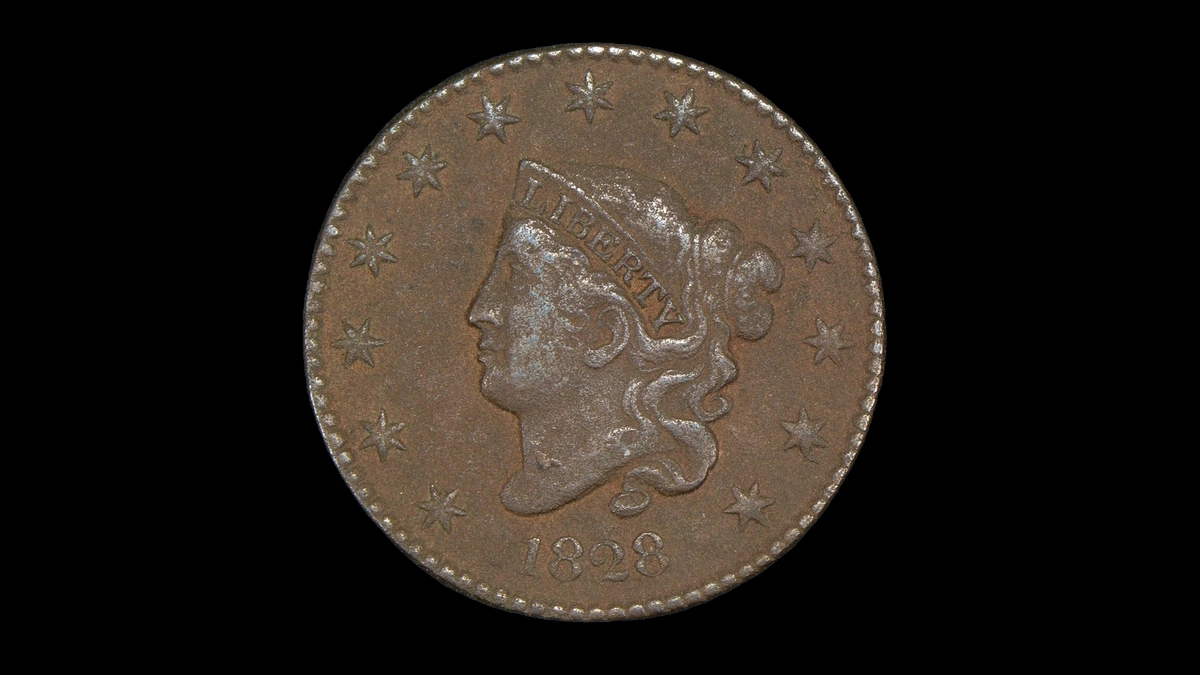
An exceptionally preserved 1828 cent with a thin die crack sold for $15,863 in January 2013. That price reflects the complete coin, including its remarkable condition.
The estimated range for 1828 penny errors is $20–$16,000. Begin at UNITED on the reverse, then examine the edge and check how the two faces align.
| Inspection area | Feature | Estimated value |
|---|---|---|
| D in UNITED | Repunched letter | $40–$4,000 |
| Above TED | Die crack or cud | $20–$16,000 |
| Outer edge | Reported straight clip | $20–$3,000 if genuine |
| Relationship between faces | Rotated dies | $20–$2,500 |
The usual copper large cent weighs 10.89 g and measures about 28 mm, with a plain edge. Record those measurements only on a loose coin; certified examples can remain sealed.
1. 1828 Penny An Extra Stroke beside D: Repunched Letter Error
The right edge of D in UNITED can preserve part of an earlier letter placement. An auction description noted this feature on an 1828 cent graded NGC MS62 Brown.
The letter punch entered the die more than once in slightly different positions. Coins made with that die then copied the surviving earlier stroke.
How to Identify
Compare the complete D with a matching N-11 photograph, keeping adjacent letters visible. The reported auction description places the small extra stroke on its right.
Follow the raised letter shape under changing light. A scratch, rough edge, or flat shelf beside the D does not establish repunching.
What It’s Worth
Estimated whole-coin values are $40–$4,000 for correctly identified examples. Wear, marks, and copper color affect the comparison.
The MS62 Brown reference supplies a grade but no sale amount used here. An 1851 inverted-date variety brought $823 in February 2018 at PCGS MS62 Brown, although the auctioneer saw light wear.
That later coin has a different punching mistake as well as a different date. Its result does not price the small D remnant independently.
2. 1828 Penny A Ridge or Rim Patch above TED: Die Crack and Cud Error
A fine raised line across the tops of TED records a crack in the reverse die. Another coin from the same tool variety carries a full rim-connected patch in that area.
The larger patch, called a cud, formed after an edge piece of the die broke away. It represents a different stage from the thin crack.
How to Identify
Decide whether the coin shows a narrow ridge or a broad patch before selecting a photograph. The January 2013 auction coin has the fine line; the 2015 Twin Leaf example has the full cud.
Check that the ridge rises above the surface and that a suspected cud connects to the rim. A scratch cuts downward, while folded or added metal can create misleading edge lumps.
The Twin Leaf cud coin was graded PCGS Fine Details with environmental damage. Its rough surfaces belong to that individual coin and are not themselves proof of a die break.
What It’s Worth
The broad estimated range is $20–$16,000, from worn minor cracks to unusually well-preserved examples. The upper end includes a substantial condition component.
The thin-crack MS66 Brown coin sold for $15,863 in January 2013. No realized price is assigned here to the separate environmentally damaged cud coin.
3. 1828 Penny A Straight Section Missing from the Edge: Reported Clip Error
A blank cut across the end of a copper strip can lack a straight segment. A seller described a heavily worn, ungraded 1828 cent as having this kind of clip.
How to Identify
The seller’s title does not settle when the metal was removed. Inspect the straight boundary for filing, saw lines, or a cut through already finished design.
Study both ends of the gap where the struck rim approaches it. Their form must fit a blank that was incomplete before striking.
The supplied listing gives neither a certified grade nor a clock position. Low weight supports missing metal but cannot distinguish an original clip from later cutting.
What It’s Worth
A genuine 1828 straight clip may fit an estimated $20–$3,000. Authentication of the edge is necessary before applying that range.
The reported seller listing showed $40 Buy It Now and a $15 auction opening with no bids. Neither amount records a completed sale.
An 1852 clipped cent graded NGC MS63 Brown brought $384 in June 2024. Its unworn condition differs greatly from the seller’s worn 1828 candidate.
4. 1828 Penny The Reverse Turns Up at an Angle: Rotated Dies Error
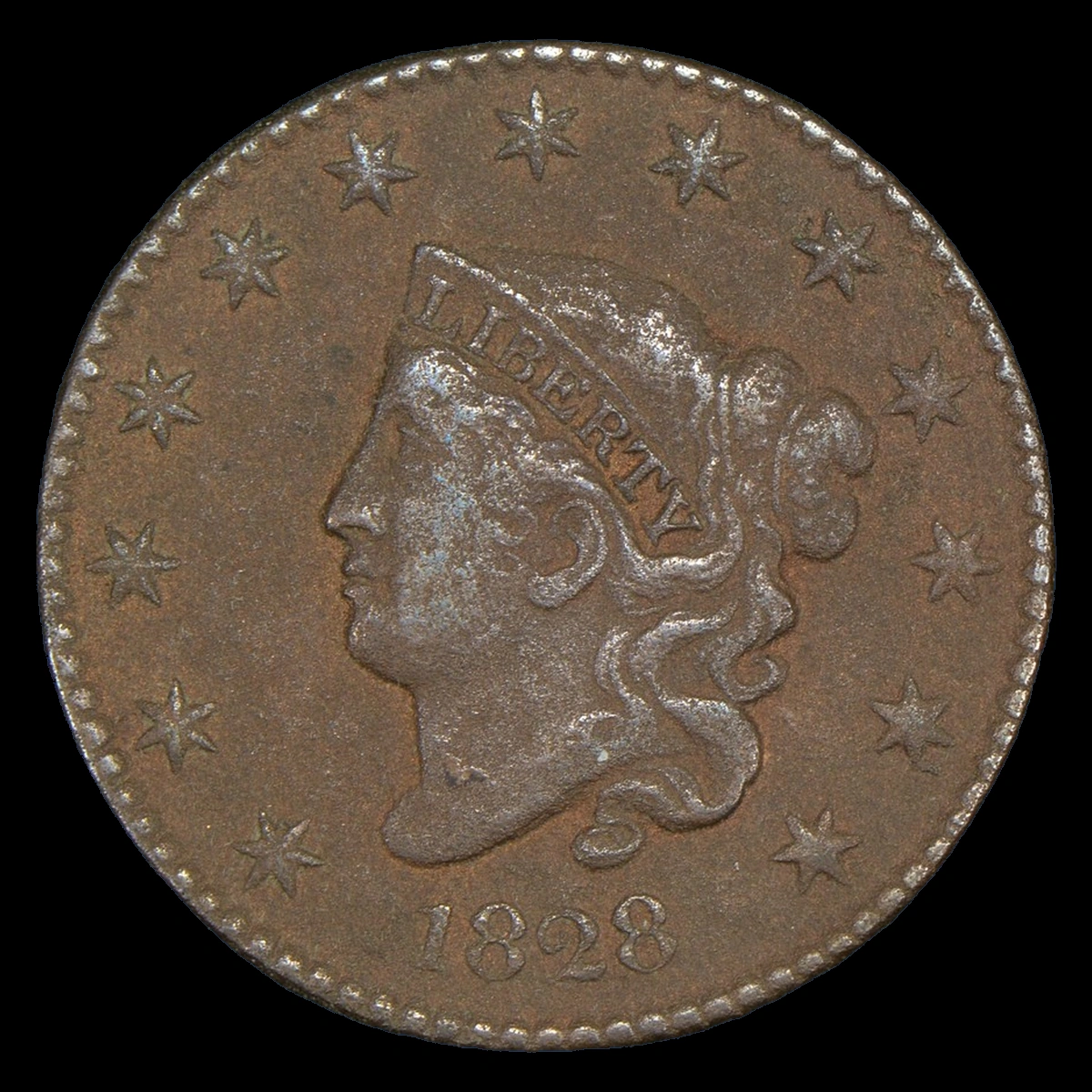
A die can turn from its intended position while still delivering a complete design. The resulting coin has an unusual relationship between its two faces.
How to Identify
With Liberty upright, turn the coin top to bottom without twisting sideways. The reverse should appear upright under normal United States coin alignment.
Repeat the movement or record a continuous video. Two separately rotated photographs cannot prove the alignment of the physical coin.
No specific angle is established for the supplied 1828 report. Inspect the plain edge for a join before attributing an unusual alignment to the dies.
What It’s Worth
Estimated values are $20–$2,500 for authenticated examples, depending on the rotation and preservation. A slight tilt on a worn cent may add little.
A dealer asked $39.99 for a different-year 1851 cent described as rotated 60 degrees. A later sold-out label does not disclose what was paid or establish that angle for an 1828 coin.
Conclusion
The reverse inscription offers two useful starting points: a repeated D and the changing break above TED. Treat those small die features separately from an incomplete blank or an unusual relationship between the faces.
The $15,863 result belongs to an exceptional MS66 Brown cent. A damaged cud coin or unverified straight-clip listing needs its own condition and authenticity assessment before a price comparison becomes meaningful.