Rare 1956 Quarter Errors (List & Pictures)
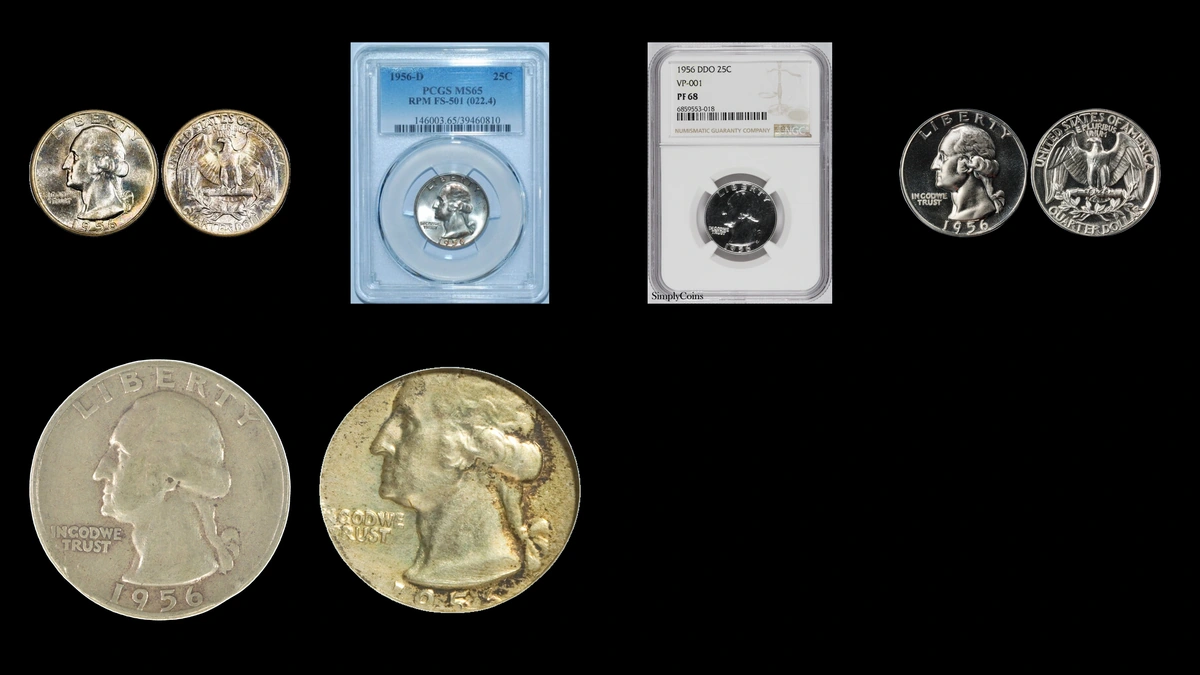
A 1956 Type B quarter graded MS66+ sold for $2,400 in January 2018. The 1956 quarter errors and varieties below have estimated whole-coin values of $25–$5,000.
Distinguish ordinary strikes from collector Proofs first, then inspect reverse lettering, the mintmark, surface relief, and unusual metal or outline.
| Clue | Category | Whole-coin range |
|---|---|---|
| Separated E and S in STATES | Type B reverse on ordinary Philadelphia coin | $25–$3,000 |
| Earlier D outline | Repunched or inverted mintmark | $25–$1,000 |
| Repeated design or raised Proof line | Doubled die or die gouge | $25–$2,500 |
| Peeling silver or excess thickness | Lamination or rolled-thick blank | $50–$2,000 |
| Missing edge or incomplete strike | Clip or off-center strike | $25–$3,000 |
| Small blank carrying quarter design | Wrong planchet | $500–$5,000 |
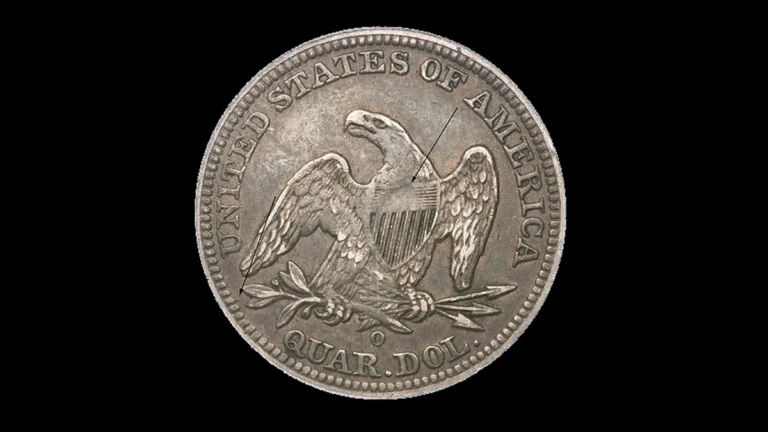
1. 1956 Quarter Proof-style lettering on an ordinary quarter: Type B reverse Error
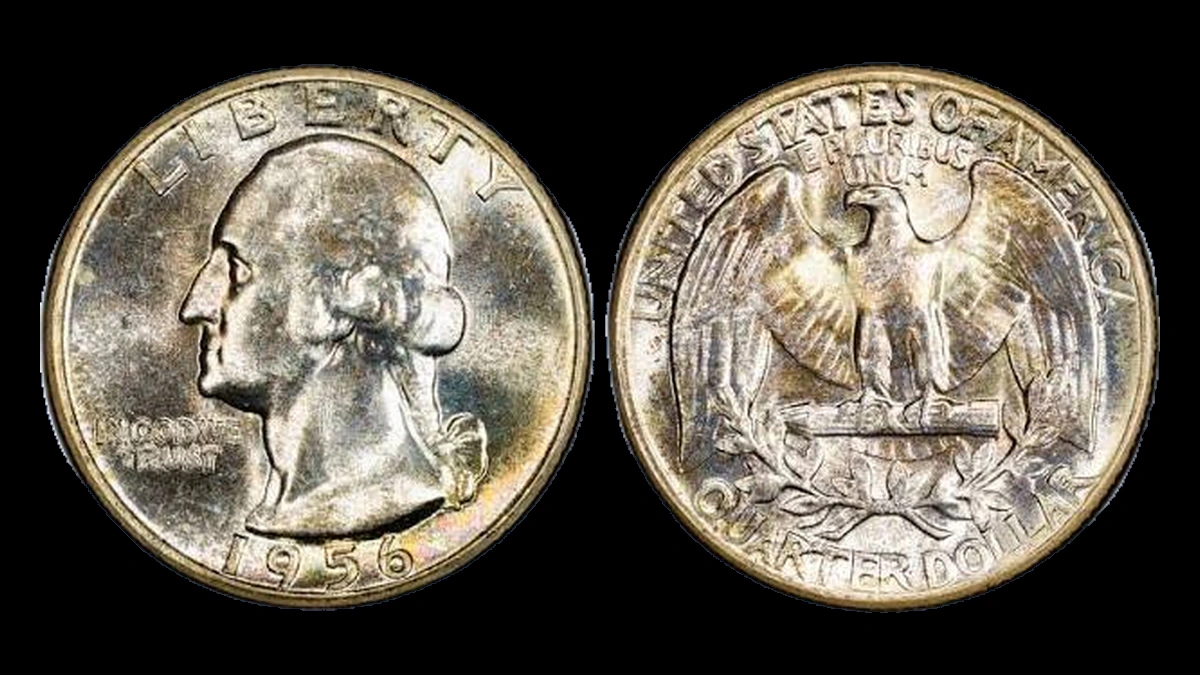
Some ordinary Philadelphia quarters received the reverse design prepared for Proofs. This combination is known as Type B, cataloged as FS-901.
The E and S at the end of STATES are more clearly separated than on the ordinary Type A design. Leaves near the arrows provide further comparison points.
A normal Philadelphia Proof is expected to have a Proof-style reverse. Its Type B artwork alone does not establish the unusual ordinary-strike combination.
How to Identify
Establish the production finish before relying on the lettering. A shiny circulation strike is not automatically a Proof.
For an ordinary Philadelphia candidate, compare the E-S gap and arrow-area leaves with a Type B reference. Confirm that there is no Denver D and match the whole reverse rather than one gap altered by wear.
What It’s Worth
Identified ordinary Type B examples have an estimated range of $25–$3,000.
PCGS records an MS66+ Type B at $2,400 in January 2018. Its unusually strong preservation is part of that price, and a normal Proof does not inherit the same variety premium.
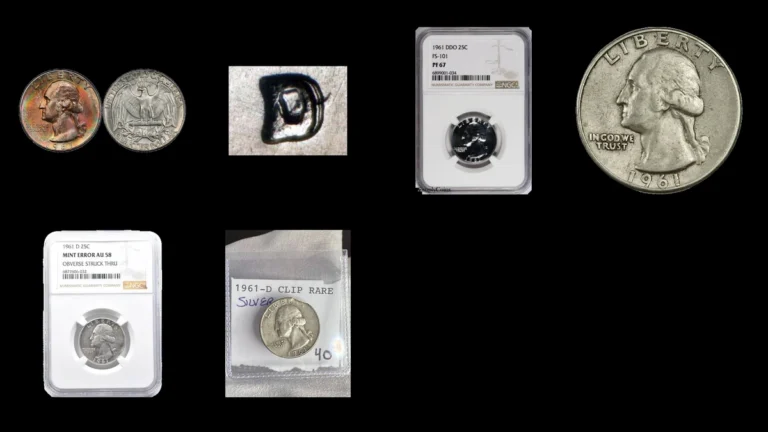
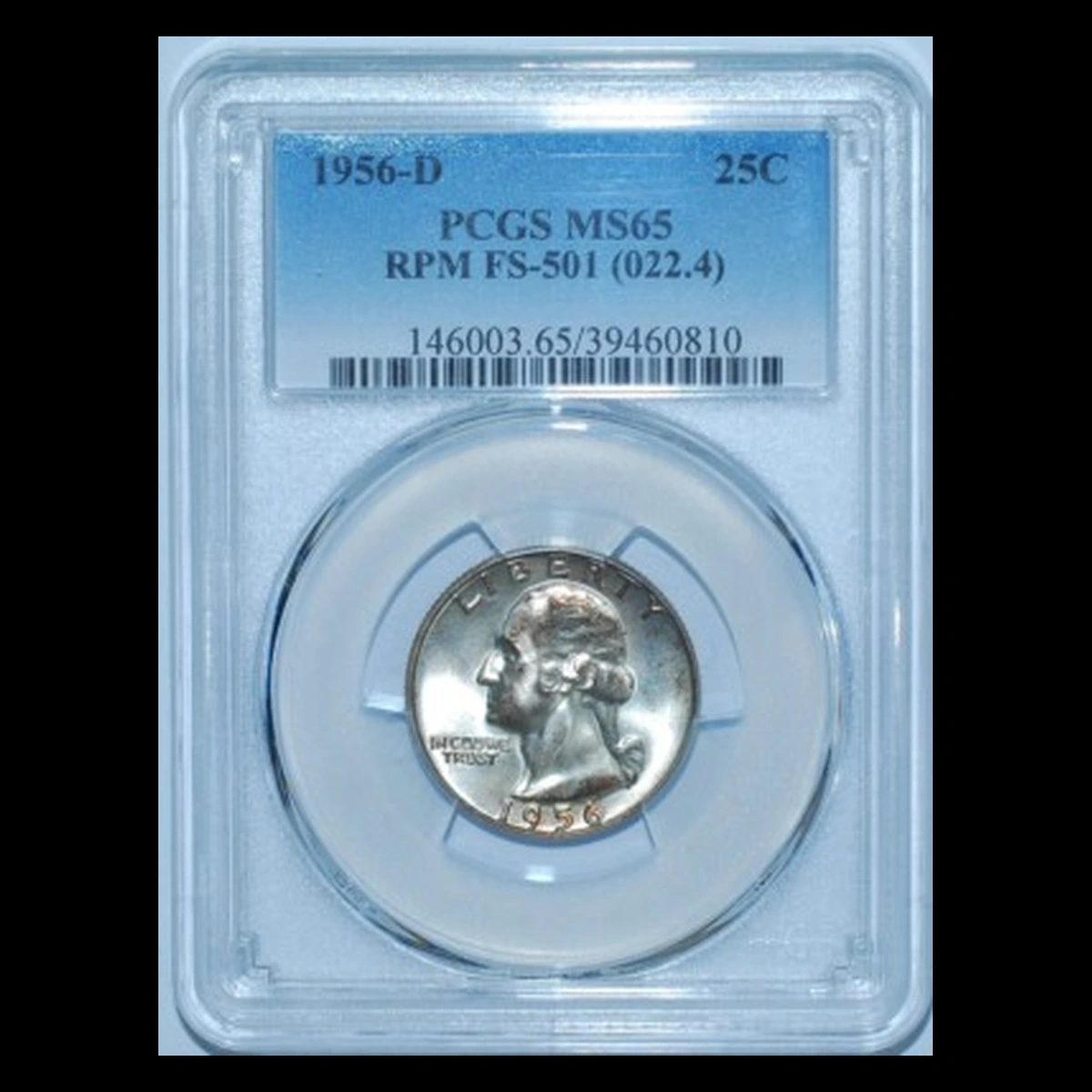
2. 1956 Quarter An earlier or upside-down D: repunched mintmark Error
One cataloged Denver variety preserves an earlier inverted D beneath the final upright letter. Other reports have remnants toward the upper right or from a turned impression.
The earlier punch was in the reverse die before coins were made. The whole quarter did not have to be struck upside down.
How to Identify
Locate D below the wreath and trace its normal stem and curve first. Compare the remaining outline with a quarter-specific reference for the inverted, upper-right, or turned subtype.
A thick letter, dirt in its opening, or a flat shelf cannot establish another punch position. Use nearby die markers from the same reference when available.
What It’s Worth
Authenticated repunched-mintmark varieties have an estimated range of $25–$1,000.
No realized price is supplied for a specific pattern. Clear inverted-letter evidence can attract more attention than a faint unassigned edge, but the surrounding quarter’s condition remains important.
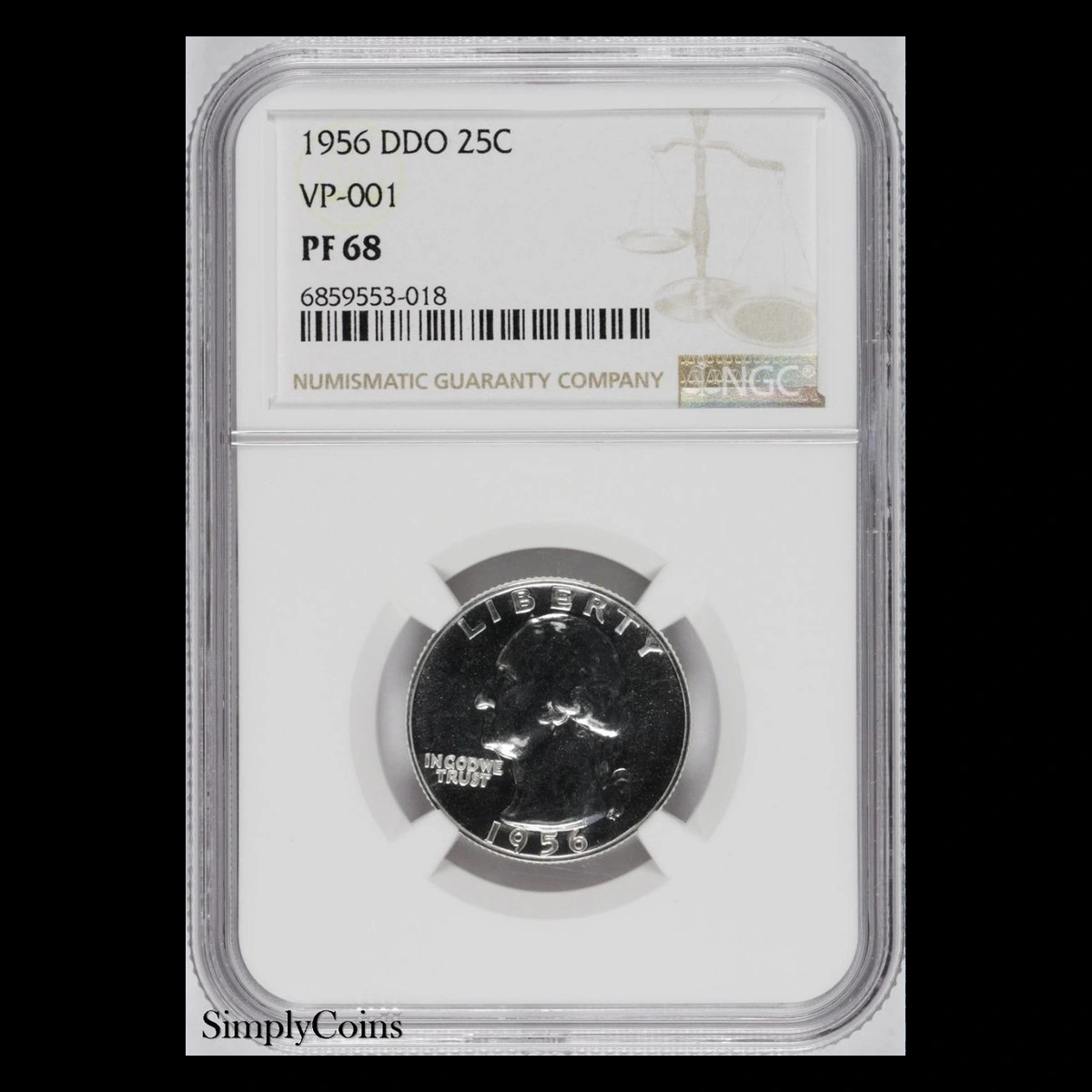
3. 1956 Quarter Repeated contours on either face: doubled die Error
Philadelphia Proof front patterns involve the motto, date, designer’s initials, lower ribbon, and parts of BERTY. One pattern has three close outlines.
Denver ordinary coins have separate front thickening and reverse patterns around inscriptions, branches, and lower wings. Ordinary Philadelphia reverses and Proof reverses have their own listed varieties.
How to Identify
Record mint and finish before selecting one complete pattern. For a Proof front, begin at the motto and date, then follow the applicable reference to its additional details.
For a Denver reverse, compare outer words, branches, and lower wings together. Philadelphia reverse patterns need separate photographs.
Raised separation or matching notches differ from a low flat shelf created during striking. Normal Type B spacing is a design difference rather than duplicated lettering.
What It’s Worth
Identified doubled-design varieties have an estimated range of $25–$2,500.
No individual sale is supplied for these patterns. Proof tripling requires a matching tripled variety, not an assumption that a bright letter has three impressions.
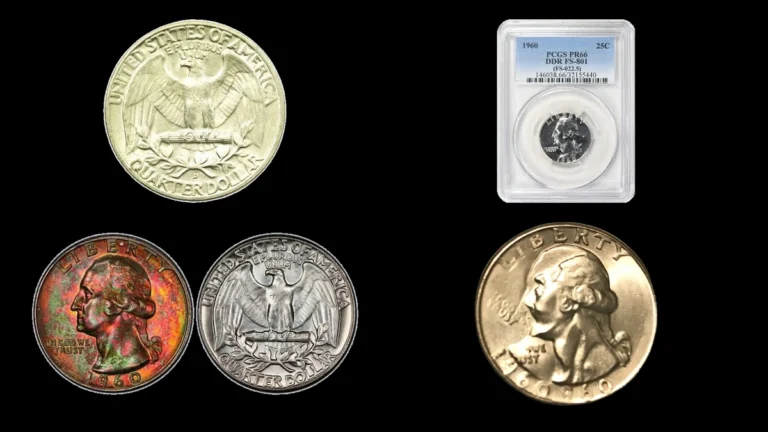
4. 1956 Quarter A raised line on a Proof reverse: die gouge Error
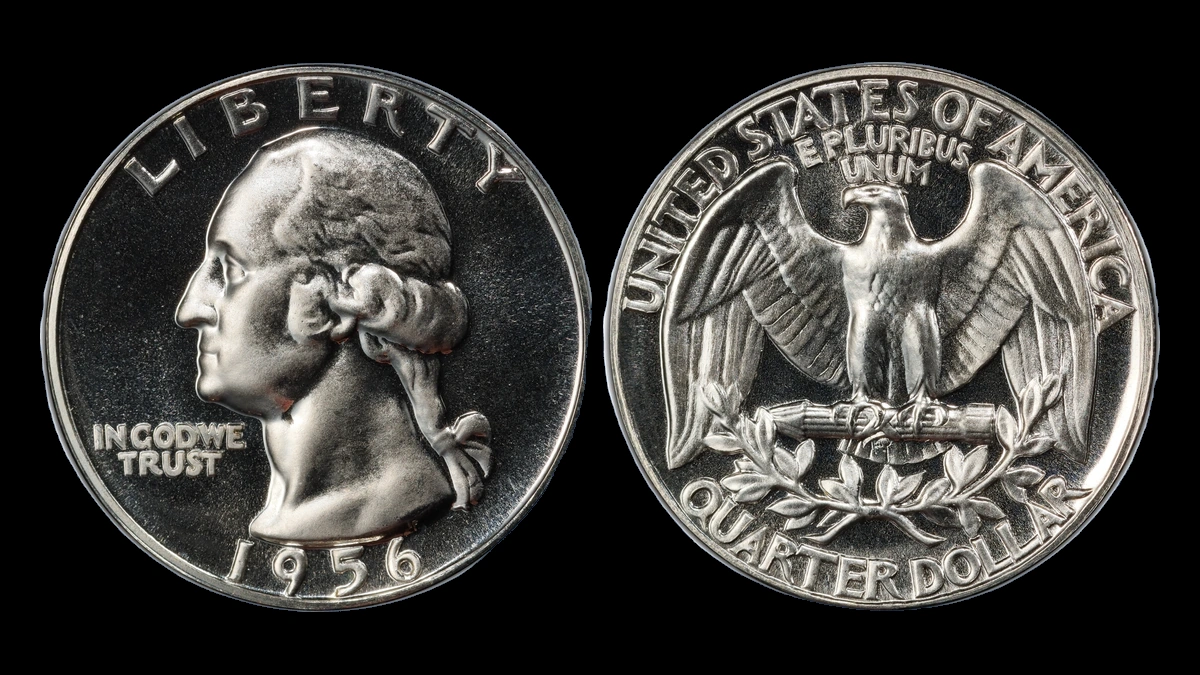
The recognized FS-701 reverse die gouge belongs to Philadelphia Proof quarters. A PCGS PR66 example is recorded under that designation.
A cut in the steel tool fills with coin metal during striking and leaves a raised line. It differs from a scratch cut into the finished Proof.
How to Identify
Select a photograph of the exact Proof variety and trace the full raised mark in relation to neighboring eagle details. The supplied account does not establish a precise route in words.
Move the lamp to check height and exclude a recessed scratch or wiping lines. An ordinary brilliant quarter with a reverse mark is not sufficient for this Proof attribution.
What It’s Worth
Identified Proof die-gouge examples have an estimated range of $50–$750.
The PR66 record supplies a grade reference without a realized sale. The underlying Proof’s preservation and any cleaning remain part of the whole-coin value.
5. 1956 Quarter A thin peeling layer of silver: lamination Error
A Philadelphia NGC Proof-69 quarter has a certified front lamination. An owner separately reported lamination on an ordinary Philadelphia Type B coin.
A weakness within the silver alloy can let a thin layer lift or detach. These coins do not have the bonded copper-centered construction of later clad quarters.
How to Identify
Examine the layer’s edge without lifting it. Follow any struck detail onto a retained flap to compare the design with the surrounding metal.
The Proof’s front peel and the ordinary Type B report require different images. Scraping and corrosion can also leave rough areas without the same original layered separation.
What It’s Worth
The combined estimate is $50–$2,000, with ordinary authenticated laminations around $50–$1,000 and comparable Proofs around $150–$2,000.
The NGC Proof-69 front-lamination coin sold at GreatCollections in April 2026, but the public page hides its price. Its exceptional grade does not establish the flaw’s size or an amount to quote.
6. 1956 Quarter Excess silver in a thick blank: rolled-thick planchet Error
A Philadelphia PCGS AU53 example was cataloged as 20% rolled thick. Another record describes an NGC AU55 specimen weighing 7.5 grams.
A metal strip rolled too thick can produce quarter-size blanks with excess silver. This differs from using a smaller nickel blank.
How to Identify
A normal silver quarter weighs 6.25 grams and measures about 24.3 millimeters across. Compare the loose candidate’s actual weight, thickness at several points, and overall outline.
Inspect the entire edge and both faces for a seam, added solder, or plating. The recorded 7.5 grams belongs to the AU55 coin, not automatically to every thick-blank example.
What It’s Worth
Authenticated thick-silver-blank quarters have an estimated range of $100–$1,500.
The PCGS AU53 20%-thick example sold for $126.50 in February 2009. The estimate requires excess original metal rather than added material.
7. 1956 Quarter A small gap near 7 o’clock: clipped blank Error
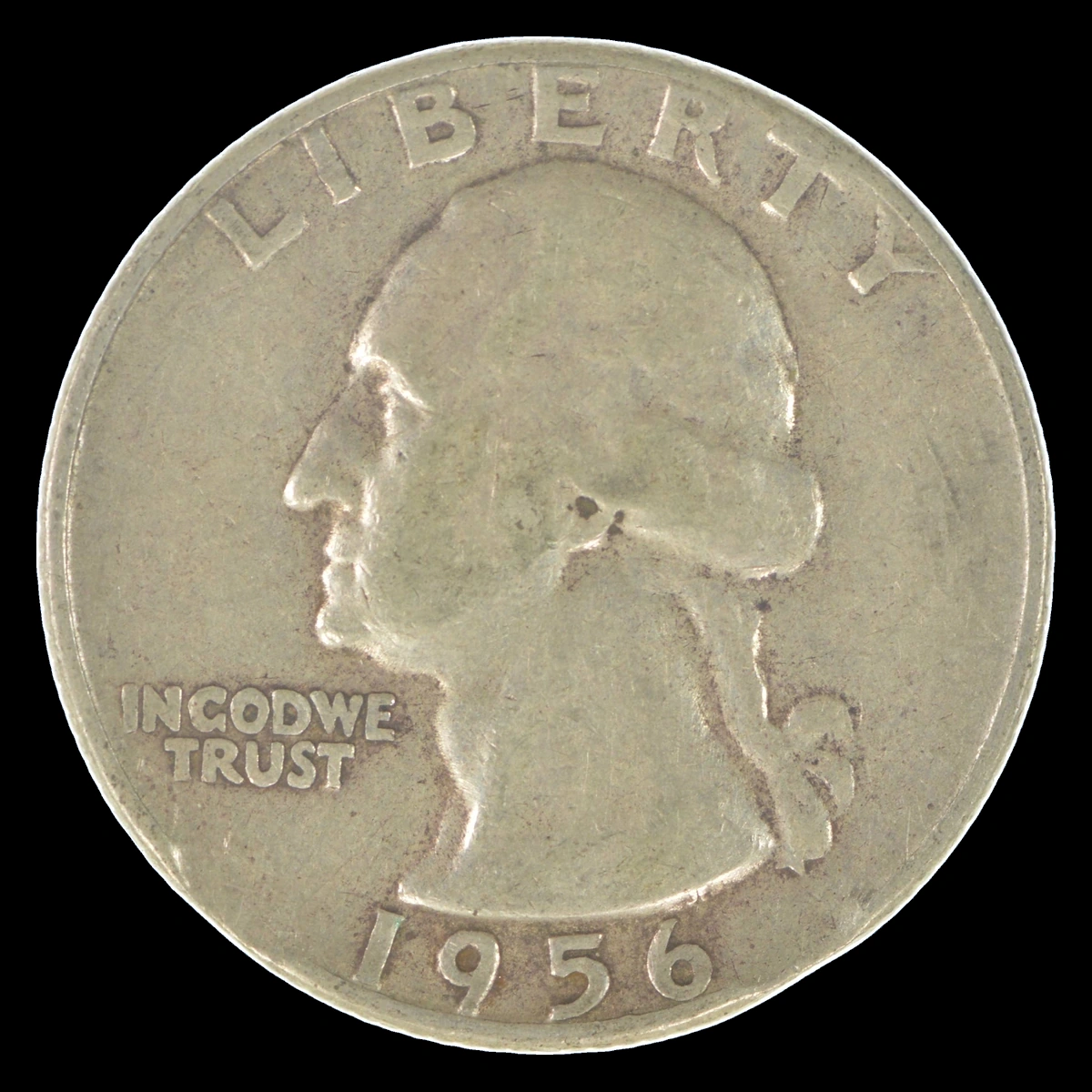
A dealer described a Philadelphia VF20 quarter with a 1% clip near 7 o’clock. The missing metal was absent before striking if the clip attribution is correct.
Its small size makes comparison with ordinary rim damage especially important. VF20 indicates circulation wear with much of the major design still present.
How to Identify
Photograph the upright front with the gap and nearby lettering visible. Inspect both ends for naturally weakened rim formation rather than fresh burrs or metal pushed by a blow.
Check the gap wall for cutting and the opposite rim for supporting weakness. Wear and the small loss make weight a limited check on a 1% clip.
What It’s Worth
Authenticated clips have an estimated range of $25–$500, from small worn examples to clearer larger gaps in better condition.
The dealer’s VF20 description is not a recorded auction result. Its modest clip belongs toward the less dramatic end of the comparison.
8. 1956 Quarter An incomplete picture beside untouched metal: off-center strike Error
Ordinary Philadelphia off-center quarters are reported for 1956 without one specific direction or percentage. The blank was misplaced, leaving part of its surface unstruck while artwork missed the metal.
How to Identify
Compare Washington and the eagle for displacement explained by the same blank position. A one-face shift can indicate a misaligned die instead.
Find both the original blank crescent and the missing intended artwork. If all design survives inside a widened outline, compare an uncentered broadstrike.
Inspect for filing, squeezing, or trimming that removed letters afterward. Keep the surviving date visible with the strike boundary.
What It’s Worth
An authenticated 1956 off-center quarter has an estimated range of $100–$3,000.
No specific realized sale is supplied for the report. Displacement, original surfaces, and a readable date help narrow the comparison.
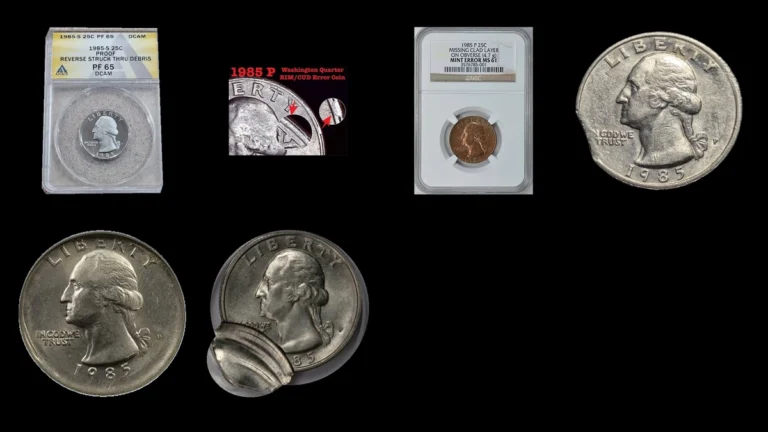
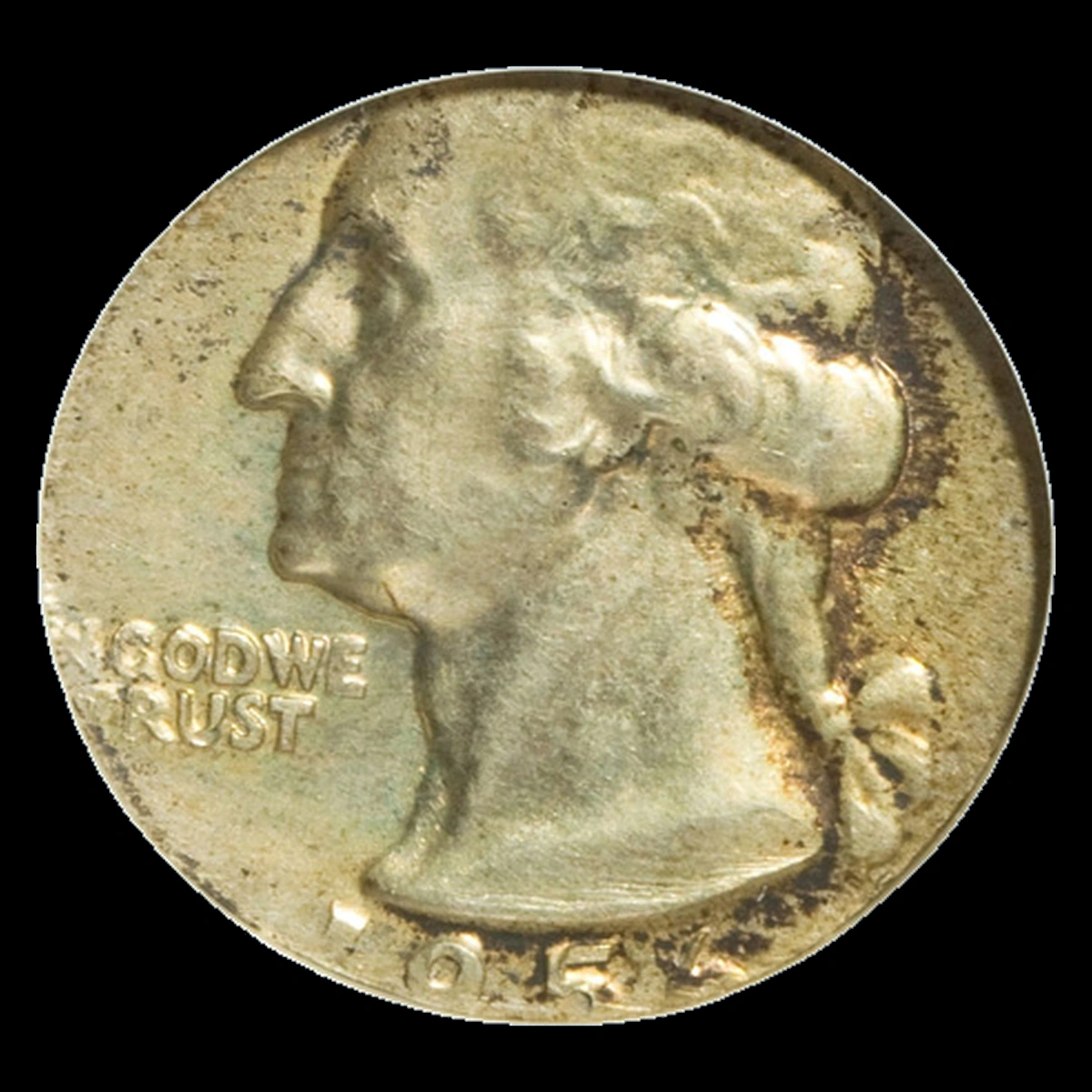
9. 1956 Quarter Quarter artwork on a cent, nickel, or dime blank Error
A Philadelphia cent-blank example graded NGC MS65 Brown weighs 3.08 grams. Separate nickel-blank records include PCGS AU58 and MS64 coins, while a silver-dime example appears in an ANACS MS63 holder.
The smaller unused blanks leave less room for the quarter design. Earlier artwork from another denomination is not required.
How to Identify
Compare the actual weight and metal with period standards: a cent blank is about 3.11 grams, a nickel 5 grams, and a silver dime 2.5 grams. The cent specimen’s recorded 3.08 grams is its own measurement.
Inspect the edge for trimming and the surface for coatings before relying on size or color. Original design flow must fit the proposed smaller blank.
Read only the date digits that survive. A small blank can omit part of the year even on a genuine error.
What It’s Worth
Authenticated wrong-blank examples have an estimated range of $500–$5,000.
Mint Error News reported the NGC MS65 Brown cent-blank coin at $1,265 in December 2009. Nickel and dime examples need their own metal and condition comparisons rather than inheriting that result.
Conclusion
The finish determines whether a Proof-style reverse is expected or forms an unusual ordinary-strike combination. Small date and letter features need a precise reference, while thick or undersized blanks call for measurements and composition checks.
Keep the reported ordinary Type B lamination separate from the certified Proof peel, and preserve the actual weight of each wrong blank. The estimated ranges price whole coins with their condition included.