Rare 1964 Dime Errors (List & Pictures)
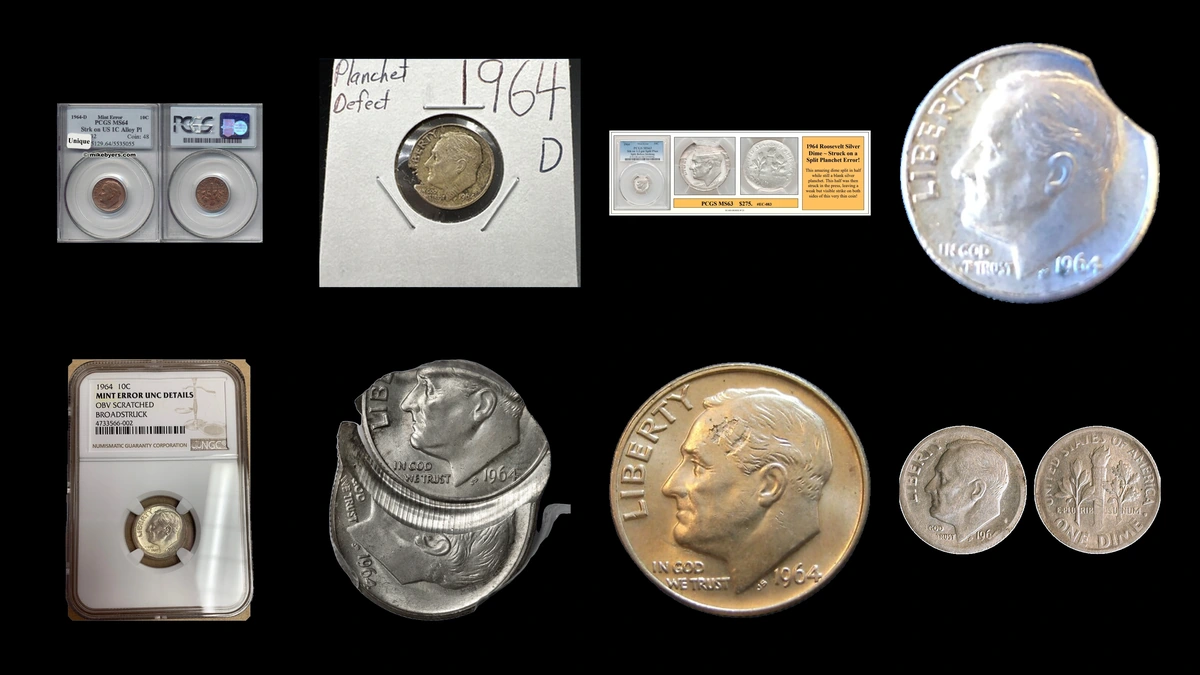
Silver-colored metal is normal for a 1964 dime, but one dime-sized copper-alloy specimen sold for $3,450 in April 2010. Estimated values for 1964 dime errors range from $10–$15,000, with the uppermost clad-blank estimate still conditional.
Begin with the metal and outline, then examine the surfaces for evidence of blocked, repeated, or altered designs.
| Finding | Useful distinction | Estimated value |
|---|---|---|
| Unexpected metal | Copper-alloy disk versus reported clad blank | $3,000–$15,000, depending on confirmed identity |
| Thin piece | Split before striking versus struck scrap | $50–$1,000 |
| Design overlaps itself | Repeated strike versus doubled die | $150–$2,500 for single repeated-strike coins |
| Raised surface lines | Die cracks or clashes | $10–$250 for ordinary examples |
The normal dime is 90% silver and 10% copper, weighs 2.5 grams, and measures 17.91 millimeters with a grooved edge. Denver’s D is on the reverse below and left of the torch; Philadelphia circulation coins and Proofs have no mintmark.
Record a loose candidate’s weight, width, and edge once when its metal or shape is unusual. These measurements help sort possibilities but do not prove a particular error.
1. 1964 Dime Copper Alloy in a Dime-Sized Disk: Wrong Alloy Error
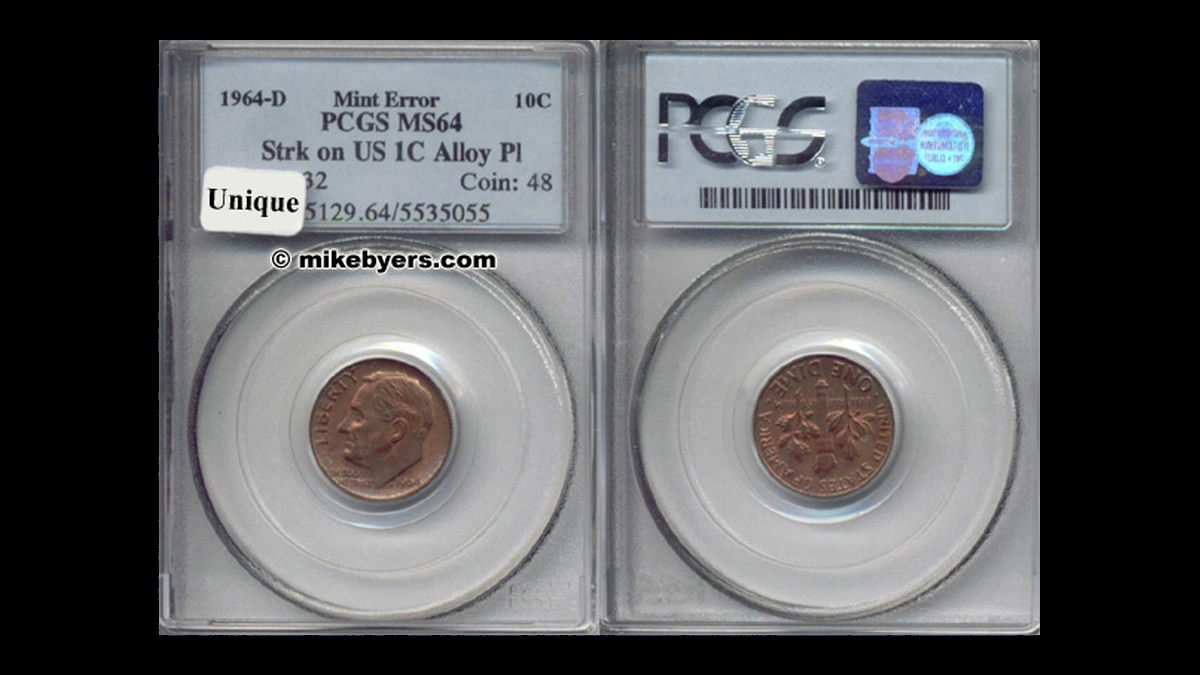
A recorded 1964-D PCGS MS64 coin carries dime designs on cent alloy. Its dime-sized disk is distinct from a full cent blank, which would normally measure 19.05 millimeters.
Heritage suggested that cent metal could have been cut with dime-sized tooling. Dealer Mike Byers also discusses an experimental origin, so the production explanation remains unsettled.
How to Identify
Match the Denver mark, edge, and documented front crack running through IN toward the chin. Those details belong to the recorded specimen, not every copper-colored dime.
Confirm the disk’s dimensions and composition rather than relying on color. Nondestructive testing must distinguish copper-based metal throughout from a coating over an ordinary silver dime.
What It’s Worth
An estimated $3,000–$12,000 reflects this unusual composition and the coin’s condition. It does not resolve whether the piece was experimental or accidental.
The PCGS MS64 specimen sold for $3,450 on April 29, 2010. The dealer’s description preserves both proposed explanations for its origin.
2. 1964 Dime A Copper Core Between Pale Faces: Reported Clad-Blank Strike Error
Later circulation dimes have copper-nickel faces bonded to a copper core. A genuine 1964 design on that construction would differ from the year’s normal silver alloy.
Mint Error News price lists report a 1964 clad-blank dime as a transitional error. The supplied information does not establish a particular tested specimen or completed sale.
How to Identify
The candidate must have an authentic 1964 dime date and genuine layered metal. A later clad blank normally starts at 2.268 grams and the same 17.91-millimeter diameter.
Inspect the edge and date, then seek nondestructive confirmation of the layers. Neither a 1965 silver dime nor a 1964 cent on a dime blank is the error described here.
What It’s Worth
A professionally confirmed example has a conditional estimated range of $5,000–$15,000. This figure describes the reported category rather than an identified auctioned coin.
A copper stripe, light weight, or altered color alone cannot support that valuation. Date authenticity and actual clad construction must agree.
3. 1964 Dime Extra Weight in a Thick Disk: Thick Planchet Error
A Philadelphia dime graded NGC MS65 Full Bands weighs 3.1 grams. The recorded explanation is an unusually thick disk, not an identified foreign blank.
Full Bands describes clear separation in the torch bands. It is a condition detail and not another error.
How to Identify
Compare thickness and width with a normal dime after confirming the weight. A heavy disk near dime width presents a different question from an intact larger-denomination blank.
Inspect both faces and the edge for added coatings or a joined second piece. A matching weight alone does not identify the source of the original metal.
What It’s Worth
A genuine thick-planchet 1964 dime is estimated at $150–$750.
A different 1968-D dime on quarter-thickness stock brought $504 in October 2021 and weighed three grams. That clad-metal comparison does not prove where the 3.1-gram silver-year coin’s stock came from.
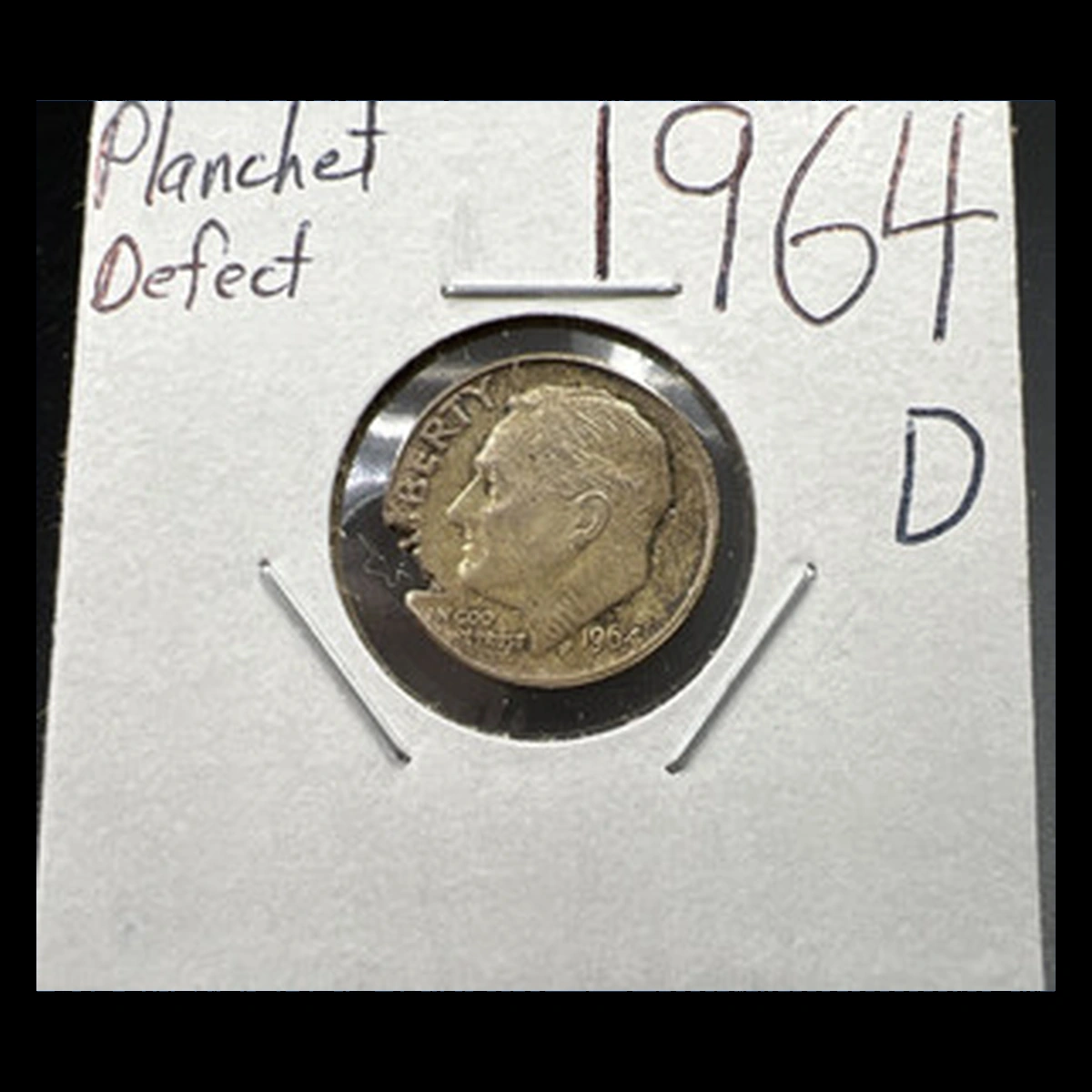
4. 1964 Dime Pits, Thin Areas, or an Original Hole: Defective Planchet Error
Some blanks entered the press with irregular metal rather than a sound disk. A Philadelphia NGC MS65 example weighs 2.2 grams, while a separate Denver MS64 Full Bands coin also weighs 2.2 grams and has an original hole.
The equal weights do not identify an equal defect. The way each flaw meets the struck design is more informative.
How to Identify
For the Denver hole, inspect both openings for design and metal formed around an existing gap. Circular drill marks, burrs, or disrupted finished detail suggest later alteration.
For uneven or thin patches, compare the defect’s boundary with the unaffected surface. Corrosion can remove weight after striking without creating an original defective blank.
What It’s Worth
Estimated values are $50–$500 for genuine defective-planchet coins. A clearly original opening can be more distinctive than a small irregular patch.
No realized price is supplied for either 2.2-gram specimen. Their grades and different defects must remain separate when choosing a comparison.
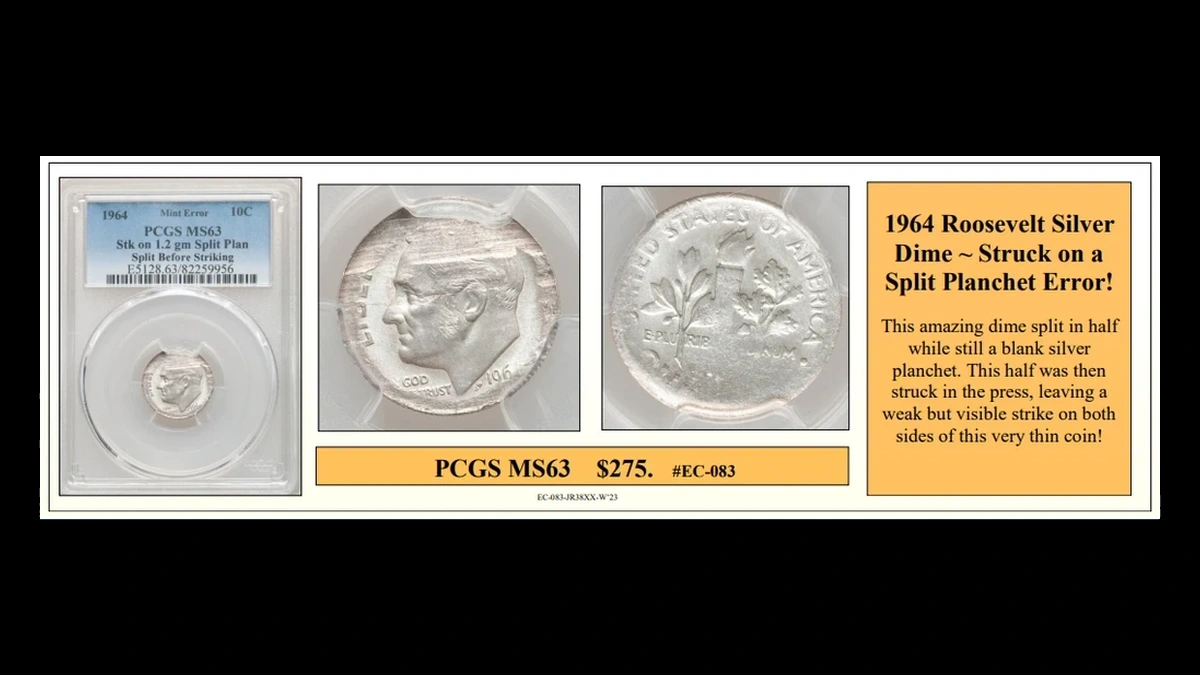
5. 1964 Dime Designs on an Unusually Thin Piece: Split Before Striking Error
A blank that separates through its thickness before reaching the dies can still receive a design on each face. One of those designs is struck onto the newly exposed split surface.
Recorded Philadelphia examples weigh 1.2 and 1.7 grams, and a Denver example weighs 1.2 grams. Another labeled Denver piece has no reported weight.
How to Identify
Examine the thin edge and the design on the split face. Genuine struck detail there helps distinguish a before-strike separation from a rough interior exposed only after striking.
Grinding a finished coin can also reduce thickness and weight. The surfaces must support the sequence, and no matching second half should be assumed to survive.
What It’s Worth
A genuine before-strike split piece suggests about $50–$400. Readable identity and clear impressions are useful strengths.
A one-gram 1968-D fragment sold for $141 in November 2013. Its different date and fragment classification make it a broad comparison, not a sale for these 1964 split pieces.
6. 1964 Dime Dime Detail on a Tiny Irregular Piece: Struck Scrap Error
The Philadelphia scrap example weighs only 0.4 grams and is graded NGC MS66. The dies impressed the fragment itself rather than a complete round blank.
Its irregular outline does not establish whether the metal originally came from another coin or a machine part. That source remains unspecified.
How to Identify
Trace where identifiable dime details meet the fragment’s boundaries. Struck metal at those boundaries should differ from a later cut through completed design.
Record surviving dimensions without expecting a full circle or continuous rim. Keep any catalog-assigned identity distinct from the date portions actually visible.
What It’s Worth
About $150–$1,000 is an estimate for a genuine 1964 struck scrap with secure identification. Its interest lies in the struck object rather than its tiny metal content.
The $141 result for the one-gram 1968-D fragment is only a different-year comparison. It does not price the smaller MS66 piece or imply that a companion fragment exists.
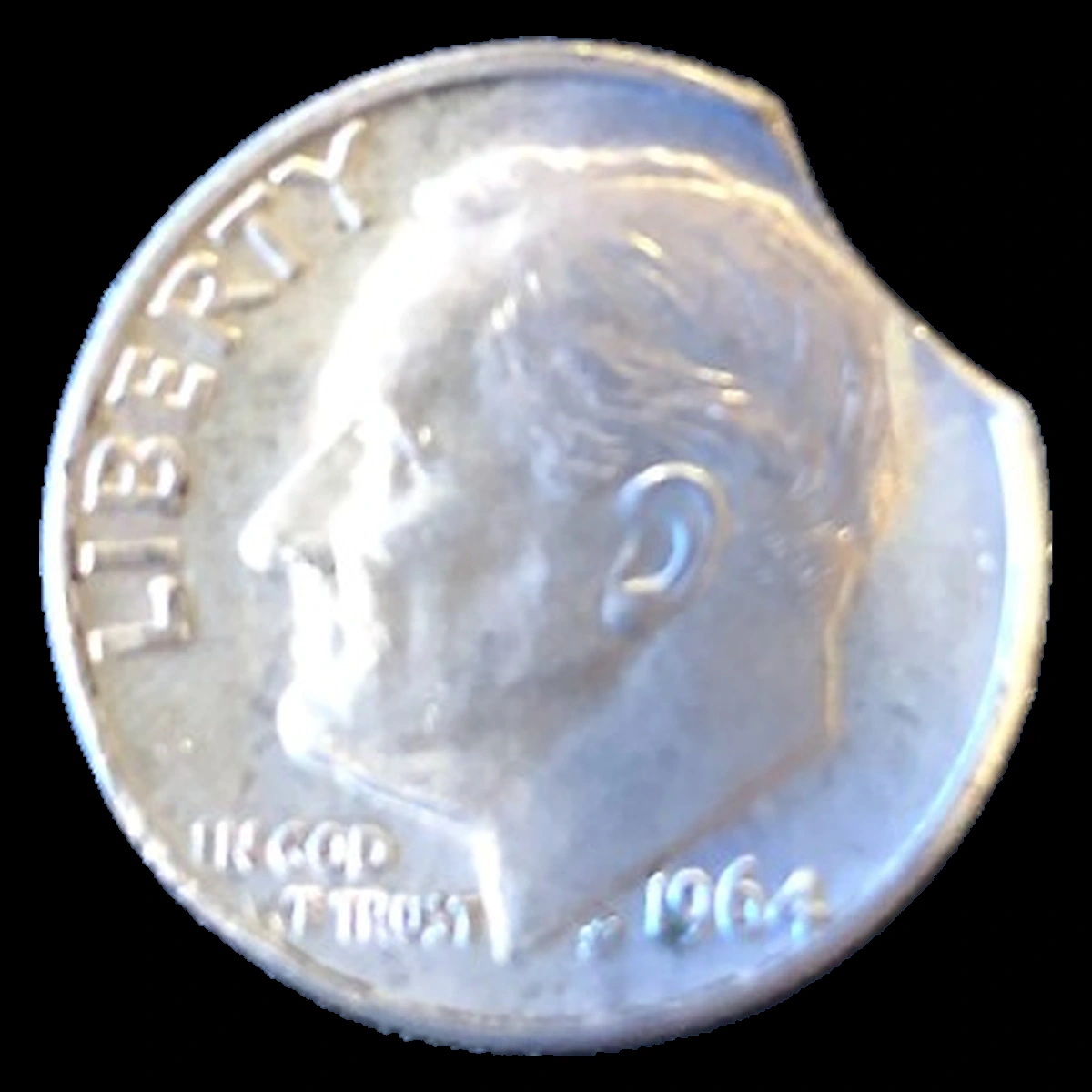
7. 1964 Dime Missing Sections of the Outline: Clipped Planchet Error
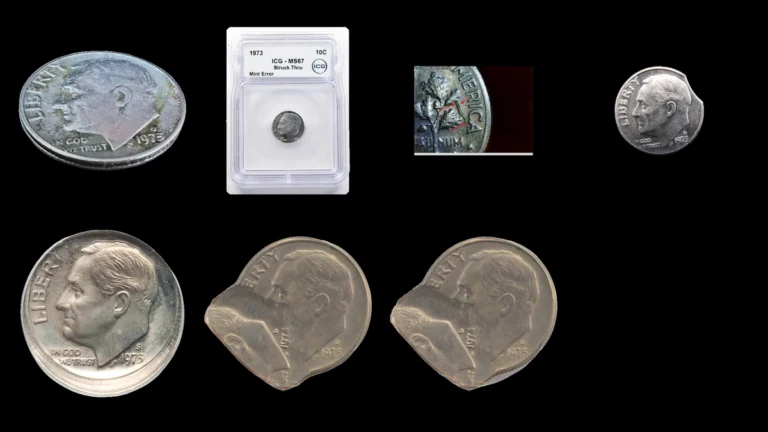
Reported 1964 clips include single and double curved gaps, a straight Denver clip, and a ragged Philadelphia edge. These began as incomplete blanks before the designs were applied.
The Denver straight clip is described as 25% and weighs 1.98 grams. A separate Philadelphia coin has a 4% ragged clip together with an expanded strike.
How to Identify
Follow the rim into both ends of a missing section, looking for original flow rather than a sharp cut through finished detail. Weakness on the opposite border can offer supporting evidence.
Inspect exposed metal for filing or fresh cutting. Neither the 1.98-gram measurement nor a quoted percentage should be transferred to another specimen.
What It’s Worth
Genuine clipped examples are estimated at $25–$400, with size, readability, and condition affecting the comparison.
A 20% clipped 1997-P nickel sold for $124 in March 2025. It is a different denomination and date, while the 1964 ragged-clip broadstrike must be valued as one combined-error coin.
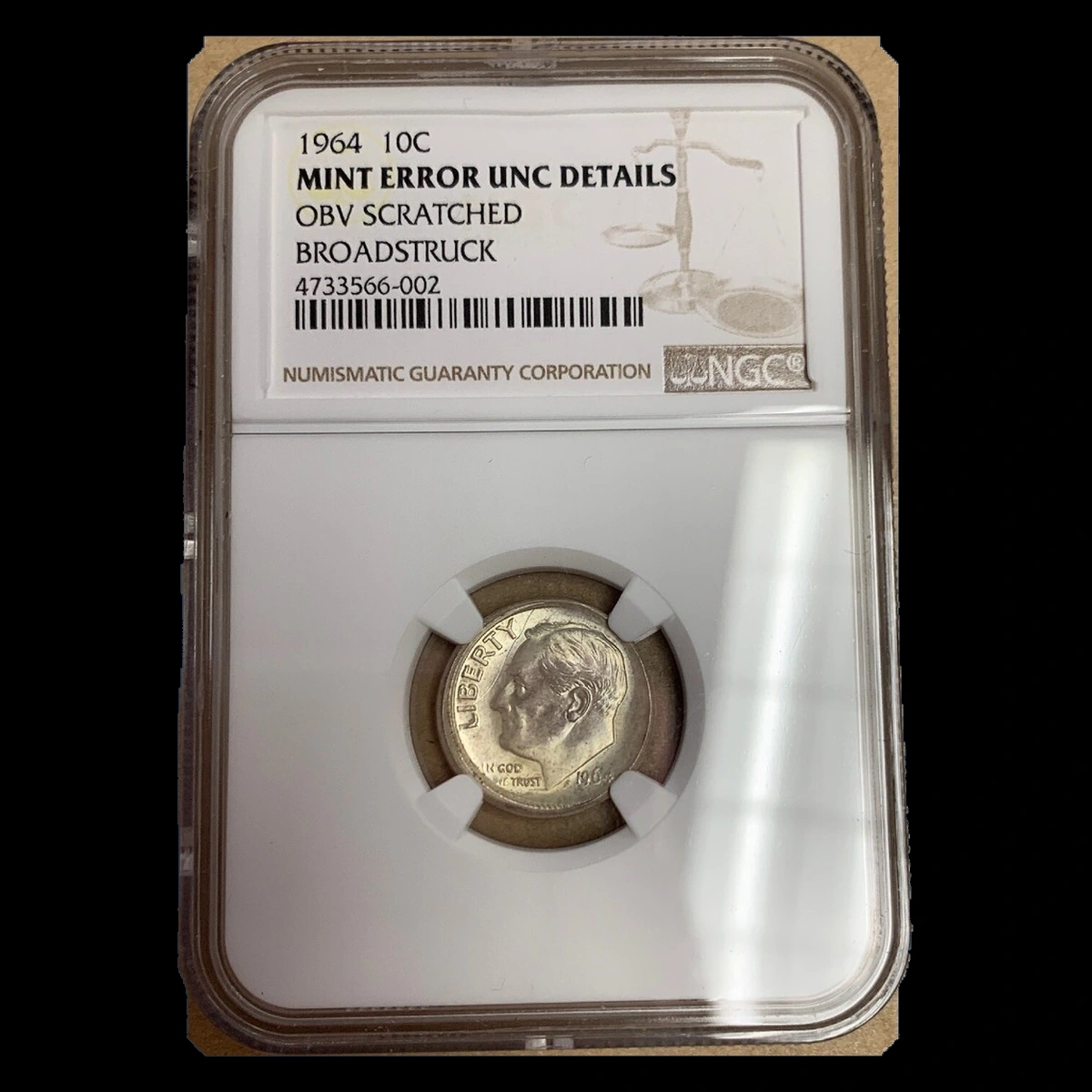
8. 1964 Dime A Wider Outline with Complete Design: Broadstrike Error
The collar ring normally limits sideways metal flow. When it fails to contain the strike, a dime can spread outward while retaining its intended design.
Philadelphia examples include a large cupped PCGS MS65 piece. The cup alone does not establish that the coin stuck to a die as a cap.
How to Identify
Look beyond the lettering for an expanded border and examine the edge for reduced grooves where the collar did not contain it. Check that the original design remains complete.
Later flattening can enlarge a coin while crushing its high points. Original outward flow and preserved detail make the stronger broadstrike identification.
What It’s Worth
Broadstruck 1964 dimes suggest roughly $40–$500. Large attractive shapes can be more desirable than slight expansion.
A 1988-P dime with a broadstruck second strike sold for $80.50 in May 2005. Because that later coin was also double struck, its price does not isolate broadstriking alone.
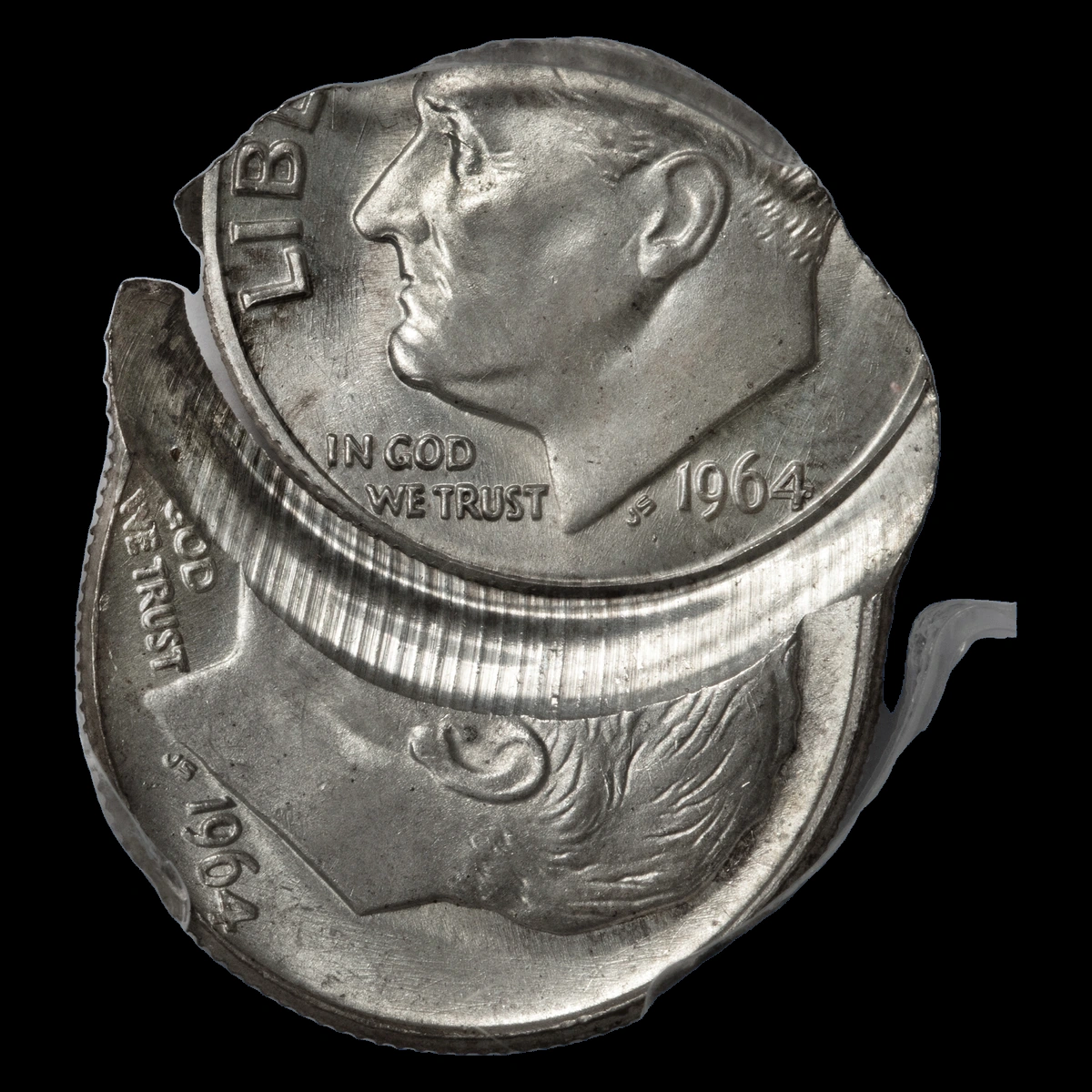
9. 1964 Dime A Blank Crescent and Cropped Design: Off-Center Strike Error
A blank positioned partly outside the dies receives only part of the design. The unstruck portion remains beside the shifted impression.
Recorded Philadelphia examples range from 15% to 75% off center. A separate PCGS MS64 specimen is described as 50% off center.
How to Identify
Read the surviving date before estimating the displacement. Compare both faces for matching design cutoff and an original untouched region.
A one-face shift can result from a misaligned die instead of an off-center blank. A ground-down region also needs to be excluded from the claimed unstruck area.
What It’s Worth
Genuine dated examples are estimated at $75–$1,000. A large shift is easier to collect when the date remains legible.
A 10% off-center 1977 dime brought $109 in June 2026. Its later clad metal and smaller displacement limit its usefulness for a dramatic 1964 silver example.
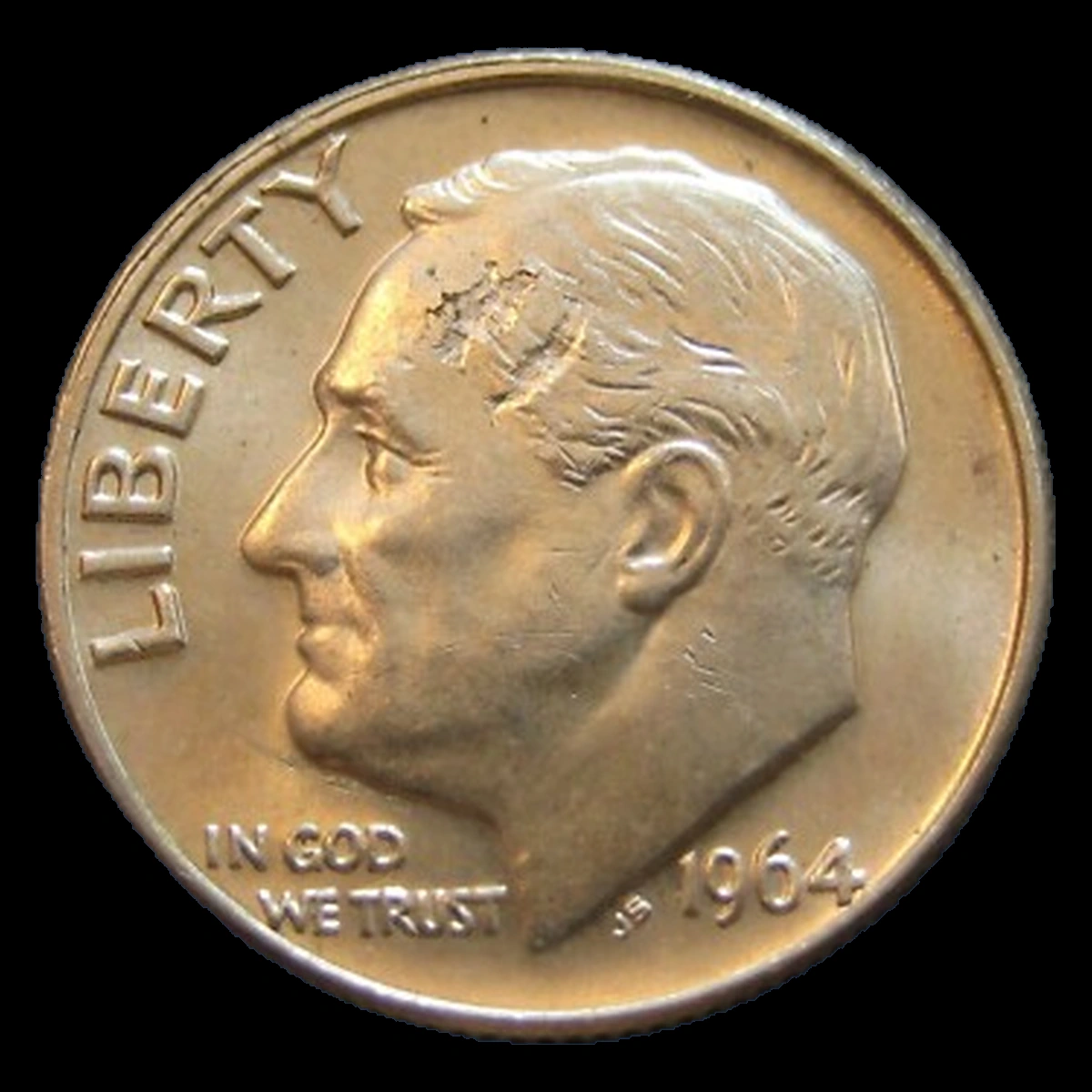
10. 1964 Dime Original Metal Peeling from the Face: Lamination Error
A front-side lamination is recorded on a Philadelphia NGC MS63 dime. A weak seam near the surface allowed part of the alloy to separate.
The 1964 silver alloy is not the layered construction of a later clad dime. A peel here does not automatically mean a missing clad layer.
How to Identify
Follow the thin separation edge without lifting any attached metal. Compare interrupted design and exposed texture with the untouched surrounding surface.
A smooth scoop with tool marks may be later damage. Small original peels need not produce a large weight change.
What It’s Worth
Genuine front laminations are estimated at $15–$200. Clearer or larger separations on attractive coins tend to make stronger comparisons.
The supplied MS63 example has no stated sale result. Its condition, silver content, and any cleaning belong in the whole-coin assessment.
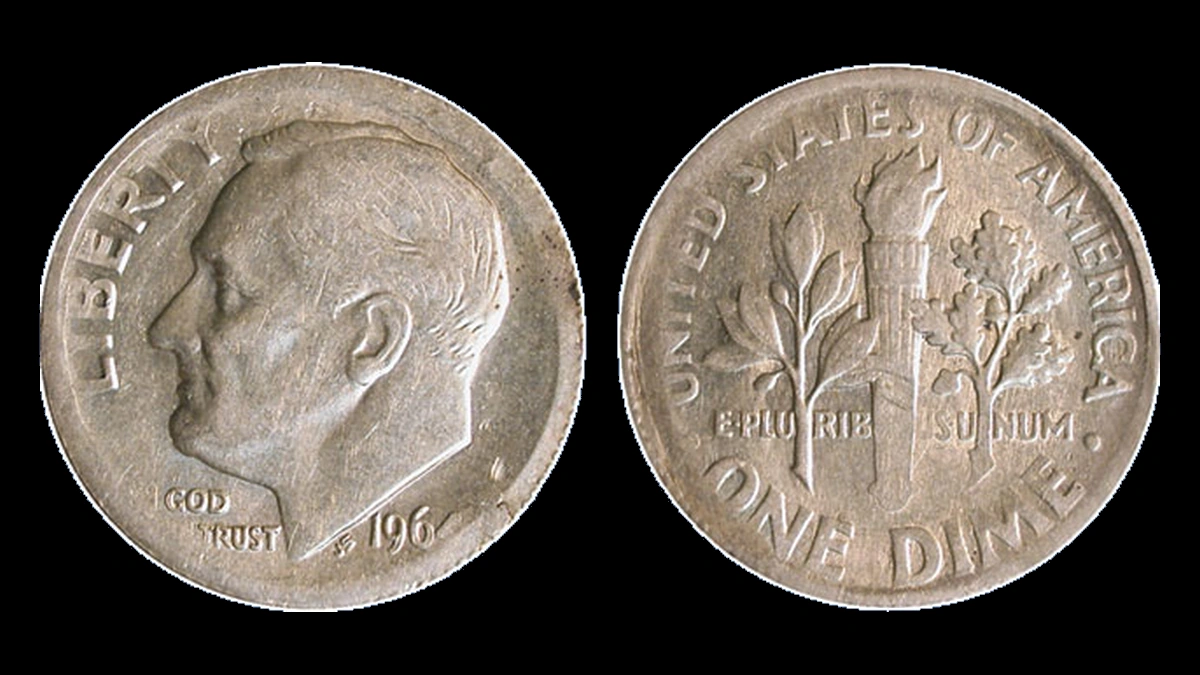
11. 1964 Dime Weak Detail on an Unworn Coin: Weak or Die-Adjustment Strike Error
One Denver dime was labeled a die-adjustment strike, implying unusually light striking pressure. Another Philadelphia coin weighs 2.41 grams and has weak outer detail despite being struck inside the collar.
The Philadelphia piece may have lacked adequate rim preparation, but pressure, tool shape, or hard metal could also contribute. Its explanation should not be treated as identical to the Denver label.
How to Identify
Work from the outer lettering toward the center, checking whether shallow details retain original struck texture. Circulation wear instead smooths and lowers exposed high points.
Compare the perimeter with evidence of collar contact on the Philadelphia type. A slightly low weight or blurry appearance alone cannot establish a die-adjustment strike.
What It’s Worth
Unusual original weak strikes suggest an estimated $25–$400. Severe, clearly attributed examples differ from mildly weak borders.
No completed sale is supplied for these specimens. The 2.41-gram reading is a feature to document, not an independent reason for a large premium.
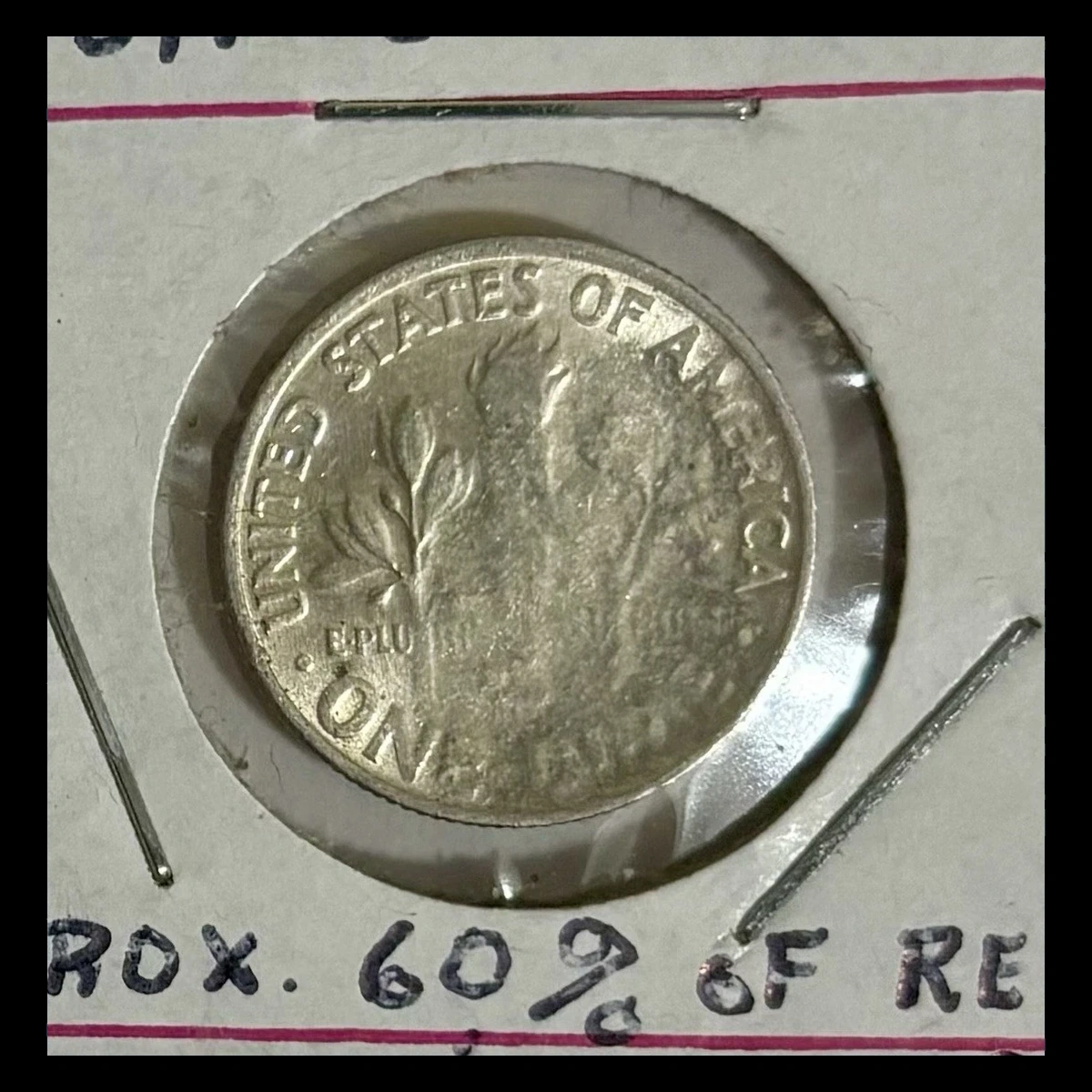
12. 1964 Dime A Local Area Fails to Form: Struck Through an Obstruction Error
An object or substance between a die and blank can block detail. A Philadelphia NGC MS64 example has a reverse struck-through area whose obstructing material is unspecified.
Other reported Denver dimes were struck through a die cap, a previously struck coin covering the tool. Those receiving coins can carry softened or distorted designs without themselves being caps.
How to Identify
Inspect the weak area’s boundary beside normally formed detail. Uniform wear, grinding, and an incomplete overall strike require different explanations.
For a cap-struck example, compare the altered design with a confirmed receiving coin. Do not name grease, cloth, or another material from an indistinct depression.
What It’s Worth
Ordinary struck-through areas suggest $25–$300, while clearer cap-covered strikes may fall around $50–$400.
A 1984-P dime described as a late-stage front blocked strike sold for $45 in January 2023. That later clad coin is a limited comparison for the different 1964 appearances.
13. 1964 Dime A Deep Overlap Depression: Indent Error
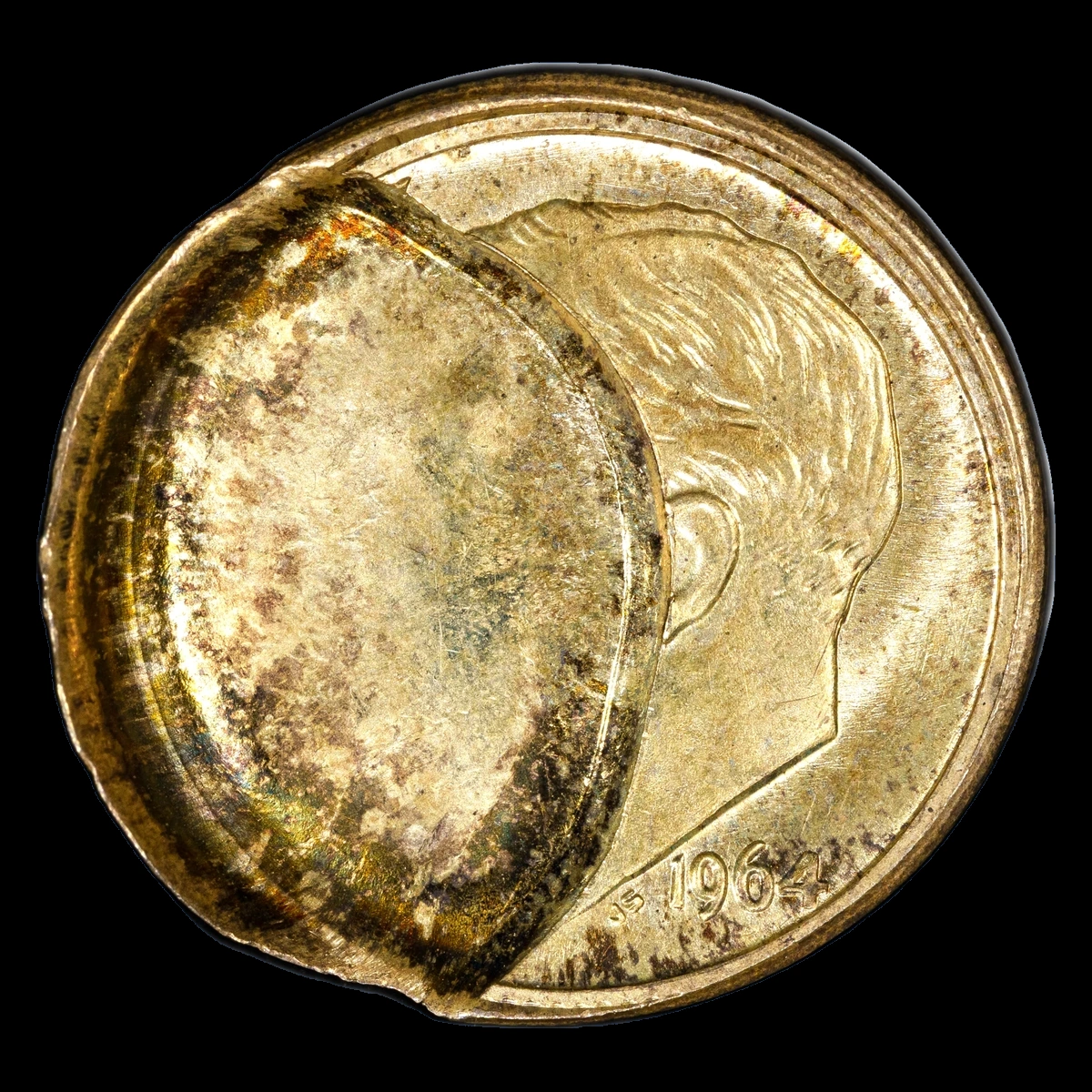
Another blank overlapping the dime can press its outline into the surface during striking. The resulting plain sunken region is called an indent.
A Philadelphia NGC MS65 coin has about 95% of its front indented. A separate PCGS MS66 example combines a 50% indent with partial-collar striking.
How to Identify
Use an angled view to follow the depression and the design flowing around its boundary. A later random impact need not fit an overlapping disk or the surrounding strike.
The partial-collar coin should also show the edge difference between the ring-contained and expanded portions. A recognizable recessed mirror design would require a brockage explanation rather than a plain indent alone.
What It’s Worth
Authentic 1964 indents are estimated at $100–$1,000. Size, definition, and preservation influence the comparison.
No realized prices are supplied for the two named specimens. The half-face indent and partial-collar feature belong to one coin and one total value.
14. 1964 Dime Recessed Letters Read Backward: Brockage Error
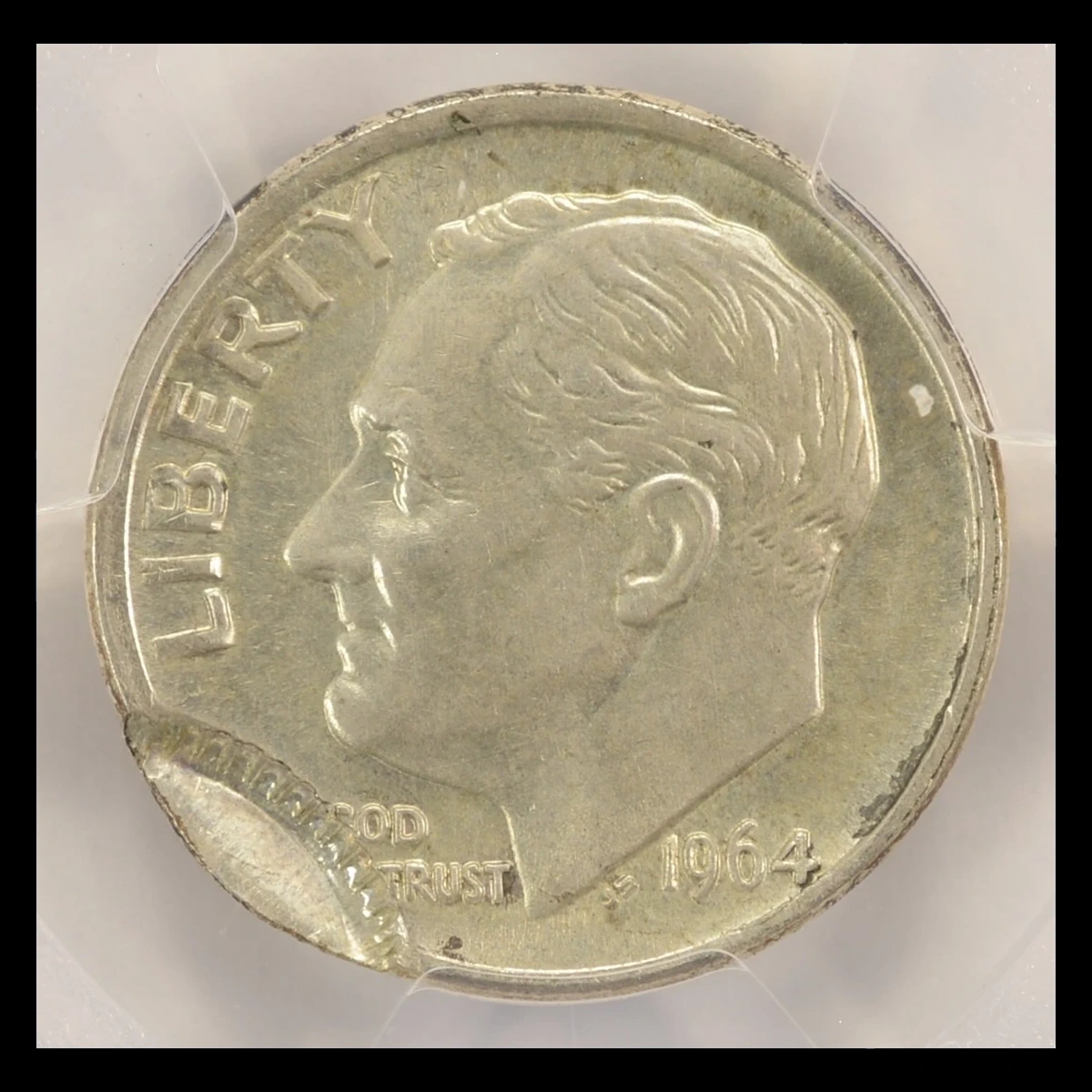
A previously struck coin trapped in the press can impress its raised design into another blank. The receiving coin records an incuse, reversed copy called a brockage.
A Philadelphia front brockage and a separate 70% reverse brockage with a broadstrike are recorded. They are two specimens, not two views of one coin.
How to Identify
Check that the transferred lettering is both recessed and reversed. An ordinary dent or a raised doubled letter does not show the same mechanism.
Compare the opposite face and contact boundary as parts of the same strike. The 70% reverse example’s expanded outline is an additional feature of that particular coin.
What It’s Worth
Recognizable silver-dime brockages are estimated at $150–$1,500. Larger clear mirror images generally make stronger comparisons.
A 2001-P dime combining partial front brockage and clashing sold for $79 in November 2014. That different-metal combination does not establish the price of the 70% 1964 example.
15. 1964 Dime Several Designs Overlap: Multiple Strikes and Matched Pairs Error
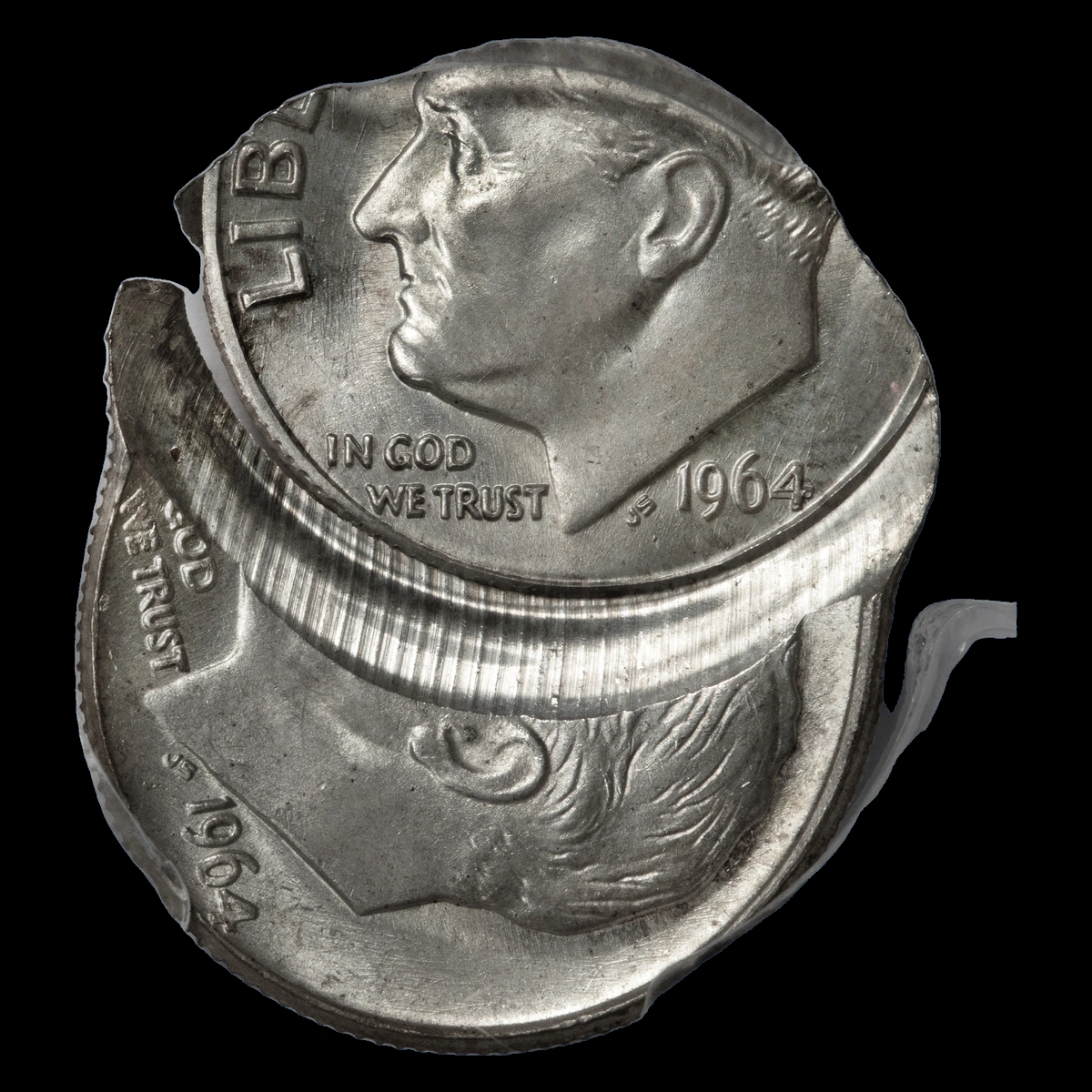
Trace the separate dates and portraits when a coin has several impressions. A Denver example received a second strike 70% off center, with its second date nearly upside down relative to the first.
Other specimens include Denver 75% second strikes and Philadelphia pieces with both strikes off center, repeated broadstrikes, or a 90% second strike. Recorded matched pairs contain two coins whose contact features can be compared.
How to Identify
Count distinct design impressions rather than every doubled letter. Determine where one strike crosses or flattens the previous image.
One reported pair combines a flipover double strike with a brockage receiving coin. Keep both objects distinct and compare their contact areas without forcing them together.
What It’s Worth
Single multiple-strike dimes suggest $150–$2,500; intact matched pairs suggest $500–$3,000. Pair values cover both objects together.
The Denver PCGS MS61 example with the 70% second strike sold for $373.75 in September 2006. Its nearly inverted second date should not be assigned to the other specimens.
16. 1964 Dime The Coin Forms a Covering Cup: Die Cap Error
A coin remaining attached to a die can spread around it under further striking pressure. The resulting cap is the covering coin itself, not a later coin struck beneath it.
Philadelphia examples include an NGC MS67 obverse cap and a separate MS66 Full Bands reverse cap. The face and grade identify different objects.
How to Identify
Inspect how the design stretches around the walls and interior without compressing them. The pattern must support continued attachment to a die.
A cupped broadstrike or a coin bent with tools can have a similar outline. Shape alone is insufficient without compatible struck surfaces.
What It’s Worth
Genuine 1964 caps are estimated at $500–$3,000, with recognizable deep shapes and attractive surfaces supporting more interest.
A 1977-D NGC MS69 obverse cap sold for $1,725 in April 2006. It supplies a later-year comparison in different metal and a different grade.
17. 1964 Dime Design Struck onto a Fold: Foldover Strike Error
A Philadelphia PCGS MS65 example was cataloged as a foldover. A blank entering at an angle can fold under pressure while the dies impress their designs into it.
The supplied title does not state the folding direction or angle. These details need to come from the actual specimen.
How to Identify
View the fold from several angles to see where struck design crosses or meets the bent metal. The surfaces must show that folding and striking belonged to the minting event.
A finished dime bent afterward may have torn or crushed detail instead. Leave the fold intact and avoid measurements that would require opening or flattening it.
What It’s Worth
A genuine 1964 foldover suggests an estimated $500–$3,000. Strong identifiable design and preserved surfaces help explain the error.
No sale total is supplied for the PCGS MS65 example. Its grade does not establish an exact folding geometry for another coin.
18. 1964 Dime Raised Lines or Lumps: Die Cracks and Breaks Error
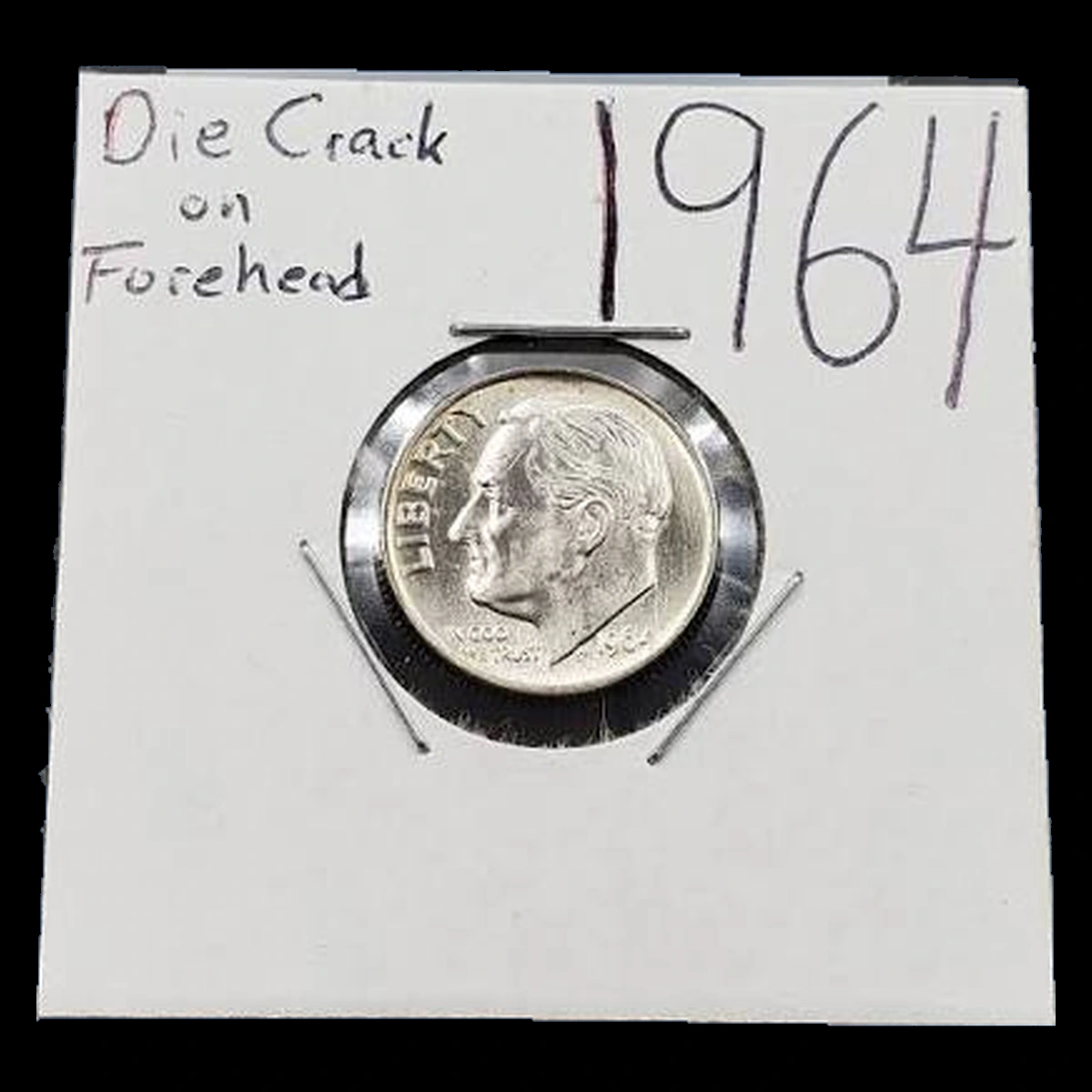
Denver reports include hair cracks, a long forehead lump, and a raised area among the reverse branches. These came from different damaged dies and need not occur together.
Metal fills a crack or broken opening in the tool and leaves a raised feature. A larger break attached to the rim is called a cud.
How to Identify
Follow a ridge with light from the side and distinguish it from an incuse scratch. A thin line touching the edge is still different from a broad rim-connected cud.
Match the actual location and shape to a corresponding Denver example. Added metal and battered edges can imitate lumps without reproducing a die break.
What It’s Worth
Small cracks suggest $10–$40, while stronger lumps or rim breaks may fall around $40–$200.
A 1970-D nickel with two cuds sold for $63 in October 2022. That different-denomination result illustrates modest demand for some breaks without pricing a particular 1964 dime pattern.
19. 1964 Dime Foreign Outlines in the Design: Die Clash and Fragment Impression Error
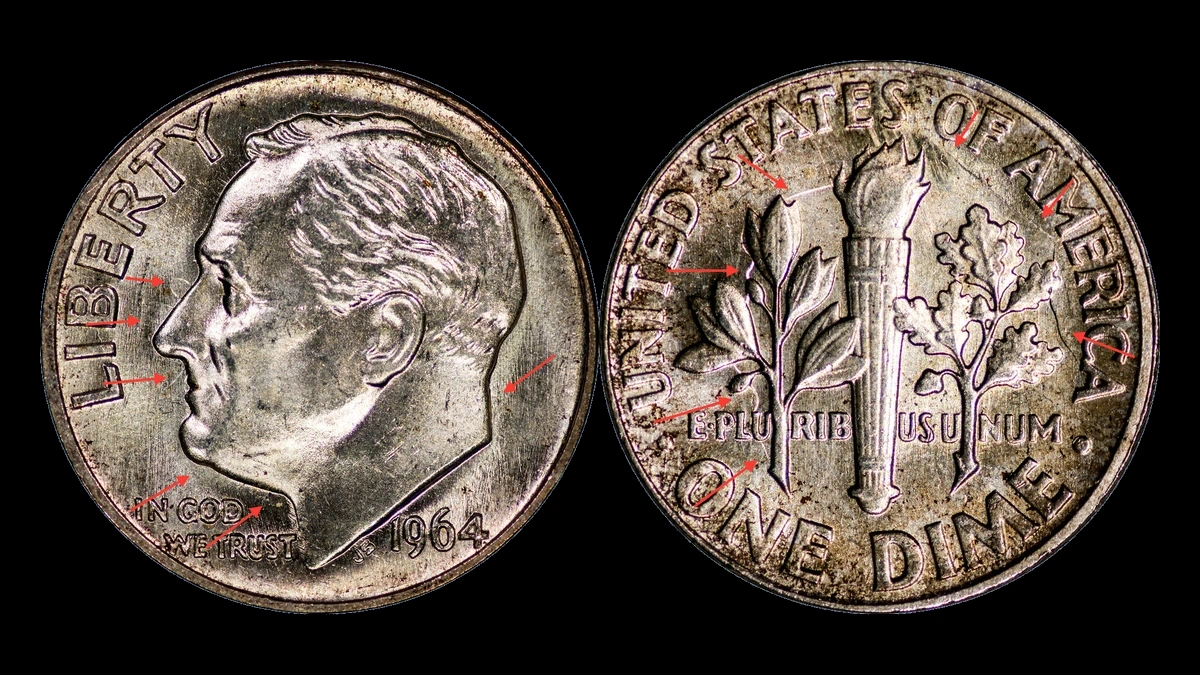
When dies meet without a blank, they can mark each other and copy traces of the opposite design onto later coins. Both Philadelphia and Denver examples show varying clash patterns.
One Denver specimen combines strong clashes on both faces with a fragment impression on the reverse. The fragment contact and clashed outlines are separate features on that one coin.
How to Identify
Match an unexpected outline to an actual feature of the opposite design. Nose-area or branch-area traces cannot be assigned from a random line alone.
For the combined Denver specimen, inspect the fragment impression independently of the clashes. Other clashed coins need not have any fragment contact.
What It’s Worth
Ordinary visible clashes suggest $15–$250, while the unusual fragment-and-clash combination is estimated at $100–$1,000.
The $79 sale of the 2001-P brockage-and-clash dime is only a broad comparison. A combined-error estimate values one complete coin, not separate prices added for each mark.
20. 1964 Dime Thickened Mouth Outlines: Abrasion Doubling or Hot Lips Error
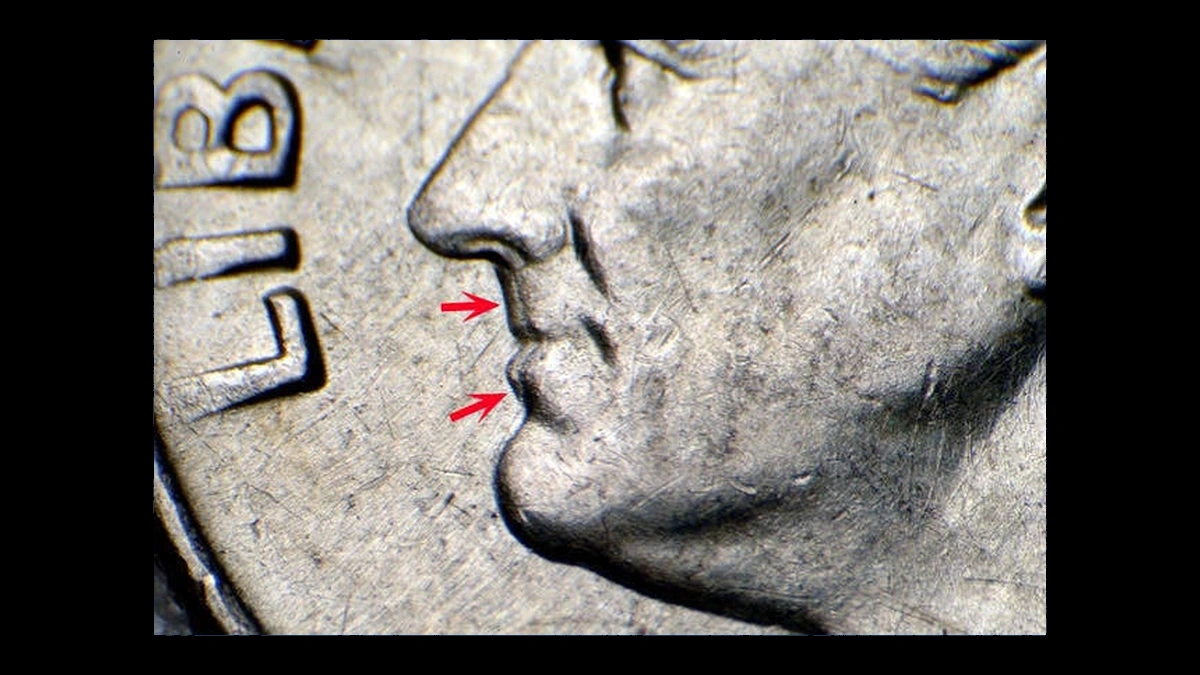
The Hot Lips nickname describes altered mouth contours reported on both Philadelphia and Denver coins. Their former doubled-die listings were withdrawn and reclassified as abrasion doubling.
Polishing the die changed this localized feature. It did not produce the same duplicated design as a true doubled die.
How to Identify
Choose the mouth photograph for the correct mint, then inspect the lips and surrounding face together. Compare with the corrected abrasion description rather than an old doubled-die label.
Broad local contour changes differ from well-separated duplicate lettering elsewhere. The nickname does not establish a rare doubled-die attribution.
What It’s Worth
Clear collectible examples are estimated at $10–$75 as whole coins. Silver content and preservation remain part of that value.
No major doubled-die premium should be inferred from an outdated listing. Price the actual polishing-related feature and condition.
21. 1964 Dime Earlier D Strokes Near the Torch: Repunched Mintmark Error
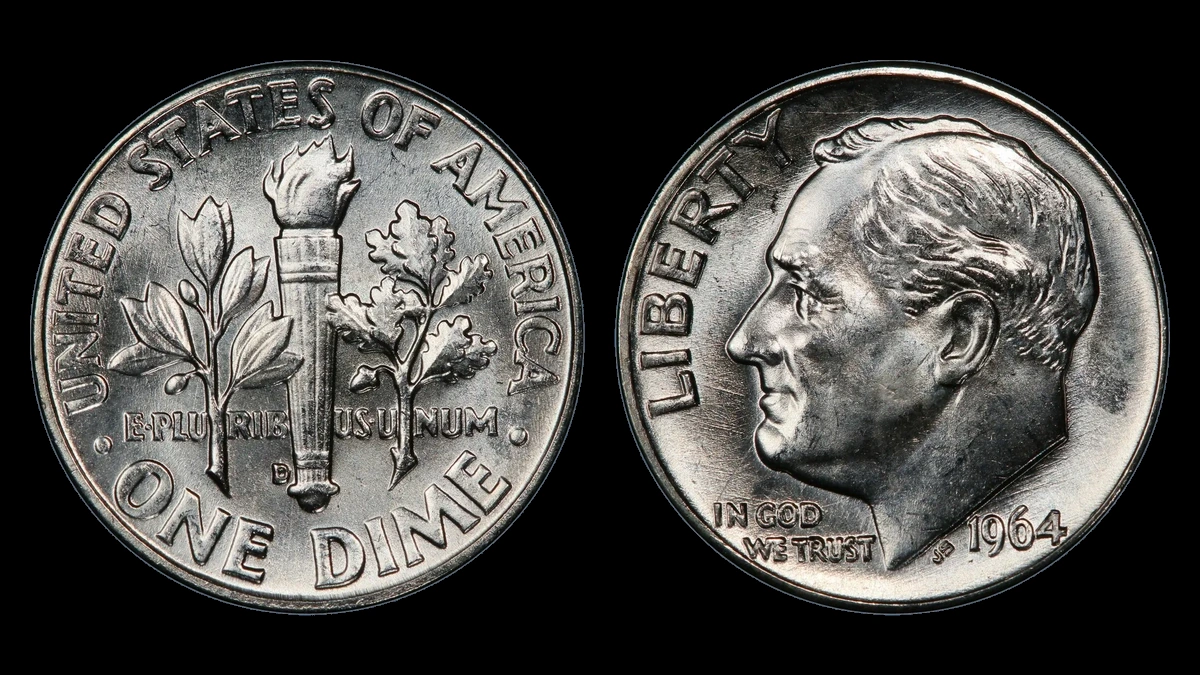
Mintmarks were punched into individual dies, and a shifted repeat entry could preserve an earlier D. Some 1964-D patterns overlap closely, while FS-502 places an extra D widely toward the torch.
That separation explains its older misplaced-mintmark name. Other patterns have different directions or three impressions and require their own matches.
How to Identify
Find the mintmark below and left of the reverse torch, not above the date as on later dimes. Trace enough straight and curved strokes to recognize the earlier letter.
For FS-502, compare the separated D and its surroundings with that specific variety. Dents or a single raised lump beside the main D are insufficient.
What It’s Worth
Across identified patterns, an estimated range is $15–$1,000. Clear named varieties in strong condition can differ considerably from faint worn examples.
The supplied material does not give a realized price for each catalog entry. A widely separated FS-502 needs its own comparison instead of the price of an ordinary overlapping D/D.
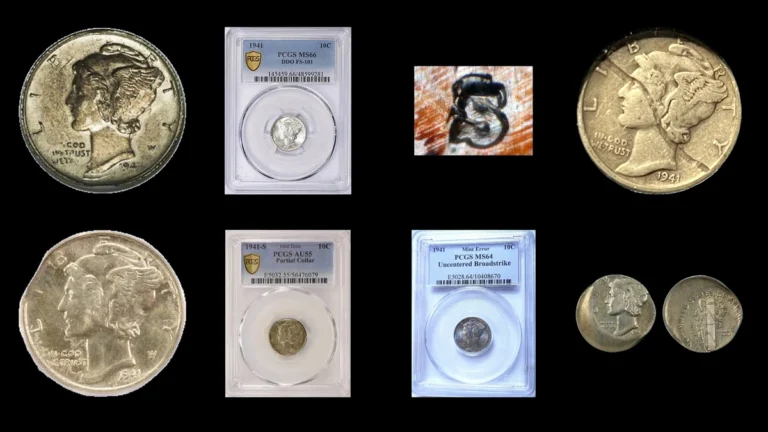
22. 1964 Dime Repeated Lettering Already in the Tool: Doubled Die Error
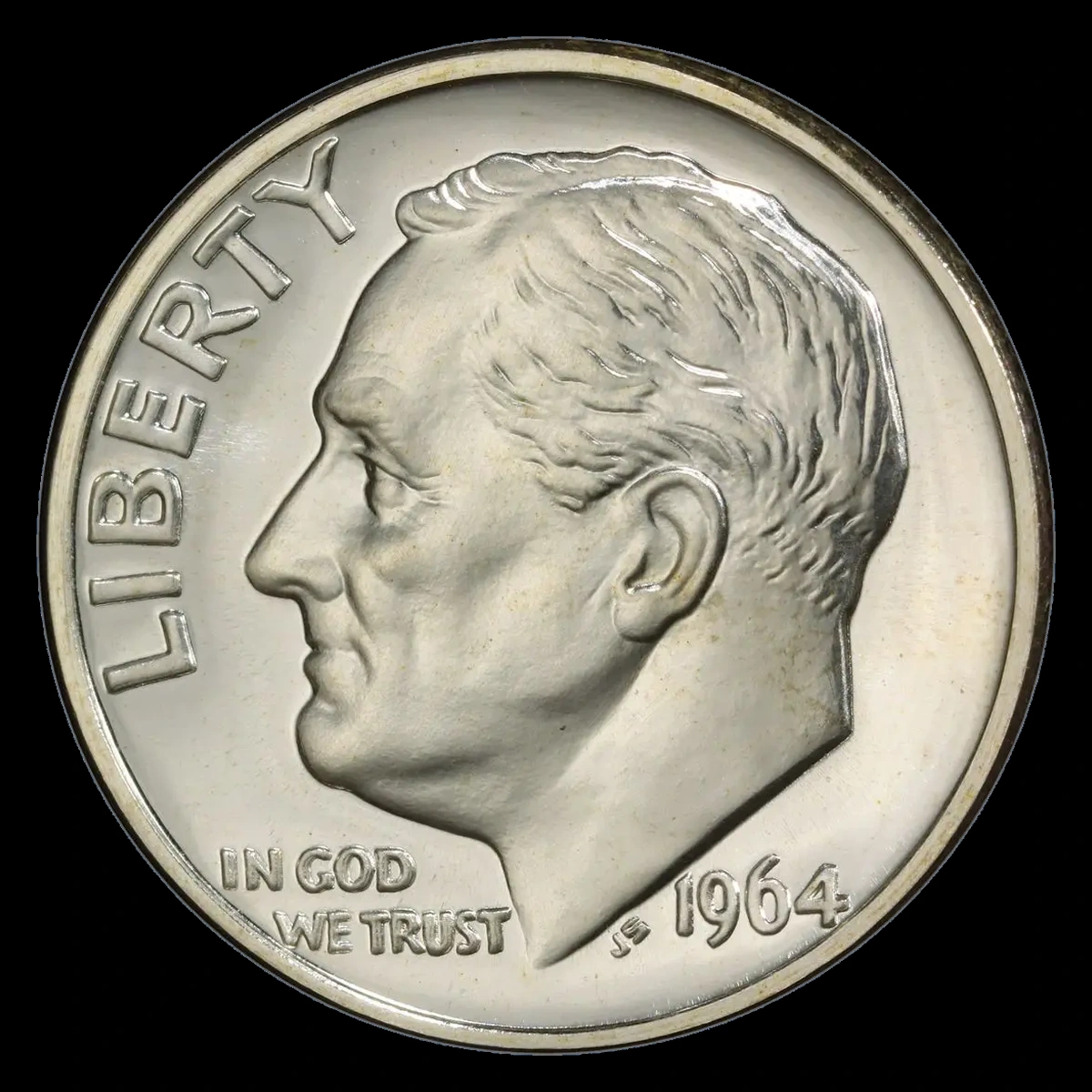
True doubled dies carry repeated contours before they strike a coin. Reported 1964 patterns affect the front, reverse, or both through paired dies across ordinary and Proof issues.
Denver reverse varieties FS-801 and FS-802 differ in direction. Philadelphia Proof FS-101 concerns the front, so those names are not interchangeable.
How to Identify
Establish mint and finish, then compare several letters or design details with one identified die. Look for rounded duplicate contours and split tips rather than flat mechanical shelves.
A sharp or blunt tail on the 9 is not an error by itself. Neither a bright surface nor a Full Bands designation substitutes for the actual doubling pattern.
What It’s Worth
Minor matched doubled designs suggest $15–$100, while stronger named varieties may reach $100–$1,500.
These estimates span different dies and grades. A strong Denver reverse variety does not establish the price of faint thickening on a Philadelphia Proof.
Conclusion
The ordinary silver alloy is the starting point for a 1964 dime, but its metal alone cannot explain every unusual surface or shape. Follow the physical evidence to distinguish incomplete blanks, interrupted strikes, repeated impressions, and marks inherited from a die.
Use exact specimens where available, keep two-coin pairs intact, and leave the reported clad-blank valuation conditional. Several visible features on one dime still describe one collectible and one total value.